9 Edible Mushrooms Found In Virginia Forests And The Dangerous Ones They Resemble
One fungus in our autumn woods glows faintly green in the dark, and it happens to be poisonous. That eerie light belongs to a mushroom that fools hopeful foragers every single October across Virginia.
Fall rains wake up a hidden network of threads under the leaf litter and rotting logs. Within days, frilly gray clusters and bright orange shelves pop up like someone spilled paint on the trees.
I have to admit that my first basket held more doubts than dinner, and that felt like the right instinct. You need to treat every find like a puzzle, checking tiny details before anything gets near your skillet.
Some of the tastiest treats in Virginia hide right beside risky twins that look nearly identical at first. So which ones belong in your basket, and which ones should stay in the woods for the squirrels?
1. Hen Of The Woods
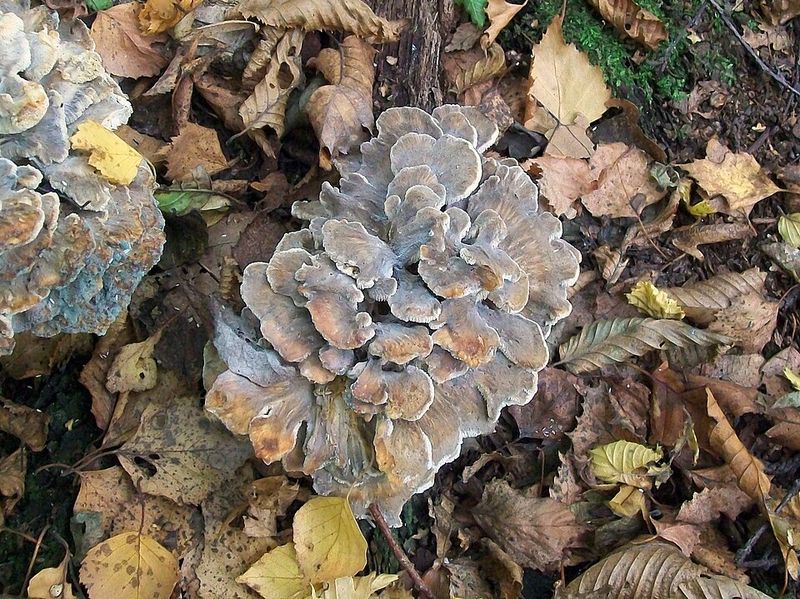
Finding a ten-pound clump of frilly gray fans at the base of an old oak feels like winning the lottery. Folks call it maitake too, and the ruffled cluster really does resemble a fluffed-up hen sitting on her nest.
Look underneath any cap and you will see tiny white pores instead of gills, which is a key clue. The caps overlap in a tight rosette, and the whole thing often grows from a single thick base.
Mid-September through October is prime time, so this month is perfect for checking your favorite oak trees again. Personally, I write down every spot I find, because hens often return to the same tree year after year.
The look-alike to watch for is the black-staining polypore, which grows in similar clusters near hardwood roots. Its caps are usually bigger and flatter, and its surfaces slowly darken to black after you handle them.
That staining species is not considered dangerous, but it turns tough and bland, so it ruins a good meal. Rub a cap edge gently and wait several minutes to see if dark smudges start forming on the flesh.
Once home, slice the cluster into chunks and rinse away the forest grit that hides deep between the fronds. I love how the edges crisp up in a hot pan while the center stays tender and rich.
Extra pieces freeze well after a quick sauté, so one lucky find can stretch through several winter dinners. Just leave part of the clump behind, and the tree will likely reward you again next fall.
2. Chicken Of The Woods
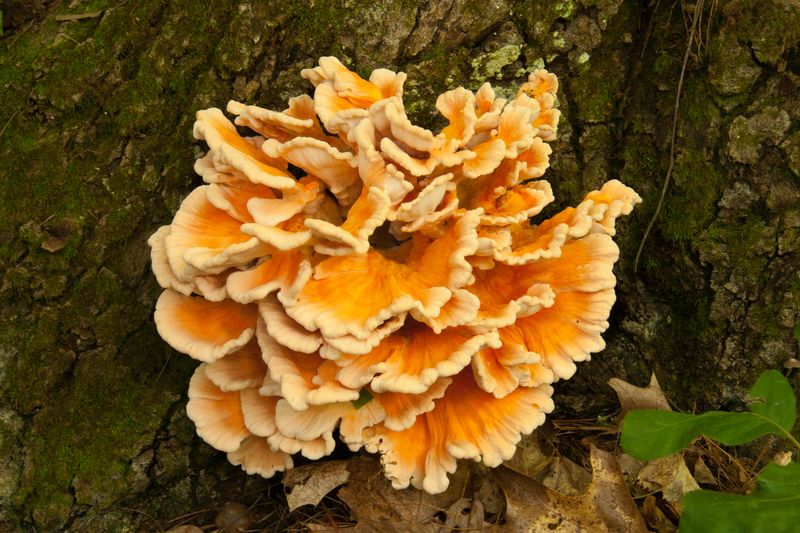
Nothing in the October woods shouts quite as loudly as a stack of neon orange shelves on a fallen oak. You can spot chicken-of-the-woods from across a ravine, glowing like a traffic cone against the brown bark.
The tops are bright orange, while the undersides are sulfur yellow and covered in tiny pores with no gills. One species grows in shelves on trunks, and a paler cousin forms rosettes near the base of trees.
Its texture really does resemble chicken breast, which is why vegetarian cooks get so excited about finding it. I like to harvest only the soft outer edges, since the older parts near the wood get chalky.
Your Virginia Garden Changes Every Week. Your Plan Should Too.
Gardening in Virginia changes quickly throughout the season. Every Friday you’ll receive a simple weekly plan showing exactly what to plant, prune, fertilize, harvest, and protect so you never miss the right timing.
The jack-o’-lantern mushroom causes the most mix-ups, because it shares that same pumpkin orange color in clusters. Flip one over and you will find sharp, crowded gills running down the stem, which chicken mushrooms lack.
Jack-o’-lanterns can bring on hours of painful vomiting, so learning that gill check really matters for every forager. Their gills sometimes glow faintly green in total darkness, which is a fun trick but a poor dinner choice.
Some people react badly to chicken-of-the-woods too, especially when it grows on conifers or eucalyptus trees. Cook it thoroughly and eat only a small portion the first time to see how your stomach handles it.
Fresh flushes keep popping up through mid-October in many hardwood forests across Virginia after a soaking rain. Check the same logs every week, because a tender new shelf can turn tough within just a few days.
3. Lion’s Mane
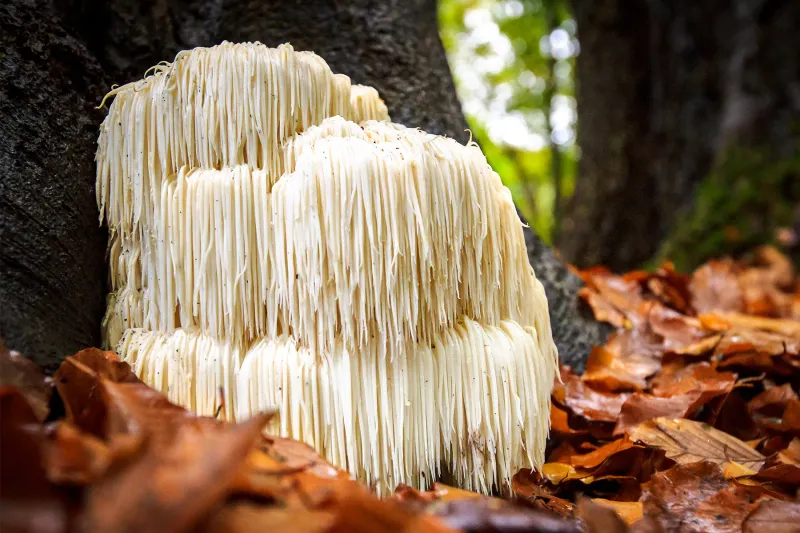
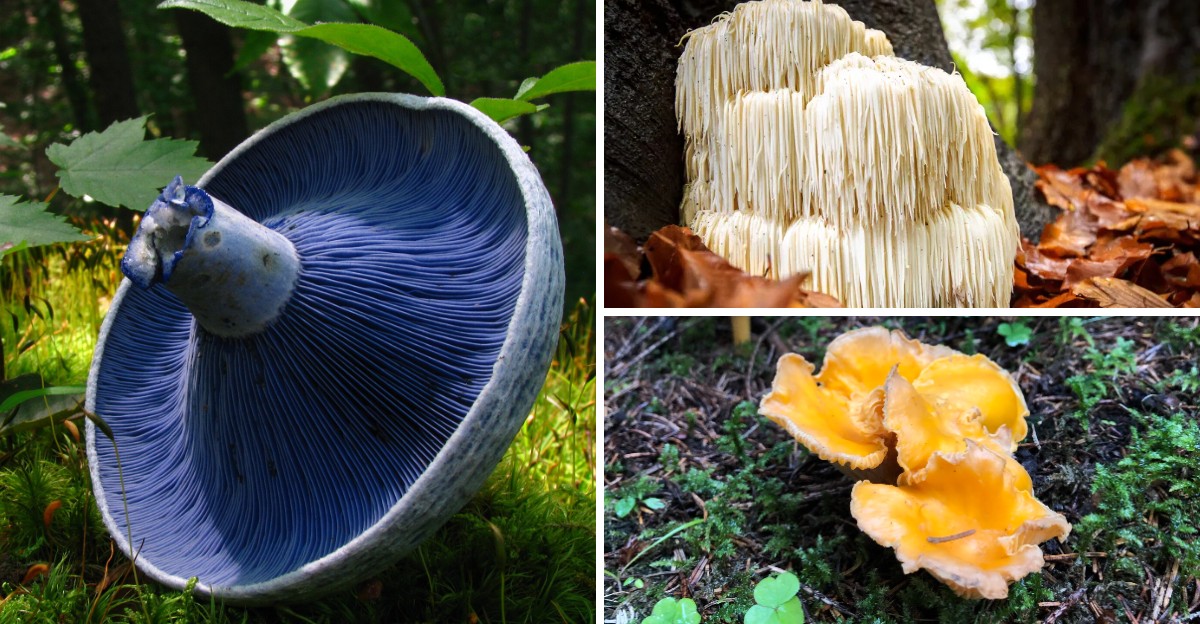
Spotting a white pom-pom hanging from a wounded beech trunk feels a little like discovering a forest snowball. Lion’s mane has no cap at all, just a shaggy mass of soft dangling spines that look like icicles.
Each tooth can stretch about half an inch or longer, and they all hang straight down toward the ground. Look on fallen hardwood logs or on living trees that carry old wounds and broken branches.
Its season stretches nicely through late fall, so October is a great month to start scanning tree trunks. I can’t imagine a happier sight on a chilly hike than that bright white blob peeking out from bark.
Close cousins like bear’s head tooth and comb tooth grow in more branched, coral-like shapes on similar wood. Those relatives are also edible, so mixing them up will not cause trouble at the dinner table.
There are no commonly confused toxic look-alikes, which makes this one a friendly choice for careful beginners. Still, you need to check that the spines are pure white, since yellowing specimens taste sour and bitter.
Tear the mushroom into chunks rather than slicing, and squeeze out extra water before it hits the pan. Many cooks say the sweet, mild flavor reminds them of crab or lobster when browned in a little butter.
Researchers are studying compounds in lion’s mane for possible brain benefits, though the evidence is still early. For now, I simply enjoy it as a delicious seasonal treat and leave health claims to the scientists.
4. Giant Puffball
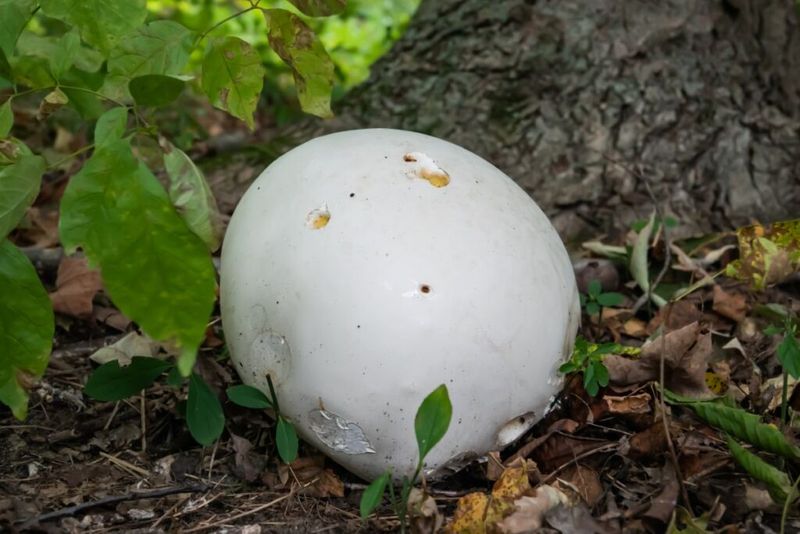
Stumbling on a white ball as big as a soccer ball can stop you right in your tracks. Giant puffballs grow from baseball size to basketball size, and they look like someone lost their lawn toy.
You will usually find them in grassy pastures and woodland edges, especially after a good soaking rain. The skin feels smooth and leathery, and a healthy specimen shows no stem or cap at all.
The most important step is slicing every puffball in half from top to bottom before deciding anything. A good edible one shows solid pure white flesh inside, with the texture of firm fresh marshmallow.
The danger comes from young Amanita mushrooms, which start out as smooth white eggs hiding underground or in leaves. These toxic Amanitas can cause severe liver damage, and some species rank among the most poisonous fungi on Earth.
When you cut an Amanita egg, you will see the faint outline of a cap and stem inside. Any yellow or olive tint also means the puffball is past its prime or might be something else.
Personally, I peel off the outer skin, then slice the flesh into thick slabs like slices of bread. Dipped in egg and breadcrumbs and fried until golden, they taste a lot like a savory mushroom pancake.
Puffballs spoil fast, so cook yours within a day or two before the insides start turning yellow. October finds are often older, so expect to toss more of them than you would in late summer.
5. Oyster Mushroom
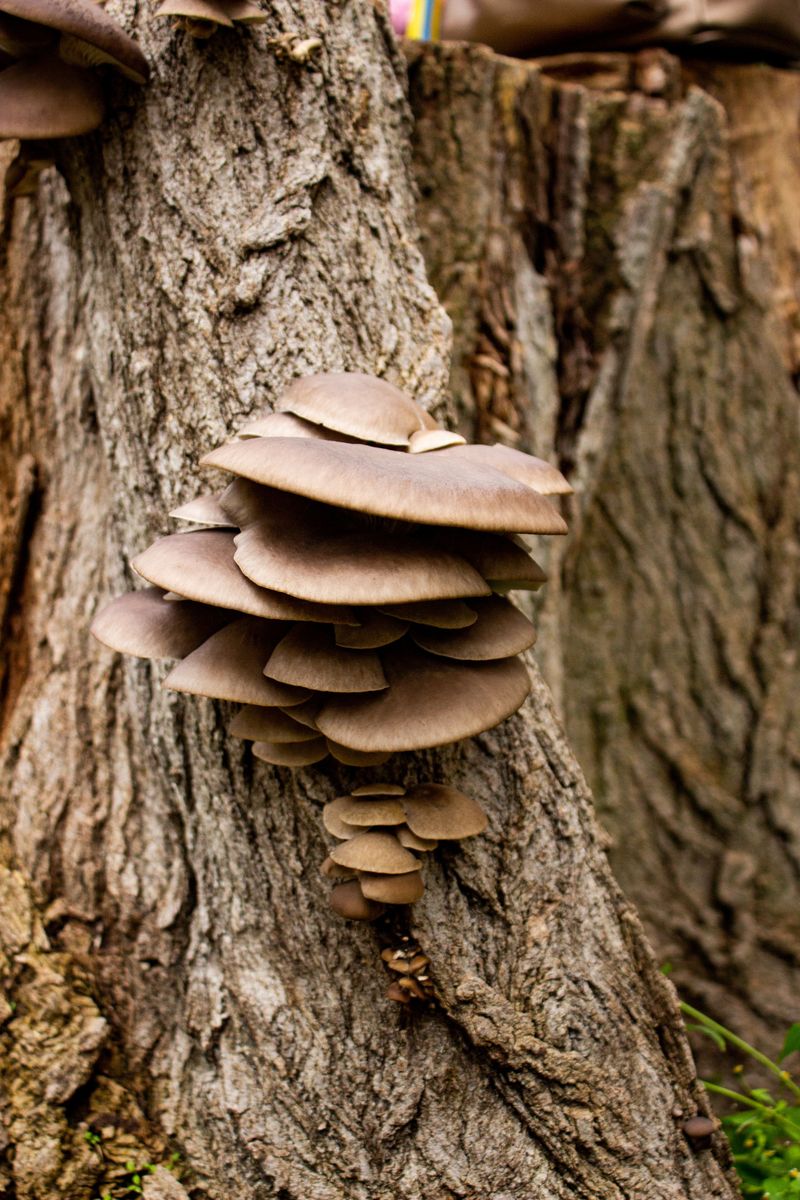
Soft gray shelves stacked on a rotting log look like someone arranged a tiny set of fancy fans. Oyster mushrooms earned their name from that shape and color, which really does resemble a shell on the beach.
The caps range from white to tan or gray, and they usually overlap in thick clusters on hardwood. Flip one over and you will see white gills running down onto a short stubby stem, or no stem.
In Virginia, fall brings cooler nights that wake them up, and some keep fruiting into mild winter weather. I like checking fallen tulip poplar and beech logs after storms, because oysters love freshly decaying wood.
Smart foragers learn to watch for small brown Galerina mushrooms, which also sprout on logs this time of year. Galerina marginata carries the same type of toxins as the worst Amanitas, so mistakes here can be very serious.
Luckily, Galerina has a central stalk with a thin ring, and its spore print comes out rusty brown. Oysters grow sideways from wood without a ring, and their spore print looks white to pale lilac.
You need to make a spore print at home by setting a cap gill-side down on dark paper overnight. Jack-o’-lanterns can also fool beginners, though their bright orange color looks nothing like a gray oyster.
Tiny beetles love hiding between oyster gills, so shake each cap and give it a quick rinse before cooking. Pan-fried until the edges turn crispy, they make a wonderful topping for a bowl of creamy potato soup.
6. Golden Chanterelle
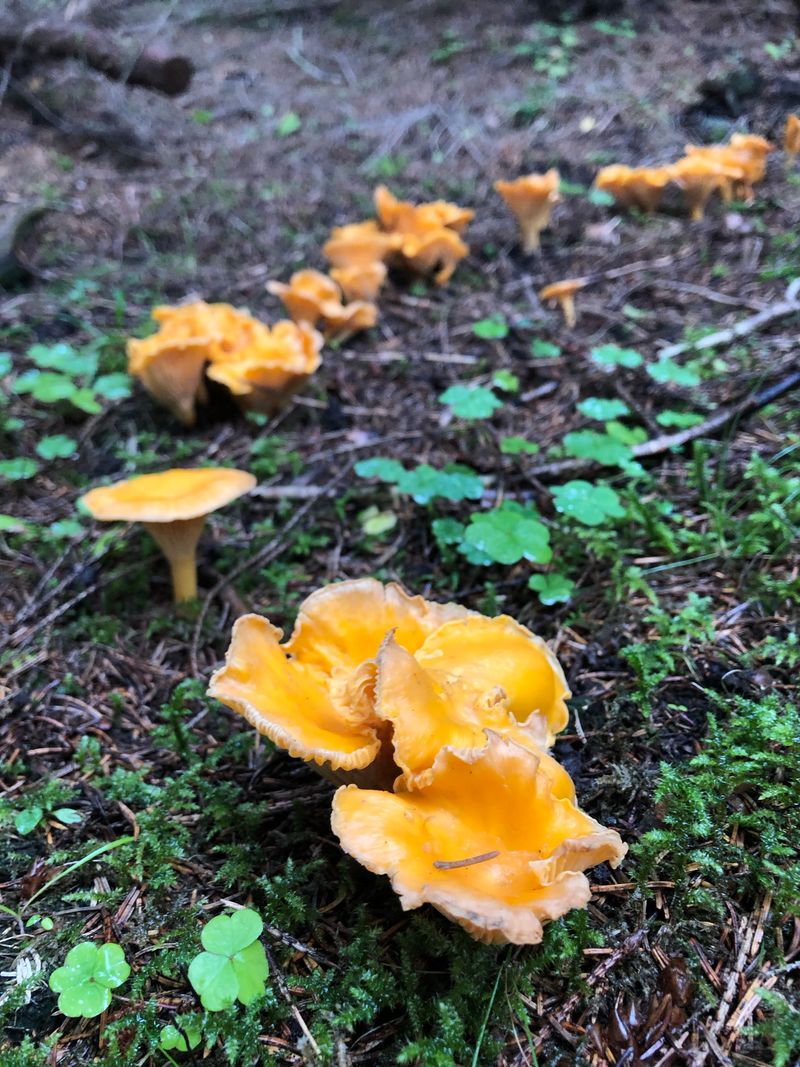
A faint smell of ripe apricots drifting up from the leaf litter is a clue that chanterelles are nearby. These golden trumpets are a summer favorite, but late stragglers sometimes linger into the first weeks of fall.
Each one rises straight from the soil, usually near oaks and other hardwoods, rather than sprouting from logs. Underneath, you will find blunt, forked ridges that run down the stem instead of sharp, separate gills.
By October, finds are rare in most areas, so treat any chanterelle this month as a bonus surprise. What surprises me most is how a single patch often returns to the same hillside for many years.
The jack-o’-lantern is the top look-alike, and it grows in big orange clusters on wood or buried roots. Its true gills are sharp and knife-like, and the inside flesh is orange, while chanterelle flesh is white.
The false chanterelle is another copycat, with brighter orange color and thin, crowded, forked true gills. It usually grows on rotting wood or wood chips, and it can upset your stomach if eaten.
Try tearing a chanterelle lengthwise, because the inside should look pale and stringy, almost like string cheese. That simple test, along with checking the ridges, helps you avoid most of the common mistakes.
Dry sauté them first in a hot pan to release their water, then add butter at the end. The flavor is fruity and peppery, and it pairs beautifully with scrambled eggs on a cool morning.
7. Shaggy Mane
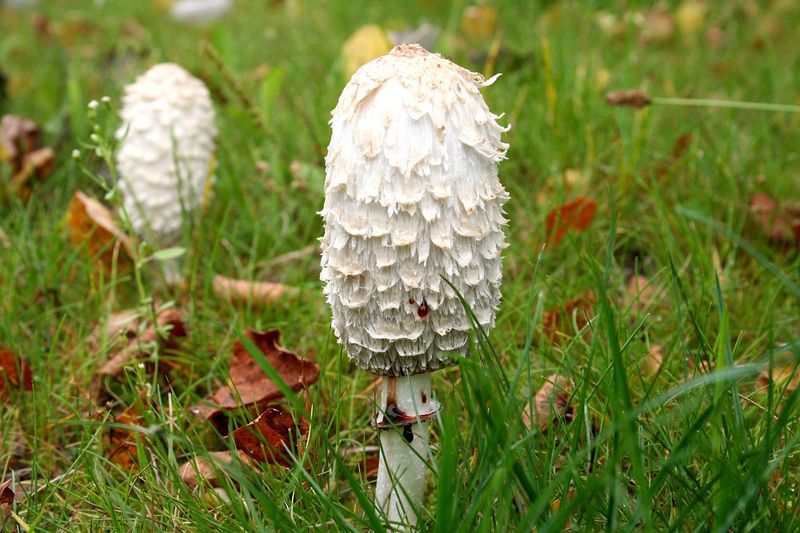
Few mushrooms are as dramatic as the shaggy mane, which slowly melts itself into black ink as it ages. Some people call it the lawyer’s wig, thanks to the curly white scales covering its tall cylindrical cap.
You will often spot them in lawns or along gravel roadsides, especially near the edges of rich woods. They pop up in groups after rain, and the fall season can bring a fresh flush in many areas.
The gills start out white, then turn pink and finally black, dripping inky liquid from the bottom up. That process is called deliquescence, and it helps the mushroom release its spores as the cap curls away.
You need to pick shaggy manes while the gills are still pure white, then cook them within hours. I have watched a beautiful batch turn into a gooey puddle on my counter overnight, which taught me patience.
Toxic inky caps like the magpie inkcap exist, but they have dark caps with bold white patches instead. Smooth gray inky caps also grow nearby, and those cousins can trigger unpleasant reactions when eaten with alcohol.
Shaggy manes also soak up pollutants, so skip any growing beside busy highways or treated lawns. A quiet field edge or woodland path is a much safer place to gather these delicate treats.
Their flavor is mild and buttery, and they work beautifully in a simple cream sauce over toast. Slice them lengthwise to check for worms, then cook quickly before the edges start to darken.
8. Indigo Milk Cap
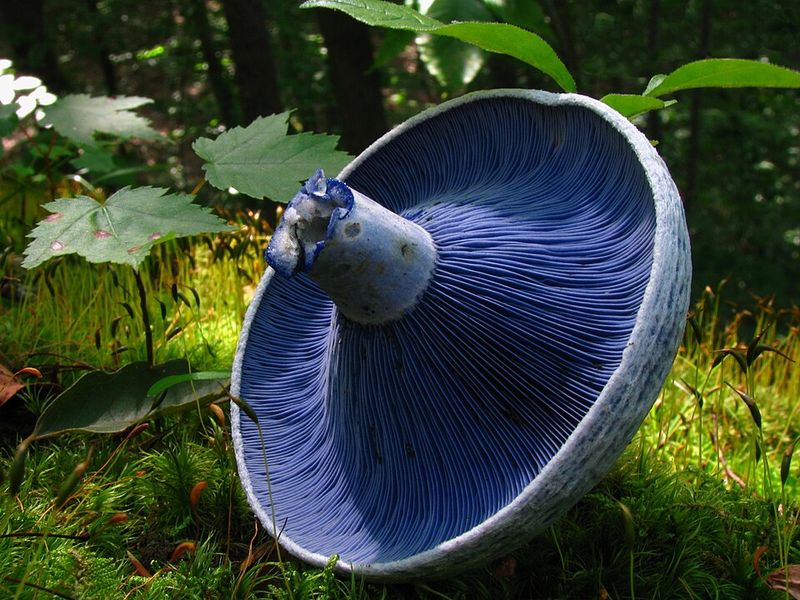
Breaking open a mushroom and watching bright blue juice ooze out feels like a scene from a cartoon. The indigo milk cap is real, though, and it ranks among the most colorful finds in eastern forests.
The whole mushroom wears that deep blue shade, which slowly fades toward a silvery gray as it ages. Many caps show faint rings of darker color, and older ones may stain greenish where they get bruised.
Look on the ground in oak and pine woods, since this fungus partners with tree roots to grow. Late summer through fall is the main season, so October walks can still turn up a blue surprise.
There are no truly dangerous look-alikes that also produce blue milk, which makes identification fairly simple. Other milk caps share the same basic shape, but their latex usually runs white or orange instead.
I believe the cut test is the best part, because the blue drops show up the moment you slice. If the milk looks white or the cap is not blue, put it back and keep searching the woods.
Honestly, the texture is a bit grainy, so many cooks slice the caps thin and fry them crisp. The blue color mostly cooks away to gray, which disappoints kids hoping for a bright blue dinner plate.
Bugs enjoy these mushrooms too, so choose firm young caps and check the stems for tiny tunnels. Even if you skip eating them, snapping a photo of one makes any autumn hike feel extra special.
9. Pear Shaped Puffball
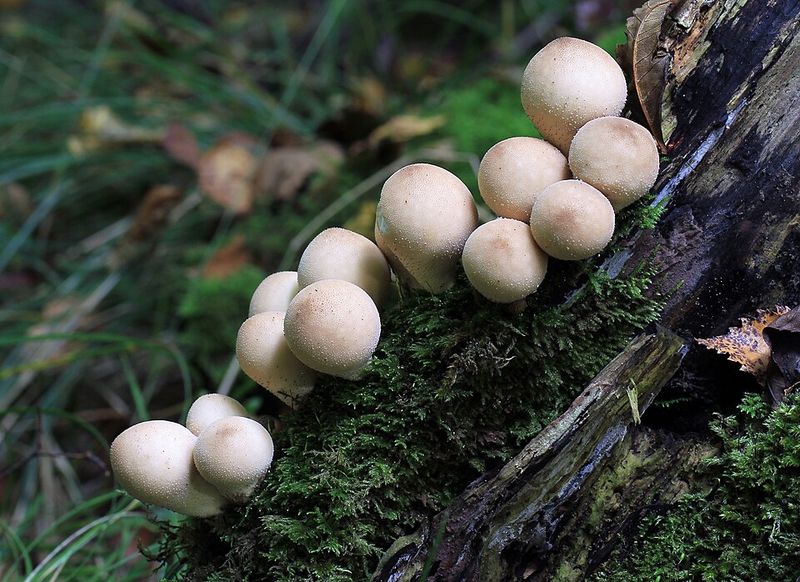
Tap a ripe pear-shaped puffball and a little brown cloud of spores puffs out like smoke from a chimney. Kids love that trick, but the tastiest puffballs are the young ones that have not reached that stage.
Unlike most puffballs, this species grows on rotting stumps and logs, often in crowded clusters of dozens. Each one is about the size of a large grape, with pale tan skin that feels slightly grainy.
Late September and October are peak months, and Virginia woods can be loaded with them after rain. Look closely at the base, because tiny white threads connect each puffball to the wood underneath.
You need to slice every single one top to bottom, since the inside tells you everything you need. Good edible ones show solid white flesh, like a fresh marshmallow, without any lines or shapes.
Earthballs are the main look-alike, and their interiors turn dark purplish black, often with white marbling. They also have thicker, tougher skin, and eating them can cause unpleasant stomach trouble for several hours.
Young Amanita eggs can also sneak in, so any hint of a cap or stem means toss it. Yellow or olive flesh means it has started to mature, and the flavor turns bitter and unpleasant.
I like to pop small ones whole into a skillet with garlic until they turn golden and crisp. They make a fun snack, but keep the first batch small to see how your stomach handles wild food.