The Cold-Climate Berry Louisiana Gardeners Are Proving Can Grow Here
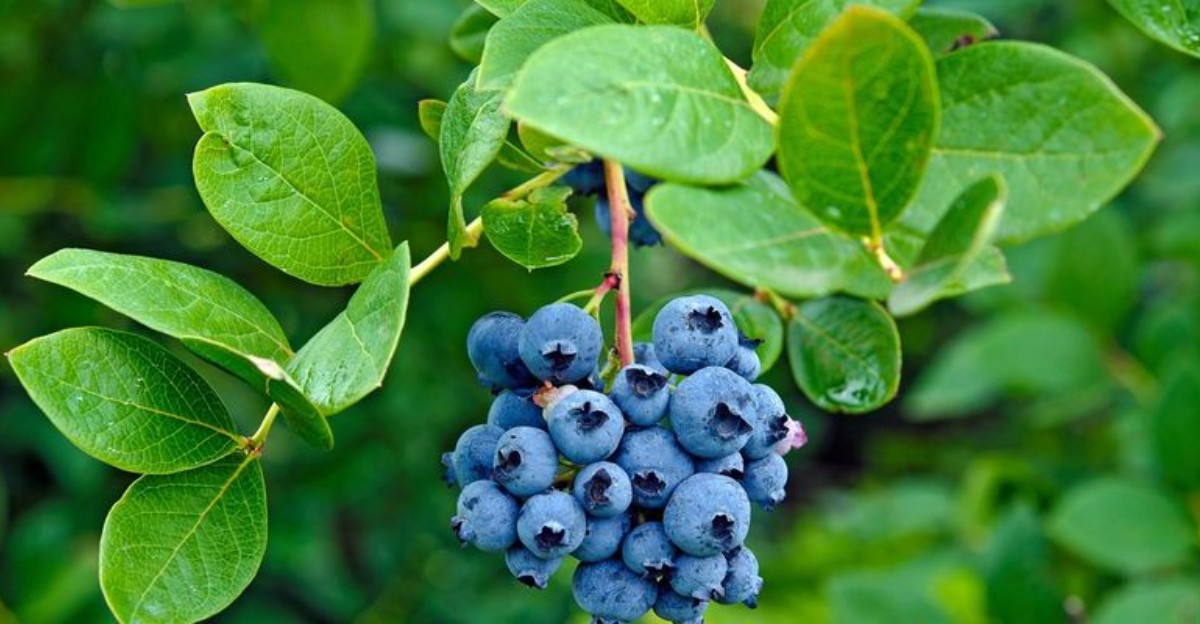
A shrub that grows wild in New Jersey bogs and Maine barrens now ripens in backyards near the Gulf. Even stranger, some newer types need almost no winter cold to set fruit.
I first heard about it from a seed swap table in Louisiana and laughed. Then I tasted a handful picked in early June, still warm from the sun, and stopped laughing.
Turns out the trick has little to do with luck. Plant breeders in Georgia, Florida, and Mississippi spent decades building bushes that shrug off humid summers and mild winters.
Louisiana growers have been quick to take advantage, and many now harvest from their own yards.
You build your success on a few choices made before the first hole gets dug. Get those right, and a fruit most people link with chilly northern farms could be dangling in blue clusters by your back porch in Louisiana next summer.
Those Blue Clusters Have a Southern Secret Behind Them
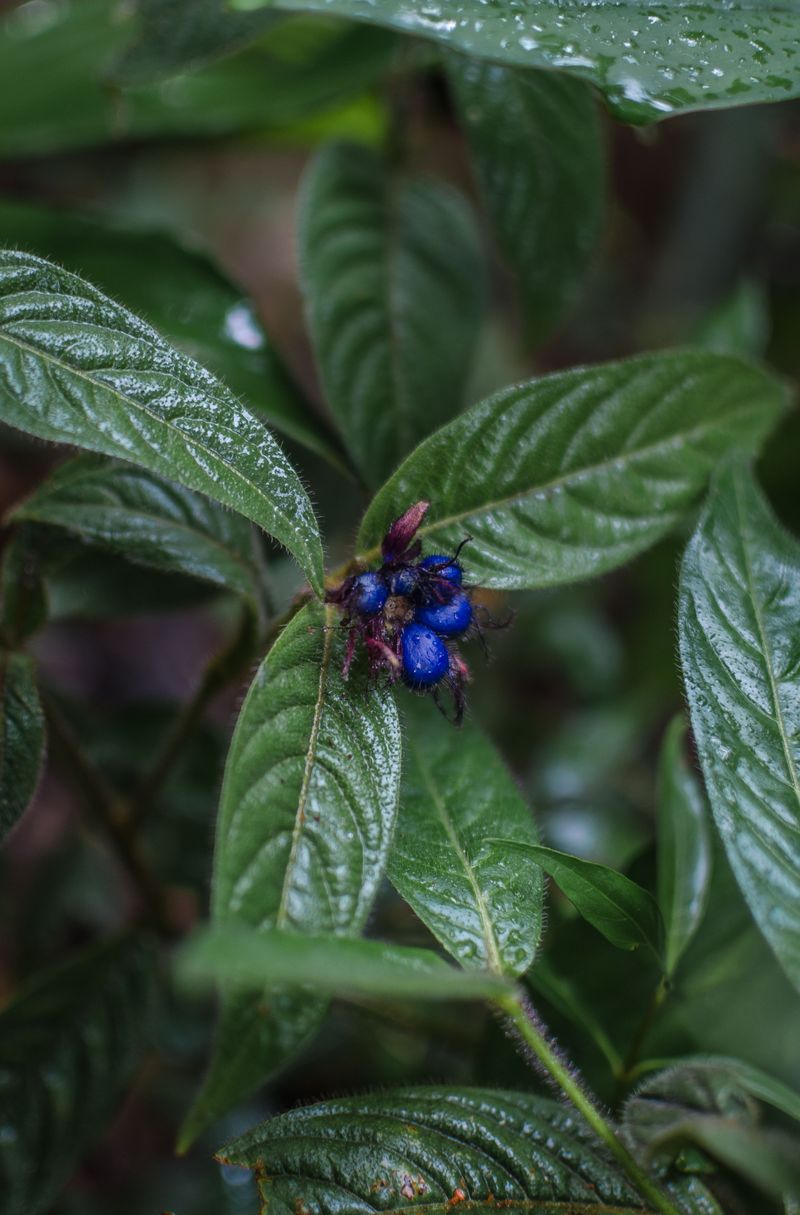
Blueberries carry a reputation as a northern crop, and for good reason. Classic highbush types grown in Michigan and Maine need 800 or more hours below 45 degrees each winter to bloom well.
Most of the Gulf South gets far fewer cold hours than that. North Louisiana might collect 600 to 900 chill hours in a typical winter, while the coast around New Orleans often sees 300 or less.
So how are people pulling it off? The answer comes from two groups of blueberries bred for warm places.
Rabbiteye blueberries are actually native to the Southeast, and southern highbush types are hybrids mixing northern genes with heat-loving southern relatives.
I love that the rabbiteye got its name from the pinkish blush its berries show before turning blue, a bit like a rabbit’s eye. It is a true Southern plant hiding inside a northern reputation.
The LSU AgCenter has recommended blueberries for home gardens for years, and many parishes have small pick-your-own farms. That means the idea is far from a wild experiment.
Calling it a cold-climate berry is only half the story. The right variety turns a long shot into a solid backyard project.
Pick Rabbiteye Blueberry Varieties Before Anything Else
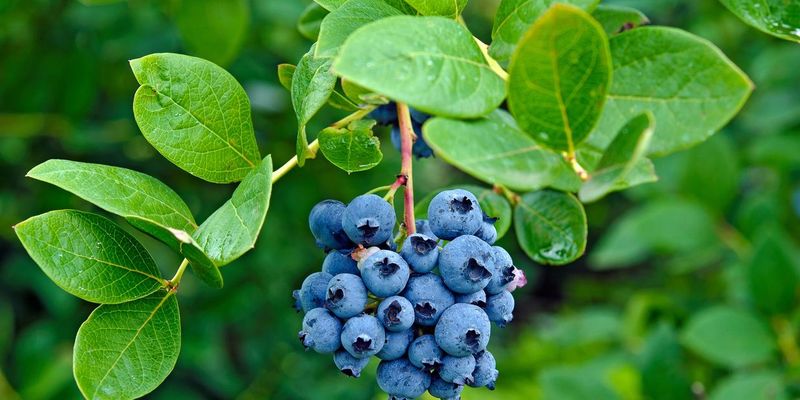
Choosing a variety matters more than any fertilizer or fancy tool. Get this step wrong and your bush may bloom poorly or flower too early and lose blossoms to a late frost.
Rabbiteyes are the workhorse choice across most of Louisiana. They usually need about 300 to 700 chill hours, tolerate heat well, and handle a range of soils better than other types.
Varieties often suggested by LSU AgCenter for Louisiana gardens include Climax, Premier, Tifblue, Brightwell, Powderblue, and Austin. Planting early, midseason, and late types together can stretch your picking from late May into July.
Southern highbush blueberries are worth a look along the Louisiana coast. They may need only 150 to 600 chill hours and often ripen earlier, but they tend to be fussier about soil and drainage.
Some nursery catalogs advertise very-low-chill types, though home gardeners report mixed yields with those. I would treat them as a fun bonus rather than the backbone of your patch.
Your Louisiana Garden Changes Every Week. Your Plan Should Too.
Gardening in Louisiana changes quickly throughout the season. Every Friday you’ll receive a simple weekly plan showing exactly what to plant, prune, fertilize, harvest, and protect so you never miss the right timing.
My tip is to ask your local parish extension office which varieties do best in your area. Their advice is free, and it comes from real trials in your region.
Acidic Soil Under Blueberry Roots Changes Everything
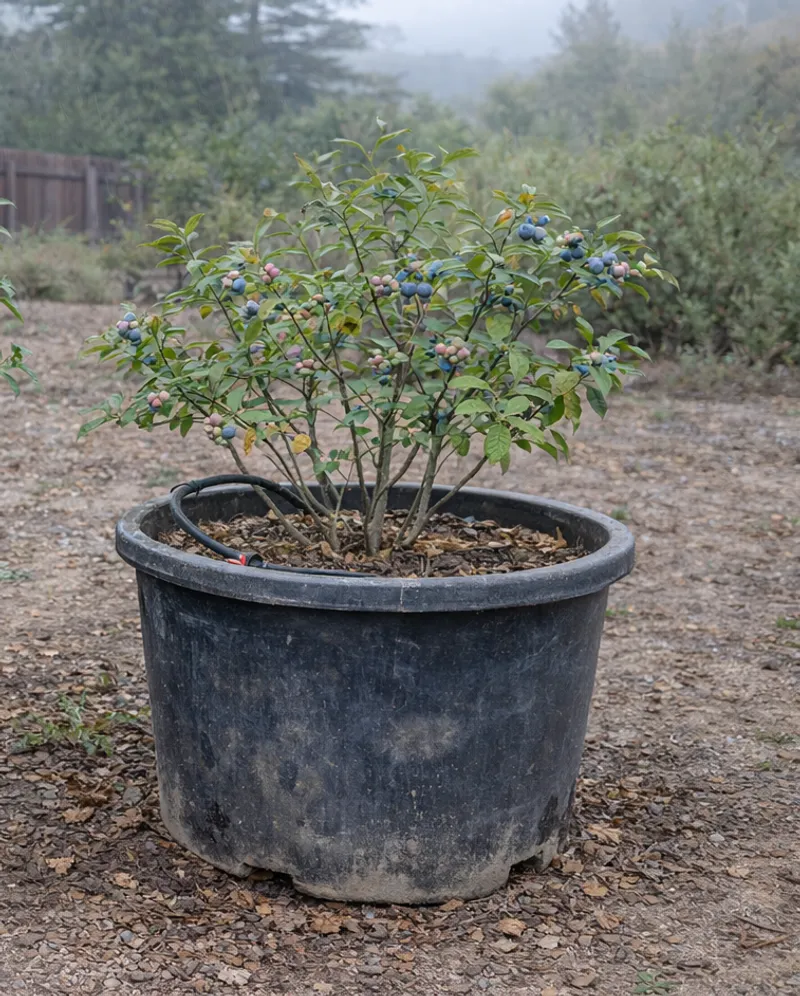
Here comes the part that trips up most beginners. Blueberries want soil with a pH between about 4.5 and 5.5, which is much more acidic than what tomatoes or roses prefer.
Plenty of yards in the state sit closer to neutral or even alkaline, especially in some river bottom soils. When pH runs too high, leaves often turn yellow between the veins because roots cannot take up iron well.
Start with a soil test from the LSU AgCenter lab. It costs little and tells you exactly where you stand before you spend money on amendments.
If you need to lower pH, mix elemental sulfur into the planting area several months ahead if possible. Sulfur works slowly, so patience pays off.
Adding plenty of organic matter like pine bark fines or peat moss also helps. Rabbiteyes in particular love loose, spongy soil with lots of bark mixed in.
I skipped the soil test on my first bush and regretted it within a season. The second time, I tested, amended, and watched the leaves stay a deep, happy green.
Raised Mounds Keep Blueberry Bushes Out of Soggy Clay
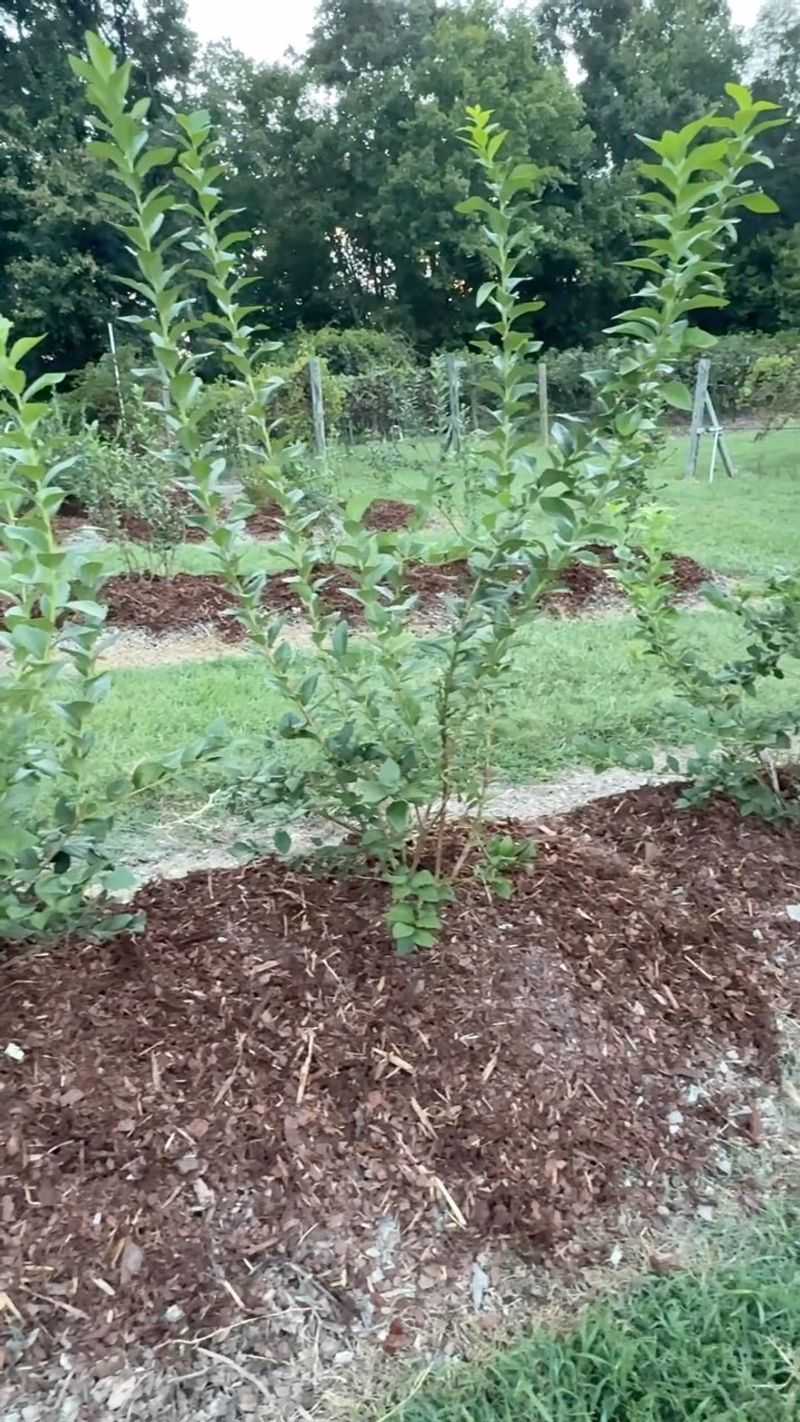
Wet feet are a quick way to lose a young blueberry plant. Their roots are fine and shallow, a lot like hair, and they struggle in heavy, waterlogged soil.
Much of the state gets over 55 inches of rain a year, and clay soils hold that water for days. Root rot problems often follow when drainage is poor.
Building a raised bed or mound fixes a lot of trouble. A mound about 8 to 12 inches high and 3 to 4 feet wide gives roots room to breathe.
Fill it with a blend of native soil and generous amounts of pine bark. Then top everything with 3 to 4 inches of pine straw or bark mulch.
Mulch does several jobs at once. It holds moisture during dry spells, keeps roots cooler in July, and slowly adds acidity as it breaks down.
You might be surprised how much better a bush grows when it sits just a little higher than the surrounding yard. I now treat the mound as part of the plant, not an optional extra.
Fall and Winter Are Prime Time for Planting Blueberry Shrubs
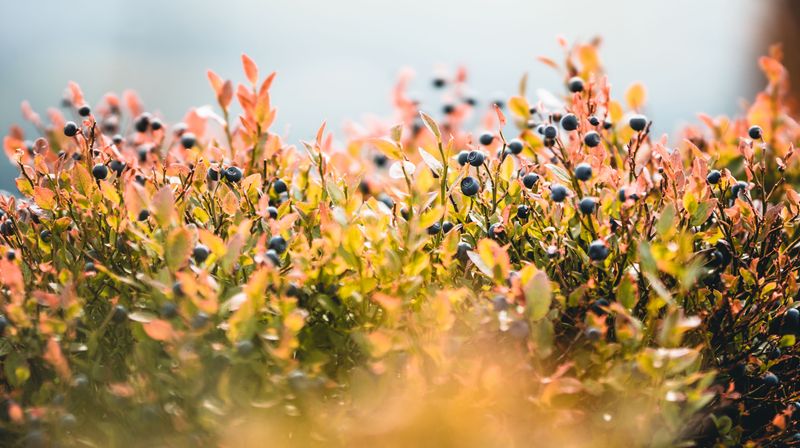
Timing your planting well gives your bushes a real head start. LSU AgCenter suggests planting blueberries from late fall through winter, roughly November through February.
Cool weather lets roots settle in while the top of the plant rests. By the time spring warmth arrives, the shrub is ready to push new growth instead of fighting summer heat with a tiny root system.
Pick a spot with at least six to eight hours of direct sun. More sun usually means more flowers and sweeter fruit.
Give rabbiteyes plenty of elbow room, about 5 to 6 feet between plants and 10 to 12 feet between rows. Southern highbush plants can sit a bit closer.
After planting, water deeply and keep the soil evenly moist. Drip irrigation or a soaker hose makes this easy, especially during spring and summer dry spells.
One more tip from extension experts surprised me. They often recommend picking off flowers the first year so the plant puts energy into roots and branches.
It feels painful, but the payoff comes in stronger harvests later.
Two Blueberry Varieties Bring in More Bees and More Berries
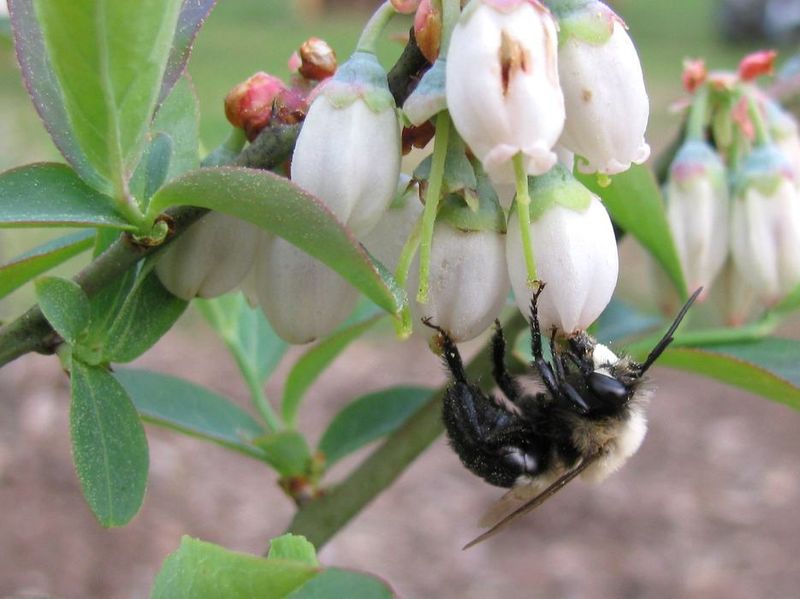
A lonely rabbiteye bush can leave you with a skimpy crop. Most rabbiteye varieties set much better fruit when pollen moves between two or more different varieties.
Plant at least two kinds that bloom around the same time. Climax and Premier often pair nicely, and Tifblue works well alongside Brightwell or Powderblue.
Bees do the heavy lifting here. The white, bell-shaped blossoms suit bumblebees and native southeastern blueberry bees, which can shake pollen loose with a fast buzzing motion.
Fun fact for curious gardeners: the southeastern blueberry bee is a native species that times its flights to early blueberry blooms. Seeing one bounce from flower to flower feels like watching a tiny expert at work.
Avoid spraying insecticides while bushes are in bloom. Planting spring wildflowers nearby can also bring more pollinators to your yard.
Better pollination does more than raise numbers. Well-pollinated berries often grow larger and ripen more evenly, which makes every handful taste better.
Two bushes might cost a bit more up front, yet the extra fruit quickly makes up the difference.
Winter Pruning and Bird Netting Protect Your Blueberry Harvest
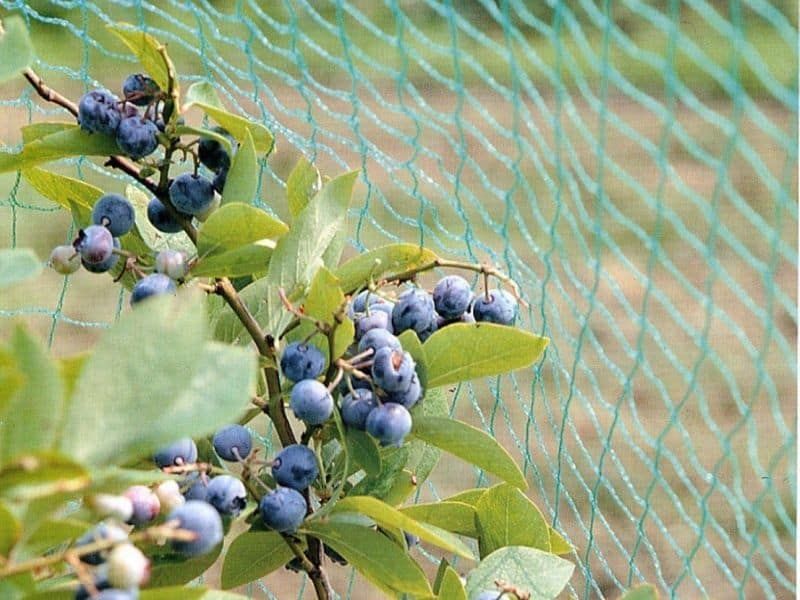
Mockingbirds and blue jays seem to know the exact day your berries ripen. I have lost an entire morning’s picking to a single determined mockingbird.
Bird netting is the most reliable fix. Drape it over a simple frame of PVC or wooden posts before berries start turning blue, then secure the edges so birds cannot slip underneath.
Pruning keeps bushes productive for years. For the first few seasons, only remove weak or crossing branches.
Once plants mature, take out one to three of the oldest, thickest canes each winter. That encourages vigorous young canes that bear better fruit.
Rabbiteyes can grow 10 feet tall or more if ignored. Cutting back the tallest canes keeps berries within easy reach and makes netting much simpler.
Feed lightly with a fertilizer made for acid-loving plants, like an azalea or camellia formula. Blueberry roots are sensitive, so small doses in early spring and again a few weeks later usually work better than one big helping.
A little winter effort keeps summer fun. Your future self, munching berries in the shade, will thank you.
Dorman Red Raspberries Might Be Your Next Backyard Challenge
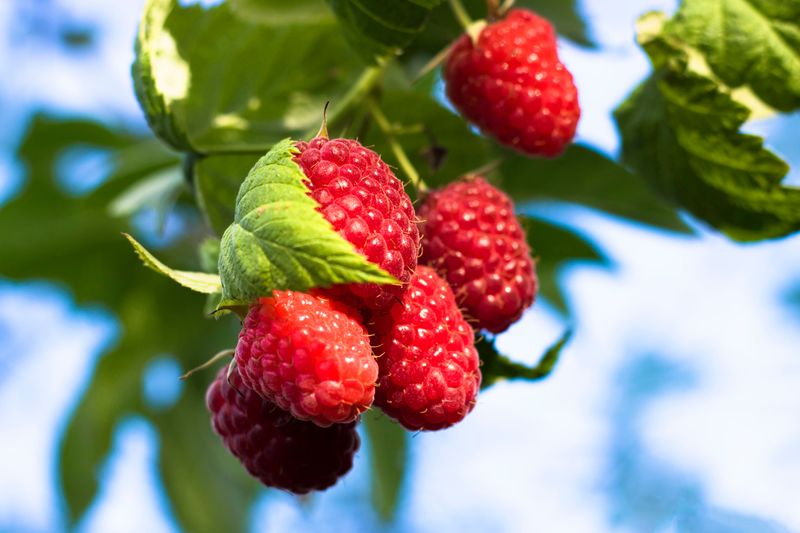
Once blueberries are thriving, some gardeners get bold and eye raspberries. Honestly, that step is much harder in our heat and humidity.
Most raspberries need cold winters and mild summers. LSU AgCenter has long pointed to Dorman Red as one of the few varieties that performs reasonably well in the state, though fruit quality is modest compared with northern berries.
If you want to try, give canes morning sun and afternoon shade. Good drainage, a sturdy trellis, and steady watering also help them handle summer stress.
Blackberries are a friendlier backup plan. Thornless types bred in Arkansas, like Navaho, Ouachita, and Natchez, grow very well across the region.
My honest takeaway is to start with blueberries and let them build your confidence. They are long-lived, often producing for 20 years or more with good care.
Plant two or three rabbiteyes this winter, test your soil, and mulch generously. Next summer, you may find yourself standing in the yard with purple fingers, wondering why you waited so long to grow a northern favorite in Southern soil.