Small Brown Bags On Georgia Evergreens Could Mean Trouble Next Spring
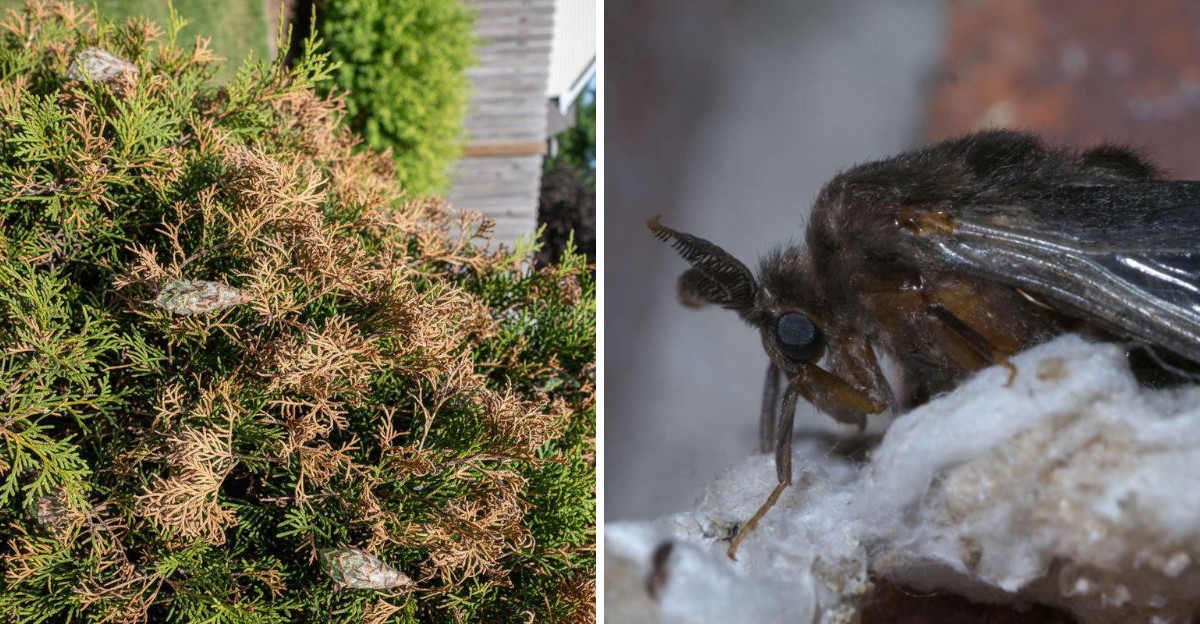
One tiny brown pouch hanging on a shrub can hold hundreds of eggs, sometimes more than a thousand. That little bundle looks like a harmless pinecone, and that is exactly the trick.
I walked past these things for years before I learned what they were. They hang from junipers, arborvitae, and Leyland cypress all across Georgia.
Most folks never give them a second look until patches of green suddenly turn brown in summer.
I find the whole setup a little sneaky and a little brilliant. The pouch is built from silk and stitched with bits of the very plant it sits on.
Wind, rain, and cold barely bother what is tucked inside.
You have a real chance to get ahead of it right now, while the branches are quiet. So how many of those odd little cones are hanging in your yard today?
1. Those Tiny Cone-Shaped Bags On Your Juniper Aren’t Pinecones
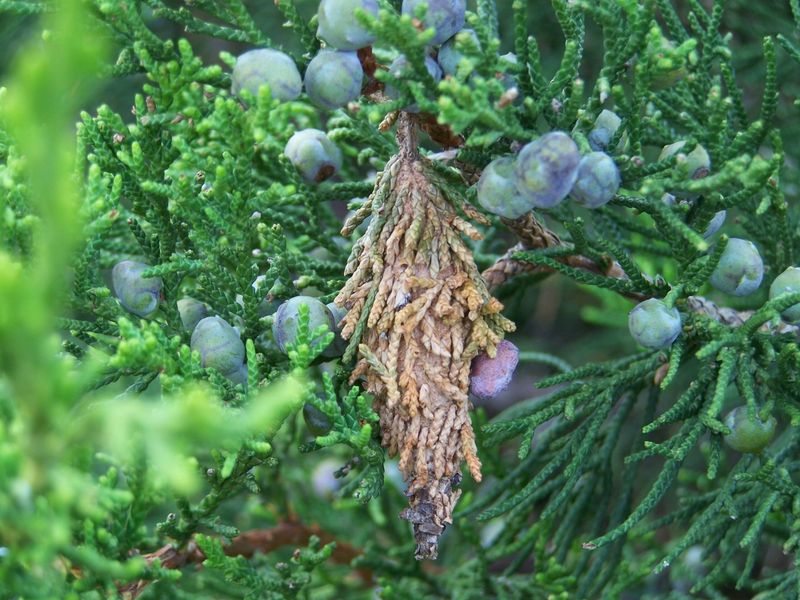
Ask most people what is dangling from their juniper, and they will shrug and say pinecones. I said the same thing once, and I was wrong.
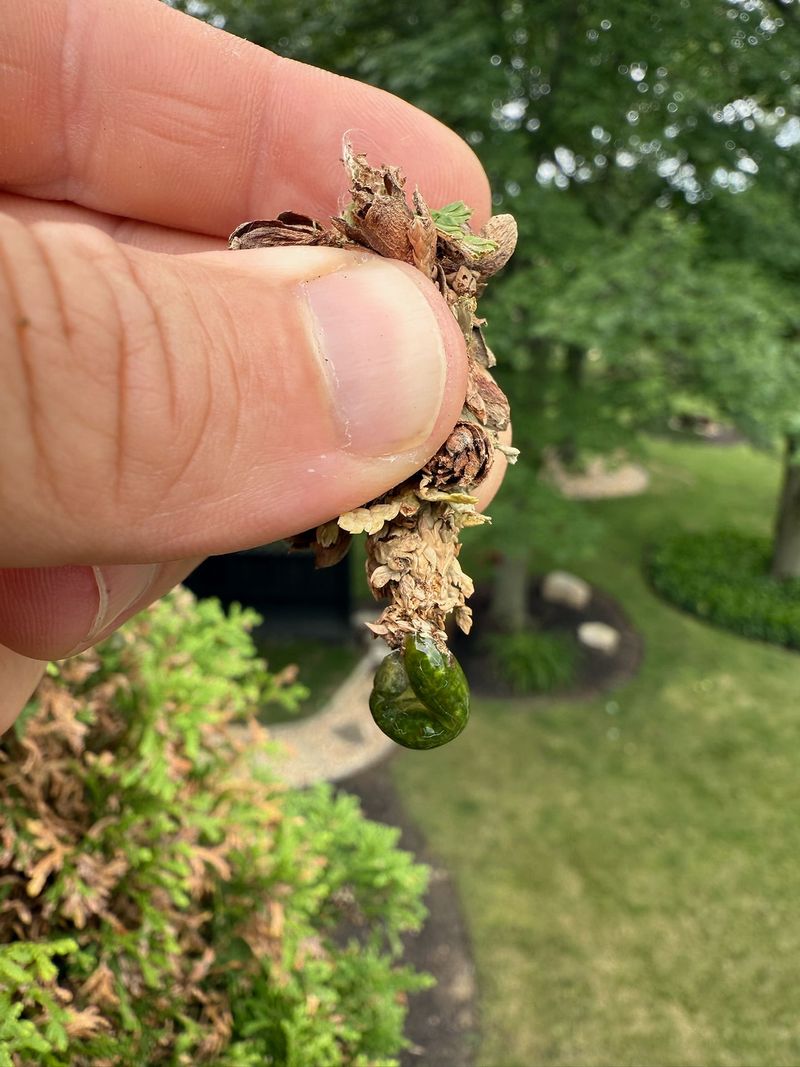
Those 1.5 to 2 inch spindle-shaped pouches are bagworm cases, built by the caterpillar of a small moth called Thyridopteryx ephemeraeformis.
Each case is woven from tough silk. The caterpillar glues bits of needles, leaves, and twigs onto the outside as it grows.
That disguise lets it blend in with the plant it feeds on, so a bag on a cedar looks cedar-ish, and one on arborvitae looks like arborvitae.
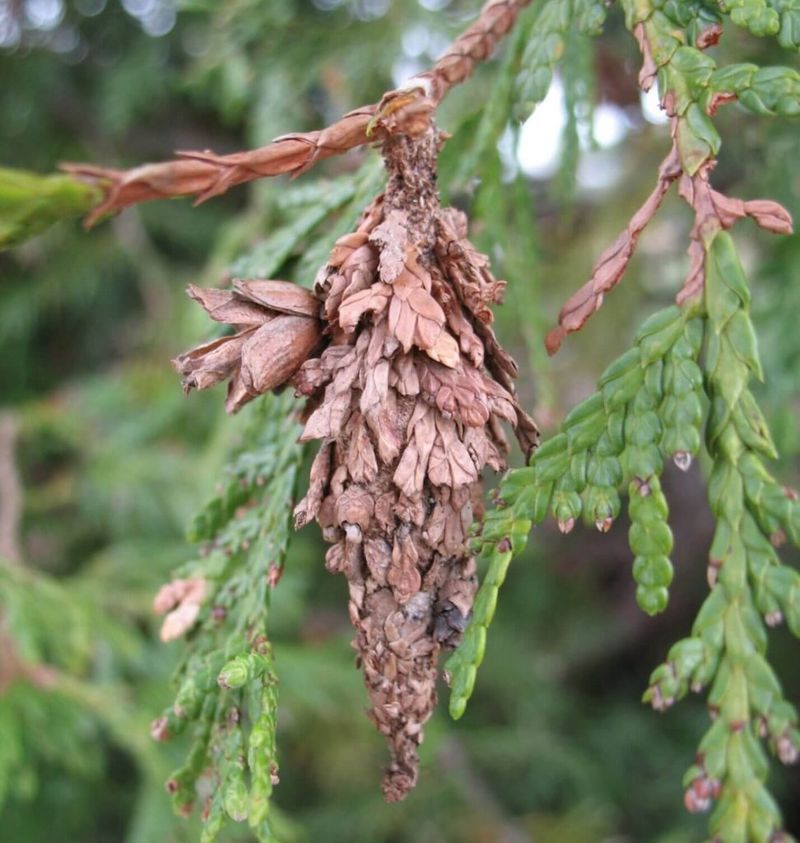
A quick test helps you tell them apart from real cones. Pinecones grow from the branch tip and feel woody and layered.
Bagworm bags hang from a silk thread wrapped tightly around a twig, and they feel papery and soft when squeezed.
Right now, in fall and winter, most of those bags are not empty. Female bagworms never leave their cases.
They lay their eggs inside and stay put, turning that pouch into a cozy nursery for next year.
Spotting one bag means it is time to look closer. Where there is one, there are usually more.
2. Every Bag Is Packed With Eggs Waiting For Warm May Weather
Here is a number that made me grab my pruners fast. A single female bagworm can leave anywhere from several hundred to over a thousand eggs inside her bag.
That one pouch is basically a loaded seed packet for caterpillars.
Those eggs sit through the whole winter, protected from cold and rain. Once temperatures warm up in late spring, usually around May into early June in Georgia, they hatch.
South Georgia often sees activity a bit earlier than the mountains up north.
The newborn larvae are tiny, about the size of a pencil dot. They crawl out of the old bag and spin their own little cases right away.
Some even let out a silk thread and ride the breeze to a nearby shrub, which is how bagworms spread through a neighborhood.
Bagworms have just one generation per year. That sounds like a relief, and it is, because it gives you a clear target.
Every egg-filled bag you remove before spring is one less group of caterpillars hatching on your trees.
So the trouble the title warns about is not happening now. It is sleeping, and you can act before it wakes up.
3. Hand-Picking Bags Off Arborvitae Is Your Best Winter Move
Grab a bucket, some gloves, and a pair of small snips. Honestly, that is the whole toolkit for the most effective bagworm control on small trees and shrubs.
Removing bags by hand in fall, winter, or early spring stops eggs before they ever hatch.
Do not just pull the bag and toss it on the ground. Eggs can still hatch from fallen bags, and the larvae will climb right back up.
Drop each one into a bucket of soapy water and let it soak, or seal the bags in a trash bag.
Cut the silk band, too. Bagworms wrap that silk tightly around twigs, and over time it can girdle the branch and choke off its growth.
A clean snip next to the bag takes care of both problems at once.
I like to make this a slow afternoon project. Walk around each shrub, look high and low, and check inside the branches where bags hide best.
Arborvitae and Leyland cypress deserve extra attention because they suffer badly from feeding. Finish before mid-April, and you are well ahead of hatch time.
4. Spraying Leyland Cypress Works Best When Caterpillars Are Tiny
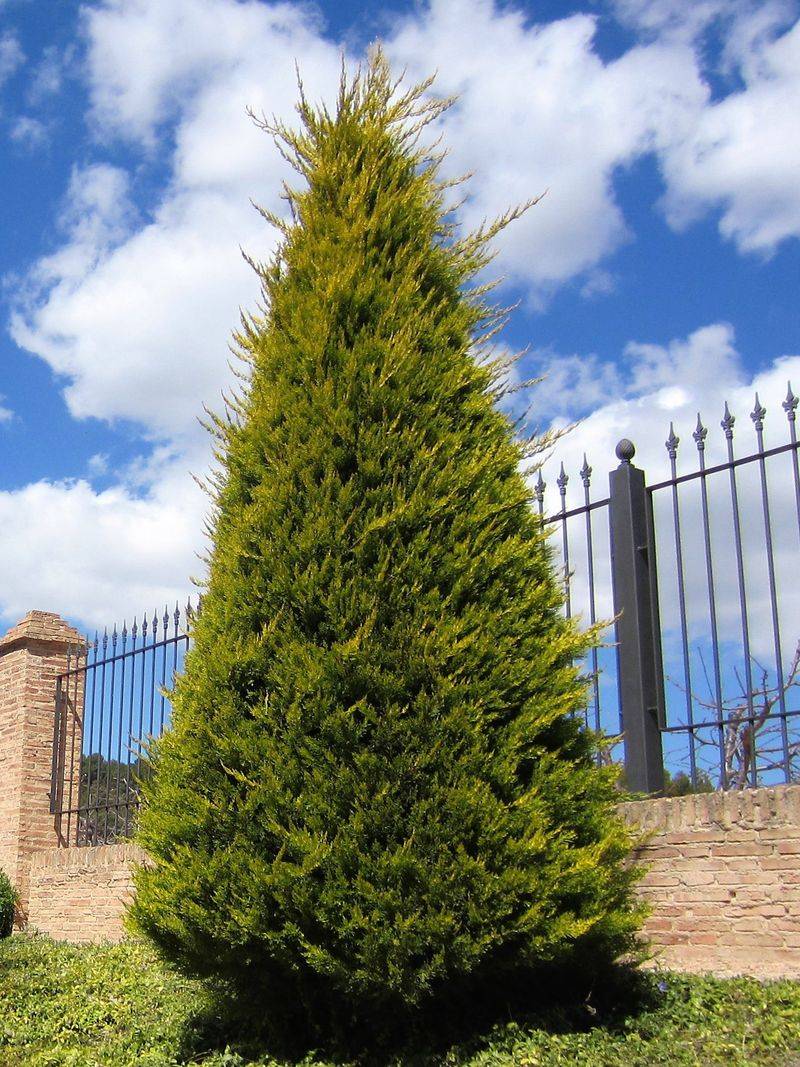
Timing beats strength every single time with bagworm sprays. If you have tall trees or too many bags to pick, a spray can help, but only during a short window.
The sweet spot in Georgia usually lands in May and June. The eggs have hatched, the larvae are small, and they are munching away out in the open.
Look for tiny bags, about an eighth of an inch long, moving on the foliage.
Bacillus thuringiensis, often sold as Bt, is a favorite choice. It is a natural bacterium that targets caterpillars and is easier on bees, ladybugs, and other helpful insects.
Spinosad is another option many extension specialists mention.
Both products need to be eaten to work. That means good coverage on the foliage where larvae are feeding.
Always read and follow the label directions.
Wait too long and sprays lose their punch. By mid to late August, bagworms seal their bags and pupate, and the insecticide simply cannot reach them.
For very tall Leyland cypress or pines, calling a licensed arborist is a smart, safe idea. They have the equipment to reach the top.
5. Brown Patches On Evergreens Often Show Up Too Late
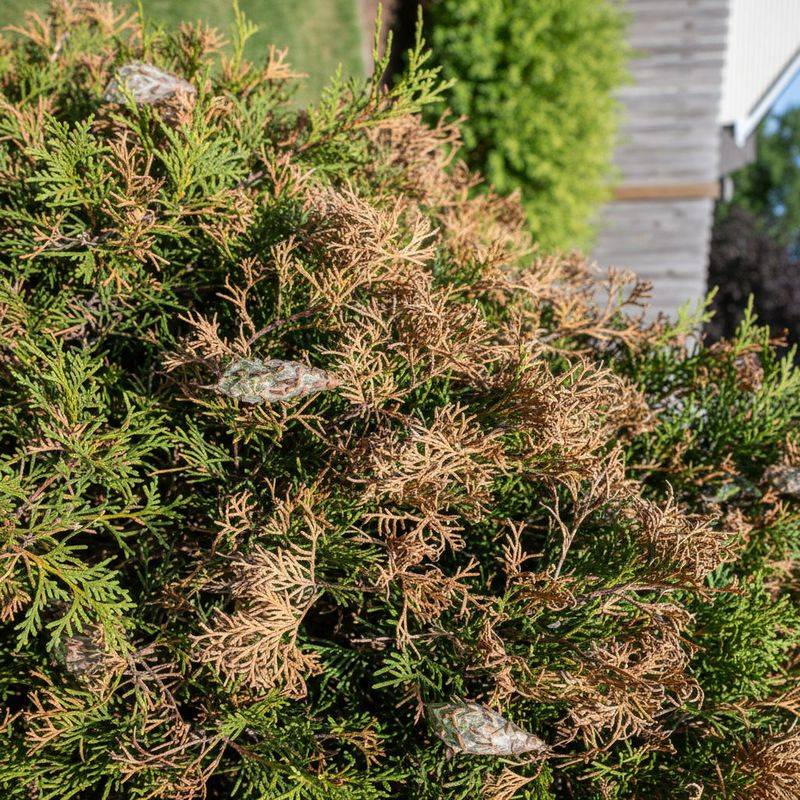
Many Georgia gardeners first notice bagworms in July. A section of hedge suddenly looks thin and brown, and only then do they spot dozens of bags clinging to it.
The reason is simple. Young larvae are so small that early feeding barely shows.
As they grow bigger through summer, their appetite grows too, and the damage speeds up quickly.
Look for these clues as the season moves along:
Thinning foliage near branch tips, brown patches spreading across one side, and bags growing larger week by week. On broadleaf plants, you may see small holes chewed into leaves.
Brown needles do not always mean bagworms, though. Drought stress, root problems, spider mites, and fungal diseases can cause similar browning in evergreens.
Checking for the actual bags is the best way to confirm.
A quick monthly walk around your shrubs from May through August makes a big difference. Catching small bags early means far less work and far less harm to your plants.
Your local UGA Extension office can help identify anything puzzling.
6. Why Evergreens Like Arborvitae Struggle To Bounce Back
Oak trees have a neat trick. When caterpillars strip their leaves, they can often push out a fresh set the same season.
Most evergreens cannot pull that off.
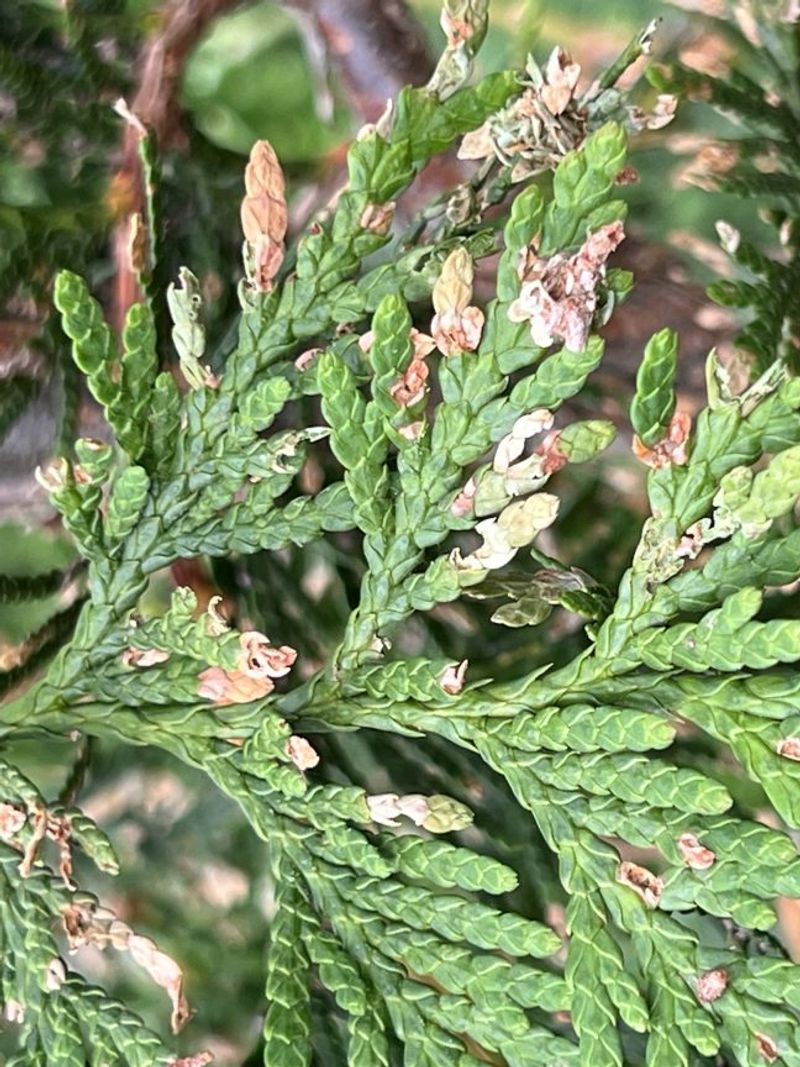
Junipers, arborvitae, and many conifers rarely replace needles on bare stems. Once a branch is chewed bare, it may stay bare for good.
That is why bagworm feeding hits evergreens much harder than shade trees.
Extension experts note that heavy defoliation, especially losing most of the foliage, can push a plant into serious decline. Young trees and already stressed plants are most at risk.
Even milder damage leaves gaps in hedges and privacy screens that take years to fill.
Repeated attacks add up, too. A shrub weakened one summer becomes an easier target for drought, diseases, and other pests the next.
I find this the most convincing reason to act early. A few minutes snipping bags now can save a screen that took ten years to grow.
Waiting until summer often means trimming away brown sections that will not return.
7. Winged Male Bagworm Moths Are The Only Ones That Fly
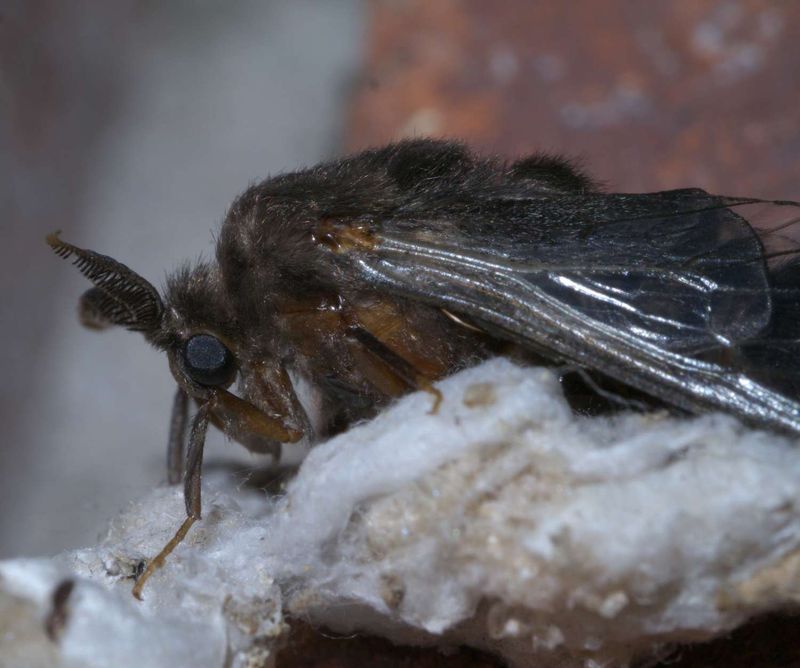
Fun fact time. Adult female bagworms have no wings, no working legs, and no eyes worth mentioning.
They spend their whole lives inside the bag.
The males get the more exciting ending. In late summer to early fall, they emerge as small, fuzzy, dark moths with clear wings.
They fly around searching for females, guided by special scents the females release.
After mating, the female lays her eggs inside her case and then perishes there. The case becomes the winter shelter you see hanging on your shrubs today.
This odd lifestyle explains how bagworms spread so slowly on their own. Since females cannot fly, new infestations usually come from larvae drifting on silk threads or from infested nursery plants brought home.
Inspect new evergreens before planting them. A quick look for small bags at the garden center can keep a problem from moving into your yard.
It also means a single shrub can build a big population over a few years. Those bags just keep stacking up in one place.
8. Healthy Watered Junipers Hold Up Better Against Bagworms
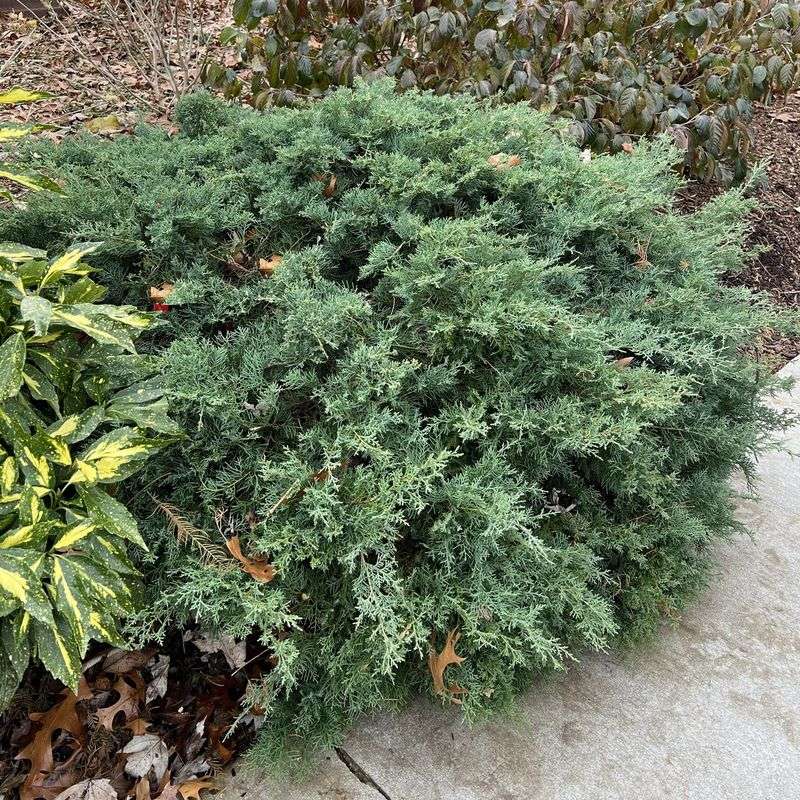
Strong plants handle pests better, plain and simple. A well-watered, well-placed juniper can shrug off light feeding that might cripple a stressed one.
Georgia summers can swing from soggy to bone dry fast. During dry spells, give evergreens a deep soak about once a week instead of light daily sprinkles.
A soaker hose and a few inches of mulch help keep roots moist and cool.
Avoid nicking trunks with mowers and string trimmers. Those wounds stress plants and open the door to other troubles.
Planting choices matter, too. Mixing different shrubs instead of one long row of arborvitae or Leyland cypress makes it harder for pests to sweep through a whole screen.
Native options like wax myrtle or American holly can add variety.
Birds lend a hand as well. Some songbirds pick at bagworms, and tiny parasitic wasps help keep numbers down naturally.
Your plan for the year is easy. Snip bags this winter, watch closely in May, spray small larvae if needed, and keep your evergreens healthy.
Next spring can stay green.