Bright Orange Jelly Is Showing Up On Indiana Logs After Rain
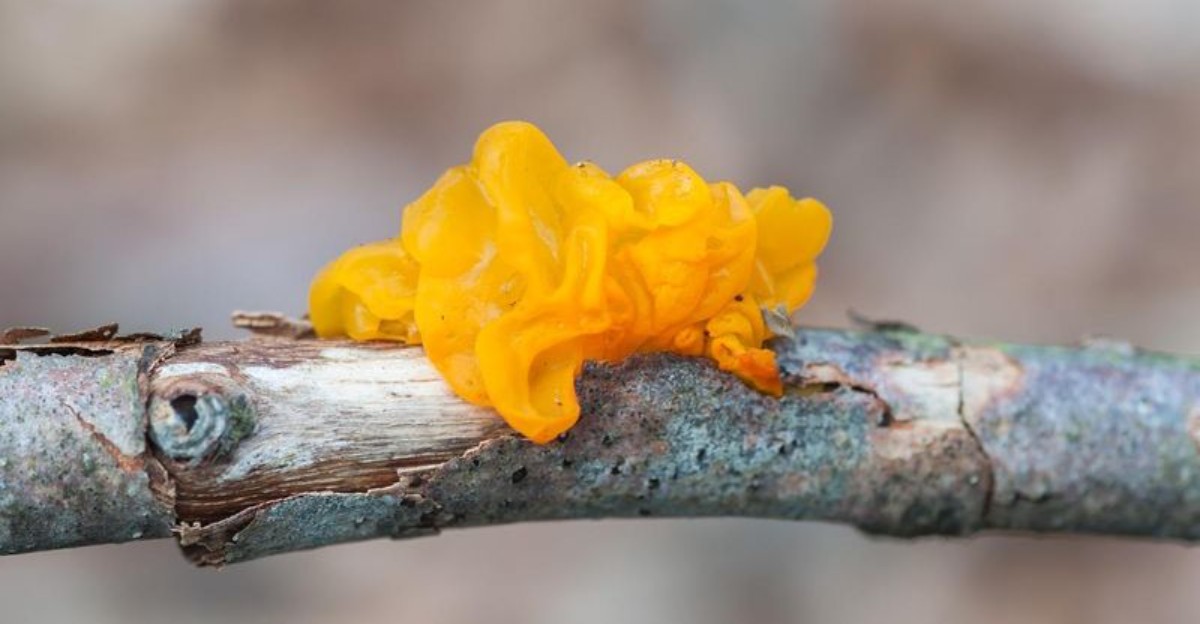
A blob that looks like spilled orange gelatin can shrink to a hard crust in dry weather, then swell back to life after one good rain. I still remember poking one on a fallen oak branch and feeling it wobble like dessert.
Across Indiana, these glossy lumps pop up on logs, stumps, and woodpiles once the clouds roll through. They seem to appear overnight, and that sudden arrival has puzzled people for centuries. Old European stories even blamed them on mischief and magic.
I love how something so bright can hide in plain sight for weeks. You walk past the same log every day and see nothing special. Then a soaking storm passes, and the wood suddenly glows like a traffic cone.
So what exactly is clinging to that bark, and should you worry about it near your garden, kids, or curious dog?
That Glowing Orange Blob On Your Woodpile Has A Spooky Nickname
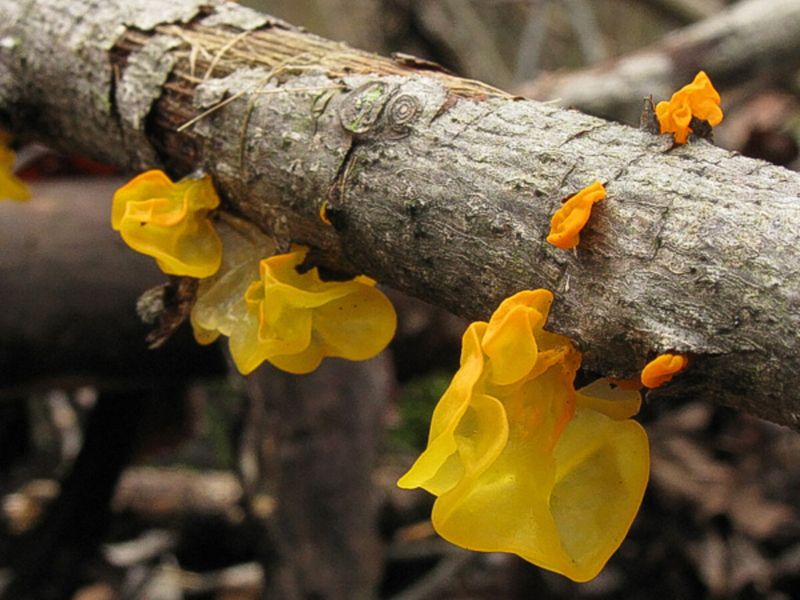
Folks have called it witch’s butter for hundreds of years, and once you see it, the name makes sense. The wobbly orange mass on your hardwood log is most likely a jelly fungus named Tremella mesenterica.
When wet, it forms wavy folds and lobes that look a bit like a tiny brain or a pile of glossy ribbons. Its color runs from lemon yellow to deep orange, and it often shines as if someone brushed it with clear glaze. Most clumps are about one to four inches across.
You can find it on fallen branches, stumps, and firewood stacks in yards, parks, and woods. It shows up in many temperate places around the world, so Hoosier sightings are normal rather than strange. Mushroom guides list it as common in the Midwest.
Gently touching it is fine, and I recommend doing so at least once. The texture feels slippery, rubbery, and cool, a lot like a gummy candy left in the rain. Snap a photo before you poke, though, because handling can smear the folds.
A quick picture also helps later if you want to compare it with look-alikes or share it with a local mushroom club for a confirmed ID.
Rain Turns A Dry Crusty Fungus Into Wobbly Jelly Overnight
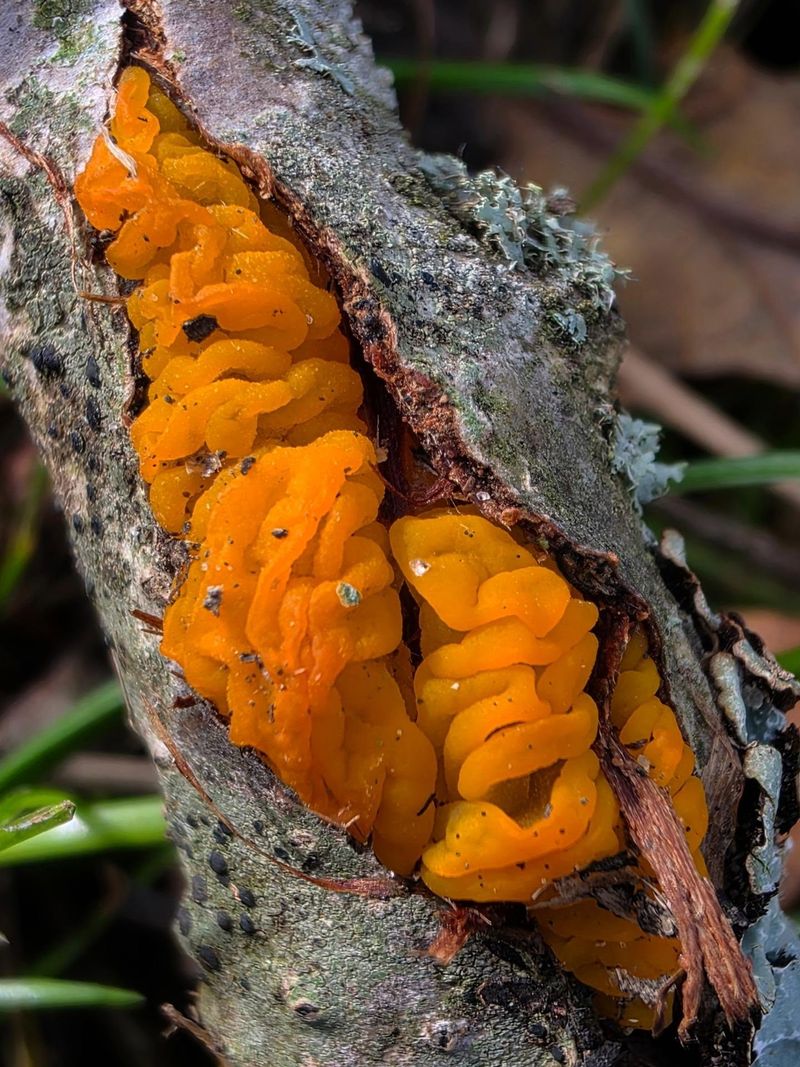
Sometimes the fungus was there all along. During dry spells, witch’s butter shrivels into a thin, hard, dark orange crust that blends right into the bark.
Once rain soaks the wood, the dried tissue soaks up water and swells back into its jiggly shape within hours. That explains why it seems to appear out of nowhere after a storm. A stretch of humid, drizzly days can keep it plump for quite a while.
The jelly form matters for the fungus. Wet tissue lets it make and release spores, which drift off to start new growth on other wood. When things dry out again, it simply pauses and waits.
In Indiana, you can spot it during much of the year, especially in cool, damp months of spring, fall, and even mild winter thaws. Summer finds are possible after heavy rain too. Cold snaps rarely stop it for long.
Want to see the trick yourself? Find a dried, crusty patch on a fallen branch and mist it with a spray bottle. Check back after an hour or two, and you may watch it puff up like a sponge in a bowl of water.
Your Fallen Oak Branch Is Hiding A Second Fungus Inside
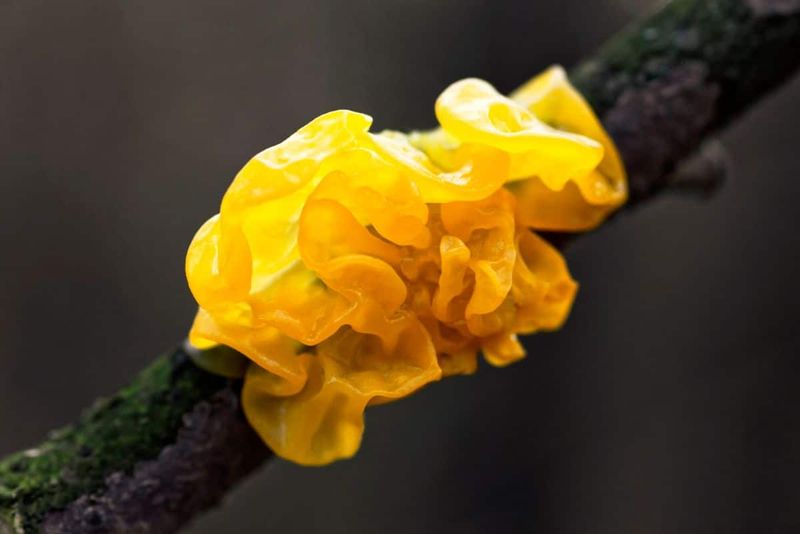
Plenty of people assume the orange jelly is eating the log. Surprisingly, it is not eating the wood at all.
Tremella mesenterica is actually a parasite of other fungi. It feeds on crust fungi in the Peniophora group, which grow flat and pale on dead hardwood branches. Those crust fungi break down the wood, and the witch’s butter taps into them like a sneaky houseguest raiding the fridge.
That means where you find the bright jelly, you can usually find a plainer crust fungus nearby. Look closely at the bark around the orange clumps. You may notice thin grayish, pinkish, or tan patches spreading across the surface.
Witch’s butter favors hardwoods such as oak, along with other broadleaf trees. Fallen limbs with the bark still attached are prime spots. Freshly cut lumber or treated wood rarely hosts it, since the crust fungi need natural, aging wood.
For gardeners, this is a fun detective clue. Spotting the orange jelly tells you a whole hidden team of decomposers is already working inside that branch. It also means the wood has been sitting outdoors long enough to begin breaking down naturally.
Orange Jelly On A Pine Log Could Be A Different Species
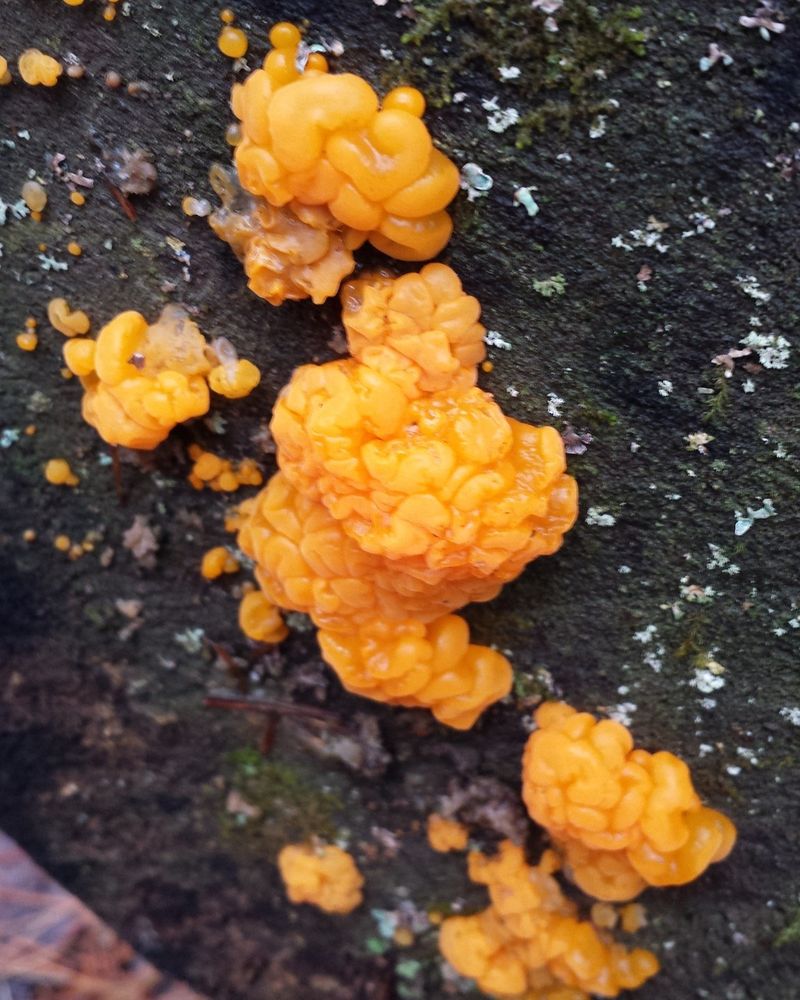
Check the wood type before you name your find. If the orange jelly is growing on pine, spruce, or another conifer, you may be looking at a cousin instead.
Dacrymyces chrysospermus, sometimes called orange jelly spot or orange witch’s butter, grows on dead conifer wood. It tends to form smaller, cushion-shaped or wavy clusters. A handy clue is the pale, whitish base where it attaches to the wood, which you can see if you gently lift one edge.
Tremella mesenterica, on the other hand, mostly shows up on hardwoods. Its folds are often larger and more brain-like, and it lacks that obvious white attachment point. Color alone will not settle the question, since both can look nearly identical.
Here is a simple checklist I use in the field: Is the log a conifer or a broadleaf tree? Does the clump have a white base? Is it a big, folded mass or small rounded blobs?
Answering those three questions gets most backyard finds sorted quickly. If you still feel unsure, post clear photos showing the wood and the base to an online mushroom group or a local club for help.
Kids And Dogs Sniffing The Jelly Fungus Usually Isn’t A Worry
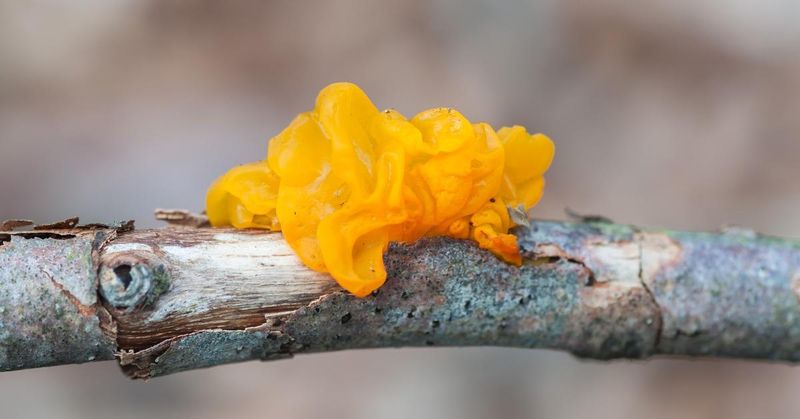
Parents and pet owners often ask the same thing first. Both witch’s butter and orange jelly spot are generally considered non-toxic and are not known to cause harm.
That said, I treat every wild mushroom with caution. If a child or dog chews on any wild fungus, call your doctor, veterinarian, or poison control for advice, even before symptoms appear. Mixed patches of mushrooms can grow on the same log, and some other species can cause real trouble.
Some sources describe witch’s butter as edible but bland, valued more for texture than flavor. Related jelly fungi do appear in certain Asian soups and desserts. Still, I would not recommend eating any wild fungus unless an expert confirms the identity in person.
Touching it with bare hands is fine for most people. Wash up afterward, the same way you would after handling soil or mulch. Gloves help if you have sensitive skin.
A simple rule works well in busy yards. Let kids look, touch, and photograph, but teach them that nothing from the woodpile goes in their mouths. Keeping that habit early protects them from riskier mushrooms later.
Old Legends Blamed Witch’s Butter On Doorsteps For Curses
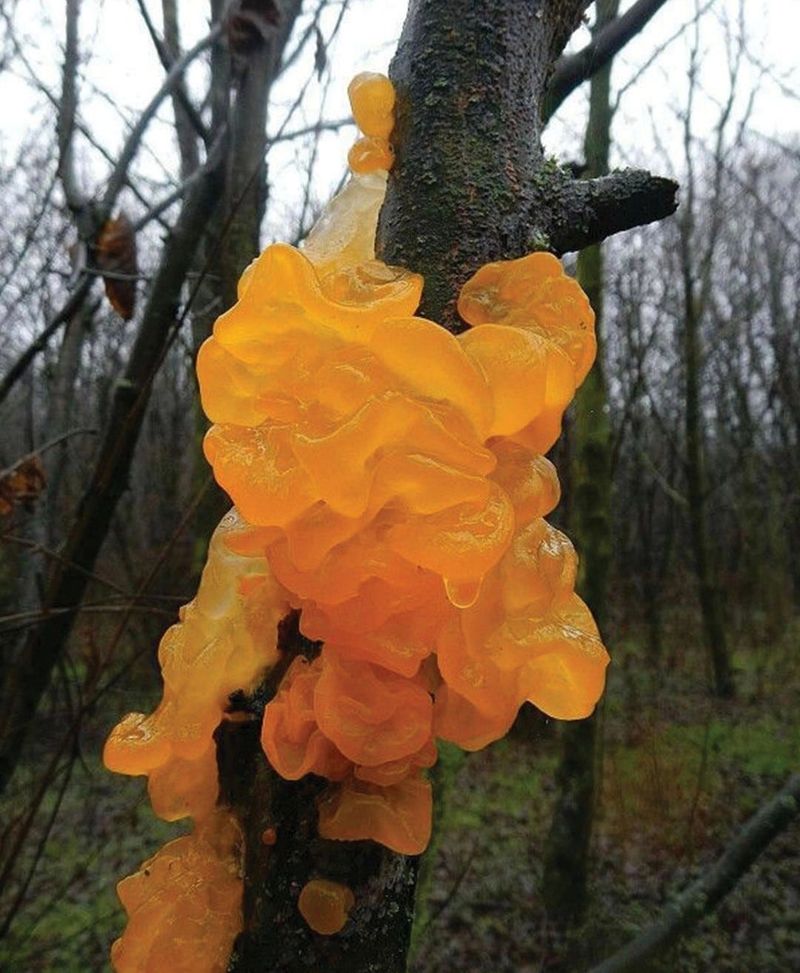
Long before field guides, folks in parts of Europe had a spooky answer for these glowing blobs. They believed witch’s butter showed up because a witch had cast a spell nearby.
According to old Scandinavian and other European tales, finding the fungus on your gate or doorway meant someone had cursed the household. Some stories linked it to milk going sour or butter refusing to churn. The sudden overnight appearance after rain made it seem even more magical.
Folk remedies were creative. In some traditions, people pierced the jelly with pins or sharp objects to break the curse. Of course, the fungus usually shrank in dry weather and returned with the next shower, which probably kept the legends going strong.
Today we know the real cause is far less dramatic. Moisture and a hidden crust fungus explain everything, no cauldron required.
Still, I think these stories add charm to a soggy morning walk. Sharing the legend with kids or grandkids turns a damp log into a storytelling spot. It is a fun way to spark interest in fungi, science, and history all at once.
Leave That Jelly-Covered Log In Your Garden Bed
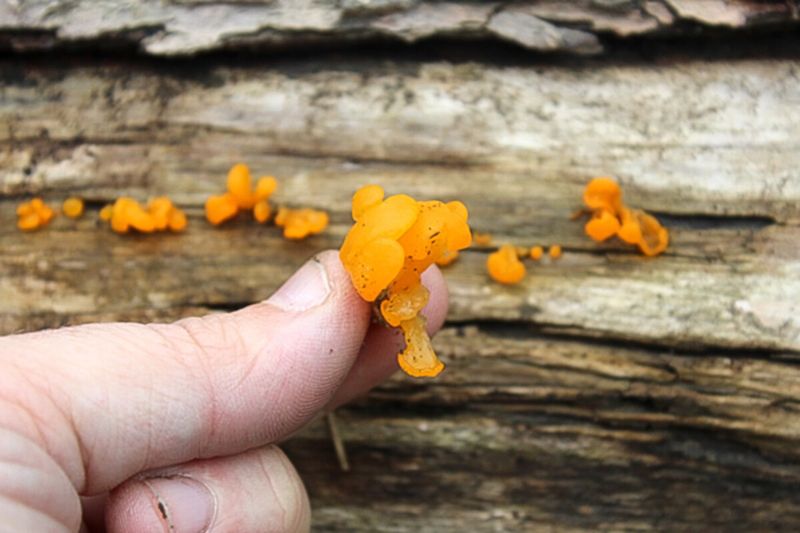
My advice is simple: let it be. Orange jelly on a log is a sign that natural recycling is happening right in your yard.
The fungi working in that wood help break down branches and return nutrients to the soil. Decaying logs also hold moisture and offer shelter to beetles, salamanders, millipedes, and other small creatures that birds love to snack on. Many Indiana gardeners use old logs as borders in shade beds for exactly this reason.
The jelly fungus is not attacking your living trees. It grows on dead wood, so healthy shrubs and maples nearby are not at risk from it. If a living tree shows fungus growth, that is a separate concern worth asking an arborist about.
Want to remove it anyway? Simply lift the branch out or scrape the clump off with a stick. No spray or chemical treatment is needed, and the fungus causes no damage to decks or patios.
Next time rain soaks your yard, grab a camera and check your logs. You might find a whole little world glowing orange, ready to teach you something new about your garden.