11 Desert Plants That Turn A Bare Arizona Block Wall Into Something Worth Looking At
A sunny block wall in Phoenix can bounce enough heat back to scorch a tomato plant within one week. I learned that the hard way one July, staring at crispy leaves that looked like burnt toast.
West-facing walls can push nearby temperatures 10 to 15 degrees higher than the rest of the yard. Soggy roots during monsoon storms often cause more trouble than the heat itself, which surprises plenty of new gardeners.
I love how the right plants turn plain Arizona concrete into a busy hangout for hummingbirds and lizards. Dense native plantings also invite roadrunners, which happily snack on insects and the occasional scorpion near your patio.
Every pick on this list handles brutal sun and stingy watering while still looking good in an Arizona October. So which of these tough beauties will finally make your neighbors slow down when they walk past?
1. Bougainvillea
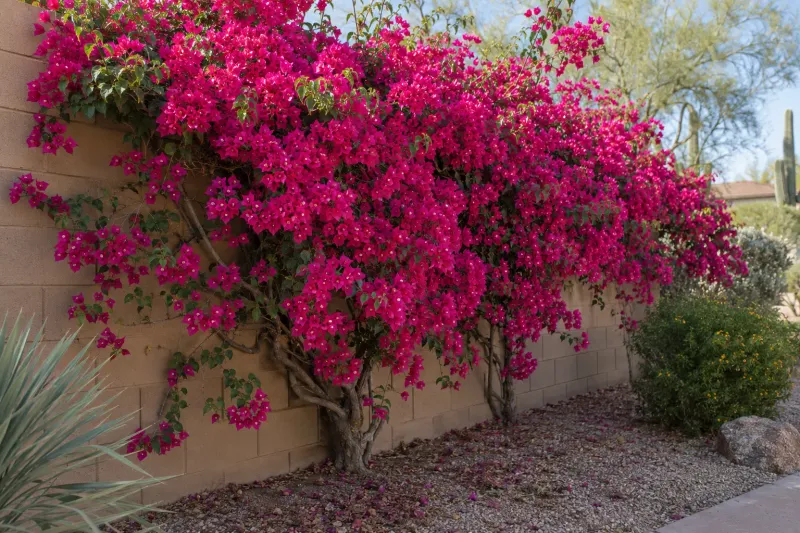
Few sights beat a wall dripping with magenta bougainvillea while the thermometer creeps past one hundred degrees. Those bright colors come from papery bracts, while the real flowers are tiny white tubes tucked inside.
I have to admit, this vine seems to bloom harder the more reflected heat you throw at it. A west or south wall gives it the blazing conditions it craves, and the show often lasts for months.
Water deeply every ten to fourteen days once roots settle, then let the soil dry between soaks. Slightly thirsty plants usually produce richer color, while constant watering pushes leafy growth with fewer bracts.
October is a smart time to plant, since roots can spread before next summer arrives with full force. Frost can still nip tender stems in winter, so keep an old sheet handy when cold nights are forecast.
Mature vines get surprisingly heavy, especially after rain, so sturdy anchors or a strong trellis are worth installing early. The thorns are sharp, which makes this a better choice away from walkways where kids play.
2. Mexican Fence Post Cactus
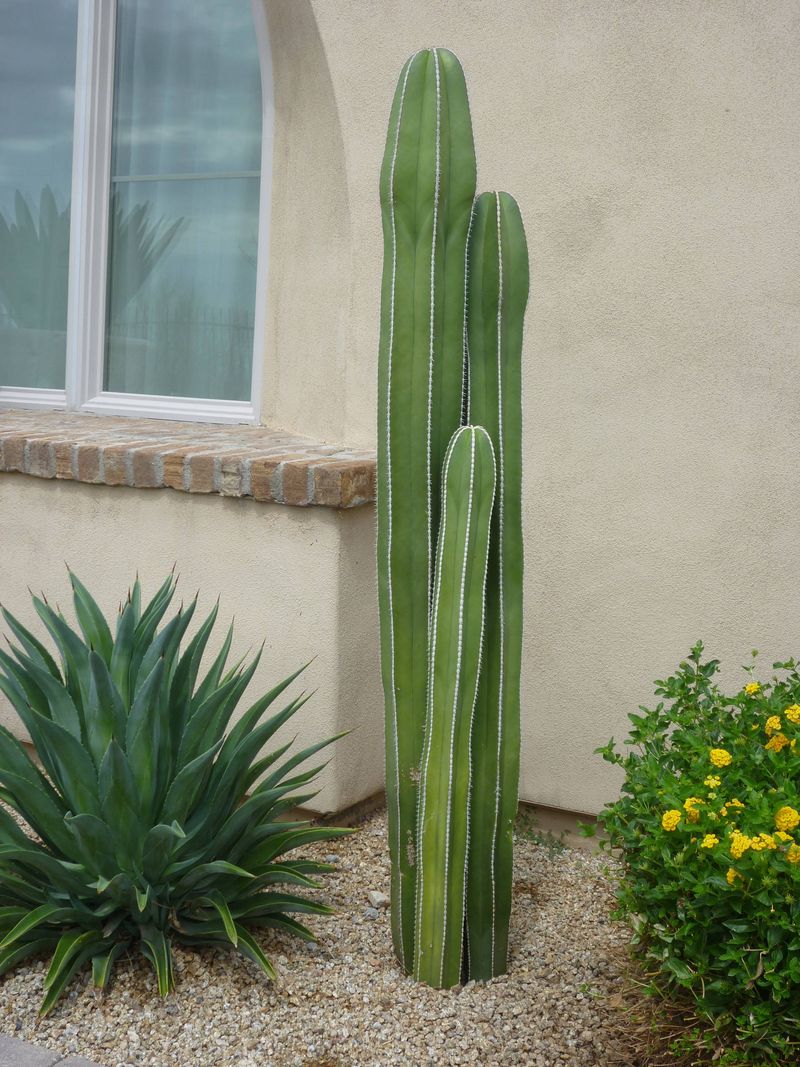
Rancheros in Mexico once planted these columns side by side to build living fences that needed no nails. You can borrow that old trick to give a plain wall bold vertical lines and real architectural presence.
Each smooth green column carries neat rows of short spines along its ribs, like stitching on a fancy shirt. Planted in a tidy row, the effect feels modern and clean, almost like sculpture lined up against concrete.
Known botanically as Pachycereus marginatus, this cactus loves full sun but appreciates a little afternoon break in the hottest spots. Fierce reflected heat can sometimes yellow the skin, so watch young plants during their first summer.
Drainage matters more than anything, because heavy clay soil holding monsoon water invites rot at the base. I like planting it slightly raised on a mound of gritty soil, then watering lightly until roots take hold.
Fall planting gives roots several cool months to settle before next summer tests them. Birds often perch on the tops and sometimes nest nearby, adding a little life to an otherwise quiet corner.
3. Desert Willow
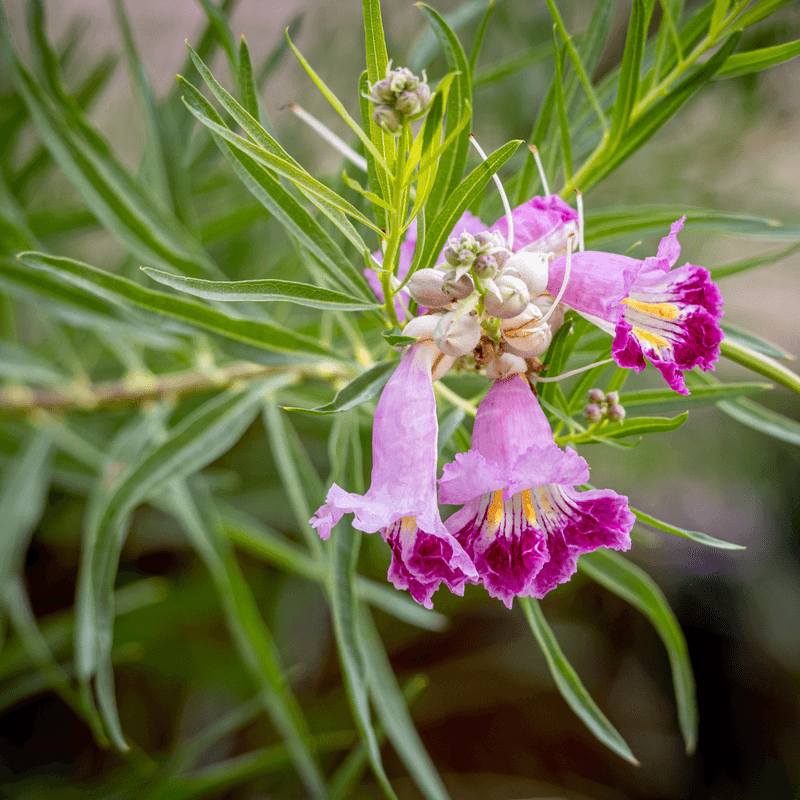
Hummingbirds treat a blooming desert willow like a neighborhood snack bar with the lights left on all day. Its trumpet flowers in pink, lavender, and burgundy look surprisingly tropical for a tough native tree.
Despite the name, Chilopsis linearis is not a true willow at all, just a lookalike with narrow leaves. It actually belongs to the catalpa family, which explains those showy orchid-like blossoms that appear in waves.
Blooms arrive in bursts from late spring into early fall, so you may still spot a few right now. Black-chinned and Costa’s hummingbirds are frequent visitors, zipping between flowers with impressive speed.
Growth often reaches fifteen to twenty-five feet, with an airy shape that casts soft, dappled shade across a wall. Choose a spot with room overhead, and the canopy will cool that hot surface during summer afternoons.
October and November are ideal for planting, giving roots time to explore before temperatures soar again. Once established, deep watering every few weeks in summer keeps it happy, and winter leaf drop is normal.
4. Texas Sage
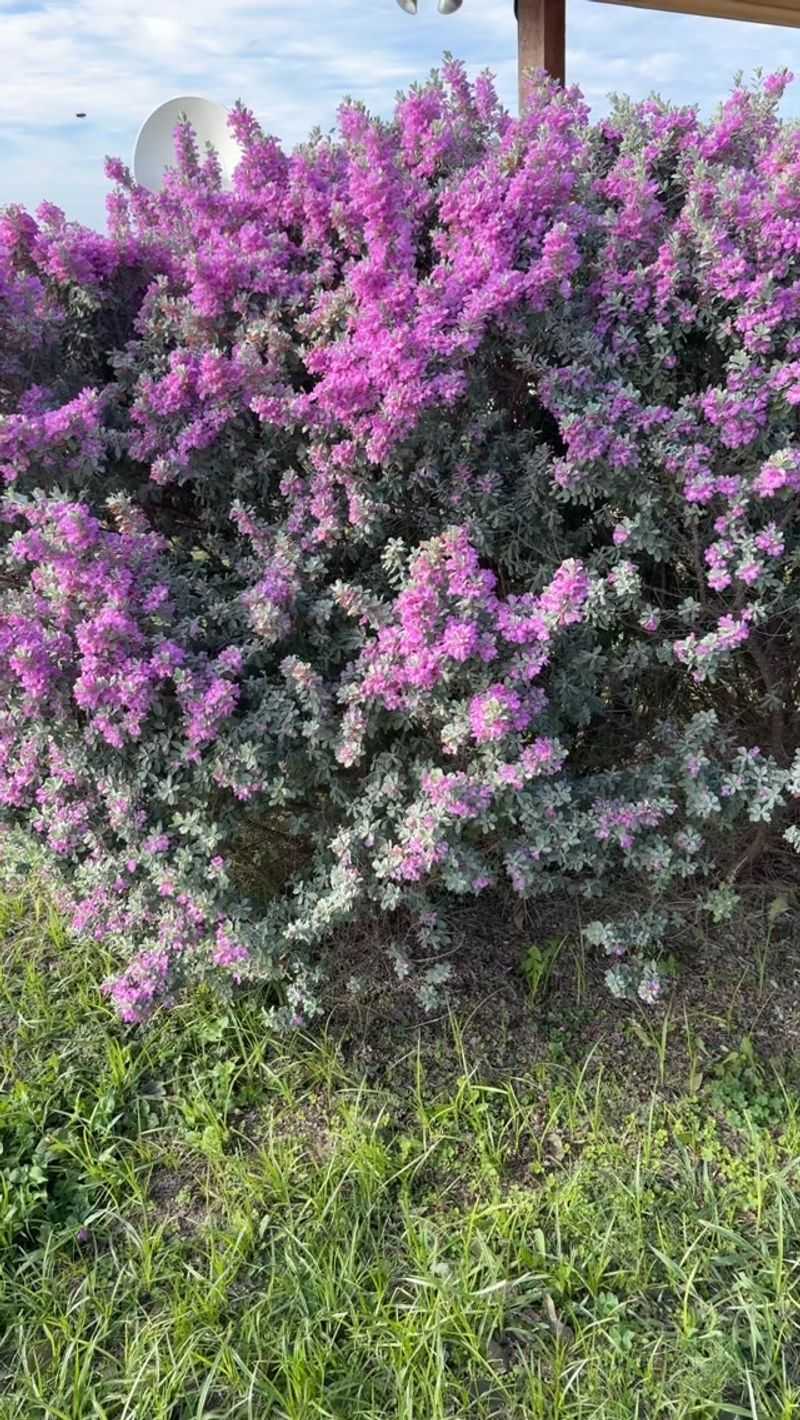
Old-timers swear Texas sage can predict rain, since it often explodes in purple blooms right after humidity rises. Some folks even call it the barometer bush, and watching it work feels like a small desert magic trick.
Personally, I love the soft silvery leaves, which glow against a tan wall even when no flowers appear. That pale color reflects sunlight, helping the shrub stay cool while other plants nearby look tired and droopy.
Leucophyllum frutescens shrugs off reflected heat and grows happily in alkaline soil without fancy amendments. Caliche-heavy ground rarely bothers it, as long as water can drain away from the roots after storms.
Most plants reach three to eight feet tall, forming a dense mound that softens hard edges beautifully. Please skip the shearing into tight balls, since natural shapes produce far more blooms than boxy ones.
October planting works wonderfully because roots establish during cooler months with less stress. Bees buzz around the flowers after summer rains, and the shrub needs only occasional deep watering once it settles in.
5. Arizona Yellow Bells
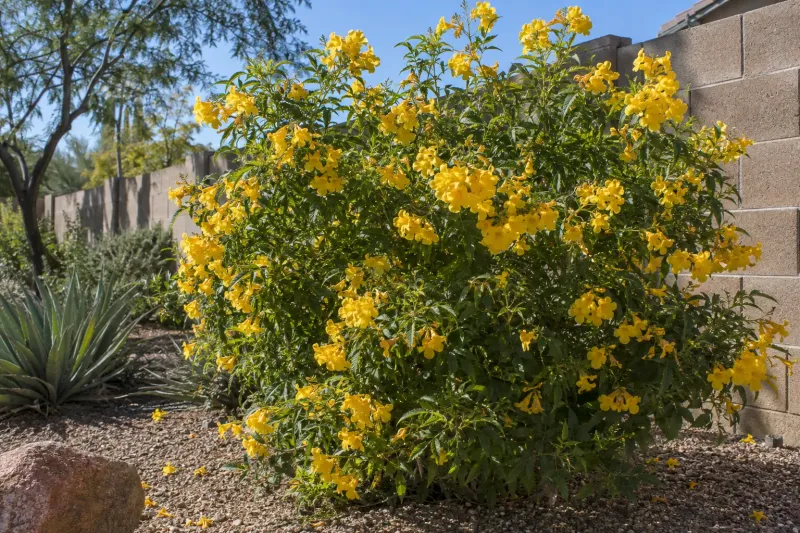
Sunshine seems to bottle itself inside the bright yellow trumpets of this heat-loving native shrub. On the hottest afternoons, when most gardens look exhausted, yellow bells keeps pumping out fresh flower clusters like nothing happened.
The native form, Tecoma stans var. angustata, grows wild in southern Arizona canyons and handles local conditions with ease. Its narrow, toothed leaves give it a lighter, more delicate look than the tropical relatives sold elsewhere.
Expect plants around six to ten feet tall, making them a strong backdrop along a long, empty wall. You can let them grow loose and natural, or trim lightly after winter to keep the shape tidy.
Hummingbirds and butterflies visit the tubular flowers constantly, so a chair nearby makes for great entertainment. I enjoy watching the morning crowd arrive, buzzing from bloom to bloom before the sun gets too intense.
Fall planting gives roots a head start, and occasional deep watering encourages heavier flowering through warm months. Light frost may damage tips, but new growth usually returns quickly once spring warmth arrives.
6. Red Yucca
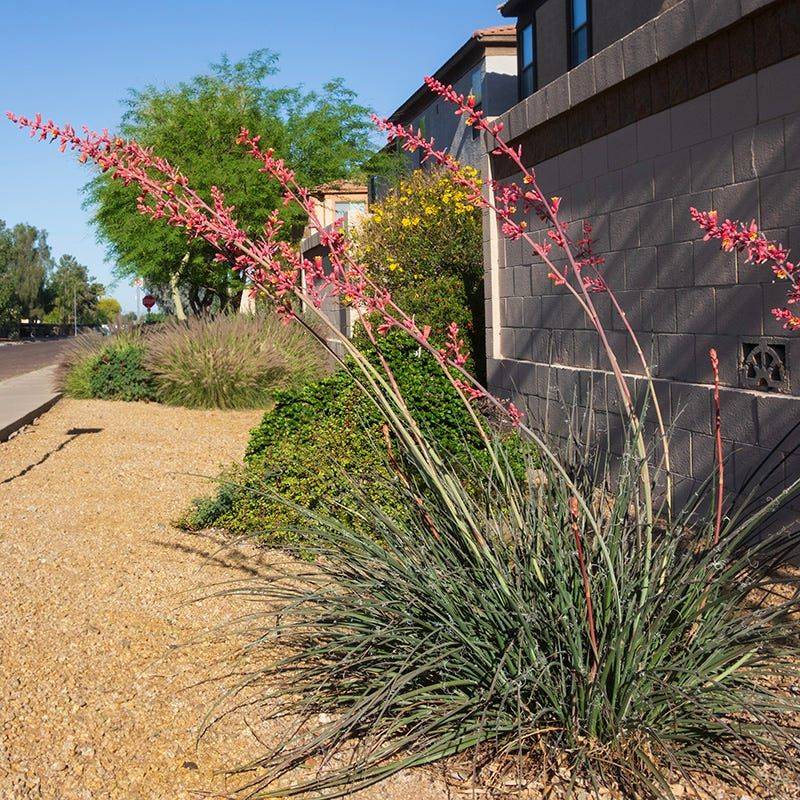
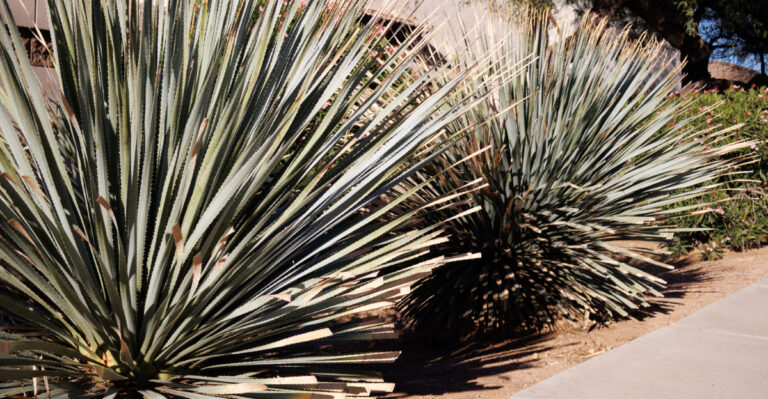
Tall coral flower spikes rising from a fountain of leaves make red yucca look like a fireworks display frozen mid-burst. Funny enough, it is not a true yucca, and its botanical name is Hesperaloe parviflora.
The arching blue-green leaves stay attractive all year, giving a wall steady structure even when no blooms appear. Look closely, and you will notice curly white threads along the leaf edges, adding a charming, scruffy texture.
Clumps usually reach two to four feet across, while flower stalks can stretch up to five feet high. Several plants spaced along a long wall create a rhythm that feels planned without needing much effort.
You might notice hummingbirds parked near these spikes for hours, sipping nectar from the tubular blossoms. Since the leaves lack sharp tips, it is a friendly option beside walkways, pools, or patios with kids.
Early fall is a great planting window, so October fits nicely while soil remains warm. Give it full sun and gritty drainage, then water sparingly once established and let the rain handle most chores.
7. Snapdragon Vine
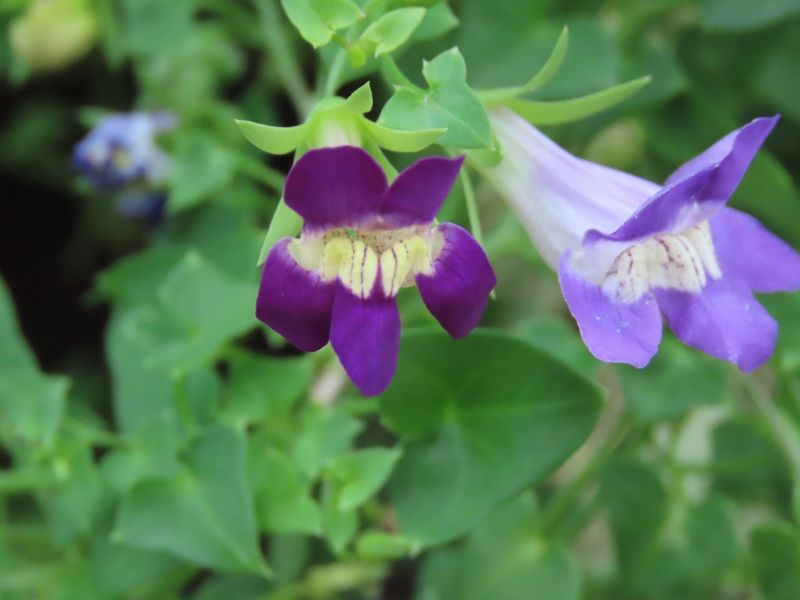
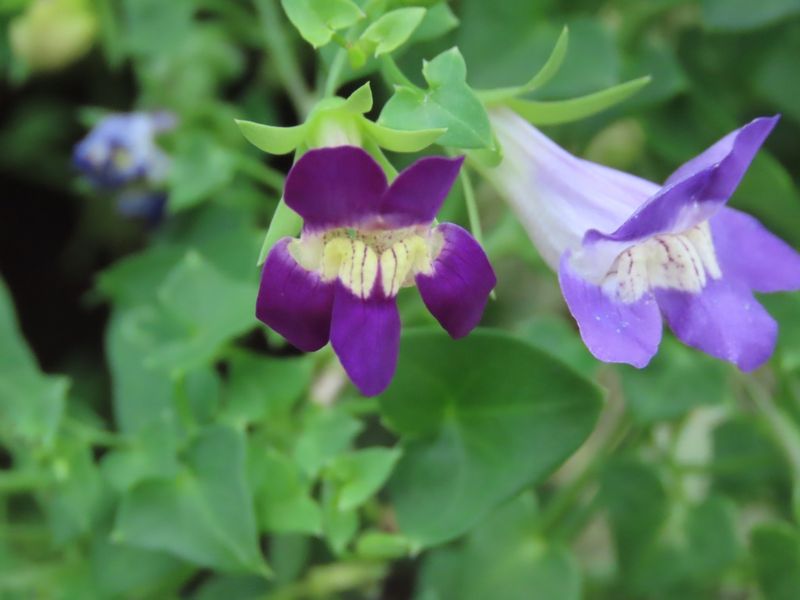
Tiny purple flowers shaped like miniature snapdragons dangle from this dainty native vine, and they charm everyone who leans close. I can’t imagine a sweeter way to soften a stretch of bare concrete without hiring a contractor.
Botanists call it Maurandya antirrhiniflora, and it grows wild across rocky slopes in the Southwest. Unlike aggressive vines, it stays fairly modest, often climbing six to eight feet with gentle twining leaf stalks.
Give it a simple wire grid or lattice, since smooth block offers nothing for the stems to grab. Within a season, the vine weaves a lacy green curtain dotted with violet blooms that brighten the wall.
Bees love the blossoms, and the lightweight foliage creates a little shelter for tiny garden helpers. Afternoon shade on hot west walls helps it look its best, though it handles plenty of morning sun.
October planting gives the roots cool months to settle before summer heat returns in force. Water every week or so at first, then stretch the schedule once it climbs steadily and looks comfortable.
8. Chuparosa
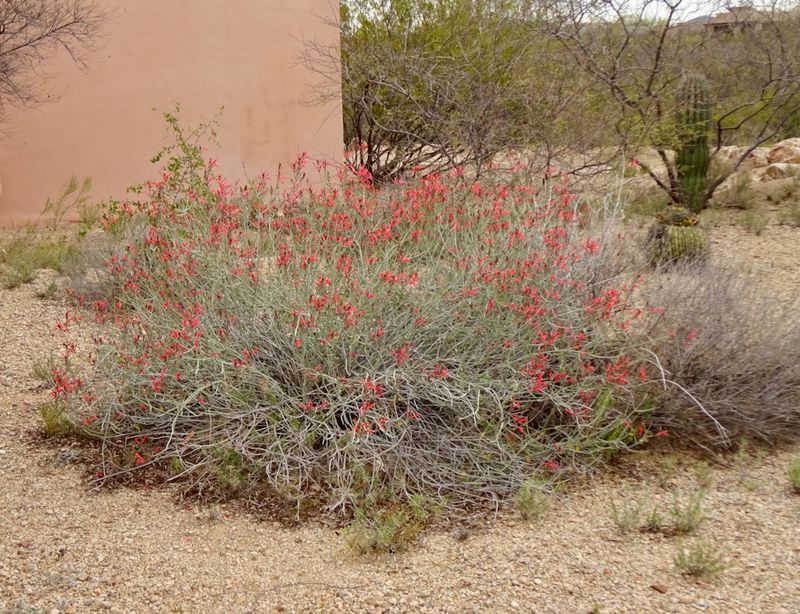
Chuparosa means hummingbird in Spanish, and the name could not fit this cheerful native shrub any better. Its red tubular flowers seem designed for long beaks, and local hummingbirds arrive like they have reservations.
Justicia californica grows naturally along sandy washes in the Sonoran Desert, so reflected heat rarely fazes it. The stems stay green and leafless for long stretches, which helps the plant save water during dry spells.
Most shrubs reach three to five feet tall and wide, with an airy shape that spills gracefully. Planted near a low wall, the branches drape over the edge and create a soft, natural look I adore.
Blooms often peak in late winter and spring, feeding Anna’s and Costa’s hummingbirds when food runs short. You may see scattered flowers in fall too, especially after monsoon moisture lingers in the soil.
Deep watering about once a month in fall keeps the shrub vigorous without fuss or fertilizer. A hard frost may brown some tips, but a quick spring trim usually brings fresh growth back.
9. Ocotillo
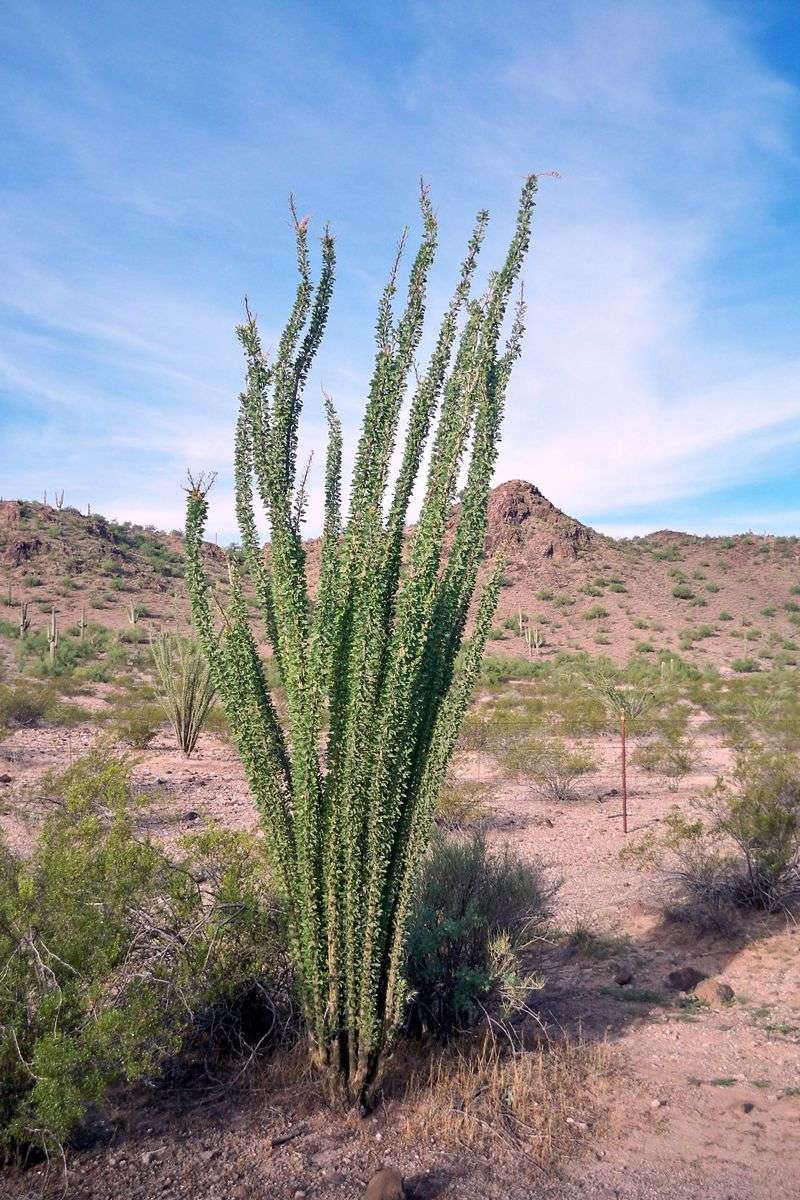
Ocotillo can grow leaves within days of a good rain, then drop them once the soil dries again. That quick-change habit makes it one of the most fascinating plants you can grow against a sunny wall.
Long spiny canes shoot up from the base, often reaching ten to twenty feet over many years. Late afternoon sun throws their shadows across the concrete, creating dramatic patterns that shift through the day.
Each spring, fiery red flower clusters appear at the cane tips just as migrating hummingbirds pass through. What surprises me most is how carpenter bees and orioles join the party for those nectar-rich blooms.
Fouquieria splendens needs fast drainage and dislikes soggy feet, so avoid planting it near busy sprinklers. Fall planting works well, and light misting of the canes in hot weather can help new transplants recover.
Patience pays off, since ocotillos sometimes take a year or more to settle into new homes. Only buy plants with proper tags or permits, because wild-collected ocotillos are protected and must be legally harvested.
10. Desert Marigold
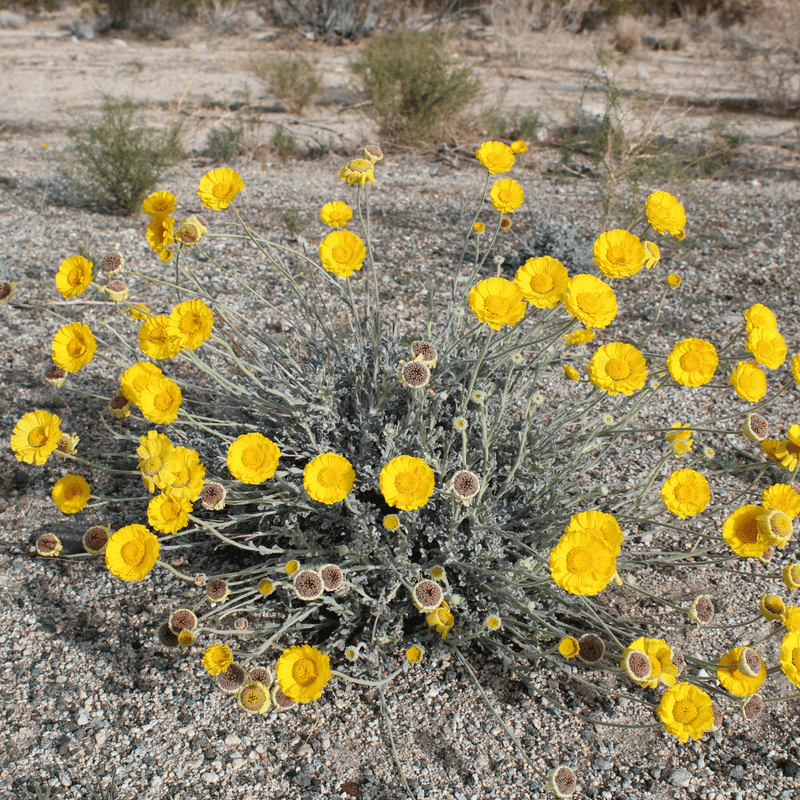
Bright yellow daisies floating above fuzzy silver leaves give desert marigold a sunny glow at the base of any wall. I like how it fills awkward bare strips where nothing else seems willing to grow.
Baileya multiradiata is a true native wildflower, blooming heavily in spring and again after fall rains. In mild spots, you may find flowers on and off for much of the year with almost no care.
Plants stay around one to two feet tall, forming neat mounds that soften hard lines along the ground. Tucked in front of taller shrubs, they create a layered look that feels relaxed and natural.
Overwatering is the biggest risk, since soggy soil quickly causes these plants to decline and flop over. Poor, rocky ground suits them perfectly, so skip the compost and let them toughen up on their own.
October is a great month to sow seeds or plant transplants, since cool weather helps them root. Bees and other insects visit often, feeding birds and lizards that patrol the yard for tasty snacks.
11. Parry’s Agave
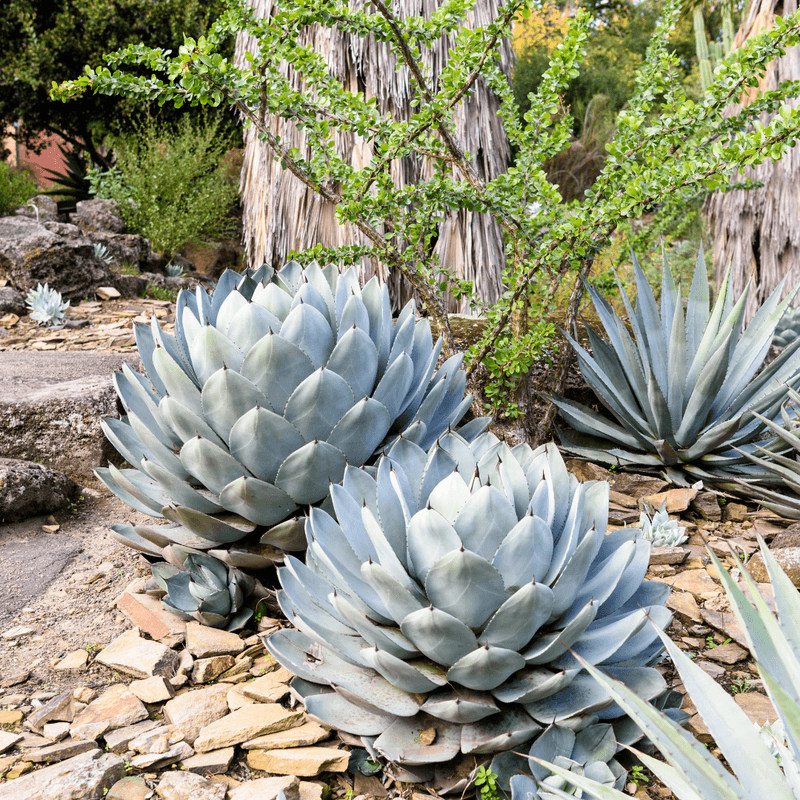
Perfect symmetry makes Parry’s agave look like a giant artichoke carved from blue-gray stone. Set against a tan wall, that tight rosette becomes a living sculpture that draws eyes right away.
Agave parryi stays compact, usually around two feet tall and two to three feet wide. That modest size makes it easier to manage than massive century plants that quickly swallow small yards.
Each thick leaf ends in a sharp dark spine, so keep it away from gates and busy paths. Gloves and long sleeves are wise when you plant it, because those teeth catch skin easily.
After many years, a tall flower stalk rises once, feeding bees and other pollinators with plenty of nectar. The mother rosette then declines, but small pups around the base carry the show forward for years.
Fast-draining soil prevents rot during monsoon downpours, which troubles agaves more than any summer heatwave. September and October are ideal planting months, and occasional deep watering keeps leaves plump until winter rains return.