Those Green Softballs Scattered Along Minnesota Fields Were Planted On Purpose
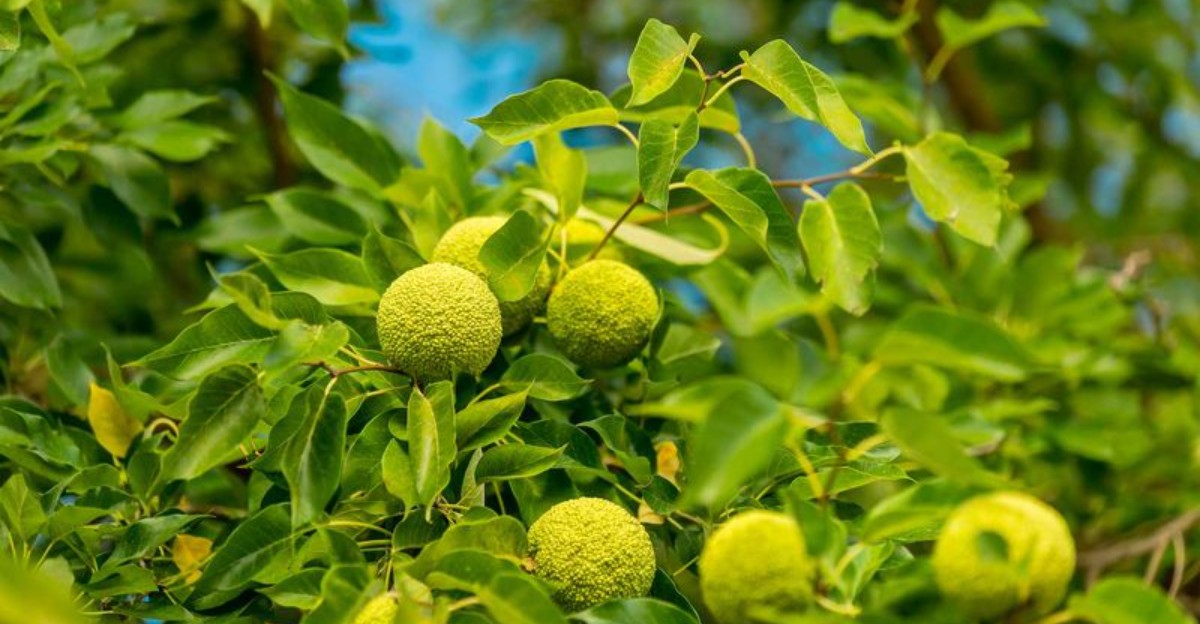
The tree that drops these lumpy, softball-sized green fruits once helped fence in cattle before barbed wire existed. I found a pile of them under a windbreak last fall and laughed out loud.
They smell faintly of citrus, feel like a brain, and ooze sticky white sap when cracked. Squirrels pick at them, but most animals walk right past.
You might notice them in neat rows along old farm edges in southern Minnesota. That tidy line is a clue. Somebody, long ago, put those trees there with a very practical goal in mind.
Scientists even suspect the fruit was built for giant Ice Age animals that no longer roam the prairie.
Why is a tree from Texas and Oklahoma dropping fruit near a Minnesota cornfield, and should you keep one on your porch?
Those Bumpy Green Fruits Along The Fence Line Tell A Farm Story
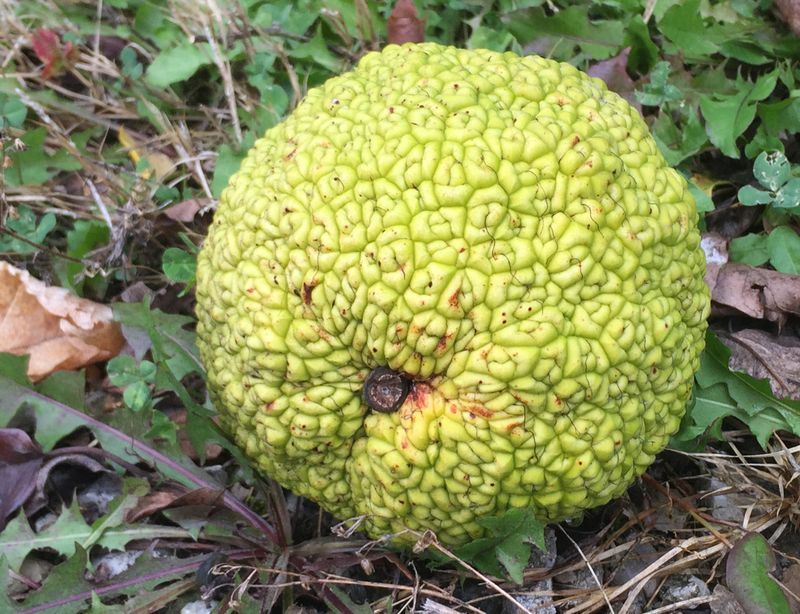
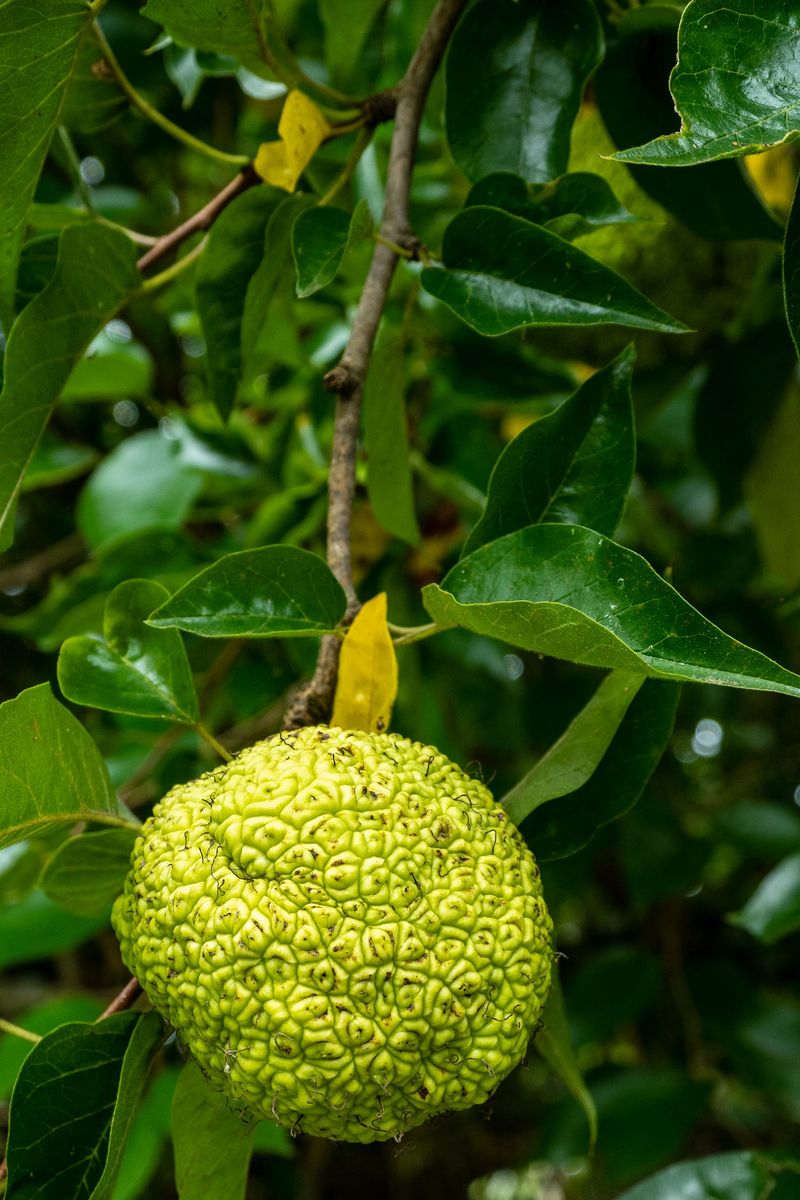
Walk an old fence row in October and you may stumble over a dozen of them. The fruits are round, yellow-green, and wrinkled like a giant brain. Most measure 3 to 5 inches across, which is why folks compare them to softballs.
Their official name is Osage-orange, or Maclura pomifera. Locals often call them hedge apples, hedge balls, or monkey balls.
Despite the names, they are not oranges or apples at all. The tree is actually related to mulberries and figs.
Only female trees produce fruit, and fruit with seeds forms only when a male tree is close enough to pollinate them. Even unpollinated female trees can still make smaller fruits, though they lack seeds. That explains why some rows are loaded and others stay bare.
The fruit ripens in late summer and drops from September into October. A good-sized one can weigh over a pound, so you do not want one landing on your head. Look up before you park your truck under a heavy tree.
If you spot a straight line of thorny trees with these balls underneath, you are likely looking at a piece of farm history. That line was laid out by hand, and the reason is surprisingly clever.
Thorny Osage-Orange Hedgerows Were The Original Cattle Fence
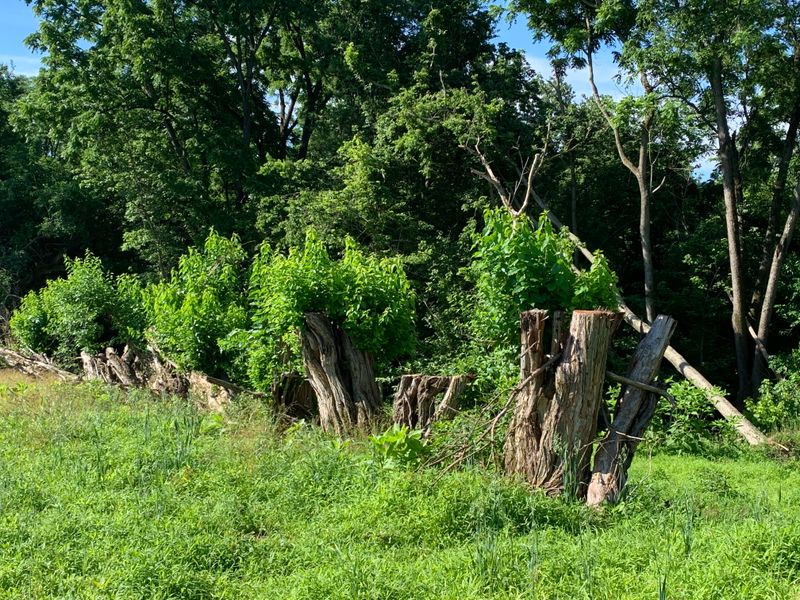
Long before barbed wire showed up in the 1870s, prairie farmers had a real problem. Timber was scarce, so wooden fences were costly. Stone was rare too.
The answer came from a tough little tree with sharp thorns. Farmers planted Osage-orange seedlings close together and pruned them hard so they grew thick and bushy. Within a few years, the row became a living wall that cattle could not push through.
The common rule was that a good hedge should be horse-high, bull-strong, and pig-tight. Osage-orange delivered on all three. Its spiny, tangled branches discouraged livestock, and its roots handled dry prairie soil well.
Planting it became a booming business. Nurseries sold seed and seedlings by the millions across the Midwest and Great Plains during the mid-1800s. Some states even paid incentives to landowners who planted hedges.
Once barbed wire arrived, many farmers stopped trimming their hedges. The shrubs grew into full trees, sometimes reaching 30 to 40 feet.
Many rows were later kept as windbreaks during the Dust Bowl era. So when you see those tidy tree lines today, you are seeing an old fence that simply grew up.
A Texas And Oklahoma Native Traveled North With Farmers
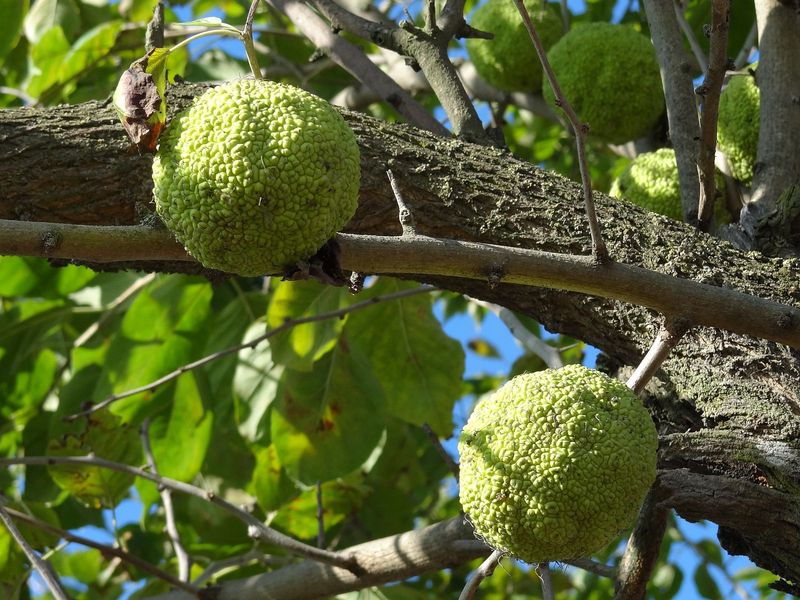
Here is a fun twist for your next walk. The Osage-orange is not native to Minnesota at all. Its natural home is a small area of eastern Texas, southern Oklahoma, and western Arkansas.
The tree got its name from the Osage Nation, whose lands were near that native range. People traded the wood widely because it made excellent hunting bows. French settlers called it bois d’arc, meaning bow wood.
Human hands carried it far beyond that small home. Settlers and nurseries spread it across much of the eastern and central United States. Today it grows in nearly every lower 48 state.
In Minnesota, you will mostly find it in the southern part of the state. Winters farther north are often too harsh for it to thrive.
It is generally rated hardy to about USDA Zone 4, and southern Minnesota sits right around that edge.
That means trees near Rochester or the Iowa border tend to do better than ones near Brainerd. A planted row in the right spot can last for generations. Pretty impressive for a tree that started out as a southern transplant.
Woolly Mammoths May Explain Why Hedge Apples Are So Huge
Ever wonder who is supposed to eat a pound of bumpy, sticky fruit? Scientists have wondered too. The answer might be animals that disappeared thousands of years ago.
Researchers call fruits like this an evolutionary anachronism. The idea is that the fruit evolved for huge Ice Age mammals such as mammoths, mastodons, and giant ground sloths. Those big grazers could swallow the fruit and spread the seeds far away.
When those animals disappeared, the tree lost its best seed spreaders. Its range shrank to that small corner of Texas and Oklahoma. Then farmers came along and gave it a second chance.
Keep in mind this is a well-supported theory, not a proven fact. It fits the evidence nicely, though. Avocados and Kentucky coffeetree pods are thought to share a similar story.
Modern animals mostly ignore hedge apples. Squirrels sometimes tear them apart for the seeds. Deer, horses, and cattle occasionally nibble them, but not often.
I find it oddly charming. Every rotting fruit in a ditch is a leftover from a lost world. Next time you kick one, picture its original fan club walking the same ground.
That Hedge Apple On Your Porch Probably Will Not Chase Off Spiders
Grandma swore by them. Every fall she tucked a few hedge apples into the basement corners to keep spiders and crickets away. Plenty of families still do the same.
Sadly, the science does not back her up. Iowa State University and other extension services report no solid evidence that whole fruits repel insects in a home. A few lab tests found that concentrated extracts from the fruit had some repellent effect.
The catch is concentration. A whole fruit sitting in a corner releases far too little of those compounds to matter. So your basement spiders are mostly unbothered.
There is a practical downside too. Hedge apples rot after a few weeks indoors. They can turn soft, leak juice, and stain floors or shelves.
If you love the look, use them as fall decor instead. Pile them in a bowl with pumpkins and gourds for a chartreuse pop of color. Set them on a tray to protect surfaces.
For real pest control, sealing cracks, fixing leaky pipes, and reducing clutter work far better. Your hedge apples can stay as the pretty, lumpy guests they are.
Wear Gloves Before Handling That Sticky Osage-Orange Sap
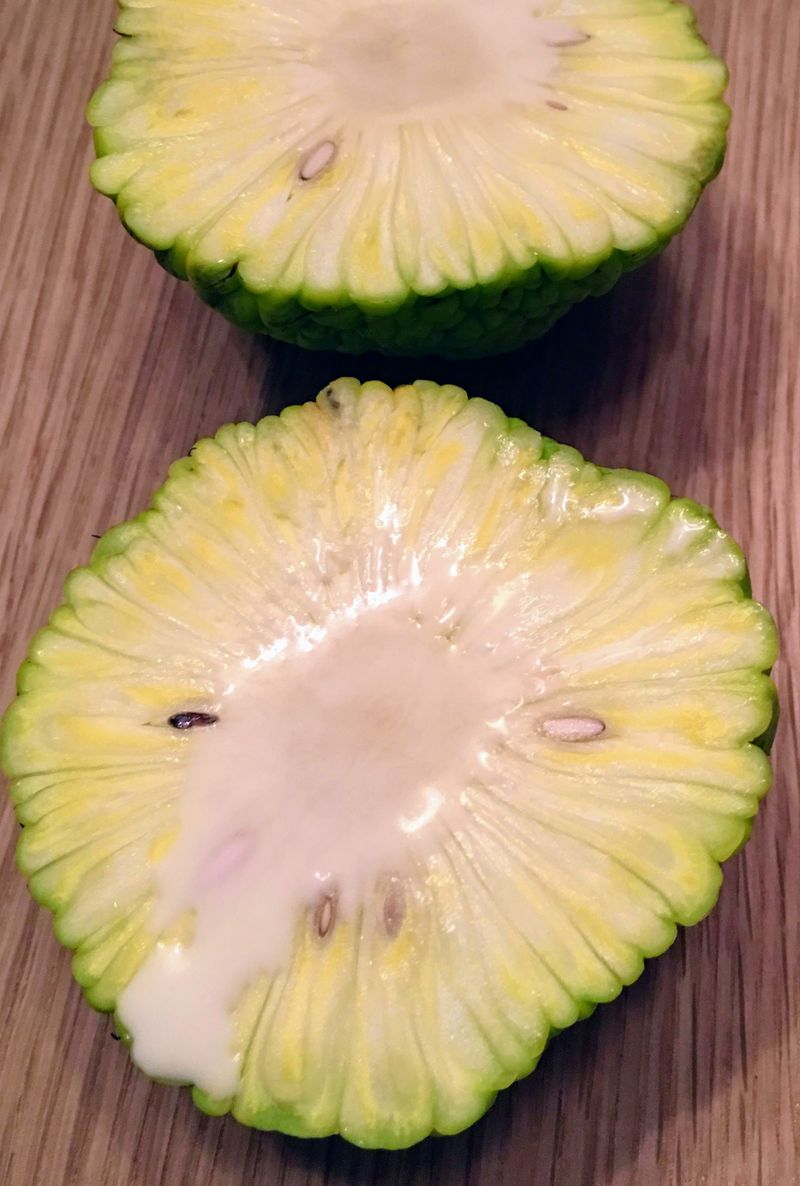
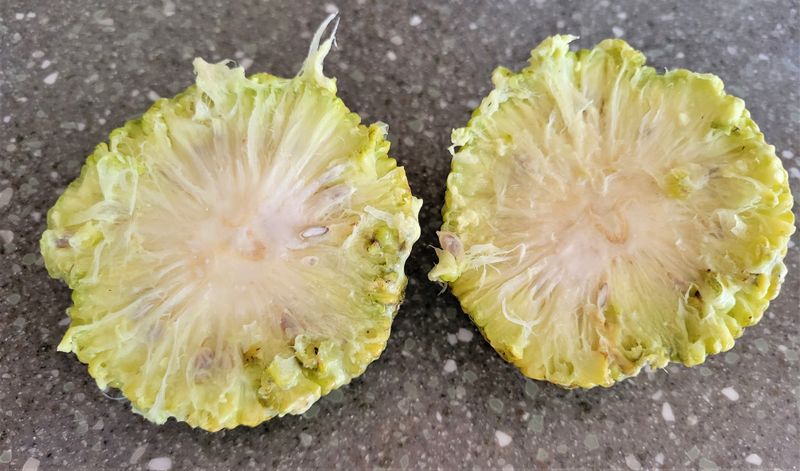
Slice one open and you will get a surprise. Milky white sap bubbles out right away. It is sticky, stubborn, and surprisingly hard to wash off.
For some people, that latex sap can irritate the skin. A red, itchy rash is possible, especially if you have sensitive skin. Wearing gloves is a smart habit whenever you gather or cut them.
Are they poisonous? Extension experts generally say hedge apples are not considered toxic to people. Still, they are not food, and the texture is woody and unpleasant.
Livestock occasionally choke when trying to swallow a whole fruit. Dogs might chew on them too. Keep an eye on curious pets in yards where the fruit drops.
The branches deserve respect as well. Thorns up to an inch long can poke through thin gloves and sneakers. If you trim a tree, wear thick leather gloves, long sleeves, and eye protection.
A quick tip for cleanup: vegetable oil helps loosen the sap from hands and tools before soap. Then wash with warm water. Your skin will thank you after a fall hedge apple project.
Rot-Resistant Osage-Orange Wood Still Earns Fence Post Fame
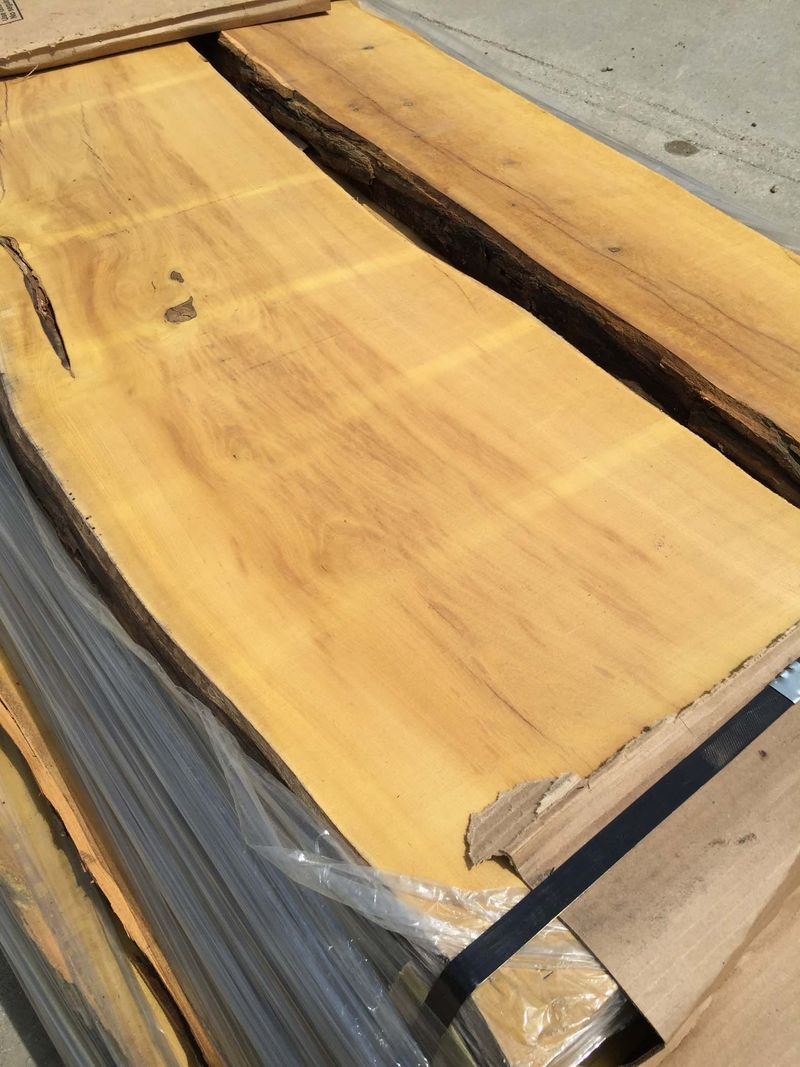
Old farmers had a saying that an Osage-orange post would outlast the hole it sat in. That is barely an exaggeration. The wood is among the most decay-resistant in North America.
Freshly cut wood glows a bright golden orange. It ages to a warm brown over time. It is also extremely dense, heavy, and strong.
Because it resists rot so well, people used it for fence posts that stood for decades. It also made wagon wheels, tool handles, and those famous hunting bows. Many archers today still prize it for bow making.
It burns hot too. Firewood users love its high heat output, though it sparks and pops a lot. Use a screen if you burn it in a fireplace.
If you have a hedge row on your property, those trees may hold real value. Woodworkers sometimes seek out the lumber for bowls and furniture. Talk to a local sawyer before you haul logs to the brush pile.
One heads-up: the wood is so hard it can dull chainsaws fast. Keep your chain sharp and take your time. That toughness is exactly why farmers loved it.
Thinking About Planting An Osage-Orange Tree In Your Yard?
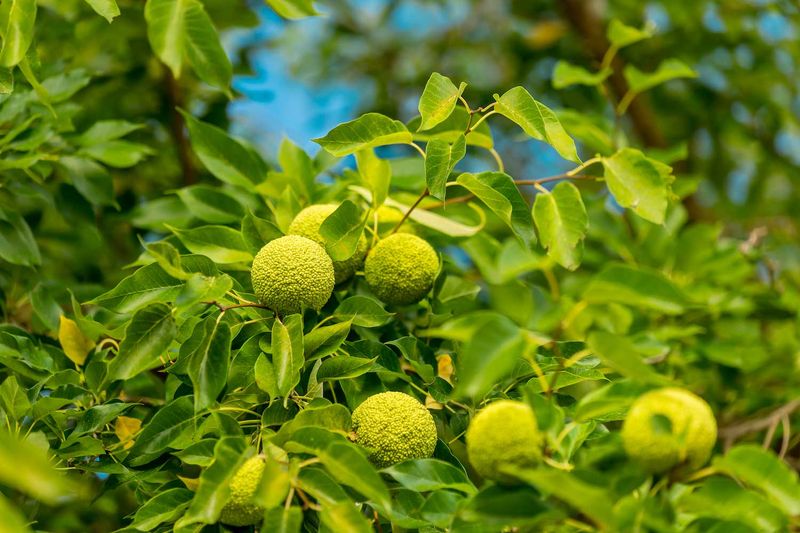
Maybe the history charmed you. Good news for curious gardeners is that this tough tree can work in the right spot. Just plan before you plant.
Choose a sunny location with room to spread. Osage-orange handles poor soil, drought, wind, and heat with ease. In Minnesota, stick to southern areas near Zone 4 or warmer microclimates.
For yards, look for male thornless cultivars such as Wichita or White Shield. Male trees produce no fruit, so you skip the pound-heavy drops on your lawn and car. The thornless types are friendlier for kids and mowers.
Keep in mind that it is not native here. It is not listed as invasive in Minnesota, but it can spread in some pastures elsewhere. Native options like bur oak, hackberry, or American plum give local wildlife more benefits.
Already have an old hedge row? Consider keeping it. Those trees offer wind protection, shade, and shelter for birds.
Mostly, enjoy the story they tell. Each green softball connects you to prairie farmers, bow makers, and maybe even mammoths. That is a lot of history hanging from one thorny branch.