8 Cold-Hardy Flowers That Can Brighten Georgia Porches For Thanksgiving
Frost can actually make some porch plants look brighter, with leaf colors deepening once nights dip below fifty degrees.
Late November in Georgia often brings that chill, yet many front steps still look strangely gray and empty.
Garden centers fill up with cool-season plants in October, and some of them shrug off temperatures in the twenties. A few even keep flowering through winter, then put on a second show when spring warms the soil.
I love how a single bright pot can make tired guests smile before they even reach the door. You need to plant a little early, though, so roots settle in before the coldest Georgia nights arrive.
I think the Thanksgiving porch deserves more than one lonely pot of mums wilting beside the welcome mat. There are plenty of colorful alternatives that can handle frosty mornings and still look cheerful when the turkey hits the table.
1. Pansies
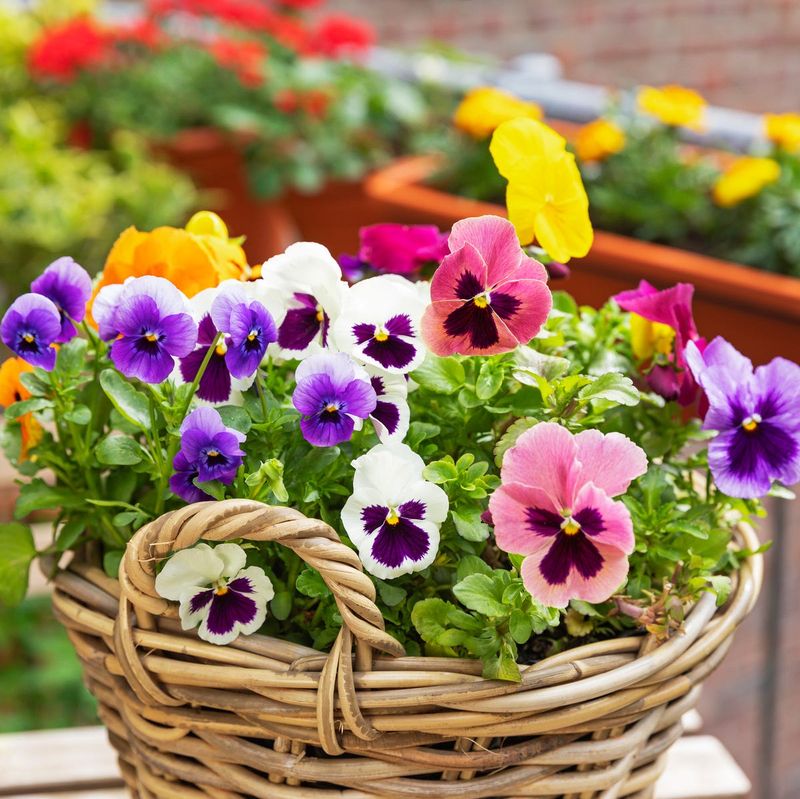
Few flowers look this cheerful on a frosty morning, with little painted faces staring up from the pot.
Pansies, known botanically as Viola x wittrockiana, handle temperatures in the low twenties once their roots are settled.
I have to admit, watching them perk up by noon after a hard frost still delights me every year. Leaves may look limp and dark at dawn, but they usually recover once the sun warms them up.
UGA Extension suggests planting pansies from late September through October, while soil is still warm enough for roots. Plants set out by Thanksgiving week can still bloom, though they may stay smaller until spring growth kicks in.
Give them a sunny spot, since at least six hours of light keeps flower buds coming through cooler months.
Use a quality potting mix that drains well, because soggy containers invite root rot during long rainy spells.
Water when the top inch of soil feels dry, and check pots before a freeze arrives. Moist soil holds warmth better than dry soil, which gives roots a small advantage on cold nights.
Pinch off faded blooms every few days to keep the plants focused on making fresh flowers instead of seeds. A light feeding with a liquid fertilizer every couple of weeks also helps container pansies stay full and colorful.
Orange and deep burgundy varieties look wonderful beside pumpkins and rustic baskets on a holiday porch. Better yet, the same pots often keep blooming until late spring, long after the holiday leftovers are gone.
2. Violas
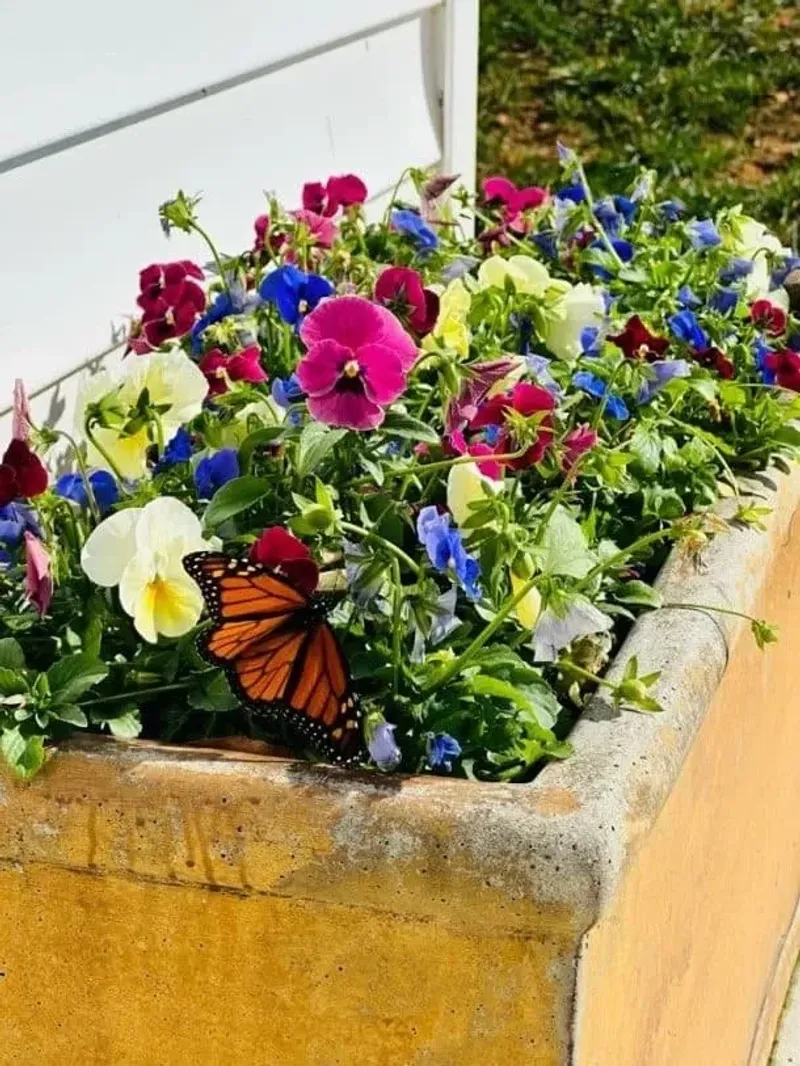
Tiny blooms can pack a surprising punch, and violas prove it by covering themselves in dozens of small flowers. These smaller cousins of pansies often shake off cold snaps faster, recovering quickly after a frosty Georgia night.
Many garden violas sold today are hybrids involving Viola cornuta, sometimes called horned violet for its tiny spur. Flowers usually measure about one inch across, but each plant makes so many that the pot looks crowded.
Personally, I like tucking violas around the edges of larger containers where their little faces peek over the rim. They fill gaps nicely between taller plants and soften hard edges on concrete steps or wooden porch boards.
Plant them in full sun or light shade, using a loose potting mix with plenty of drainage holes below.
Violas stay compact, usually reaching six to eight inches tall, so they rarely need staking or heavy trimming.
Keep the soil lightly moist without letting water pool in the saucer, especially during cloudy weeks in late fall. Feed every two weeks with a diluted liquid fertilizer to support steady blooming through the cooler months ahead.
Wildlife watchers will appreciate that early bees sometimes visit violas on warm winter afternoons when little else is open.
The flowers are also edible when grown without pesticides, making them pretty decorations for holiday cakes or salads.
Choose apricot or deep purple shades to echo fall leaves and pumpkins sitting nearby on the steps. You might notice violas keep flowering steadily during mild spells, while bigger blooms pause until the weather settles.
3. Snapdragons
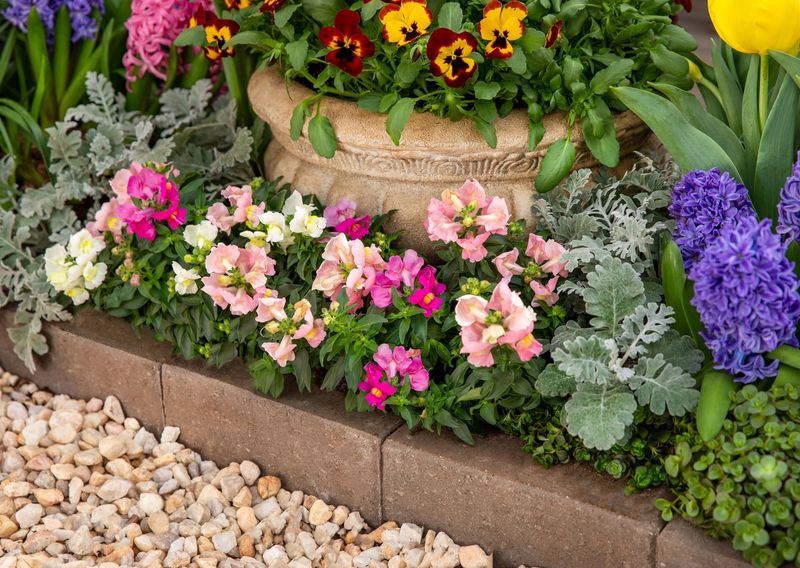
Squeeze the side of a snapdragon flower gently, and its little jaw opens like a tiny talking dragon. Kids love that trick, and honestly, so do I every single time I walk past the porch pots.
Antirrhinum majus is a cool-season favorite across the South, often handling temperatures into the mid-twenties without much complaint. Hard freezes can damage open flower spikes, yet the leafy base usually survives and sends up fresh stems later.
Dwarf varieties around eight to twelve inches tall suit containers best, since taller types can flop in winter winds.
The Snaptastic and Montego series are popular compact choices that fit neatly into window boxes and porch planters.
Give snapdragons full sun for the strongest stems and the most flowers through the shorter days of late fall. Use well-drained potting soil, and avoid overwatering, because cold soggy roots often lead to rot and yellow leaves.
Fall planting works wonderfully in Georgia, since plants set out early develop roots that support a big spring show.
Many gardeners find their fall snapdragons bloom even harder in April than they did around the holidays.
Snip off finished spikes just above a set of leaves to encourage side shoots with new flower buds. Those cut stems also last nicely indoors, so a small vase of snapdragons can brighten the holiday table.
What surprises me most is how the dried seed pods look like tiny skulls once the petals fall away. That quirky detail makes snapdragons a fun conversation starter when relatives gather on the porch after dinner.
4. Dianthus
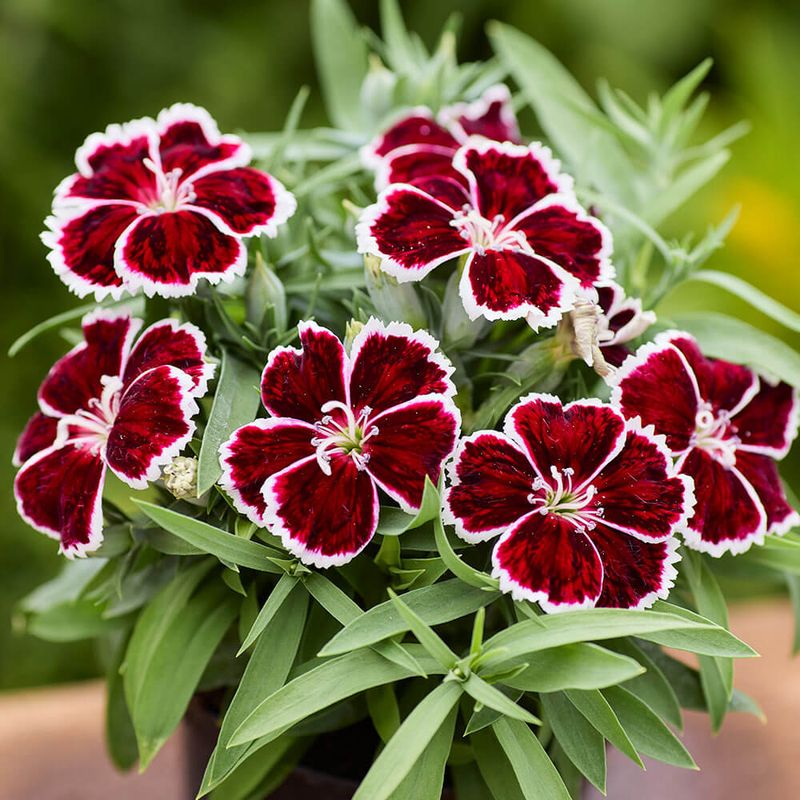
Lean close to a pot of dianthus, and you may catch a spicy scent that smells faintly like cloves. That fragrance is one reason these flowers earned the old nickname pinks, along with their neatly fringed petal edges.
Dianthus includes many species and hybrids, and the bedding types sold in fall handle frosty nights remarkably well.
Some, like Dianthus chinensis hybrids, often keep blooming through mild winter weather in the warmer parts of the South.
I love how the frilly flowers look like someone trimmed each petal with pinking shears from a sewing kit. Colors mostly range from soft pink to deep red, with many bicolor patterns that sparkle in low sunlight.
Give dianthus plenty of sun, ideally six hours or more, and a gritty potting mix that drains quickly.
These plants dislike wet feet, so avoid saucers that hold water and let the top inch dry between drinks.
Most bedding dianthus stay six to twelve inches tall, making them tidy partners for pansies in mixed containers. Their bluish green foliage adds a cool contrast beside warm orange pumpkins or rusty fall leaves on the steps.
Shear off spent flower clusters with scissors to keep plants looking neat and to encourage another round of buds. A light feeding in late winter helps them gear up for a strong spring flush when days grow longer.
Butterflies visit dianthus flowers during warm spells, so your porch might attract a surprise guest on a sunny afternoon. Personally, I think that sweet clove scent makes holiday visitors linger a little longer at the front door.
5. Sweet Alyssum
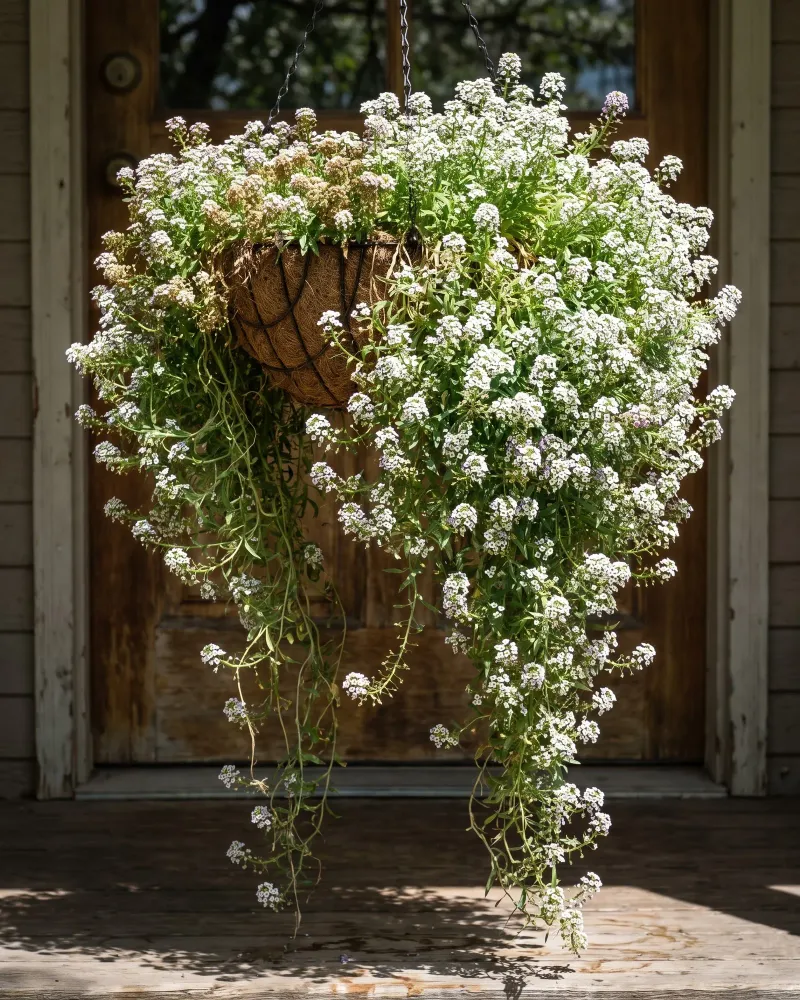
Honey is the first thing many people notice about sweet alyssum, because its tiny flowers smell remarkably sweet up close. On a still afternoon, a single trailing pot can perfume the whole front step without anyone spotting the source.
Lobularia maritima belongs to the mustard family and comes from the Mediterranean region, where cool damp seasons suit it.
It often sulks in hot humid summers, then bounces back with fresh blooms once fall temperatures finally drop.
Plants stay low, usually around four to eight inches tall, while stems spread and spill gently over container edges. That trailing habit makes alyssum a perfect spiller that softens the rim of tall urns or hanging baskets.
Frost tolerance is decent, and established plants usually handle light freezes, though hard freezes in the twenties can scorch them.
Covering pots with a light sheet on the coldest nights helps them keep blooming well into the holiday season.
Full sun suits alyssum best during cooler months, along with a light potting mix that drains without staying soggy. Water when the surface feels dry, since constantly wet roots tend to cause stems to rot and collapse.
If plants look ragged, trim them back by about one third, and new flowers usually appear within a few weeks. Varieties like Snow Princess are especially vigorous and heat tolerant, sometimes flowering for many months in mild Southern gardens.
Beneficial insects like hoverflies love those tiny flowers, and their larvae help control aphids on nearby plants. I love how white alyssum makes darker blooms nearby look brighter, almost like a lacy tablecloth under a feast.
6. Calendula
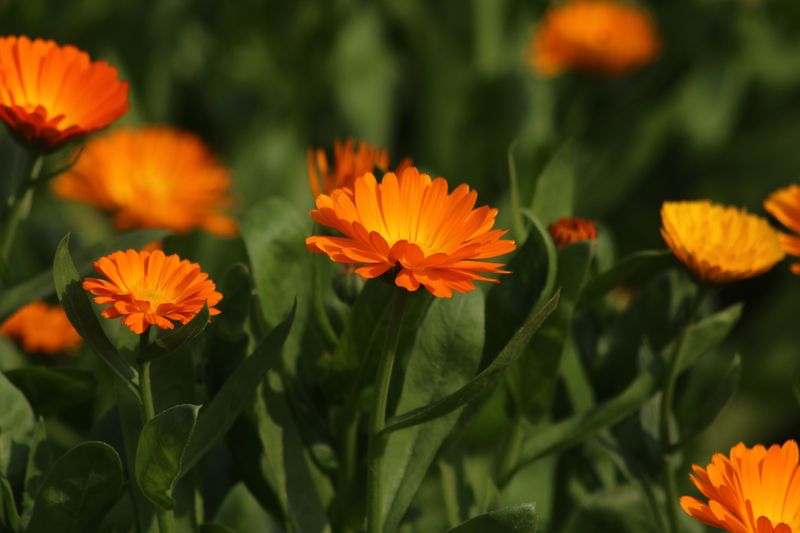
Glowing orange petals make calendula look like it was designed specifically for a Thanksgiving color scheme and harvest decor.
Often called pot marigold, Calendula officinalis is a different plant from the common marigolds that struggle with frost.
Calendula actually prefers cool weather, and many Southern gardeners grow it as a fall and winter annual. It handles light frosts and temperatures in the mid to upper twenties, though deep freezes can damage open blooms.
I have to admit, the cheerful daisy-like flowers make me grin every time sunlight hits them on cold mornings. Shades mostly range from pale lemon to deep tangerine, matching pumpkins and gourds beautifully on porch steps and railings.
Plants grow about one to two feet tall, so they work nicely as the centerpiece in medium porch containers. Choose a sunny location and a well-drained potting mix, since calendula dislikes heavy wet soil during cool weather.
Fall planting works well across much of Georgia, especially in the middle and southern parts of the state.
Gardeners in colder northern areas may want to move pots against the house when hard freezes are forecast.
Pinch off faded flowers regularly, because plants that set seed tend to slow down their bloom production quickly. Watch for powdery mildew on leaves during humid spells, and improve air circulation by spacing containers a bit apart.
Petals are edible and have long been used to add golden color to soups and rice dishes. Pollinators like bees appreciate the open flower centers on mild days when food sources are scarce around the yard.
7. Flowering Kale
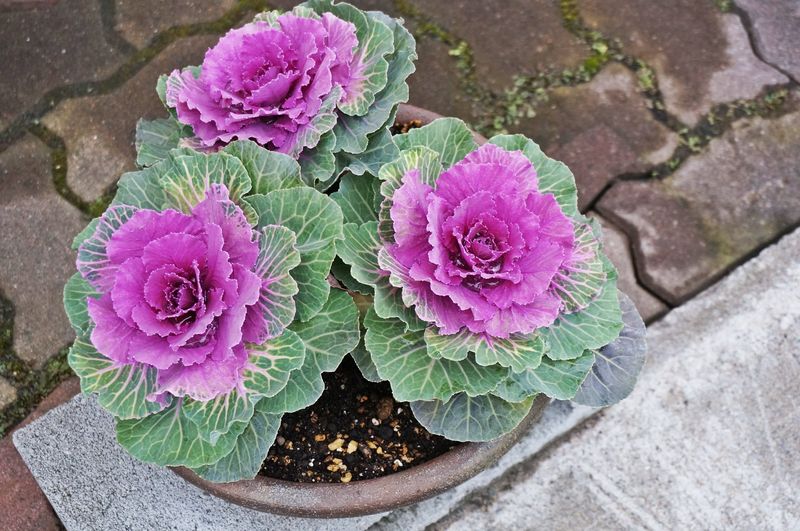
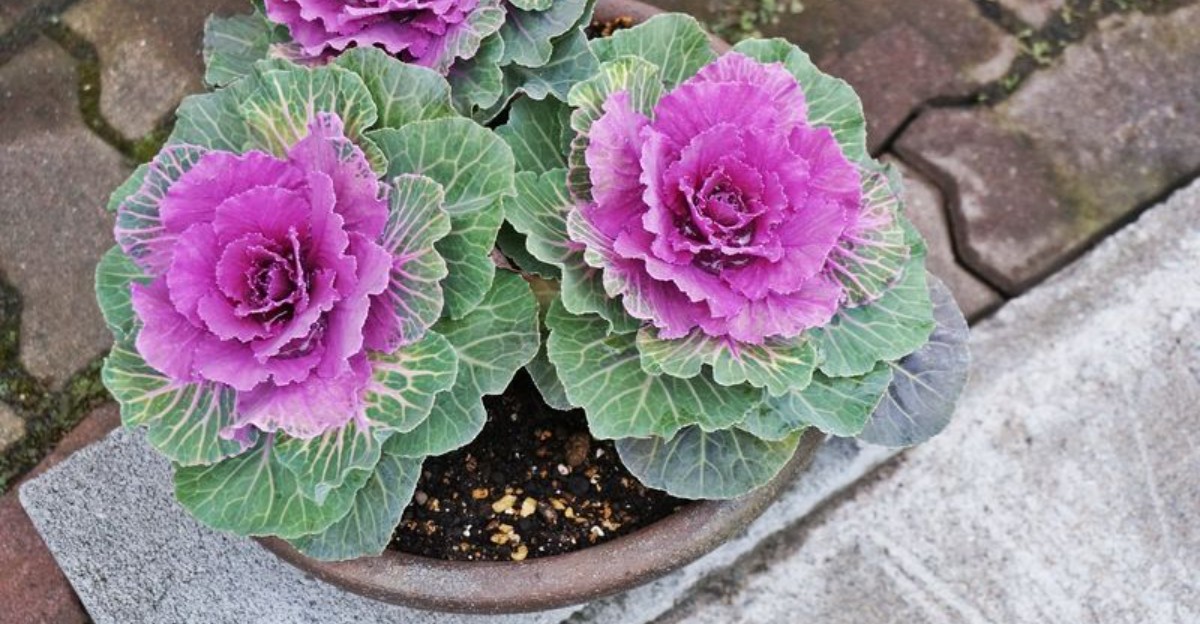
Ruffled rosettes in pink and purple make flowering kale look like giant roses sitting in a porch pot. Those colorful centers are actually leaves, and they grow more vivid once nighttime temperatures drop below about fifty degrees.
Ornamental kale and cabbage are both forms of Brassica oleracea, the same species that gives us broccoli and collards.
Breeders selected these types for looks, and while technically edible, they tend to taste bitter compared with kitchen varieties.
Cold tolerance is impressive, with many plants handling temperatures down into the teens without losing their bright color. That toughness makes them a reliable anchor for containers across the state, even in chilly north Georgia mountain towns.
Buy plants that already show color, since kale planted late in fall may not size up much before winter. Choose a sunny spot and fertile potting mix, then water whenever the top inch of soil starts to dry.
Personally, I like one big kale in the center of a pot, surrounded by pansies spilling around the edge.
The combination looks lush on porch steps and holds up far better than tender annuals left from summer.
Caterpillars and aphids may nibble the leaves on warm fall days, so check undersides of foliage every week. Hand picking pests or spraying with insecticidal soap usually keeps damage minor and the rosettes looking tidy for guests.
Plants eventually send up tall yellow flower stalks when spring arrives, which signals their show is wrapping up. At that point, you can pull them and replace them with warm season color for the months ahead.
8. Sasanqua Camellia
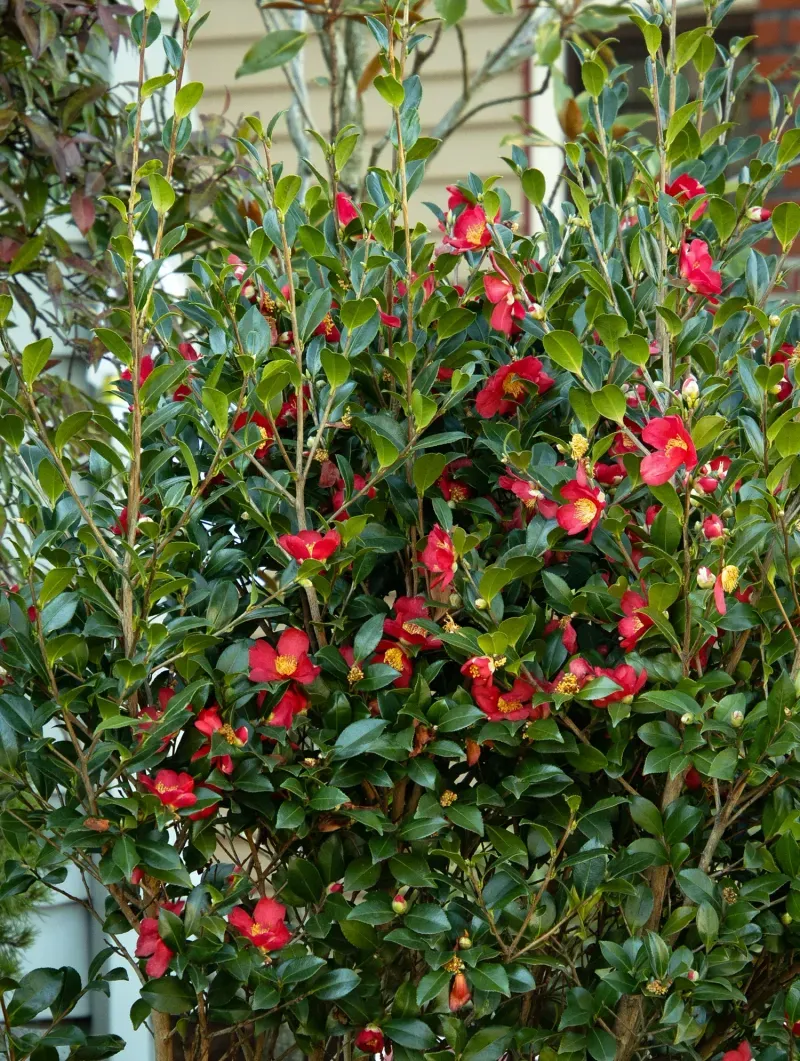
Blooming in the middle of fall, sasanqua camellias open their flowers right when most garden shrubs are calling it quits. Camellia sasanqua often flowers from October into December, so Thanksgiving usually lands right in the heart of its show.
Native to Japan, this evergreen shrub has been grown in Southern gardens for generations and is not considered invasive. Glossy dark leaves stay attractive all year, which means a potted sasanqua looks handsome long after the petals fall.
Flowers range from snowy white to rosy pink, and some varieties like Yuletide offer bright red single blooms. Many types carry a light sweet scent, and I love how fallen petals scatter across the steps like confetti.
Compact cultivars such as Shishi Gashira grow slowly and stay small enough for large porch containers for several years.
Use a roomy pot with excellent drainage and an acidic, bark-based potting mix similar to what azaleas prefer.
Sasanquas handle more sun than common Japanese camellias, though morning sun with afternoon shade often works beautifully on porches. Water deeply when the soil starts drying, and avoid letting containers sit in saucers full of standing water.
Most sasanquas are hardy in USDA zones seven through nine, covering nearly all of Georgia’s growing regions.
Container roots are more exposed to cold, so group pots against a wall during unusually hard freezes.
Prune lightly right after flowering finishes, because next season’s buds form on new growth during spring and summer. You’re in for a treat when a plant bought for one holiday returns with blooms every fall afterward.