Marbled Salamanders Have An Unusual Fall Nesting Habit In Georgia
A mother amphibian in the woods lays her eggs on dry ground in autumn, then curls around them and waits for rain. She may guard that tiny nest for weeks.
Most frogs and salamanders in Georgia lay eggs in spring water. This little creature flips the calendar and picks a dry pond bed instead.
I love how she bets everything on a storm that has not arrived yet.
You could walk right past one of these nests under a log near a wooded floodplain. The adults are small, chunky, and striped like a fancy pair of socks.
I think they are one of the coolest neighbors a backyard naturalist could have.
What makes an amphibian nest on dry land and trust the weather to finish the job? The answer is clever, a little risky, and worth a closer look.
1. That Striped Salamander Under The Log Is Waiting For Rain
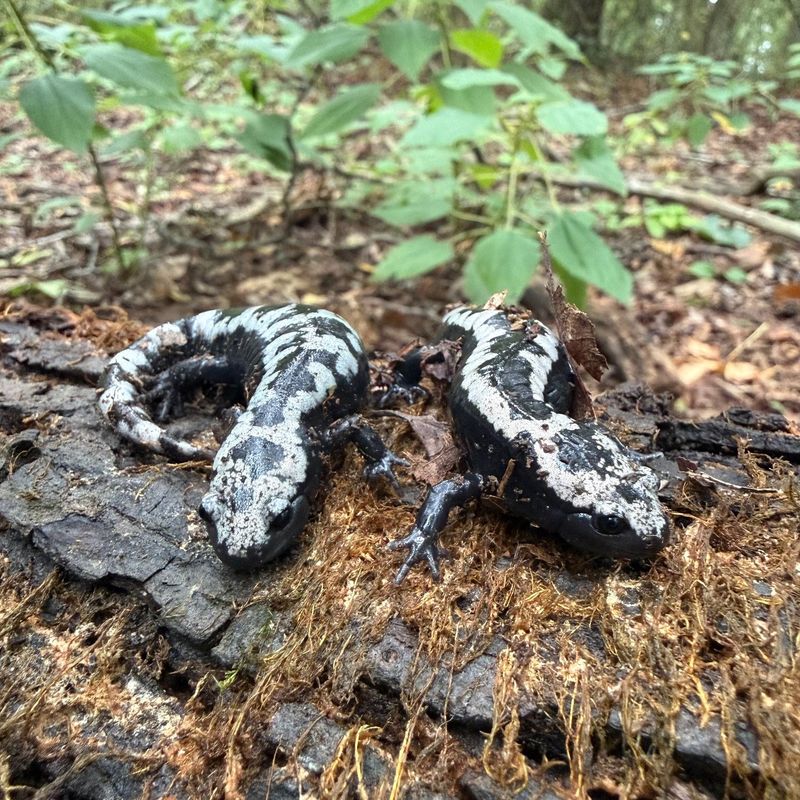
Flip a log in a dry Georgia pond basin in October and you might find a black-and-silver salamander coiled around a pile of pearly eggs. That is a female marbled salamander, Ambystoma opacum, and she is doing something most of her relatives skip.
Instead of laying eggs in water, she lays them in a shallow dip on land.
She picks low spots in temporary wetlands, often called vernal pools, that sit dry for much of summer and early fall.
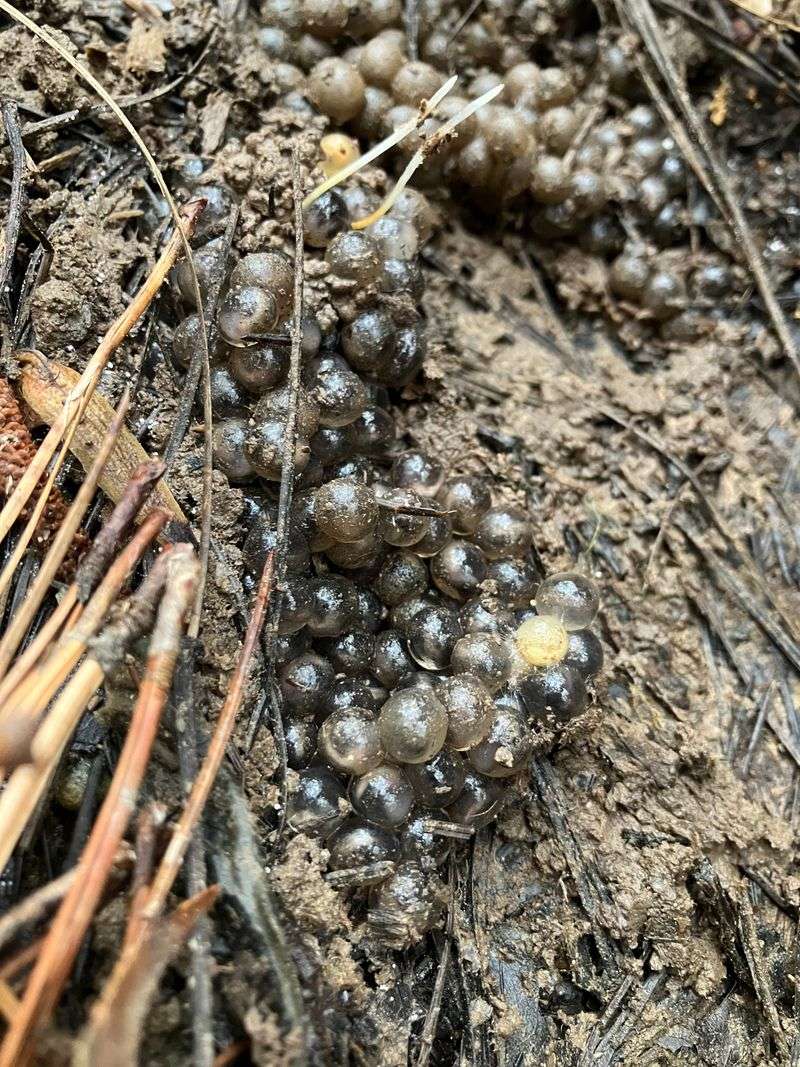
She lays roughly 50 to 200 eggs, depending on her size, and then she stays. Biologists have watched females remain with their clutch for days or even weeks.
Her waiting game has a clear purpose. When fall and winter rains arrive, the pool basin fills, the water covers the nest, and the eggs can hatch.
Until then, the eggs sit on moist soil under leaves, logs, or moss. The developing embryos can grow inside the eggs while they wait, so they are ready to go once water reaches them.
Spotting one is a real treat. Snap a quick photo, gently replace the log the way you found it, and let her get back to work.
2. Dry Pond Beds Make A Smart Nursery For Salamander Eggs
Timing is everything here. By laying eggs in fall, marbled salamander larvae get a head start that spring breeders can only envy.
Once rain floods the nest and the eggs hatch, the larvae spend winter in the pool eating tiny critters like zooplankton.
By the time spotted salamanders and many frogs lay eggs in late winter and spring, the marbled larvae are already bigger.
Size matters in a pond. Bigger larvae can eat smaller ones, including the young of other salamander species, and they are less likely to be eaten themselves.
Temporary pools also hold a special perk. Since they dry out each year, they usually lack fish, which happily gobble up amphibian eggs and larvae.
Of course, the plan has a catch. If the rains come late or the pool stays shallow, the eggs may stay stranded on land too long and the clutch can fail.
Researchers in the Southeast have noted that drought years can lead to poor breeding success. In other words, this habit works beautifully in wet autumns and struggles in dry ones.
I find it fascinating that a creature smaller than a pencil runs its whole family plan around the weather forecast.
3. Those Black And White Bands Help You Spot A Marbled Salamander
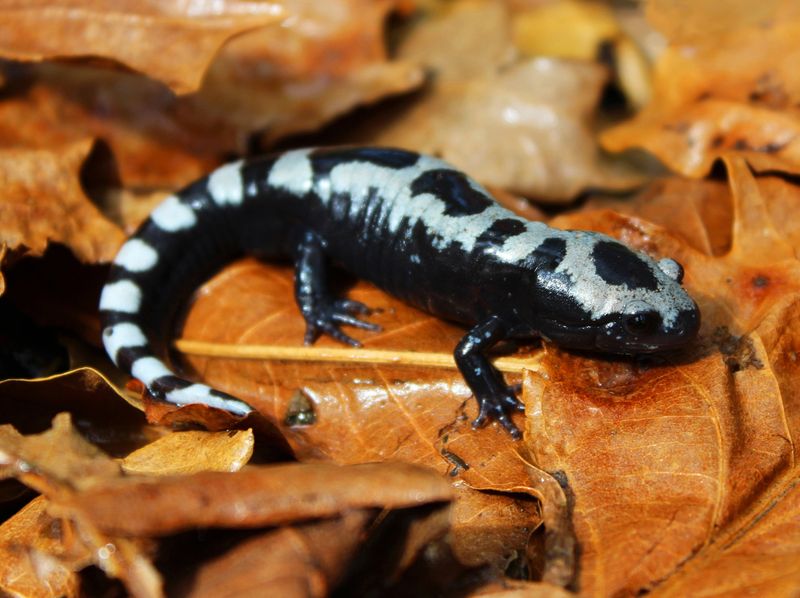
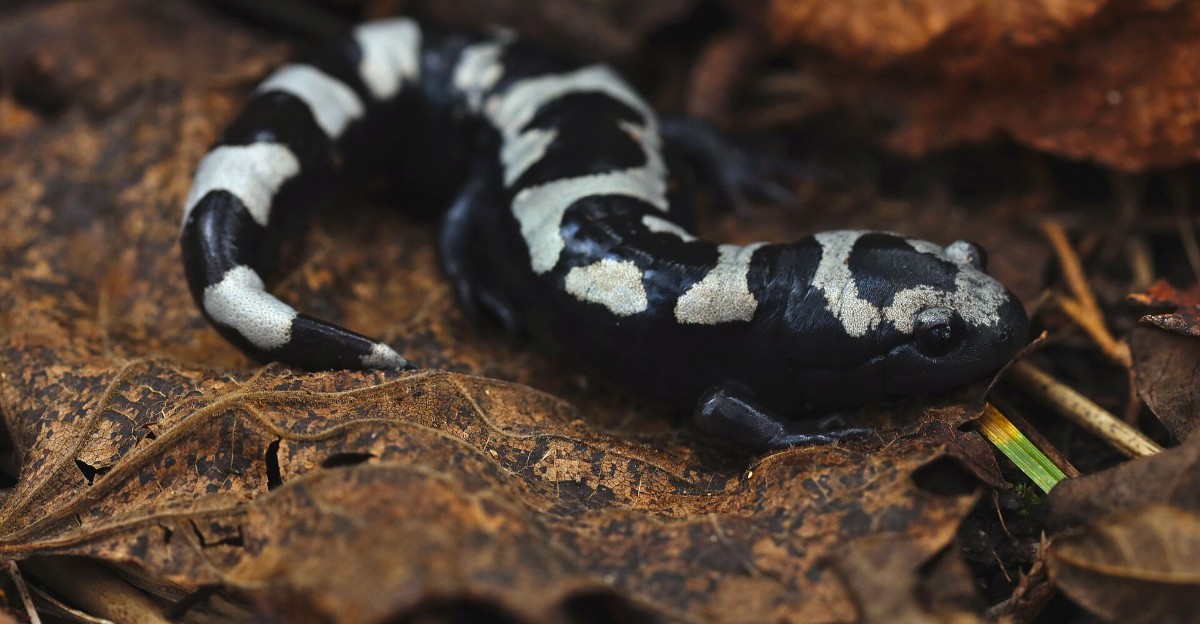
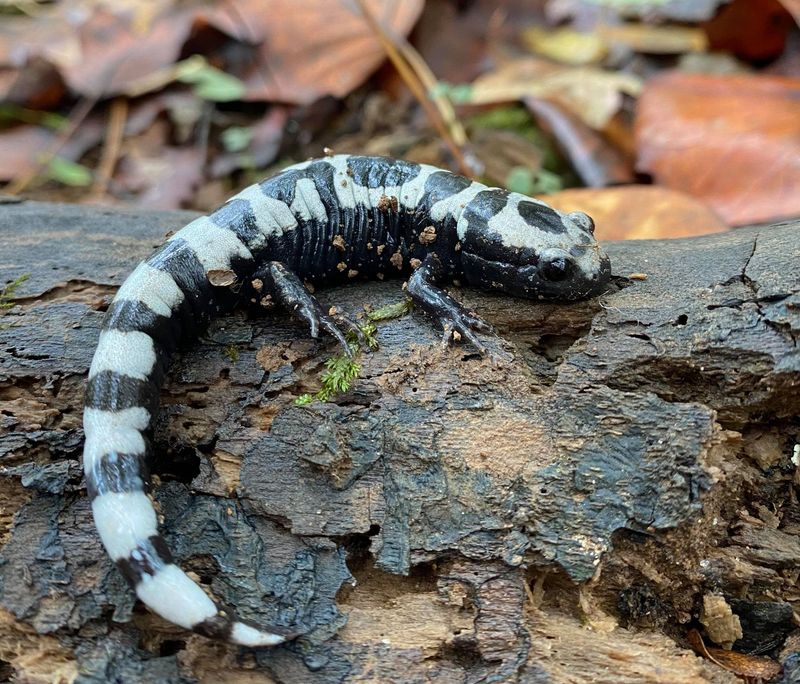
Few salamanders dress this sharply. Marbled salamanders wear a glossy black coat with thick crossbands that look like they were painted on.
Adults usually reach about 3.5 to 4 inches long, with a sturdy body and a short, wide head. Their bands help you tell the sexes apart, which is a fun trick for curious kids.
Males tend to have bright white or silvery bands. Females usually show grayer, softer bands, though there is some overlap.
Young salamanders that have just left the water look quite different.
They are often brownish or gray with light flecks, and the bold pattern develops over time.
The larvae are another story. They live in water, have feathery gills on the sides of their heads, and look a bit like tiny underwater dragons.
You will rarely see adults out in the open. They spend most of the year underground in burrows, under logs, or deep in leaf litter, coming out mostly on damp nights.
If you go looking, bring a flashlight on a rainy fall evening and walk slowly near wooded wetlands. Watch, enjoy, and avoid handling them with dry hands or lotion, since their skin is sensitive.
4. Rainy Fall Nights Bring Salamanders Marching To The Wetlands
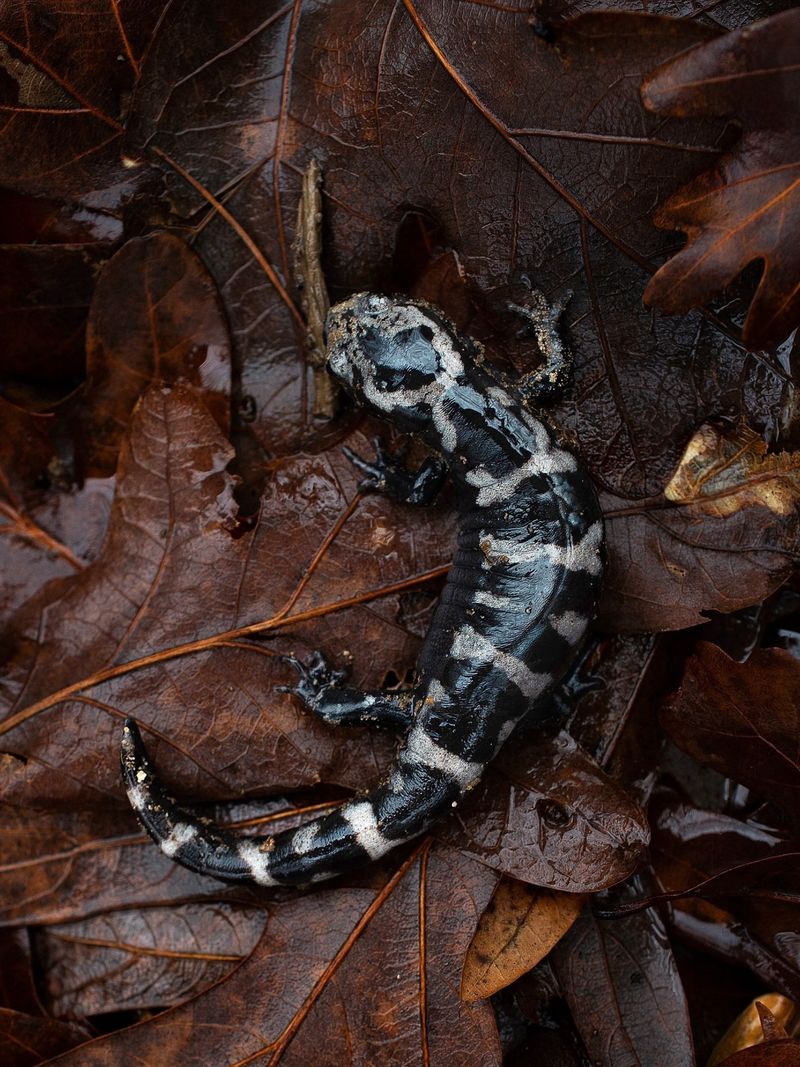
Picking the right night is half the battle for these little travelers. In Georgia, marbled salamanders usually head for their breeding spots from about September into November, often on warm, rainy nights.
Exact timing shifts across the state. North Georgia mountain populations may move earlier in fall, while those in the Coastal Plain often breed a bit later.
Males tend to show up first. They gather near the dry pool basin and court females with a kind of nudging, circling dance.
The male then drops a small packet of sperm on the ground. The female picks it up, and fertilization happens inside her body before she lays eggs.
Many salamanders return to the same pools year after year.
That loyalty is lovely, but it also means losing a single wetland can affect a whole local population.
Roads are a real hazard during these migrations. Salamanders crossing pavement on wet nights can be run over in large numbers.
If you live near woods and wetlands, slow down on drizzly fall evenings. Some communities even organize volunteer crossing patrols, and helping a salamander across in the direction it was heading is a kind gesture.
5. Your Leaf Pile Could Become Prime Salamander Habitat
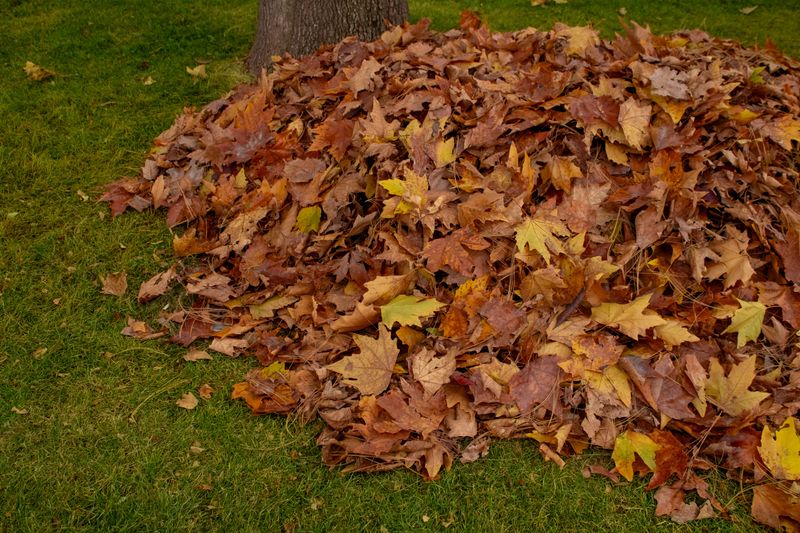
Raking every last leaf might feel tidy, but salamanders see it as a housing crisis. Marbled salamanders rely on moist leaf litter, rotting logs, and loose soil to stay hidden and damp.
Adults live mostly in hardwood or mixed forests near floodplains and temporary wetlands.
If your property touches a wooded area, you can make it friendlier with a few easy steps.
Leave some leaves in shady beds through fall and winter. They hold moisture, feed the soil, and shelter worms and insects that salamanders eat.
Keep a fallen log or two in a quiet corner. As the wood softens, it becomes a cool hideout that stays damp even in dry spells.
Native shade plants help too. Ferns like Christmas fern, along with native groundcovers and trees such as oaks, build the layered, shady habitat these amphibians favor.
Try to cut back on pesticides and lawn chemicals near wooded edges. Amphibians absorb substances through their skin, so runoff can hurt them.
Personally, I call my messy back corner the salamander suite. It costs nothing, takes less work than raking, and gives wildlife a real chance.
6. Small Seasonal Ponds Need More Protection Than You Might Expect
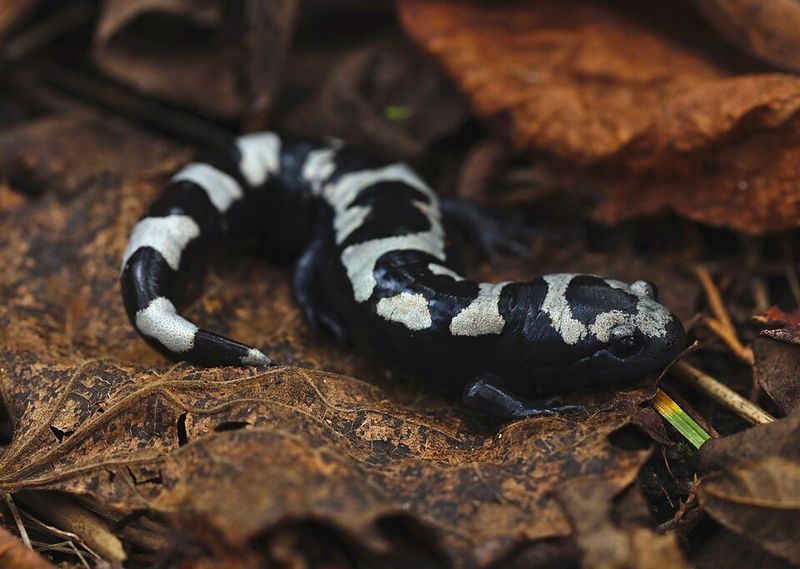
Some of the most important wetlands in Georgia are barely bigger than a backyard pool. These seasonal ponds can look like nothing more than a muddy dip most of the year.
Because they are small and often dry, they are easy to fill, drain, or clear during development. Their loss is one of the biggest threats to marbled salamanders and other pool-breeding amphibians.
The species is not currently listed as threatened in Georgia, and it is still fairly widespread. Still, local populations can decline when wetlands disappear or when surrounding forest is cleared.
Adults need more than the pond itself. Studies suggest pool-breeding salamanders often roam a few hundred feet or more into nearby woods, so the forest around the pool matters a lot.
If you have a low spot that holds water in winter, consider leaving it alone. Avoid filling it, dumping yard waste in it, or stocking it with fish.
Keep a buffer of trees and leaf litter around its edges as well. Shade keeps the ground cool and moist for adults.
That soggy patch you once wanted to fix might be the most valuable square footage on your land.
7. Watching Marbled Salamanders Respectfully Makes Fall Even Better
Here comes the fun part, and it only takes patience. Fall is your best window in Georgia to observe marbled salamanders, especially after a soaking rain.
Visit public lands with bottomland forests or seasonal wetlands, and follow park rules about staying on trails. State parks and wildlife management areas sometimes host guided amphibian walks, so check their event calendars.
When you find a log or rock, lift it gently toward you so any critter underneath is shielded. Then set it back exactly in place.
If you discover a female with eggs, admire her from a distance and leave her be. Disturbing her may cause her to leave the clutch, which can leave the eggs exposed.
Wet your hands before touching any amphibian, and keep handling brief. Better yet, use your phone camera instead of your fingers.
You can also share sightings with community science projects like iNaturalist or Georgia Department of Natural Resources amphibian surveys. Your photos help biologists track where these salamanders live.
I believe every rainy October night now feels a little magical once you know a tiny striped mom might be out there, waiting for the water to rise.