The November Mistake Georgia Gardeners Should Avoid With Newly Planted Azaleas
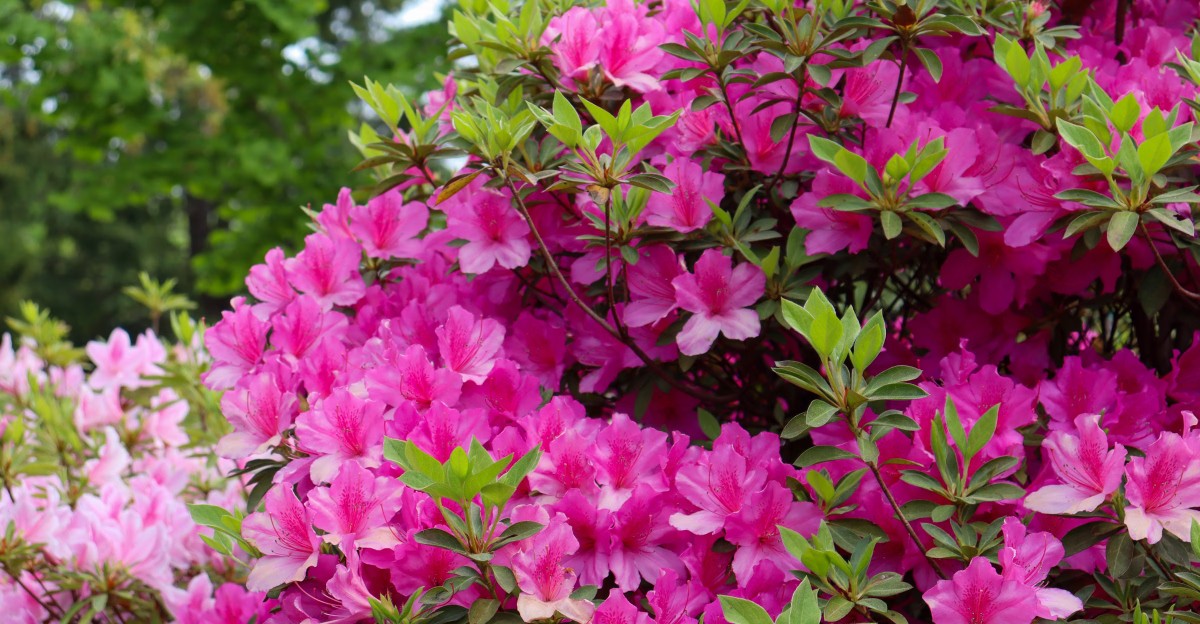
A bag of plant food can do more harm than good in late fall. That surprised me the first time I learned it, because feeding feels like the kindest thing a gardener can do.
Here in Georgia, November soil often stays warm long after the air turns crisp. Roots keep working underground while the leafy tops slow down and settle in for winter.
That quiet season below the surface matters more than most of us realize.
I love tucking new shrubs into the ground this time of year. The weather is cooler, the rain is often kinder, and young plants have months to settle before summer heat returns.
Still, one well-meant habit can undo much of that head start.
What should you hold back, and what should you give instead? The answer is simpler than you might expect, and your spring flowers depend on it.
1. That Bag of Shrub Fertilizer Can Wait Until Spring
A scoop of fertilizer looks harmless sitting on the garden bench. Yet for azaleas planted this fall, that scoop is the mistake to skip.
Feeding new shrubs in November can create more trouble than help.
Most shrub fertilizers contain nitrogen, and nitrogen tells a plant to grow leaves and shoots. In late fall, azaleas are supposed to be slowing down.
They are shifting into a resting mode that helps them handle cold nights.
When you feed them now, you send mixed signals. The plant may push out fresh growth when it should be getting ready for winter.
University extension experts in the Southeast, including the University of Georgia, advise against fertilizing azaleas late in the season for this reason.
I know the urge well. You just planted something lovely, and you want to help it settle in.
Feeding feels like a warm welcome, a little care package for the new arrival.
In reality, the best welcome right now is patience. Your new azalea already has stored energy and plenty to do underground.
Put the fertilizer bag back in the shed and save it for the right moment. Your shrub will be better for it come spring.
2. Tender Azalea Shoots Have No Time to Toughen Up Before Frost
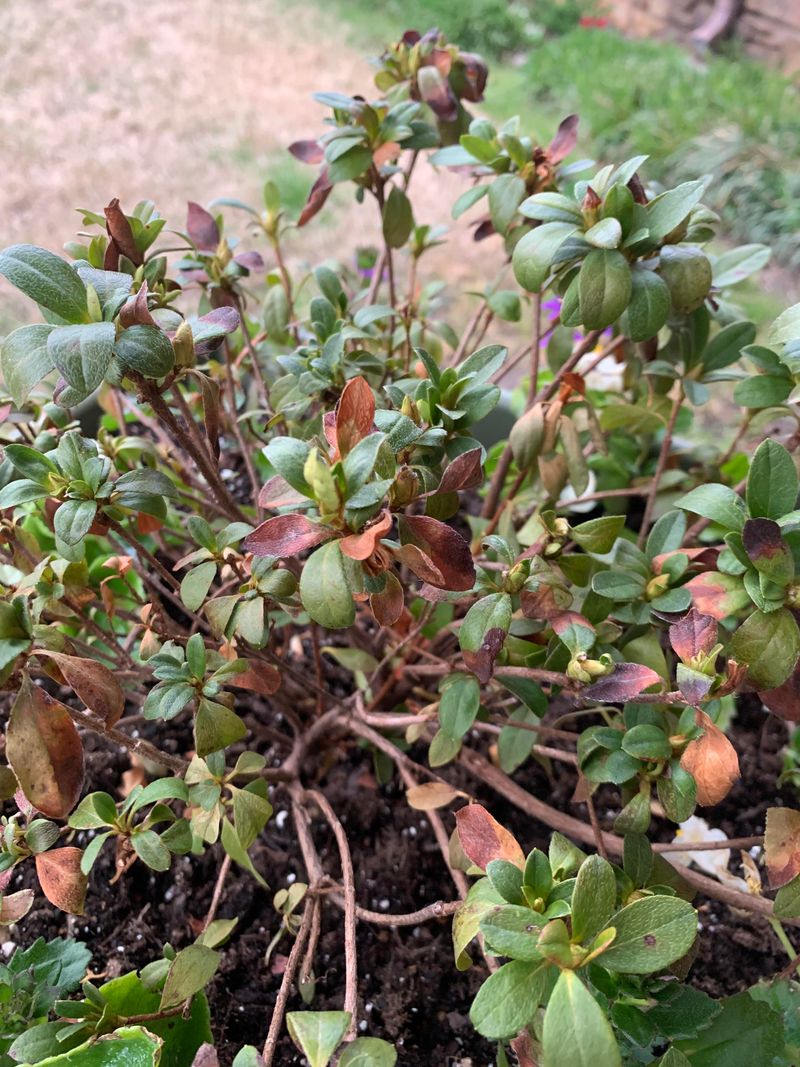
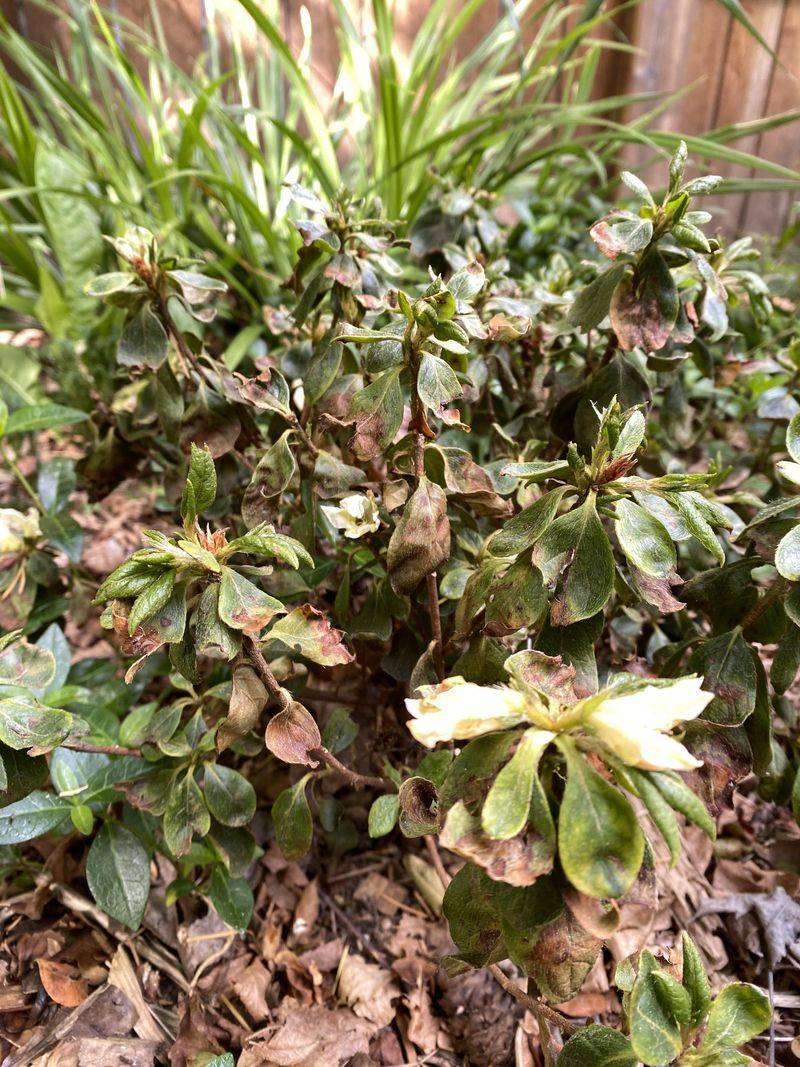
Soft new leaves are the weak spot in this whole story. When fertilizer sparks late growth, those fresh shoots come out pale, thin, and full of water.
They look healthy for a few weeks, then the weather turns.
Plant tissue needs time to harden off. That means it slowly thickens and builds tolerance to cold.
Growth that starts in November rarely gets that chance before the first hard freeze arrives.
Across Georgia, first frost dates vary a lot. North Georgia mountain areas often see frost in October, while the Atlanta area usually gets it in early to mid November.
Coastal and southern counties may wait until late November or December, but cold snaps can still sneak in.
Frost-damaged shoots turn brown or black and shrivel. The shrub usually survives, yet it loses energy repairing that harm.
A young plant with a small root system has little energy to spare.
Damaged tips can also leave openings for disease. That adds one more problem to a shrub still learning its new home.
Honestly, it is a lot of stress caused by a single well-meaning scoop of plant food, and it is easy to prevent.
3. Azalea Roots Are Quietly Doing the Heavy Lifting Underground
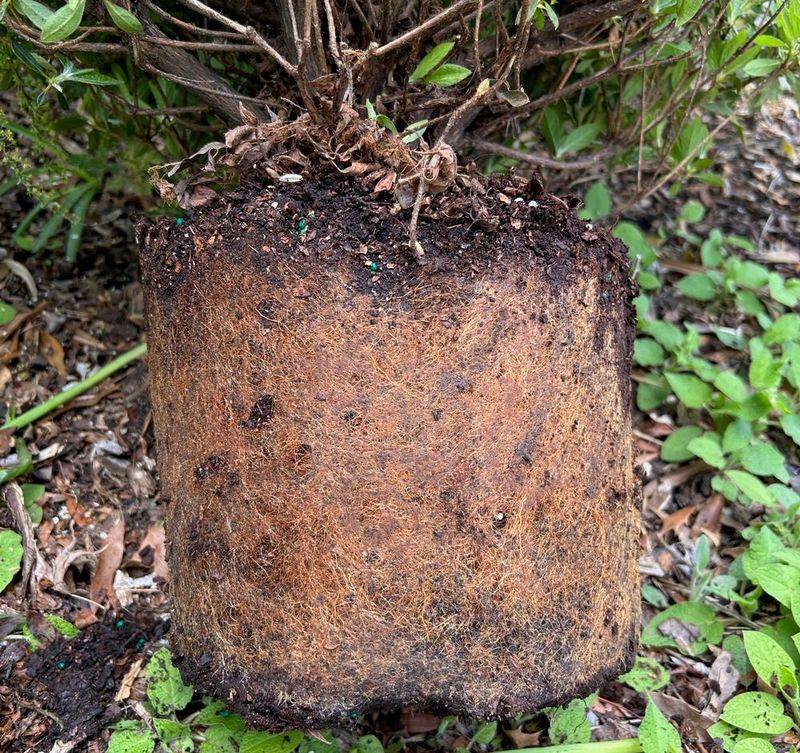
Out of sight is not out of action. While the top of your azalea looks still, its roots are busy reaching into new soil.
Fall planting works so well because of this hidden growth.
Soil cools much more slowly than air. In much of Georgia, the ground stays warm enough for root growth well into late fall and sometimes through mild winters.
Those fine, threadlike azalea roots keep spreading whenever conditions allow.
Azaleas have shallow, fibrous roots that stay near the surface. That makes them sensitive to drying out and to too much fertilizer salt.
Strong fertilizer near young roots can burn them, which slows the very establishment you want.
Think of fall as the plant’s quiet foundation season. Every inch of root grown now means better water uptake next summer.
Georgia summers can be brutal, so a deep, healthy root system is a huge advantage.
Fun fact: azalea roots naturally partner with special fungi in the soil. These helpers improve nutrient uptake in acidic ground.
Heavy feeding can reduce the plant’s need for these partnerships. Let the roots and their tiny allies do their work without interference this month.
4. A Slow, Deep Drink Beats Plant Food for Young Azaleas
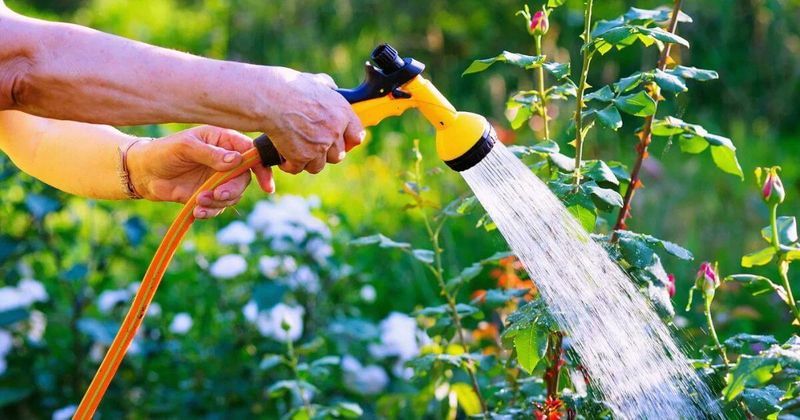
Water is the gift your new shrub actually wants. Plenty of fall-planted azaleas struggle not from hunger, but from thirst.
Their small root balls dry out faster than the surrounding soil.
Check the soil a few times a week by poking a finger about two inches down. If it feels dry, give the plant a slow, deep soak.
A hose trickling at the base for several minutes works better than a quick spray.
Fall in Georgia can be surprisingly dry. Some years bring weeks without meaningful rain, especially in October and November.
Newly planted shrubs need steady moisture during their first year, even while temperatures drop.
Moist soil also holds heat better than dry soil. That helps shield roots during cold nights.
Watering before a predicted hard freeze is a smart move many experienced gardeners rely on.
Be careful not to drown them, though. Azaleas dislike soggy ground, and waterlogged soil can lead to root rot.
Aim for damp, like a wrung-out sponge, rather than muddy. A little attention with the hose this month pays off with fuller growth and better blooms next spring.
5. Pine Straw Mulch Makes a Cozy Winter Blanket
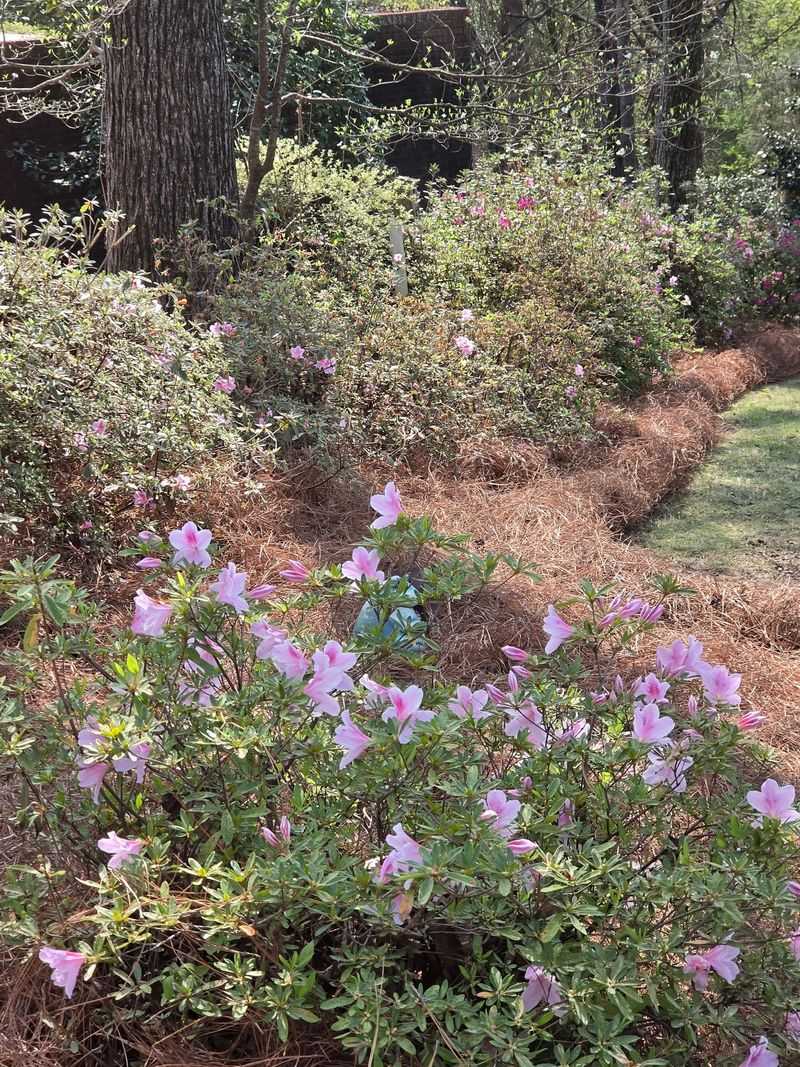
Southern gardeners have trusted pine straw for generations, and azaleas love it. A good mulch layer may do more for your young shrub this month than anything from a bag.
It is cheap, easy, and very effective.
Spread about two to three inches of pine straw, pine bark, or shredded leaves around the plant. Mulch keeps moisture in the soil and evens out temperature swings.
Those shallow azalea roots stay calmer under a cozy cover.
As it slowly breaks down, organic mulch adds gentle nutrients and improves soil structure. That is a slow, natural kind of feeding that will not push risky late growth.
Pine straw also leans slightly acidic, which suits azaleas nicely.
Keep the mulch a few inches away from the main stem. Mulch piled against bark holds moisture there and invites rot or pests.
A small ring of open space around the trunk is all you need.
Avoid going too thick, too. More than about four inches can block air and water from reaching the roots.
Check the layer each fall and refresh it as needed. Your azaleas will thank you with steady, healthy growth.
6. Yellow Azalea Leaves Might Point to Soil pH Instead of Hunger
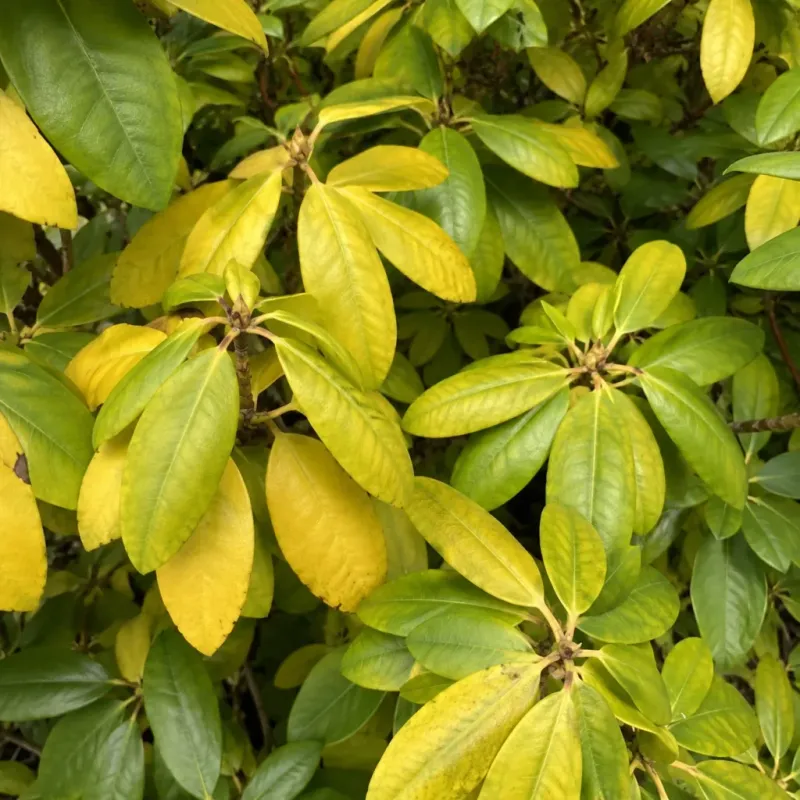
Yellow leaves can tempt anyone to grab the fertilizer. Before you do, take a closer look at the pattern.
Yellowing between green veins often signals a soil pH problem, not a lack of food.
Azaleas prefer acidic soil, roughly a pH of 4.5 to 6.0. When soil is too alkaline, the plant struggles to absorb iron and other nutrients, even if they are present.
Experts call this condition chlorosis.
Soil near concrete foundations, sidewalks, or driveways can run higher in pH. That is a common trap for azaleas planted close to the house.
Adding fertilizer will not fix a pH issue and may add stress.
Some yellowing in fall is also normal. Many azaleas shed a few older inner leaves as the season changes.
If the newest leaves look green and healthy, your shrub is likely fine.
The smartest step is a soil test. UGA Extension offices across the state offer affordable testing and clear recommendations.
Results tell you exactly what your soil needs, so you avoid guessing. Plan any pH adjustments based on those results rather than reacting to a few yellow leaves this month.
7. Blooming Azaleas Tell You When Feeding Time Finally Arrives
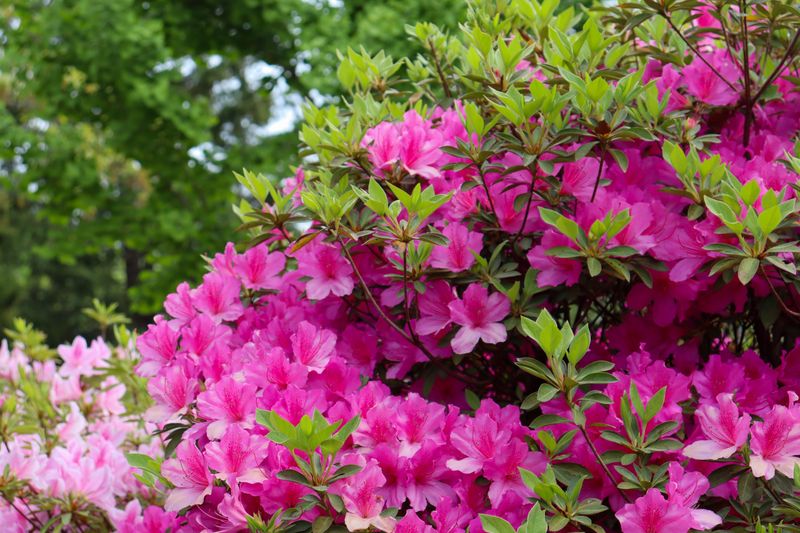
Spring flowers are your best calendar reminder. For most azaleas, the ideal feeding window opens right after blooms fade.
That timing supports healthy leaves and sets up next year’s flower buds.
Newly planted azaleas often need little or no fertilizer in their first season. If you mixed compost or organic matter into the planting area, the soil may already offer enough.
Let a soil test guide you before adding anything.
When feeding does make sense, choose a slow-release fertilizer made for acid-loving plants. Apply it lightly and spread it out near the drip line, not piled against the stem.
Water it in well afterward.
Reblooming types, such as Encore azaleas, flower in spring and again in late summer or fall. They may benefit from a light feeding in spring and again after the first bloom.
Follow label directions carefully.
For all types, stop feeding by mid to late summer, generally around July. That gives new growth time to toughen before cold weather.
Keep this rhythm in mind, and your azaleas can grow into the full, colorful shrubs that make Georgia springs so memorable. Patience now means a better show later.