Manage Indoor Darkness and Temperature to Encourage Holiday Cactus Buds in Arizona
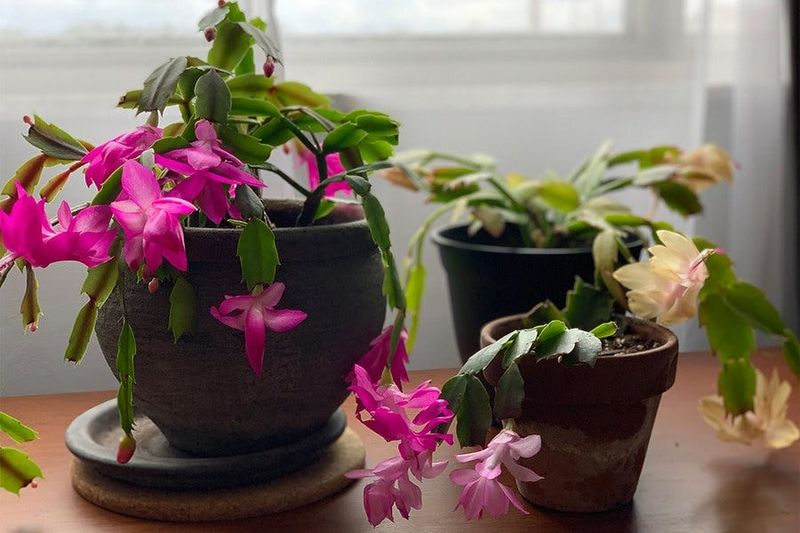
A houseplant can ignore a sunny Arizona October and still wait for the right kind of night. Holiday cacti pay attention to long, uninterrupted darkness, and a porch light can confuse them.
Temperature plays a part too, and that surprises many growers. Here is how to set up your plant for its best shot at buds without promising a bloom date.
Short Days Help Cue Flower Buds
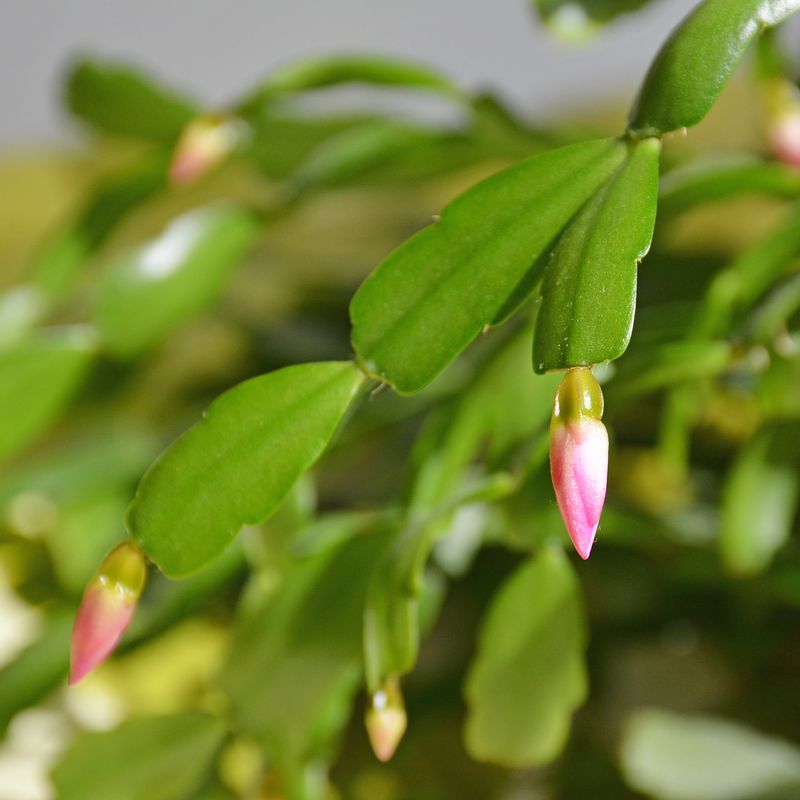
Holiday cacti set flower buds when days get short and nights get long and unbroken. Temperature also has a say, so darkness is only part of the story.
A University of Arizona guide suggests starting about six to eight weeks before the holiday you have in mind. Treat that as a planning window, not a promise or a magic formula.
Your plant, your home, and your timing may differ.
Iowa State describes the same short-day response and points out that cool nights matter as well. Think of the routine as setting the stage.
The plant still decides when to act, so give it steady care and some patience.
Arizona’s Natural Nights Are Not a Guarantee
The title idea that Arizona nights will do the job on their own does not hold up. Phoenix sunset-to-sunrise time in October 2026 runs from about 12 hours 10 minutes on October 1 to 13 hours 9 minutes on October 31, based on Time and Date sun tables.
That is shorter than the 15-hour nights in the University of Arizona holiday cactus guide. It also counts twilight, so the truly dark stretch is shorter still.
Those numbers are for Phoenix, and other Arizona spots will differ.
Add porch lights, streetlights, and kitchen glow, and a windowsill plant may never get a full dark period. The takeaway is simple: do not assume natural nights meet your plant’s needs.
Manage the darkness yourself.
Darkness Recommendations Vary
Ask three extension sources how much darkness a holiday cactus needs and you may get three answers. The University of Arizona fact sheet says nights of at least 15 hours, while another Arizona Extension page gives 12 to 16 hours of darkness for six to eight weeks.
Iowa State says many cultivars want 14 to 16 hours of uninterrupted darkness, though some may respond to 12. You can read more in the Arizona Extension article and the Iowa State guide.
So there is no single exact rule. Cultivar, temperature, and plant condition all shift the response.
Pick a schedule within the published ranges, watch how your plant reacts, and adjust next year.
Protect the Dark Period Indoors
Daytime comes first: give your plant bright, indirect light. A spot near a window with a sheer curtain works well in many Arizona homes.
At night, protect it from lamps, kitchen lights, and streetlights. Iowa State and Clemson Extension both note that night lighting can interfere with bud initiation.
What counts is uninterrupted darkness, not the hours between sunset and sunrise. A quick flip of a switch in the room can break the stretch.
Try a closet, a spare room nobody uses at night, or a box that blocks light, and bring the plant back out each morning.
Temperature Also Shapes Flowering
Darkness is not the whole recipe. The University of Arizona guide recommends 60 to 65 degree conditions and reports fewer flowers when nights run above 70 degrees, as noted in its holiday cactus fact sheet.
Iowa State cautions that temperatures above 70 can prevent flowering even under short days. It also says some plants will flower at about 55 degrees in fall regardless of day length, and UConn lists nights around 55 as an alternative.
Treat each number as that source’s guidance, not a universal target. Cooler does not mean cold drafts, an open winter door, or a frosty porch.
Choose a steady, comfortable cool room instead.
The Plant’s Label Can Change Its Blooming Season
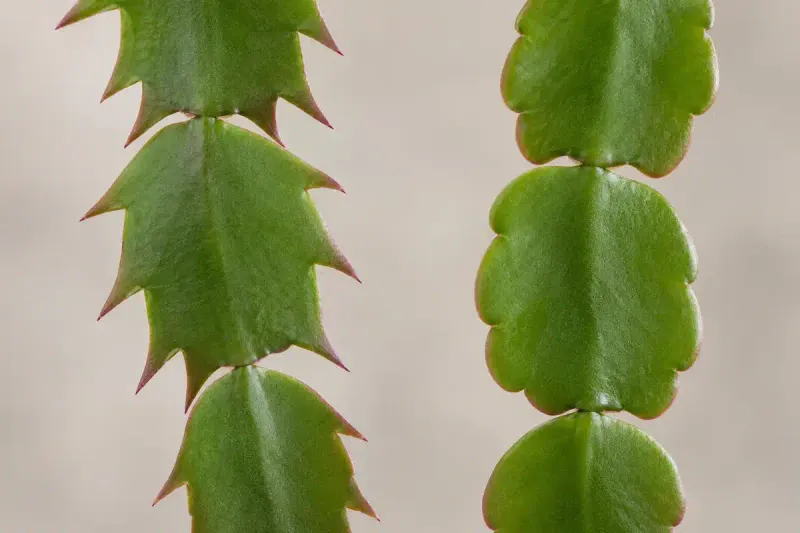
That tag saying Christmas cactus may be wrong. UMass Extension says many commercial holiday cacti are actually Thanksgiving cactus, Schlumbergera truncata, which tends to flower four to six weeks earlier than true Christmas cactus, as described in its commercial production fact sheet.
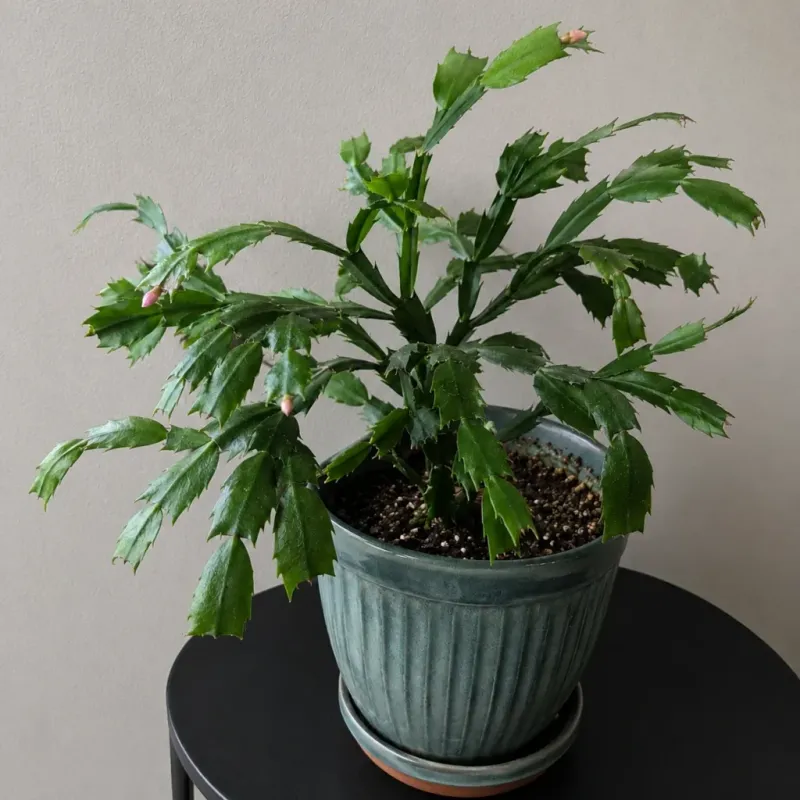
Clemson Extension offers a quick check: look at the stem segment edges. Thanksgiving cactus segments have pointed projections, while Christmas cactus segments are more rounded.
Cultivars also differ in timing and response, and Wisconsin Extension notes that forcing a plant for a specific date may take experimentation. A label mix-up plus cultivar variety explains why a bloom date is never assured.
Keep Care Steady After Buds Form
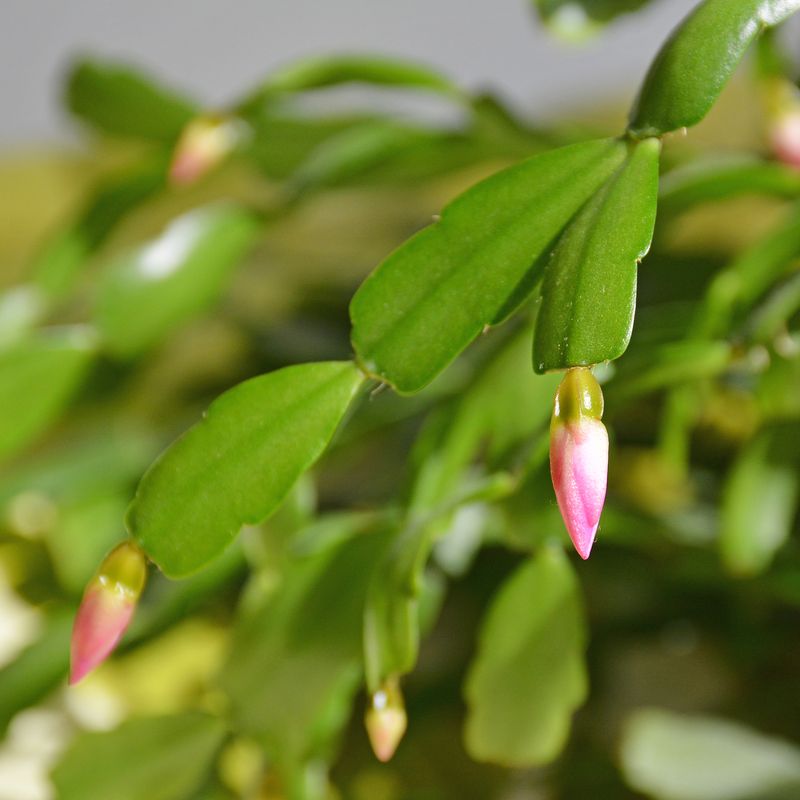
Once you spot tiny buds, resist the urge to rearrange. Abrupt changes in light, temperature, or location can contribute to bud drop, according to the University of Arizona guide and Iowa State.
Skip the idea of withholding water to trigger buds. UMass Extension reports research showing that water stress during flower induction can reduce bud set.
Remember, this is a tropical epiphyte from Brazil’s rainforests, not a desert cactus. Use a well-drained mix, water when the top feels slightly dry, and avoid both soggy and bone-dry pots.
Steady beats dramatic every time.
Encourage Buds Without Promising a Date
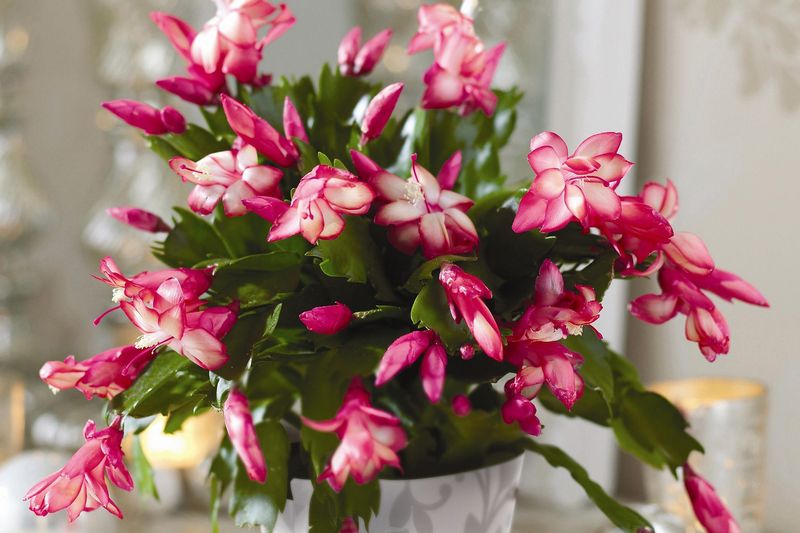
Start early, give your plant a consistent dark period, watch the temperature, and keep care steady. Those steps can encourage flowering, but they cannot lock in a precise holiday bloom date.
As Wisconsin Extension notes, forcing a plant for a specific date may take experimentation. Cultivar, plant condition, and growing conditions all play a role, and Iowa State’s ranges are guidance, not a contract.
Keep notes this year on dates, hours of darkness, and room temperature. Next season you will know your plant better.
A holiday cactus keeps its own calendar, and it rewards the gardener who learns to listen.