What Happens When You Mow Over Leaves On Your Indiana Lawn
Researchers at Michigan State University found that chopping maple leaves into a lawn cut dandelions dramatically over a few seasons. I read that twice. Then I looked at the twelve paper bags lined up at my curb and felt a little foolish.
I used to think fall cleanup meant sore shoulders and a raked yard as bare as a parking lot. Every October, I hauled away pile after pile of crunchy gold. It never crossed my mind that I was tossing out something my grass actually wanted.
Here in Indiana, a single big oak or maple can drop a jaw-dropping amount of leaves in just a few weeks. That smell of damp, earthy leaves is a clue about what they become later. Most of us just never stick around to see it.
So what really happens when your mower rolls right over that colorful mess instead?
Those Crunchy Fall Leaves Are Hiding Something Your Grass Wants
I’ll admit it, the first time I mowed over a yard full of maple leaves, I expected a disaster. Instead, the lawn looked cleaner within minutes. The leaves seemed to vanish into the grass like magic.
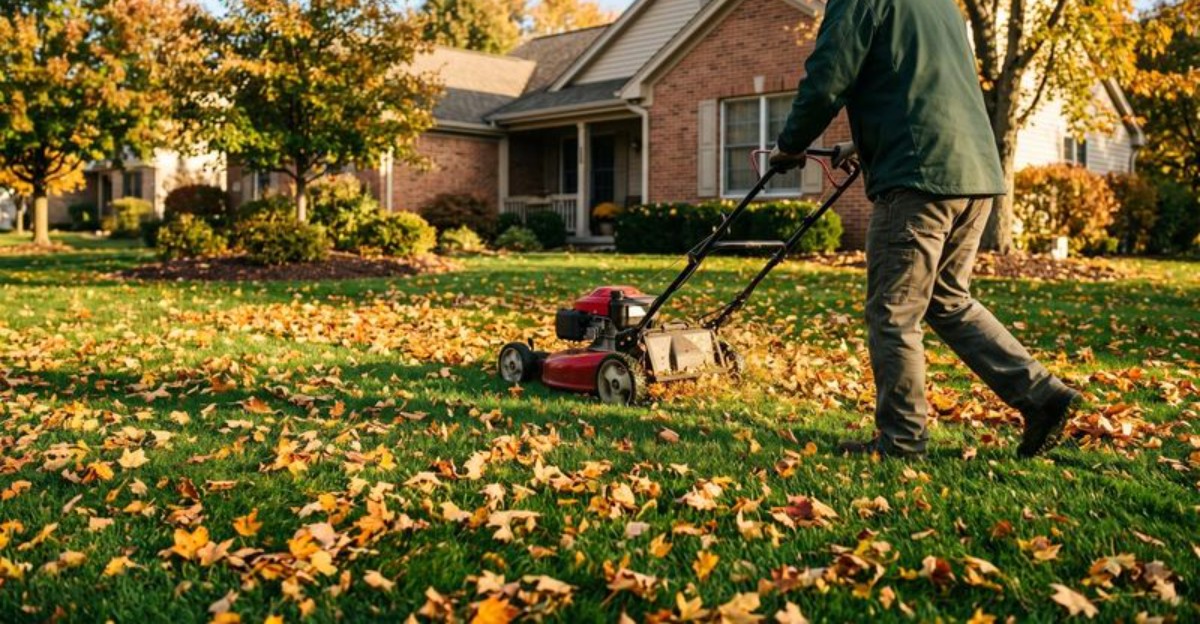
Nothing magic is going on, though. Your mower blade slices dry leaves into tiny flakes that drop down between the grass blades. Once they reach the soil surface, worms, fungi, and bacteria start breaking them apart over the fall and winter.
Leaves carry small amounts of nutrients the tree pulled from the ground all summer. As they break down, those nutrients slowly return to the soil. The bigger payoff is organic matter, which acts like a sponge and helps soil hold water and air.
Purdue Extension turf specialists support mulching leaves into the lawn when the layer is light enough. They note it can save you time and keep a lot of yard waste out of the landfill. That’s a nice bonus for anyone tired of bagging.
So the short answer is simple. Mowing over a reasonable amount of leaves feeds your soil life and gives your lawn a gentle boost. The trick is knowing how much is too much, and that comes next.
Chop Leaves Down To Dime-Sized Bits For The Best Results
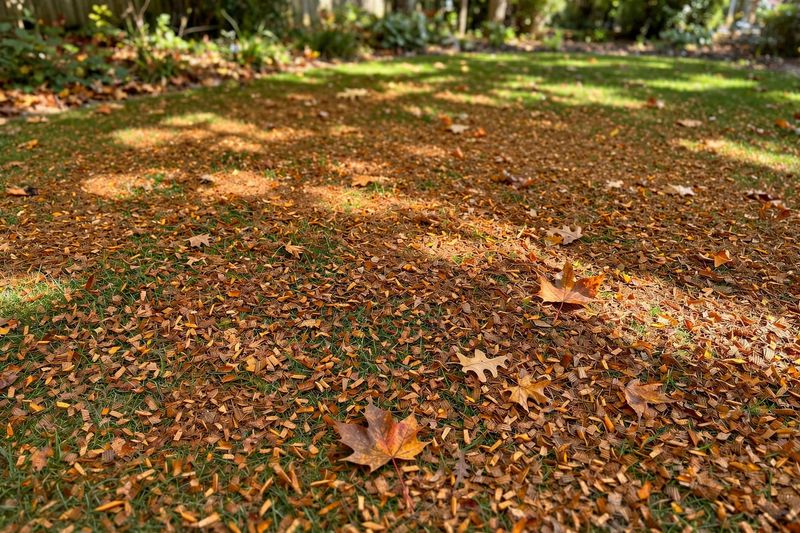
Size matters here more than anything else. Leaf pieces about the size of a dime or smaller slip down into the turf and break down fast. Big chunks just sit on top and shade the grass.
Pick a dry, breezy afternoon for the job. Crunchy leaves shred easily, while wet ones clump, stick to the deck, and leave soggy trails behind you. Your mower will thank you too.
Set the blade fairly high, around 3 to 3.5 inches for tall fescue and Kentucky bluegrass. Those are the cool-season grasses most Hoosier yards rely on. A higher cut gives the shredded bits room to settle without scalping the lawn.
One pass is rarely enough with a heavier layer. Go over the area two or three times, changing direction if you can. A mulching blade or mulching kit helps, but a regular rotary mower still does a decent job.
Here’s my quick test after mowing. Look down at the lawn and see if you can spot green grass easily through the leaf flakes. If about half the grass blades are visible, you’re in great shape. If not, make another pass or move some leaves elsewhere.
A Thick Blanket Of Oak Leaves Needs A Rake First
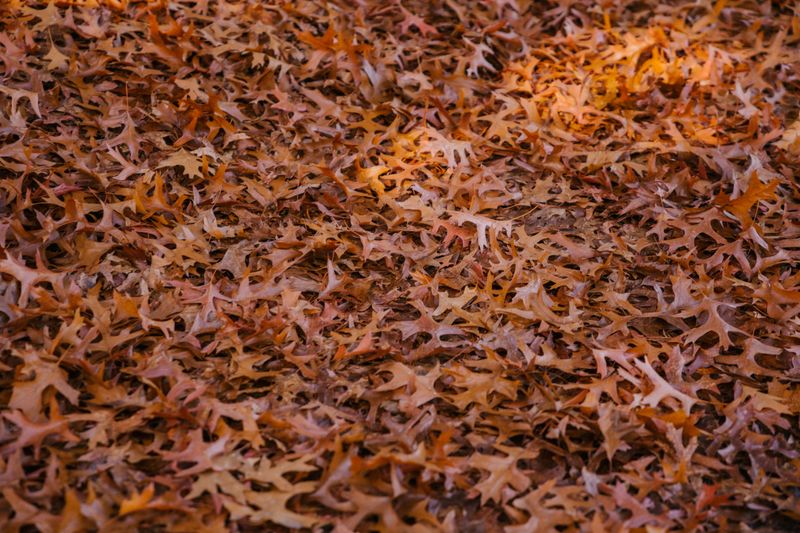
Call me stubborn, but I once tried to mulch a foot-deep drift under a big pin oak. The mower choked, and I spent an hour clearing the deck. Lesson learned.
Some yards simply get more leaves than a mower can handle. If you can’t see any grass under the pile, the layer is likely too thick to mulch in one go. Purdue experts suggest removing part of a heavy layer so the turf can still breathe and soak up light.
Oak leaves are tough and waxy, so they take longer to break down than maple or honeylocust leaves. Large trees can drop several inches at once. Mowing more often during peak leaf drop keeps the layer manageable.
A good plan is to rake or blow the extra leaves into a pile. Then mulch the thinner layer that’s left on the lawn. You get the soil benefits without burying your grass alive.
Leaf drop in northern Indiana often peaks a bit earlier than down south near the Ohio River. Keep an eye on your own trees rather than the calendar. They’ll tell you when to step up your mowing.
Soggy Matted Leaves Can Invite Snow Mold Into Your Turf
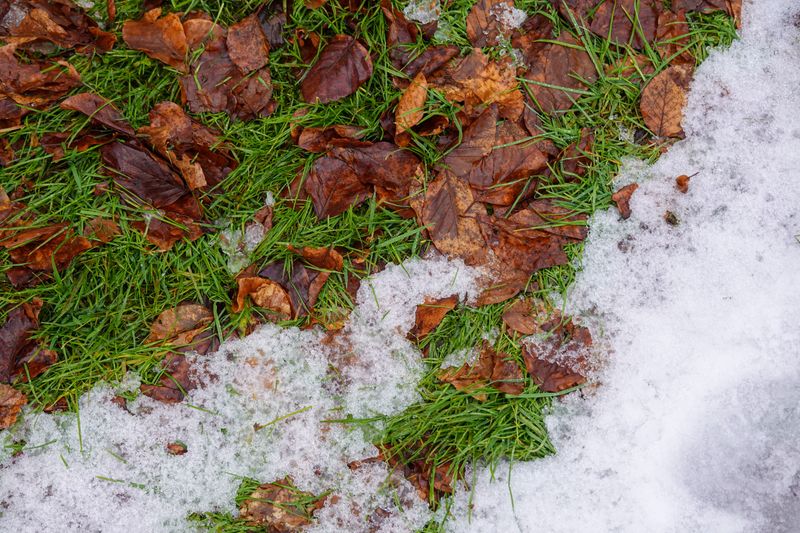
Trust me on this one, wet leaf piles are sneaky. They look harmless in November and then surprise you in March. That’s when the snow melts and reveals pale, crusty circles in the grass.
Those circles are often snow mold, a fungal problem common in cool-season lawns across the Midwest. Gray snow mold and pink snow mold both thrive under damp, matted cover that stays cold for weeks. Thick, wet leaves create exactly that kind of hideout.
A soggy leaf mat also blocks sunlight when grass still needs it. Fall is a key season for cool-season turf to store energy in its roots. Without light, the grass weakens heading into winter.
Most snow mold damage is cosmetic, and lawns usually recover once things dry and warm up. A light raking in spring helps fluff up matted spots. Still, preventing the problem is much easier than fixing it.
Keep leaves from piling up and staying wet on the lawn for long stretches. Shred them while dry, and move any excess into beds or a compost pile. Your spring lawn will look far better for it.
Earthworms And Fewer Dandelions Might Show Up Next Spring
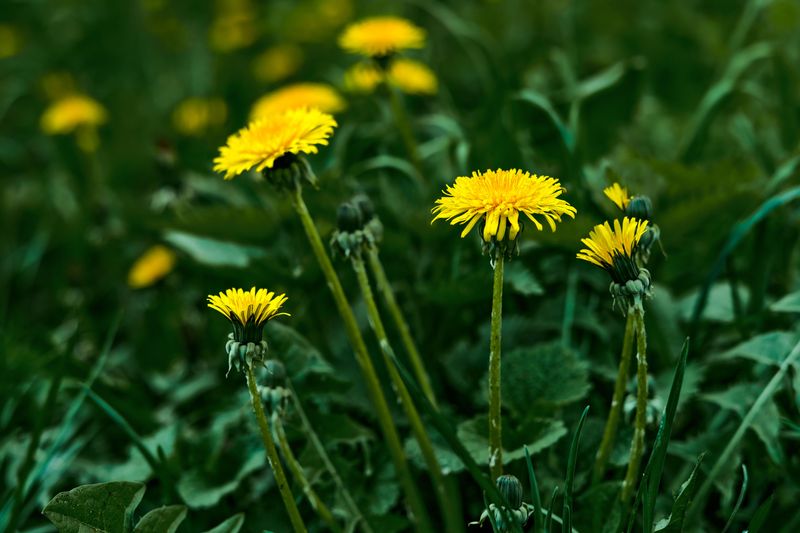
Here’s what gets me about leaf mulching. The results you notice next year aren’t just a greener lawn. You might also find more earthworms and fewer yellow dandelion heads.
Researchers at Michigan State University tested mowing large amounts of shredded maple leaves into turf for several years. They reported a noticeable drop in dandelions compared with lawns where leaves were removed. Scientists are still studying exactly why, and results with other leaf types may vary.
Earthworms are easier to explain. They love fresh organic matter and pull leaf bits down into their tunnels. Those tunnels loosen packed soil and help water soak in after heavy rain.
Better soil structure matters a lot in Indiana, where many yards sit on heavy clay. Clay compacts easily and drains slowly. Adding organic matter year after year can gradually make it crumblier and easier for roots to explore.
Don’t expect overnight changes. Soil improvement builds slowly, season by season. Stick with mulching for a few falls, then dig a small hole and look. Darker soil and wriggling worms are a pretty rewarding sight for any lawn lover.
Mowing Every Week Through Peak Leaf Drop Keeps Things Easy
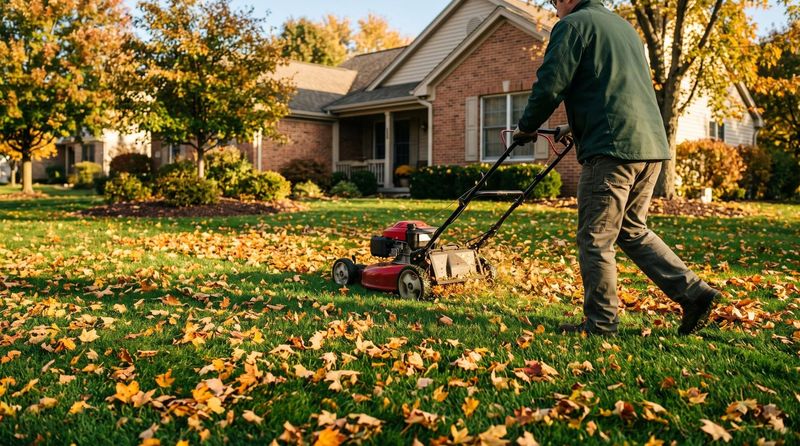
Every fall, I learn again that waiting is the enemy. Let leaves pile up for three weeks and you’ve got a chore. Mow them weekly and it feels like regular lawn care.
Plan to run the mower every five to seven days while trees are dropping heavily. In much of the state, that stretch runs from mid-October into mid-November. Thin layers shred quickly and settle in before the next wave lands.
Keep mowing until the grass stops growing, which usually happens after a few hard frosts. For that last cut, many turf experts suggest dropping the height slightly, to around 2.5 inches. Shorter grass is less likely to mat down under snow.
Fall fertilizing still has a place too. Purdue recommends fall nitrogen for cool-season lawns, and mulched leaves don’t replace that. Think of the leaves as a soil builder working alongside your regular routine.
Watch for pet waste, sticks, and walnuts before you mow. Hard objects can dull a blade or shoot across the yard. A quick walk around first takes two minutes and saves a headache.
Extra Shredded Leaves Make Gold For Garden Beds And Compost
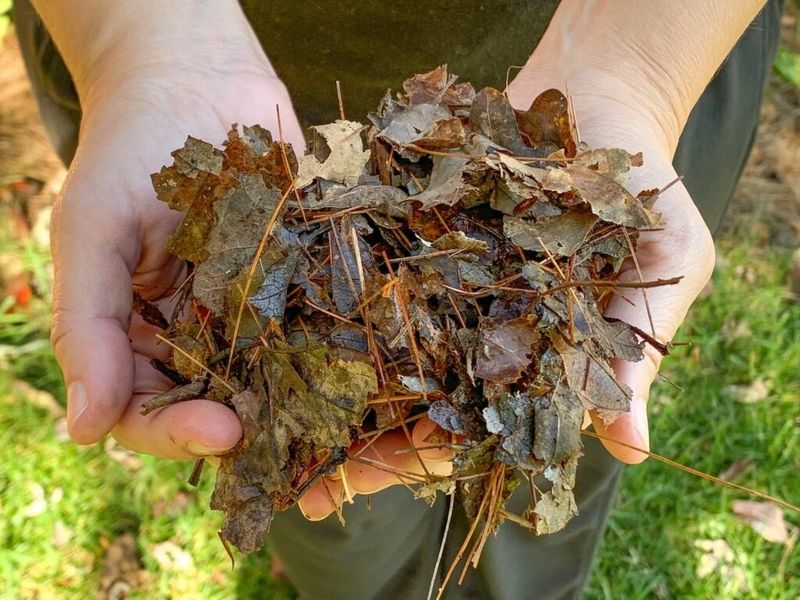
Not going to lie, extra leaves feel like a gift once you know what to do with them. Even after mulching the lawn, many yards have plenty left over. Please don’t send them to the curb just yet.
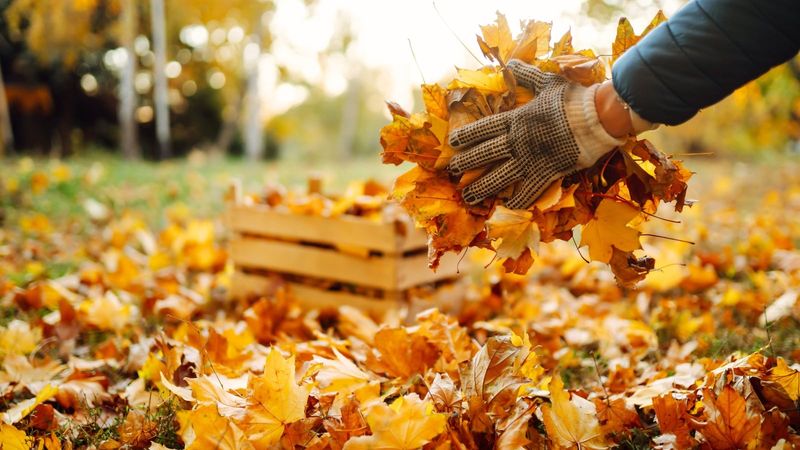
Shredded leaves make a fantastic winter mulch for perennial beds. Spread a layer two to three inches deep around plants, keeping it off the crowns. It helps hold moisture and evens out soil temperatures during freeze and thaw cycles.
Your compost pile will love them too. Leaves are a classic brown ingredient, rich in carbon. Mix them with green kitchen scraps or grass clippings, and they break down into rich, dark compost by next summer.
You can also pile them in a corner to become leaf mold. That crumbly material is wonderful for vegetable gardens. It takes a year or two, but it asks for almost no work.
Leaves left in quiet beds also give shelter to overwintering insects, including some butterfly and moth caterpillars. So the real takeaway is this. Keep your leaves on your property, use them wisely, and let your yard feed itself.