The Sticky Residue on Michigan Patio Plants That May Signal Spotted Lanternfly Feeding
Some insects pee so much sugary liquid that the trees above you seem to be drizzling on a sunny day.
I found that out the hard way when my patio chair felt tacky, like someone had spilled soda and walked off. The leaves above it glistened. The railing shone too, and a few ants were already marching in for a snack.
Here’s something you might not expect. That shiny coating isn’t sap leaking from the plant at all. It’s waste left behind by tiny sap-drinkers, and it can turn black and grimy within days.
In Michigan, that sticky clue now carries extra weight. A flashy newcomer with polka-dot wings has settled into a handful of counties, and gardeners are being asked to watch for it.
So the real question is simple. What exactly is dripping on your patio, and how can you tell who left it there?
1. That Shiny Film On Your Patio Leaves Is Actually Bug Waste
Run a finger across a glossy leaf, and if it feels like dried lemonade, you’ve met honeydew. It’s the sugary liquid that sap-feeding insects push out after drinking from plant veins.
Plant sap is loaded with sugar but low in protein. Insects that feed on it have to process huge amounts to get the nutrients they need, so the extra sugar water comes out the other end. That leftover liquid lands on whatever sits below.
On a patio, that means leaves, deck rails, cushions, grills, and car windshields. Heavy feeding can make it feel like a light mist is falling from a tree, even on a clear afternoon.
A quick test helps. Honeydew usually shows up on top of lower leaves and on surfaces directly under the feeding spot, not on random patches across the yard. Look straight up from the sticky area, and you’ll often find the source.
Tree sap from a wound, by comparison, tends to ooze from one spot on bark. Honeydew coats things in a spread-out shine.
Knowing the difference is the first step toward figuring out who’s feeding on your plants. Once you confirm it’s honeydew, the next job is finding the insect responsible.
2. Spotted Lanternflies Rain Down More Honeydew Than Most Bugs
Few insects make a sticky mess quite like the spotted lanternfly. These planthoppers feed in groups, and a crowded trunk can pour out honeydew in surprising amounts.
Spotted lanternflies are native to parts of Asia and were first confirmed in Michigan in 2022, in Oakland County.
The Michigan Department of Agriculture and Rural Development has since confirmed them in several southern counties, including spots in the Detroit area and southwest Michigan.
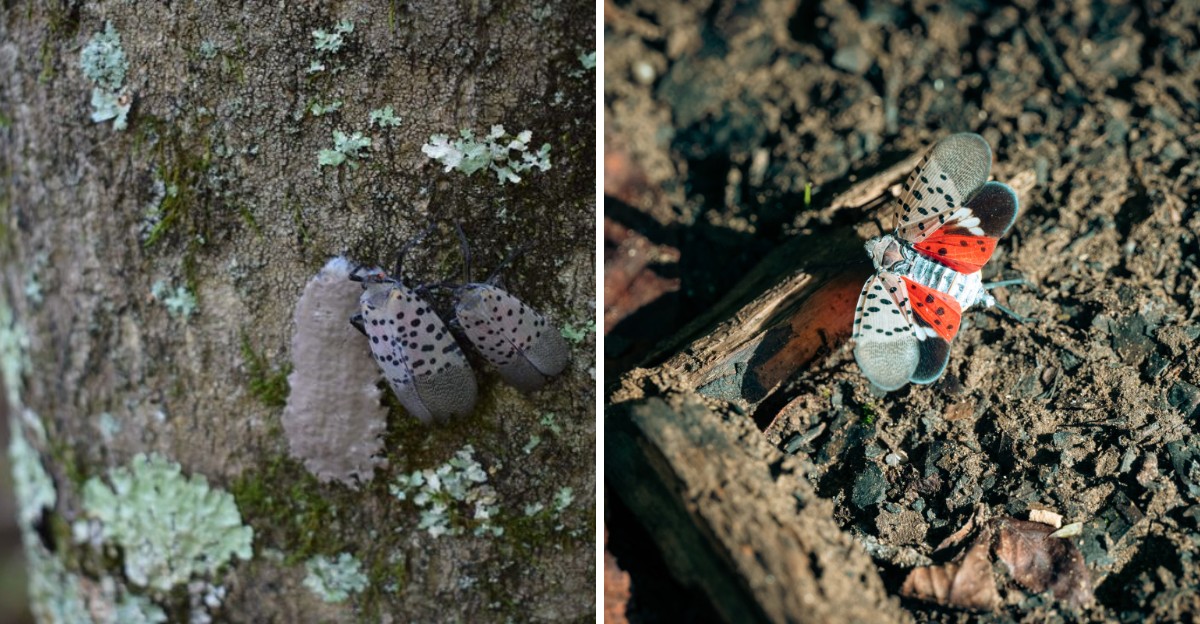
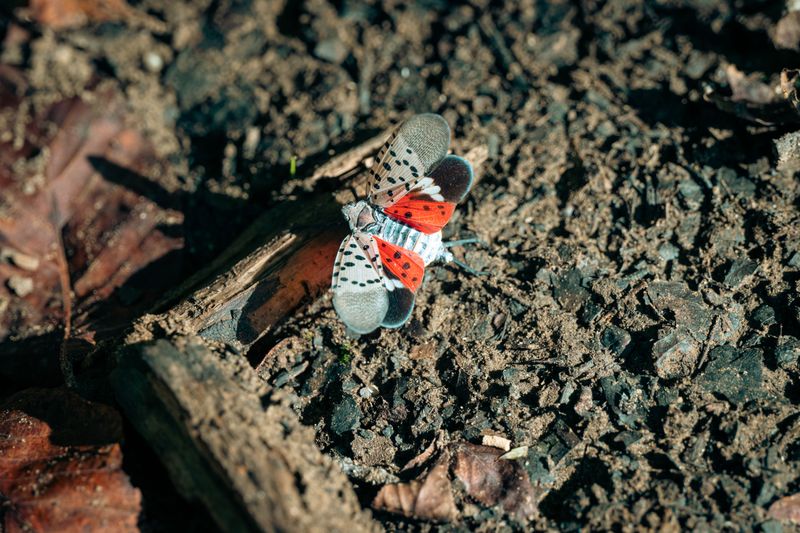
Most of the state, especially up north, has no confirmed populations. Adults are about an inch long. Their forewings are pinkish gray with black spots, and when they hop or fly, bright red hindwings with black and white patches flash open.
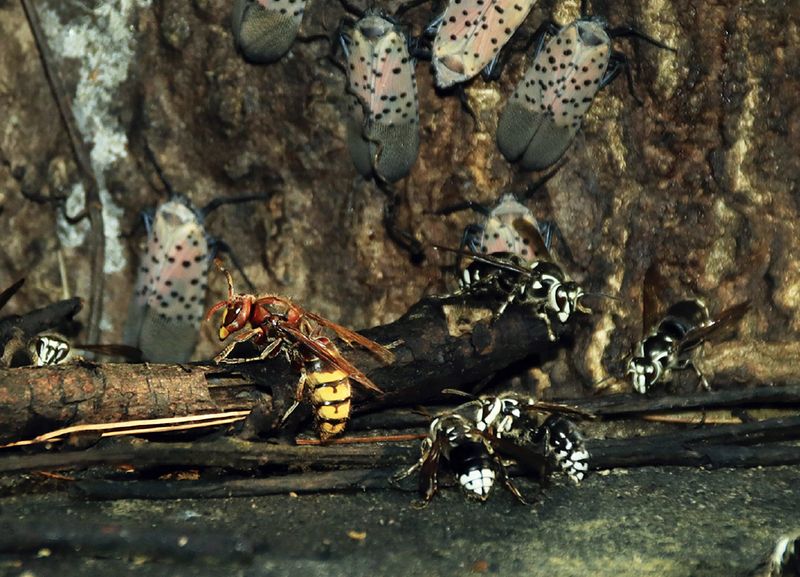
What sets them apart is volume. Penn State Extension notes that heavy feeding can leave surfaces dripping and glistening, with bees and wasps swarming the sugary film.
So if your patio is sticky and you live in or near a county with confirmed sightings, it’s worth a careful look. Check trunks, stems, and the undersides of branches during the day, when they’re feeding.
Still, stickiness alone doesn’t prove lanternflies are present. You need to see the insect, its eggs, or its young to be sure.
3. Polka-Dot Nymphs Show Up Long Before The Red-Winged Adults
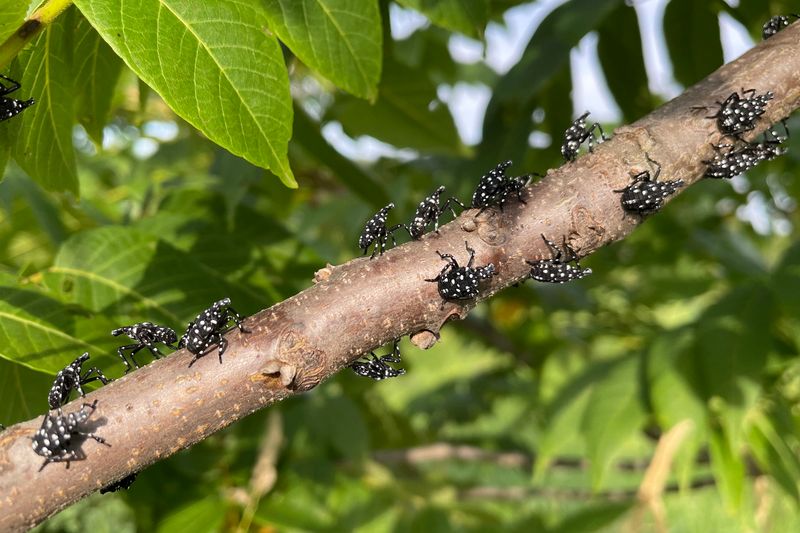
Here’s a twist many gardeners miss. The young lanternflies look nothing like their parents, and they start feeding months before adults appear.
Eggs hatch in late spring, usually around May or June in the Great Lakes region. The first nymphs are tiny, about the size of a tick, and black with crisp white spots. They hop fast when you reach for them.
By mid to late summer, older nymphs turn bright red with black and white markings. They’re roughly half an inch long and hard to overlook once you know what to watch for.
Adults usually show up from late July or August into fall. They keep feeding until a hard freeze ends the season, which is why autumn patios often get the stickiest.
Nymphs feed on tender stems and leaves, so check new growth on roses, grapes, maples, and herbaceous plants. Adults prefer woody stems and trunks. Snap a clear photo whenever possible.
A good picture helps officials confirm a sighting, and it lets you compare your bug against identification guides from MSU Extension. Learning all three looks, black nymph, red nymph, and spotted adult, makes you a far sharper scout.
4. Black Sooty Mold On Leaves Means Honeydew Has Been There A While
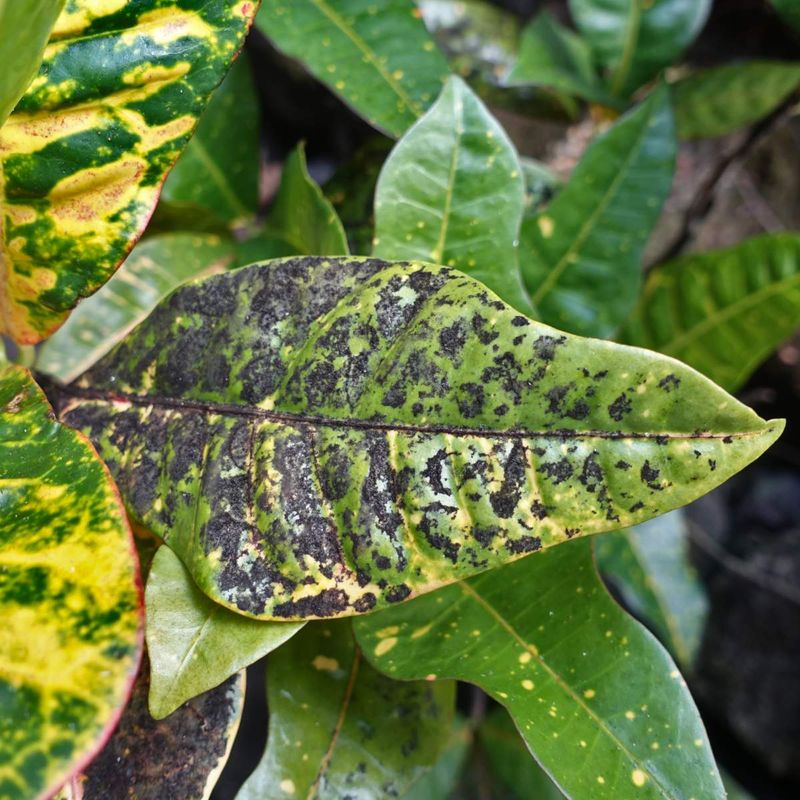
Ever wiped a leaf and watched black dust smear onto your fingers? That’s sooty mold, and it’s honeydew’s messy sidekick.
Sooty mold isn’t one single fungus. It’s a group of fungi that grow on sugary honeydew, not on the plant tissue itself. They don’t infect the leaf, but they coat it like a layer of soot.
That dark coating blocks sunlight. Leaves that can’t soak up light make less food, so heavily coated plants may look tired, slow down, or drop leaves early.
On patios, sooty mold also stains furniture, umbrellas, decks, and siding. Under lanternfly-heavy trees, Penn State Extension reports blackened ground plants and lawns too.
Cleanup is fairly simple once the feeding stops. A spray of water or a gentle wash with mild soapy water usually loosens it from sturdy leaves and hard surfaces. Rain and weathering help over time.
The catch is that washing only treats the symptom. If insects keep feeding overhead, fresh honeydew lands and the black film returns.
Treat sooty mold as a timeline clue that tells you feeding has been happening for days or weeks. Then go hunting for the source.
5. Aphids And Scale Insects Leave Sticky Leaves Too
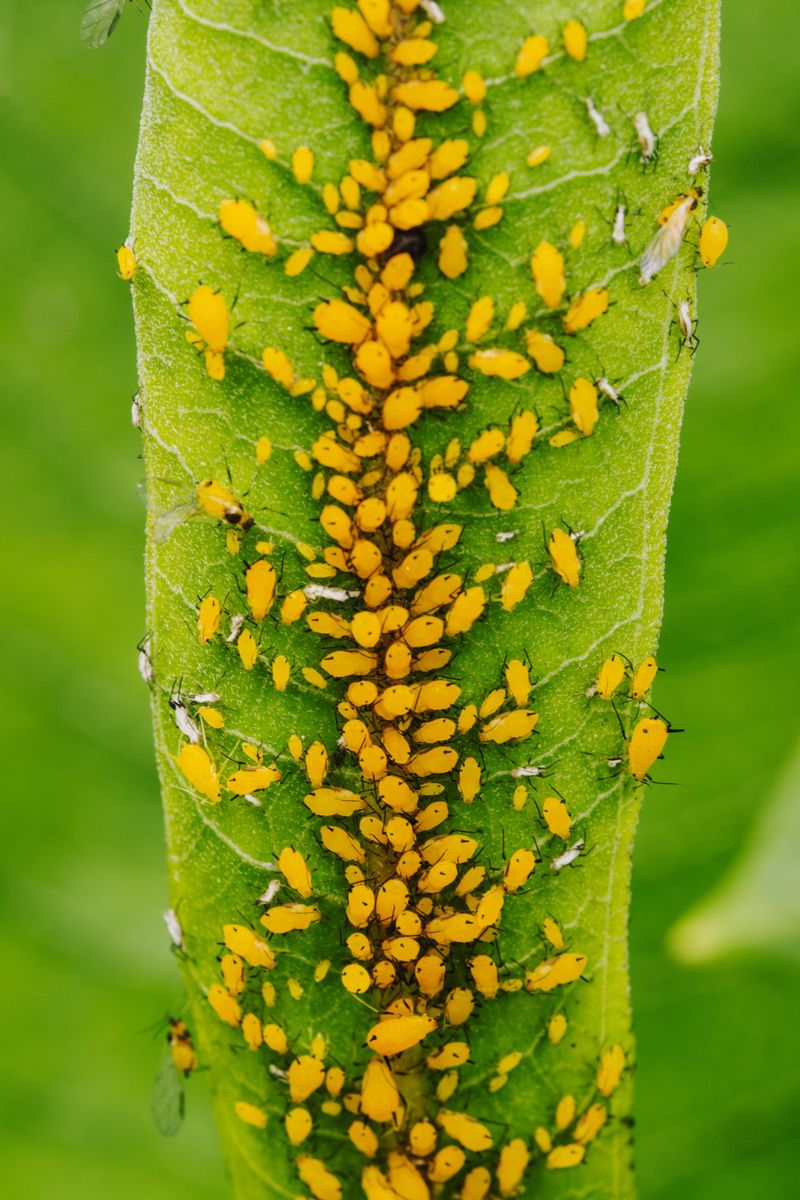
Before you panic about lanternflies, meet the usual suspects. Most sticky patio plants in Michigan come from familiar pests that have been around for ages.
Aphids are tiny, soft, pear-shaped insects that gather on new shoots and leaf undersides. They come in green, black, yellow, or pink, and ants often guard them for their honeydew.
Soft scale insects look like small bumps stuck to stems and twigs. Many folks mistake them for part of the bark. Lecanium and magnolia scale are well known for producing heavy honeydew on Michigan trees.
Mealybugs look like fuzzy white cotton bits, especially on houseplants summering outdoors. Whiteflies are tiny white specks that puff into the air when you brush a leaf.
Linden trees are famous for dripping aphid honeydew onto cars and patios in summer. That sticky mess often has nothing to do with lanternflies.
The best clue is the bug itself. Grab a magnifying glass and inspect shoots, leaf backs, and twigs right above the sticky spot. Small, slow, or stationary insects point to these common pests.
A hopping, inch-long bug with spots and red flashes points somewhere else entirely.
6. Grapevines, Maples, And Tree Of Heaven Draw Lanternflies In
Lanternflies have favorite restaurants, and some of them may be growing right beside your patio chair.
Their top pick is tree of heaven, an invasive tree with long compound leaves and a funky smell when crushed. It pops up along fences, alleys, and roadsides in southern Michigan.
Grapes rank high too. Backyard vines on pergolas and arbors can draw crowds of adults in late summer and fall. Heavy feeding can weaken grapevines and reduce harvests, which is a big worry for the state’s wine and juice grape growers.
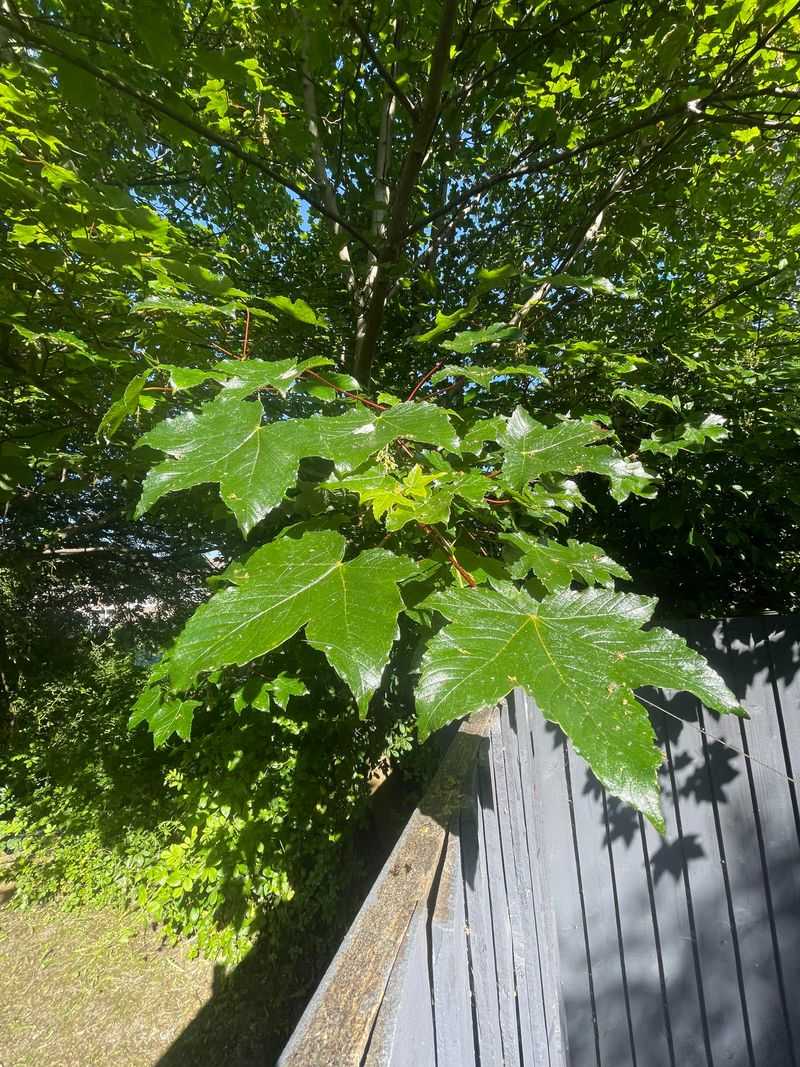
Maples, black walnut, willows, birch, and river birch also attract feeding, especially from adults. Researchers have recorded lanternflies on over 100 plant species, though many get only light visits.
Potted patio plants like herbs and flowers are rarely the main target. Still, they can catch honeydew dripping from a tree above.
A smart move is to note which plants sit directly over your stickiest surfaces. If one is a grapevine, maple, or tree of heaven, give its trunk and branches a close look. Bark crevices, branch forks, and the shaded side of the trunk are popular hangouts.
7. Spot A Lanternfly In Michigan? Snap A Photo And Report It
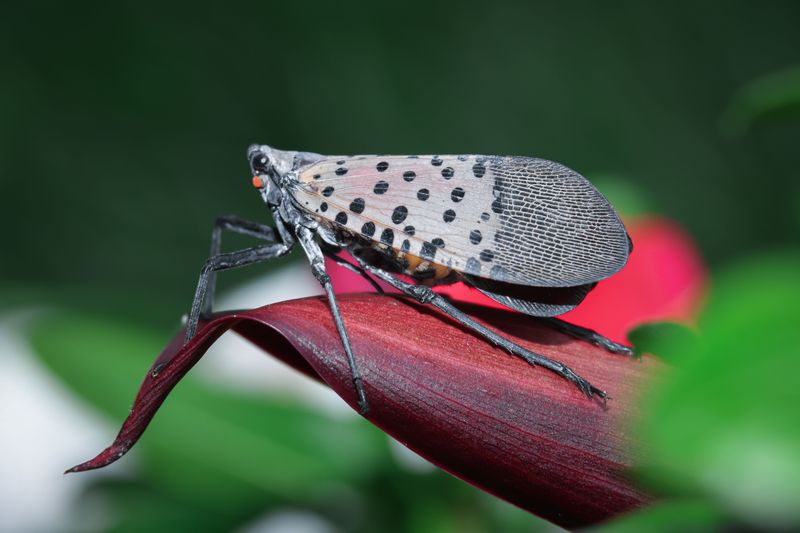
Finding one is genuinely helpful, so don’t keep it to yourself. Michigan officials depend on gardeners to track where this pest is showing up.
MDARD’s message is simple. Take a clear photo, note the exact location, and report it. You can use the online Eyes in the Field reporting tool from MDARD or the MISIN website and app run by Michigan State University.
Officials also suggest squishing the insect after taking a picture, as long as it’s safe to do. If you can’t, collecting it in a sealed jar or bag works too.
Reports matter most outside known infested areas. A single sighting in a new county can trigger surveys that help slow spread.
For egg masses, scrape them into a bag or container with rubbing alcohol or hand sanitizer, then seal it. A plastic card or putty knife works well.
Be careful with sprays. Many products harm bees and other helpful insects that flock to honeydew. For large trees or heavy infestations, a certified arborist can recommend targeted options.
Always follow label directions and check MSU Extension guidance before treating anything near flowers or edible plants.
8. Check Flowerpots And Patio Furniture For Mud-Like Egg Masses
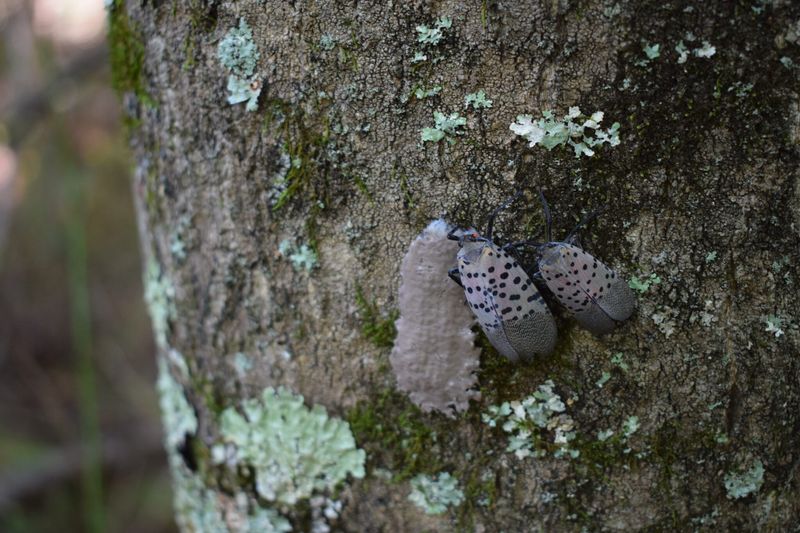
Lanternflies are sneaky travelers. They don’t fly far on their own, but they ride along on our stuff with ease.
From fall into winter, females lay eggs on almost any hard surface. Trees, rocks, flowerpots, grills, trailers, outdoor furniture, and firewood all qualify.
Fresh egg masses look like a smear of gray mud or putty. As they age, the coating cracks and turns brownish, showing rows of seed-like eggs underneath. Each mass holds roughly 30 to 50 eggs.
That’s why fall cleanup is the perfect inspection window. Before stacking pots, storing chairs, or packing camping gear, check the undersides and shaded sides. Pay extra attention to items coming from areas with known infestations.
If you visit Ohio, Indiana, Pennsylvania, or southeast Michigan, glance over your car and trailer before heading home. A quick check can keep eggs from hitching a ride to a new neighborhood.
Removing tree of heaven from your property can also help, though larger trees often regrow from roots and may need professional guidance.
The takeaway is easy to remember. A sticky patio is a clue worth checking, and a few minutes of looking can protect plants across the state.