Why Bluebirds Stick Around North Carolina All Winter And How To Help Them Through Cold Snaps
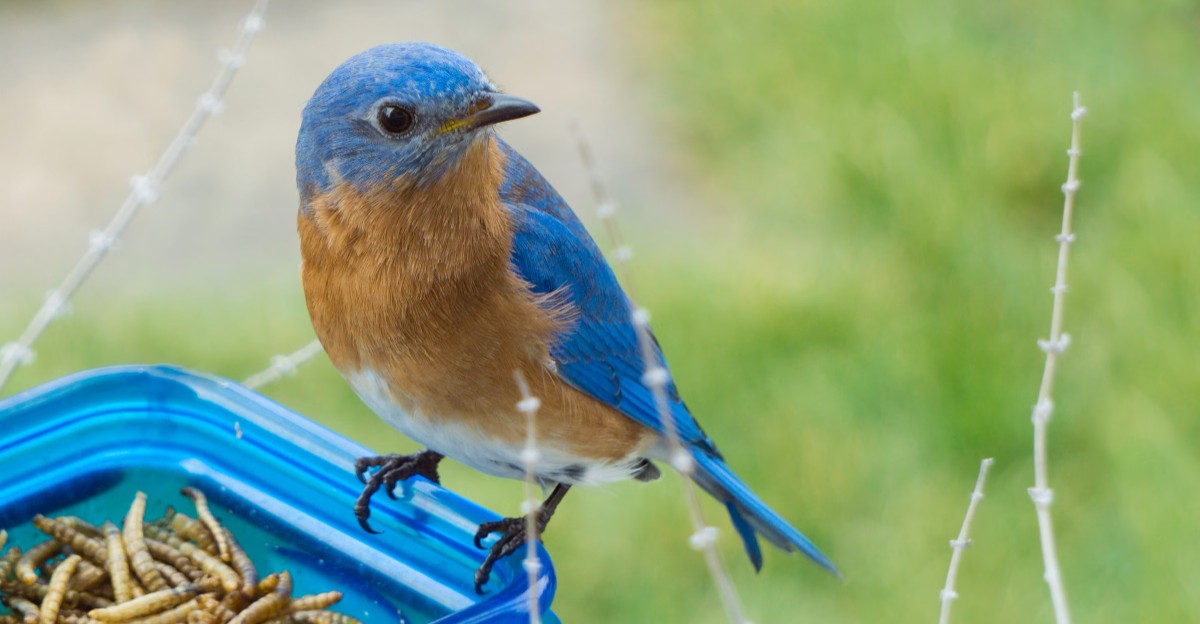
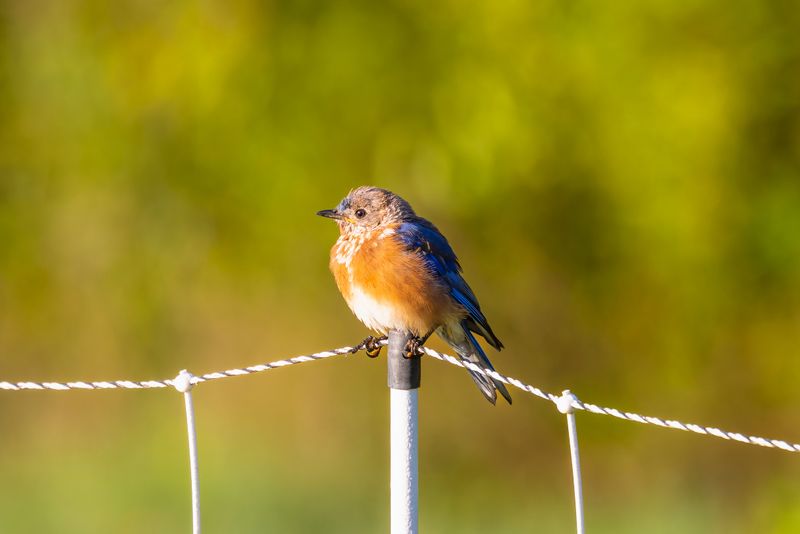
On a bitter January morning, a flash of blue lands on a fence post. It seems impossible. Most songbirds left months ago, and the ones that stayed look puffed up and miserable. Bluebirds manage something clever to survive.
Their winter life looks nothing like their summer one, from what they eat to where they sleep when temperatures plunge. On the coldest nights, they do something that surprises many people who have watched them for years.
Your yard can make a real difference, and the help they need is not what most people expect. A few simple changes cost very little. Learn what these birds are really up to, and every glimpse of blue outside your window will mean a bit more.
1. North Carolina Winters Are Mild Enough For Them
Many people think every songbird heads south when the leaves fall. Eastern bluebirds, known to scientists as Sialia sialis, prove that idea wrong in North Carolina, where you can spot them in every month of the year. They are true year-round neighbors here.
Up north, things are different. Bluebirds in places like Michigan or Maine often move south when winter gets too harsh, because deep snow and long freezes make food hard to find.
North Carolina sits in a sweet spot, with winters that are cool but usually not brutal, so many local bluebirds simply stay home.
Some visitors join them, too. Bluebirds from farther north may drift into the state for the winter, which means the bird on your fence in January might be a local or a traveler. Either way, it found a place with enough food and shelter to get through the season.
Knowing where to look makes spotting them much easier. Bluebirds love open spaces, so check yards with short grass, farm fields, golf courses, parks, and the edges of woods.
They like to sit on fences, power lines, and low branches, watching the ground below for something to eat.
A good tip is to scan any line of fence posts on a sunny afternoon. Bluebirds often fluff up their feathers in the cold, so they may look rounder than usual, almost like little blue balls with orange fronts.
Spotting them brings real joy. Across the state, from the mountains to the coast, these birds add a splash of color to brown lawns and bare trees. When the landscape looks sleepy and dull, a bluebird can brighten the whole day.
2. They Switch From Insects To Berries
Grasshoppers, beetles, and caterpillars make up most of a bluebird’s summer menu. When cold weather arrives, though, those bugs mostly vanish from sight. So bluebirds do something clever and change what they eat.
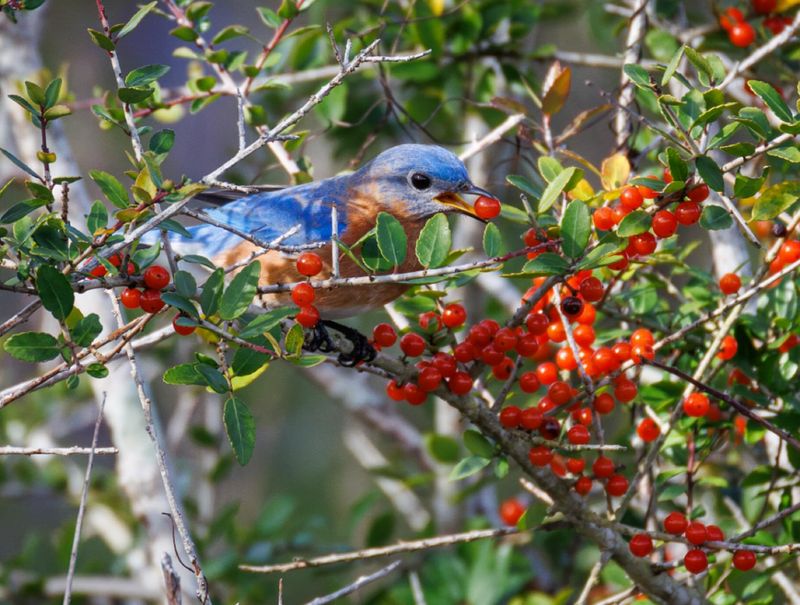
Fruit becomes the main meal in winter. Bluebirds rely heavily on berries to get the energy they need, and they will still grab an insect whenever one shows up on a warm day. Being flexible eaters is a big part of how they handle the cold months so well.
Your garden can serve as a winter snack bar. Native shrubs and trees that hold their fruit into the colder months are perfect choices, and several of them are easy to grow. Good picks include:
American holly, with its shiny red berries. Eastern red cedar, which makes small, waxy blue cones that look like berries. Flowering dogwood, known for bright red fruit in fall.
Winterberry, a holly that drops its leaves and shows off red berries. Wax myrtle, which offers small gray-blue berries packed with fat.
Hold off on the pruning shears in autumn. Many gardeners trim shrubs to keep them neat, but cutting off berries removes food bluebirds may need later.
Let the fruit stay on the branches, and save your trimming for late winter or spring, after the birds have eaten their fill.
Planting more than one kind of shrub helps a lot, since different berries ripen and stay on plants at different times. That way, there is something to eat from fall through the end of winter.
Native plants are a smart fit here. They grow well in North Carolina soil and weather, need less fuss than many fancy plants, and feed birds that have relied on them for a very long time.
3. They Travel In Small Winter Flocks
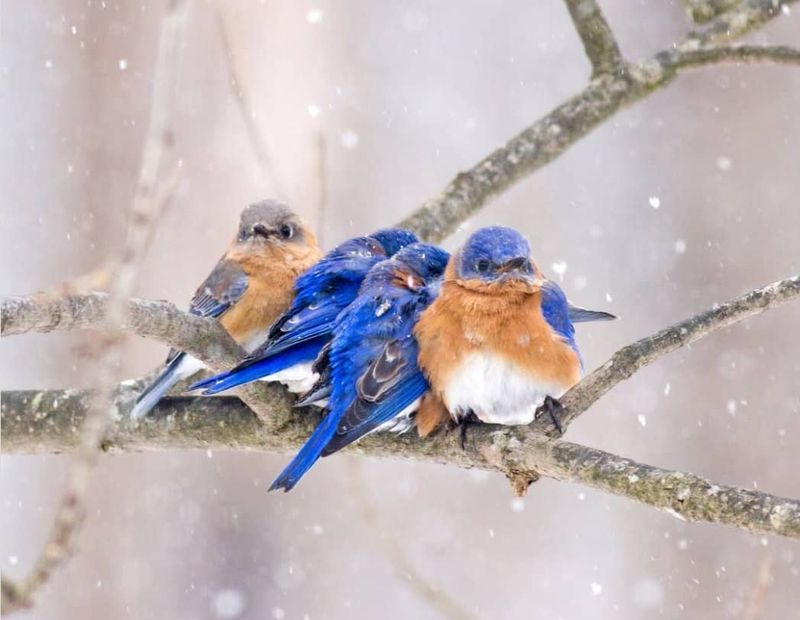
Spring bluebirds act like homeowners. A pair picks a spot, guards it from rivals, and raises a family there. Come winter, that private lifestyle gets traded for a more social one.
Small groups form once the nesting season ends, often with five to ten birds or sometimes more. Traveling together has big benefits. More eyes mean it is easier to find a tree loaded with berries, and it is also easier to notice a hawk or a cat sneaking close.
Watching these groups can be a real treat. They tend to move from berry trees to open lawns to fence lines, stopping for a few minutes before flying off again. You might see them drop to the grass to check for a stray bug, then swoop back up to a branch.
Bluebirds are not always alone in these gatherings. American robins often join the party, since they love the same berries and open lawns.
Cedar waxwings may show up too, with their sleek tan feathers and black masks, gobbling fruit side by side with the bluebirds.
Keep a pair of binoculars near your window during winter. When one bluebird appears, there is a good chance a few more are close by. Counting them can be a fun family game on a chilly weekend morning.
For birdwatchers in North Carolina, flocking season is a gift. Instead of seeing one or two birds at a time, you might have several bluebirds in your yard at once.
A holly or cedar full of fruit can turn your backyard into a busy, colorful show that lasts for days, especially when the berries are at their peak.
4. They Huddle Together In Boxes To Stay Warm
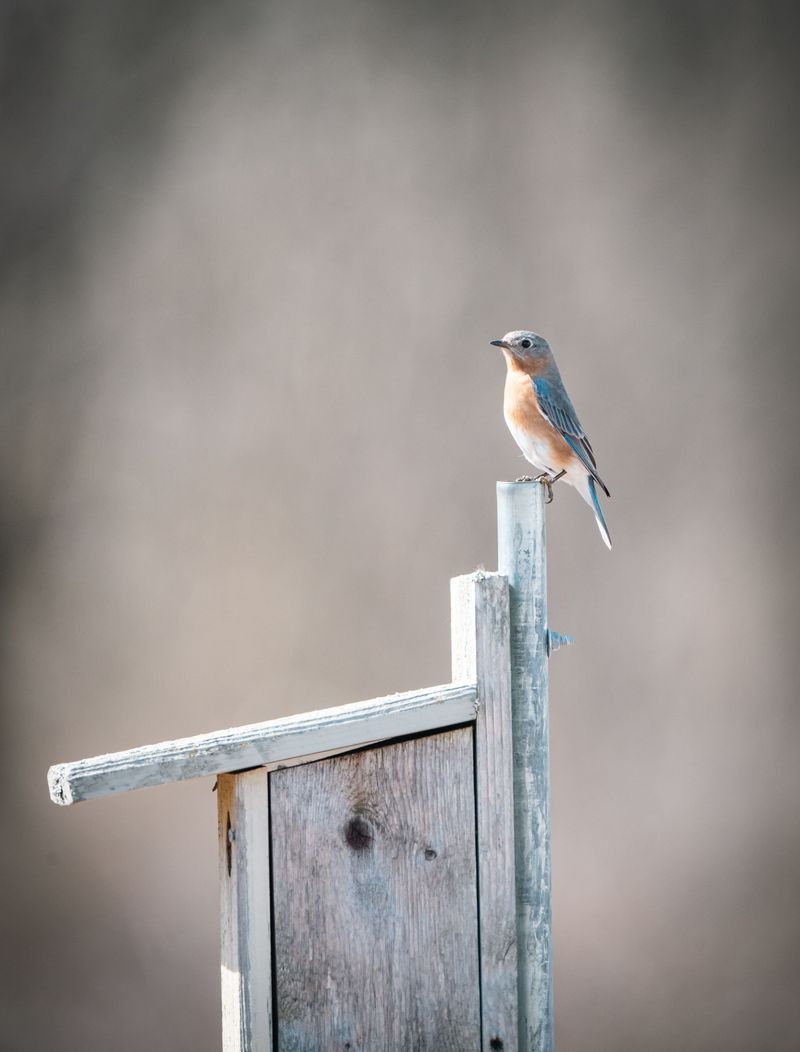
Imagine squeezing into a tiny wooden box with a bunch of friends just to keep warm. Bluebirds do exactly that on cold winter nights. It sounds cramped, but it works.
Roosting together helps them share body heat. Bluebirds will tuck into nest boxes, tree holes, and other sheltered spots after dark, and during a hard freeze several birds may pack into a single box.
Some birdwatchers have found more than ten bluebirds crowded into one roosting spot. Here is how you can lend a hand. Leave your nest boxes up all winter instead of taking them down after summer.
Birds look for safe places to sleep when temperatures drop, and an empty box can become a cozy bedroom.
Late fall is the right time for a quick cleanup. Remove old nesting material, which can hold mites and other pests, so the box is fresh and ready. Some people add a small handful of clean, dry pine shavings for extra comfort, though this step is optional.
You might also think about a special roost box. These are designed a bit differently from regular nest boxes, with the entrance hole placed near the bottom instead of the top. Warm air rises, so a low hole lets less heat escape.
Many roost boxes also have small perches inside so several birds can rest at once. Freezing nights happen here more than some folks expect.
Even in milder parts of North Carolina, a cold snap can drop temperatures well below freezing. A safe, snug place to spend the night can make a big difference for bluebirds trying to make it to morning.
5. Mealworms Can Help During Cold Snaps
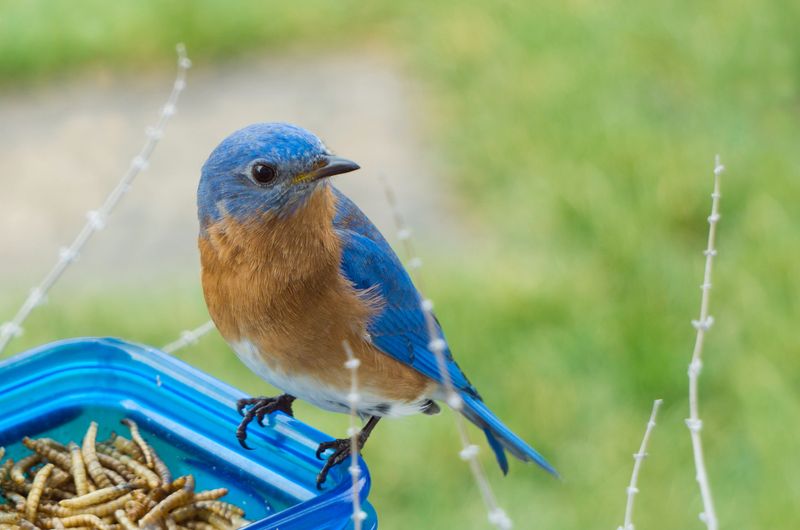
Ice storms are rough on everyone, birds included. When berries get coated in ice or buried under snow, bluebirds can have a hard time finding a meal. Long cold spells burn through energy fast, and these small birds need steady fuel to stay warm.
A little extra food can really help. Mealworms are a bluebird favorite, and you can offer them live or dried. Live mealworms tend to attract birds more quickly, while dried ones are easier to store and handle.
Soaking dried mealworms in warm water for a few minutes can make them softer and more appealing.
Simple setups work best. Place the mealworms in a shallow dish or a feeder made just for bluebirds, which often has small openings that let bluebirds in while keeping bigger birds out. Make sure the sides are low enough that worms cannot crawl out.
Suet adds even more energy. Suet nuggets or crumbled suet cakes without large seeds are good choices, since bluebirds like the soft, fatty bites. Fruit blends made for songbirds can work too.
Location matters a lot. Set feeders near open perches like a fence, small tree, or shepherd’s hook so bluebirds can spot the food from a distance. Keep amounts small and fresh, adding more as birds eat, so nothing spoils or gets soggy.
Many North Carolina gardeners are surprised to learn that bluebirds rarely visit standard seed feeders.
Their beaks are made for catching bugs and eating fruit, not cracking sunflower seeds. Setting out the right food during a cold snap is one of the kindest things you can do for them.
6. Fresh Water Is Hard To Find In Freezing Weather
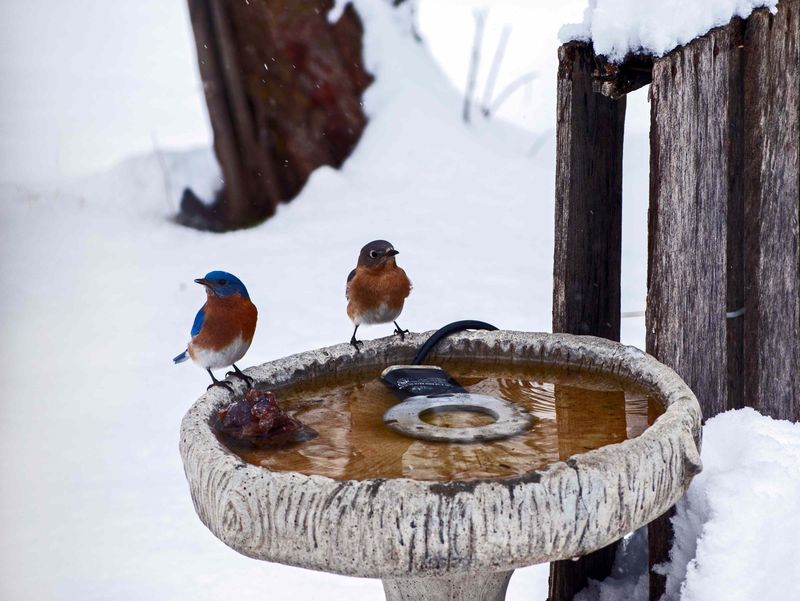
Food gets most of the attention in winter, yet water matters just as much. Bluebirds need a drink every day, and they also use water to bathe and preen their feathers. Clean feathers trap warm air better, which helps a bird stay cozy on chilly days.
Freezing weather creates a real problem. Puddles, creeks, and birdbaths can turn to solid ice overnight, leaving birds with very few places to drink. A small, reliable water source suddenly becomes one of the most valuable spots in the neighborhood.
Getting started is easy. A shallow birdbath, about one to two inches deep, is perfect for bluebirds. Keep it filled with fresh water and place it near shrubs or a perch so birds feel safe while they visit.
Cold snaps call for a little extra help. A birdbath heater or a heated birdbath keeps water from freezing, and many models only switch on when temperatures drop.
If you do not have one, pour warm water into the bath each morning to melt the ice and give birds a fresh drink.
Never add antifreeze, salt, or any chemicals to keep the water from freezing. These can harm birds and damage their feathers. Plain water is always the safest choice.
Keeping it clean is part of the job, too. Scrub the bath every few days with a brush and rinse it well to prevent algae and germs.
In North Carolina, a winter freeze can lock up natural water for several days in a row, so your birdbath might be the only open water around.
7. Good Habitat Keeps Them Coming Back
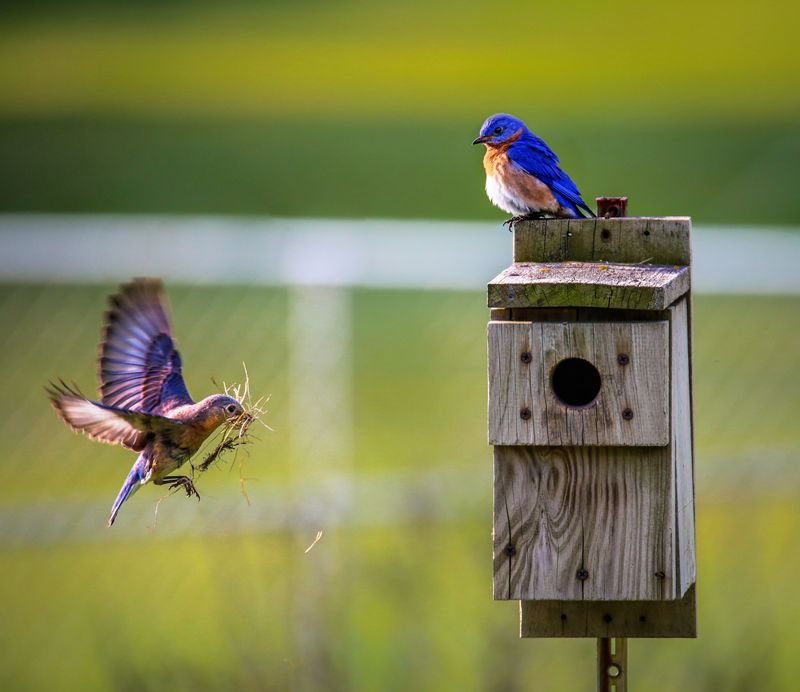
Bluebirds are picky about real estate, but their wish list is short. They want open ground with short grass where they can spot insects, a few perches to sit on, berry plants nearby, and safe cavities or boxes for shelter.
Check those boxes, and you may have bluebirds all year. Nest boxes are the heart of a bluebird-friendly yard. Mount them on smooth metal poles in open areas, about five feet off the ground, facing away from strong winds.
Adding a predator guard, such as a metal cone or tube below the box, helps keep snakes, raccoons, and cats from climbing up.
Your lawn plays a role as well. Keeping some areas mowed short gives bluebirds a clear view of the ground, which helps them hunt insects in spring and summer. You can still leave other spots wilder for pollinators and other wildlife.
Skip the insecticides whenever you can. Bug sprays cut down on the insects bluebirds feed to their babies, and that can make raising a family much harder. A yard with plenty of bugs is a yard bluebirds will happily call home.
Native berry shrubs tie it all together, offering food in winter and cover all year. Holly, dogwood, wax myrtle, and cedar all help.
North Carolina has a real success story here. Bluebird numbers dropped in the past as natural nesting holes disappeared, but backyard nest boxes helped them bounce back.
Groups like the North Carolina Bluebird Society encourage people to put up boxes and monitor them, and every yard that pitches in helps these cheerful birds thrive for years to come.