Who Is Responsible When A Neighbor’s Tree Falls Into Your Yard In Texas
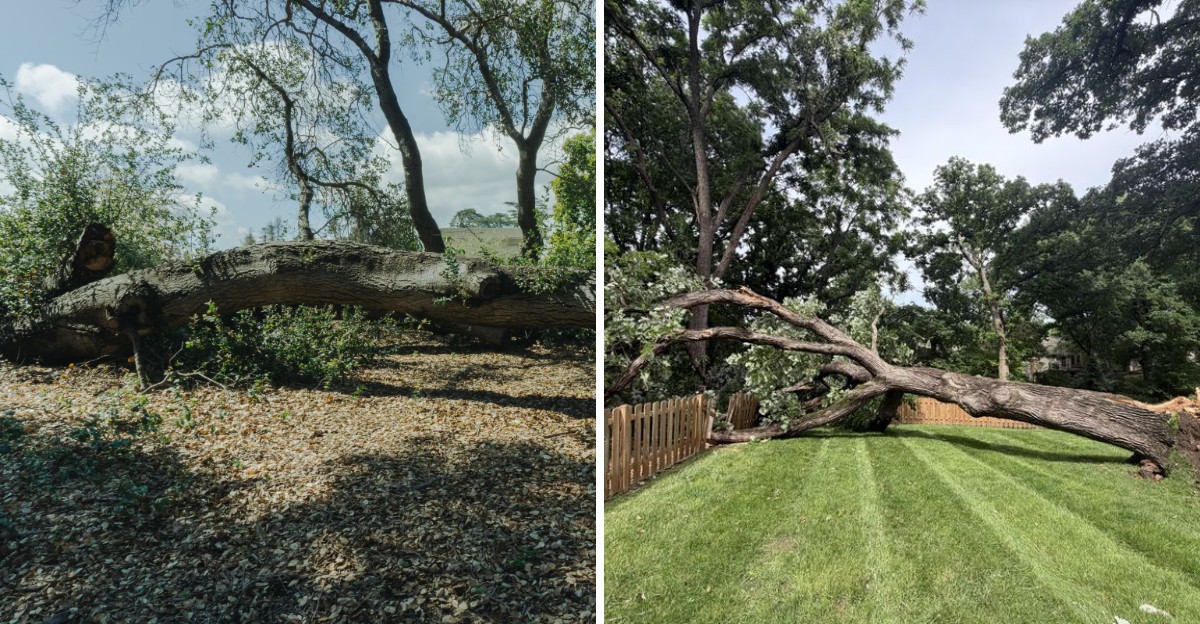
A perfectly healthy tree can crash onto your roof, and the law may treat it like nobody’s fault at all.
Courts call that an act of God. I still remember how unfair that sounded the first time I heard it, especially since the trunk grew on the other side of the fence.
Texas storms make this question very real. Spring hail, summer derechos, hurricane winds on the coast, and the 2023 ice storm all sent big oaks and pecans tumbling into yards that were not theirs.
You need to know one tiny detail before you call anyone. It can decide whether your insurer pays, your neighbor pays, or you end up covering the chainsaw crew yourself.
So what makes a fallen tree a simple accident in the eyes of the law, and what turns it into somebody’s expensive problem?
1. A Healthy Live Oak Down After A Storm Is Treated Very Differently
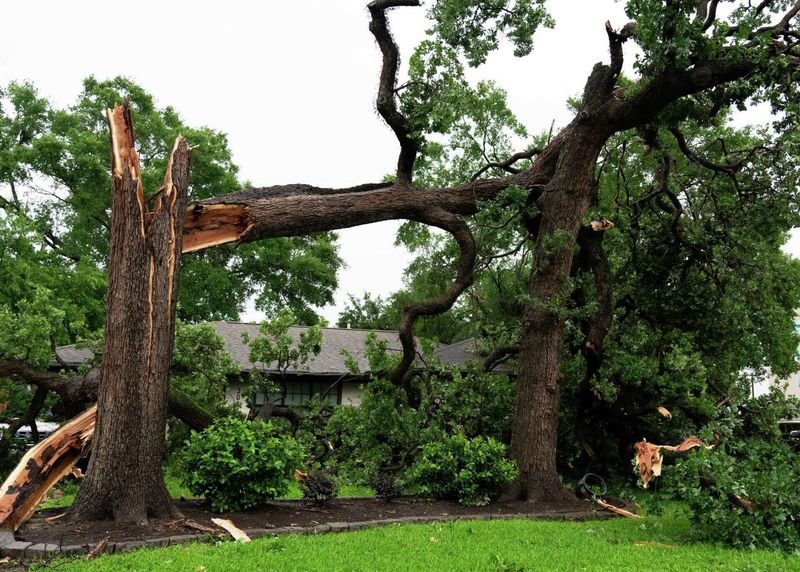
Storm winds hit, the ground shakes, and suddenly your neighbor’s live oak is lying across your flower beds. The first thing that matters is the tree’s health before it fell.
Texas courts generally follow a negligence standard. If a sound, well-kept tree comes down because of high winds, lightning, ice, or a flood, it is usually considered an act of God.
In that case, your neighbor is typically not legally responsible for the damage, even though the roots sat on their land.
I know that feels backward at first. Still, the logic is fairly simple. Nobody can reasonably prevent a healthy tree from snapping in a 70 mph gust, so the law does not blame the owner for weather they could not control.
Storm patterns across the state make this common. East Texas pines, Hill Country oaks, and coastal trees face very different threats, from ice to hurricanes. A tree that looked strong last week can still fail in extreme weather.
Take photos of the trunk, roots, and broken limbs right away. Those pictures help show whether the tree was healthy or hiding a problem, and that one fact shapes everything that comes next.
2. Your Own Homeowners Insurance Usually Pays For The Damaged Roof And Fence
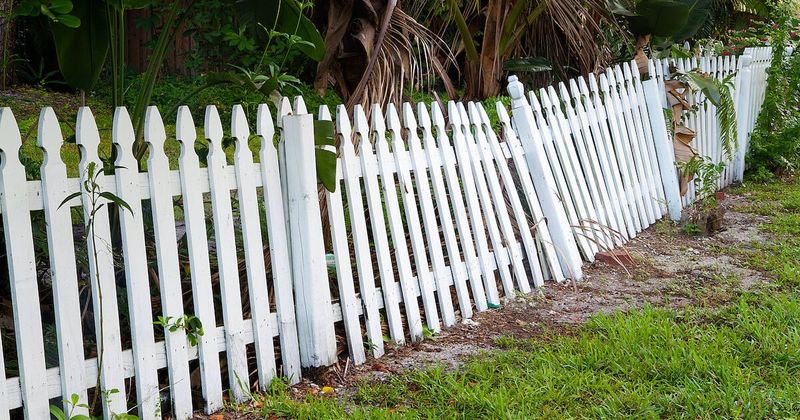
Most people are surprised to learn who gets the first phone call. When a healthy neighbor’s tree damages your property, your own homeowners policy typically handles the claim.
Standard Texas policies usually cover damage to your house, garage, and other insured structures caused by falling trees during covered events like windstorms.
Fences and sheds often fall under other structures coverage. You will still pay your deductible, and some coastal policies carry separate wind or hurricane deductibles that can be a percentage of your home’s value.
Personally, I would read my policy before storm season instead of after. Look for wind and hail exclusions, especially if you live near the Gulf, where wind coverage may come through the Texas Windstorm Insurance Association.
File quickly and document everything. Snap wide shots and close-ups, keep receipts for emergency tarps, and avoid tossing broken items before the adjuster visits.
Your insurer may try to recover costs from your neighbor’s insurer if negligence is involved. That process is called subrogation, and it can sometimes get your deductible back. Either way, starting with your own policy is often the fastest route to repairs.
3. A Rotting, Leaning Tree Can Put Your Neighbor On The Hook
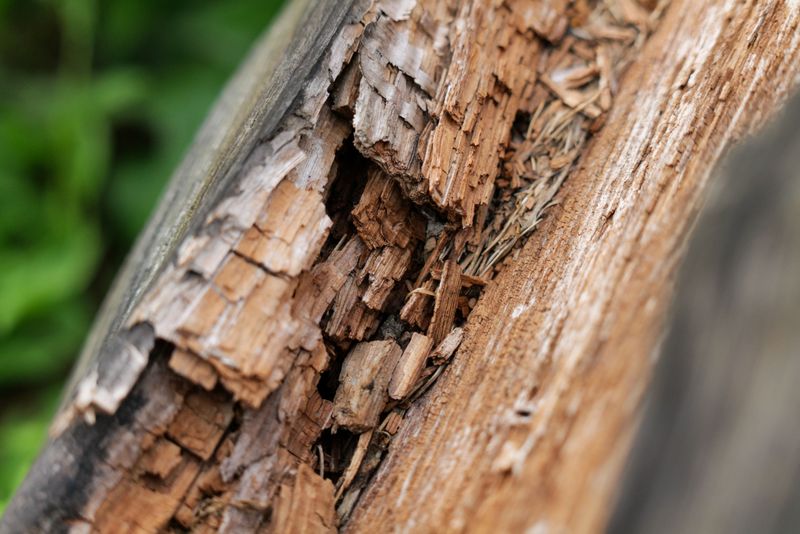
Everything changes when the tree was already in bad shape. If your neighbor knew, or reasonably should have known, the tree was hazardous and did nothing, they may be liable for the damage.
That is the heart of negligence. A property owner has a duty to use reasonable care, and ignoring an obviously failing tree can break that duty.
A trunk full of rot, a hollow base, or big bare limbs hanging over your roof are classic examples.
Knowledge is the key word. A hidden internal defect nobody could see may still count as an accident. A tree you pointed out in writing six months ago is a very different story.
Courts in Texas look at what a reasonable person would have noticed. Rural landowners with large wooded tracts may face a lower inspection burden than city homeowners, so location can matter.
If you believe negligence played a role, tell your insurer. They may pursue your neighbor’s carrier, or you might file a claim directly.
Small claims in Justice Court can handle disputes up to $20,000, which covers many tree cases without hiring a lawyer.
4. Bare Branches And Mushrooms At The Base Are Warning Signs Worth Photographing
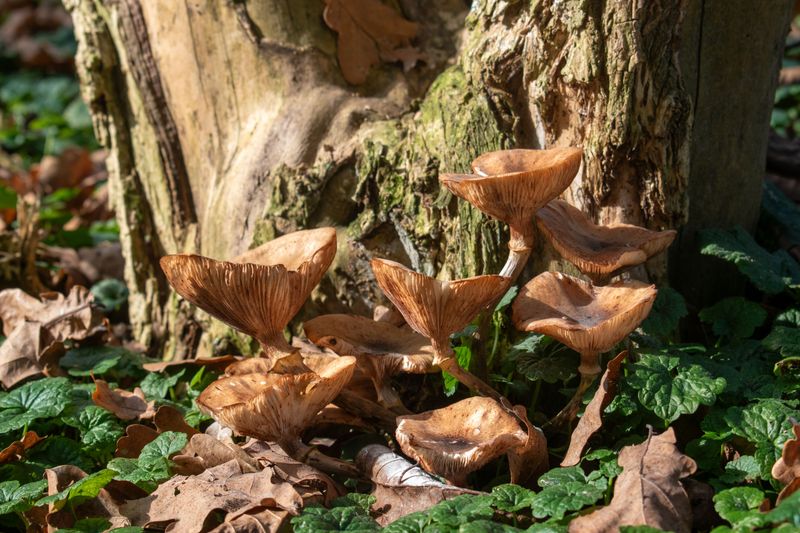
Trees often drop hints long before they drop limbs. Learning those clues helps you protect your home and build a record if trouble comes later.
Watch for large leafless branches during the growing season, deep cracks in the trunk, peeling bark, and mushrooms or shelf fungi near the roots.
A sudden new lean or soil heaving on one side can mean roots are failing. Texas A&M Forest Service also warns about oak wilt in Central Texas, which can leave live oaks and red oaks declining quickly.
Drought plays a role too. Several dry summers can weaken root systems, and pests like bark beetles move into stressed pines in East Texas.
I like keeping a simple phone album for any worrisome tree near my fence. Date each photo and take the same angle every few months so changes are easy to spot.
Then send your neighbor a friendly, written note. A text, email, or letter mentioning the specific problem creates proof they were informed.
Suggest having an ISA certified arborist look at it, since an expert report carries real weight if a claim ever lands in court.
5. Hauling Away That Giant Pecan Trunk Can Cost More Than Expected
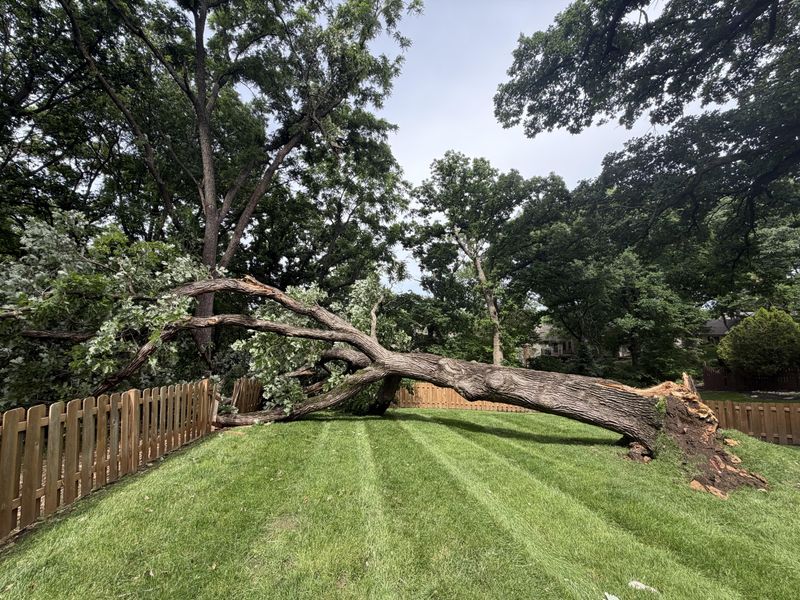
Chainsaws buzzing in your yard sound great until the invoice arrives. Removing a large fallen tree can run from several hundred to a few thousand dollars, depending on size and access.
Generally, whoever owns the land where the tree lands handles cleanup when no negligence is involved.
Your insurer often helps if the tree struck a covered structure like your home, garage, or fence. Many policies cap debris removal at around $500 to $1,000 per tree, with an overall limit per storm.
The catch stings a bit. If the tree simply landed on your lawn without hitting anything insured, removal may not be covered at all. Blocking your driveway or a wheelchair ramp is sometimes an exception, so ask your agent.
Before hiring help after a big storm, check reviews and ask for proof of liability insurance. Out-of-town crews flood Texas neighborhoods after major events, and not all are reputable.
Here is one bright spot. Seasoned pecan and oak wood is prized for smoking and fireplaces, so a neighbor might happily take some logs. Mulching the smaller branches can also feed your garden beds.
6. Trimming Overhanging Limbs At The Fence Line Is Your Right, With Limits
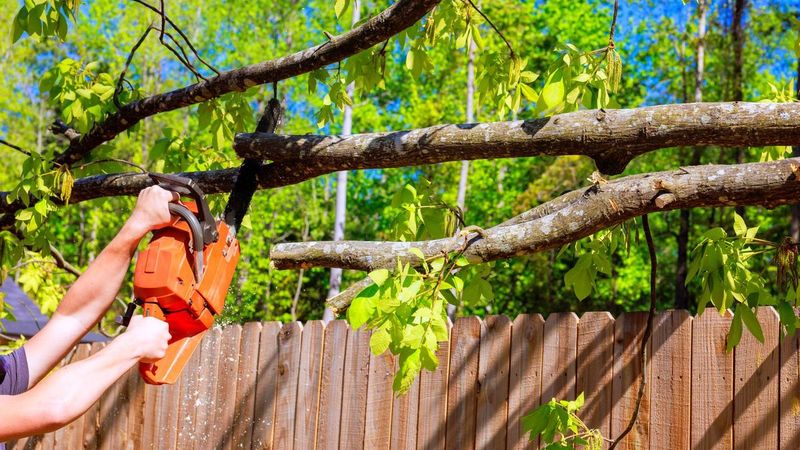
Prevention beats paperwork every time. In Texas, you may usually trim branches and roots that cross onto your property, right up to the property line.
There are a few important limits. You pay for the work yourself, and you cannot step onto your neighbor’s land without permission, since that can count as trespassing.
You also cannot cut so heavily that the tree suffers or fails, because Texas law can make you responsible for its value, sometimes far more than you would guess.
Timing matters for oaks here. Texas A&M Forest Service recommends avoiding oak pruning from February through June to reduce oak wilt spread, and sealing fresh cuts with wound paint. Late summer and winter tend to be safer windows.
Talk with your neighbor before the saw comes out. Many folks are relieved someone is offering to handle a messy limb, and some will even split the cost.
Personally, I would hire an ISA certified arborist for anything big. Professionals know how to make proper cuts, protect the tree’s health, and carry insurance if a limb swings the wrong way.
7. A Denied Claim Over A Fallen Oak May Need A Property Attorney
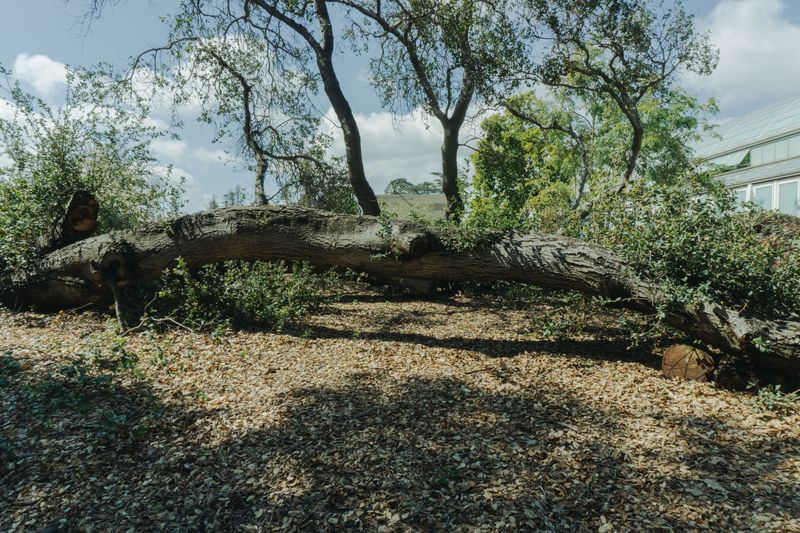
Most tree disputes end with a handshake over the fence. Some, sadly, need more help. Start with a calm conversation and share your photos.
Ask whether your neighbor will contact their insurer, and keep notes on what everyone agrees to. A follow-up email summarizing the talk protects both of you.
Things get tricky when your insurer denies a claim, your neighbor refuses to acknowledge an obviously hazardous tree, or the damage is large.
That is when a Texas attorney who handles property or insurance disputes can be worth the fee. Many offer free first consultations.
Free resources exist too. TexasLawHelp.org explains neighbor tree issues in plain language, and many counties offer dispute resolution centers where a trained mediator helps both sides reach an agreement without court.
Keep deadlines in mind. Texas generally allows two years to file a property damage lawsuit, and insurance policies have their own notice rules that may be much shorter.
Also check HOA rules if you live in a planned community. Some associations have specific tree maintenance requirements that can strengthen your case.
8. Regular Checkups On Backyard Trees Keep Peace On Both Sides Of The Fence
Trees give shade, cooler homes, and birdsong, so nobody wants to treat them like threats. A little routine care keeps them assets instead of liabilities.
Walk your yard each spring and after big storms. Look up at the canopy, then down at the roots, and note anything new.
Water deeply during long droughts, since stressed trees break more easily, and avoid piling soil or mulch against trunks.
Consider an arborist visit every few years for large trees near your house. Many cities, including Austin and San Antonio, have tree ordinances, so check local rules before removing a protected heritage tree.
Review your insurance each year too. Ask about wind deductibles, debris removal limits, and whether fences are covered. Knowing those numbers now saves stress later.
Finally, treat your neighbor like a teammate. Mention concerns kindly, share arborist contacts, and offer to coordinate trimming along the shared line.
I believe most fallen tree headaches shrink when people talk early. Healthy trees, a clear policy, and a friendly relationship make the next storm far less scary for everyone.