The Native Texas Bloom That Draws Dragonflies And Cuts Mosquito Numbers
A Texas pond can look beautiful at sunset and still become the busiest mosquito meeting spot on the block.
That is where one native bloom gets interesting.
It does not repel mosquitoes. It does not work like a spray. It does something quieter, and the payoff depends on who decides to show up.
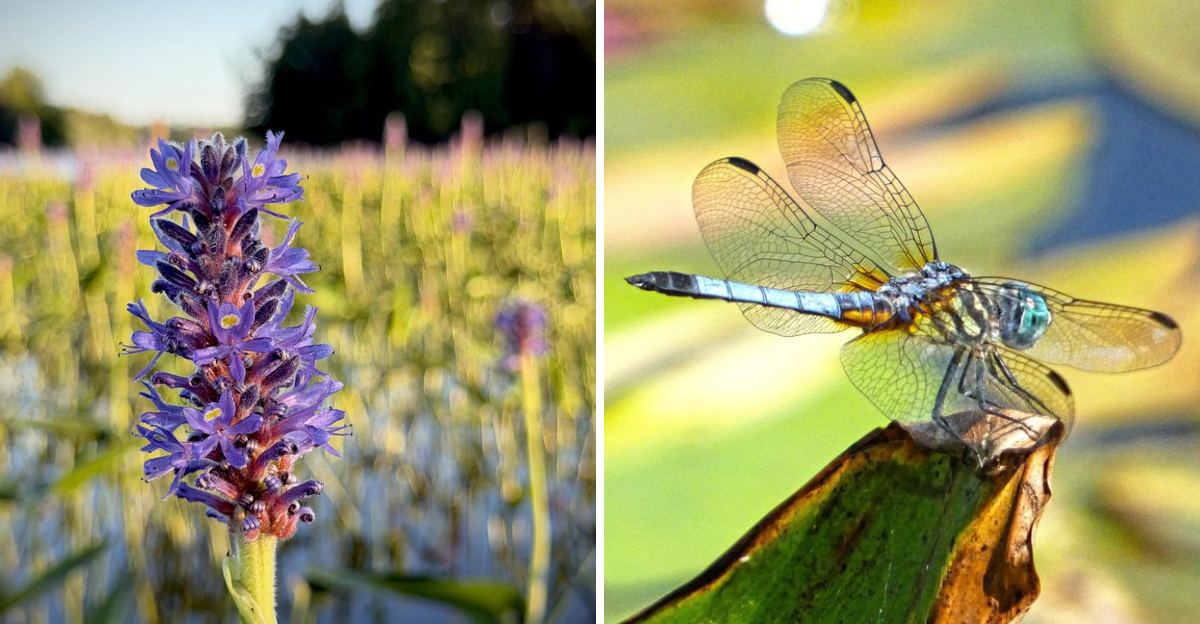
Purple flower spikes rise above the water. Broad leaves frame the edge. Then another kind of visitor starts using the pond like a hunting ground.
That visitor matters.
The trick is that the plant alone cannot carry the whole job. Open water, clean edges, healthy habitat, and fewer forgotten containers around the yard all change the outcome.
So why does this flower deserve a place beside a Texas pond?
Part of the answer happens above the surface. The rest starts below it.
Get the setup right, and your pond can become more than decoration. It can turn into a livelier, better-balanced corner of the yard, with fewer easy opportunities for mosquitoes nearby during muggy summer evenings too.
Plant Pickerelweed Along Shallow Pond Edges
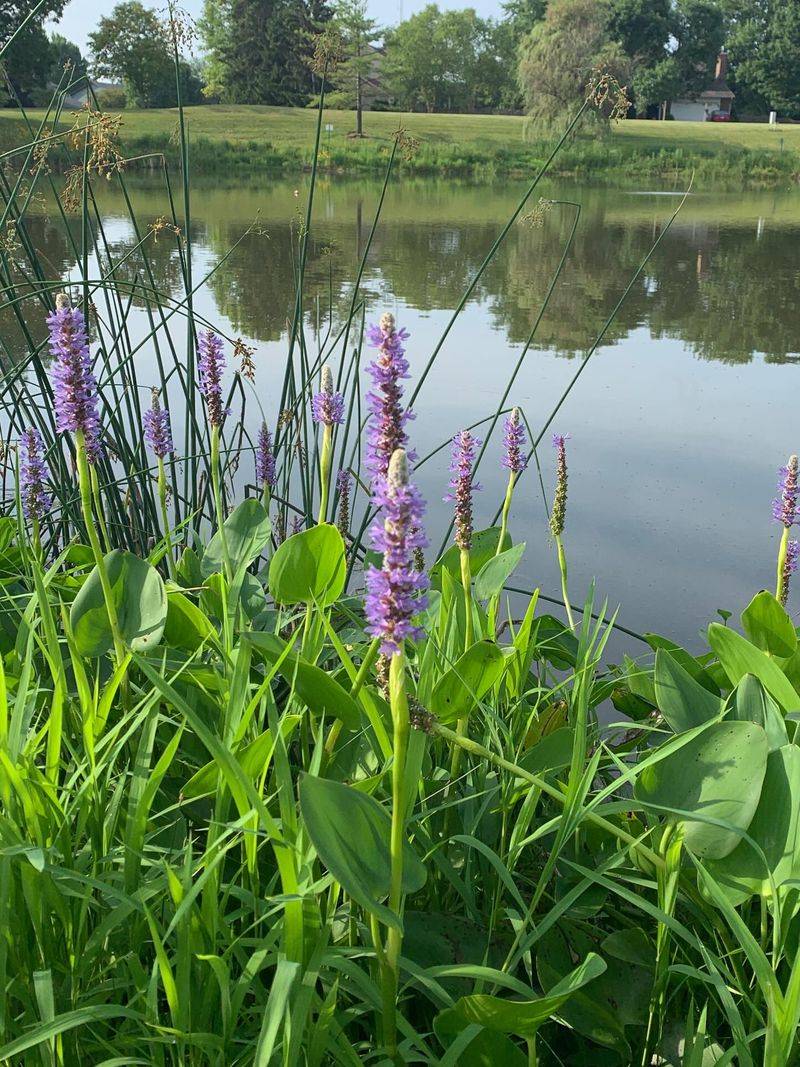
The pond edge is where pickerelweed earns its space.
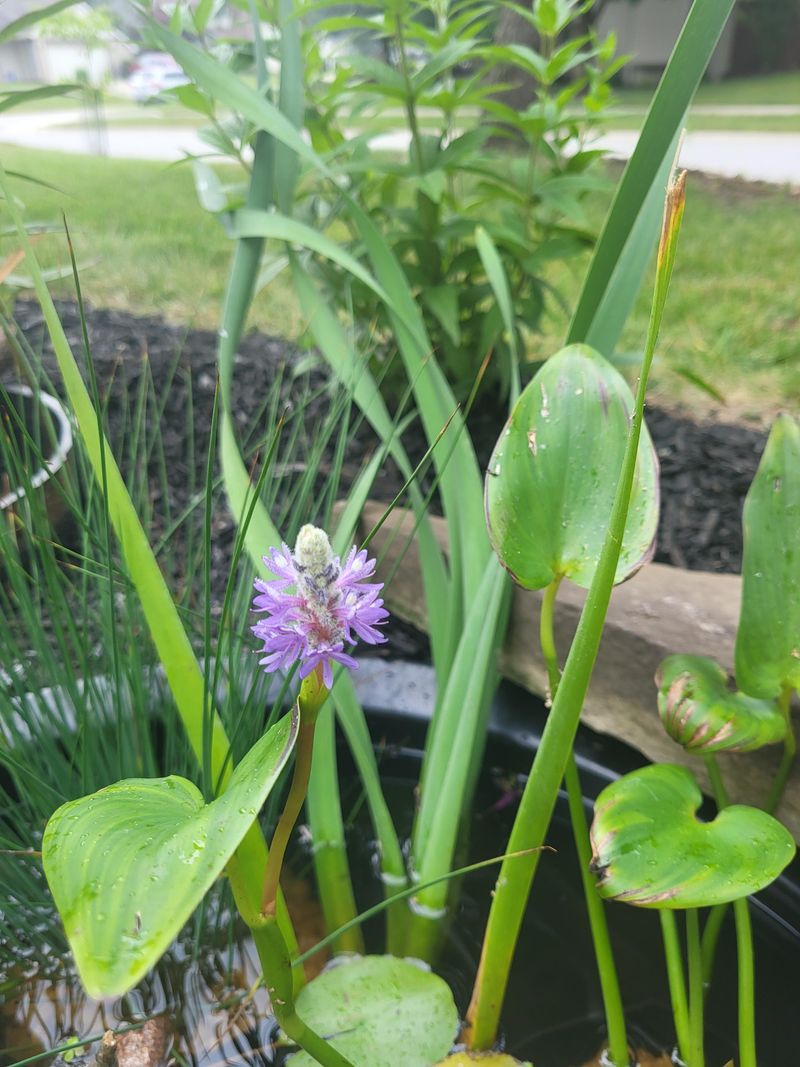
Pontederia cordata likes the narrow zone between wet soil and open water. Its roots settle into mud while broad, heart-shaped leaves and violet flower spikes rise above the surface.
For a Texas pond, shallow water works best.
Set plants where the water sits about six inches to two feet deep. A north or east bank can offer useful sun without the harshest late-afternoon heat. Leave about 18 to 24 inches between plants so each clump has room to spread.
Lined ponds deserve one extra trick.
Use a fabric aquatic pot filled with heavy clay loam. Lower the pot to the right depth and let the stems rise naturally. The container can slow the rhizomes before they claim half the shoreline.
Keep plants away from culverts, drainage channels, and narrow outlets. Dense roots and stems can become an unwanted traffic jam where water needs to move freely.
Established clumps may expand noticeably after two or three seasons. Thin them in fall or early spring when the edge starts to feel crowded.
Leave plenty of open water in front.
That balance gives the pond a planted border without turning it into a solid mat. Pickerelweed gets the shoreline.
Dragonflies get useful structure. Your pond still gets room to look like a pond instead of a very enthusiastic salad bowl.
Use Violet Spikes As Dragonfly Perches
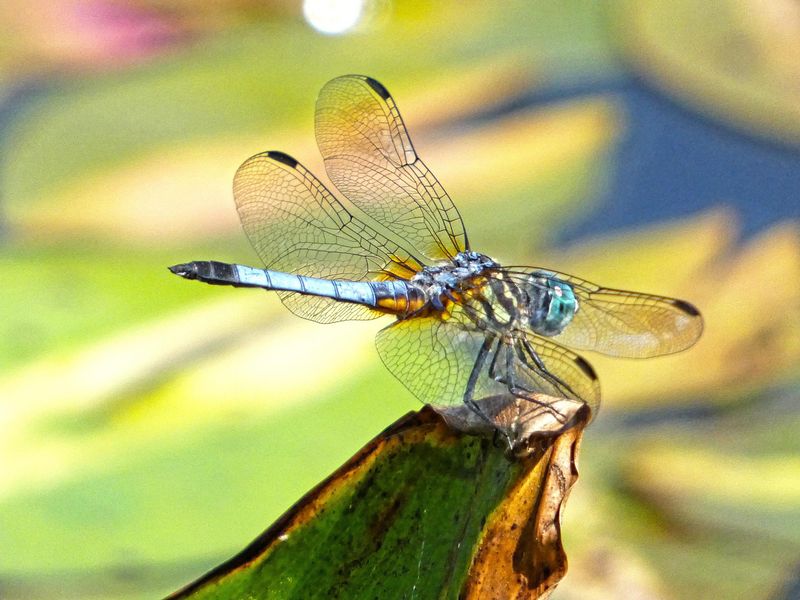
Watch a dragonfly near water for a few minutes and one habit becomes obvious.
It lands. It waits. It launches after prey. Then it often returns to a nearby perch.
Pickerelweed offers plenty of those lookout spots.
Its upright flower stalks can rise several feet above the water, giving dragonflies a stable place to scan the pond edge. Broad leaves below the blooms add lower resting spots when insects want a pause closer to the surface.
The flowers can last from late spring into early fall across much of Texas.
That gives the pond months of vertical structure during the same warm stretch when mosquito activity can feel relentless.
Your Texas Garden Changes Every Week. Your Plan Should Too.
Gardening in Texas changes quickly throughout the season. Every Friday you’ll receive a simple weekly plan showing exactly what to plant, prune, fertilize, harvest, and protect so you never miss the right timing.
The blooms also attract bees, skippers, and other pollinators. Dragonflies are not showing up for the scent, though. Open sightlines and useful perches matter more to these aerial hunters.
Keep pickerelweed close to the water rather than tucked far back in a flower border.
A few clumps spaced along a sunny edge can create a loose perch corridor. Dragonflies can move from stem to stem while they patrol the water and nearby air.
Do not pack the plants shoulder to shoulder.
A perch works best when the hunter can actually see beyond it.
The violet spikes bring color for you and observation posts for dragonflies. That is a pretty efficient job description for one pond plant, especially when the patio crowd would prefer fewer tiny winged gate-crashers after sunset.
Build Hunting Posts Above The Water
More pond plants do not always mean a better dragonfly pond.
A surface packed from bank to bank can leave adult dragonflies with fewer clear flight lanes. These insects hunt in the air, so open space matters just as much as stems and leaves.
Keep a generous part of the water visible.
About half the surface left open can give dragonflies room to launch, turn, and chase small flying insects above the pond. Plants can frame that open zone rather than cover it.
Use different heights around the edge.
Short native sedges can sit low. Pickerelweed can fill the middle layer. Taller reeds or other suitable emergent plants can stay farther back where they do not block the view.
That variety gives different dragonfly species more options.
During the first season, young plants may not provide many tall perches. A few plain wooden stakes near the water can fill the gap. Set the tops about 12 to 18 inches above the surface and keep each one stable.
No fancy pond accessory is required.
Dragonflies care more about a solid perch and a clear field of view than they do about garden décor.
Stand near the pond and look across it at insect height. Dense stems everywhere can feel like rush-hour traffic.
Leave a runway through the middle. The flowers still get their stage, but the dragonflies finally get some airspace to work with.
Support Nymph Habitat Below The Surface
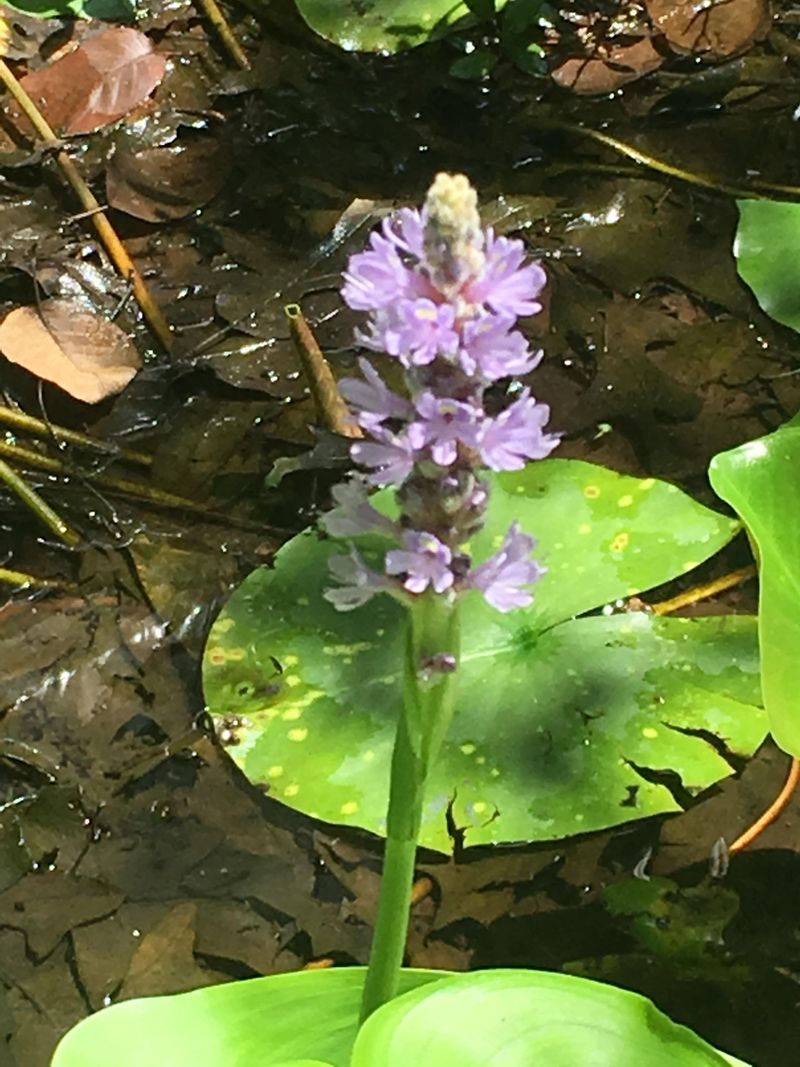
The most important dragonfly action may happen where you cannot see it.
Before those fast adults patrol the yard, they spend a long stretch underwater as nymphs. Depending on the species, that stage can last many months or even several years.
Pickerelweed helps below the surface too.
Its submerged stems and root mass offer places for young dragonflies to cling, hide, and hunt small aquatic creatures. That structure can make the shallow edge far more useful than a bare pond liner.
The plant cannot do the whole job alone.
Water quality matters. Heavy lawn runoff can push excess nutrients into the pond and encourage algae. Poor oxygen levels and thick silt can make the habitat less useful for aquatic life.
Keep broad-spectrum insecticides away from the pond whenever possible. Products that affect many insects can also harm the small aquatic creatures dragonfly nymphs use as food.
Add a little habitat variety instead.
A patch of coarse sand or gravel, several flat rocks, and a small amount of natural leaf litter in one corner can create different hiding places below the surface.
Do not let the entire pond fill with decaying debris.
A little structure helps. A swampy pile of old leaves creates a different problem.
Pickerelweed handles part of the architecture above and below water. Dragonfly nymphs get somewhere to live, and your pond gets much more going on than one pretty flower spike.
Let Adult Dragonflies Patrol The Pond
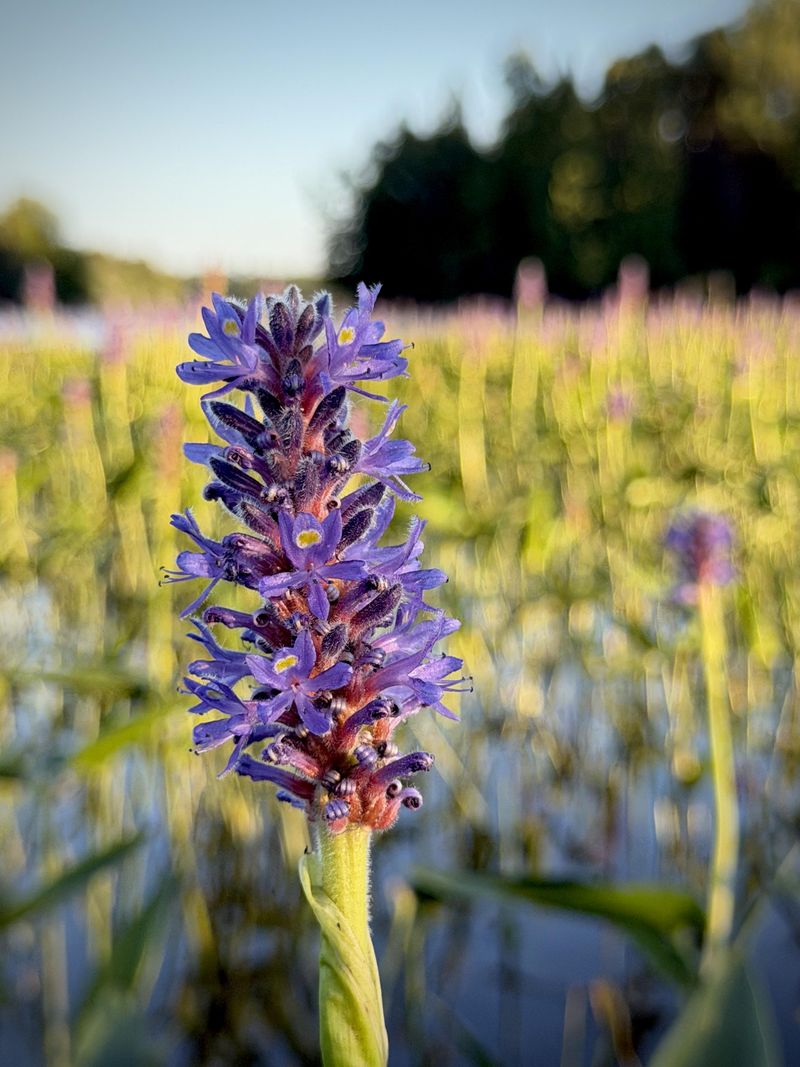
A dragonfly on patrol is not a mosquito specialist.
It may catch mosquitoes, but it also eats gnats, midges, small flies, and other insects that cross its flight path. That broad appetite is why a healthy dragonfly population can add useful pressure around a pond.
Do not expect a magic shield.
The number of mosquitoes taken depends on dragonfly numbers, weather, nearby breeding sites, and the abundance of other prey. One flower bed cannot promise a bite-free patio.
A resident pond population can still help.
The best way to keep dragonflies around is to support the whole life cycle. Adults need perches and open flight lanes. Nymphs need clean aquatic habitat, cover, and enough food below the surface.
Pickerelweed contributes to both sides of that equation.
Stems rise into useful adult territory while roots and submerged growth add structure below. A pond that supports successful nymph development may produce adults that continue to patrol nearby.
Let the rest of the food web stay reasonably intact too.
Spiders, frogs, birds, and other predators belong in a balanced yard. Removing every creature that catches insects can leave the ecosystem less stable.
Your pond does not need to become a dragonfly factory.
It just needs to become a good address.
Give these hunters water, perches, open air, and an underwater nursery. They may return the favor by treating mosquitoes like one item on a very busy dinner menu.
Remove Stagnant Containers Around The Yard
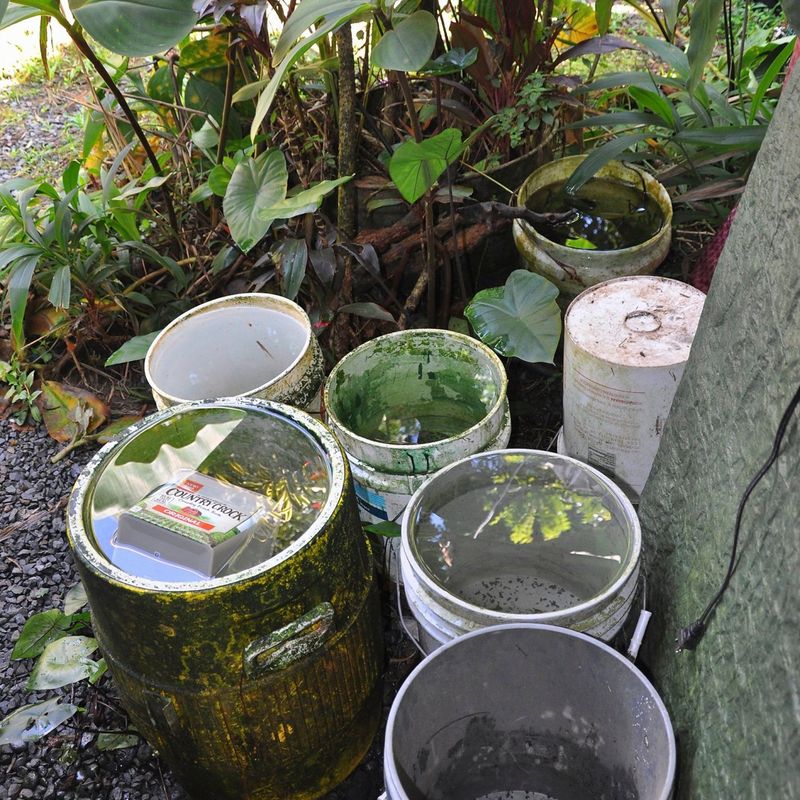
The biggest mosquito problem may sit nowhere near the pond.
A forgotten plant saucer can hold enough water for mosquitoes to develop. So can a bucket, clogged gutter, folded tarp, toy, tire, or tiny container that catches summer rain.
That is especially important with container-breeding mosquitoes such as Aedes aegypti.
These mosquitoes often prefer small pockets of still water close to homes. A carefully managed wildlife pond may attract far less trouble than one neglected cup tucked behind a pot.
Walk the yard once a week.
Tip out water from movable containers. Scrub birdbath surfaces and saucers so eggs do not stay stuck along the sides. Store buckets upside down. Clear clogged gutters and flatten tarps that create little rain pockets.
Repeat the check after storms.
Texas rain can turn yesterday’s dry junk into tomorrow’s mosquito nursery with impressive efficiency.
Warm weather speeds the process, so a few quiet days of standing water can matter.
Do not let the pond distract you from these smaller sources.
You can build beautiful dragonfly habitat and still lose the mosquito battle to one wheelbarrow left under the eaves.
The good news is that this part costs almost nothing.
A short weekly walk can remove breeding sites before larvae have time to mature. Pickerelweed can support helpful predators at the pond. Your job is to stop offering mosquitoes a chain of tiny private pools everywhere else in the yard.