That Fast Many-Legged Bug In Your Minnesota Basement Is Venomous But Handles Pest Control
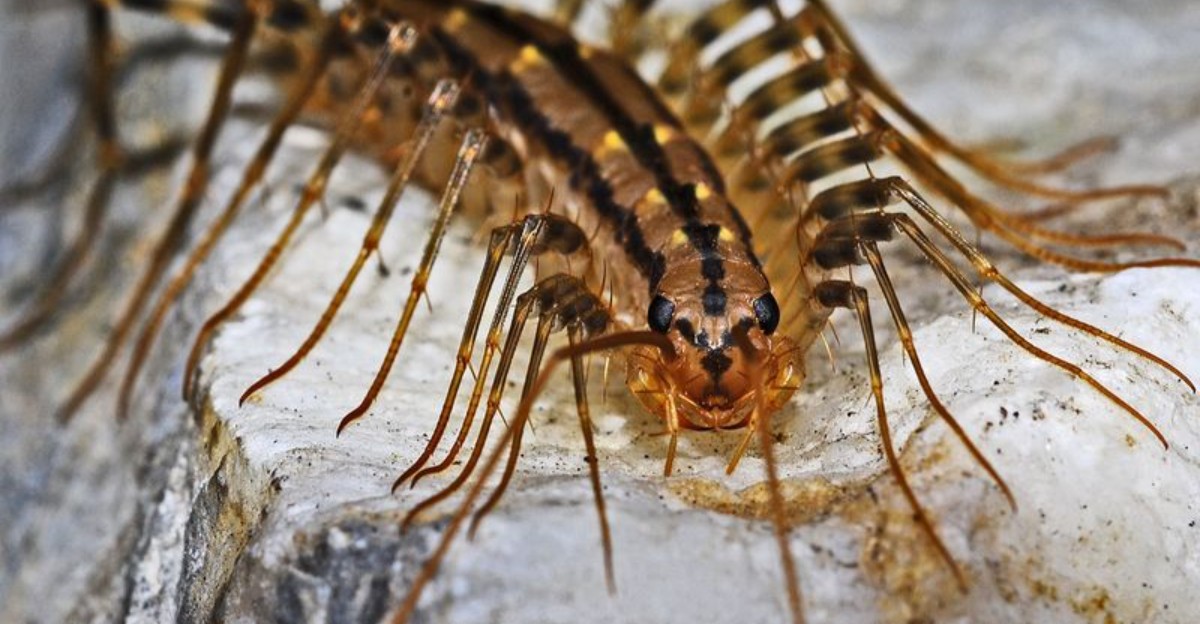
A bug with thirty legs can outrun most things in your basement at about 1.3 feet per second. I learned that fact after one shot past my seed-starting shelf in a pale yellow blur.
It has fangs, too. Well, sort of. Its front legs evolved into venom-loaded pincers, and it uses them on prey smaller than a dime.
I am surprised how often this critter gets blamed for the very pests it eats. You might notice it near the floor drain, the laundry tub, or a stack of damp cardboard boxes. Here in Minnesota, those cool, humid corners feel like a five-star resort to it.
After I stopped shrieking long enough to watch, I saw it work like a tiny night guard, even on a chilly Minnesota evening. Before you reach for the shoe, consider letting this leggy roommate finish its shift.
That Leggy Basement Sprinter Is Chasing Something Smaller Than You
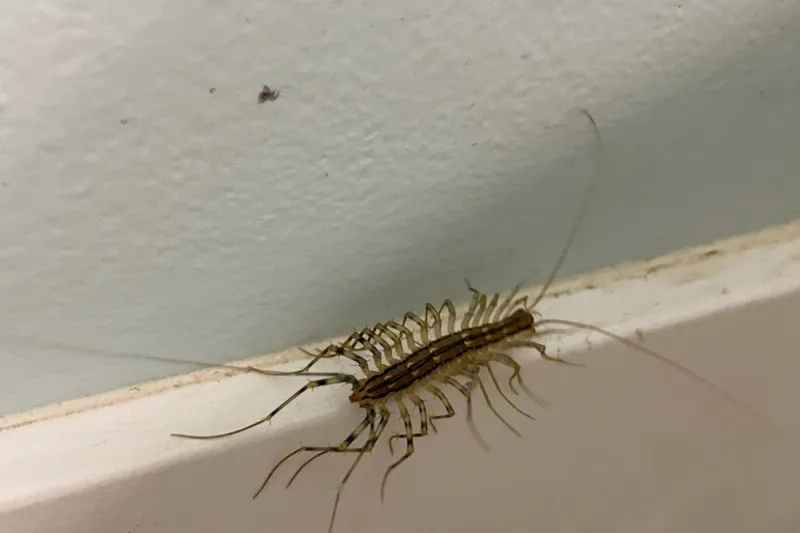
Nobody likes a surprise sprint across the laundry room floor. That speedy streak, though, is the house centipede, Scutigera coleoptrata, and it is not coming for you.
Its speed is a hunting tool. Researchers clock it at roughly 1.3 feet per second, which is fast enough to catch a silverfish before it slips under a baseboard.
It can run across floors, up walls, and even along ceilings. Most of that action happens at night. House centipedes are mainly nocturnal, so a sighting during the day often means you startled one out of a hiding spot.
They usually freeze for a split second, then bolt for the nearest crack. I used to read that bolt as aggression. It is closer to panic. These creatures want distance from big, warm, loud animals like us.
When one darts toward you, it is often just running in a random direction to escape. Give it a moment and it will slip into a dark gap.
Try this the next time you see one. Stand still, watch where it goes, and make a mental note of that spot. You just learned where moisture or hidden pests might be gathering in your basement.
Silverfish, Roaches, And Spiders Top This Centipede’s Menu
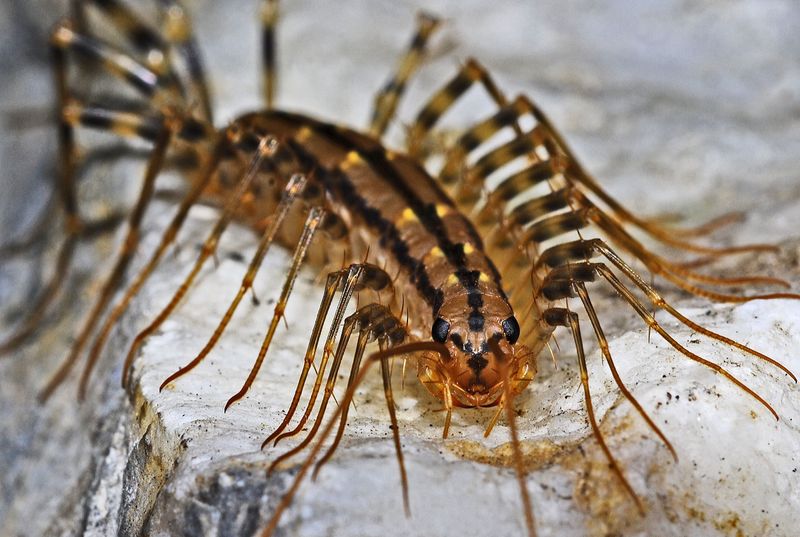
Think of it as a free exterminator that works the night shift without a paycheck. House centipedes are strict meat eaters, and they skip crumbs, plants, and your pantry food.
Their menu reads like a list of basement troublemakers. Extension entomologists list silverfish, cockroaches, spiders, crickets, earwigs, moths, carpet beetle larvae, and ants among their prey.
Some sources note they will tackle bed bugs, too, though they are not a reliable fix for an infestation.
Hunting style matters here. Unlike a spider waiting in a web, the centipede actively roams and grabs. It sometimes lassos small prey with its legs before delivering a venomous pinch.
I find that a little thrilling to picture. A single centipede may patrol the same few corners for months. There is a catch, though. If you see lots of centipedes, they likely have plenty to eat.
Frequent sightings can point to a hidden silverfish or cricket problem that deserves your attention.
So a lone centipede now and then is usually a helper. A crowd of them is a clue. Use that clue to check boxes, drains, and damp storage for the pests they are chasing.
Those Venomous Front Pincers Rarely Bother People
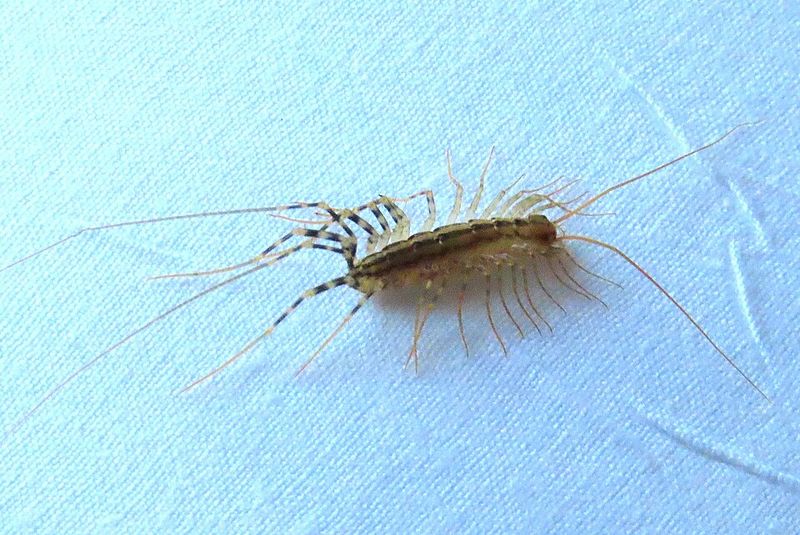
Yes, the venom part is real. The house centipede carries a pair of modified front legs called forcipules, and they inject venom into prey.
For a silverfish, that is bad news. For a person, it is mostly a non-event. These centipedes are shy, and their small pincers often struggle to pierce human skin at all.
Bites usually happen when someone presses one against bare skin, like rolling onto it in bed or grabbing it by accident. Penn State Extension and other experts compare the feeling to a mild bee sting. Expect brief pain, a bit of redness, and some swelling.
Most reactions fade within a day. Wash the spot with soap and water, then use a cold pack if it feels sore.
Watch for anything unusual. Rarely, a person may have an allergic response, so trouble breathing, spreading swelling, or hives call for prompt medical care.
House centipedes do not damage wood, wiring, food, or fabric. They also do not carry diseases known to affect people or pets.
Honestly, a curious cat is in more danger of getting a tiny pinch than you are. Even then, most pets simply bat the centipede around and move on.
Fifteen Pairs Of Striped Legs Make It Look Bigger Than It Is
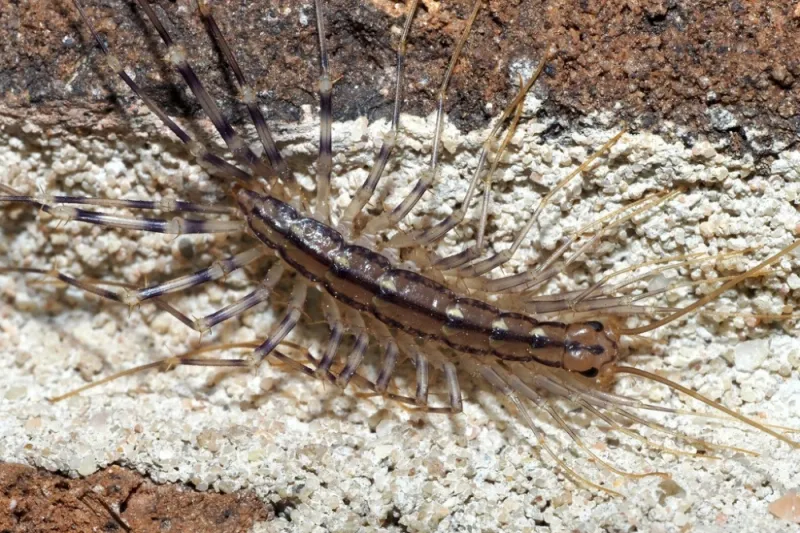
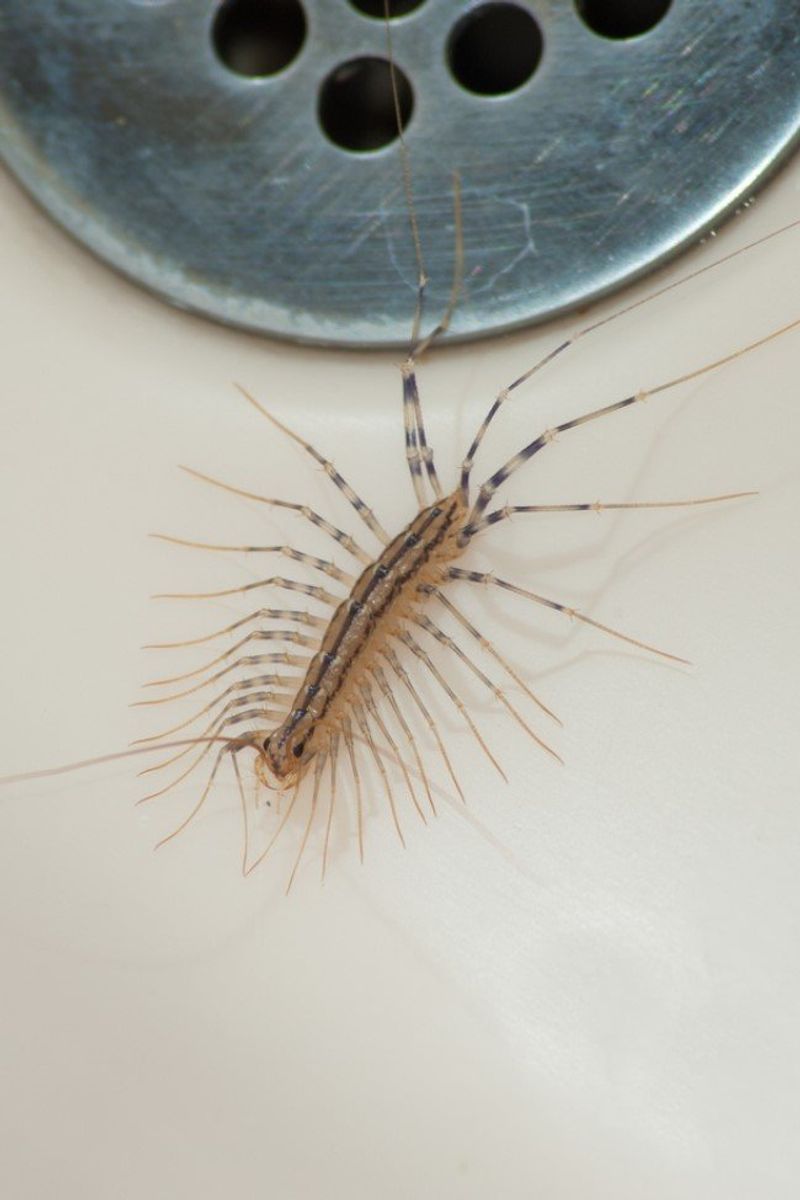
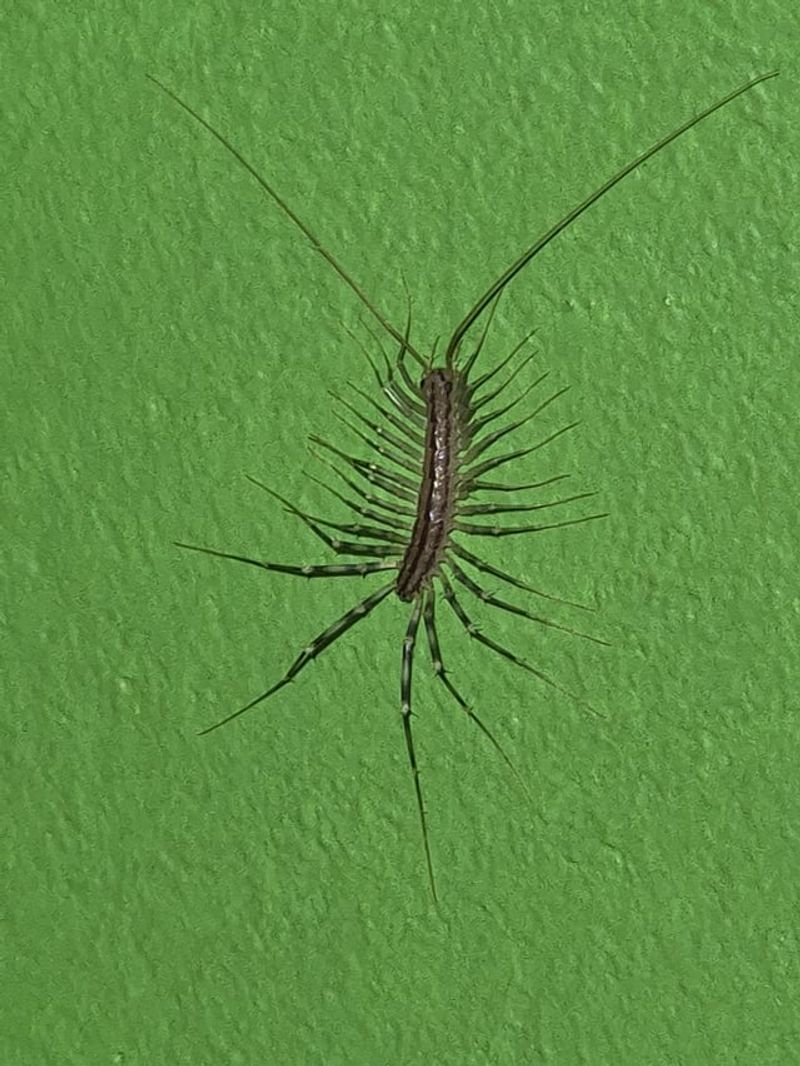
Count the legs if you dare. An adult house centipede has 15 pairs, and each one is long, thin, and banded in dark stripes.
The body itself is modest, roughly 1 to 1.5 inches long. Add those legs and the long antennae, and it can look close to four inches across. That stretched outline is why so many people swear they saw something huge.
Color helps with identification. The body is grayish yellow to yellowish brown with three dark stripes running down the back.
Here is a fun detail. The very last pair of legs is extra long and can look like a second set of antennae. That trick may confuse predators about which end is which.
Young centipedes start with only four pairs of legs. They gain more with each molt until they reach the full 15 pairs.
They also live surprisingly long for a household bug. Many survive three years or more, and some reach five to seven years in good conditions.
If a leg snaps off during an escape, it can regrow over later molts. So that wiggling leftover leg you found is not a sign of a new species, just a narrow getaway.
Damp Minnesota Basements Feel Like Home To These Mediterranean Travelers

Here is a twist for a cold-climate home. The house centipede originally came from the Mediterranean region and spread around the world with people.
Outdoors, it does not handle harsh Minnesota winters well. Indoors, though, it can live and breed all year.
Basements, crawl spaces, bathrooms, and laundry areas give it the cool, humid hideouts it craves.
Moisture is the big draw. These centipedes lose water easily through their bodies, so they seek out spots near sump pits, floor drains, and leaky pipes.
Food is the second draw. A damp basement often supports silverfish, crickets, and spiders, which keeps the centipede well fed.
Sightings can rise in spring and fall. During those transitions, some centipedes and their prey move around more, and outdoor populations under mulch or stones may wander inside.
University of Minnesota Extension notes they are among the most common centipedes found in homes here. Older homes with fieldstone foundations or unfinished basements often host more.
I noticed fewer in my own house after a dry summer. Humidity really does steer where they hang out, so your basement’s moisture level is worth checking with a cheap hygrometer.
A Running Dehumidifier Sends The Centipedes Looking Elsewhere
Want fewer leggy visitors without harsh sprays? Start with the air. A dehumidifier is one of the most effective tools you can buy for a damp basement.
Aim for indoor humidity around 50 percent or lower. At that level, centipedes, silverfish, and many other moisture lovers find life much harder.
Next, fix the drips. Leaky faucets, sweating pipes, and a poorly sealed sump pit all create small oases. Even a single wet corner can keep a population going.
Clutter is the third piece. Cardboard boxes on the floor soak up dampness and give pests countless hiding spots. I swapped mine for lidded plastic bins on shelves, and the difference showed within a few weeks.
Outside, pull mulch, leaf piles, firewood, and stones back from the foundation. Seal cracks around windows, doors, and utility lines with caulk or weatherstripping.
Sticky traps placed along walls can show you where centipedes travel. Use them to monitor activity rather than as your main fix.
Broad insecticide sprays rarely solve the real problem. Remove the moisture and the prey, and the centipedes drift off on their own.
Letting One House Centipede Stay Might Be Your Smartest Move
My personal rule is simple. One centipede in the basement gets a pass, but one on my pillow gets a free ride outside.
That balance works for a lot of homeowners. A few centipedes quietly reduce silverfish, spiders, and other pests.
Many sightings, especially upstairs, tell you to tackle moisture and hidden prey. Relocating one is easy. Set a jar or cup over it, slide stiff paper underneath, and carry it outside.
Warmer months are the kindest time to do this, since a winter release outdoors in a Minnesota freeze gives it slim odds.
Please skip the bare-handed grab. A tiny pinch is unlikely to harm you, but there is no reason to test it.
Kids often find centipedes fascinating once the fear fades. Count the legs together, talk about what they eat, and turn a scream into a science lesson.
A centipede sighting is less a crisis and more a message about your home. Listen to it, dry things out, clear the clutter, and let the occasional night hunter keep doing the job it does best. You might even start to appreciate that speedy little roommate.