What You Should – and Shouldn’t – Do to Crape Myrtles Before Winter in Texas
Southern gardeners have a dramatic nickname for one popular fall chore, and it sounds like the title of a cozy mystery novel. Horticulturists toss it around with a wink, but they’re only half kidding.
Crape myrtles look fantastic even after the leaves drop. That peeling, cinnamon-colored bark glows in the low winter sun, and the twisty limbs could pass for sculpture in a museum.
Still, every year, plenty of Texas yards end up lined with chopped-off stubs. Ouch.
Here’s the funny part. Good winter care mostly means keeping your hands to yourself.
A few smart moves now can protect roots and buds when a surprise freeze rolls in. A few overeager ones could leave you with floppy branches next summer.
Ready to sort the helpful chores from the crimes?
1. Those Chopped Crape Myrtle Stubs Tell a Sad Story
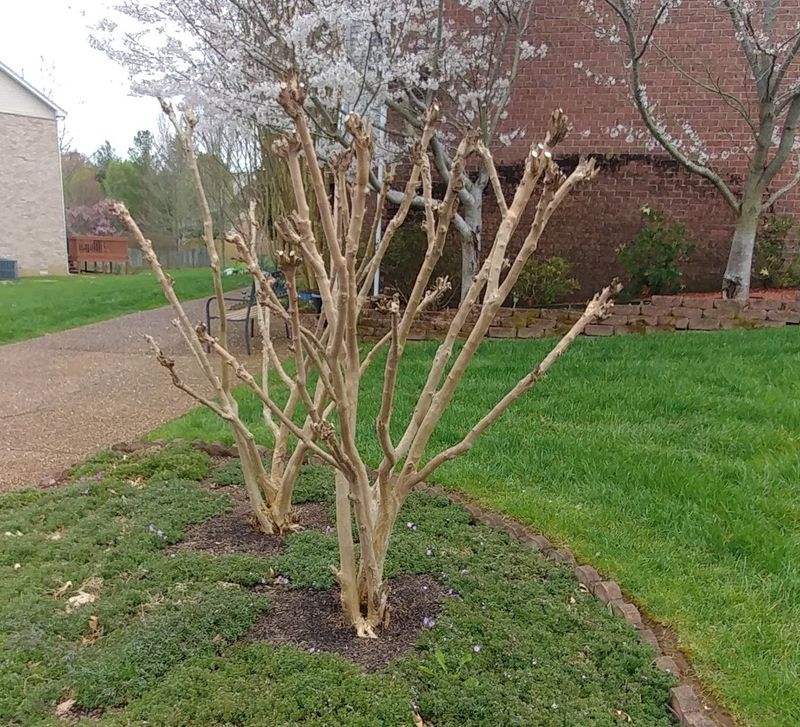
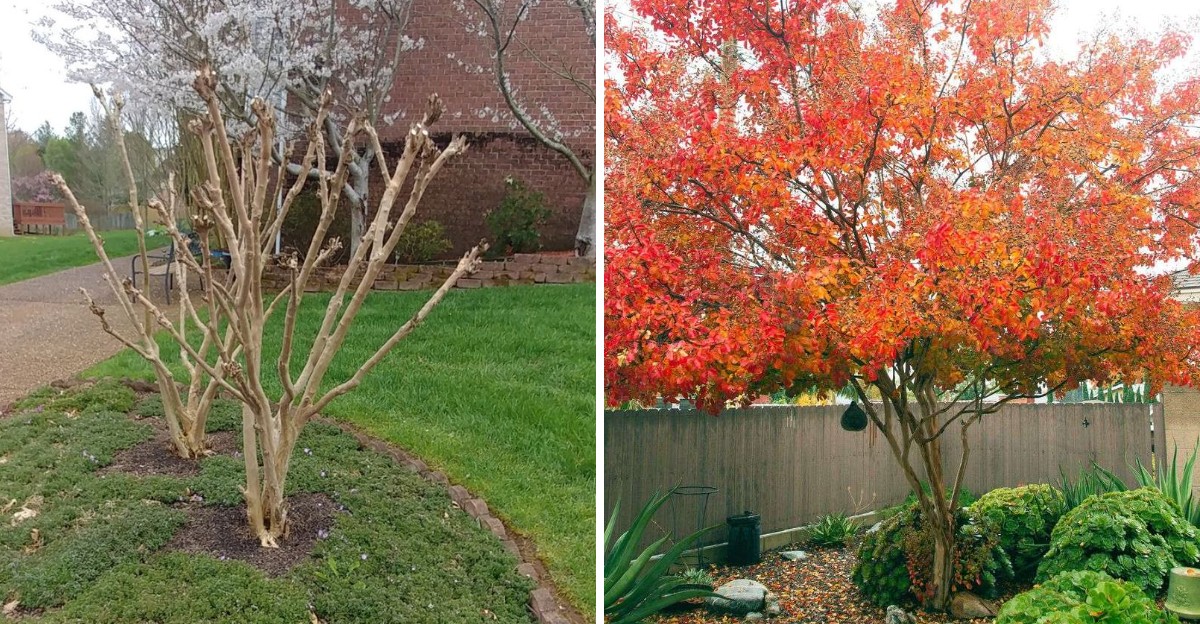
Drive through almost any Texas neighborhood in late fall and you’ll spot them: crape myrtles cut down to thick, blunt stumps that look like clenched fists.
This harsh practice is known as topping, and Texas A&M AgriLife experts have warned against it for years.
Topping removes the graceful branch structure that took a decade to build. It also leaves big wounds that heal slowly and give pests and decay an easy way in.
The tree responds with a burst of skinny water sprouts in spring. Those shoots grow fast but stay weak, so heavy flower clusters can make them bend or snap after a summer rain.
You end up with more work and a less sturdy tree.
Many people top their trees because they believe it boosts blooms. In reality, flower size might bump up slightly, but the overall number of blooms and the tree’s health often suffer.
That’s a poor trade.
My advice is simple. Put the loppers and chainsaw away this fall.
Let the smooth, mottled bark and twisting trunks show off during the bare months, because that winter silhouette is one of the best reasons to grow these trees in the first place.
2. Save Crape Myrtle Pruning for Late Winter
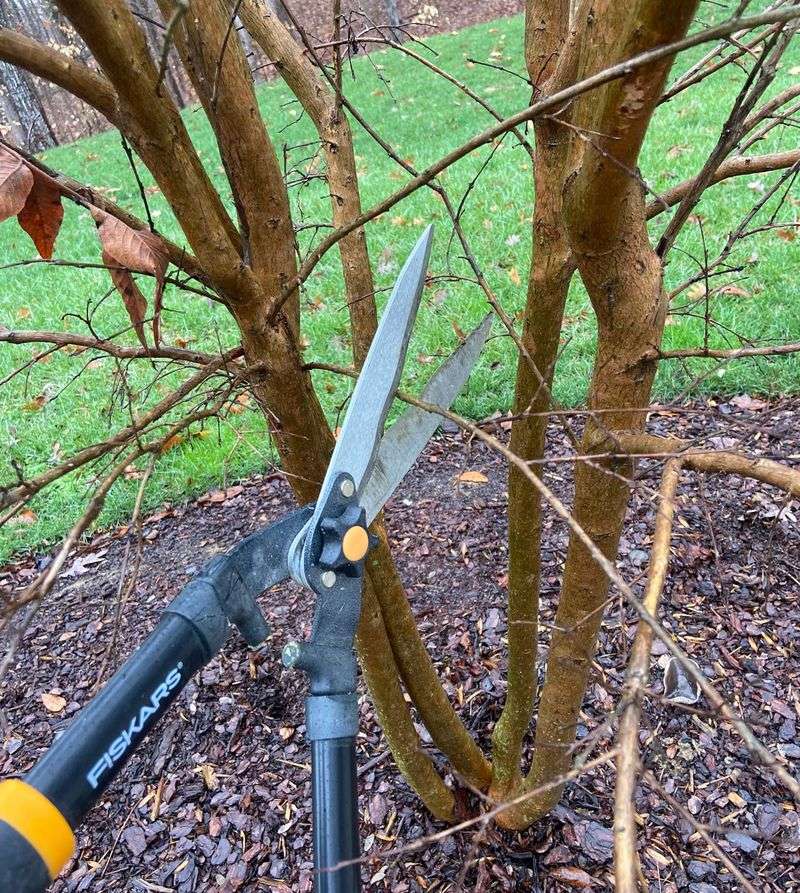
Patience pays off with these trees. The best pruning window in Texas falls in late winter, usually January through February, when the tree is fully dormant and leafless.
Around Houston and other mild coastal areas, early March can still work. In the Panhandle, waiting until the hardest cold passes makes sense.
Bare branches also let you see the structure clearly, so you can spot problems you’d miss under a canopy of leaves.
Fall pruning, on the other hand, can nudge the tree into pushing tender growth right before cold weather. A sudden blue norther can then damage those soft shoots.
When the time comes, keep the job light. Remove branches that cross and rub, suckers sprouting at the base, and any broken or diseased limbs.
Small twigs growing toward the center can go too, which opens the tree to air and light.
Cut back to a side branch or the trunk collar instead of leaving stubs. Clean, sharp bypass pruners and a small saw make neat cuts that seal faster.
Think of it as a tidy haircut, not a buzz cut, and your tree will thank you with sturdy growth.
3. A Cozy Mulch Ring Keeps Crape Myrtle Roots Snug
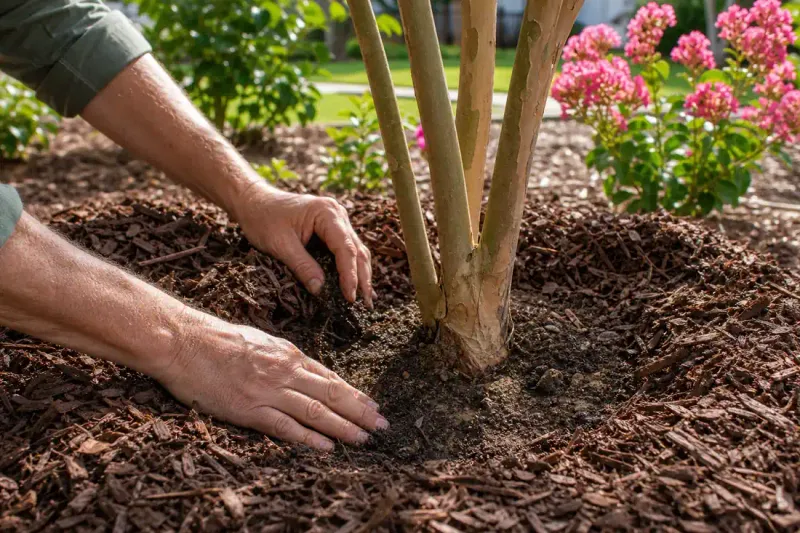
Mulch is like a warm blanket you can buy by the bag. A 2 to 4 inch layer of shredded bark, pine straw, or chopped leaves helps hold steady soil temperatures when a cold front rolls in.
It also keeps moisture in the ground and smothers winter weeds. Over time, organic mulch breaks down and feeds the soil, which crape myrtles appreciate.
Newly planted trees are more tender, so you can go a little deeper with them, up to about 6 inches. Their roots haven’t spread far yet, so extra cover offers helpful insurance against a hard freeze.
Here’s the part folks often skip. Keep mulch a few inches away from the trunks.
Piling it up against the bark in a volcano shape holds moisture against the wood, invites rot, and gives rodents a hiding spot.
Spread the ring out to the drip line if you can, the area under the outer edge of the branches. A free option is raking up your own fallen leaves and running a mower over them first.
Chopped leaves stay put better and look surprisingly neat around the base of the tree.
4. Hold Off on Feeding That Crape Myrtle Until Spring
Fertilizer in fall feels generous, but your crape myrtle sees it differently. Nitrogen tells a plant to grow, and that’s the last message it needs as it slows down for dormancy.
Fresh shoots that pop out in November or December stay soft and full of water. One sharp freeze can turn them brown and mushy, and the tree wastes energy replacing them.
Too much fertilizer can also burn roots and push leafy growth at the expense of blooms. Crape myrtles are fairly light feeders anyway.
Many established trees in decent soil do fine with little or no extra food.
So when should you feed? Wait until spring, once new leaves begin to emerge.
A light application of a balanced or slow-release product works well for most yards.
If your tree seems pale or weak, a soil test through Texas A&M AgriLife’s lab can show what’s actually missing. That beats guessing and buying the wrong product.
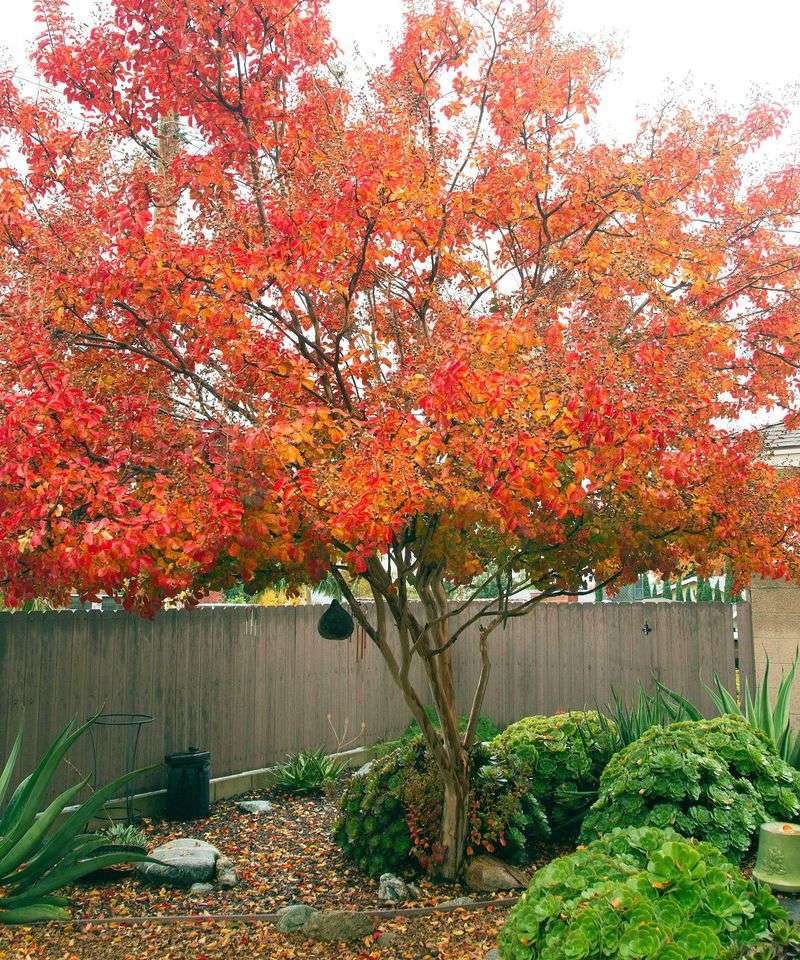
For now, store the fertilizer bag in the garage and enjoy the colorful fall foliage, which on many varieties turns shades of red, orange, and gold before dropping.
5. Deep Drinks Help Crape Myrtles Through Dry Winter Spells
Winter in much of Texas can be surprisingly dry. Weeks can pass without meaningful rain, especially out west and in the Hill Country.
Established crape myrtles handle drought well, yet roots still need some moisture while the tree rests. Dry soil also loses heat faster than moist soil, so a well-watered root zone handles a freeze better.
Young trees planted in the last year or two deserve the most attention. Their roots are shallow and can dry out quickly.
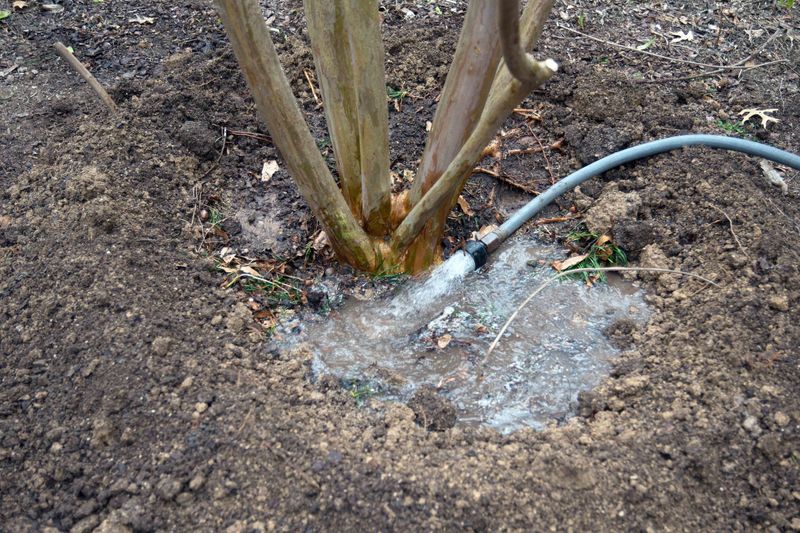
Aim for slow, deep watering every few weeks during long dry stretches. A soaker hose or a garden hose left trickling at the base for a while lets water sink down where roots live.
Watering a day or two before a predicted hard freeze is a smart move.
Skip sprinklers that soak the branches, since wet surfaces can encourage fungal trouble. Water earlier in the day when temperatures are above freezing.
Not sure if it’s time? Push a finger or a screwdriver a few inches into the soil.
If it comes up dry and dusty, give the tree a drink. If it feels damp, wait and check again later.
6. Soggy Soil Can Hurt a Sleeping Crape Myrtle
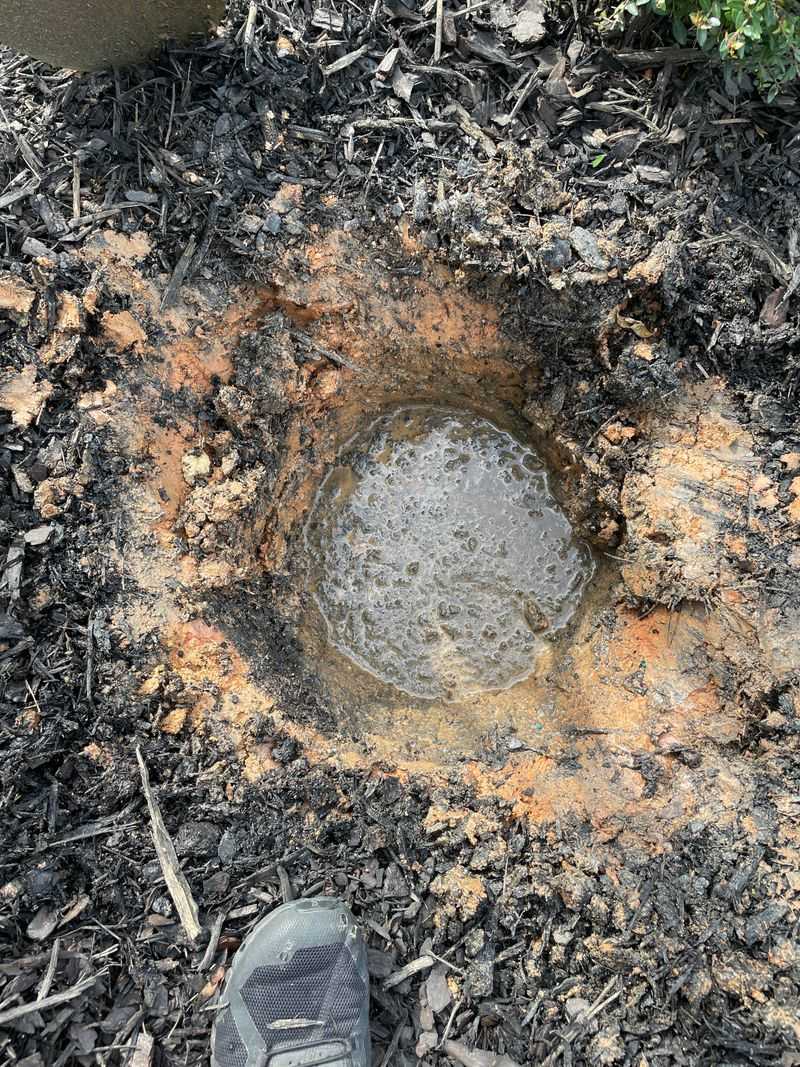
Too much love from the hose causes trouble too. A dormant crape myrtle uses very little water, so constant soaking can leave roots sitting in mud.
Roots need air as much as moisture. When soil stays waterlogged for long periods, they struggle to breathe, and root rot becomes a real risk.
Heavy clay soils, common around Dallas, Fort Worth, and parts of Central Texas, drain slowly. East Texas also gets plenty of winter rain.
In those areas, your tree may need almost no extra water from now until spring.
Watch your irrigation system. Many sprinkler timers stay set on summer schedules long after the weather cools.
Switching to a winter setting, or turning the system off and watering by hand when needed, saves water and protects roots.
Signs of overwatering include puddles that linger around the base and soil that smells sour. Next spring, you might also see slow leaf-out or thin growth.
If drainage is a constant problem in one spot, consider that a lesson for the future. Crape myrtles prefer well-drained ground, so a slightly raised bed or a better location may suit the next one you plant.
7. Potted Crape Myrtles and Small Trees Need Extra Freeze Protection
Dwarf crape myrtles in containers make cute patio plants, but their roots live a riskier life. In a pot, soil gets cold much faster than ground soil, and roots have no earth around them for insulation.
Before a hard freeze, roll or carry the pot into an unheated garage, shed, or covered porch. The tree doesn’t need light while it’s dormant, and a few days indoors is fine.
Move it back out once the cold snap passes.
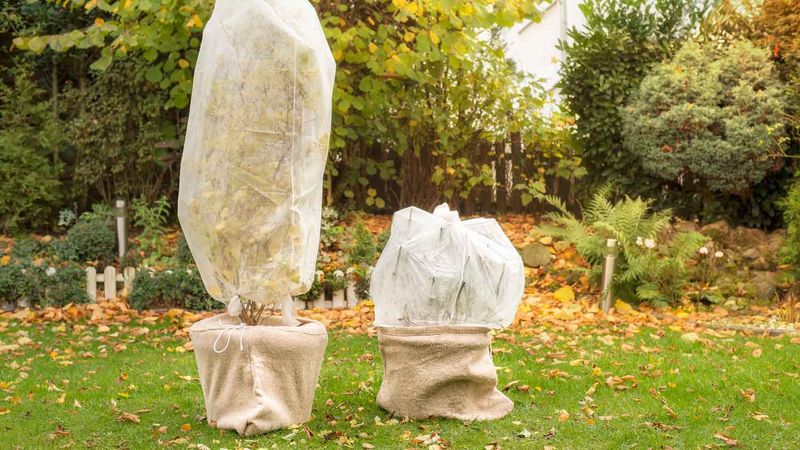
Small or newly planted trees in the ground can benefit from a temporary cover. Frost cloth or burlap works well.
Drape it loosely so it doesn’t crush branches, and let it reach the ground so it traps warmth rising from the soil.
Skip plastic sheeting. On sunny winter days it heats up quickly underneath, which can harm bark or coax buds open too early.
Those early buds then get zapped by the next frost.
Remove covers once temperatures climb above freezing. Large established crape myrtles in USDA zones 7 through 9 rarely need covering at all.
Save your effort for the little ones that truly need help.
8. White Crusty Spots on Crape Myrtle Bark Deserve a Closer Look
Bare branches give you a rare chance to play detective. With the leaves gone, you can spot pests that hid all summer.
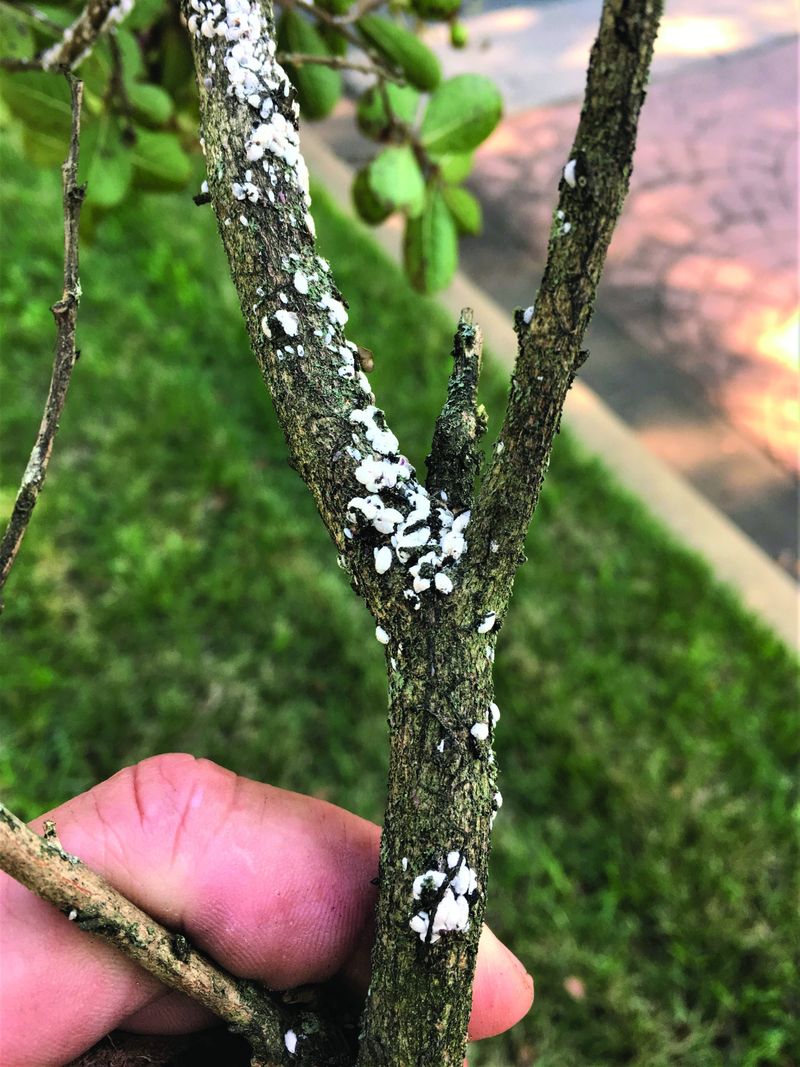
Look for white or gray felt-like patches on the bark, often in branch crotches or around old pruning cuts. That’s likely crape myrtle bark scale, an insect first found in Texas in 2004 near Dallas.
Crush one, and it may ooze pinkish fluid.
Black, sooty coating on bark is another clue. Sooty mold grows on honeydew, a sticky waste from scale insects and aphids.
It’s mostly cosmetic, and you can scrub it off with a soft brush and soapy water.
Gentle washing in winter also removes some scale insects. Horticultural oil applied during dormancy can help smother them, following the label carefully.
Many experts suggest systemic treatments in spring around bud break, rather than during bloom, to protect pollinators. Your county AgriLife Extension office can confirm what you’ve found.
Leave those dry seed heads alone, by the way. They’ll drop as new growth begins.
Your best next step is a slow walk around each tree this weekend, checking bark, mulch, and soil, then marking February on your calendar for that gentle pruning.