Rounded Clumps on Arizona Mesquites Are Often Desert Mistletoe, but a Nest May Hide Inside
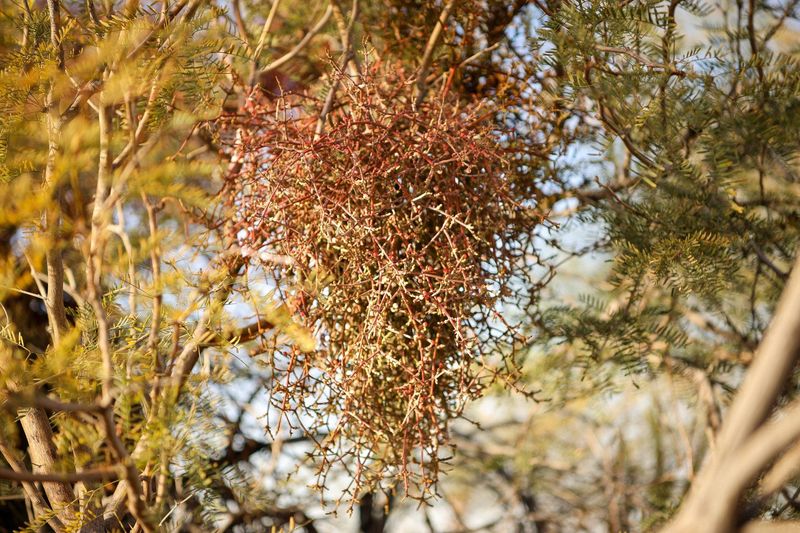
A single red berry can feed a bird that then plants the next generation of a parasite. I love how a lumpy clump in a tree can hold such a tangled story.
In Arizona, many mesquite owners spot these rounded masses and wonder what they are. I have to admit the answer is not as simple as it looks from the driveway.
A Rounded Mesquite Clump May Be Desert Mistletoe
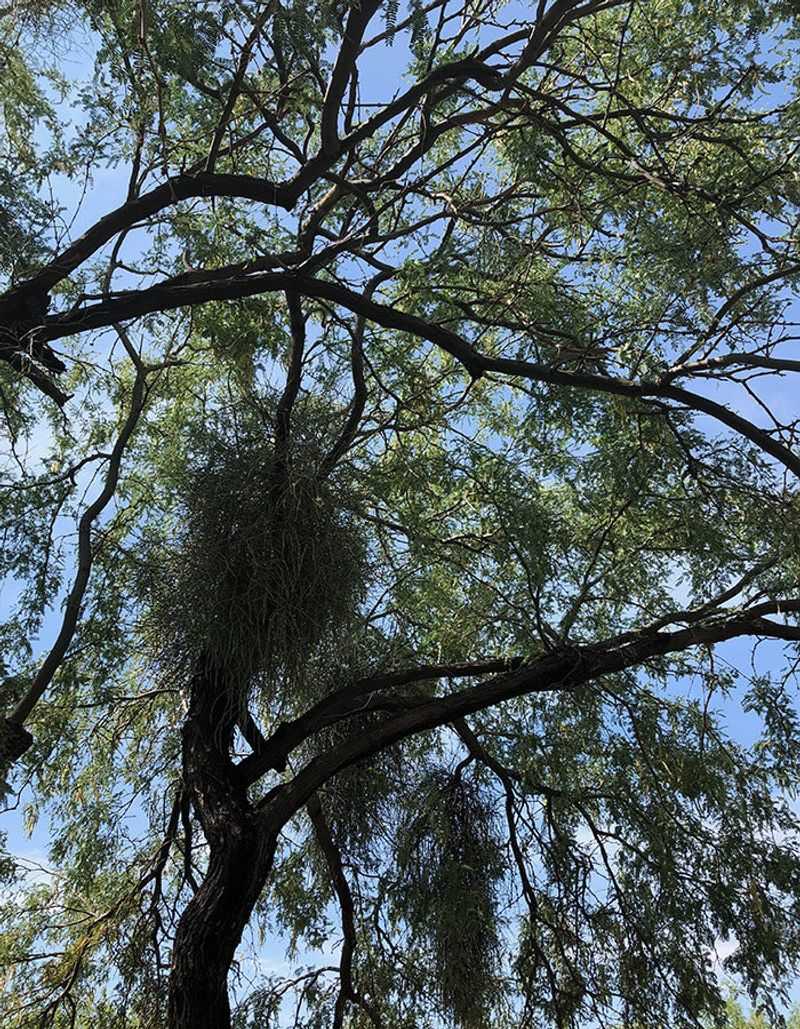
Look up into an Arizona mesquite and you may spot a dense, rounded mass sitting in the branches. Often, that mass is desert mistletoe, Phoradendron californicum, a native plant that commonly grows on mesquite, as University of Arizona Extension notes in its guide to mesquite trees in the urban landscape.
Despite the old nickname of leafy clumps, this mistletoe is essentially leafless. Its stems are dense, brittle, and jointed, with tiny scale-like leaves and often a reddish tint, according to Extension’s mistletoe guide.
Those features give you a useful clue to look for.
Still, a quick look from across the yard cannot confirm what you have. Other growths can look similar, and I would want a closer view before naming anything.
Also, naming the plant is a separate question from whether a bird nest is tucked inside, and we will get to that.
How Desert Mistletoe Gets Water and Nutrients From Its Host
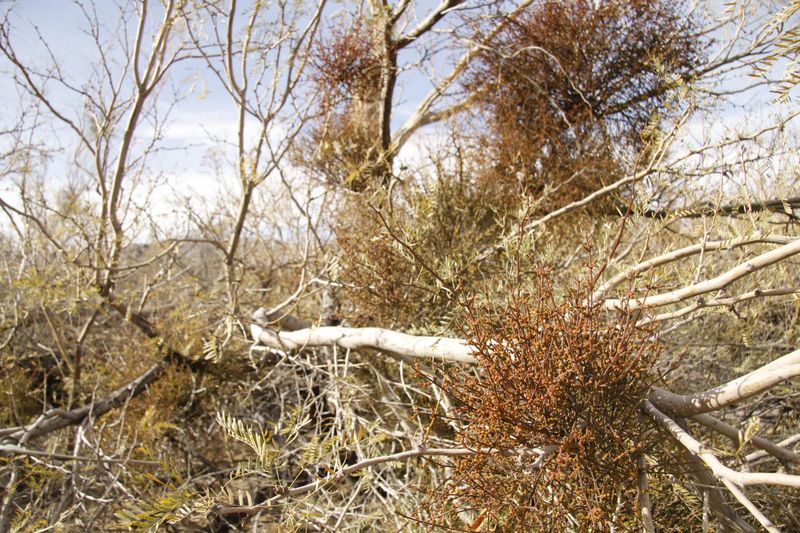
Desert mistletoe is a partial parasite, which sounds odd until you see how it works. It makes its own food through photosynthesis, just like other green plants.
What it borrows from the mesquite is water and dissolved nutrients.
The Arizona-Sonora Desert Museum describes this mistletoe family and its habits, including the small red berries produced on female plants. Mesquite is the principal host in Arizona, but the plant can also grow on other woody desert species.
So a clump on a different tree is not automatically a mystery.
Here is a practical point. The effect on a host is not the same everywhere, and a mistletoe plant does not guarantee trouble for its tree.
A University of Arizona Extension guide covers how infestations differ. Watch the whole tree, not only the clump.
A Phainopepla Nest May Be Hidden in the Clump
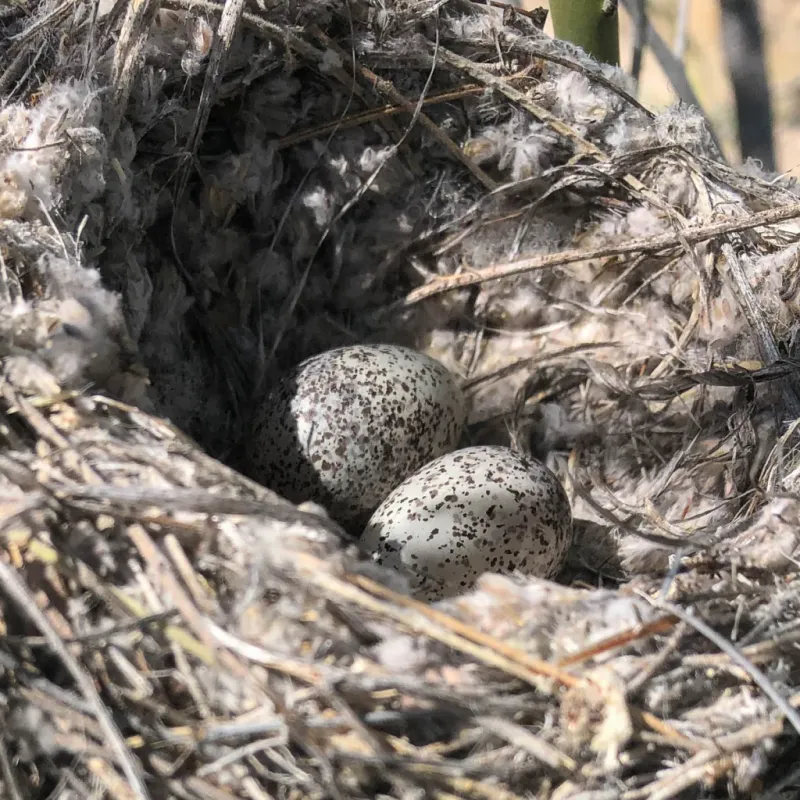
Here is the twist that makes the old claim of not a nest too absolute. Mistletoe is plant growth, yet a bird nest can sit right inside it.
The Arizona State University Ask A Biologist page says Phainopeplas usually place their nests in mistletoe clumps.
That means a clump can be both at once. A nest is small and can be hard to spot among dense stems.
You cannot rule one out just because you do not see it at first glance.
The slim, crested Phainopepla is a glossy black bird in males, with a gray female, and the Audubon Field Guide offers more on its habits. Before any pruning, watch the tree for a few minutes.
Look for birds coming and going, and check carefully for a nest.
If a nest is occupied, leave it alone and do not disturb it.
Birds Help Mistletoe Seeds Travel
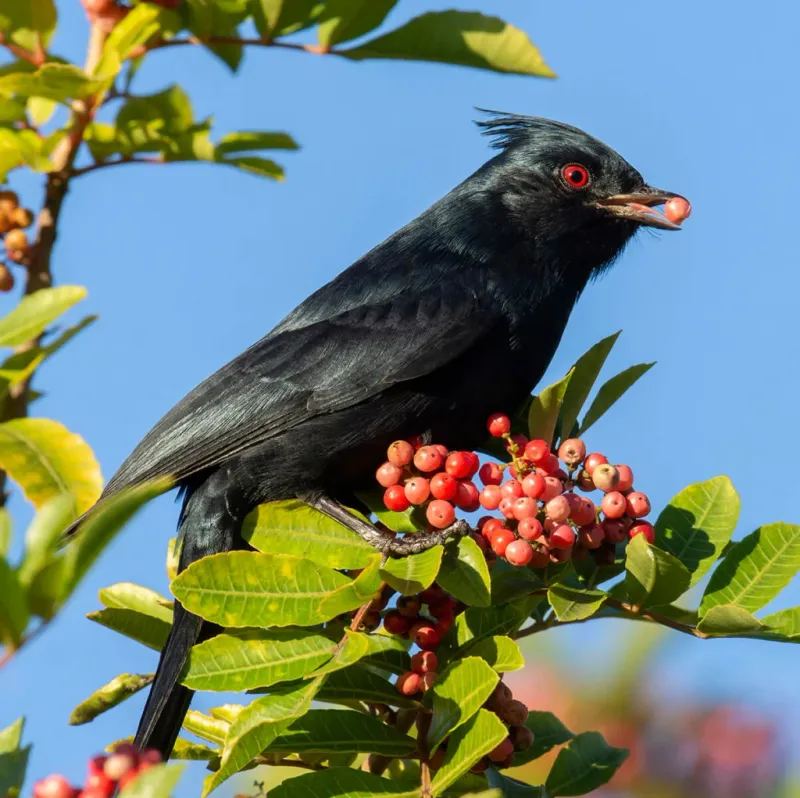
Those little red berries are a big deal to one bird. The Arizona-Sonora Desert Museum identifies mistletoe berries as a main winter food for Phainopeplas.
I find it charming that a bird and a plant lean on each other this way.
The seeds are sticky, so they can cling to a branch after a bird wipes its beak or passes them. That is how new mistletoe can start on a fresh limb.
The same sticky coating helps the seed stay put.
A USGS research summary found Phainopeplas were especially effective seed dispersers at the Sonoran Desert site that was studied. That is a result from one place, not a rule for every yard.
It also says nothing about pests, so skip any claims about mistletoe controlling ticks, scorpions, or mosquitoes.
Similar Brooms Can Have Different Causes
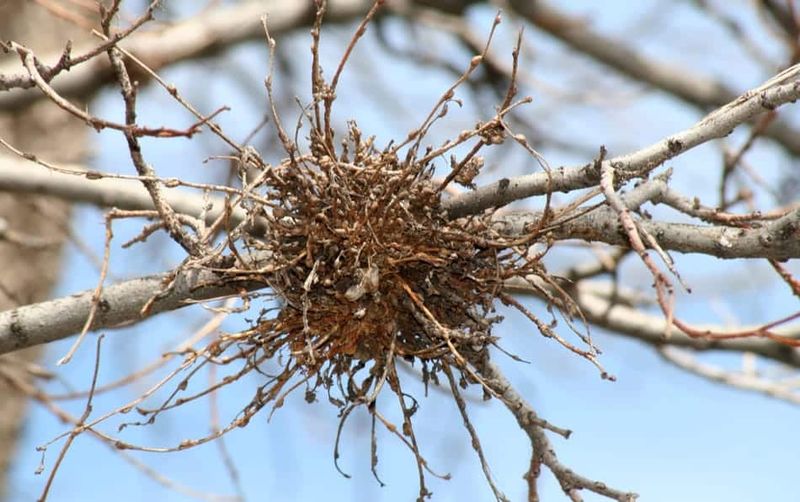
A dense, rounded tangle in a branch has a nickname: witch’s broom. That name only describes how it looks.
It does not tell you the cause.
Arizona’s forestry guide to urban tree insects and diseases says mistletoe clumps may be called witch’s brooms, while fungi and other causes can produce similar deformities. So a distant view of a broom is not enough to diagnose mistletoe.
You may also read about witches’-broom disease in palo verde, documented by University of Arizona Extension. That is a palo verde story, and you should not apply it to your mesquite.
When in doubt, get a closer look at the stems. Jointed, brittle, reddish stems point toward mistletoe, but a local expert can help confirm.
Tree Condition Matters More Than Mistletoe Alone
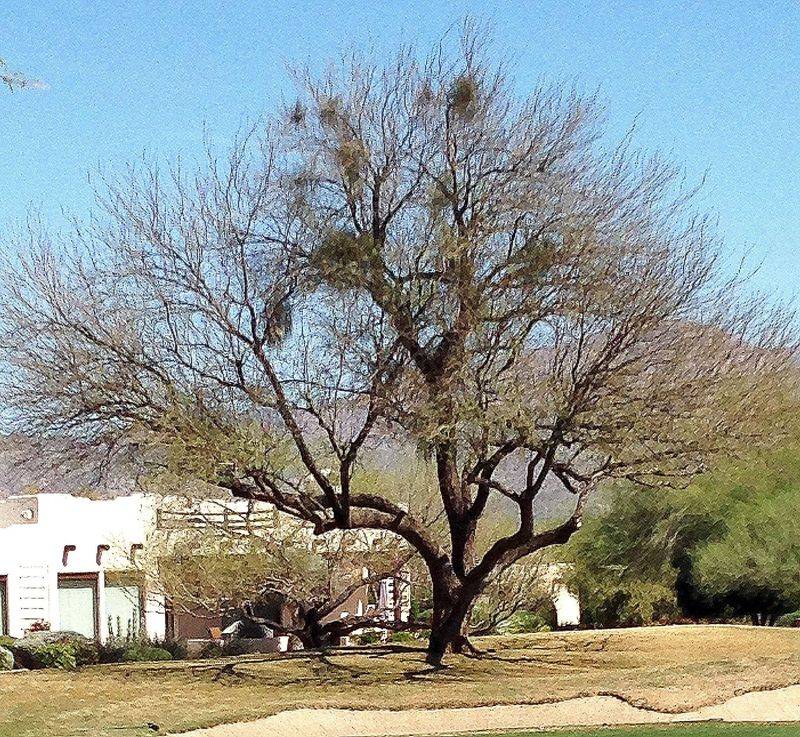
Spotting mistletoe does not mean a mesquite is in trouble. For a lightly infested tree, University of Arizona Extension treats removal as an aesthetic choice, and it also recognizes the plant’s ecological role.
Heavy infestations are different. They can contribute to decline in the host or to branch failure.
That is why the whole tree deserves attention, not just one clump.
Walk around the tree and ask a few practical questions. Does the canopy look full and green for the season?
Are the infested limbs large, or do they hang over a patio, car, or walkway? Is a branch cracked or sagging?
A thin, struggling tree with many clumps on big limbs is a different case from a sturdy tree with one small clump. If branch hazards worry you, that is the moment to call a qualified arborist.
Do not assume every clump needs to come out.
Removing Visible Shoots Does Not Eradicate Mistletoe
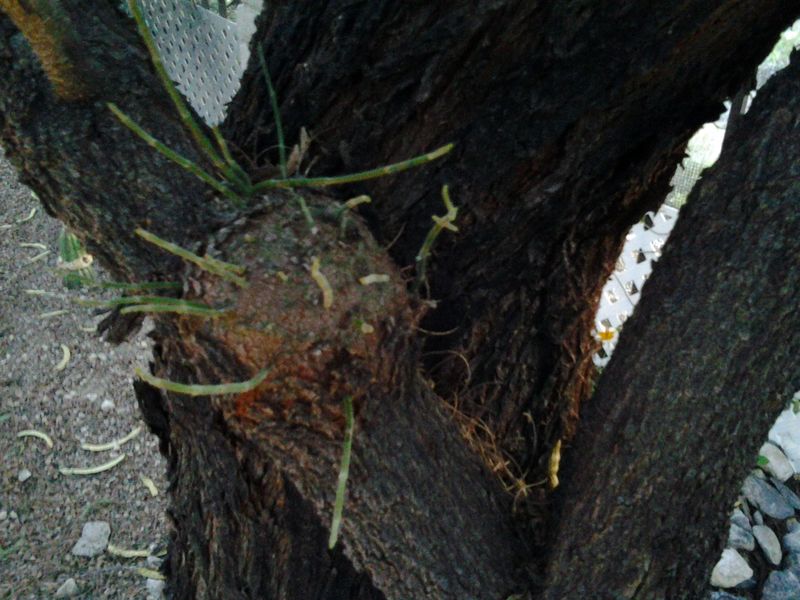
Snapping off the green shoots feels satisfying, but it is not a cure. Mistletoe can persist inside the host wood after the visible shoots are gone.
University of Arizona Extension describes this kind of removal as control, not eradication.
For a limb that is infested, Extension recommends cutting at least one foot below the infection or at the nearest branch crotch. Trunk infections cannot be cut away like that, so they may need repeated shoot removal over time.
Skip breaking off shoots as a permanent fix. Also skip topping the tree and cutting indiscriminately, since those choices ignore tree structure and can create hazards.
Before any cut, check for birds and nests. For high limbs or substantial pruning, hire a qualified arborist rather than climbing or cutting overhead branches yourself.
Treat Unidentified Berries With Caution
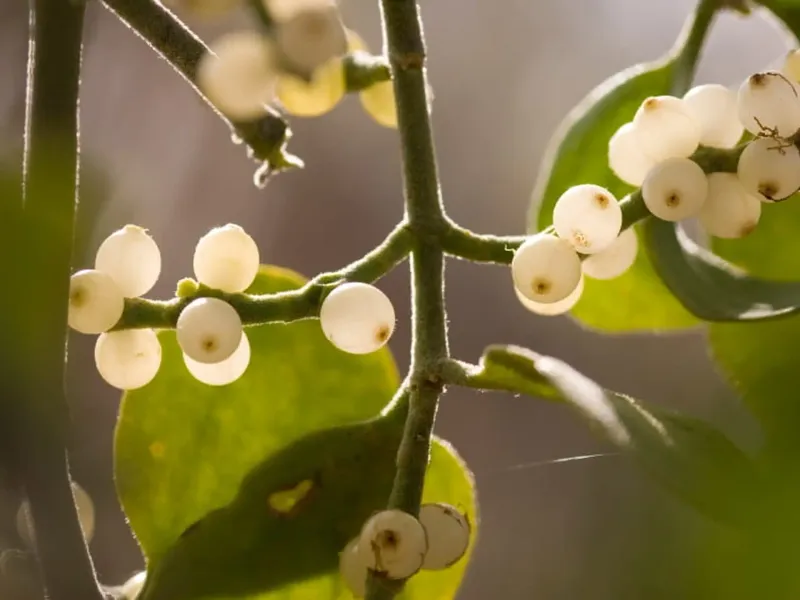
Those little red berries look tempting to a curious child or a dog. Do not eat unidentified berries or plant parts, and keep them away from children and pets.
That simple rule covers you even when you are unsure of the plant.
Poison Control’s mistletoe article discusses American mistletoe exposures in general, mainly Phoradendron serotinum, and separates it from European mistletoe. It does not establish the ingestion risk of Arizona’s Phoradendron californicum specifically.
So I cannot call the berries safe, and I will not call them harmful either. If you suspect someone ate some, contact Poison Control right away.
Before you act on any clump, identify it, observe who lives there, and assess the tree. A slow look usually beats a quick cut.