Who Pays When Your Neighbor’s Tree Crashes Into Your Arizona Yard After A Storm
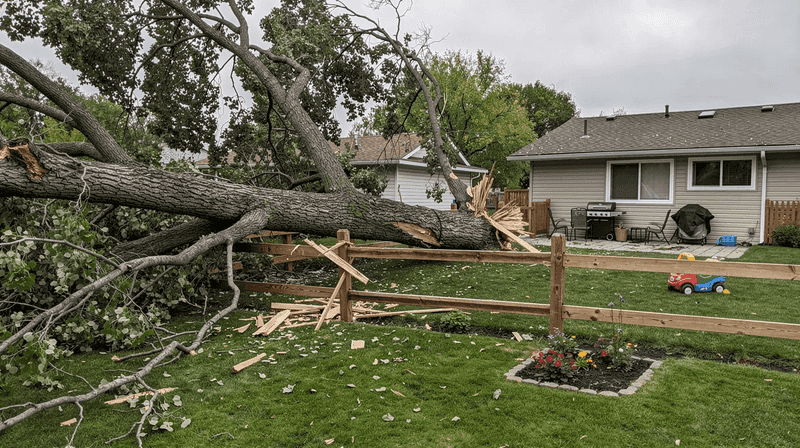
A big monsoon gust can drop a whole tree across a fence in seconds. Then comes the hard part, figuring out who owes what.
The answer is not as simple as where the tree grew. Here is how Arizona homeowners can sort out fault, cleanup, and insurance without starting a feud.
Does the Tree Owner Automatically Pay?
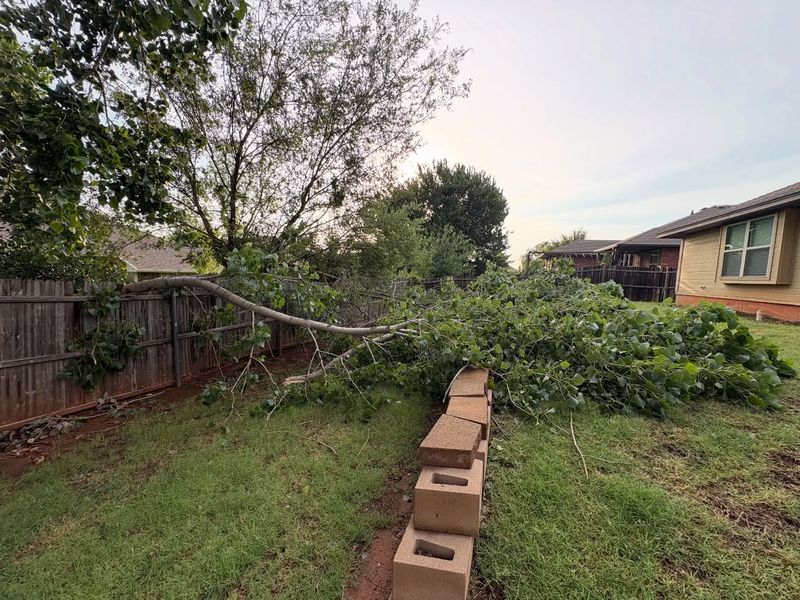
Short answer: no, not automatically. The fact that a tree grew in your neighbor’s yard does not, by itself, make them responsible for the damage or the cleanup bill.
The State Bar of Arizona’s disaster plan manual explains the general idea. A person usually is not liable for harm caused by a disaster or Act of God unless fault or negligence is involved.
Liability depends on concurrent negligence that proximately caused the damage, which is a legal way of saying someone’s careless choices helped cause the harm.
It also helps to split the problem into pieces. Liability for damage, debris removal, insurance coverage, and city services are separate questions, and each has its own rules.
The sources reviewed do not offer one statewide formula for who pays what.
That can feel frustrating when a trunk is sitting on your patio. Still, knowing the question is open can keep you from either demanding payment or paying too quickly.
Notice Can Change the Liability Picture
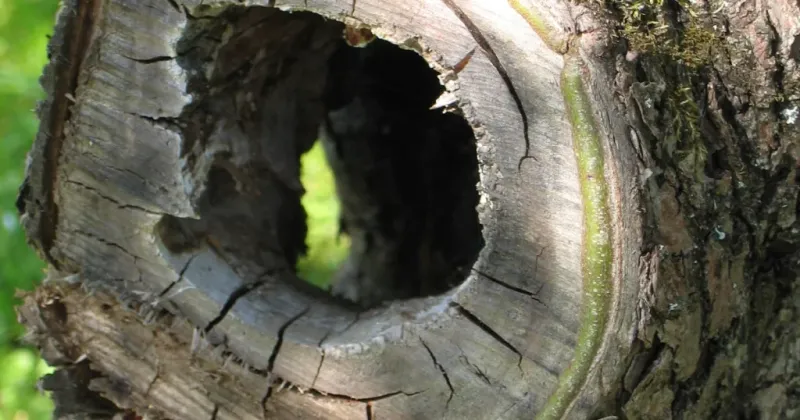
Storms are rough on trees, and a strong one can topple a healthy specimen. So a storm alone does not prove your neighbor did anything wrong.
What may matter is notice. If the owner knew, or reasonably should have known, that a tree posed an unreasonable risk and did nothing sensible about it, that fact could become relevant.
Think of a trunk with obvious rot, a big lean, or a limb that a neighbor had warned about in writing.
Arizona’s Supreme Court looked at notice in Carver, a 1969 case about a tree beside a public roadway. It is useful background on how courts think about a land possessor’s knowledge, but it is not a direct ruling on a tree falling between two private yards.
The Arizona Bar’s general disaster guidance points the same direction: fault and causation matter. No outcome is guaranteed, so treat any signs of earlier warnings as facts worth saving, not as a sure win.
Cleanup Is Separate From Damage Liability
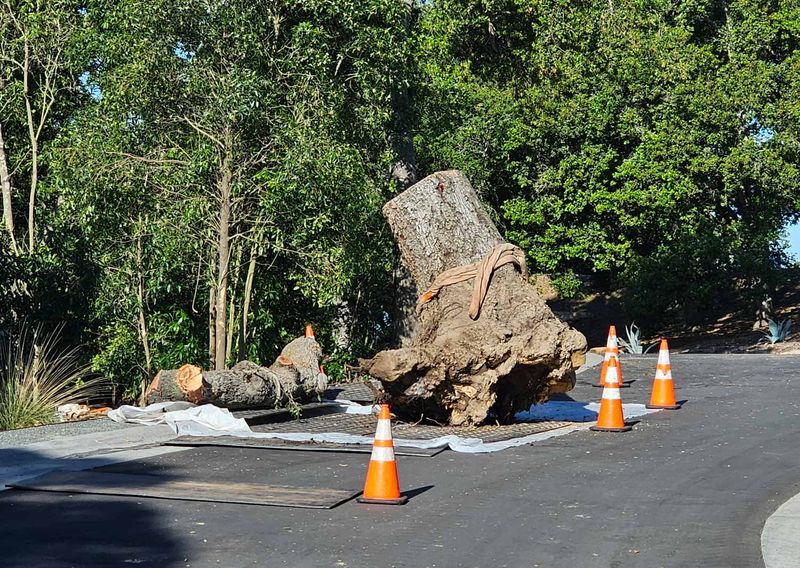
Even if you have a possible claim for damage, that does not automatically settle who must arrange or pay for removing the tree. Those are two different questions that can have two different answers.
Damage liability asks whether someone’s negligence helped cause the harm. Cleanup asks who hires the crew, who pays them, and how the work gets done safely.
A neighbor might agree to share costs without admitting fault, or the opposite might happen.
The sources reviewed, including the Arizona Bar’s disaster guidance, establish no statewide rule that assigns the entire removal bill to the tree’s original owner. They also do not divide it neatly by the property line.
In practice, that means talking it through. Get a written estimate or two, and ask your insurer what it covers before anyone signs anything.
What Can Your City Actually Remove?
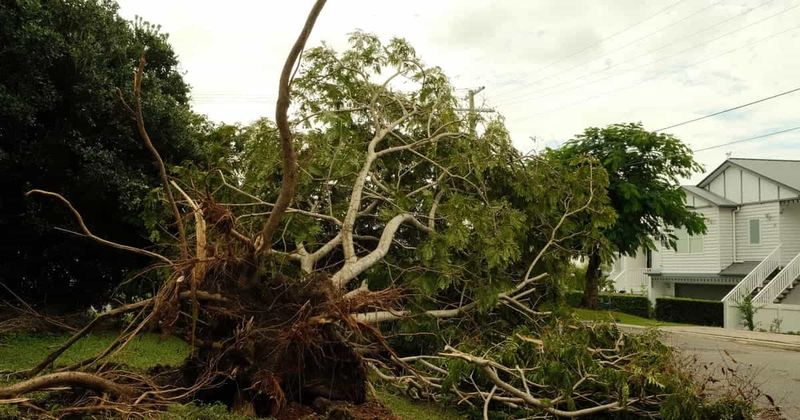
Many people assume the city will haul away a tree that fell in a yard. Often it will not.
Phoenix says in its storm damage assistance flyer that it does not remove trees on private property. Prescott takes a similar position on its trees, grass, and weeds page, saying fallen trees on private property are not the city’s responsibility.
Those policies describe city services. They do not decide which neighbor owes a private cleanup bill, and they do not create a cost formula for the state.
Your own city or county may differ. Check its rules for streets, rights-of-way, bulk pickup, and emergency response, especially if branches block a road or sidewalk.
Contact Your Insurer Before Cleanup When Possible
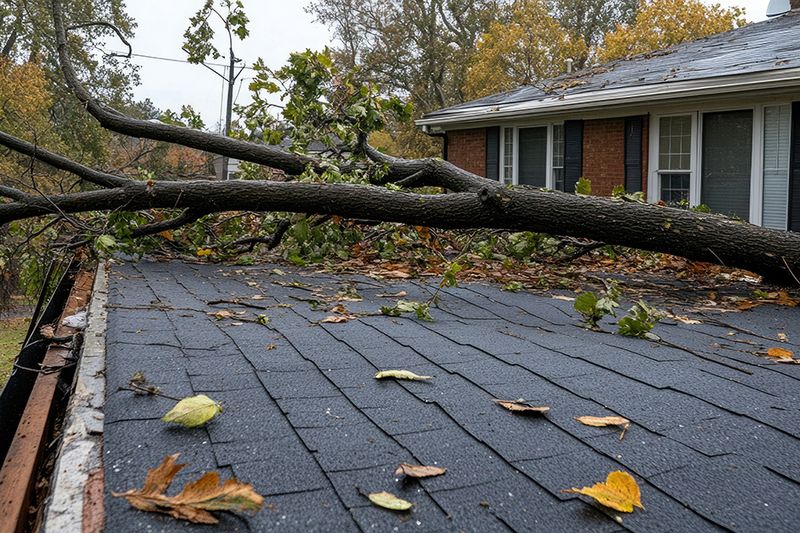
Before you haul, chop, or toss anything, make a call. The Arizona Department of Insurance and Financial Institutions advises contacting your insurer before repairing, cleaning, or disposing of damaged property when possible, so the company can evaluate it.
If urgent work is needed to prevent further damage, DIFI’s homeowners insurance guidance says to ask the insurer what documentation it needs, and to keep photos and receipts.
DIFI also notes a homeowner can file a claim when a tree on their property falls on their house. Coverage and limitations vary, though, so do not assume a policy pays for a tree lying in the yard, debris removal, a fence, or any specific loss.
The best move is simple: ask your insurer what your policy covers and what it does not. Then you can plan your next step with real information.
Downed Lines Make Safety the First Priority
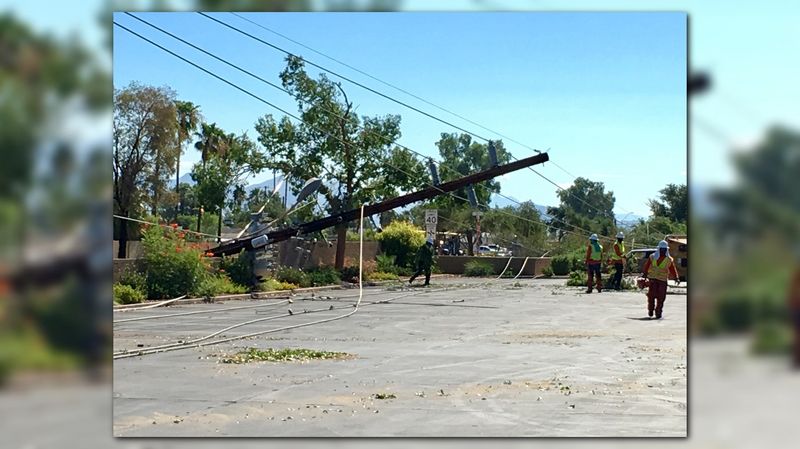
Money questions can wait. Power lines cannot.
If a tree is touching or near a power line, stay away from it. APS safety guidance says to call 911 for a downed line and stay at least 100 feet away.
Do not approach, cut, or move a tree that is tangled in lines, even if it looks harmless. Lines can stay energized, and the danger is not always visible.
The Arizona Department of Homeland Security’s recovery guidance also stresses caution after emergencies. Keep kids and pets back, and let the professionals handle it.
Document the Damage and Agree on Next Steps
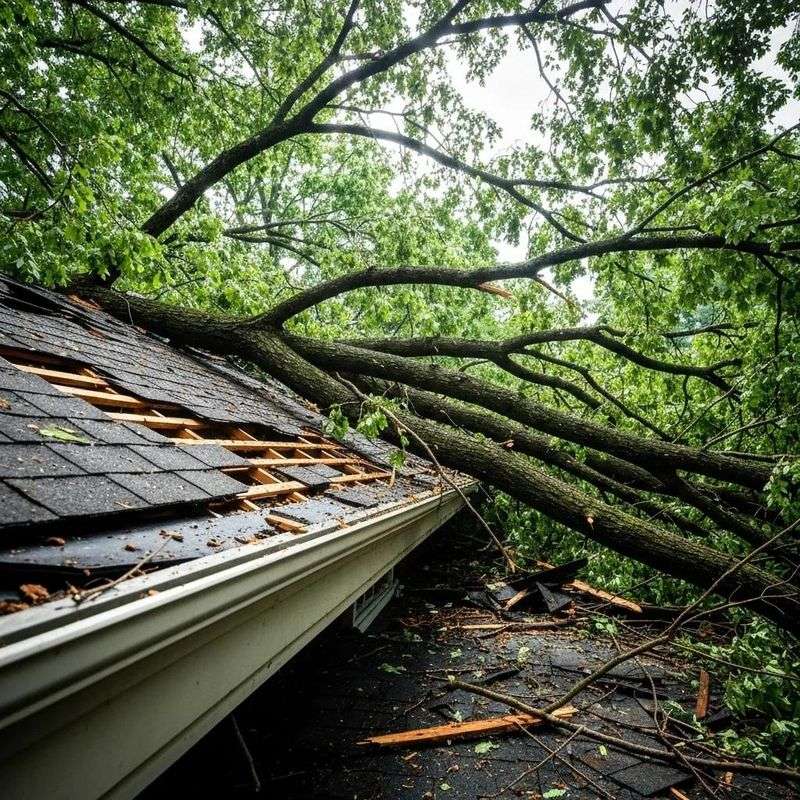
Start with photos. Take wide shots and close-ups of the tree, the damage, and the surrounding yard before anything moves, and save texts, emails, and letters about the tree, especially earlier warnings.
Ask your insurer what documentation it needs before any urgent work, and keep every receipt, as DIFI advises.
Then talk with your neighbor calmly. Mesa describes neighbor tree disputes as mostly civil matters and encourages communication and written agreements.
That is local guidance, not a statewide legal ruling.
Check your HOA and city rules too. If evidence suggests prior notice or negligence, consider legal advice, since the Arizona Bar’s general guidance makes fault relevant.
Where the tree grew will not settle who pays. Facts, paperwork, and a steady conversation usually carry more weight.