The Snake Indiana Homeowners Most Often Mistake For A Copperhead Is Not Venomous
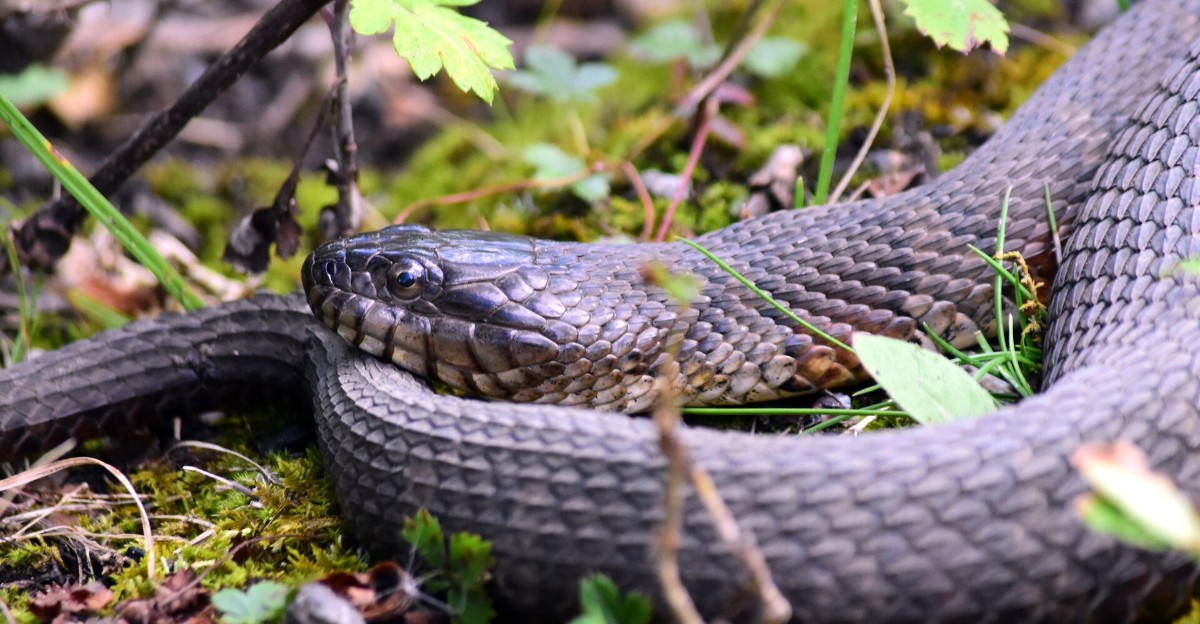
Ask Indiana snake experts which “copperhead” photo lands in their inbox most often, and the answer usually isn’t a copperhead at all.
Copperheads live mainly in the southern hills, tucked into rocky, wooded slopes. Yet panicked reports pour in from backyard ponds, creek banks, and lake docks far from that range. Somebody is getting blamed for crimes it didn’t commit.
The first time a thick, banded snake slid off the edge of my garden pond, I froze with a rake in my hand. My brain screamed copperhead before my eyes caught a single real detail.
I get it. A brown snake with dark bands looks scary when it shows up next to your tomatoes. But the real culprit has round pupils, a big appetite for fish, and a bad reputation it hardly deserves.
So who is that innocent snake hanging around your water garden?
The Usual Suspect Is Lounging Beside Your Garden Pond
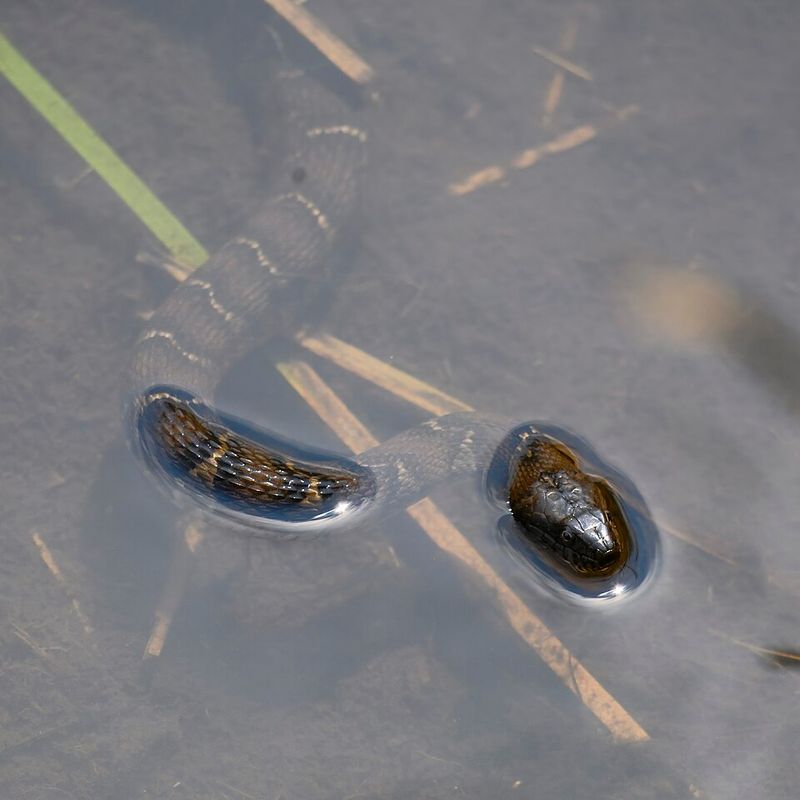
Herp groups across the Midwest agree on one thing. The snake most often reported as a copperhead is the northern water snake, Nerodia sipedon.
It makes sense once you know its habits. Northern water snakes are among the most common snakes in the state, and they love the same places people love. Farm ponds, lake shores, drainage ditches, creeks, and backyard water gardens all suit them just fine.
Adults usually stretch two to three and a half feet long. Their bodies look thick and heavy, and their colors range from tan and gray to reddish brown. Older snakes often darken so much that the pattern almost disappears.
That brownish, banded look is exactly what trips people up. Add a snake that flattens its body and refuses to back down, and you have a recipe for a frantic phone call.
Here is what matters most. Northern water snakes carry no venom, and they pose no real danger to you, your kids, or your dog. They spend their days hunting fish, frogs, and tadpoles, not people.
So the next time a banded snake slips into your pond, odds are strong you just met the water snake. It is a neighbor worth knowing better.
Northern Water Snake Bands Run Backward From A Copperhead’s Hourglass
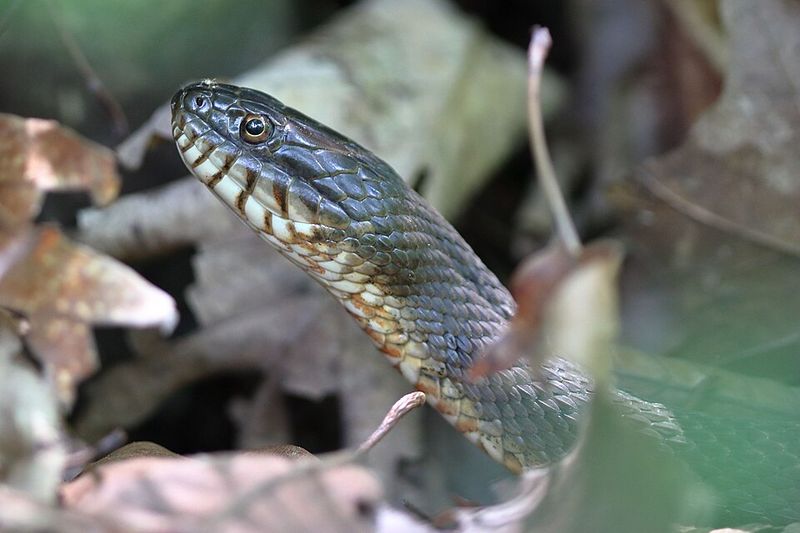
Flip the pattern upside down, and you have the whole trick. That is the single most useful tip I ever learned for telling these two snakes apart.
Copperheads wear hourglass shapes. Each dark band is wide along the sides and pinches narrow across the middle of the back. Some folks say the bands look like Hershey’s Kisses when you view the snake from the side.
Northern water snakes do the opposite. Their dark bands are widest on the back and get narrower as they run down the sides. Toward the tail, those bands often break into alternating blotches instead of full rings.
Color helps too, though it is less reliable. Copperheads glow in pinkish tan and rusty copper tones with chestnut bands. Water snakes lean toward gray, brown, or reddish brown, and they often look muddy or dull when dry.
If you ever get a safe look at the belly, such as in a clear photo, water snakes often show red, orange, or brown half-moon markings underneath. Water snakes often show red, orange, or brown half-moon markings underneath.
Fair warning, though. Pattern is easiest to read on a still, dry snake from a respectful distance. Snap a zoomed photo with your phone instead of leaning in, and study the bands once your heart rate settles.
Round Pupils And A Slim Head Give The Water Snake Away
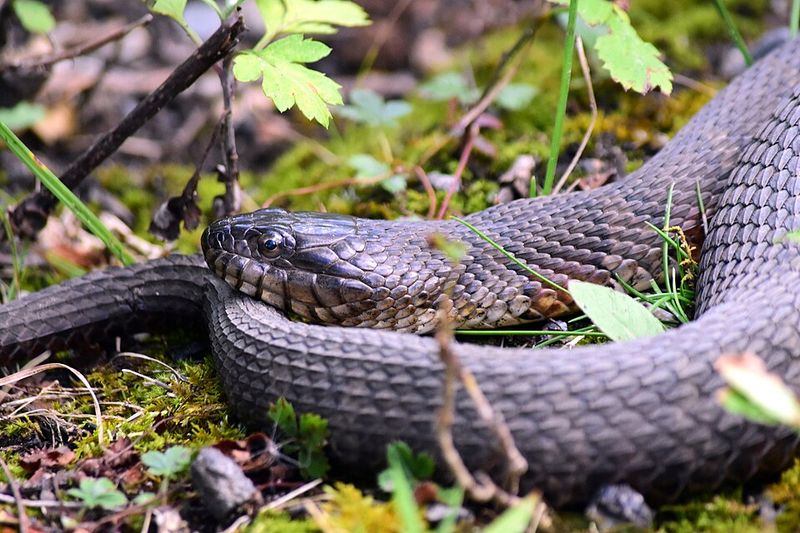
Eyes tell a story, but you should read it from a safe distance. Copperheads have vertical, cat-like pupils, while northern water snakes have round ones.
Copperheads also carry a small heat-sensing pit between each eye and nostril. That pit helps them find warm prey in the dark, and it is a hallmark of pit vipers.
Not going to lie, though. Spotting pupils and pits usually means you are way too close, so treat these as bonus clues for zoomed photos.
Head shape gets mentioned a lot, and it deserves a caution label. Copperheads do have broad, chunky heads. But a nervous water snake can flatten its head and body into a wider, more triangular look when it feels cornered.
That bluff fools plenty of people. Many harmless snakes do it, so a triangular head alone proves very little.
Baby copperheads offer one more giveaway. Young ones sport a bright sulfur-yellow or greenish tail tip, which they wiggle to lure frogs and lizards. Young water snakes lack that bright tail tip and show crisp, high-contrast bands instead.
Stack several clues together before you decide. One feature can mislead you, but three or four rarely do.
Copperheads Stick To Rocky Wooded Hills In Southern Indiana
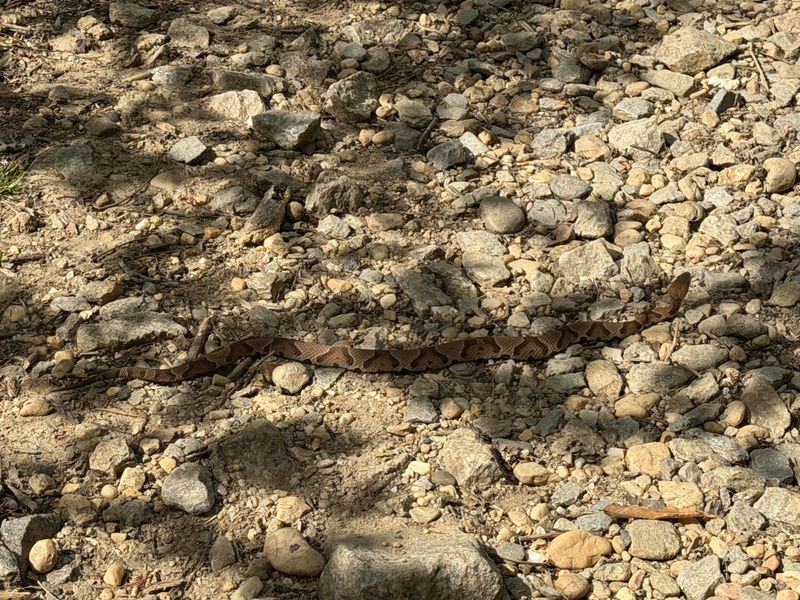
Location might be your best clue of all. In Indiana, copperheads live mainly in the southern part of the state, especially the rugged, forested hills and ravines of the south-central region.
They favor dry, rocky slopes, forest edges, and rotting logs. Deep leaf litter is their favorite hiding spot, since their coloring blends right in with fallen oak leaves.
Copperheads are sit-and-wait hunters. They may stay coiled in one spot for days, waiting for a mouse or cicada to wander past.
Northern water snakes are a different story. They are found statewide, and they stick close to water almost every time. If a banded snake is swimming, diving, or sunning on a pond rock, that is a big hint you are looking at a water snake.
Copperheads can swim, so water alone is not proof. Still, a snake gliding across a lake in Fort Wayne or Lafayette is very unlikely to be a copperhead.
Trust me on this one. Knowing your county and your snake’s surroundings narrows the list fast. A quick look at the Indiana Herp Atlas range maps can tell you which species have actually been recorded near you.
A Cranky Water Snake Bites, Musks, And Then Swims Off
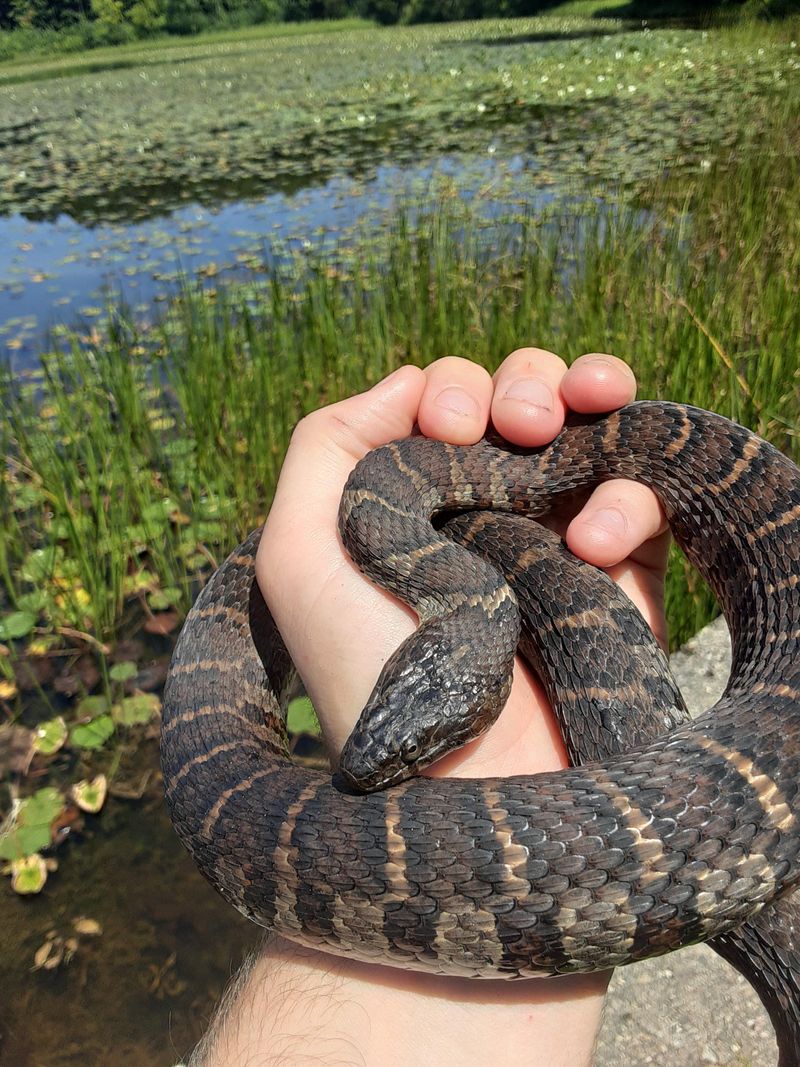
Let me be honest about the water snake’s attitude. It is not exactly cuddly, and grabbing one is a fast way to learn that lesson.
When cornered, a northern water snake flattens its body, strikes repeatedly, and smears a foul-smelling musk on anything holding it. Many folks swear the smell lingers longer than the scare.
Bites can bleed more than you expect. Water snake saliva contains an anticoagulant that keeps small punctures oozing for a few minutes. That looks dramatic, but there is no venom involved.
Treat a water snake bite like any small scrape. Wash it well with soap and water, apply pressure, and add a bandage. Watch for redness or swelling over the next few days, and call your doctor if it looks infected.
A true copperhead bite is a different matter. Stay calm, keep the bitten limb still and near heart level, remove rings, and get to an emergency room right away. Skip ice, cutting, and suction tricks.
Here is my favorite part, though. Left alone, a water snake almost every time chooses to drop into the water and disappear. Give it a few feet of space, and the drama ends on its own.
Hognose, Milk, And Fox Snakes Get Mistaken For Copperheads Too
Water snakes are the top suspect, but they have company in the lineup. Several other harmless snakes get blamed for copperhead sightings every summer.
Eastern hognose snakes are master actors. They puff up, hiss loudly, and flatten their necks like a tiny cobra. If that bluff fails, they roll over, open their mouths, and play possum. Look for the upturned, shovel-like snout.
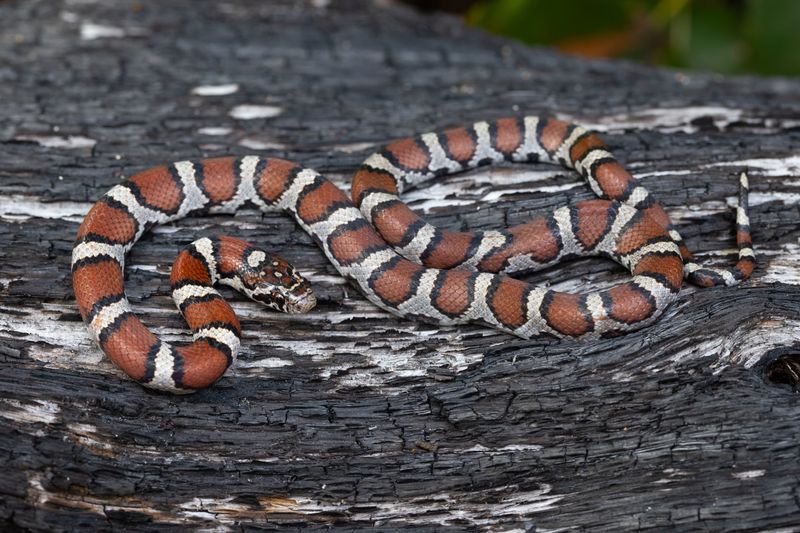
Eastern milk snakes wear reddish brown blotches edged in black on a gray or tan body. They often show a light Y or V shape on the back of the head. Barns, woodpiles, and old foundations attract them because mice live there.
Fox snakes turn up in northern counties, especially near wetlands and farm fields. Their chestnut blotches and coppery heads cause plenty of confusion.
Young gray rat snakes deserve a mention as well. Babies carry bold gray and brown blotches that fade as they grow into long, dark adults.
I’m a sucker for a good impostor story, and these snakes deliver. Each one eats rodents, insects, or toads, and each one would rather hide than tangle with you. Learning their faces turns fear into a fun backyard guessing game.
Native Snakes Like The Water Snake Are Protected By State Rules
Here is something many gardeners don’t realize. The Indiana Department of Natural Resources protects native reptiles, and harming or collecting them without proper permission can break state rules.
Some species carry extra protection. Timber rattlesnakes, eastern massasaugas, cottonmouths, and copperbellied water snakes are all listed as state endangered, so they get even closer attention.
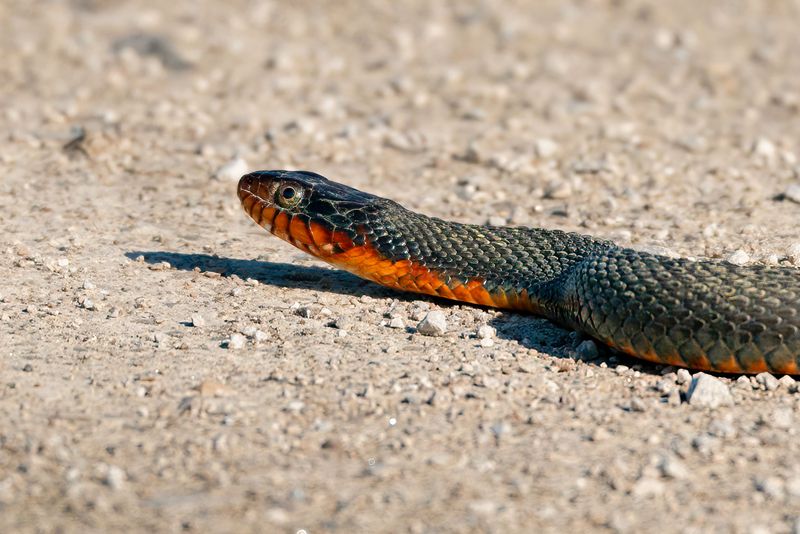
That copperbellied water snake is worth a quick note. It is a close cousin of the northern water snake, with a plain dark back and a bright orange-red belly. It lives in scattered wetlands in southwestern and northeastern parts of the state.
Rules can change, so check the DNR website for the latest details before acting on a snake problem. A licensed nuisance wildlife operator can help if a snake keeps showing up somewhere unsafe.
Beyond the legal side, these snakes earn their keep. Water snakes help keep fish and frog numbers in balance in ponds. Many other native snakes eat mice, voles, and slugs that chew through your garden.
I used to think a snake in the yard meant something was wrong. Now I see it as a sign my little patch of land supports a healthy food web.
A Snake-Smart Garden Pond Makes Peaceful Summers Easier
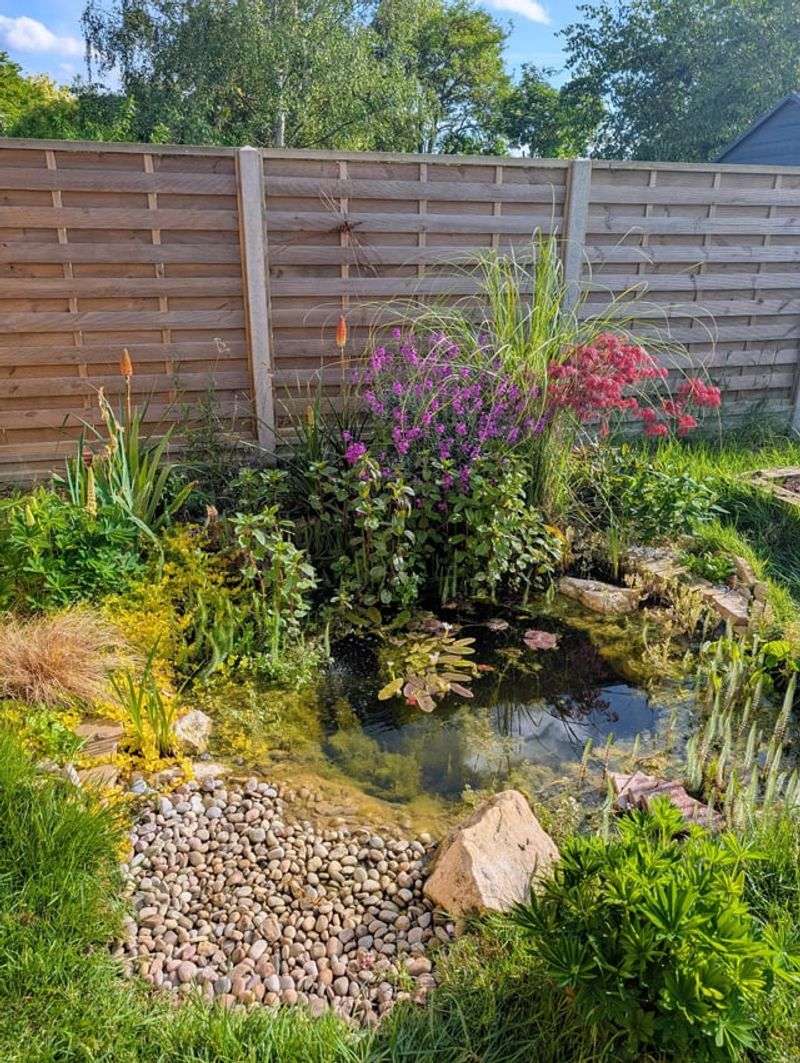
Peace with your scaly neighbors starts with a few simple habits. None of them require special gear or a degree in biology.
First, give every snake room. Stay at least a few feet away, keep pets leashed near ponds, and let the snake leave on its own schedule. Most encounters end within minutes.
Second, grab your phone instead of a shovel. A clear, zoomed photo lets you compare bands, colors, and head details later. Groups like the Hoosier Herpetological Society and the Indiana Herp Atlas can help identify mystery snakes from pictures.
Third, adjust your yard to suit your comfort level. Trim tall grass around pond edges, store firewood off the ground, and clear brush piles near doors and play areas. Fewer hiding spots mean fewer surprises.
Wear sturdy boots and gloves when you reach into leaf piles, mulch, or rock walls. Use a flashlight on warm summer evenings, when snakes are often most active.
Finally, share what you learn. One calm neighbor who knows the backward-band trick can save a lot of harmless snakes. Teach your kids too, and you may raise a family of curious naturalists instead of frightened ones.