Try This With Your Florida Desert Rose in November Instead of Watering It More
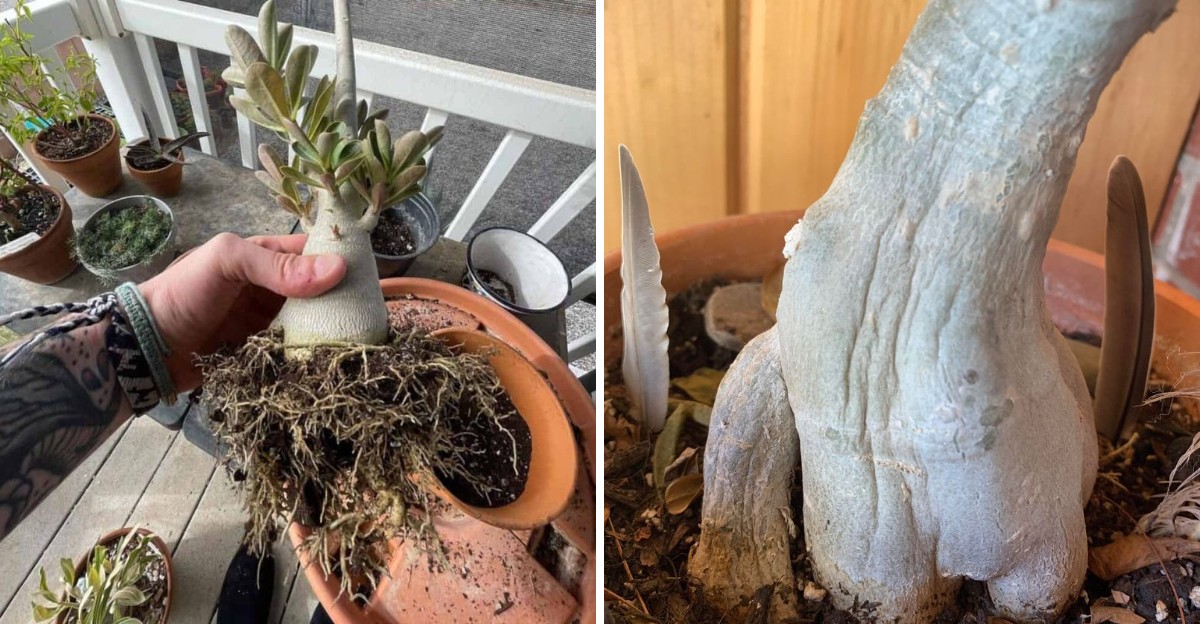
Some of the thirstiest-looking plants in a Florida yard are secretly storing water inside a swollen, bottle-shaped trunk. That chubby base works like a built-in canteen, and it can hold enough moisture to carry the plant through weeks of dry weather.
I’ll admit it, I once treated yellow November leaves like an emergency. Out came the watering can, every few days, like clockwork. The plant only looked worse, and I couldn’t figure out why.
It took me a while to notice the pattern. Cooler nights, shorter days, and a slower plant all showed up at the same time. My extra water wasn’t helping one bit.
So what does a sleepy succulent want from you once fall settles in? The answer is surprisingly hands-off, and it starts with a habit most of us find hard to break.
Those Yellowing Desert Rose Leaves Are Sending a Seasonal Signal
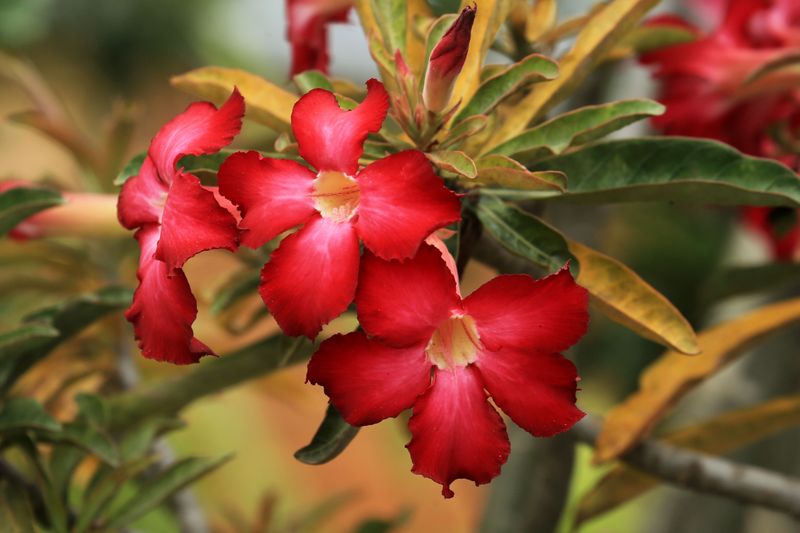
Yellow leaves in November look alarming, but they are often just a calendar reminder. Desert roses come from dry regions of Africa and Arabia, where the cool season brings little rain. Their bodies are wired to slow down when days get shorter and nights turn cooler.
As growth slows, the plant may drop some or most of its leaves. In North and Central Florida, that leaf drop can be pretty dramatic. Down in South Florida, many plants stay semi-dormant and hold on to more foliage through winter.
I used to read every yellow leaf as a cry for help. Now I see it as the plant tucking in for a rest. Leaves cost energy to keep, so letting them go is a smart move when conditions turn less friendly.
So how do you tell normal shedding from real trouble? Check the trunk at the base, called the caudex. A firm, plump caudex means your plant is fine, even if the branches look bare.
Leaf drop paired with a very soft, mushy, or darkened base is a different story. That combination calls for a closer look, which we will get to soon. For now, take a breath and skip the hose.
Squeeze the Swollen Caudex Before You Reach for the Hose
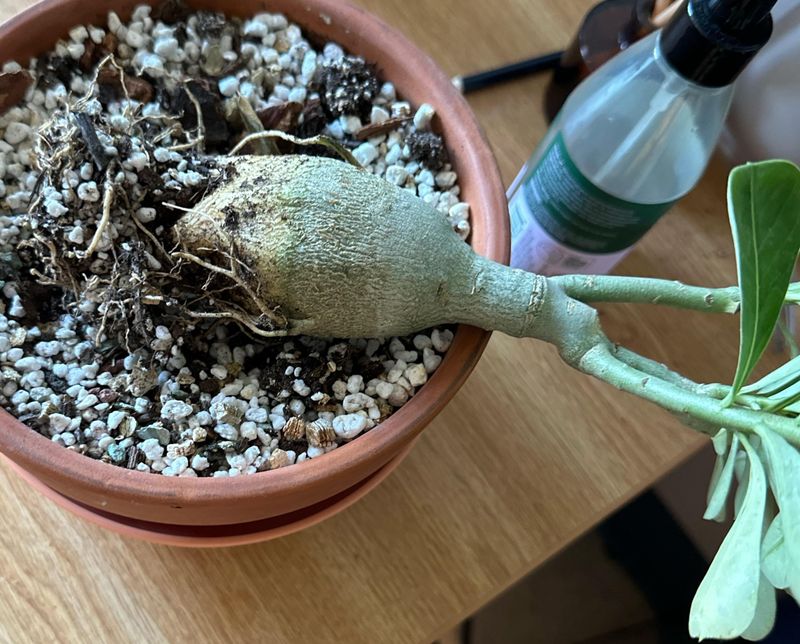
Here is the swap that changed everything for me. Instead of watering on a schedule, I give the plant a quick squeeze test. That fat caudex tells you more than any calendar ever could.
Gently press the base with your thumb and fingers. If it feels firm like a ripe squash, the plant has plenty of stored water. If it feels a little soft and slightly wrinkled, it is ready for a drink.
Pair that test with a soil check. Push a finger a couple of inches into the mix, and wait until it is fully dry before watering. During cooler months, many growers find that means watering every few weeks or even about once a month.
When you do water, give a thorough soak and let the extra drain out the bottom. Then step back and let the pot dry again. Small, frequent sips keep the roots damp and invite problems.
Fair warning, this method feels strange at first. Your instincts will nag you to do something. Trust the caudex, though, because a desert rose is built to handle a bit of thirst far better than soggy feet.
Soggy Soil Around Desert Rose Roots Is the Bigger Winter Threat
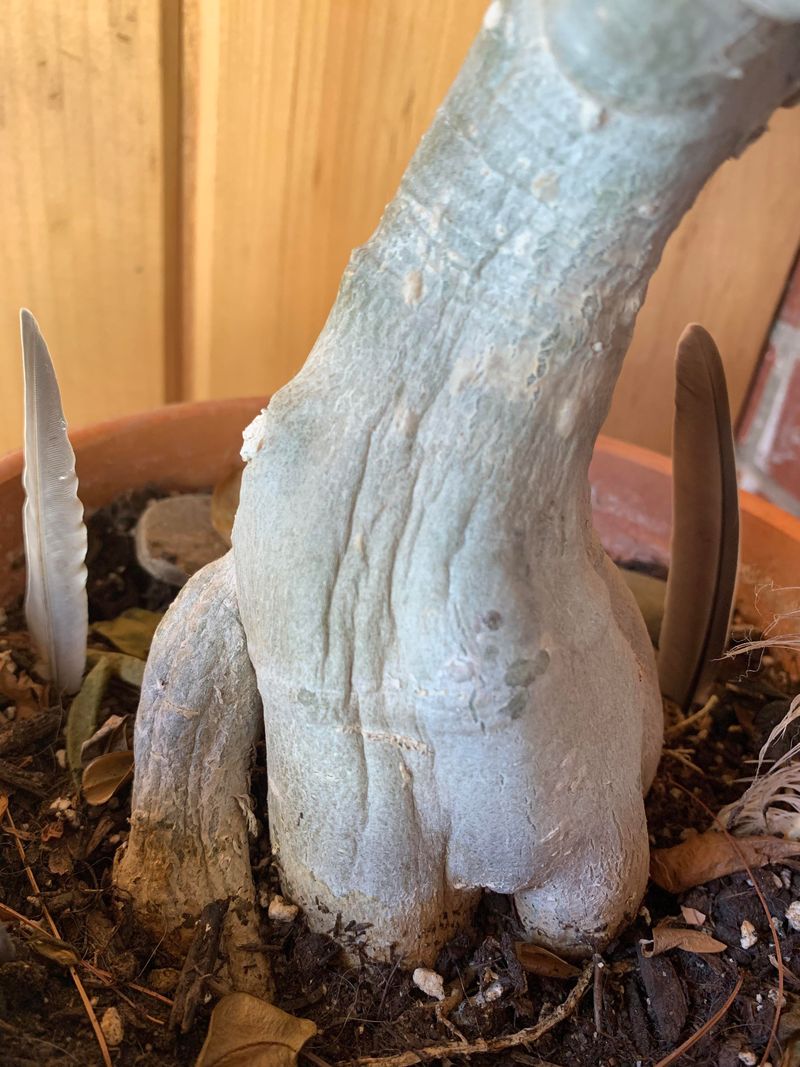
Cool, wet soil is the real villain in this story. When temperatures drop, the plant uses far less water, so moisture lingers around the roots. That lingering dampness is an open invitation to root and stem rot.
Not going to lie, rot sneaks up quietly. By the time you notice a mushy spot on the caudex, the damage underground may already be serious. Dark, soft tissue that smells sour is a strong warning sign.
Florida adds another twist. Even in November, a cold front can bring several gray, drizzly days in a row. Potted plants sitting under open sky can stay wet much longer than you expect.
A few simple habits help a lot:
Move pots under a covered porch or eave during rainy stretches. Empty saucers so water never pools underneath. Raise containers on pot feet for better airflow.
If you suspect rot, unpot the plant and inspect it. Trim away soft, discolored parts with clean shears, let the cuts dry for several days, then repot in fresh, dry mix. Catching it early gives the plant its best chance to recover and push out healthy roots again in warmer weather.
A Gritty, Fast-Draining Pot Keeps Your Adenium Happier
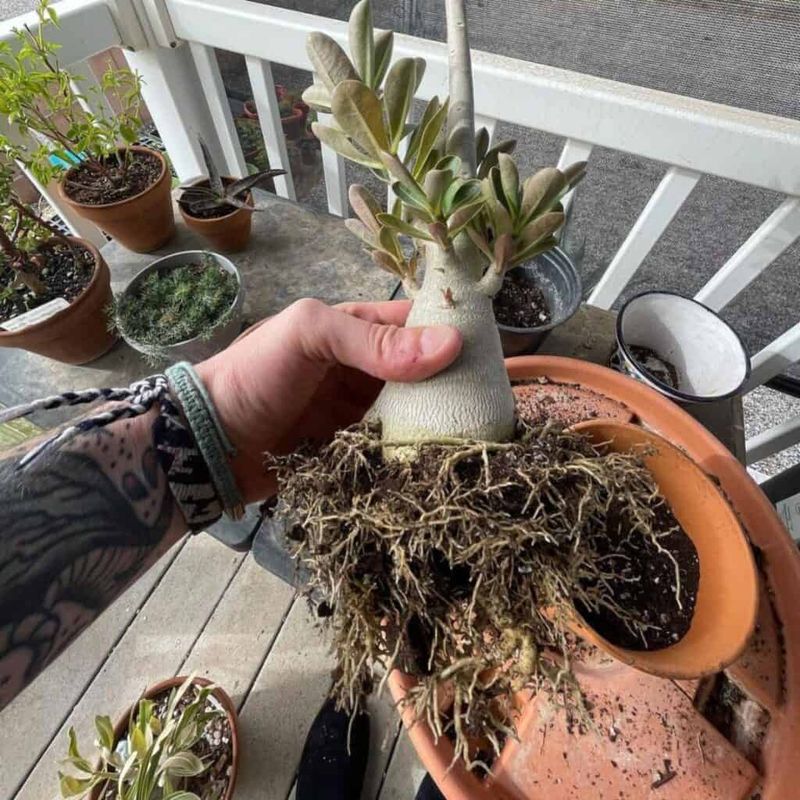
Think of the pot as your plant’s raincoat. A desert rose in heavy, peaty soil is like a hiker wearing wet socks all day. Good drainage does half the work of smart watering for you.
Choose a container with at least one large drainage hole. Unglazed terracotta is a favorite because it breathes and helps soil dry faster. Plastic works too, as long as the mix underneath is airy.
For soil, start with a cactus and succulent blend. Many growers stir in extra perlite, pumice, or coarse sand to open it up even more. You want water to rush through, not sit and soak.
Here is a fun bit of trivia. Collectors in Thailand and Taiwan have bred hundreds of desert rose varieties, and they often lift the caudex above the soil line to show off its sculptural shape. That raised look also keeps the thick base drier.
November is not ideal for big repotting jobs, since roots are slowing down. If your current mix stays wet for days, though, a gentle move into grittier soil can be worth it. Otherwise, mark your calendar and plan a full refresh for spring.
Cold Snaps Mean Moving Potted Desert Roses Under Cover
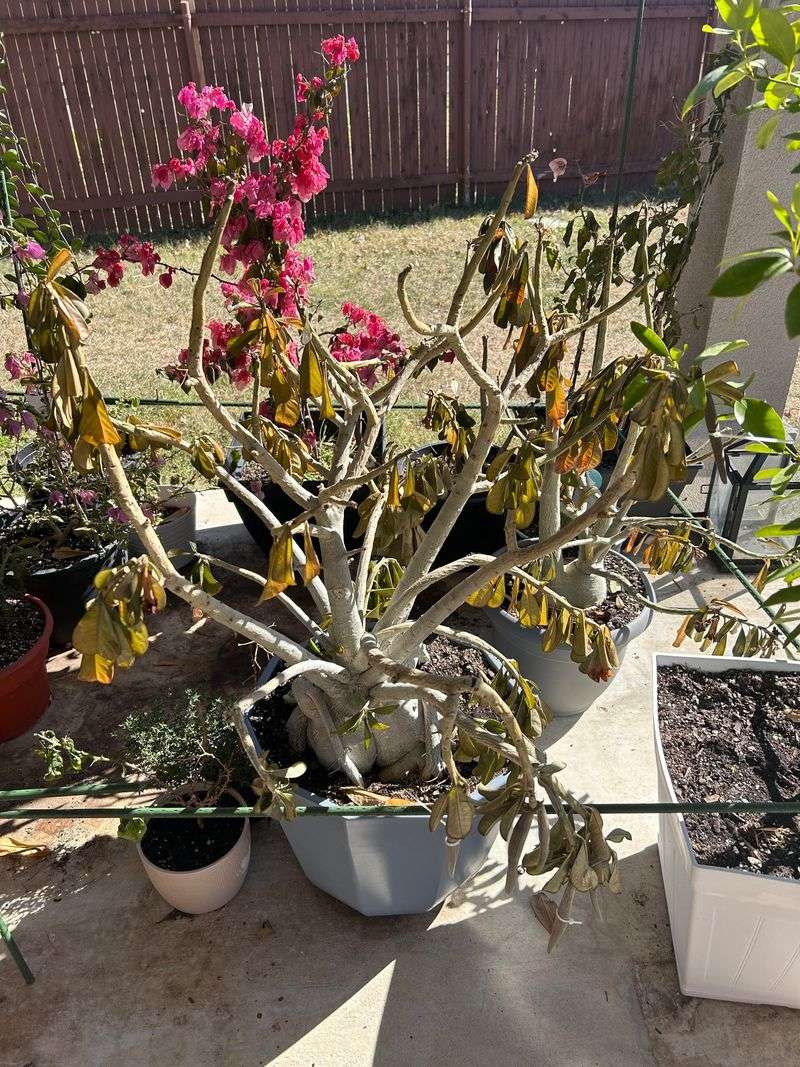
Desert roses love heat and sulk in chilly air. They grow best between roughly 60 and 90 degrees. Once nights dip toward 50 degrees, they start to feel stressed.
Frost is a serious problem for these plants, and cold plus wet soil is the worst combination of all. UF/IFAS lists the desert rose as suited to the warmest parts of the state, roughly USDA Zones 10B through 11. Gardeners in North and Central Florida, where frost is more common, usually grow them in pots for this reason.
Keep an eye on the forecast all season long. When a cold front threatens temperatures in the 40s or lower, roll pots into a garage, sunroom, or bright indoor spot. A covered porch against the house can work for milder dips.
South Florida gardeners have it easier, and many grow desert roses in the ground year-round. Still, an unusual cold snap can reach even the southern counties. Light frost cloth over in-ground plants buys valuable protection on those rare nights.
Once the chill passes, move plants back into the sun. They appreciate every bright, warm day they can get during the cool season.
Put the Fertilizer Away Until Spring Growth Returns
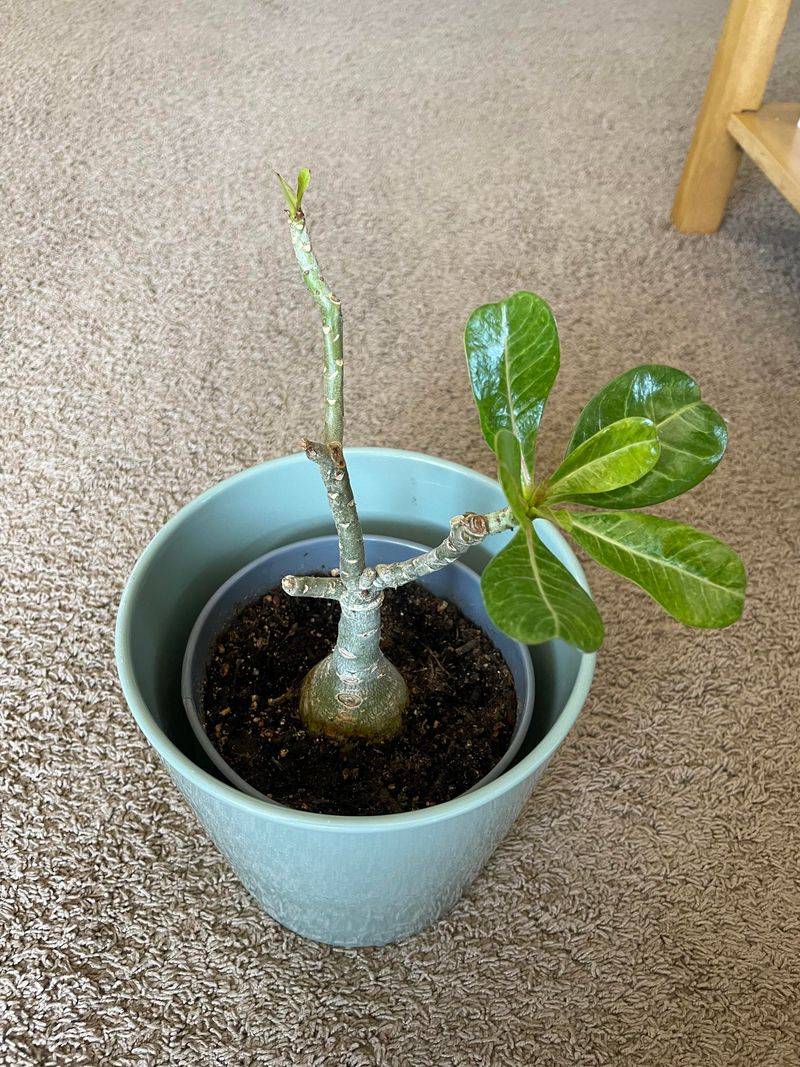
Feeding a resting plant is like handing a full plate to someone who just finished dinner. The desert rose simply cannot use it right now. Extra nutrients mostly sit in the soil and build up as salts.
That buildup can irritate tender roots, especially when the plant is barely drinking. It can also push weak, floppy growth during a time when the plant would rather rest. Neither outcome helps your plant.
Guilty as charged, I once fed my plants on autopilot all year. The result was leggy stems and fewer flowers the next spring. Taking a winter break from fertilizer made a noticeable difference.
Most growers stop feeding in fall and wait until new leaves appear in spring. In South Florida, where plants may stay a bit active, a very light feeding during warm spells is fine. Otherwise, let the bag sit on the shelf.
When you restart, choose a balanced or bloom-boosting fertilizer and dilute it according to the label. Feeding every few weeks through the warm months fuels those gorgeous trumpet flowers. Your patience now pays off with stronger, more colorful blooms later in the year.
Bright Winter Sun Sets Up Next Year’s Desert Rose Blooms
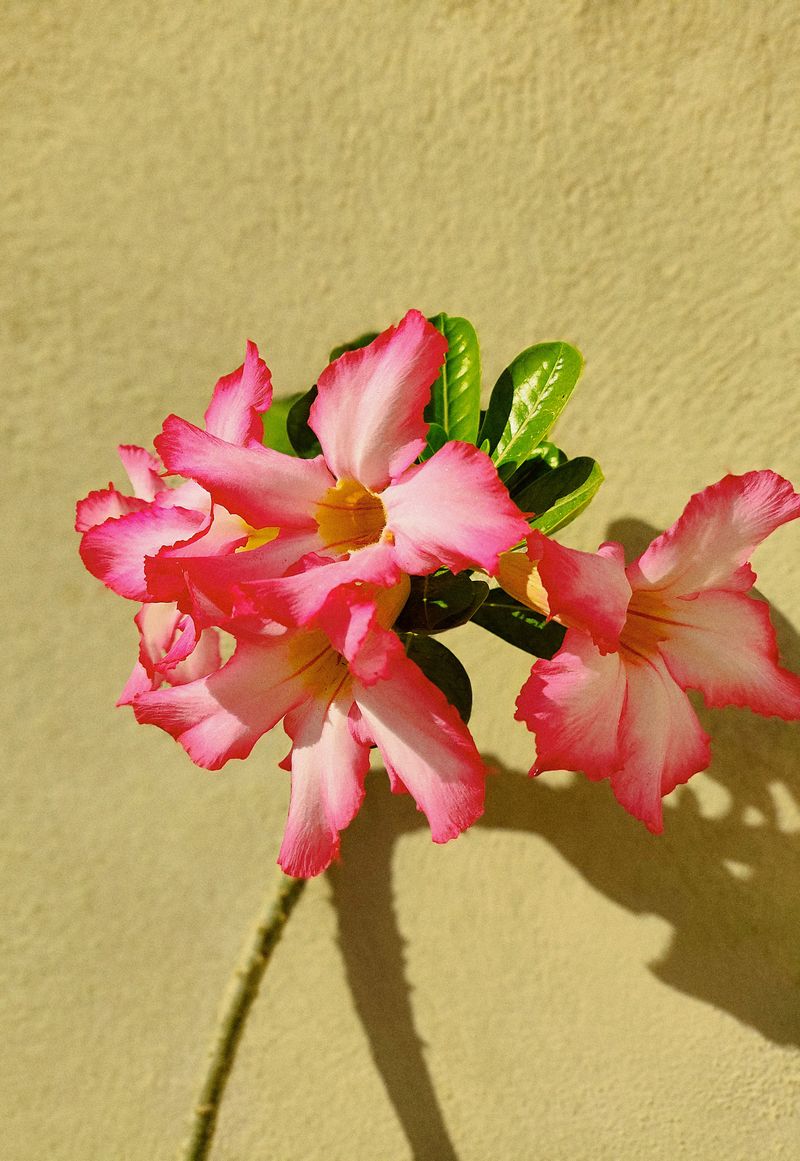
Sunlight is the one thing a desert rose craves all year. Even while resting, it benefits from as much brightness as you can offer. Six or more hours of direct sun keeps stems sturdy and the plant ready to bounce back.
Shorter November days mean the plant drinks less, which is one more reason to water sparingly. Less light plus less water keeps everything in balance. Fighting that natural slowdown rarely ends well.
If your plant comes indoors for cold weather, give it your sunniest window. A south-facing spot works best in Florida homes. Grow lights can fill the gap if your windows are shaded.
I’m a sucker for a winter bloom, and some desert roses surprise me with a few flowers in South Florida’s mild weather. Enjoy those bonus blossoms, but do not expect a full show until spring and summer warm things up.
Once longer days return and new leaves sprout, gradually increase water and restart feeding. That gentle wake-up keeps the plant from going into shock. Your quiet November routine of less water, more sun, and smart protection lays the groundwork for a dazzling display next year.