Native Ohio Plants To Grow Instead Of Nonnative Hydrangeas
Nonnative hydrangeas have a hold on gardens that good marketing built and years of familiarity reinforced. The blooms are undeniably beautiful.
The struggle to keep them performing through brutal summers, hard winters, and difficult soil is less talked about but just as consistent. Native Ohio plants deliver what nonnative hydrangeas promise without the annual negotiation.
Bloom, color, presence, and a root system built for this climate rather than adapted to it after the fact. Several natives produce flowers that stop people mid-stride in the same way a hydrangea does.
A few go further, with wildlife value, fall color, and winter interest that no nonnative hydrangea has ever matched in this landscape. The attachment to nonnative hydrangeas is understandable.
What natives bring to the same spot is worth knowing before the next one gets planted.
1. Smooth Hydrangea Keeps The Big Blooms Close To Home
Gardeners who want to stay loyal to the hydrangea family already have a native option growing wild across Ohio woodlands and stream banks.
Hydrangea arborescens, commonly called smooth hydrangea, is native to the eastern United States and fits comfortably into shaded or partly shaded borders.
It typically matures to a height and spread of three to five feet, though growing conditions can push it larger.
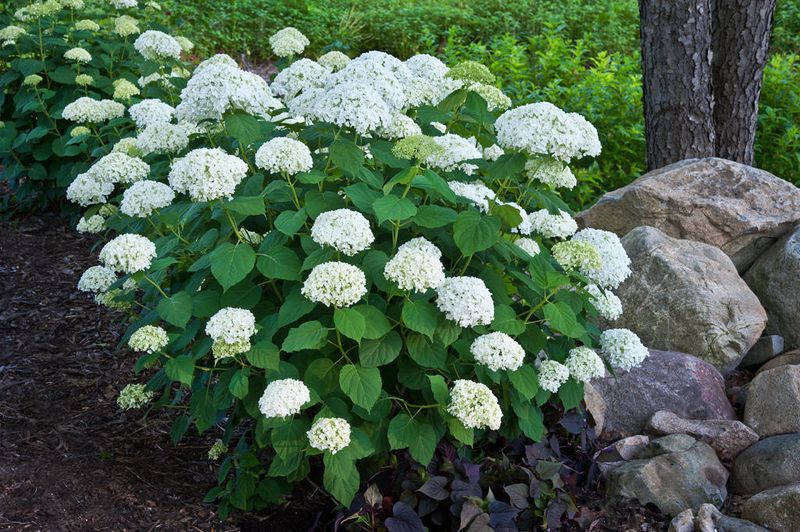
The wild form carries flat-topped clusters made up of small fertile flowers surrounded by a modest ring of larger sterile ones. Cultivars like Annabelle shift that ratio dramatically.
They load the flower head almost entirely with sterile florets, producing the giant white globes most gardeners recognize. The straight species is subtler but still delivers genuine seasonal presence from roughly June into August.
Smooth hydrangea prefers consistently moist, well-drained soil and performs best where it gets some shade during the hottest afternoon hours.
It is not a plant to rely on through long dry spells without supplemental watering, especially during its first two seasons in the ground.
Over time, established clumps may spread by suckering and form loose colonies, so allow enough open space around it. Stems can be cut back hard in late winter to encourage fresh, vigorous growth each season.
Buying from a responsible nursery ensures you receive a properly propagated plant rather than a wild-collected one.
2. Ninebark Trades Mopheads For Layered White Flowers
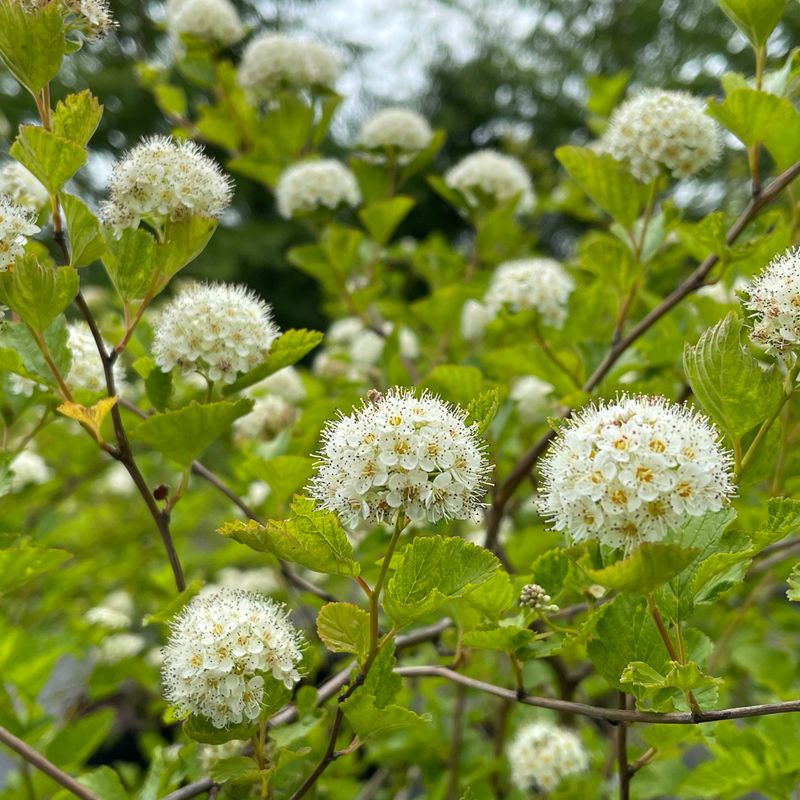
Few native shrubs pack as much year-round texture into a single plant as common ninebark. Physocarpus opulifolius is native across much of Ohio.
It produces rounded clusters of small white to pale pink flowers in late spring, typically from May into early June. Pollinators visit the blooms regularly, and the show continues after flowering when reddish seed capsules develop and hold into fall.
The bark is a genuine selling point outside of bloom season. As stems mature, the outer layers peel back in thin papery strips, revealing lighter inner bark and adding visual interest through winter.
The straight species can reach eight to ten feet tall and nearly as wide, which surprises gardeners who picture it as a tidy foundation shrub.
Compact cultivars exist and stay considerably smaller, but their dimensions should not be applied to the species as a whole.
Fall color on the straight species tends to range from orange to reddish tones, adding a third season of interest beyond flowers and bark. Ninebark tolerates a range of soil types, handles some drought once established, and grows well in full sun to partial shade.
Its size makes it a stronger candidate for a mixed border, a naturalized hedge, or a rain garden edge than for a spot directly beneath a low window. Allow generous room at planting time and it will reward that space generously over the years.
3. Shrubby St. John’s Wort Keeps Summer Color Going
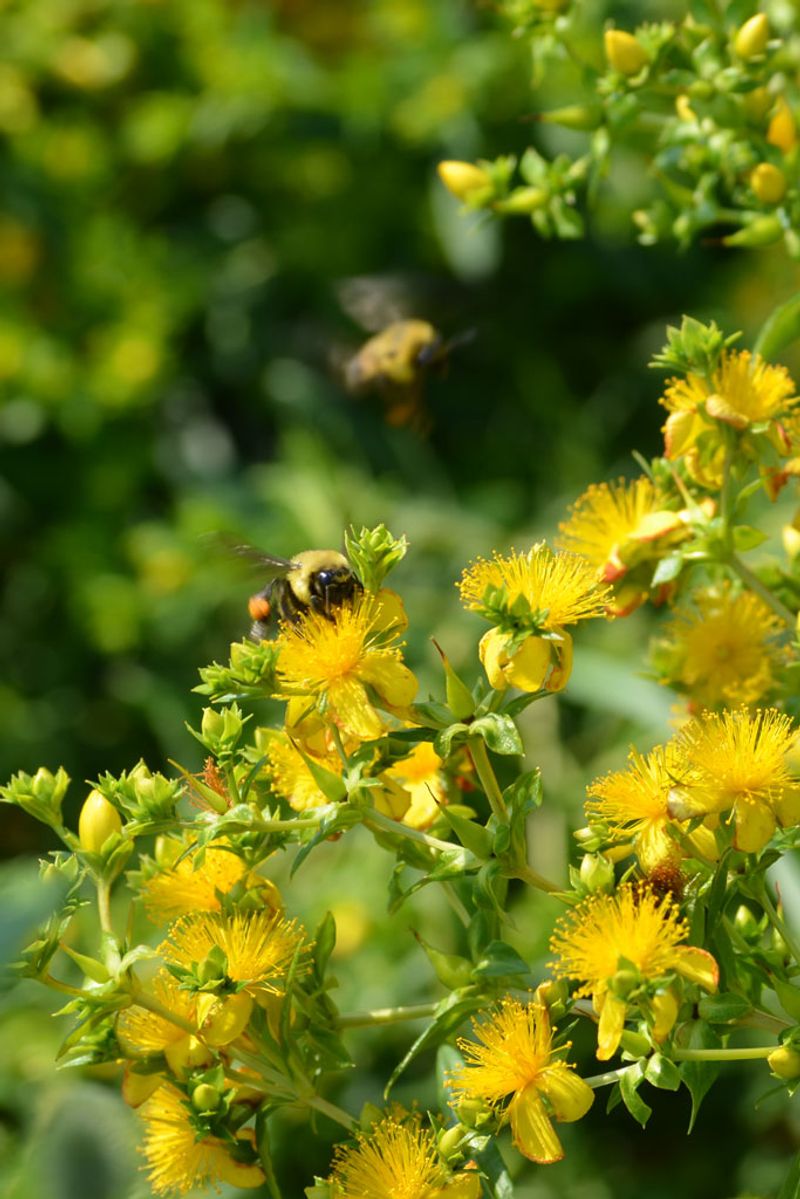
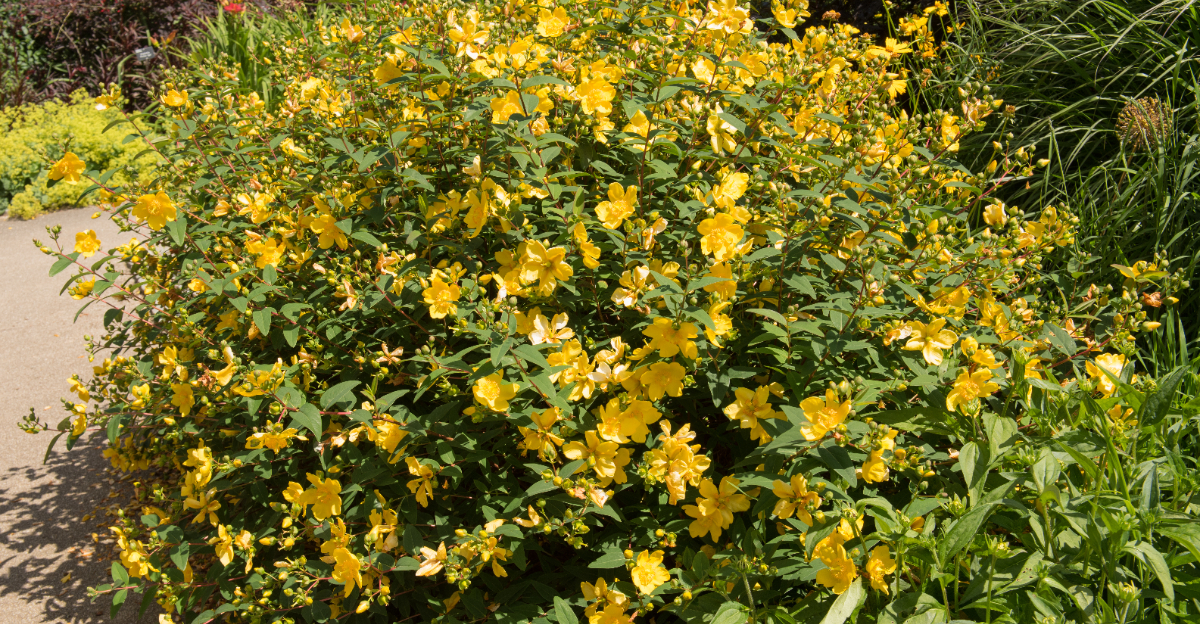
Bright yellow is not a color most gardeners associate with hydrangea alternatives, and that is exactly what makes shrubby St. John’s wort worth a closer look. Hypericum prolificum is native to Ohio and produces cheerful golden-yellow flowers with prominent stamens.
Blooming from roughly July into August, it bridges the gap between early summer flowers and fall color. Its fine-textured foliage gives the plant a tidy, refined appearance throughout the growing season.
Mature plants typically reach two to four feet tall and wide, which is considerably more compact than a full-grown ninebark or buttonbush.
That smaller footprint makes it a practical option for spots where a large shrub would crowd a pathway or obscure a window.
Do not confuse it with common St. John’s wort, Hypericum perforatum. That is a nonnative herbaceous plant with a very different growth habit and a controversial reputation in some regions.
Shrubby St. John’s wort performs well in full sun to partial shade. Once established, it also tolerates moderately dry soil, making it one of the more adaptable choices on this list.
Small oval seed capsules follow the flowers and persist into fall, adding a subtle textural note. No medicinal properties are implied here; this is purely a garden shrub valued for its ornamental traits.
Source plants from a reputable native plant nursery, water consistently through the first growing season, and reduce watering gradually as roots establish.
4. New Jersey Tea Packs White Blooms Into A Smaller Shrub
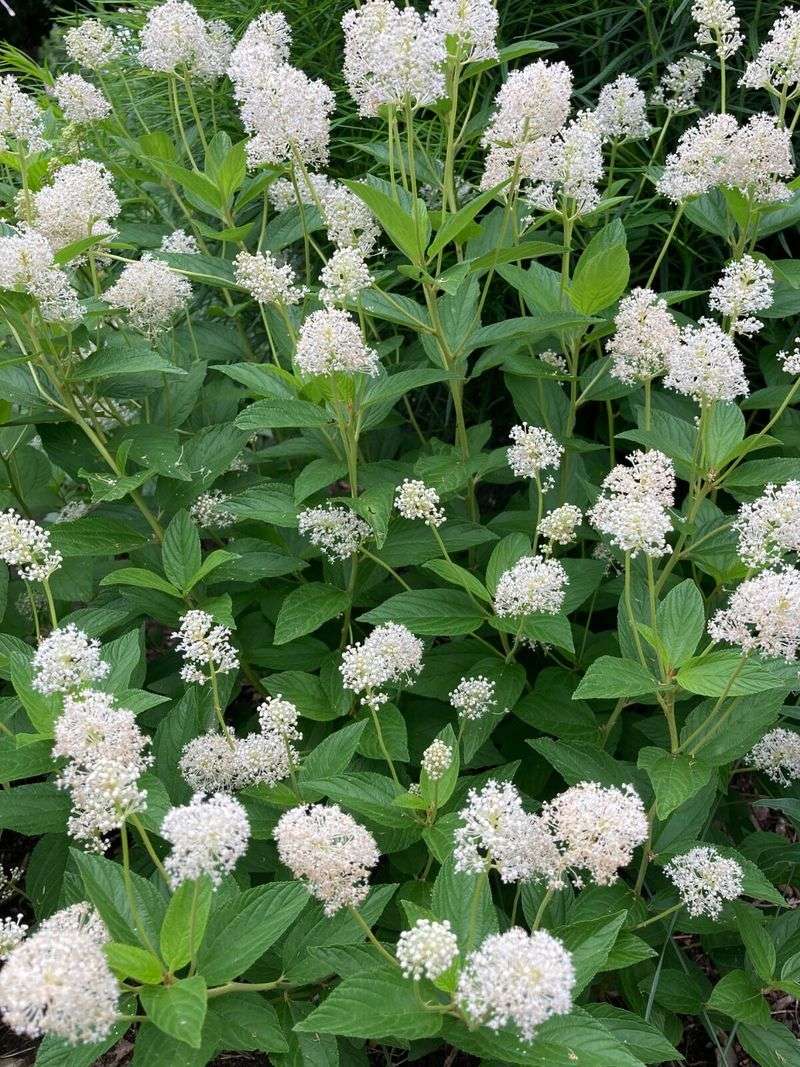
Compact size and a willingness to thrive in lean, dry soil set New Jersey tea apart from many other native shrubs. Ceanothus americanus is native to Ohio and typically matures to two to four feet tall and three to five feet wide.
Its compact size fits neatly into a sunny border where a full-sized hydrangea would overwhelm the space.
The root system is deep and somewhat woody, which helps established plants access moisture well below the surface during dry summer stretches. That same root structure makes transplanting or relocating a mature plant difficult.
Choosing the right spot from the start therefore matters more than it does with many other shrubs. Give it a location with full sun and well-drained soil, and avoid heavy clay that holds standing water.
New Jersey tea is not a shade shrub. Planting it beneath a tree canopy or in a north-facing bed will reduce flowering significantly and weaken the plant over time.
New transplants need consistent watering through their first season to help the root system establish. Once settled in, they handle dry periods much more easily than moisture-loving alternatives.
The common name traces back to colonial times, when dried leaves were brewed as a tea substitute. This piece makes no claims about its safety or taste for modern use.
5. Black Chokeberry Adds Spring Flowers And Fiery Fall Leaves
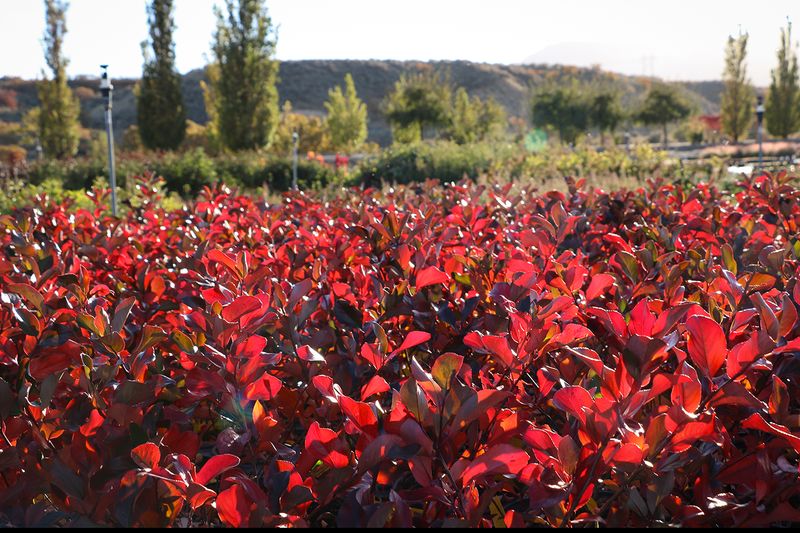
Spring, summer, and fall each bring something different when black chokeberry is in the garden. Aronia melanocarpa is native to Ohio and opens clusters of small white flowers in mid-spring, typically in May, that resemble apple blossoms in miniature.
Those blooms give way to dark, glossy berries by late summer, and then the foliage shifts to brilliant shades of red and orange as temperatures drop in autumn.
The straight species is not a tightly mounded shrub. It typically reaches three to six feet tall and spreads steadily by suckering, which allows it to form colonies over time.
That spreading habit makes it a natural fit for a rain garden, a slope that needs stabilization, or a naturalized area with open space. Gardeners who want a contained mound near a foundation should plan accordingly or choose a compact cultivar with verified smaller dimensions.
Berry production depends on adequate pollination, which generally works best when multiple plants grow near each other. Birds and other wildlife visit the fruit regularly, particularly later in the season when other food sources become scarce.
Some horticultural sources note that the berries are edible for humans in cooked or processed forms, though they are notably astringent when eaten fresh.
Sourcing plants from a nursery that propagates them responsibly ensures you get a healthy, regionally appropriate plant ready for Ohio growing conditions.
6. Buttonbush Brings Round Blooms To Moist Garden Spots
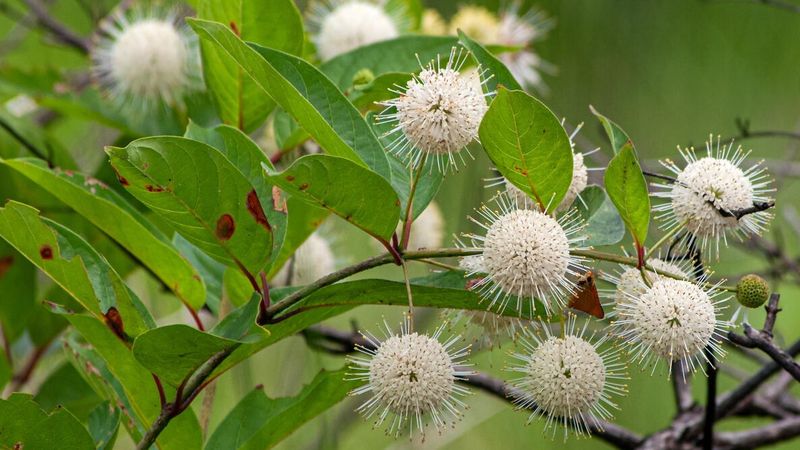
A perfectly round flower head floating above dark green leaves is one of the more unusual sights in any native plant garden. Cephalanthus occidentalis, commonly called buttonbush, produces its distinctive spherical white blooms from roughly June into August.
Each globe is made up of dozens of tiny flowers packed tightly together. This creates a textured, almost sculptural effect that stands apart from the flower clusters of most landscape shrubs.
Buttonbush is native to Ohio and grows naturally along stream banks, pond edges, and low-lying areas that hold moisture. It is genuinely adapted to wet conditions and should not be planted in a dry foundation bed or a well-drained raised border.
Rain gardens, pond margins, and consistently moist low spots in the yard are where it performs best. The straight species can reach six to twelve feet tall and wide at maturity, so plan for substantial spread when choosing a site.
Pollinators, including various bee species, visit the blooms actively during the flowering window. Small reddish-brown seed clusters follow the flowers and persist into winter, adding a secondary visual note.
Compact cultivars have been introduced that stay smaller than the straight species. However, their traits should be evaluated separately before assuming they suit a given space.
New plants need regular watering during establishment, and even mature specimens benefit from a consistently moist root zone throughout the growing season.
7. Winterberry Turns Bare Winter Stems Bright Red
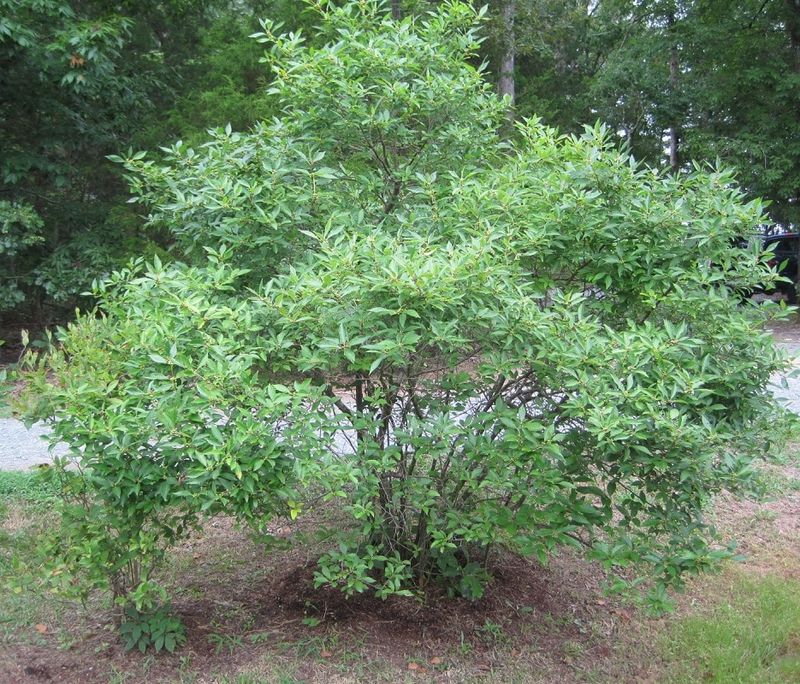
Long after most shrubs have gone quiet for the season, winterberry puts on one of the most striking displays in the native plant world. Ilex verticillata is a deciduous holly native to Ohio, and dropping its leaves in autumn is actually part of what makes it so effective.
Without foliage in the way, the densely packed red berries along every stem become the entire visual focus from late fall through much of winter.
Mature plants typically reach six to ten feet tall and nearly as wide, though cultivar selection can influence final size. Winterberry strongly prefers moist to wet soil and adapts well to sites with heavy clay or periodic flooding.
It tolerates drier conditions more than buttonbush does, but it generally performs better with reliable soil moisture rather than in a dry, fast-draining bed.
Berry production requires both male and female plants. Female plants carry the fruit, but a nearby male plant of the same or a compatible species must be present to provide pollen.
Planting a single unidentified shrub and expecting a heavy berry crop is not a reliable strategy. Nurseries that specialize in native plants can help match compatible male and female selections.
Authoritative sources note that the berries are not safe for human consumption, and pet owners should be aware of this before planting in areas where animals roam freely. Birds, by contrast, rely heavily on the fruit through the colder months.
8. Spicebush Starts The Show Before Most Shrubs Leaf Out
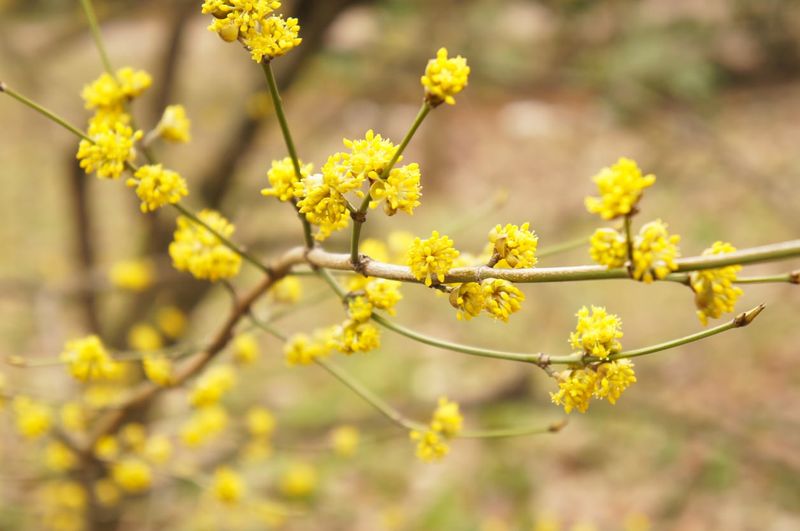
Early spring in a shaded yard can feel bare and colorless, and spicebush fills that gap before almost any other shrub wakes up.
Lindera benzoin is native to Ohio and produces clusters of small, soft yellow-green flowers directly on bare stems in March and April, well before its leaves emerge.
The effect is subtle compared to a bold hydrangea display, but it arrives at a moment in the season when any color at all feels like a genuine event.
Spicebush is an understory shrub that evolved beneath a tree canopy. It handles shade far better than sun-loving alternatives like New Jersey tea or shrubby St. John’s wort.
Mature plants typically reach six to twelve feet tall and nearly as wide. Give them room along a woodland edge, shaded border, or naturalized area rather than cramming them near a foundation.
Aromatic foliage is one of its most distinctive traits; crushing a leaf releases a spicy, pleasant scent that many gardeners find memorable.
Spicebush carries male and female flowers on separate plants. Female plants produce glossy red berries in late summer and fall that birds consume quickly.
Planting at least one male nearby gives female plants the best chance of fruiting reliably. Fall foliage turns a clear, warm yellow that brightens shaded spots considerably.
Choosing a native shrub that genuinely suits its site, rather than one forced into the wrong conditions, is the kind of thoughtful decision that pays off for years.