The Meaning Behind Hearing An Owl In Your Florida Yard In Fall
A deep series of hoots that sounds like someone asking who cooks for you is a classic night sound in the South. Hearing it outside your bedroom window in fall can make you wonder why it seems so close.
Owls tend to get more vocal as the weather cools, for a few practical reasons. Many are defending territories, while others are courting or calling to mates.
Young owls born earlier in the year are also out looking for space of their own.
Their arrival can set off back-and-forth calling between neighboring owls that lasts for hours.
Florida’s mild fall keeps rodents and other prey active, giving these birds plenty of reason to stay busy.
Step outside quietly the next time you hear one, and you may spot it perched nearby.
1. Old Superstitions Aside, Owl Calls Carry Practical Messages
Forget the old stories about owls bringing bad luck. Those tales show up in many cultures, but they have no basis in how owls actually behave.
Owls call to talk with other owls, plain and simple.
Most hooting you hear in fall is about territory and pairing up. An owl may be telling neighbors that a patch of woods is taken, or it may be checking in with a mate across the yard.
Young owls hatched in spring are often looking for their own space by fall, which can mean more calling than usual.
Hearing that sound tells you something useful about your property. Owls need prey, perches, and cover, so a calling owl suggests your area offers some of those things.
Rodent control is part of the bargain. Owls eat mice, rats, and other small animals, along with big insects in the case of smaller species.
Try listening at the same time each night for a week. Patterns can help you guess whether one owl lives nearby or several are passing through.
A free birding app with sound recordings can help you match calls to species, though you should confirm with more than one listen. Across Florida, a few kinds of owls are common in neighborhoods, and each one sounds quite different.
2. Barred Owls Can Get Surprisingly Loud And Chatty At Dusk
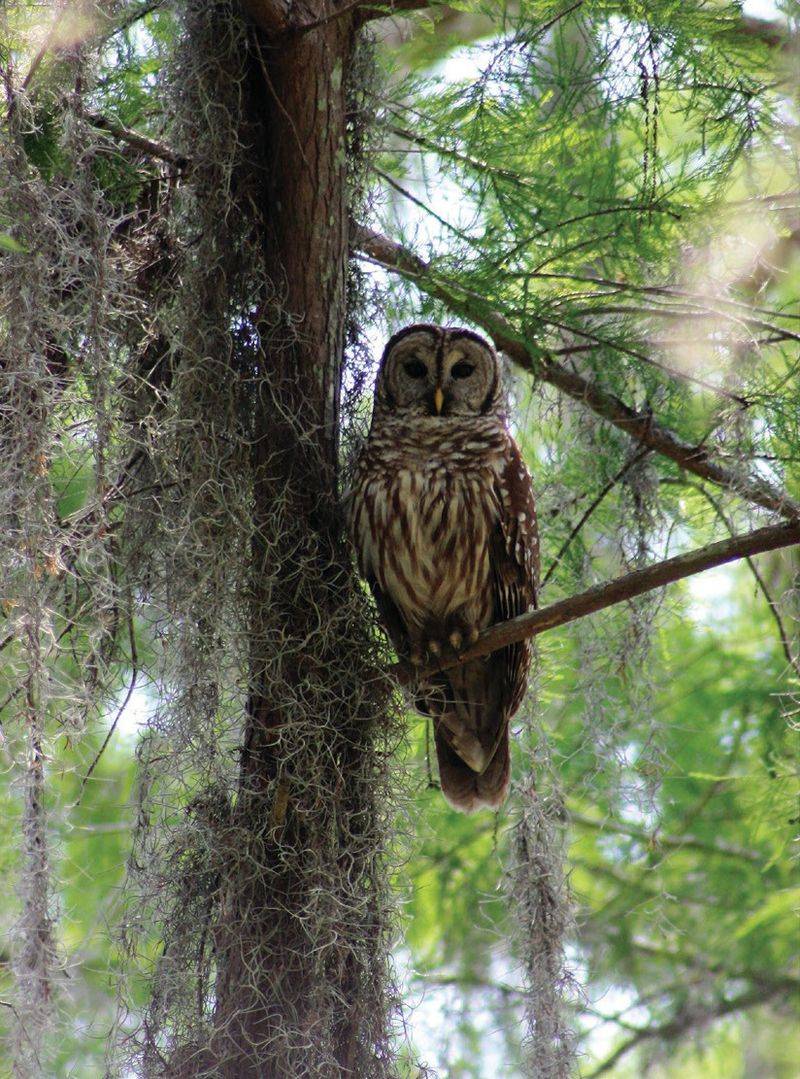
Who cooks for you? Who cooks for you all?
That rhythm is the classic barred owl call, and once you learn it, you will spot it right away.
Barred owls are some of the most vocal owls in the eastern United States.
Sometimes two or more get going together, and the result sounds like cackling, whooping, and monkey-like screams. People hearing it for the first time often think something is wrong outside.
Usually, nothing is wrong at all. Pairs call back and forth to keep in touch and to warn other owls away from their territory.
These owls love wet woods, swamps, and older neighborhoods with big trees. In Florida, they are common near lakes, creeks, and cypress stands, and they adapt well to suburbs with mature oaks.
Dusk and the first hours of darkness are prime calling times, though you may hear them before dawn or even on cloudy afternoons.
Your Florida Garden Changes Every Week. Your Plan Should Too.
Gardening in Florida changes quickly throughout the season. Every Friday you’ll receive a simple weekly plan showing exactly what to plant, prune, fertilize, harvest, and protect so you never miss the right timing.
Want a closer look? Step outside quietly with a dim red flashlight and scan large branches near the sound.
Skip playing recorded calls over and over to lure them in. Repeated playback can stress owls and pull them away from hunting, so enjoy the show from a respectful distance instead.
3. An Eerie Screech After Dark May Belong To A Barn Owl
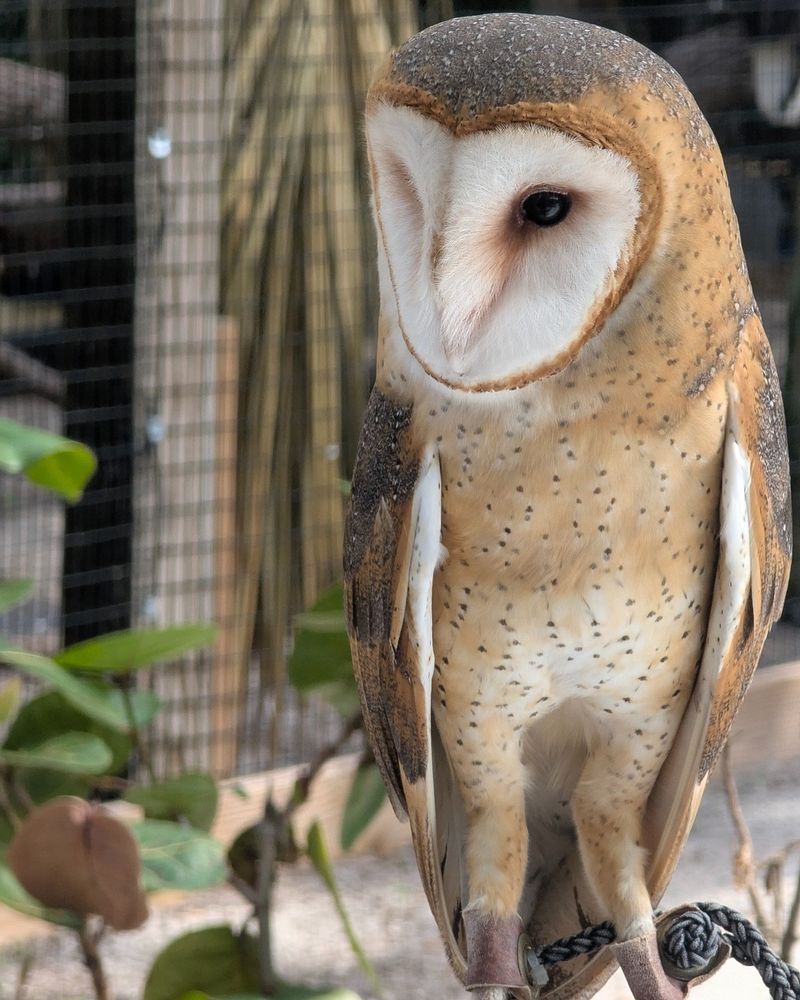
Not every owl hoots. A long, harsh hiss or scream in the dark could come from a barn owl, and it can raise the hair on your arms.
Barn owls have pale, heart-shaped faces and soft white or golden feathers.
Their call sounds more like tearing cloth than a song. Pairs and young owls also make raspy hissing and clicking noises, especially near a nest or roost.
Open land is their favorite hunting ground. Pastures, farm fields, marsh edges, and large grassy lots give them room to fly low and listen for rodents moving in the grass.
They nest in barns, hollow trees, old buildings, and sometimes large nest boxes placed on poles.
Barn owls are found throughout Florida, but they are less likely to show up in a small, heavily wooded suburban yard. If you live near farmland or open fields, your odds are better.
Hearing one is a nice reminder to go easy on rat poison. Owls can be harmed after eating poisoned rodents, so traps and sealing entry points are safer choices for wildlife.
Also, keep in mind that the eastern screech owl does not really screech. It makes a soft whinny and a steady trill, so a true scream points more toward a barn owl.
4. Great Horned Owls Can Begin Nesting As Early As December
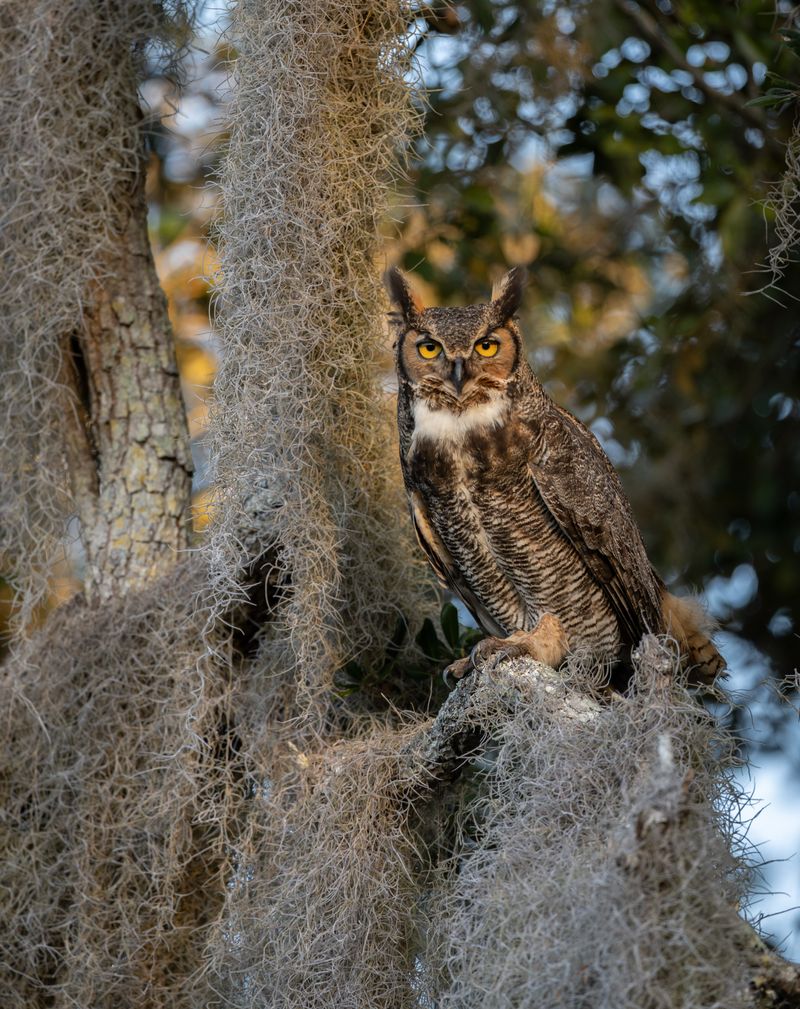
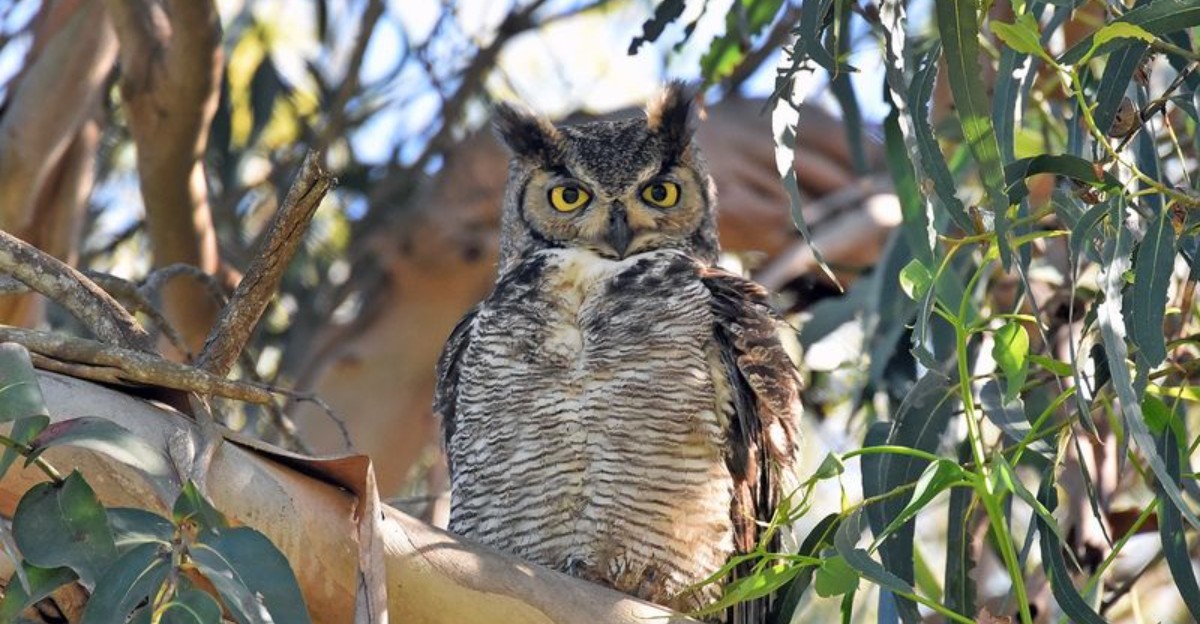
While most birds are thinking about winter, great horned owls are already planning a family. Fall hooting from these big owls is often part of courtship.
Their call is a deep, soft series of hoots, often in a pattern like hoo, h-hoo, hoo, hoo.
Males and females may call together in duets during the longer nights of fall. Listen for one voice that sounds slightly lower than the other, since the male usually has the deeper tone.
Egg laying in Florida can start around December and run into the early months of the year, with timing varying by location and individual birds. That makes them one of the earliest nesting birds in the state.
Great horned owls rarely build their own nests.
Instead, they often take over old hawk, eagle, or crow nests high in pines or other tall trees. Some also use broken treetops or ledges.
If you suspect a nest nearby, plan any big tree trimming for well outside the nesting period when possible. Check with a certified arborist, and remember that native owls are protected under federal and state law.
Keep small pets indoors at night too. These powerful owls mostly hunt rabbits and rodents, but a small cat or dog left outside could be at risk.
5. Pellets And White Splashes Under A Tree Reveal A Favorite Roost
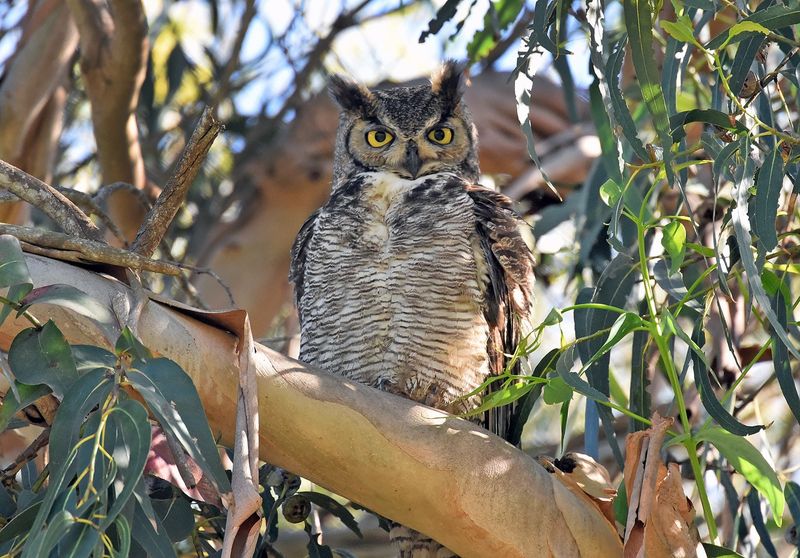
Look down, not up. Owls are masters of hiding during the day, but the ground below their roost often gives them away.
Pellets are a great clue.
Owls swallow prey whole or in big pieces, then cough up the fur and bones they cannot digest. Pellets look like small, gray, oval clumps, often with tiny bones poking out.
You may also notice white streaks or splashes on branches, trunks, or leaves. Several pellets plus white wash under the same tree suggests an owl comes back to that spot.
Dense trees are popular choices.
Live oaks with Spanish moss, magnolias, thick pines, and palms with heavy fronds all offer good cover. In Florida yards, owls may also tuck into vine-covered trees near the house.
Once you find a roost, check it now and then from a distance with binoculars. Early morning light can make spotting a sleeping owl easier.
Wear gloves if you handle pellets, or use a stick, since they can carry bacteria. Wash your hands afterward to be safe.
Kids often enjoy picking apart a pellet with tweezers to see what the owl ate. Buying sterilized pellets from a science supplier is the cleanest way to try that project at home.
6. Crows Squawking Around One Tree May Be Harassing A Hidden Owl
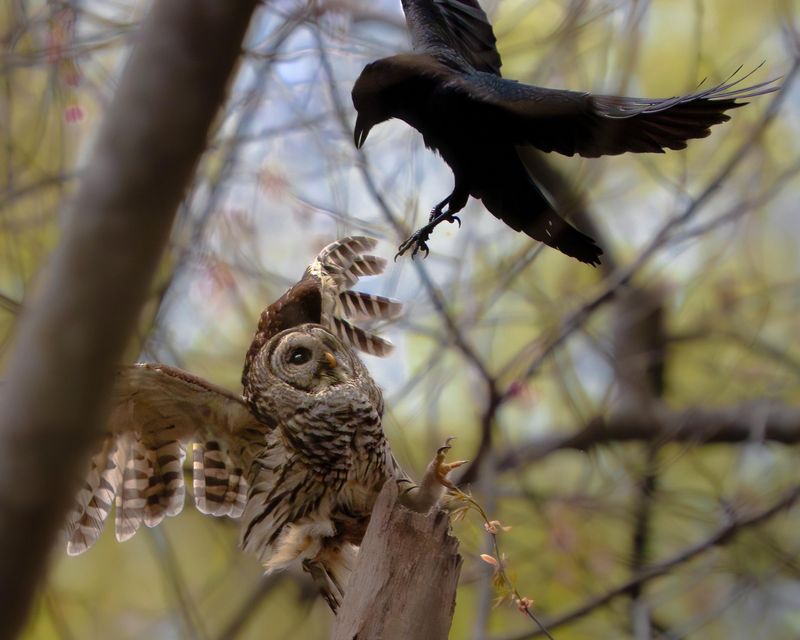
Loud crows can be your best owl detectors. When a group circles one tree, cawing nonstop, there is a fair chance a predator is hiding inside.
Birders call this behavior mobbing.
Crows, blue jays, mockingbirds, and other songbirds gang up on owls and hawks to drive them out of the area. Owls sometimes hunt smaller birds, so the alarm makes sense from their point of view.
Not every noisy flock means an owl, though.
Crows also mob hawks, snakes, cats, and even people they dislike. Treat it as a clue rather than proof, and watch the tree for a while.
Grab binoculars and scan the thickest parts of the canopy close to the trunk. Owls often sit very still and blend right in with the bark.
Fall and winter mobbing can be common in Florida neighborhoods where crows gather in larger groups. Smaller songbirds join in too, scolding with sharp chips.
If you do find the owl, enjoy the moment and then step away. It is already stressed by the commotion, and extra attention could push it out of a good daytime resting spot.
Jot down the date and tree. Owls may reuse favorite roosts, so you might find the same bird there again.
7. Nest Boxes Can Invite Screech Owls To Stay Year-Round
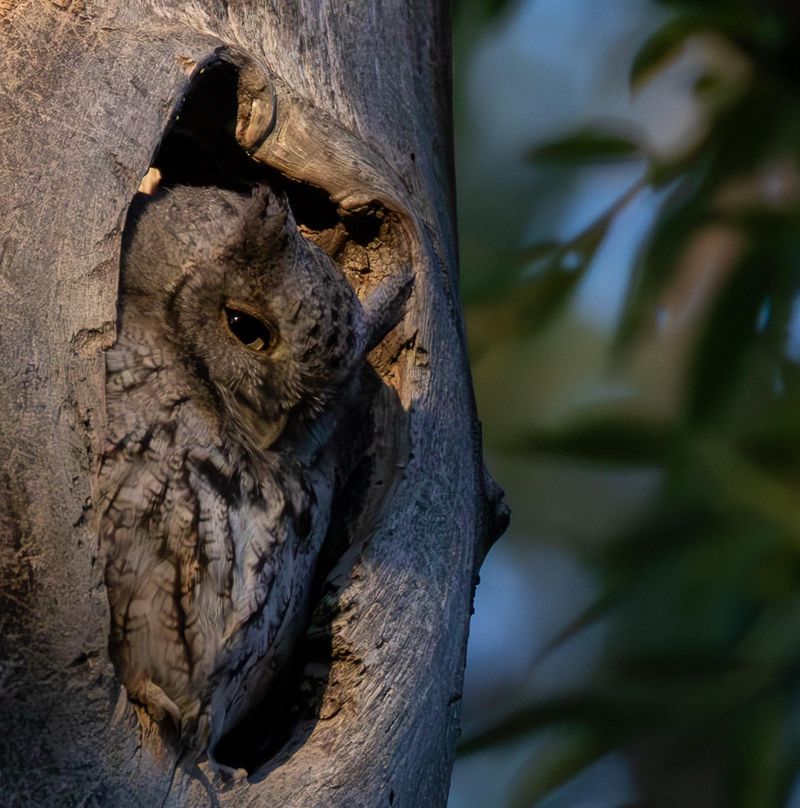
Small owl, big personality. The eastern screech owl is about the size of a soda can, yet it can live happily in an ordinary backyard.
These owls stay in the same area all year, so a good home can keep them around through every season.
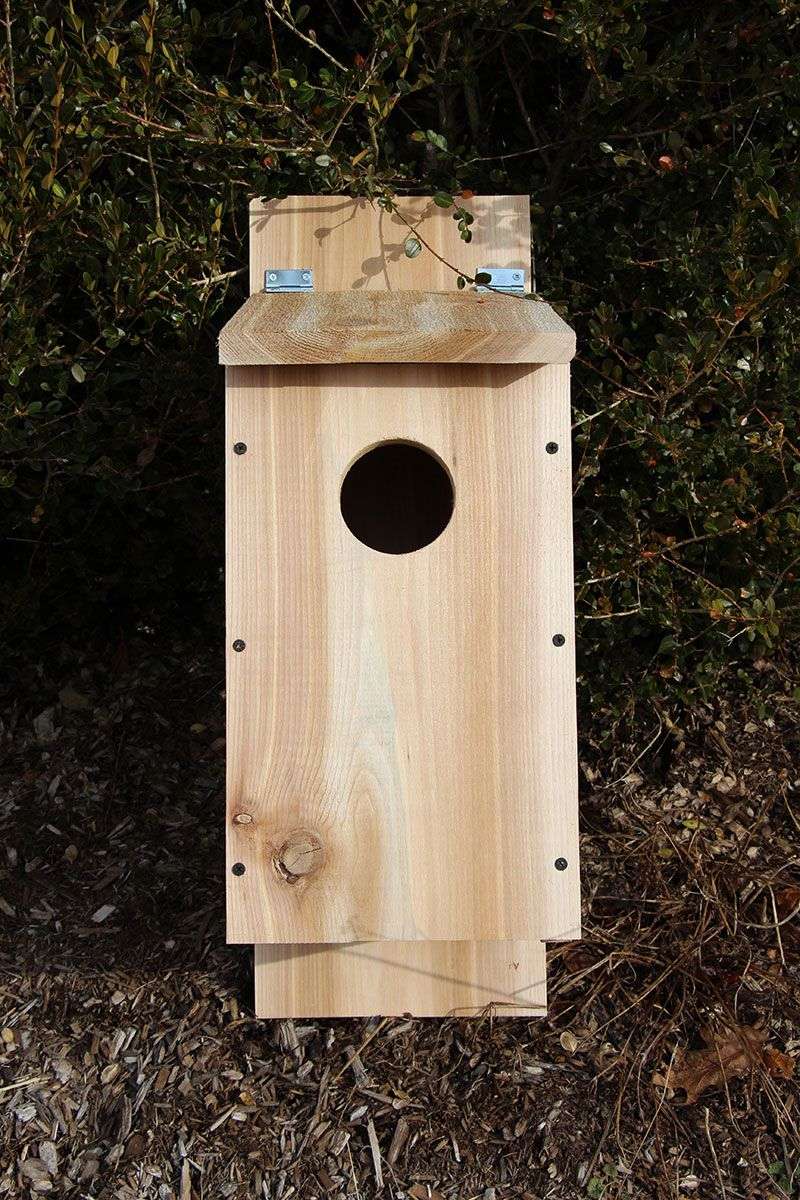
In nature, they nest in tree cavities and old woodpecker holes. Where those hollows are scarce, a simple wooden box can fill the gap.
Fall and early winter are good times to put one up, giving owls time to find it before spring nesting. Results vary, so be patient if the box sits empty at first.
Choose untreated wood and an entrance hole close to three inches wide. Mount it on a tree trunk roughly 10 to 30 feet high, in partial shade.
Add a couple of inches of wood shavings inside, since owls do not bring nest material.
Skip perches on the front, because they help predators reach in. A predator guard on the trunk adds extra protection.
In Florida, squirrels, wasps, and other birds may claim the box too. Clean it out after nesting season ends, and leave it alone while owls are using it so the family can raise its young in peace.