The Michigan Fall Task That Stops Creeping Charlie From Coming Back Next Spring
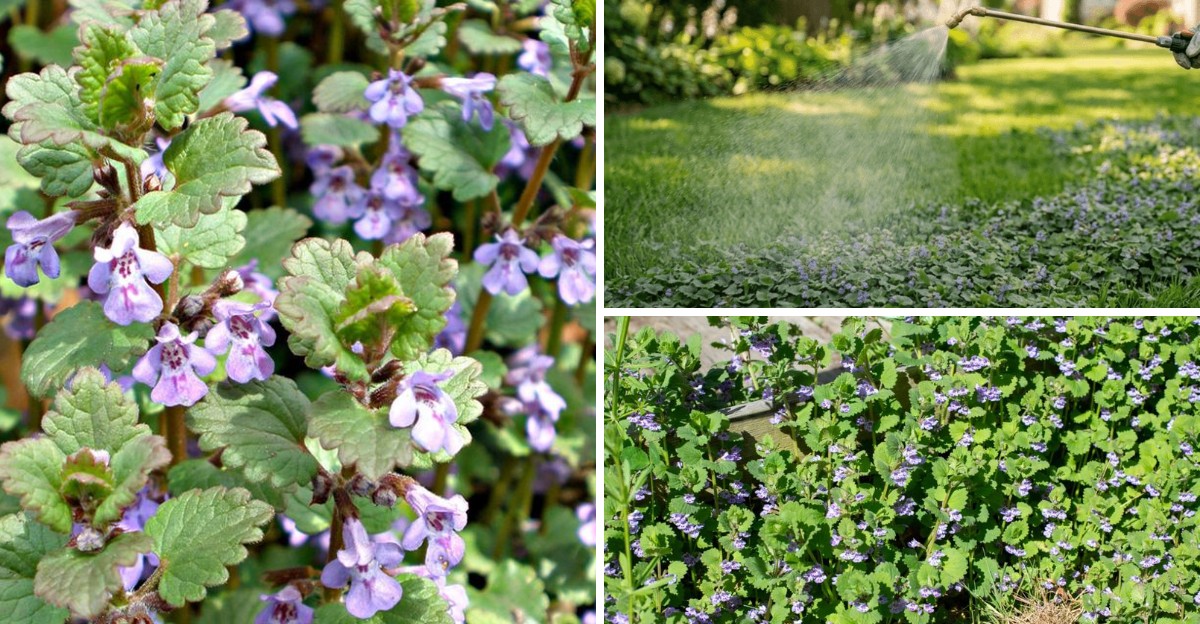
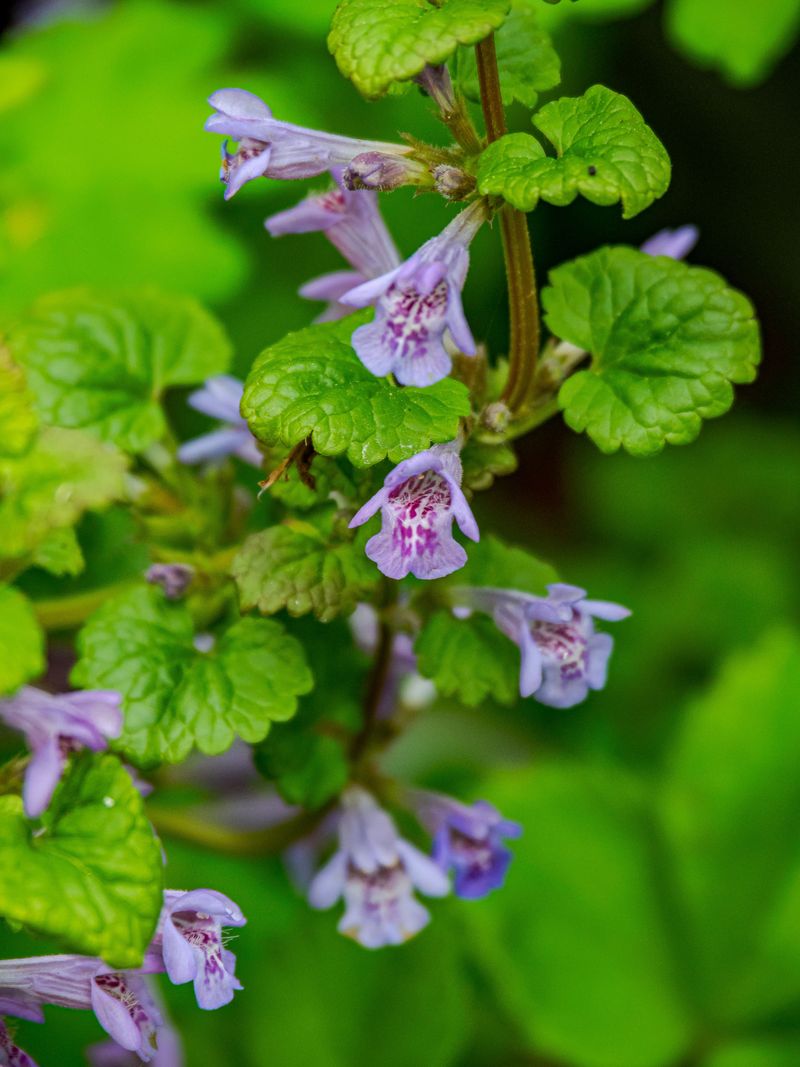
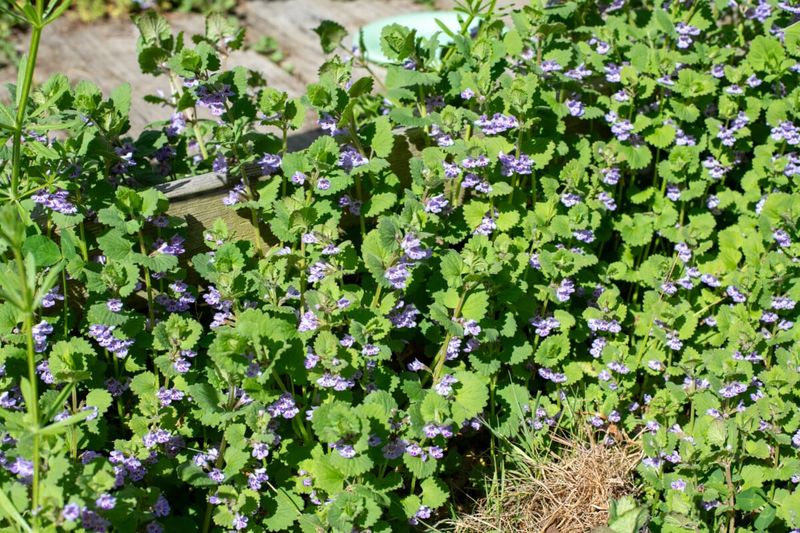
Crush one of its little scalloped leaves and your fingers will smell like mint. That sweet scent belongs to a plant in the mint family, and it can quietly stitch itself across a whole lawn.
Honestly, at first I thought those purple spring flowers looked kind of charming. Then I noticed the square stems rooting every few inches, and my charm wore off fast.
Early settlers brought this plant from Europe on purpose. They used it as a medicinal herb and even to flavor beer before hops took over. Now it shows up uninvited in shady Michigan yards everywhere.
Here’s what gets me. Most of us tackle it in spring, when it looks the worst. Yet the smartest move happens months earlier, while the maples are turning and the first frost is sparkling on the grass. So what exactly should you be doing out there this fall?
That Minty Ground Ivy Is Busy Packing Its Roots for Winter
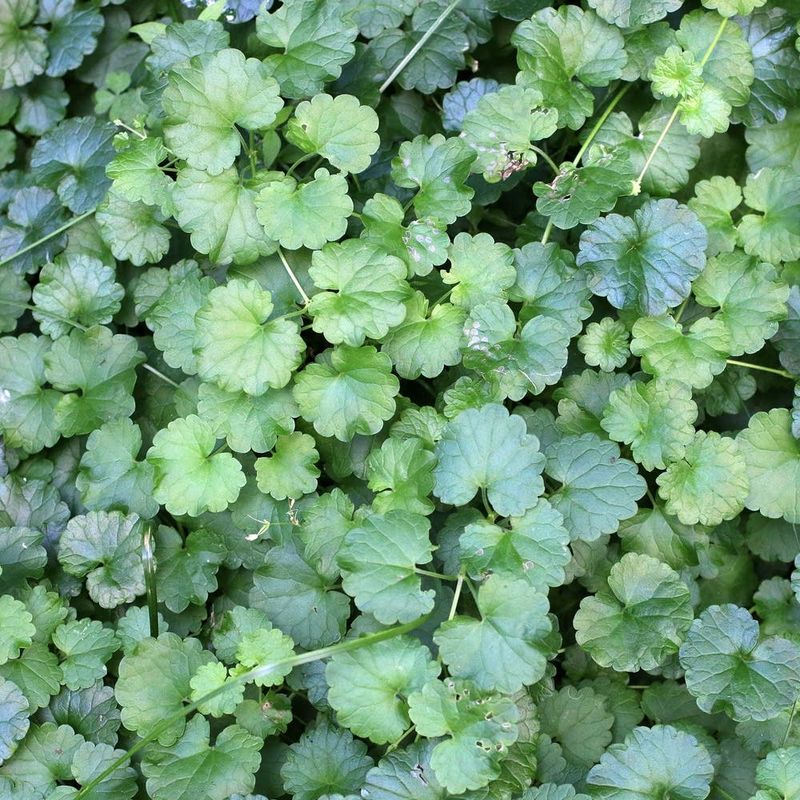
Every fall, ground ivy does something sneaky. As days shorten, the plant starts moving sugars from its leaves down into its stems and rooting nodes. It is stocking the pantry for winter.
That shift is the whole secret. Michigan State University Extension notes that fall is the best time to treat broadleaf perennials like creeping Charlie. A systemic weed product sprayed now rides along with those sugars, traveling deep into the plant instead of just scorching the leaves.
In spring, the flow runs the other way. Energy pushes up into new leaves and those purple flowers, so treatments often burn the tops while the roots shrug it off. That explains why so many spring sprays seem to work for a few weeks, then fail.
Creeping Charlie spreads with above-ground runners called stolons. Each runner can root at its nodes, which means one patch is often dozens of connected plants. Hitting them when they are pulling food downward gives you the best shot at reaching all those little anchors.
So the fall task is simple at heart. Treat ground ivy with the right product while it is still green and feeding its roots, before the ground freezes.
A Triclopyr Spray Bottle Beats Plain 2,4-D on Creeping Charlie
Not all weed sprays are equal, and I learned that one the hard way. My first bottle was plain 2,4-D, and the ground ivy barely flinched.
Research from university turf programs shows creeping Charlie is not controlled well by 2,4-D alone. Products containing triclopyr tend to work much better. Look on the label for triclopyr, often sold for lawns as a ground ivy or tough weed control product.
Three-way blends with 2,4-D, dicamba, and MCPP can also do a decent job. They usually outperform 2,4-D by itself, though triclopyr mixes are often the stronger pick for thick patches.
Read the label before you buy. Check that the product is safe for your grass type, since most Michigan lawns are Kentucky bluegrass, fine fescue, or perennial ryegrass. Follow the mixing rates exactly, because more is not better here.
Spot-treating patches keeps chemical use lower and protects nearby plants. A pump sprayer or ready-to-use bottle works fine for small areas.
Keep sprays away from garden beds, shrubs, and vegetables. Triclopyr harms many broadleaf plants, including the flowers you love. Keep kids and pets off treated areas until the spray dries.
After the First Light Frost, Those Scalloped Leaves Are Ready for Treatment
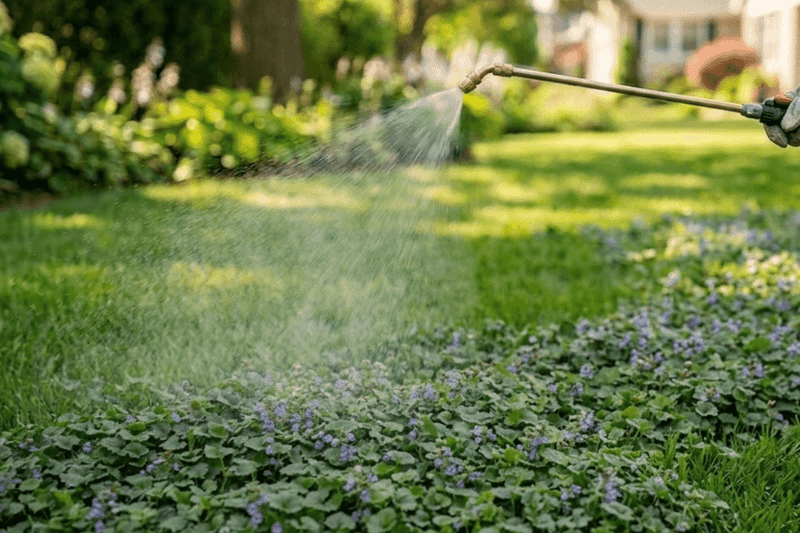
Timing makes or breaks this job. Many experts suggest treating creeping Charlie in fall, and several point to the window right after the first light frost.
In much of Michigan, that frost arrives from late September up north to mid-October in the southern counties. The Upper Peninsula often cools down first, so northern gardeners may need to act a bit sooner.
The plant must still be green and growing. A light frost nudges it into storage mode, but a hard freeze that browns the leaves leaves nothing to absorb the spray.
Pick a calm day with temperatures roughly in the 50s to 70s. Wind causes drift onto plants you want to keep. Check the forecast too, since you want a dry stretch of about 24 hours, or whatever your label recommends.
Skip mowing for a few days before you spray. More leaf surface means more product gets inside. Wait a few days afterward before mowing again.
Thick patches often need a second round. A follow-up about three to four weeks later, if weather allows, catches the stragglers. Patience pays off with this stubborn plant.
Shady, Soggy Lawn Corners Are Where Ground Ivy Feels at Home
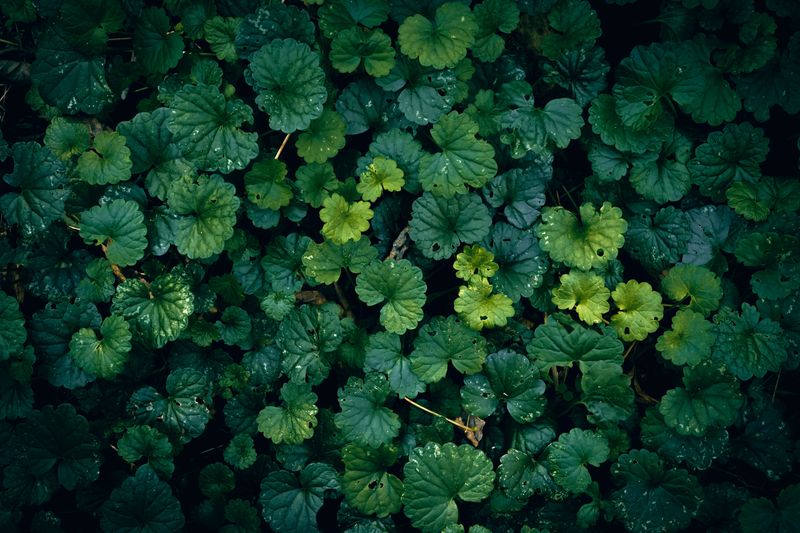
Walk your yard and look for the trouble spots. I bet the worst patches sit under trees, along the north side of the house, or in a low spot that stays damp.
Creeping Charlie loves shade, moisture, and weak grass. Most lawn grasses struggle in deep shade, and that gap is an open invitation. Ground ivy simply moves into the space your turf cannot hold.
Compacted soil adds to the problem. Heavy clay, common in parts of southeast Michigan, packs down and drains slowly. Roots of grass grow shallow, while the creeping weed happily spreads across the surface.
Poor fertility plays a role too. Thin, hungry lawns leave bare soil where runners can take root.
Think of a thick mat of ground ivy as a message from your lawn. It is telling you the grass is struggling to grow in that spot.
Spraying can clear the weed for now. Yet if the shade, wet soil, and thin turf stay the same, the runners from your neighbor’s yard or leftover bits will slip back in. Fixing the conditions is what turns a short win into a long one.
Thick Grass Mowed at Three Inches Crowds Out the Creepers
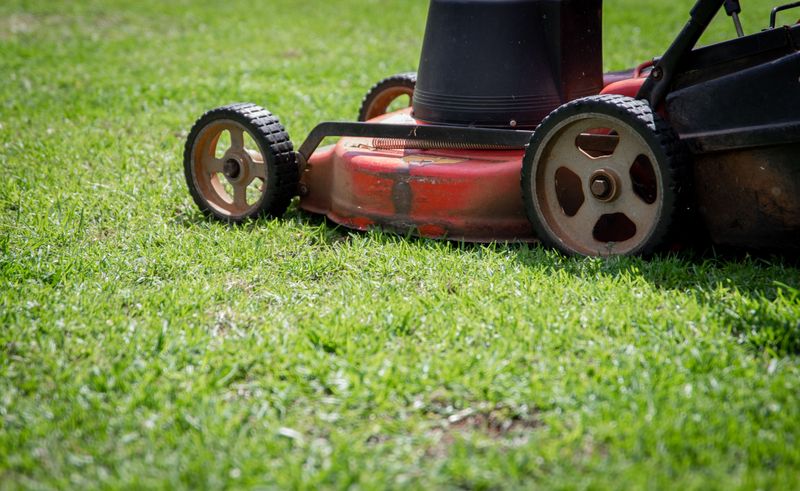
Call me stubborn, but I resisted raising my mower deck for years. Once I did, my lawn looked fuller within a season.
Mowing at about 3 to 4 inches lets grass grow deeper roots and shade the soil. Low-growing ground ivy hates competition for light. Tall, dense turf makes it harder for the runners to find open ground.
Fall feeding helps a lot. Michigan State University Extension suggests that much of your yearly lawn fertilizer go down in fall, when grass is building roots. A healthy fall lawn heads into winter strong and greens up faster in spring.
Core aeration in early fall loosens compacted soil. Those little plugs let air and water reach the roots, which helps grass in tired, packed areas.
Overseeding thin spots closes the gaps. In shady areas, choose shade-tolerant fine fescues instead of bluegrass. Early fall is a great seeding window across Michigan, while soil is still warm.
Plan your seeding carefully around weed sprays. Many products harm new seedlings, so check the label for waiting periods. Some gardeners spray first and seed the next season, while others seed bare spots and treat later.
Pruning Low Tree Branches Lets Sunlight Back Onto Your Lawn

Sunlight is the cheapest weed control around. Grass needs it, and ground ivy is happy to live without much of it.
Thinning lower tree limbs can let more light reach the ground. Even a few extra hours of sun can help turf hold its own. Fall and late winter are good times to prune many trees, once leaves drop and the branch structure is easy to see.
Be careful with oaks, though. Michigan experts advise against pruning oaks from spring through midsummer to avoid spreading oak wilt. Dormant season work is the safer bet.
Large branches or tall trees are a job for a certified arborist. Ladders and chainsaws are no place for guesswork.
Drainage fixes matter too. Redirect downspouts away from soggy lawn corners, and fill low spots with a light layer of topsoil over time.
Some spots will stay shady no matter what. In those areas, consider swapping grass for mulch or native shade plants like wild ginger or Pennsylvania sedge. Those choices look tidy, support local wildlife, and give ground ivy a tougher place to settle in than struggling turf.
That Old Borax Trick Can Backfire on Your Grass
Ask around at any garden club and someone will mention borax. It sounds tempting, cheap, and old-fashioned.
Boron can harm creeping Charlie, which is why the trick got popular. The trouble is that the amount needed to hurt ground ivy sits close to the amount that harms grass. Boron can also build up in soil and linger for years. Michigan State University Extension and other experts generally discourage it.
Hand pulling works better for small patches, with a catch. Every rooted node can sprout again, so you need to follow each runner and lift it out gently. Moist soil after rain makes the job easier.
Bag the pieces instead of tossing them on the compost pile. Bits of stem can root wherever they land.
Vinegar sprays brown the leaves but often leave roots alive. They also hit grass just as hard.
Smothering works in garden beds. A layer of cardboard topped with a few inches of mulch blocks light from small patches.
Honestly, a mix works best for most yards. Pull what you can, spot-treat the stubborn spots in fall, and keep the grass thick.
Watch for Purple Ground Ivy Flowers Next Spring and Plan Your Next Move
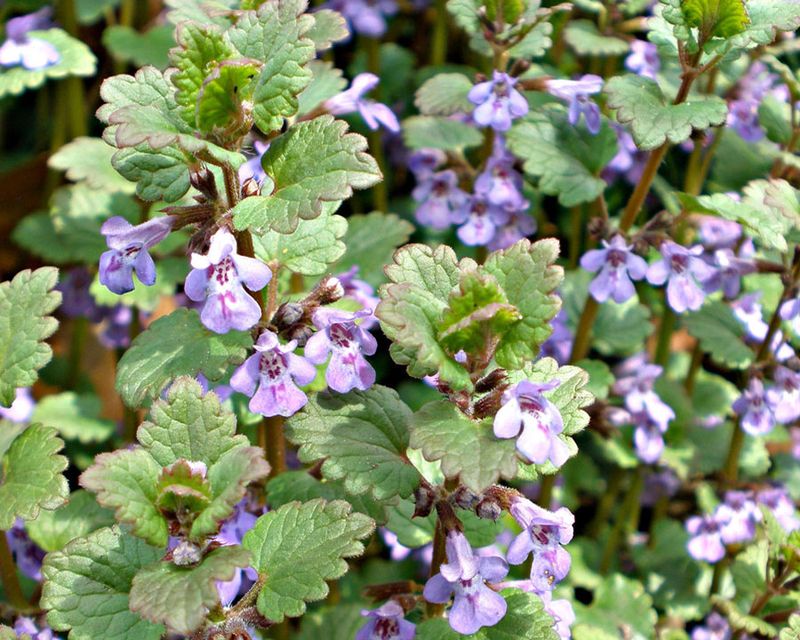
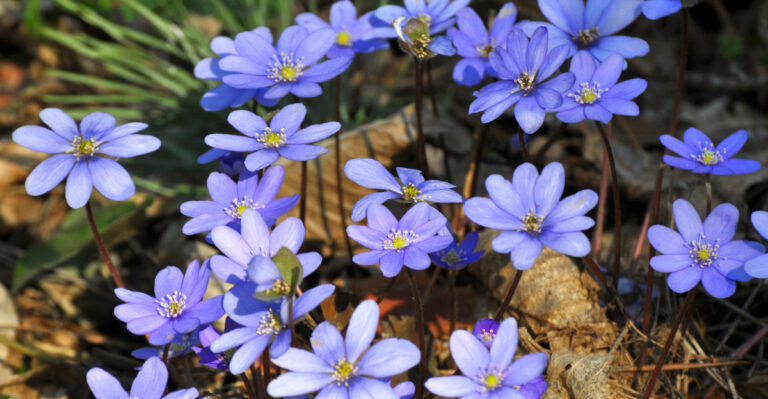
Spring will tell you how well your fall work paid off. Those tiny purple-blue funnel flowers show up in April and May, and they make leftover patches easy to spot.
Fun fact, bumblebees and other early pollinators visit those blooms. If a few flowers pop up along the edges, it is not the end of the world.
Walk the yard and note the spots that bounced back. Pull small survivors by hand while soil is soft. Mark bigger patches on a simple sketch so you remember where to focus next fall.
Spring spraying is less effective, so save the main treatment for autumn. Late spring around bloom time can work as a backup, but fall remains the stronger choice.
Keep up the lawn care that matters. Mow high, water deeply but not too often, and feed the grass on schedule.
Expect this to take a couple of seasons. Thick patches rarely vanish after one round, and runners from nearby yards may creep in again.
Stick with it, though. Each fall treatment and each thicker stretch of grass tips the balance further in your favor.