November Nights In Illinois Bring Glowing Eyes To Your Backyard
Some animals carry a tiny mirror at the back of each eye. It bounces light through the eye a second time, which is why a flashlight beam can turn a dark lawn into a field of glowing dots.
I found two golden sparks staring at me from my garden bed last week. My heart jumped first, and my brain caught up a few seconds later.
November nights in Illinois come early, so your evening trash run now happens in full darkness.
That means more chances to meet whatever is out there sniffing around your compost pile, fallen apples, and bird feeders.
Illinois backyards host more nocturnal visitors than most people realize, from raccoons and opossums to coyotes and the occasional deer.
The glow itself is a clue, though not a perfect one. Color, height, spacing, and movement all tell a story about your visitor. So who has been standing at the edge of your porch light, quietly watching you back?
That Glow Behind Your Garden Beds Comes From a Built-In Eye Mirror
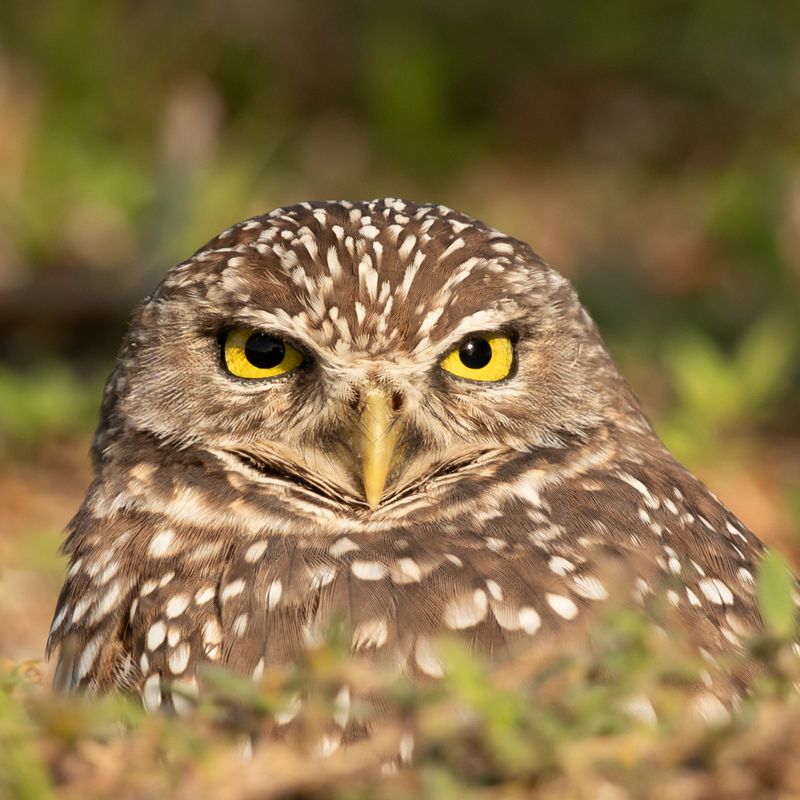
Scientists call it the tapetum lucidum, and it sits right behind the retina. Light passes through the eye, hits this shiny layer, and gets reflected back for a second pass.
That second pass gives night animals a big boost in dim light. Some sources say it nearly doubles how much light the eye can use. Still, the mirror needs a little light to work, like moonlight, a street lamp, or your porch bulb.
So when you sweep a flashlight across your Illinois yard, you are not seeing eyes that glow on their own. You are seeing your own light bouncing straight back at you. That is why the glow appears only when your beam lines up with the animal’s gaze.
People have a different setup. Our eyes lack this reflective layer, which explains why we stumble around after sunset while Illinois raccoons stroll past with confidence.
One fun detail keeps me hooked. Eyeshine color shifts with viewing angle, the color of your light, and minerals inside the reflective layer.
Even age can play a part. A single raccoon might flash yellow one night and greenish the next, so treat color as a hint rather than a name tag.
Raccoon Eyes Low to the Ground Are the Most Likely Suspects
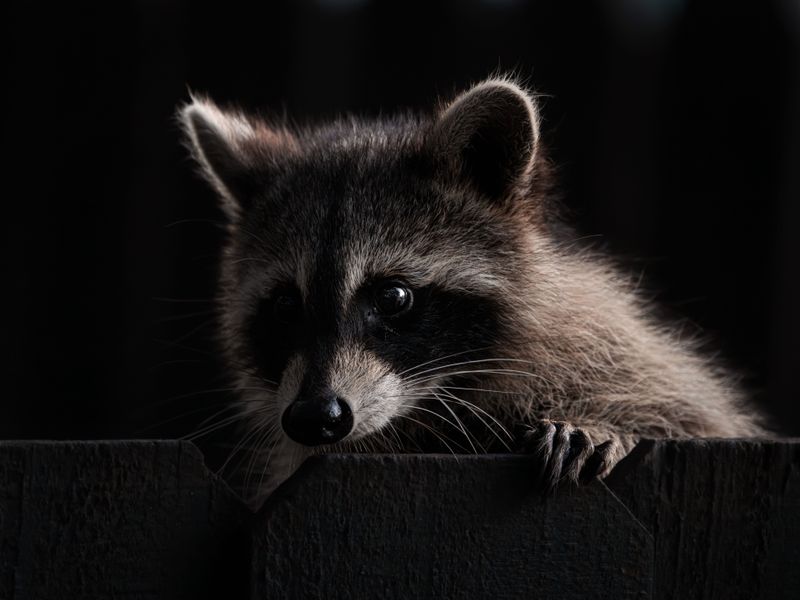
Bet on the masked bandit first. Raccoons live all across Illinois, and they do especially well in towns where food, water, and cozy den spots sit close together.
Their eyeshine often reads yellow, yellow-orange, or yellow-green. Look for a pair about a foot or two off the ground, often near trash bins, sheds, or a tree trunk. If the eyes suddenly rise up a tree, you have your answer, because raccoons climb like pros.
These clever omnivores eat berries, sweet corn, fruit, insects, and plenty of human leftovers. Pet food left on the porch is basically a dinner invitation. Fallen apples and pears under the tree count too.
A few easy changes help a lot. Use trash cans with locking lids or strap them shut with bungee cords. Bring pet bowls inside before dark, and rake up dropped fruit every few days.
Also check your attic vents, chimney caps, and the gap under your deck. Raccoons happily move into tree cavities, barns, and brush piles, but a warm attic works just as well for them.
Sealing those openings now, before a mother picks a nursery spot in spring, saves a lot of trouble later.
A Coyote Pair of Golden Eyes Sits Higher and Moves Steadily
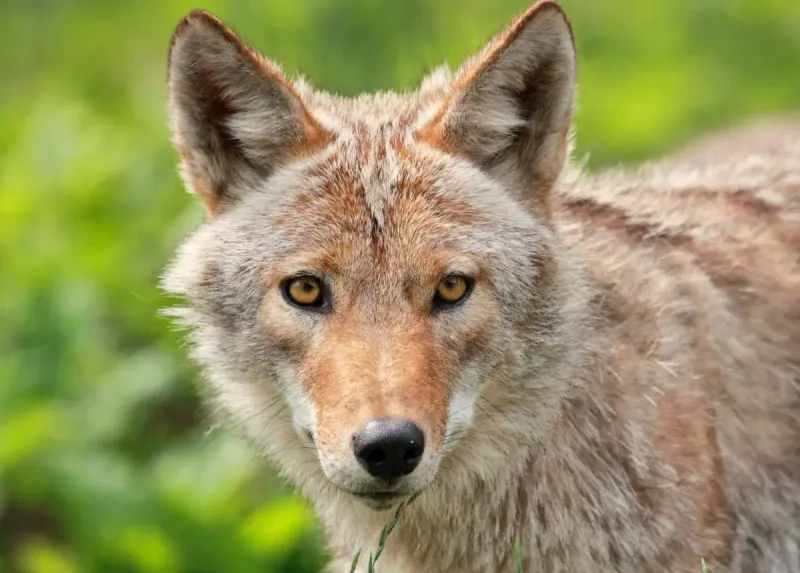
Coyotes surprise a lot of folks who live near Chicago. These adaptable canines roam every corner of the state, from farm fields to city neighborhoods and forest preserves.
Even in daylight, a coyote has striking yellow irises. At night, the eyeshine often looks greenish-gold or pale yellow.
The eyes sit roughly knee to waist high, and they usually travel in a smooth, purposeful line across the yard instead of wandering.
Most coyotes are shy and want nothing to do with you. They hunt mice, voles, and rabbits, which can actually help your garden.
They also snack on berries, grass, and garden crops, and they will gladly grab pet food or birdseed spills.
Small pets need extra care, especially at night and early morning. Walk little dogs on a leash and keep cats indoors after dark.
If one lingers too close, make yourself big and loud. Wave your arms, clap, or shout until it trots off.
Wildlife experts call this hazing, and it reminds coyotes to keep a healthy distance from people. Avoid feeding them in any way, since fed coyotes can grow bold.
Great Horned Owls Stare Down From Your Tallest Trees
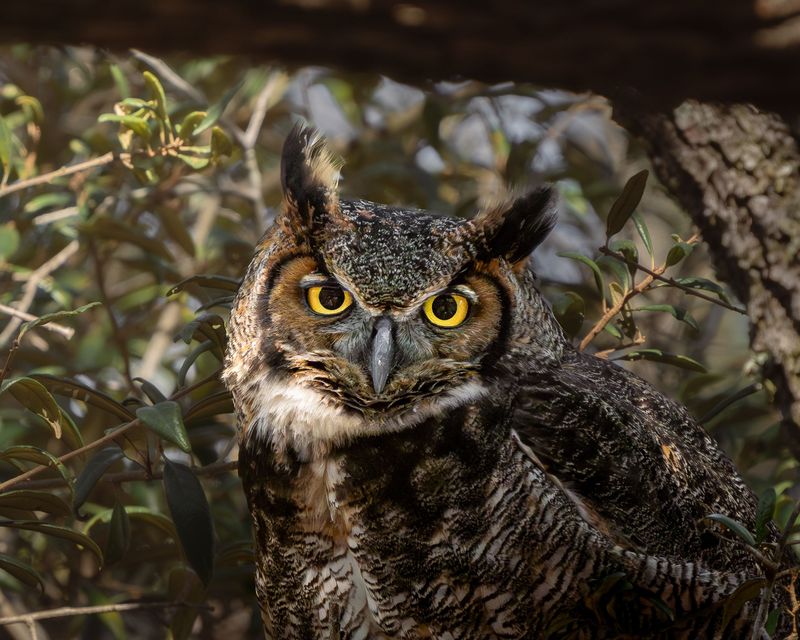
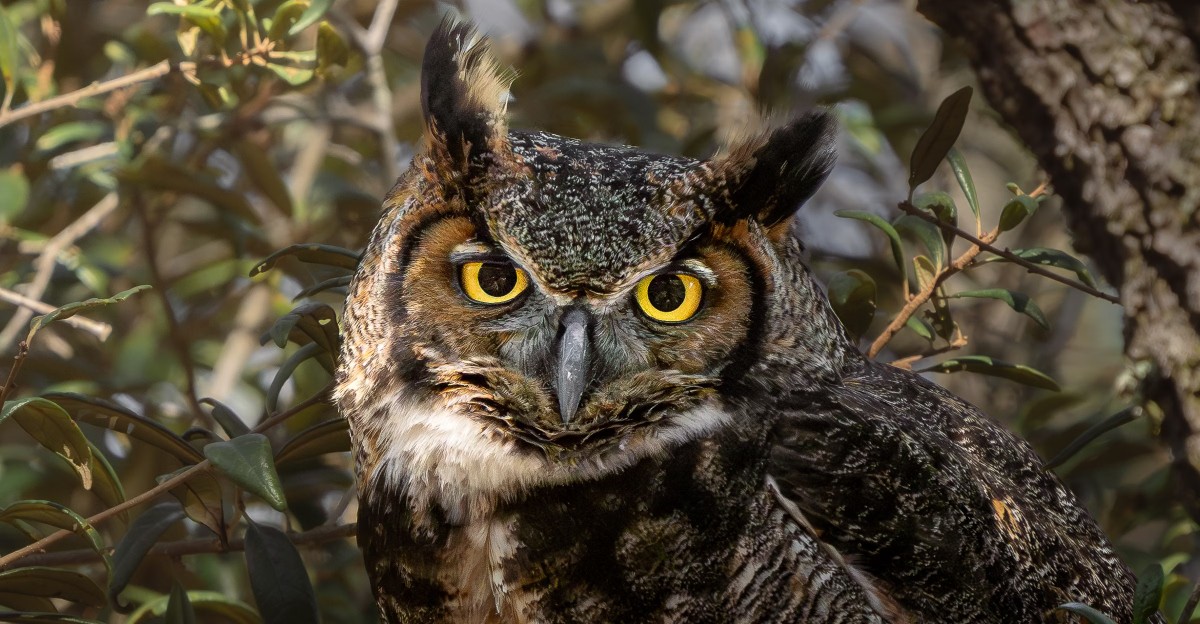
Look up before you blame the raccoon. A pair of big yellow eyes high in a tree may belong to a great horned owl, one of the most common large owls in Illinois.
Unlike mammals, owls do not give off strong eyeshine for most people. What you notice is usually the bird itself, with feather tufts like little horns and those huge golden eyes catching the porch light.
The deep hoo-h’HOO-hoo-hoo call is another giveaway. Right now is a great season to listen. These owls start courting and calling in late fall and early winter, and they often lay eggs by January or February.
They are among the earliest nesting birds in the state. For gardeners, they are welcome neighbors. They hunt rabbits, mice, voles, and other rodents that chew on young plants and bulbs.
Skip the rodent poisons if you want them around. Owls can eat poisoned prey and sustain harm.
Snap traps placed in covered boxes are a safer choice. Leaving mature trees standing also gives these hunters a place to perch and watch the yard.
That Tiny Screech-Owl Face in a Tree Hole Is Easy to Miss
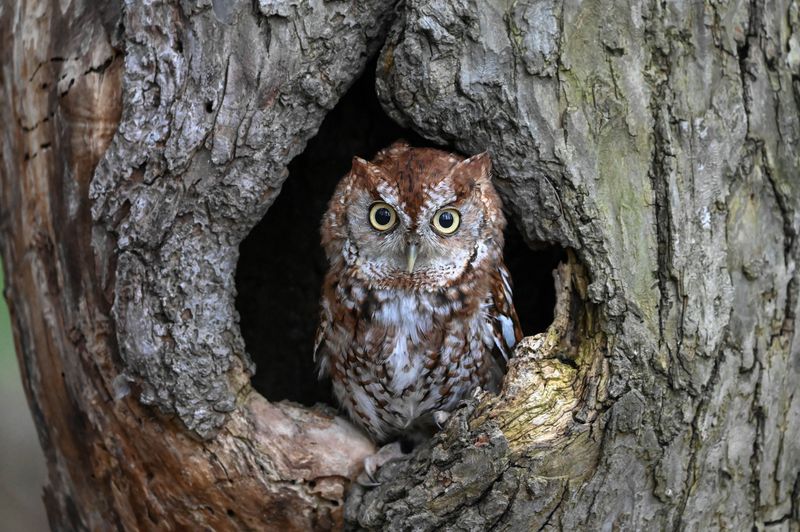
Here comes a pocket-sized surprise. The eastern screech-owl stands only about 8 or 9 inches tall, yet those piercing yellow eyes look huge on its small face.
Many people live near one for years and have no clue. These owls roost in tree cavities during the day, blending in with gray or reddish bark.
At night, they slip out to hunt insects in summer and rodents during colder months. Their call does not screech at all. Listen for a soft, horse-like whinny or a long, wavering trill after dark.
Once you know it, you start hearing it in parks, orchards, and wooded neighborhoods. Want to invite one closer? Screech-owls will move into nest boxes.
A box with an entrance about 3 inches wide, mounted 10 to 30 feet up a tree, works well. Add a couple inches of wood shavings to the bottom, since owls do not bring nesting material.
Keep old trees with natural holes when they are safe to leave standing. Those hollow spots matter for owls, woodpeckers, and other cavity nesters, and they make your yard far more lively at night.
Fox Eyes Flicker Along Your Fence Line at Dusk
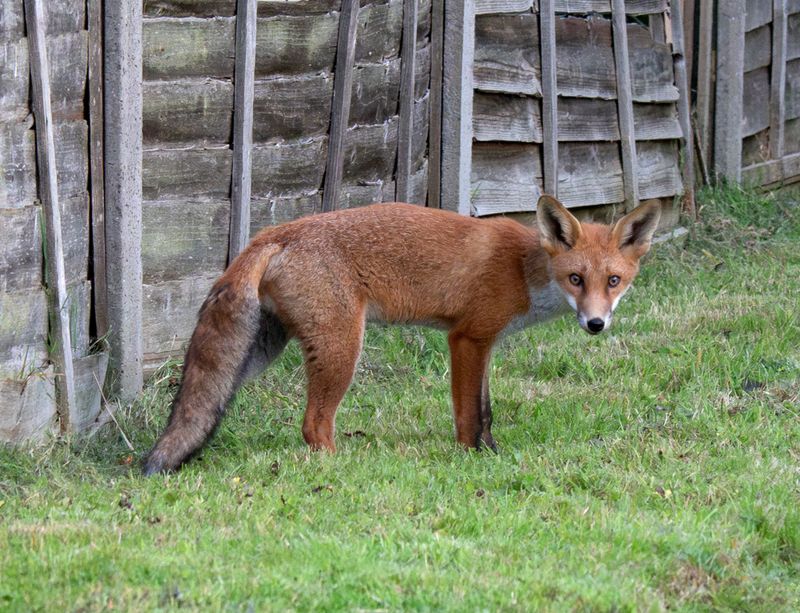
Foxes feel like a storybook visit. Both red foxes and gray foxes live in Illinois, and red foxes in particular show up in towns, golf courses, and cemeteries.
Their eyeshine often appears green, but yellow, orange, or even red flashes happen too. In daylight, a fox usually has amber or yellowish-brown eyes. Watch for a slim, low body and a big bushy tail trailing behind.
Timing helps you tell them apart from coyotes. Foxes are often busiest at dawn and dusk, slipping along fences and hedges. Gray foxes add a neat twist, since they can climb trees.
Most of the time, a fox is hunting mice, voles, rabbits, and insects. That is free pest control for your vegetable patch. Backyard chickens are a different story, so lock coops tightly every evening.
Foxes sometimes dig dens under decks or sheds in late winter to raise kits. To prevent that, block openings with hardware cloth buried at least 6 inches deep and bent outward in an L shape.
If a family has already moved in, many people simply wait a few weeks, because the young often leave by summer.
Tall Deer Eyes Mean Your Hostas and Shrubs Are on the Menu
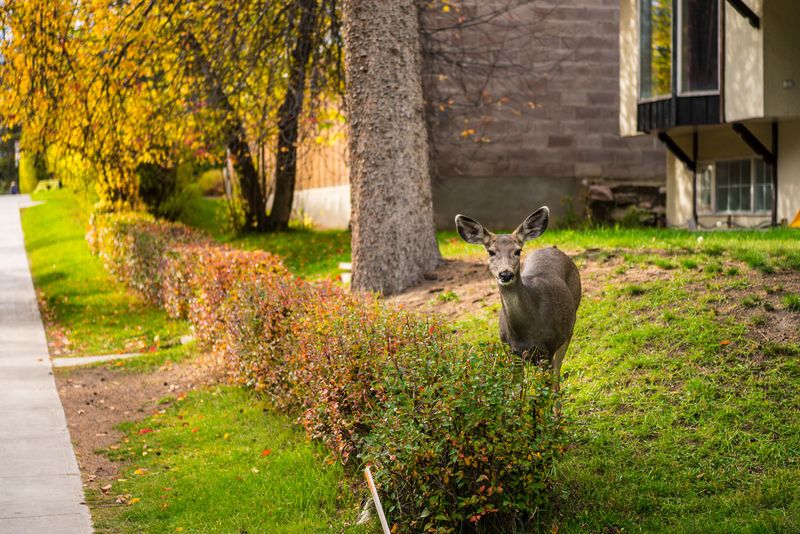
When the glowing eyes sit up at shoulder height, think deer. White-tailed deer are plentiful across the state, including plenty of suburbs with green space nearby.
Their eyeshine often looks silvery white, pale green, or soft yellow. You will usually see several pairs together, and they bob slowly as the animals graze. Deer feed most at dawn and dusk, but they also visit gardens late at night.
November brings the fall rut, so bucks are moving more and paying less attention to roads. Drive carefully at dusk, and expect rubbed bark on young trees as bucks scrape their antlers.
Protect small trees with plastic tree guards or a cage of wire fencing until spring. Arborvitae, yews, and hostas tend to get browsed heavily in winter and spring.
Fencing is the most reliable fix, though it needs height. Many experts suggest at least 8 feet for a standard fence.
Repellent sprays can help, especially if you switch products now and then and reapply after rain. Choosing less tasty natives, such as wild bergamot, or prairie grasses like little bluestem, also gives deer fewer reasons to linger.
A Few Simple Yard Habits Keep Night Visitors Wild and Wary
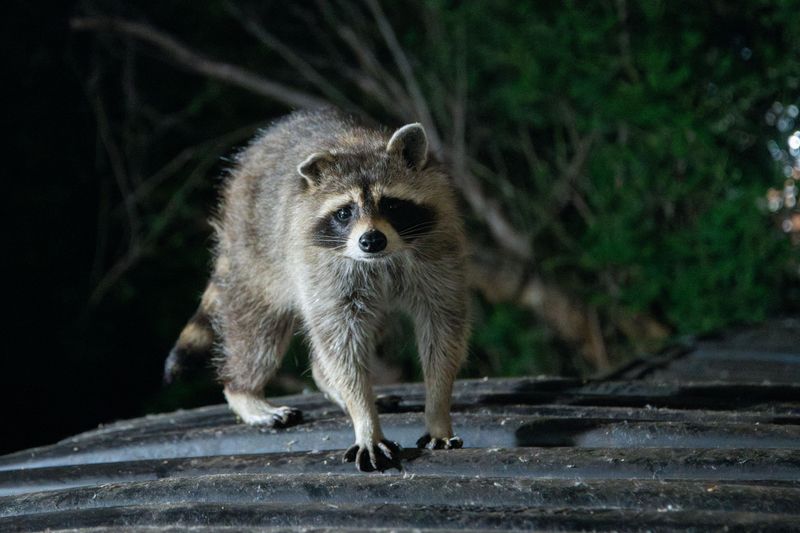
Honestly, most night visitors just want an easy meal. Take away the free buffet, and many of them move along on their own. Start with food. Lock trash lids, bring pet bowls indoors, and pick up fallen fruit.
Clean spilled seed under bird feeders, or take feeders down for a while if raccoons or deer keep showing up. Keep meat and dairy out of the compost bin.
Next, look at hiding spots. Brush piles, stacked lumber, and gaps under porches give animals safe places to rest. Tidy those areas or seal them with sturdy wire buried at least 6 inches deep.
Resist the urge to feed wildlife on purpose. Handouts can make animals lose their fear of people and draw more of them into the neighborhood. That rarely ends well for the animals.
Give every visitor plenty of space, and never corner one. If an animal seems sick, confused, or hurt, call a licensed wildlife rehabilitator or your local animal control office.
Then enjoy the show. A trail camera pointed at the garden often reveals who owns those yellow eyes, and the answer usually makes for great dinner conversation.