The November Cleanup Jobs Michigan Gardeners Should Finish Before The Snow
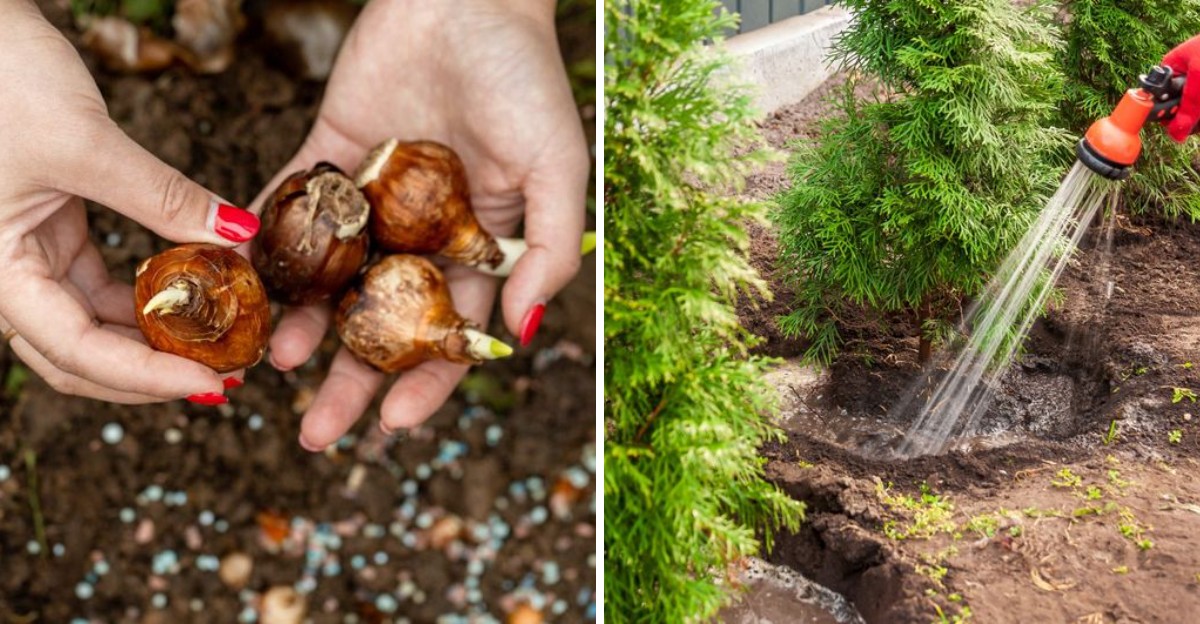
Some lawn fungi actually grow under snow, spreading quietly in the cold while your yard looks peaceful and white. Gray and pink snow mold show up in Michigan each spring as matted, crusty patches on the grass.
Those patches often start from chores we skipped in fall, like heavy leaf piles left sitting on turf. I’m always surprised by how many winter problems trace back to a single busy weekend in autumn.
Frost dates swing widely across Michigan, so northern gardens often freeze weeks before yards near the southern border. You might feel rushed, but a few focused afternoons outside can save you plenty of spring headaches.
I could be wrong, but cold air and crunchy leaves make late garden work feel strangely satisfying. So which jobs truly matter before the first heavy snow buries your beds and hoses until spring?
1. Bag Up Diseased Tomato And Peony Leaves
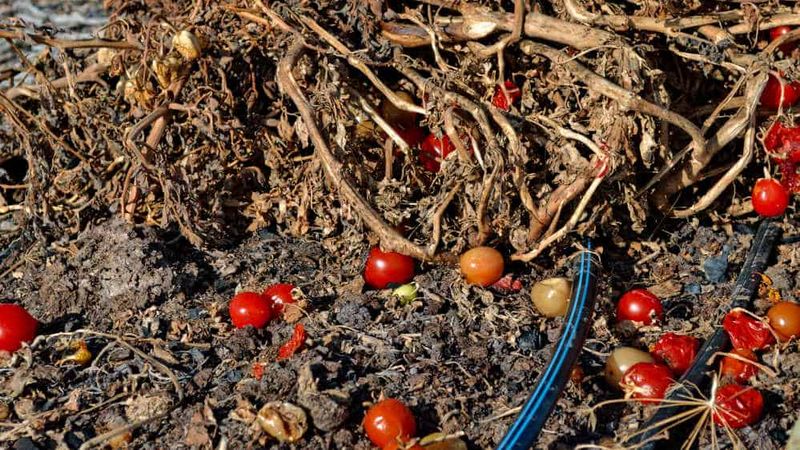
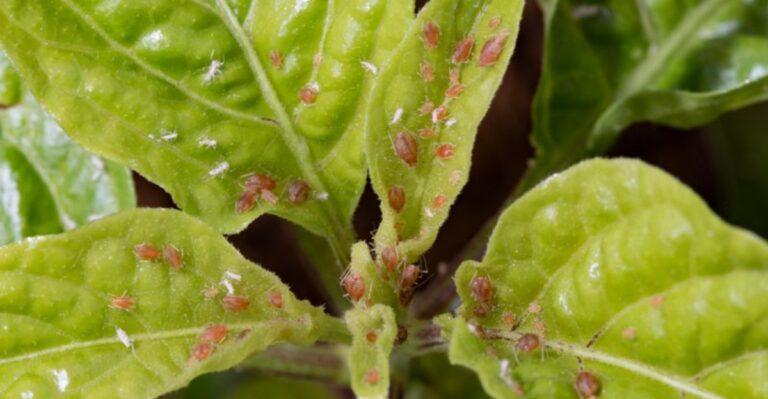
Those spotted tomato leaves you ignored in August are still out there, quietly holding fungal spores for next year. Early blight and peony botrytis both spend winter in old plant debris, waiting for warm spring rain.
Pulling that material now breaks the cycle before it can splash back onto fresh seedlings in May. I like to think of it as closing the door on problems I already fought once this year.
Diseased leaves belong in a yard waste bag or the trash, not tossed onto your backyard compost pile. Most home piles rarely stay hot enough, for long enough, to reliably reduce stubborn plant pathogens inside.
Peonies deserve special attention, because Michigan State University Extension suggests cutting their stems near the ground each fall. Removing that foliage helps reduce gray mold and leaf blotch, which commonly return when old stems remain.
Squash vines with powdery mildew and roses with black spot are also worth clearing out before snowfall. Wear gloves on a dry afternoon and drop everything straight into a bag instead of piling it nearby.
You don’t have to strip every bed bare, since healthy stems and seedheads can stay standing for wildlife. The goal is targeting the sick stuff, not chasing a spotless look that leaves birds with nothing.
Check your town’s leaf and yard waste schedule, because final pickups often wrap up by late November. Missing that last truck could leave you staring at soggy bags on the curb until spring.
2. Pull Seedy Weeds Before Winter Sets In
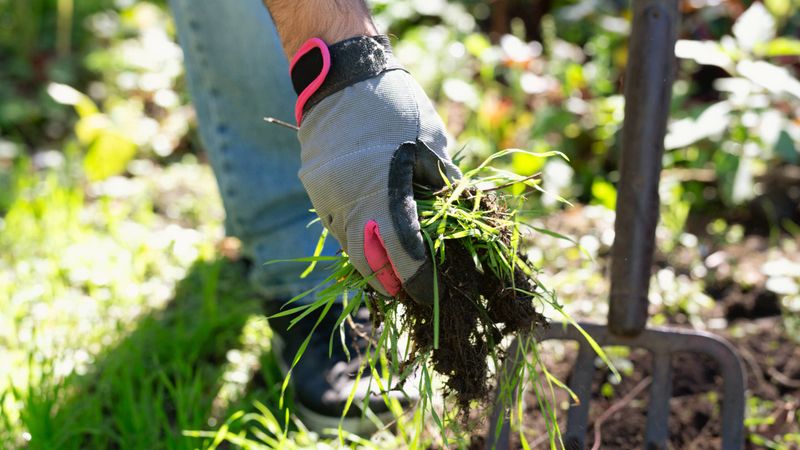
A single common lambsquarters plant can release tens of thousands of seeds, and many stay viable for years. Every weed still clinging to seedheads right now is basically a gift bag for next summer’s garden.
Cool weather makes this chore much easier than you might expect, especially after a soaking autumn rain. Damp soil lets roots slide out cleanly, and you won’t be sweating through your shirt like July.
Perennial weeds such as dandelions and Canada thistle are busy pushing sugars down into their roots this time of year. That is why fall is often considered a smart window for managing them, according to many university extension specialists.
Hand pulling works well for young plants, while a sturdy hori hori or dandelion fork reaches deeper taproots. Try to remove as much root as possible, because broken pieces of some weeds can resprout next spring.
Weeds carrying ripe seeds should go into the trash, not the compost, for the same reason as diseased leaves. Snip the seedheads into a bag first so they don’t scatter while you tug on the stems.
I find bare soil between perennials gets crowded with chickweed by spring if I skip this step. Chickweed loves cool weather and can even keep growing during mild winter spells, which surprises plenty of gardeners.
Once the beds are clear, a layer of shredded leaves helps block light from any seeds left behind. Your future self, kneeling in April mud, will probably appreciate every single weed you yanked today.
3. Shred Fallen Maple Leaves Into Free Garden Mulch
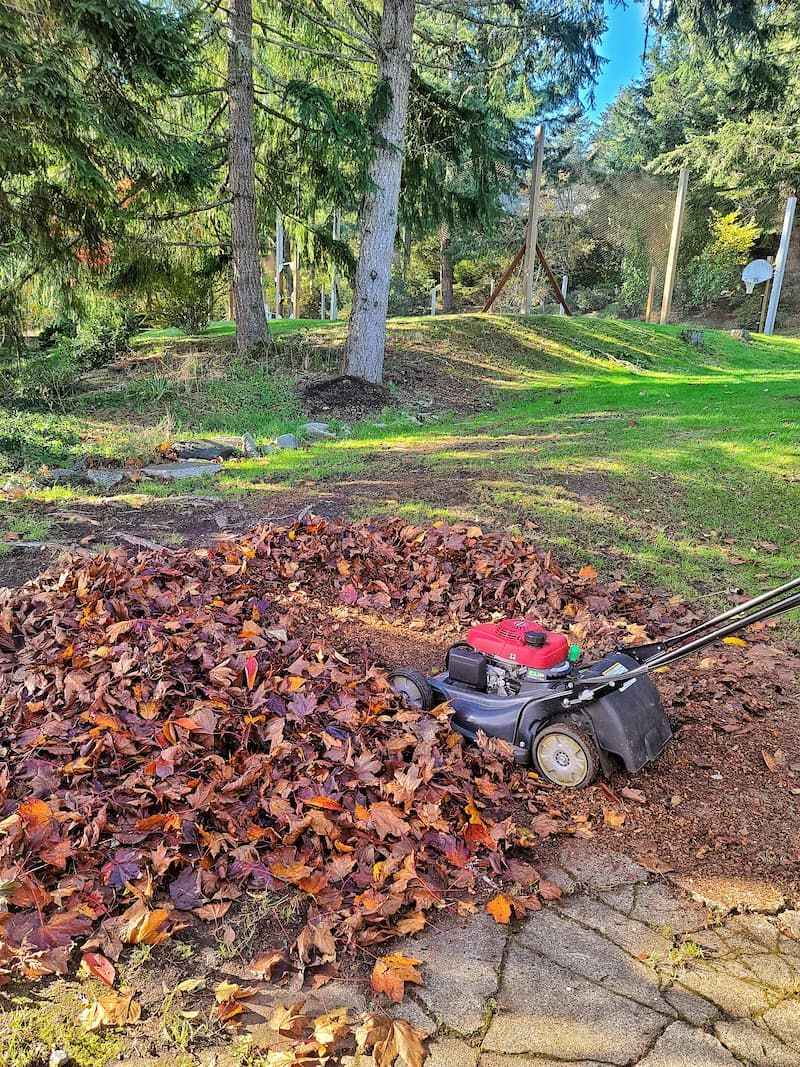
Mature trees can drop a staggering pile of leaves, and that crunchy carpet is basically free organic matter. Raking every leaf to the curb feels productive, but you might be tossing out your best soil builder.
Whole leaves left thick on the lawn can mat down under snow and smother the grass underneath. Matted layers also hold moisture against turf, which can encourage snow mold patches that show up in spring.
Michigan State University Extension notes that mulching leaves with a mower can return nutrients and organic matter to lawns. Simply run over them a few times until the pieces are about the size of a dime.
When you can see grass blades poking through the shredded bits, you have chopped them finely enough. Heavier leaf drops may need bagging attachments, so the extra can head straight into your garden beds instead.
Shredded leaves make a wonderful mulch around perennials, breaking down slowly and feeding earthworms through the cold months. Whole leaves tend to mat and shed water, so chopping them first is worth the small extra effort.
I like stashing a few bags behind the garage as a brown ingredient for next year’s compost pile. They balance kitchen scraps beautifully, and you won’t need to hunt for carbon material in July.
Try to finish this chore before the first real snow, because wet leaves get heavy and stubborn fast. A blower or rake works far better on crisp, dry piles than on soggy, frozen clumps.
4. Give Arborvitae And Young Trees A Deep Drink
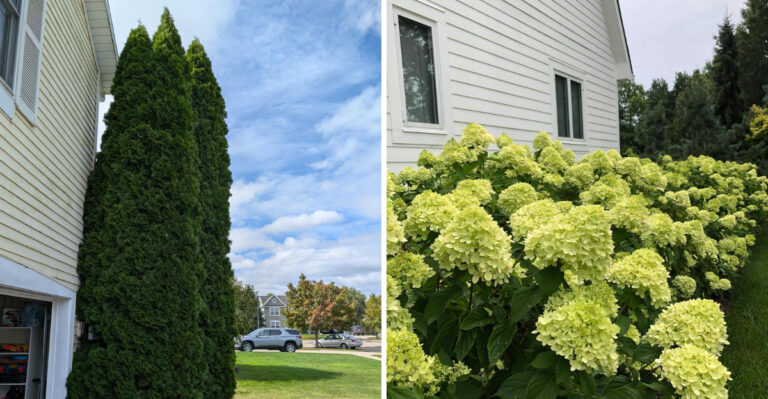
Evergreen needles keep losing moisture on sunny winter days, even when the soil around their roots is frozen solid. That mismatch causes winter burn, the crispy brown foliage that greets so many gardeners each March.
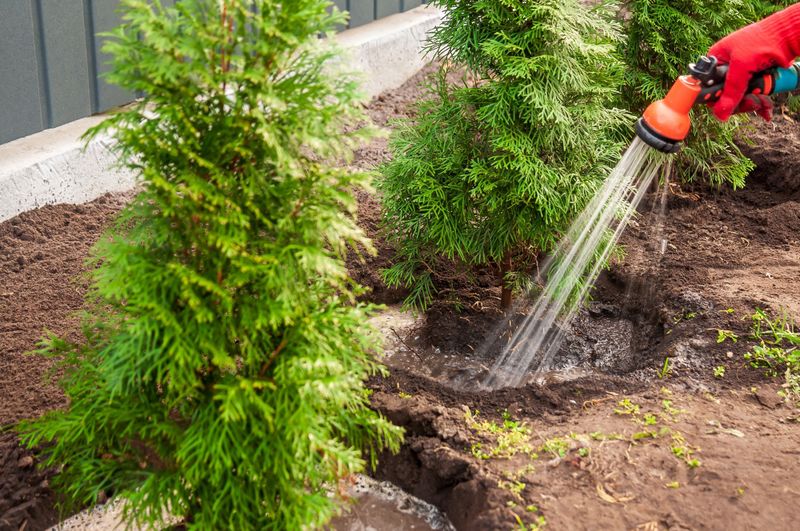
A slow, deep watering before the ground freezes gives arborvitae and yews a stronger moisture reserve for winter. Moist soil also holds warmth better than dry soil, which helps protect roots during sharp cold snaps.
Newly planted trees and shrubs need this the most, since their root systems are still small and shallow. Anything planted within the last year or two deserves a careful check before you put the hose away.
Push a screwdriver or trowel into the soil near the drip line to see how dry it really feels. If the top several inches crumble like dust, your plants could use a long, gentle soaking right away.
Let a hose trickle slowly at the base for a while, so water seeps deep instead of running off. A soaker hose coiled around the root zone works nicely, and you can move it between plants easily.
I usually water on a mild afternoon when temperatures sit above freezing, giving the soil time to absorb. Watering right before an overnight hard freeze can leave icy puddles that do little good for roots.
Once this soaking is done, you can drain and store the hose for winter with a clear conscience. Your evergreens should look noticeably greener next spring, and that small reward feels wonderful after a long winter.
5. Disconnect Garden Hoses From Outdoor Faucets
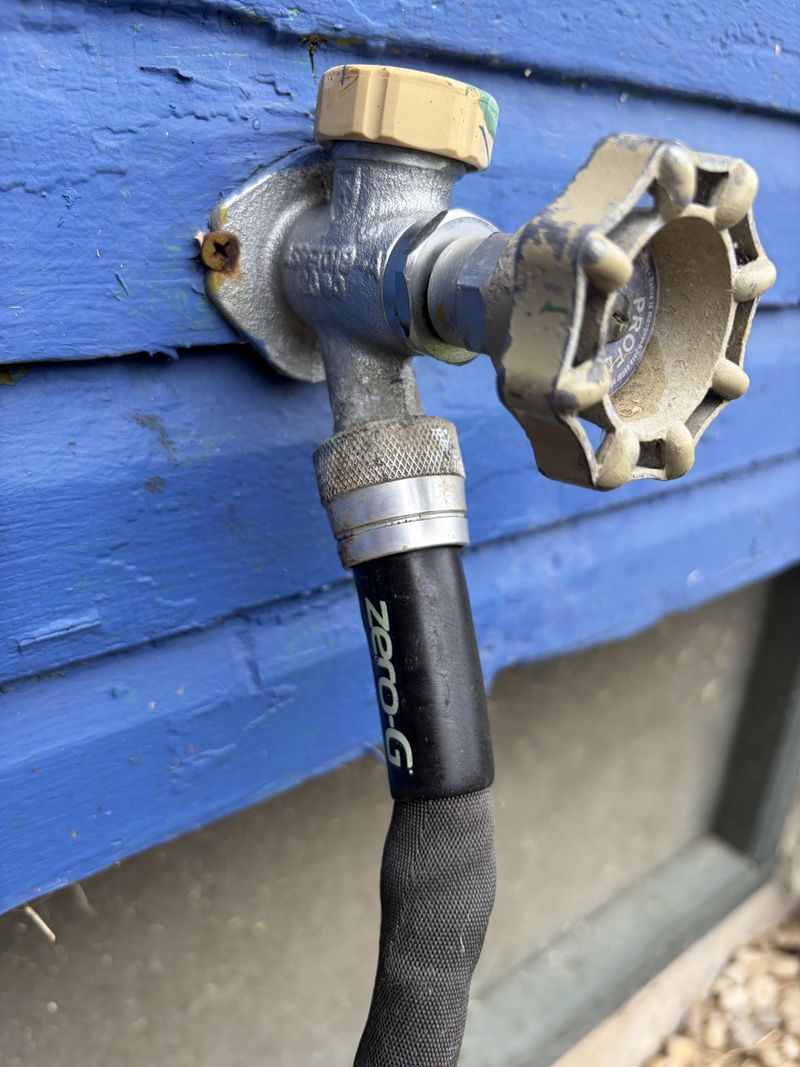
A frost-free outdoor faucet can still burst if a garden hose stays attached through a hard freeze. The connected hose traps water inside the valve, so the clever drain-back design simply cannot do its job.
Pipe repairs are expensive, and a split line might leak quietly inside your wall for weeks before anyone notices. Unscrewing a hose takes seconds, which makes this one of the easiest wins on your entire checklist.
Drain each hose by stretching it down a slope, then coil it loosely and store it in a garage. Rubber and vinyl hoses tend to crack when water freezes inside, so dry storage helps them last longer.
Older homes often have standard spigots with a separate shut-off valve located somewhere in the basement. Close that indoor valve first, then open the outside faucet to let any remaining water trickle out.
Some indoor valves also have a small bleeder cap that releases the last bit of trapped water. Place a bucket underneath, loosen it gently, and tighten it again once the dripping finally slows down.
Underground sprinkler systems usually need a professional blowout with compressed air to clear water from every zone. Home air compressors often lack enough volume, so many homeowners book this service before the soil freezes.
I also slip a foam faucet cover over each spigot for an inexpensive layer of extra insulation. You can find these at most hardware stores, and they snap on quickly in about a minute.
6. Wrap Young Tree Trunks Against Hungry Rabbits
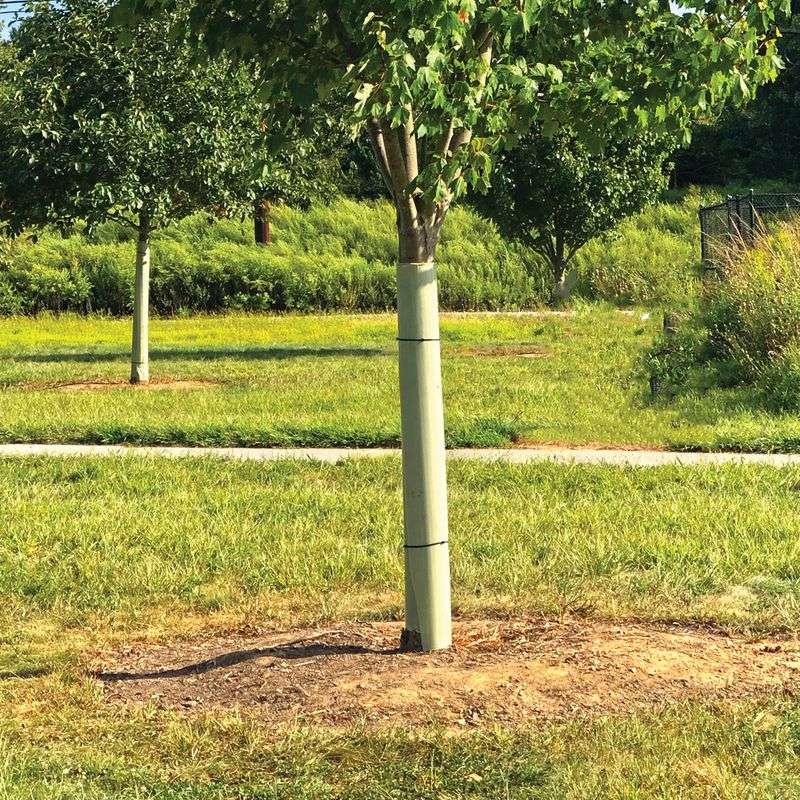
Rabbits get surprisingly bold once deep snow covers their usual buffet of clover and tender lawn grasses. Thin bark on young apple trees and serviceberries suddenly becomes an easy, tasty winter meal for them.
Voles cause trouble too, tunneling under snow and gnawing bark right at the soil line where you can’t see. When bark gets chewed all the way around a trunk, the tree often struggles badly or fails by summer.
Plastic spiral guards or cylinders of quarter-inch hardware cloth around the trunk offer simple, reliable physical protection. Push the bottom edge a couple inches into the soil so voles can’t sneak underneath the barrier.
Make guards tall enough to reach above your expected snow line, since rabbits stand on drifts to nibble. In snowy parts of Michigan, that could mean wrapping two feet or more of the lower trunk.
Pull mulch a few inches away from the base, because thick mulch against bark gives voles cozy cover. I’ve noticed vole runways appear in spring right where mulch was piled high against my shrubs.
Deer bring their own worries, as bucks rub antlers on young trunks during the fall rut each year. Sturdy fencing or a ring of wire around valuable young trees can keep that bark-shredding behavior away.
Install guards before the ground freezes, since stakes and wire are much easier to set in soft soil. Just remember to remove spiral wraps in spring so they don’t trap moisture or pinch growing trunks.
7. Plant The Last Tulip And Daffodil Bulbs
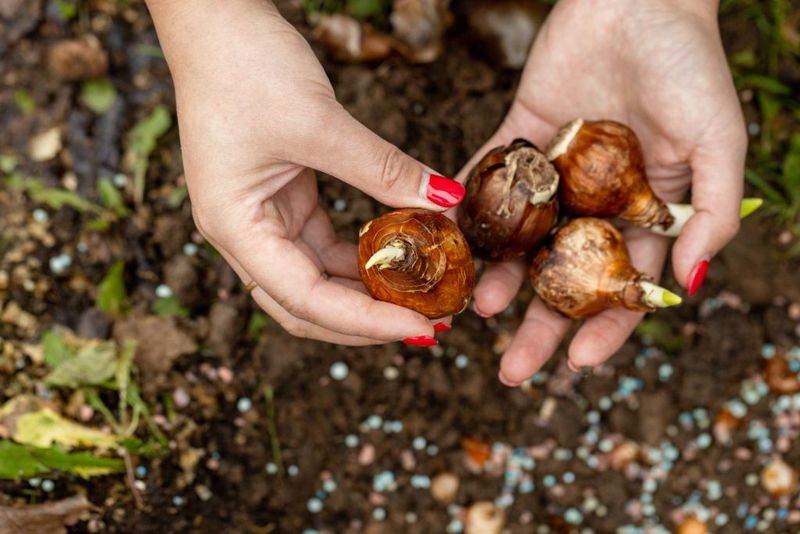
That forgotten bag of tulip bulbs in the garage still has a chance, as long as you can dig. Spring bulbs need a long chilling period in cold soil before they can bloom, and November provides it.
Michigan State University Extension notes that bulbs can go in any time before the ground freezes solid. Late planting may mean shorter roots this fall, but most bulbs still manage a respectable spring show.
Plant tulips and daffodils roughly three times as deep as the bulb is tall, pointy end facing up. Grouping them in clusters looks far more natural than lining them up single file along a stiff edge.
Squirrels adore freshly dug tulip bulbs, and they often follow the scent of disturbed soil right to them. Laying a piece of chicken wire over the planting area until spring can stop a lot of digging.
Daffodils are a clever choice if critters plague your yard, since their bulbs contain toxic compounds animals avoid. I mix them generously among tulips, and the squirrels mostly leave that bed alone in my experience.
Water the bulbs after planting to settle soil around them and encourage roots to start growing quickly. A light layer of shredded leaves on top helps keep soil temperatures steadier through freeze and thaw.
Bulbs left sitting in a bag over winter usually dry out or rot, so planting beats storing them. Even a slightly late start is better than tossing them, and spring will tell you if it worked.
8. Mound Straw Mulch Over Roses And Perennials
Strangely enough, the cold itself is rarely what harms perennials most during a long northern winter. Repeated freezing and thawing heaves shallow-rooted plants right out of the soil, leaving their crowns exposed and vulnerable.
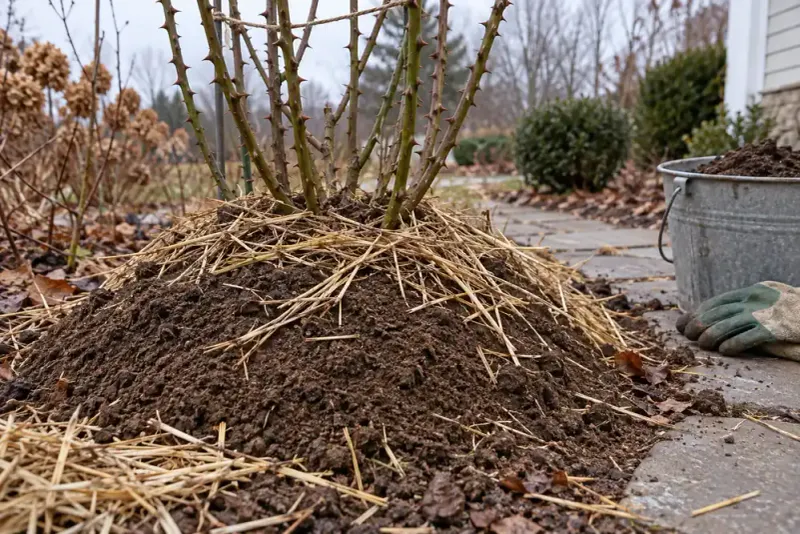
A winter mulch keeps the ground frozen more steadily, which prevents that up-and-down heaving from happening so often. Timing matters, because extension experts suggest waiting until after the soil freezes before adding this protective layer.
Mulching too early can keep soil warm and moist, inviting mice to set up winter nests underneath. In most of the state, the right moment usually lands somewhere between late November and early December.
Clean straw, shredded leaves, or evergreen boughs make great choices, spread roughly two to four inches deep. Pine boughs from a post-holiday tree work nicely too, and they trap snow, which adds natural insulation.
Grafted hybrid tea roses appreciate a mound of soil or compost around the base, roughly eight to twelve inches high. Bring in that soil from elsewhere instead of scraping it from around the rose, which exposes roots.
Newly planted perennials benefit most, since their roots have not had time to anchor deeply into the bed. Heuchera and mums are famous for heaving, so give them a little extra coverage when you can.
I love that this job gets done when everything else is finished and the garden feels peaceful. Just remember to pull mulch back gradually in spring once new growth starts poking through the soil.
9. Empty Clay Pots And Drain Rain Barrels
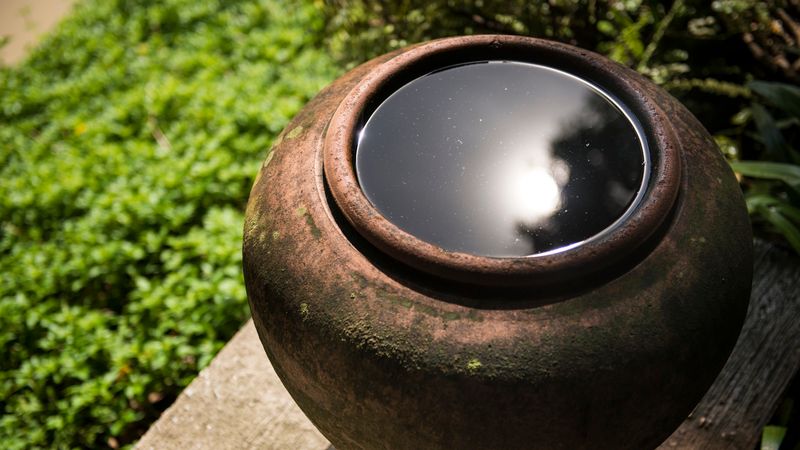
Terracotta pots soak up water like sponges, and that hidden moisture expands with real force when it freezes. More than one gardener has found a favorite pot split in half after a single icy January week.
Dump old potting mix into a compost pile or garden bed, unless those plants had disease problems. Scrub pots with warm soapy water, let them dry, and stack them upside down in a garage.
Glazed ceramic containers face the same risk, since water seeps into tiny cracks and drainage holes over time. Large pots too heavy to move can be emptied and flipped, or covered tightly to keep water out.
Rain barrels deserve the same attention before temperatures stay below freezing for days at a stretch. Ice expanding inside a plastic barrel can crack the walls or snap off the spigot at the bottom.
Open the spigot fully, let everything drain, and give your shrubs one final drink with the water. Then disconnect the barrel from the downspout and redirect that downspout away from your foundation for winter.
Rinse out any sludge or algae, then store the barrel indoors or flip it upside down outside. A secure lid or tarp works too, as long as rain and melting snow cannot sneak back inside.
I find it oddly satisfying to stack my empty pots neatly, ready for a fresh round of planting. Come spring, you will have clean containers waiting for you instead of a sad pile of cracked shards.
10. Clean And Oil Pruners And Shovels Before Storage
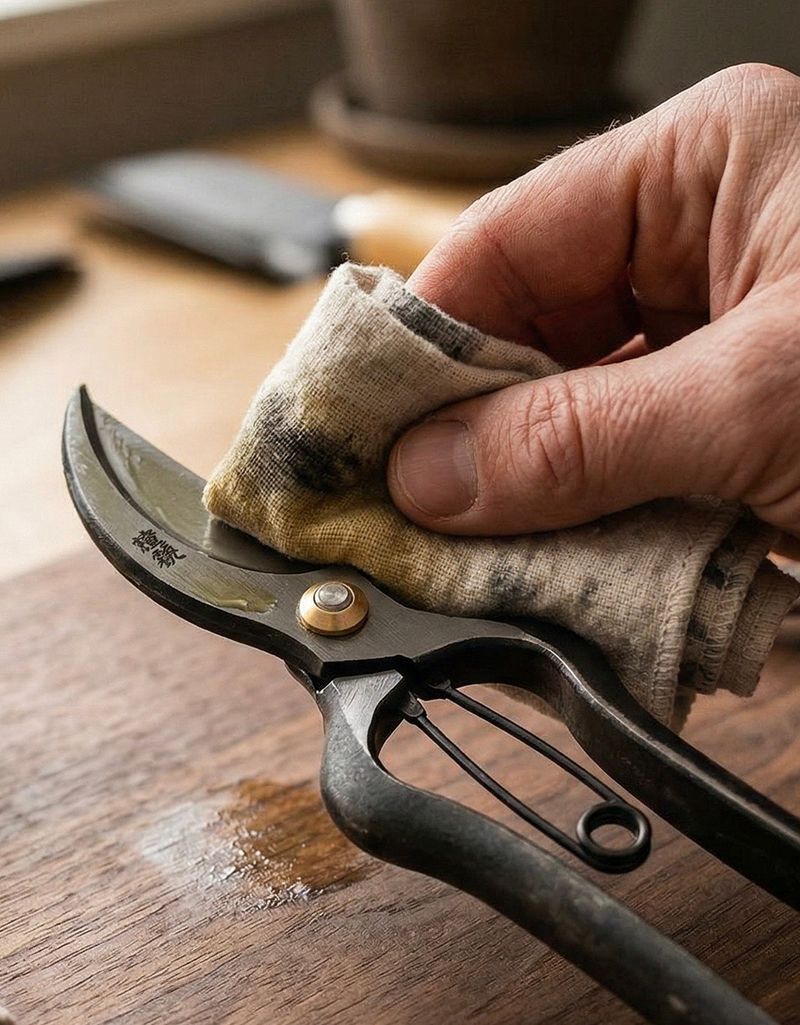
Rust loves a forgotten shovel, especially one tossed into a damp shed with a crust of October mud. Ten minutes of cleaning now means your tools will feel sharp and smooth on that first warm spring morning.
Start by knocking off dried soil with a stiff brush, then wash blades and let them dry thoroughly. Caked dirt holds moisture against metal, and it can carry plant pathogens from one garden season into the next.
Pruners and loppers deserve a disinfecting wipe with rubbing alcohol, which works well without the corrosion bleach can cause. Wipe the blades again with a dry cloth afterward, paying attention to the pivot area where grime hides.
Sharpen dull edges with a file or sharpening stone, following the original bevel angle as closely as you can. Sharp blades make cleaner cuts that heal faster, and your hands will thank you during next year’s pruning.
Rub a thin coat of light oil over metal surfaces to keep moisture from causing rust over winter. Add a drop to the pivot bolt, then open and close the pruners a few times to spread it.
Wooden handles appreciate a light sanding to remove splinters, followed by a coat of boiled linseed oil. Wipe off extra oil, then lay the rags flat outside to dry, since oily linseed rags can self-heat.
Hang long-handled tools on a wall so they stay off cold concrete floors that wick up moisture. I keep a small notebook nearby too, jotting which tools need replacing before the spring sales begin in Michigan.