8 Winter Weeds California Gardeners Should Pull This Month Before They Set Seed
One tiny weed in your flower bed can fling seeds several feet, like a spring-loaded toy in the soil. Another one grows seeds that twist like corkscrews and drill themselves into the ground after a good rain.
Across California, cool-season rains wake up a whole crew of sneaky sprouts while most of us are raking leaves. Some of them can grow from seedling to seed-maker in about six weeks, which feels a little unfair.
I have to admit that I once ignored a patch of cute green rosettes along my garden path. By spring, they had sprinkled their offspring into every pot and sidewalk crack I could find.
You might notice that pulling weeds feels oddly satisfying when the soil is soft and damp from rain. Which of these California troublemakers are already hiding in your yard, waiting for their moment to bloom?
1. Annual Bluegrass
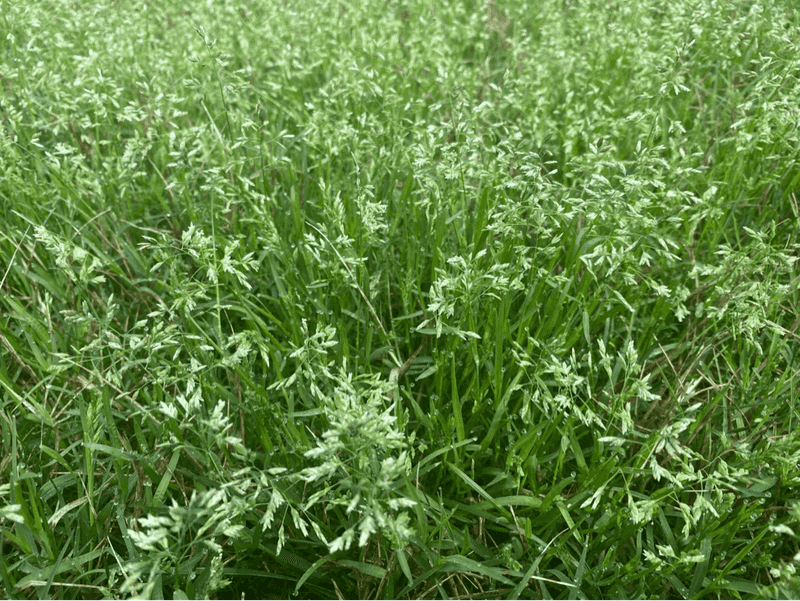
Few weeds blend into a lawn as sneakily as this pale green grass with its fluffy little seed heads. I swear it hides in plain sight, popping up between pavers and along lawn edges after the first rains.
Annual bluegrass, known to scientists as Poa annua, is a cool-season grass that loves damp, shady spots. It often grows in low clumps just a few inches tall, though it can reach about a foot.
You can spot it by its leaf tips, which are shaped like the front of a tiny boat. The blades also look a bit crinkled near the middle, and they feel softer than most lawn grasses.
What surprises me most is how fast it works, setting seed in as little as six to eight weeks. In mild coastal areas, those whitish seed heads can show up during almost any month of the year.
Each plant can drop hundreds of seeds, and many of them stay alive in the soil for years. That seed bank is the reason one forgotten patch can turn into a much bigger headache next season.
Personally, I like to pull clumps after a rain, when the shallow roots slide out with little effort. A narrow hand weeder helps you lift the whole clump without leaving broken pieces behind in the lawn.
You can also reduce future trouble by watering less often, since soggy turf gives this grass a head start. Deep, infrequent watering helps your lawn grasses grow stronger roots and crowd out the newcomers over time.
2. Common Groundsel
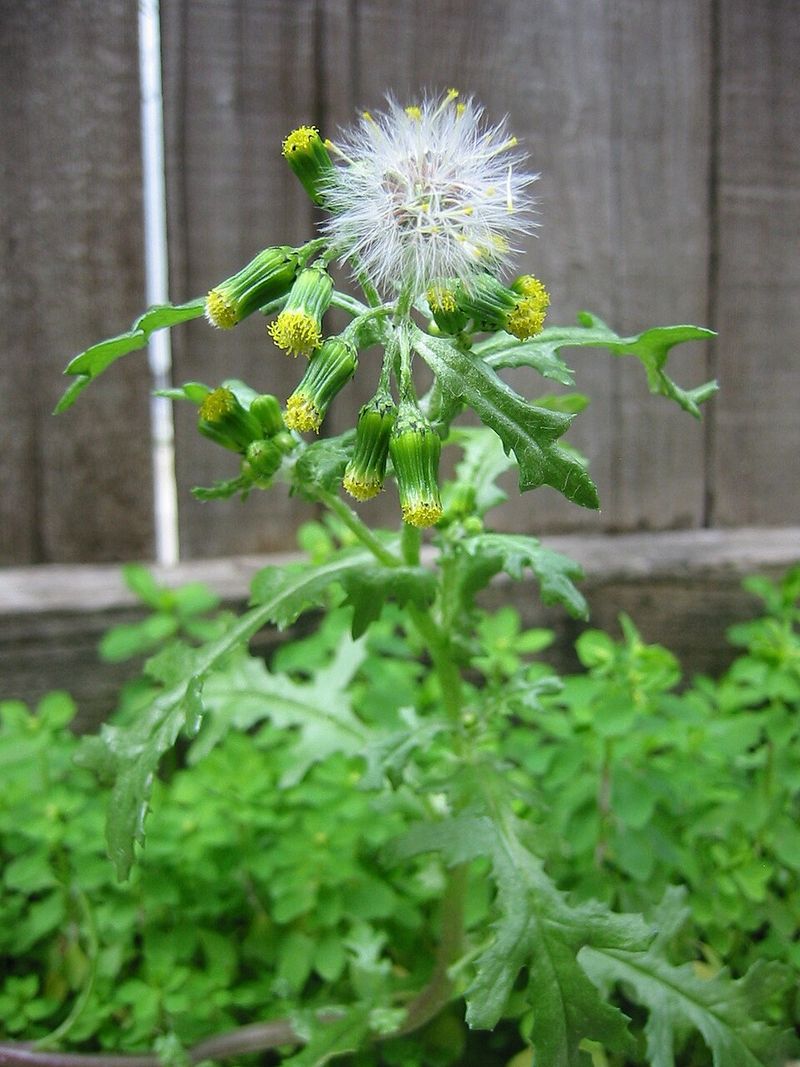
Blink twice and common groundsel goes from a tidy little seedling to a plant covered in fluffy white puffs. Honestly, this weed seems to run on fast-forward, especially when cool weather and steady moisture settle in.
Scientists call it Senecio vulgaris, and it belongs to the huge sunflower family along with daisies and asters. Its leaves are deeply toothed and lobed, often with a slightly fuzzy look when the plant is young.
Small yellow flower heads appear in clusters, but they rarely open fully, so they look like little brushes. Within days, those heads turn into white seed puffs that ride the breeze much like dandelion fluff.
Weed experts at the University of California note that groundsel can go from seed to seed in a few weeks. That means several generations can pop up in one cool season if nobody steps in to stop them.
There is another good reason to pull it promptly, especially if horses or goats graze near your yard. The plant contains compounds called pyrrolizidine alkaloids, which can harm the liver of livestock over time.
I like to grab it while the flowers are still closed, because ripe puffs scatter seeds with every tug. Pop pulled plants straight into a bag, since flowering groundsel can still mature seeds after you yank it.
Wear gloves if you have sensitive skin, and toss the bag in the green waste rather than your compost. Home compost piles rarely get hot enough to stop those tough seeds from sprouting again next winter.
3. Little Mallow
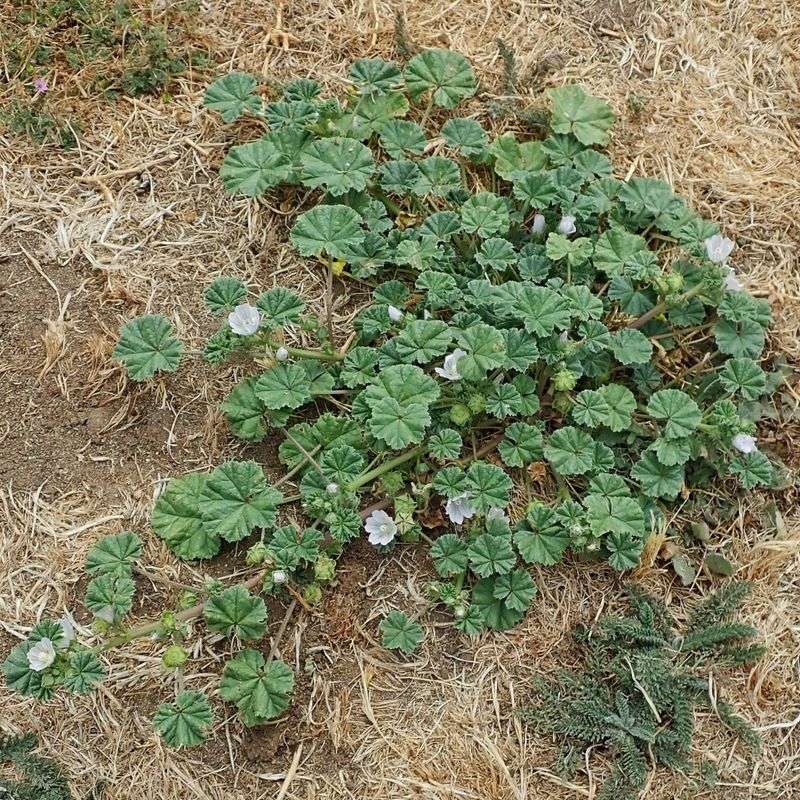
Flip over the tiny round fruit of this weed and you will see a miniature wheel of cheese. No wonder so many gardeners call little mallow by its nickname, cheeseweed, instead of its proper name.
Its scientific name is Malva parviflora, and it pops up in yards and vacant lots across much of the state. The leaves are round with shallow lobes and crinkly edges, a bit like a pleated paper fan.
Seeds usually sprout in fall and winter, though you can find new seedlings during many months of the year. Young plants look harmless, but they quickly build a thick taproot that grips the soil like a rope.
I have to admit that I once let a mallow grow for a few months to see what happened. By late spring, I needed a shovel and a lot of patience to pry that stubborn root loose.
Small pale pink or white flowers appear before those cheese-shaped fruits, which break apart into many separate seeds. Those hard-coated seeds can stay viable in soil for years, so every plant you remove now matters later.
Pull mallow when the plants are small and the soil is moist, gripping low near the base of the stem. A hori hori knife or a sturdy dandelion tool helps you lift the taproot without snapping it halfway.
If the root breaks, older plants can sometimes resprout, so check the same spot again in a few weeks. A layer of mulch over bare soil afterward makes it harder for new seedlings to find light and space.
4. Hairy Bittercress
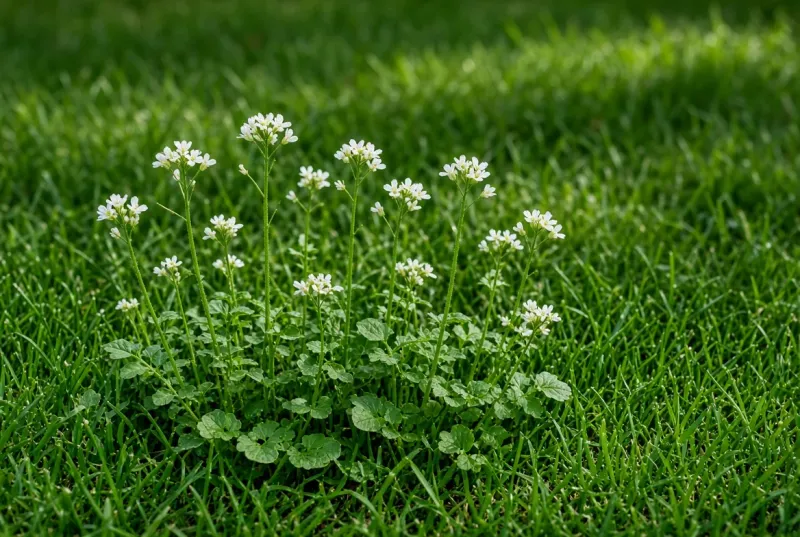
Brush past a ripe hairy bittercress plant and it might pelt your ankles with tiny seeds like confetti. Those slender pods split open with a snap, sending seeds flying up to several feet away from the plant.
Cardamine hirsuta is a small member of the mustard family, and it loves cool, moist weather and bare soil. It forms a flat rosette of leaves made of small rounded leaflets lined up along each little stem.
Tiny white flowers with four petals rise on thin stems, often when the plant is only a few inches tall. What surprises me most is how fast those flowers turn into skinny upright pods that are ready to burst.
Nursery pots are one of its favorite hiding spots, so check new plants before you set them in beds. I like to pluck any rosettes from the pot surface right in the garden center parking lot.
Pulling is simple because the roots are shallow, but timing matters far more than muscle with this weed. Once pods form, even a gentle tug can trigger them, so grab plants before any flowers open.
Fun fact for curious cooks, the young leaves are edible and taste peppery, a little like garden cress. Only harvest from areas free of pesticides and pet traffic, and identify the plant carefully before taking a bite.
After weeding, cover bare patches with a couple inches of mulch to block light from new seedlings below. Repeat a quick walk-through every week or two through late winter, since fresh rosettes keep sprouting after rains.
5. Henbit
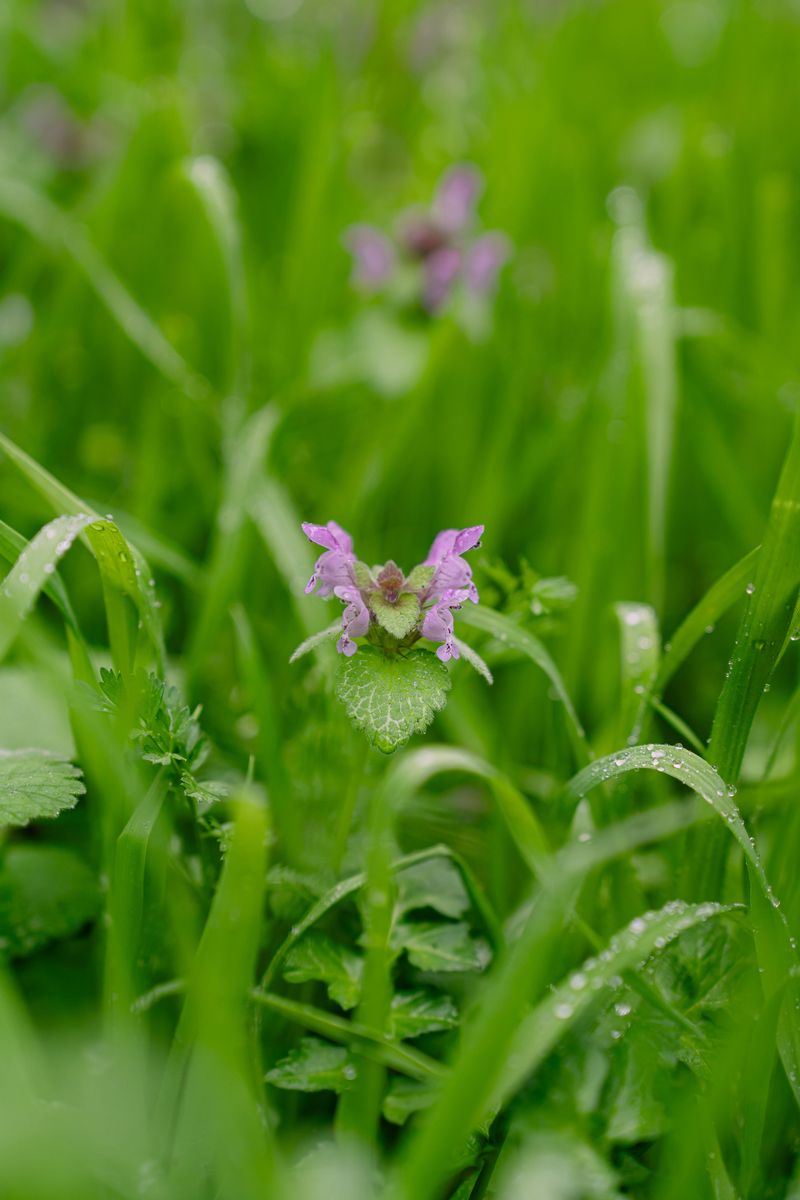
Bees adore those tiny pinkish purple flowers, which is exactly why henbit fools so many gardeners into keeping it. I get it, because a carpet of blooms looks sweet, but each flower is busy making seeds for later.
Henbit, or Lamium amplexicaule, belongs to the mint family, so its stems are square when you roll them. The rounded, scalloped leaves wrap around the stem in pairs, as if the plant is giving itself a hug.
It sprouts in fall and grows slowly through cool weather, then shoots up flowers in late winter and spring. Some of its flowers stay closed and pollinate themselves, so seed production happens with or without bees.
Henbit loves thin lawns and freshly turned soil, where it can spread into low mats across bare ground. Left alone, a few plants can fill in a whole corner of a bed before you notice the problem.
You need to pull it while the stems are short, because longer stems sprawl and tangle with your flowers. Grab the plant near the soil line and wiggle gently, since the roots are fibrous and fairly shallow.
A sharp hoe also works well on larger patches, as long as you slice just below the surface. Rake up the pieces afterward so any developing seeds do not fall back onto your freshly cleared soil.
Thickening your lawn with fall overseeding is one of the best long-term ways to crowd henbit out. Healthy turf leaves fewer bare spots, and that means fewer open invitations for this sneaky little mint relative.
6. Shepherd’s Purse
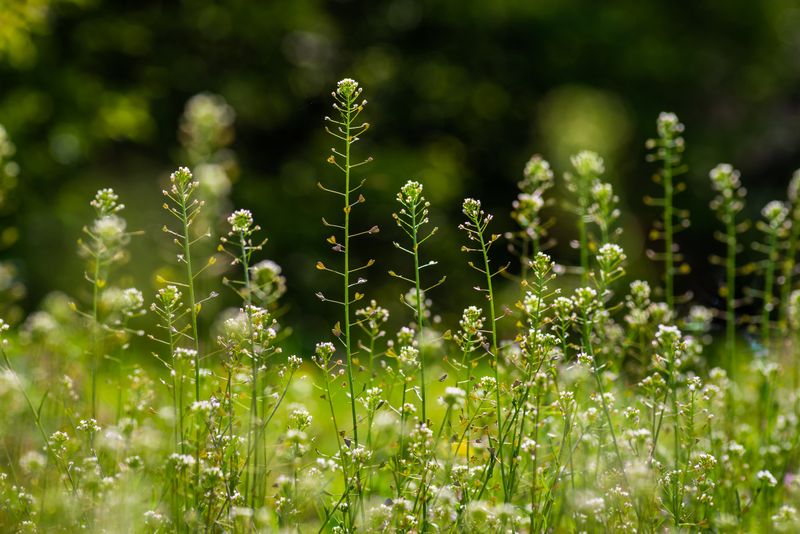
Hold up a stem of shepherd’s purse and you will see dozens of tiny green hearts dangling along it. Those flat, triangular pods reminded people long ago of the small leather pouches that shepherds carried.
Capsella bursa-pastoris is a mustard family weed that starts as a flat rosette, often mistaken for young dandelion. The leaves vary a lot, from deeply lobed to nearly smooth, which makes identification a fun puzzle.
Thin flower stalks rise from the center, topped with clusters of tiny white flowers with four petals each. The flowers keep opening at the top while pods ripen lower down, so seeds drop for weeks.
A single large plant can produce tens of thousands of seeds, according to many university weed guides. Those seeds can rest in the soil for years, which explains why the same bed keeps sprouting them.
I love how easy this one is to pull, especially when the rosette is still flat against the ground. The taproot is fairly slender, so a firm grip and a steady upward tug usually brings out everything.
Shepherd’s purse can also host pests and diseases that bother cabbage family crops in the vegetable patch. Clearing it from around your winter broccoli is a smart move for healthier harvests later in the season.
Check sunny edges of paths and beds every week, since new seedlings tend to appear after each rain. Bag any plants that already have heart-shaped pods, because the seeds can finish ripening on pulled stems.
7. Filaree
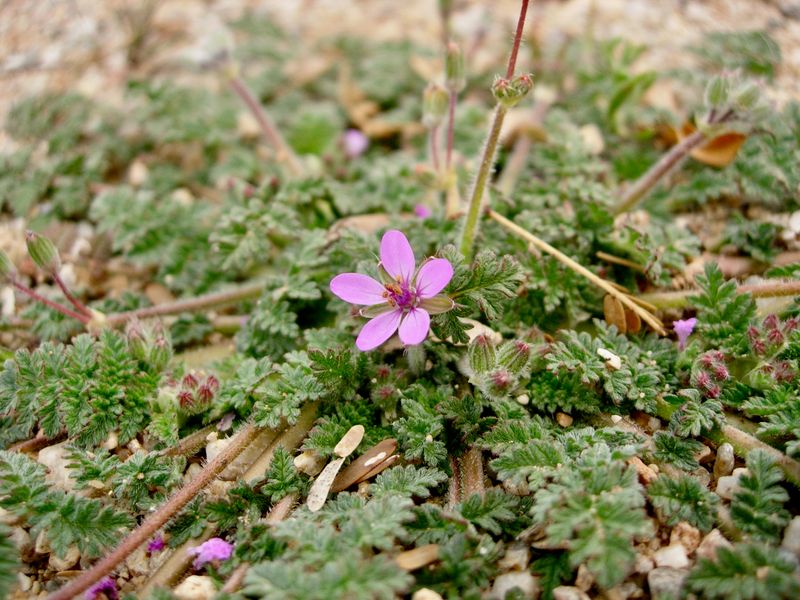
Few seeds are as clever as filaree seeds, which come with a tail that twists like a corkscrew. When humidity changes, that tail coils and uncoils, literally screwing the seed down into the soil.
Redstem filaree, or Erodium cicutarium, came from the Mediterranean region and now grows widely across California. Its leaves are finely divided and lacy, forming a low rosette that looks a bit like a carrot top.
Small pink to lavender flowers with five petals appear in late winter and spring on short reddish stems. Afterward, long beak-shaped fruits form, which explains the other common name, stork’s bill, for this plant.
I would not let it go to seed near a dog run, since those pointed seeds can poke into fur. Sharp seeds may work into paws or ears, so a quick trip to the vet is sometimes needed.
Filaree sprouts with the first cool-season rains and quietly builds a sturdy taproot over the winter months. Small rosettes come out easily, but older plants hold on tighter and often snap off at the crown.
You need to slide a weeding tool down beside the root and lever it up rather than yanking. Moist soil makes a huge difference, so plan your filaree patrol for the day after a good soaking rain.
Mowing low plants rarely helps, because filaree hugs the ground and keeps flowering below the mower blade. Hand removal before the beaked fruits form is the surest way to keep those drilling seeds out of your yard.
8. Prickly Lettuce
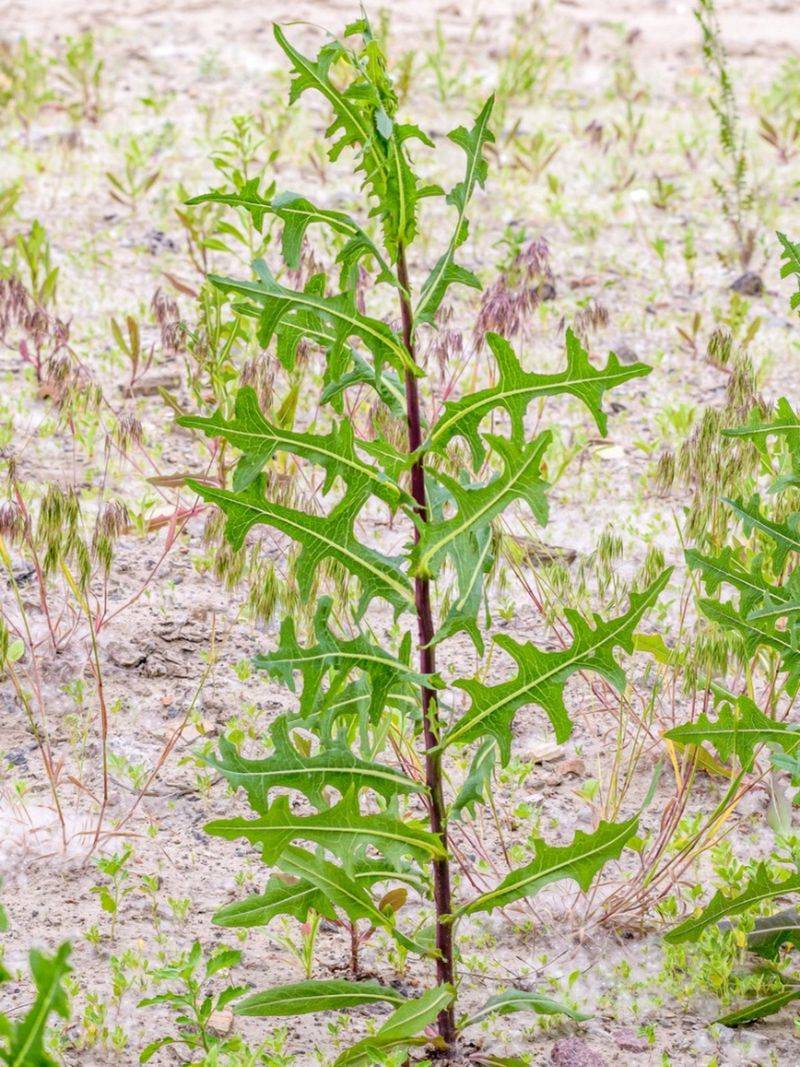
Turn a prickly lettuce leaf over and run a finger along the middle vein to feel a row of spines. That bristly midrib is the easiest clue, since young plants otherwise look a lot like garden lettuce or dandelion.
Lactuca serriola is a wild relative of the lettuce in your salad, and it oozes milky sap when broken. Seeds often sprout during the cool months, forming low rosettes before the plant sends up a tall stalk.
Personally, I find the nickname compass plant charming, because older leaves often twist to face north and south. In full sun, those turned leaves line up edge-on, which helps the plant handle hot afternoon light.
By summer, a mature plant can stand several feet tall with many small, pale yellow flower heads. Each one releases seeds with fluffy parachutes, so a single plant can seed a whole neighborhood on the breeze.
Pulling is much easier now, while the rosette is small and the taproot is still short and flexible. Wear gloves, because the milky sap is sticky and those spines can feel scratchy against bare skin.
A dandelion fork works nicely for older rosettes, since you can loosen the soil before lifting the root. Try to remove the crown, because plants cut off at the surface may send up new shoots later.
Keep an eye on fence lines and roadside edges, where this weed often gets started before moving into beds. A few minutes of pulling now spares you from wrestling a towering, prickly stalk once hot weather arrives.