Virginia Has Its Own Scorpion, and Southwest Virginians Are Finding It Indoors
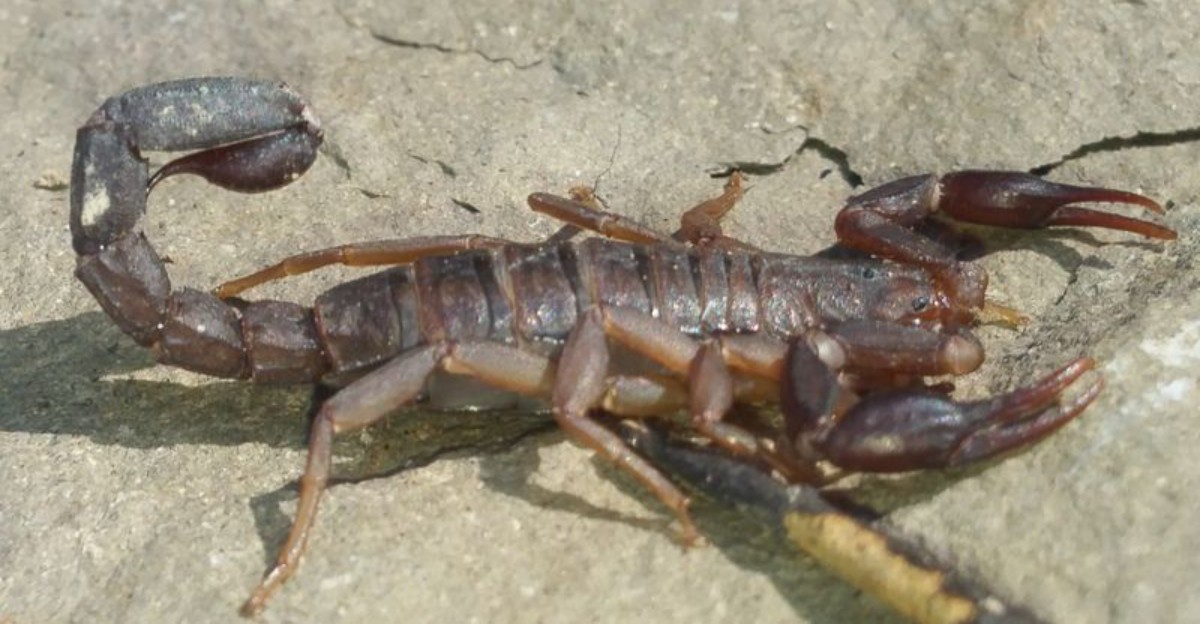
A real, wild scorpion lives in the mountains of Virginia, and it has been here all along. No desert required.
The first time I heard that, I laughed. Then a friend near Abingdon sent me a photo of one crawling across her bathroom tile at midnight.
Truth be told, this little critter is shy, small, and about as long as a paper clip. It hides under logs, loose bark, and damp leaves on wooded hillsides. Most folks walk past dozens of them on a hike and never notice a single one.
So why does it keep showing up in kitchens, basements, and bathtubs? And should you worry if you spot one near your slippers? I had plenty of questions, and the answers surprised me more than the scorpion did.
That Little Brown Scorpion on Your Floor Is a Local
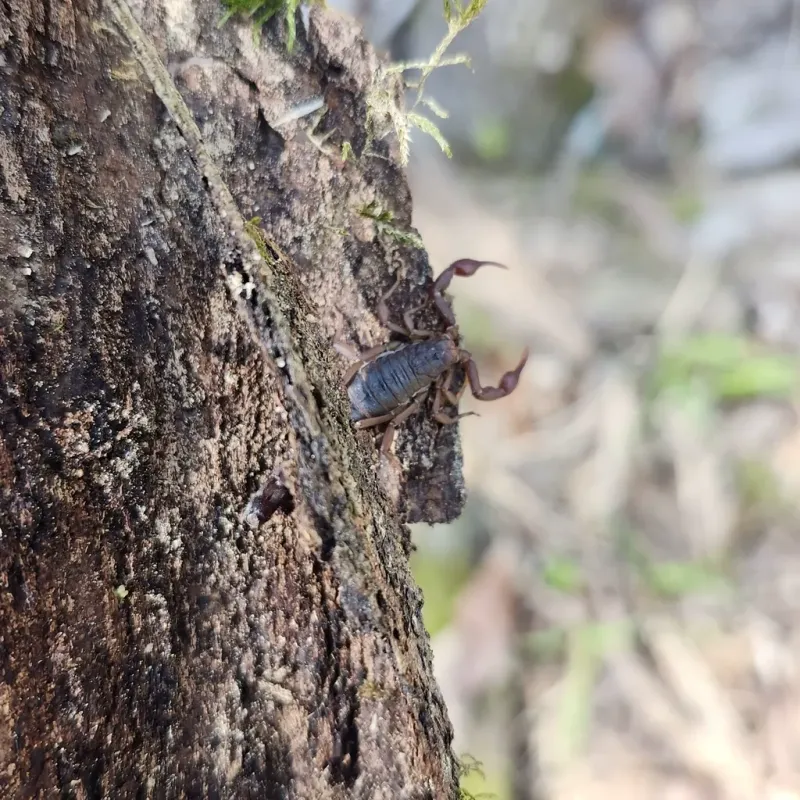
Most people expect scorpions in Arizona, not Appalachia. Yet the critter you found by the back door is most likely the Southern Devil Scorpion, also called the Southern Unstriped Scorpion.
Scientists know it as Vaejovis carolinianus.
It is the only scorpion species native to Virginia. Its range stretches across the southeastern United States, from Kentucky and Tennessee down through the Carolinas, Georgia, and Alabama.
It mostly shows up in the far southwest corner, in counties like Lee, Scott, Wise, and Washington.
Here is a fun bit of trivia for your next cookout. Unlike desert scorpions, this one likes humidity and shade.
Moist hardwood forests and rocky hillsides in the Appalachian region suit it well.
That surprises plenty of gardeners. We tend to link scorpions with cactus and sand, so seeing one near a fern bed feels strange.
But this species has been living quietly in these hills for a very long time.
So if you spot one, try not to assume it hitched a ride in a moving box. It is far more likely a neighbor from the woods next door.
Knowing it belongs here helps you stay calm. It also helps you make smart choices about keeping it outside, where it does useful work eating small bugs.
How to Tell a Southern Devil Scorpion Apart From Other Bugs
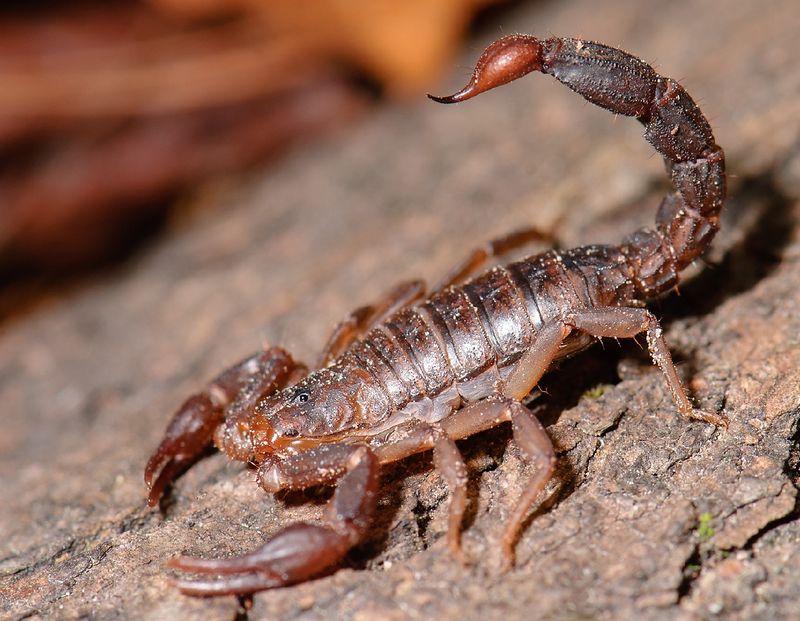
Size is the first clue. Adults usually measure about 1 to 1.5 inches long, though a few stretch a bit longer.
You could easily cover one with a quarter and a nickel side by side.
Color comes next. The body is a fairly even brown, ranging from reddish to dark chocolate.
The legs and pincers often share that reddish-brown tone.
Look closely at the pincers. They are thick and chunky for such a small animal.
The tail has no stripes, curls up over the back, and ends in a tiny stinger.
People sometimes confuse scorpions with pseudoscorpions. Those are much smaller, often less than a quarter inch, and have no tail at all.
They are harmless and actually eat tiny pests like book lice.
Another lookalike is the whip scorpion, though those are rare this far north. They have a long, thin tail like a string, not a curved stinger.
My tip? Snap a photo before you do anything else.
A clear picture lets your local Virginia Cooperative Extension office confirm what you found.
One more neat trick fascinates kids. Scorpions glow blue-green under a UV flashlight because of compounds in their outer shell.
A night walk with a blacklight can reveal them hiding on rocks and logs.
Dry Spells and Damp Basements Pull These Scorpions Indoors
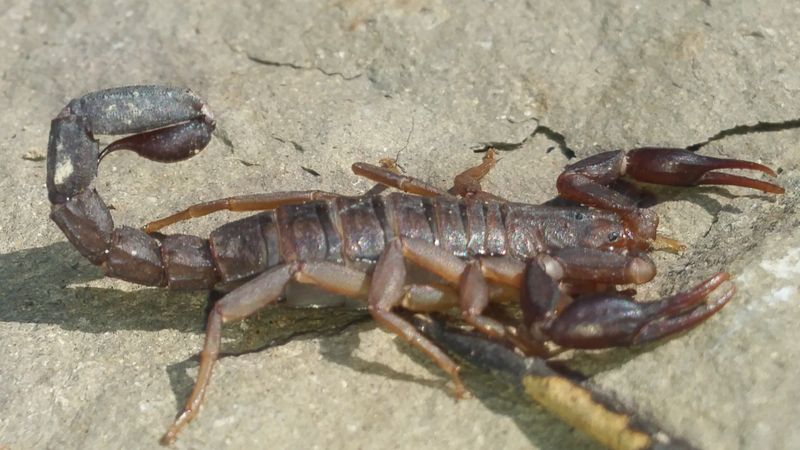
Nobody invited them, but scorpions follow comfort. When outdoor conditions turn too dry, or the season shifts, they wander in search of moisture, shelter, and food.
A house can look like a perfect hideout. Cool, damp basements and crawl spaces feel a lot like the underside of a mossy log.
Leaky pipes under sinks add even more appeal.
Their flat bodies help them squeeze through gaps as small as about 1/8 inch. That means cracks around doors, windows, foundations, and utility lines can all serve as entry points.
Food matters too. Scorpions hunt crickets, spiders, roaches, and other small insects.
If your home has plenty of those, it becomes a buffet with a roof.
Homes built near wooded hillsides tend to see more visitors. That makes sense, since the woods are their natural home.
A house tucked into the trees sits right in the middle of their neighborhood.
I find it helpful to think like a scorpion for a minute. Where is it dark, damp, and quiet?
Bathrooms, laundry rooms, basements, and closets top the list.
Indoor sightings often happen at night. These are nocturnal animals, so they move after dark and hide during the day.
A late trip to the kitchen is when many folks meet one.
A Southern Devil Scorpion Sting Hurts but Rarely Causes Trouble
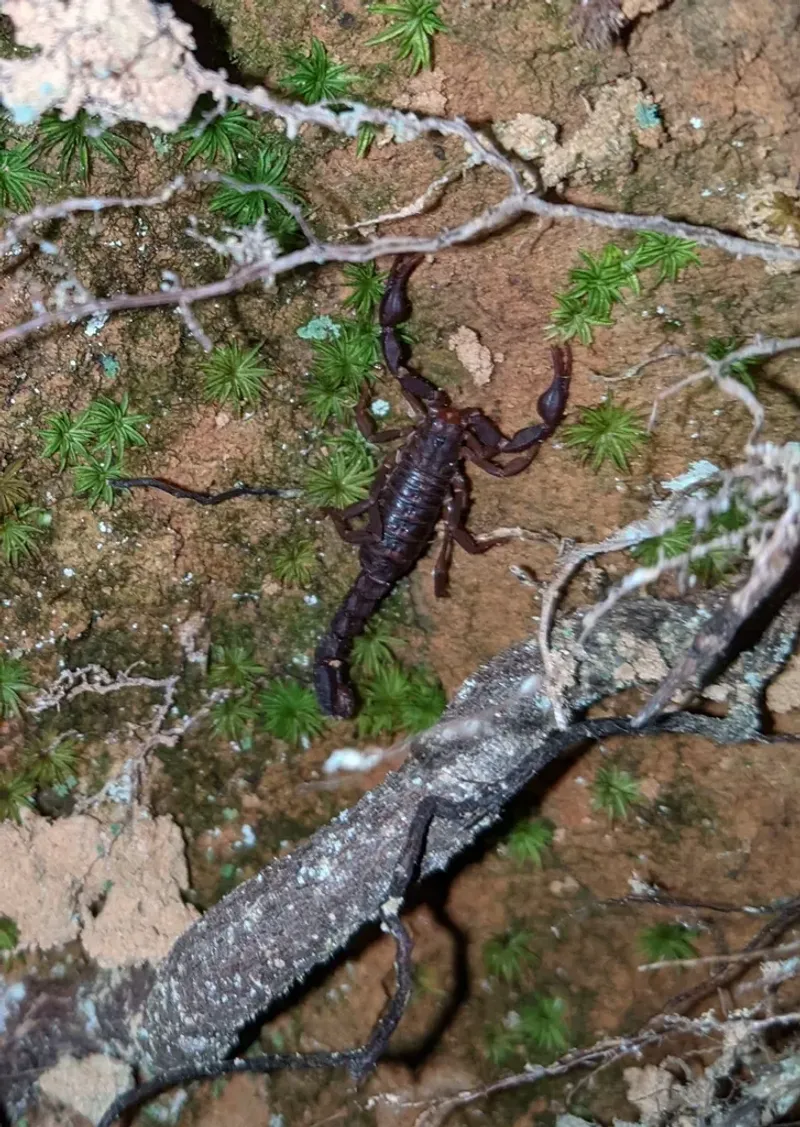
Take a breath. Medical and university experts consider this species medically unimportant for most healthy people.
A sting usually feels a lot like a bee or wasp sting. Expect sharp pain, some swelling, and maybe tingling or numbness around the spot.
These symptoms often fade within an hour or up to a day.
First aid is simple. Wash the area with soap and water, then apply a cool compress or ice wrapped in a cloth.
An over-the-counter pain reliever can help with soreness.
Watch closely for allergic reactions, though. Trouble breathing, swelling of the face or throat, hives, or dizziness call for emergency care right away.
People allergic to insect stings should take extra care.
Young children and older adults deserve close watching too. If you feel unsure, call Poison Control at 1-800-222-1222.
They help for free, any time of day.
Stings are uncommon in the first place. This scorpion prefers to run and hide, and it stings mainly when pressed or trapped, like inside a shoe or a folded towel.
Making venom costs it energy, so it saves its sting for real emergencies.
Knowing this takes a lot of fear out of the situation. Respect it, but there is no need for panic.
Caulk and Weatherstripping Close the Scorpion Front Door
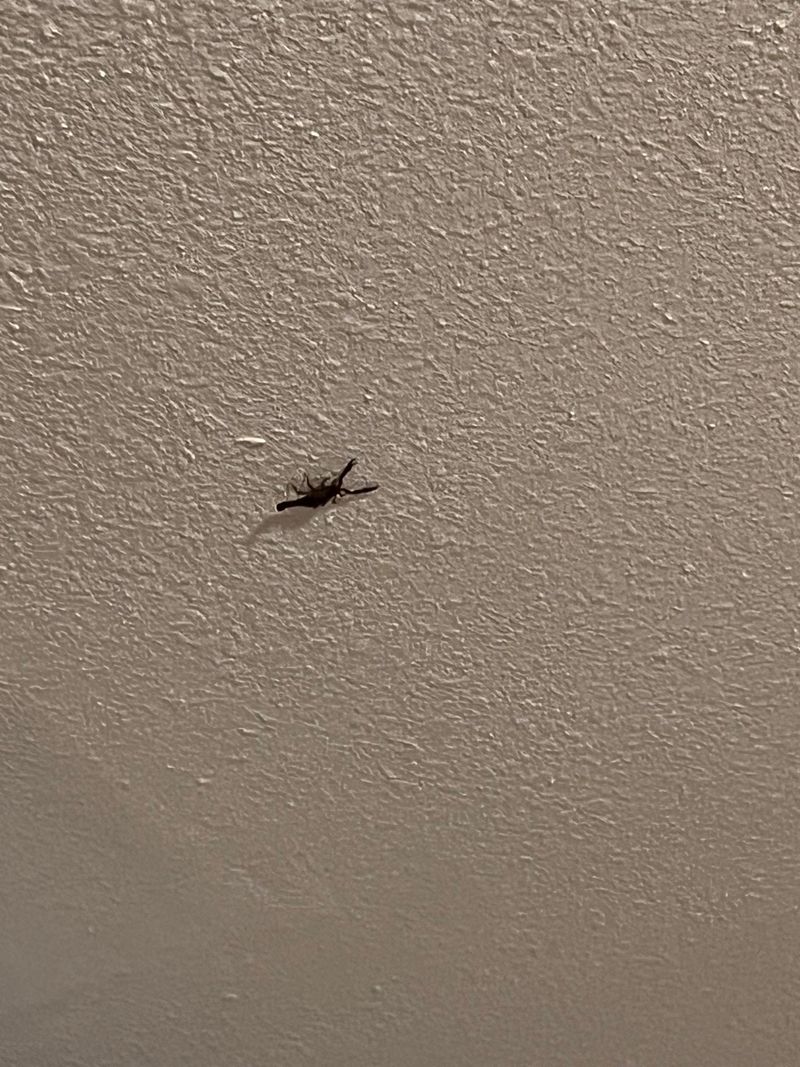
Let me save you some trouble. Sprays alone rarely solve the problem, because scorpions keep coming as long as the doors stay open.
Start with a slow walk around your house. Look for cracks in the foundation, gaps under doors, and spaces where pipes, cables, and dryer vents enter the walls.
Silicone or acrylic caulk works well for small cracks and seams. Door sweeps close the gap at the bottom of exterior doors.
Weatherstripping tightens up loose window frames.
Bigger openings around plumbing can be packed with copper mesh, then sealed with caulk or expanding foam. Check that window and vent screens are intact, with no tears.
Remember that tiny 1/8 inch rule. If a credit card slides into a gap, a young scorpion might too.
Indoors, check under sinks and behind washing machines. Gaps where pipes come through the wall make handy hallways for bugs of all kinds.
Bonus perk: this same work keeps out spiders, crickets, ants, and mice. It even trims your heating and cooling bills.
Fall is a smart time for sealing projects in Southwest Virginia. Mild days make caulk cure well, and you get ahead of critters seeking shelter before cold weather arrives.
Woodpiles and Thick Mulch Near the Foundation Invite Scorpions
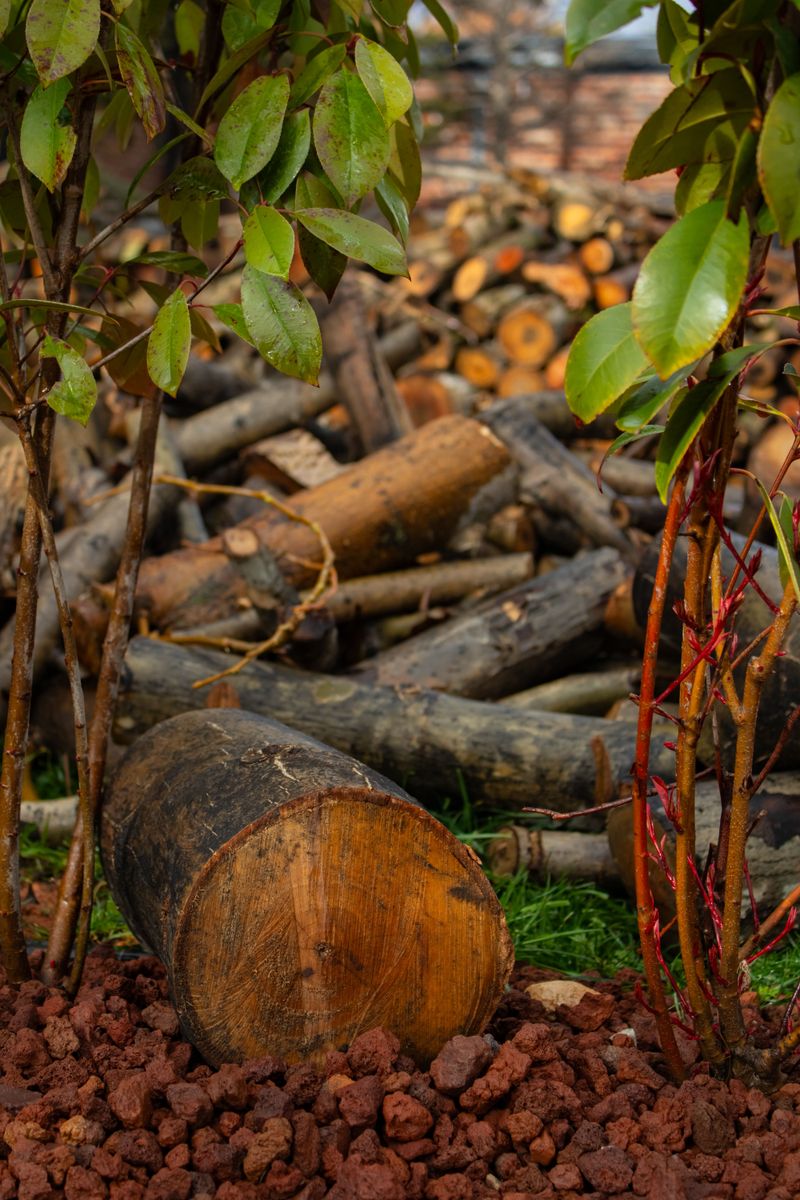
In my own yard, the firewood stack was a bug hotel. Lift a log and you would find beetles, spiders, and centipedes all sharing the space.
Scorpions love that kind of hideout. Woodpiles, rock piles, landscape timbers, and heaps of leaves give them shade and moisture right next to your walls.
Move firewood at least 10 to 20 feet from the house, and raise it off the ground on a rack. Bring in only what you will burn soon, and knock each piece against the ground first.
Mulch deserves a second look too. Keep it thin near the foundation, about 2 to 3 inches deep in beds, and pull it back several inches from the siding.
Some gardeners use a narrow gravel strip right along the house.
Trim shrubs and tree limbs so they do not touch walls or the roof. Branches and vines act like bridges into windows and gaps.
Leaf litter still has a place in your garden. It feeds soil and shelters pollinators and fireflies.
Just keep those cozy layers out in the beds, away from the doorways.
Small layout changes make a big difference. You keep a wildlife-friendly yard while giving scorpions fewer reasons to camp by your foundation.
Fixing Leaky Spigots and Running a Dehumidifier Helps a Lot
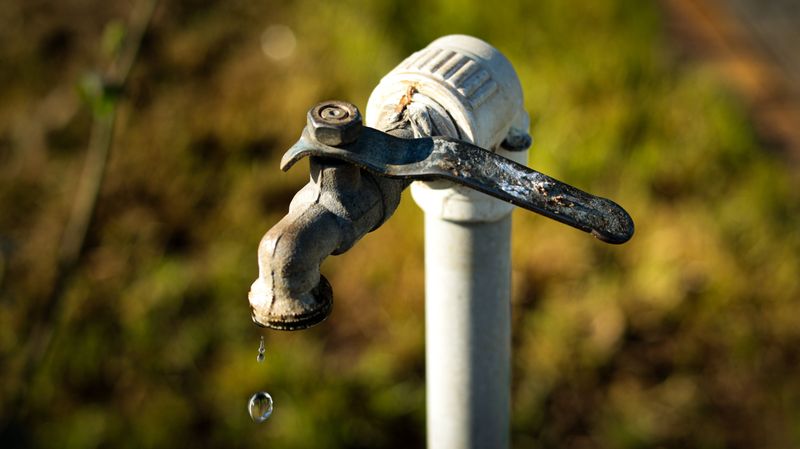
Water is the magnet. This species dries out easily, so it seeks damp spots wherever it can find them.
Outside, check hose bibs, AC condensate lines, and gutters. A dripping spigot can keep the soil soaked next to your foundation all summer long.
Gutters should send water several feet away from the house. Downspout extensions are cheap and easy to install.
Make sure soil slopes away from the walls so puddles do not linger.
Inside, a dehumidifier can be a game-changer for basements and crawl spaces. Aim for humidity around 50 percent or lower.
Your stored boxes and tools will thank you too.
Fix drips under kitchen and bathroom sinks. Run bathroom exhaust fans during and after showers.
Wipe up standing water around washing machines.
Drier spaces also mean fewer crickets, silverfish, and roaches. With less food around, scorpions find your home far less appealing.
Watering habits matter as well. Water garden beds in the morning so the surface dries by evening, when scorpions start roaming.
Soaker hoses aimed at plant roots beat sprinklers that wet the siding.
None of this takes a pro. A free afternoon, a wrench, and a few supplies from the hardware store cover most of it.
Shake Out Those Garage Boots Before You Slide Your Feet In
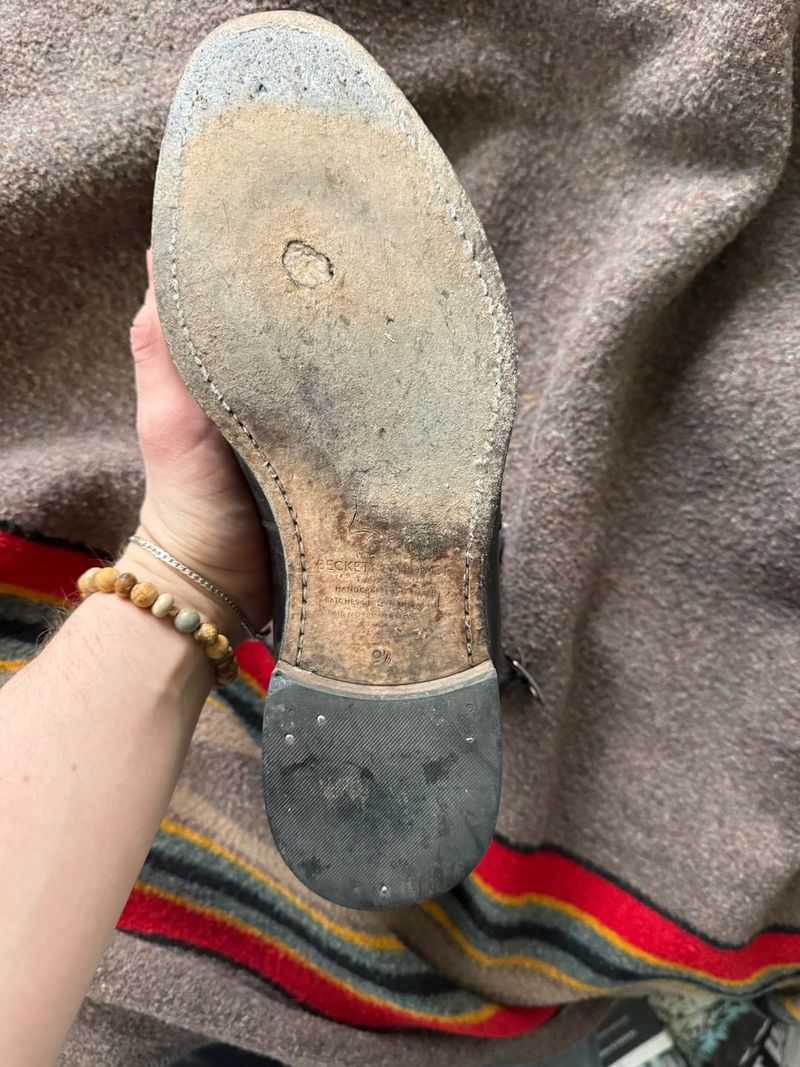
Old mountain wisdom says to check your shoes, and it holds up. Scorpions hunt at night, then tuck into dark, snug places by morning.
Boots by the back door, gloves in the shed, and towels on the floor all make tempting daytime hideouts. Give them a firm shake before use.
Keep beds pulled away from walls, with blankets off the floor. Store shoes on racks or in closed bins.
Clear clutter in basements, garages, and closets so hiding spots shrink.
Found one inside? Place a glass jar over it, slide stiff paper underneath, and carry it outside to a wooded edge.
A long pair of tongs works too.
Sticky traps along baseboards can show where scorpions travel. They also catch the insects that scorpions eat.
If you see several every week, call a licensed pest professional. Ask about sealing and moisture work first, not just spraying.
My honest takeaway? This scorpion is a quiet native neighbor that eats pests and mostly wants to be left alone.
A dry, sealed, tidy home sends it back outside where it belongs.
Share what you learned with friends in Southwest Virginia. A little knowledge turns a midnight scare into a pretty cool story.