The Right Time to Blow Out Your Michigan Sprinkler System Before the First Hard Freeze
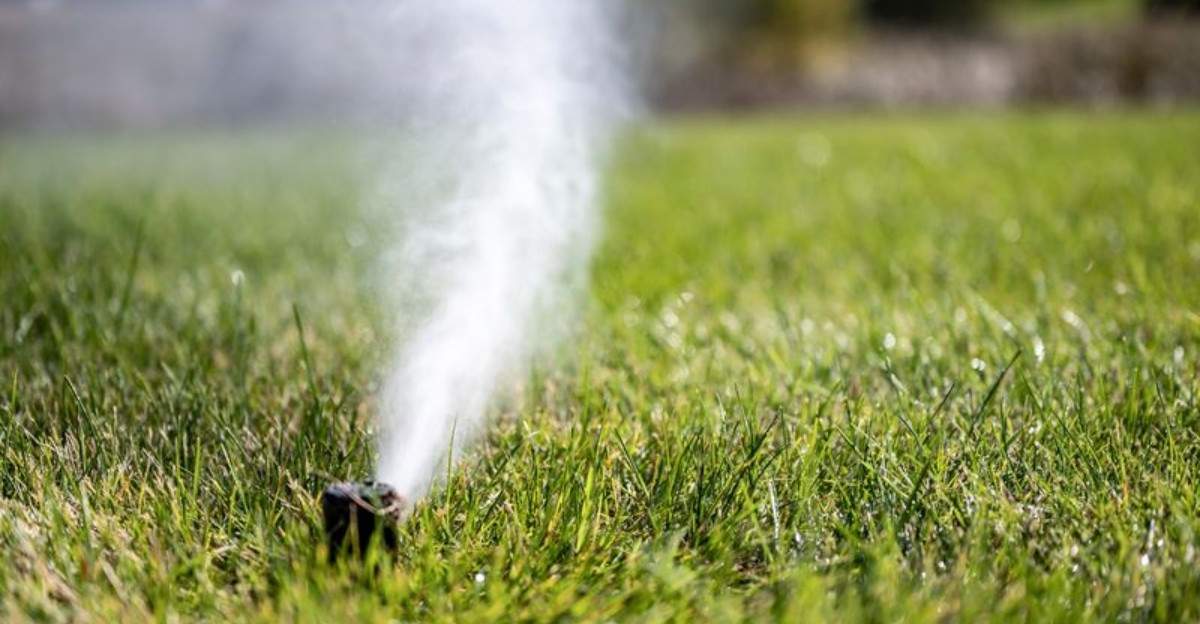
Water grows by about nine percent when it turns to ice. That tiny stretch is strong enough to split plastic pipe right down the seam.
I learned this the hard way one April. I flipped on the water, and a small fountain bubbled up in the middle of my lawn where no sprinkler head belonged.
Here in Michigan, that kind of spring surprise often starts months earlier, on one cold autumn night. The pipe looks fine all winter because the crack hides underground. You only find out when the water comes back on and the repair bill shows up.
The tricky part is the calendar. Go too early and your grass misses a few weeks of fall watering. Wait too long and the ice may beat you to it.
1. A Few Cold Hours Can Crack Those Buried Sprinkler Pipes
Ice is a sneaky plumber’s nightmare. When leftover water freezes inside a sprinkler line, it pushes outward with surprising force, and plastic pipe rarely wins that fight.
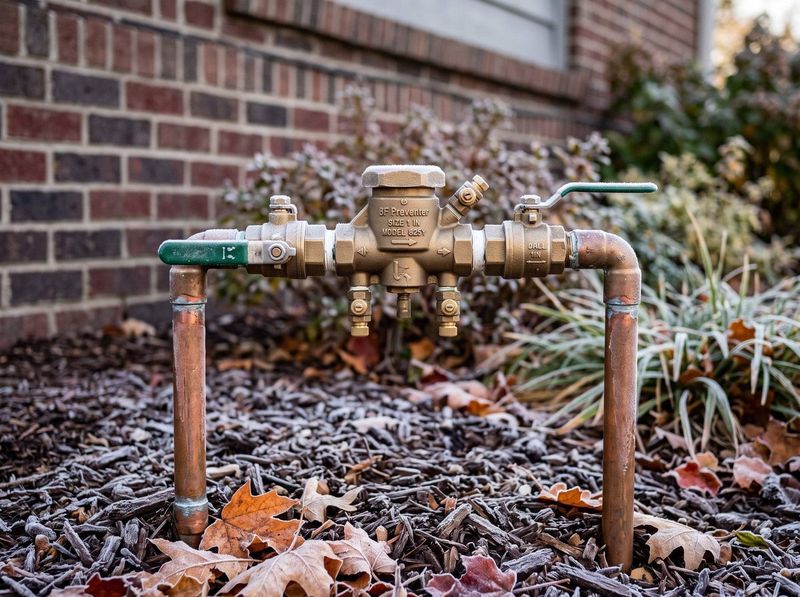
The first parts to suffer are often the ones above ground. Your backflow preventer usually sits near the house, out in the open air with no soil to keep it warm. Brass bodies can crack, and the small springs and seals inside can warp after just one hard night.
Buried lines get a little more protection from the soil. Still, most residential sprinkler pipe sits only 6 to 12 inches deep, which is shallow by winter standards. Frost in many Michigan yards reaches much deeper than that by January.
Sprinkler heads and valves also hold water in tiny pockets. A frozen head can split its casing, and a valve can crack along its bonnet.
What makes freeze damage so annoying is how quiet it stays. Nothing leaks while everything sits frozen and shut off.
Then spring arrives, you open the main valve, and puddles, soggy patches, or weak spray reveal the trouble. A little effort in fall saves you from playing detective in April.
2. Mid-October Is the Sprinkler Blowout Sweet Spot for Most Lawns
Most lower Michigan homeowners land in the right window from early October through late October. Northern Lower Michigan and the Upper Peninsula often need to move sooner, sometimes by late September.
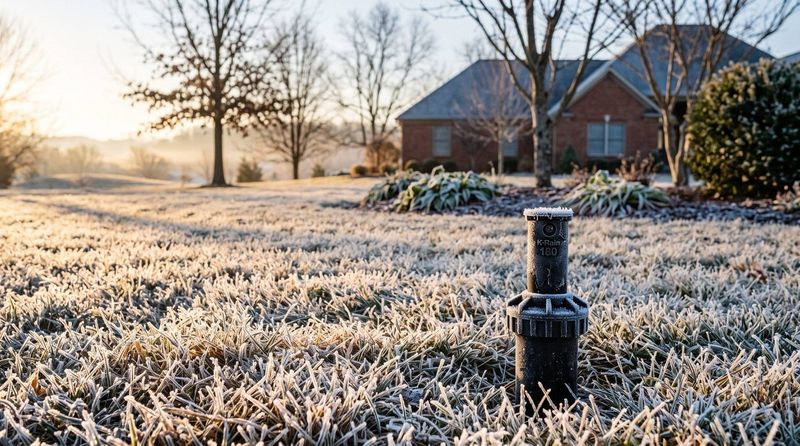
So what counts as a hard freeze? Weather forecasters generally use about 28 degrees or colder lasting several hours. A light frost near 32 degrees usually does not reach buried pipes, though it can bother exposed parts like the backflow.
Average first freeze dates help you plan. Detroit and Ann Arbor tend to see their first 32-degree night around mid to late October.
Grand Rapids and Lansing often run a bit earlier, while spots like Marquette and Gaylord can chill down in late September or early October.
Lakeshore towns sometimes stay warmer longer, since the big lakes hold summer heat. Low-lying inland areas often frost first.
My rule of thumb is simple. Once nights start dipping into the 30s regularly, and your grass growth slows down, it is time to schedule the job.
Your lawn won’t mind. Cooler fall weather and rain usually provide enough moisture once the system goes quiet.
3. Waiting for the Freeze Warning Puts Your Backflow Preventer at Risk
Plenty of us like to squeeze every last drop out of the season. I get it, because a green lawn in October feels like a small victory.
The catch is that the first hard freeze often shows up quickly. A forecast can shift from mild to frosty in a day or two, and Michigan weather is famous for changing its mind.
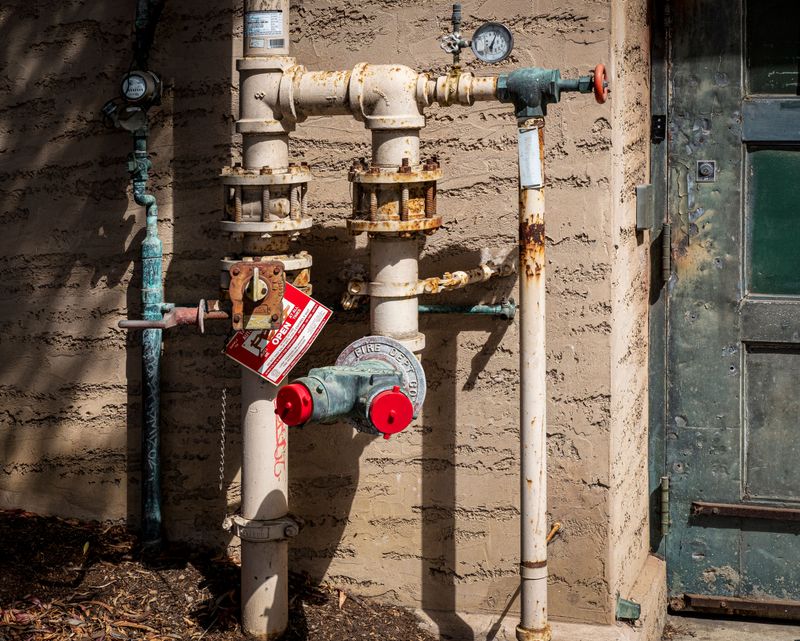
Sprinkler companies also get slammed once cold nights hit the news. Their schedules fill fast, and you could end up waiting a week or more for a spot. Meanwhile, your exposed backflow device sits there holding water.
Booking early gives you breathing room. Many local irrigation pros open their fall calendars in September, and the earliest slots often go to repeat customers.
If a surprise cold snap arrives before your appointment, you still have a quick fix. Shut off the water supply to the system and wrap the backflow in a towel or insulated cover for the night. That buys a little time without replacing the full job.
One cold morning can cost far more than a few weeks of extra watering ever saved.
4. Switching Off the Sprinkler Controller Leaves Water Behind
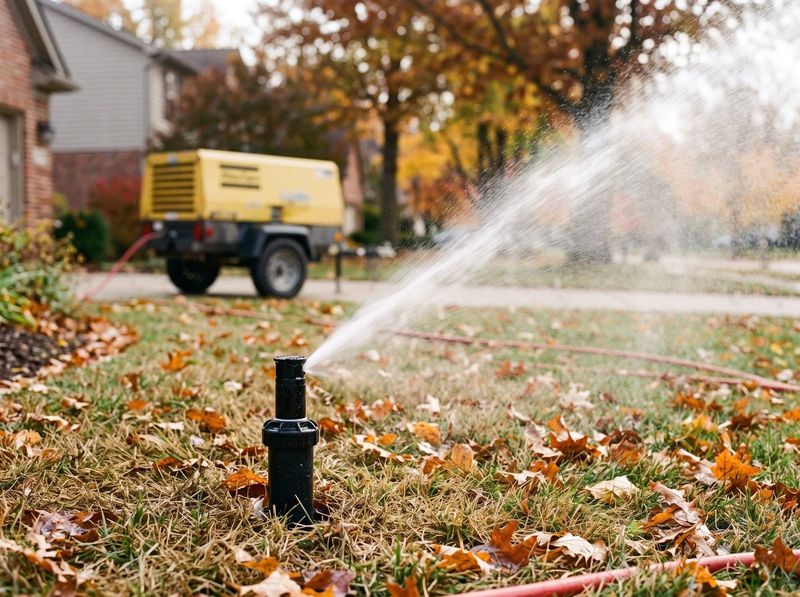
Turning the dial on your controller feels like closing up shop. Unfortunately, the pipes don’t get the memo.
Your controller only tells the valves when to open. Shutting it off stops the schedule, yet every pipe, valve, and head stays full of water from the last cycle.
Some systems have manual or automatic drain valves at low points. Those help, but they rarely clear every line. Water settles in dips, uneven runs, and the bodies of sprinkler heads, especially in yards with slopes or bumpy grading.
Many Michigan installers recommend compressed air for that reason. Air pushes water along the full length of each zone and out through the heads, reaching spots gravity can miss.
Fun fact: a lot of sprinkler systems in colder states are designed with blowout fittings on purpose. Installers expect you to clear the lines each fall.
So go ahead and set the controller to its off or rain setting. Just treat that step as the finish line, not the whole race. Your system needs the water out, not simply the timer quiet.
5. A Big Air Compressor Matters More Than High Pressure
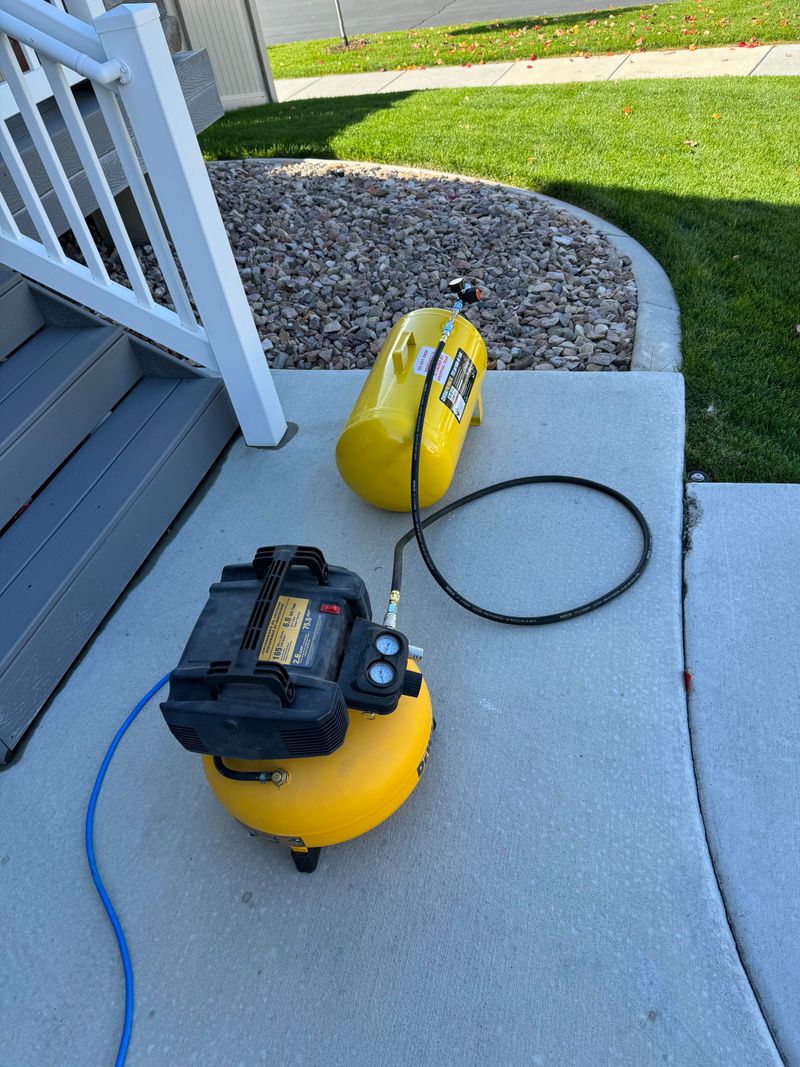
Many DIY attempts stall right here. A small pancake compressor from the garage often runs out of air in seconds, leaving water behind in longer zones.
What you want is volume, measured in cubic feet per minute. Rain Bird and other manufacturers suggest a compressor with plenty of airflow, often a large 50 to 70 gallon tank or a towable rental unit.
Pressure needs a gentle hand. Too much can blow apart fittings or damage heads, so a regulator is a must.
Your basic kit looks like this: A high-volume air compressor, a pressure regulator, and a hose with the right blowout adapter for your system’s fitting.
Safety glasses and hearing protection, since air and debris come out fast and the machine gets loud. A simple map of your zones, so you know where each one runs.
Rental shops in many Michigan towns carry tow-behind compressors each fall. Even so, plenty of homeowners decide a pro visit, often around 75 to 150 dollars, is worth the peace of mind. Either choice works when done carefully.
6. Clearing Each Sprinkler Zone Until Only a Fine Mist Sprays Out
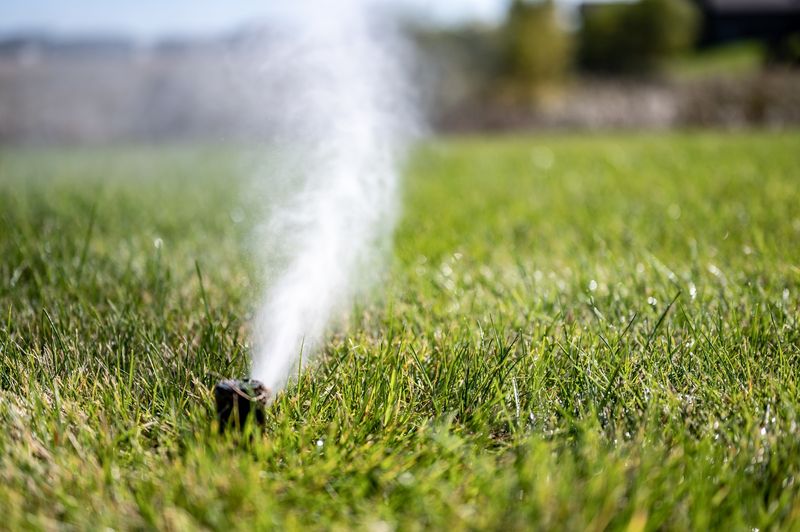
Watching that first sputtering head is oddly satisfying. Water spits, gurgles, and finally fades to a misty puff.
Start by closing the main shutoff valve to your irrigation system. Then connect the compressor at the blowout port located after the backflow, not through the backflow device itself.
Set your regulator low. Many guides suggest about 50 psi for flexible poly pipe, up to about 80 psi for rigid PVC, and around 25 to 30 psi for drip lines.
Open a zone at the controller before you add air. Sending air into a closed system builds pressure with nowhere to go.
Begin with the zone farthest from the compressor and work your way back. Run each one for roughly two minutes, or until the heads release only a light mist.
Avoid running any zone dry for too long. Pipes and heads rely on water for cooling, so friction from air alone can heat parts up.
Once every zone is done, make a second quick pass. That extra round often catches stubborn pockets.
7. Those Little Backflow Valves Need a Half-Open Tilt
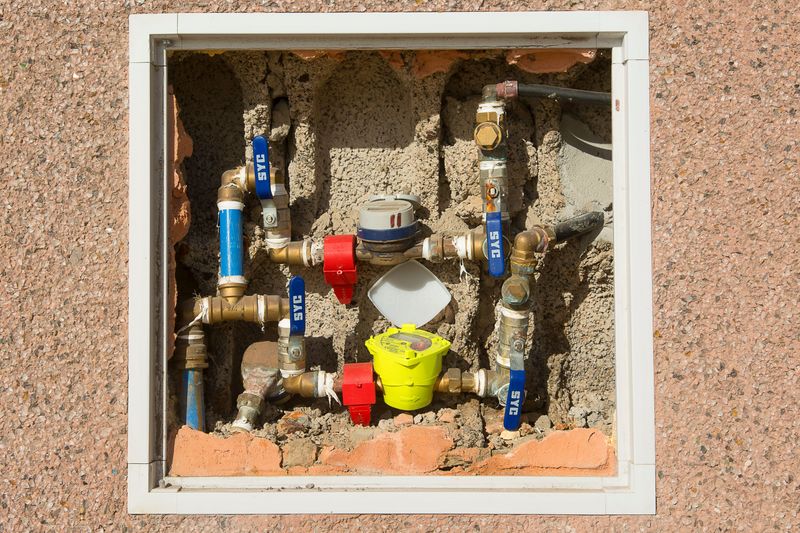
Small details on the backflow can make a big difference. After the air work, unhook the compressor and let any trapped pressure release.
Next, open the test cocks on the backflow preventer to drain the last bit of water. Then set the ball valve handles at roughly a 45 degree angle.
Why the halfway tilt? A fully closed ball valve can trap water inside the ball, while a partly open one lets it drain. Many irrigation pros consider this one of the most overlooked steps.
An insulated cover adds another layer of protection. Foam pouches and padded backflow blankets are easy to find at hardware stores, and they keep wind off the brass.
Skip wrapping it in plastic alone. Plastic can hold moisture against the metal and doesn’t offer much warmth.
Finally, switch the controller to off or rain mode. If yours plugs in outdoors, some folks unplug it, though leaving it powered helps keep the clock and programs saved. Those few minutes protect one of the priciest parts of your setup.
8. Flag Sprinkler Heads Near the Driveway Before Snowplows Arrive
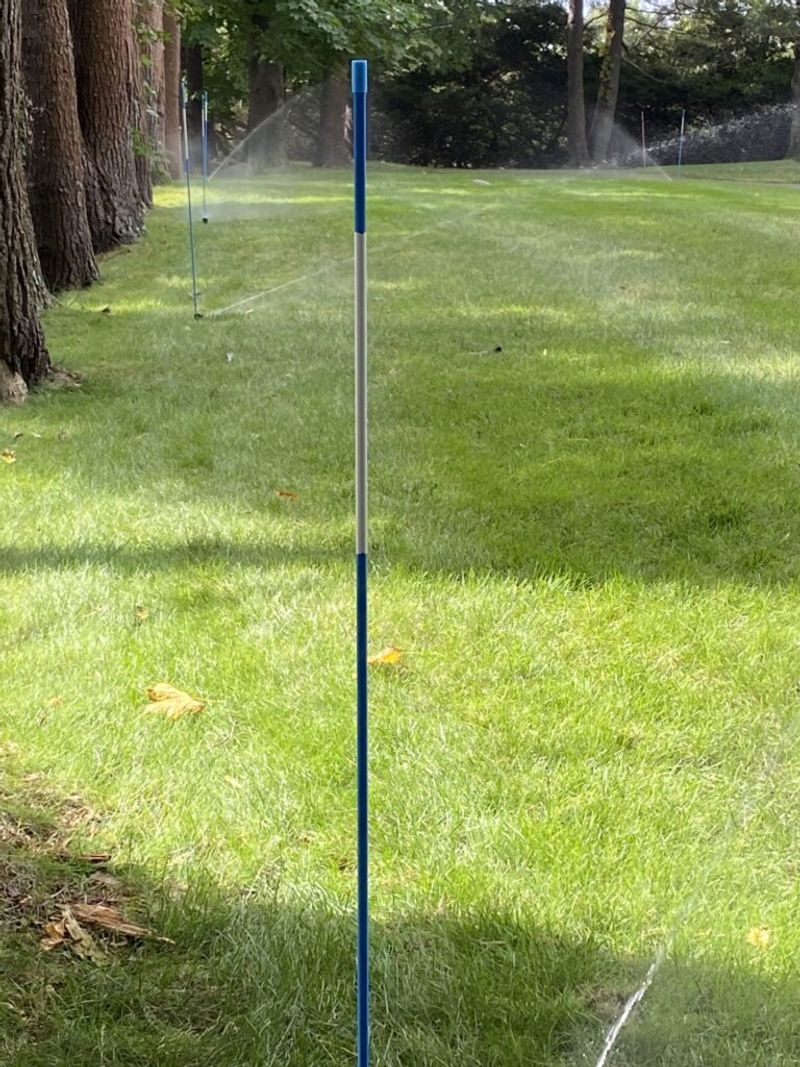
Snow season brings its own threat to sprinkler heads. Plow blades and snowblowers can pop heads clean off along driveways, sidewalks, and curbs.
A few bright marker stakes solve most of that. Push them in next to heads along hard edges before the ground freezes solid, and both you and any plow driver will know where to steer clear.
Fall is also a smart time to jot down notes. Write which heads were leaking, which zones ran weak, and any spots that stayed soggy. Those reminders save time when you start up next spring.
Speaking of spring, hold off on turning the water back on until hard frosts are behind you. Across much of Michigan, that usually means late April or May, with northern areas often waiting longer.
When the time comes, open the main valve slowly to avoid a sudden pressure surge. Then check each zone and fix anything that looks off.
A careful blowout now, a few flags along the drive, and a slow restart later add up to a lawn that greens up without drama.