Before the First Snow, Do This to Get Creeping Charlie Out of Your Ohio Yard
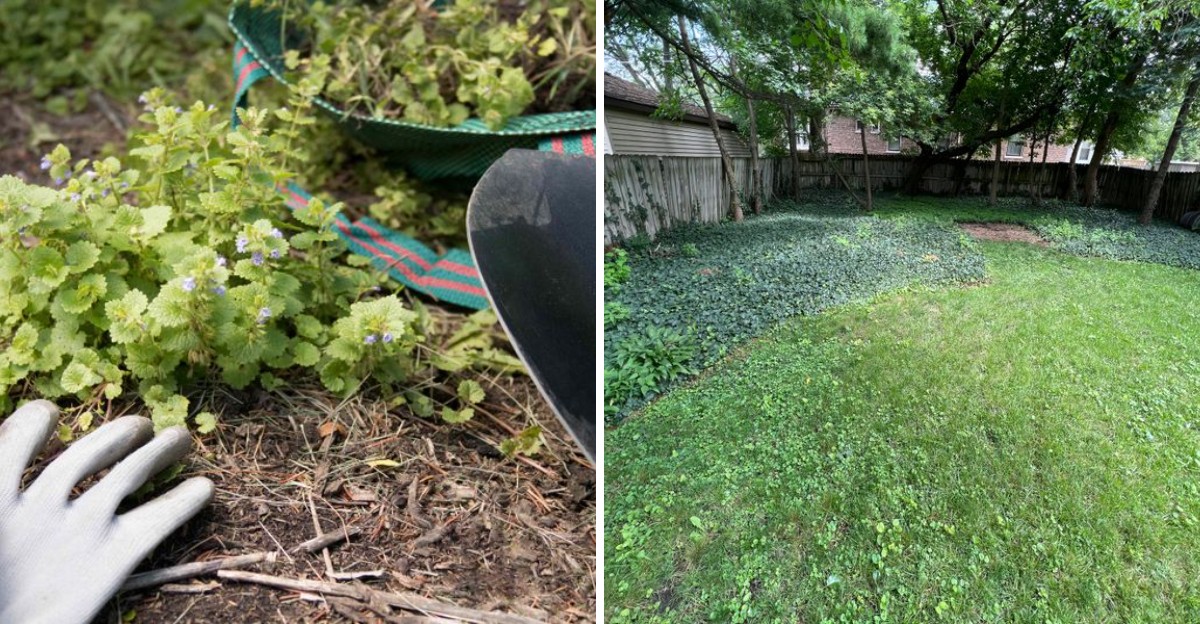
Crush one of those scalloped little leaves in your fingers, and your hand will smell like a minty, musty kitchen cabinet. That scent belongs to a mint family cousin that early European settlers brought to North America on purpose.
They used it to flavor and clear beer before hops became common, and as a folk remedy for coughs. Now it sneaks under fences and swallows shady corners of lawns across Ohio.
I can’t help admiring its nerve, even while I pull it out of my flower beds. Every stem that touches soil can sprout new roots at its leaf joints. You need more than a rake and good intentions to slow it down.
The funny part is that the best chance to fight back shows up right when most of us are hanging up our garden gloves. Why would a cold, quiet week in late fall give you the upper hand?
Those Purple-Flowered Ground Ivy Mats Are Busy Underground Right Now
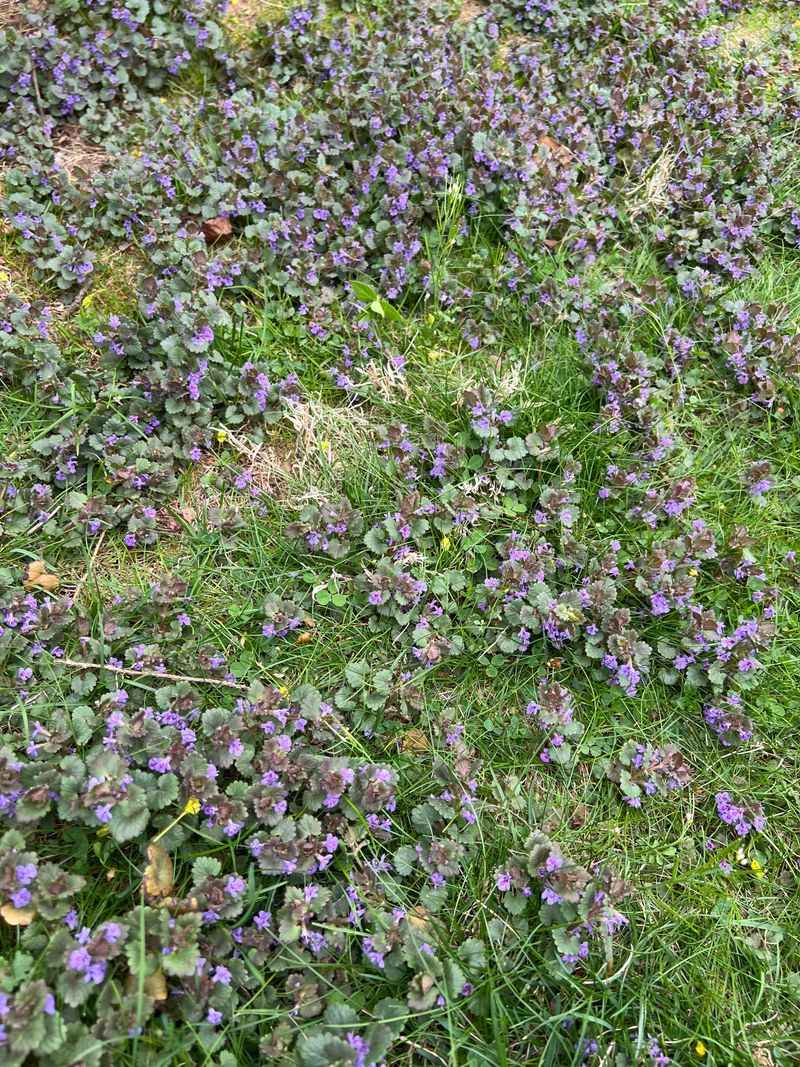
Frost on the grass fools a lot of us into thinking the yard has gone to sleep. Ground ivy, also called creeping Charlie, has other plans.
As days shorten in fall, this perennial weed starts moving sugars from its leaves down into its roots and creeping stems. It is stocking the pantry for winter.
University turf experts, including those at Purdue and the University of Minnesota Extension, point out that this downward flow is exactly what makes fall such a smart time to treat it.
A systemic weed control product rides along with those sugars. Instead of just burning the leaves, it travels into the runners and roots where the plant stores its energy.
Spring sprays often only scorch the tops, and the weed bounces back by summer.
A light frost does not usually end this window. As long as the leaves stay green and healthy, they can still absorb a product.
In most of Ohio, that means late September through October, sometimes stretching into early November in southern counties.
Once a hard freeze turns the leaves brown or snow covers them, the chance is gone until next year. Watch your forecast and plan to act while the foliage still looks fresh and green.
A Triclopyr Weed Spray Is the Tool Creeping Charlie Dreads Most
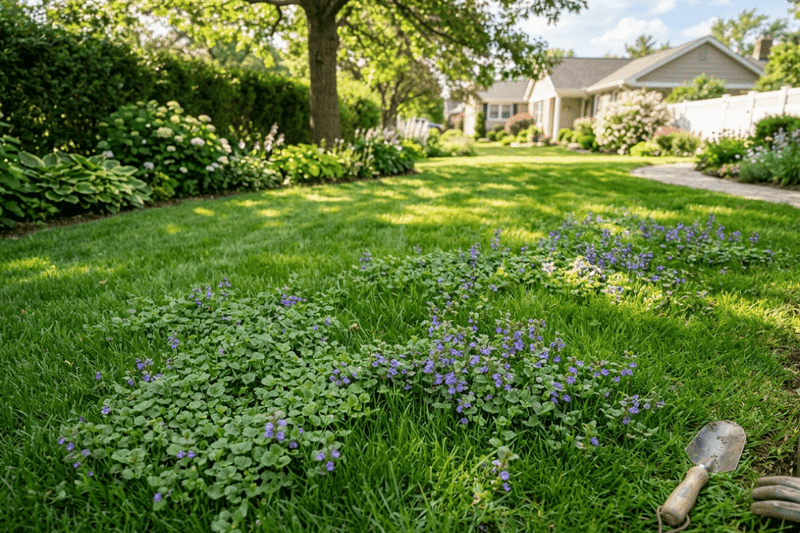
Plenty of homeowners grab any bottle labeled broadleaf weed control and end up disappointed. Ground ivy shrugs off many of the common mixes.
Extension specialists repeatedly name triclopyr as the most reliable active ingredient for this weed in cool-season lawns like the bluegrass and tall fescue found across Ohio. You will often see it in products sold for tough lawn weeds such as violets and clover.
Some formulas pair triclopyr with 2,4-D, dicamba, or MCPP for a broader punch.
Read the label before you buy. Look for ground ivy or creeping Charlie listed by name, and check that the product is safe for your type of grass.
Labels are legal instructions, so follow mixing rates and safety directions exactly.
Spot treating usually beats spraying the whole yard. Aim only at the patches, and keep spray away from garden beds, shrubs, and tree trunks.
I find a small pump sprayer gives better control than a hose-end bottle. You use less product, waste less money, and protect the plants you actually want.
Keep kids and pets off treated areas until the spray has dried, as most labels direct.
Pick a Calm, Mild Autumn Day Before You Spray Ground Ivy
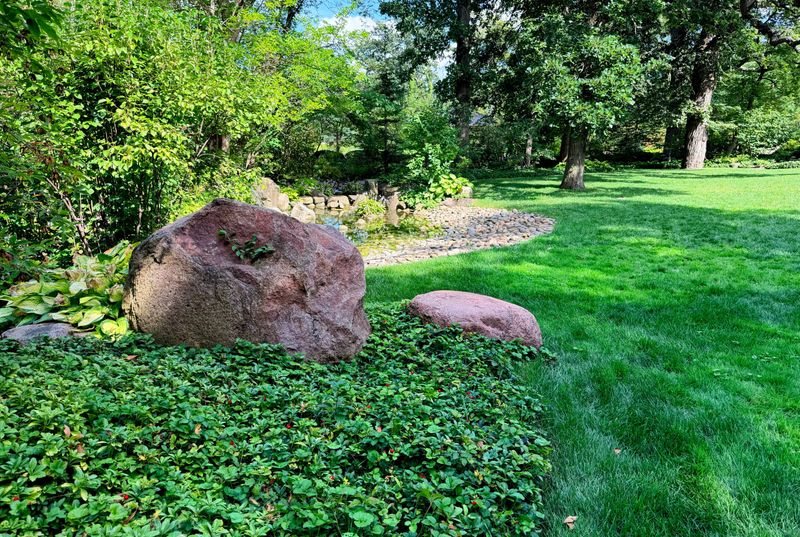
Weather on treatment day can make or break your effort. A breezy afternoon is not your friend here.
Aim for a day when temperatures sit roughly between 50 and 70 degrees and the plant is still growing. Cooler air slows absorption, and the product just sits on the leaves doing very little.
Many labels give their own temperature range, so check yours.
Wind is the bigger worry. Spray droplets can drift onto mums, vegetable plots, young trees, and your neighbor’s roses.
Triclopyr is especially rough on broadleaf plants, so even a light drift can leave curled, twisted leaves behind.
Rain matters too. Look for a stretch of at least 24 hours without showers after you spray, unless your label says otherwise.
Ohio autumns love surprise drizzle, so check the hourly forecast that morning.
Morning dew can also dilute your spray. I like waiting until midmorning, after the grass dries but before afternoon gusts pick up.
That sweet spot often gives the cleanest results.
Patience on this step pays off. Skipping a windy Saturday and spraying on a still Tuesday evening could save your favorite shrub and your lawn budget at the same time.
Put the Lawn Mower Away for a Few Days Around Treatment
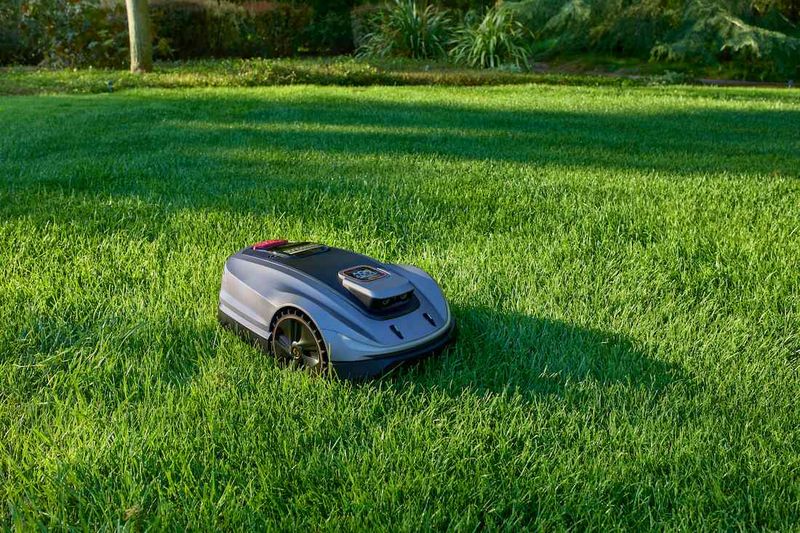
Here is a trick that feels a little lazy but actually works. Let the yard grow shaggy for a couple of days.
Hold off mowing for about two to three days before you treat ground ivy. Those extra leaves give the weed more surface area to soak up the product.
A freshly cut patch has fewer leaves to absorb anything, so your effort goes partly to waste.
After spraying, wait another two to three days before mowing again. That pause gives the product time to travel from the leaves into the roots and runners.
Mow too soon, and you might carry treated leaves away before the job is done.
Skip raking and leaf blowing over treated patches during that window too. Fallen leaves can block spray, so clear them before treatment rather than after.
A little planning helps. I schedule my last fall weed spray right after a regular mowing, then let a few days pass before treating.
That rhythm keeps the lawn tidy while still giving the weed a full, leafy target.
Neighbors may raise an eyebrow at the shaggy look. Just smile, because you are playing the long game against one of the toughest lawn weeds around.
Creeping Charlie Runners Usually Need a Second Round
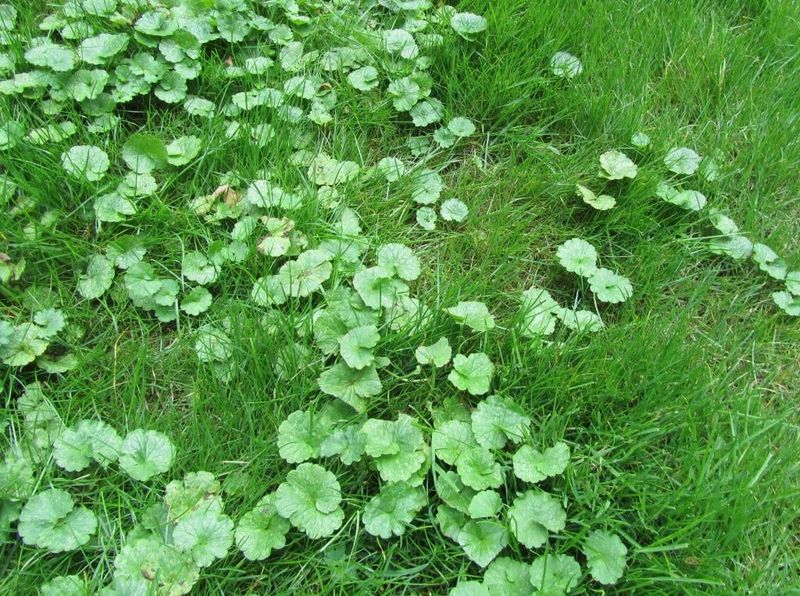
Wishful thinking says one spray should handle it. Ground ivy rarely cooperates.
Each square stem creeps along the soil and sets down roots at its nodes, the little joints where leaves attach. Miss a few sections, and each one can start a fresh colony.
Dense, established mats often hide pieces that never got a full dose.
Iowa State University and other extension programs suggest two fall treatments spaced roughly three to four weeks apart. In Ohio, that might mean one round in mid to late September and another in October.
Southern Ohio often gets a little extra time, while northern areas near Lake Erie may cool down sooner.
Check the label for limits on how often you can apply. Some products restrict the number of treatments per season.
Do not panic if patches still look green in spring. Treated plants often decline slowly and fade over the following weeks.
Keep notes or snap photos of the worst spots. Next fall, you will know exactly where to look for survivors.
Many gardeners find it takes two seasons of steady effort before a badly infested lawn finally looks like grass again instead of a minty carpet.
Thick, Tall Grass Is Your Best Long-Term Shield Against Ground Ivy
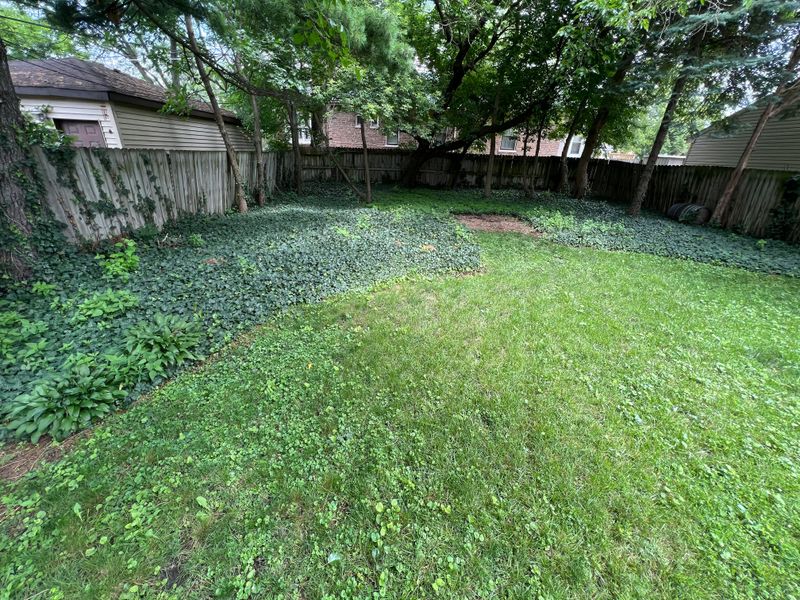
Ground ivy is a bit of an opportunist. It moves into spots where grass is already struggling.
Shady corners, soggy low areas, and hard, compacted soil are its favorite neighborhoods. Fixing those conditions makes your yard far less welcoming.
Sprays handle today’s problem, but healthy turf prevents tomorrow’s.
Raise your mower to about 3 to 4 inches. Taller grass shades the soil and grows deeper roots, which helps it crowd out low creepers.
Fall is also prime time in Ohio for core aeration and overseeding cool-season grasses, ideally from late August through September.
A fall fertilizer feeding helps grass store energy over winter. The Ohio State University turf program considers autumn the most important season for lawn fertilization.
Shade is often the root cause. Thinning lower tree branches lets in more light, and shade-tolerant fine fescues can fill gaps.
In deep shade where grass simply struggles, consider a native ground cover such as wild ginger or a mulched bed instead.
I love how this approach turns weed control into lawn care. Once the grass is thick and happy, ground ivy has fewer bare spots to grab.
Your sprayer gets a lot less use each year.
Skip the Borax Box and Grab a Hand Weeder for Garden Beds
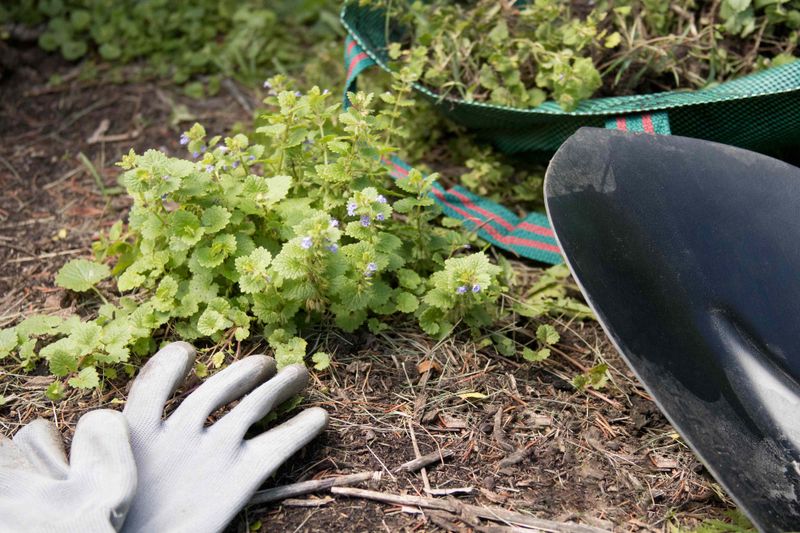
Old garden forums still swear by borax. University extensions tend to shake their heads at that one.
Boron can suppress ground ivy, but the useful amount sits very close to the amount that harms grass and other plants. Boron can also build up in soil for years.
Researchers at Iowa State tested it and found results unreliable, so most experts now advise against it.
Glyphosate brings a different problem. It is nonselective, so it harms grass right along with weeds.
Save it for areas you plan to fully renovate and replant.
In flower and vegetable beds, hand pulling works well. Moist soil after a fall rain lets runners slide out more easily.
Pull slowly, follow each stem, and try to lift the roots at every node. Bag the pieces rather than tossing them in the compost, since bits can reroot.
Afterward, spread two to three inches of mulch to slow new growth. Check again in spring when the purple flowers pop up and make stragglers easy to spot.
My takeaway is simple. Treat lawns in fall, pull from beds, and keep the grass thick.
That steady combo gives you a cleaner yard by next summer.