What It Means When Termites Swarm Your Florida Yard After Rain
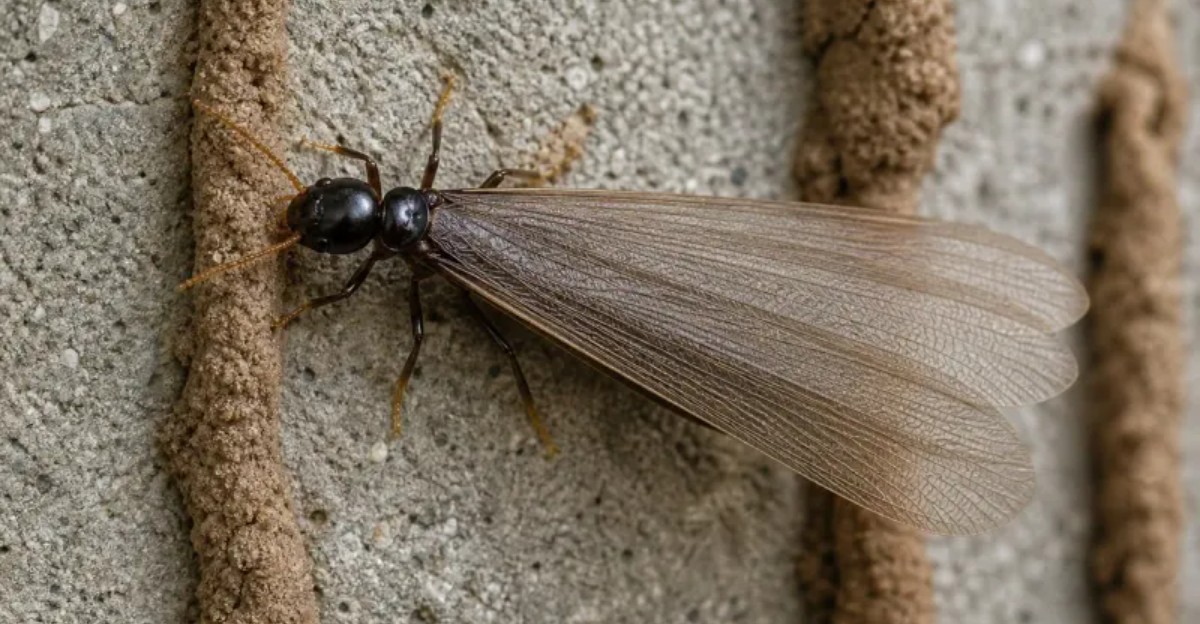
A single mature colony can launch thousands of winged insects into the air in just a few minutes. Most of them get eaten by birds, lizards, and frogs before they ever touch down again.
I saw it happen last spring after a warm afternoon shower in my Florida garden. One minute the air was still, and the next it shimmered with fluttering bodies rising from the mulch near my fence.
You probably have questions, and I did too. Were they ants? Were they harmless? Should I be worried about the house just a few steps away?
The answers surprised me, and some of them changed how I mulch, water, and store firewood. Those papery wings left on the patio turned out to be a message worth reading closely. So what exactly was that cloud trying to tell me?
That Winged Cloud Rising From Your Wet Lawn Is a Moving Day
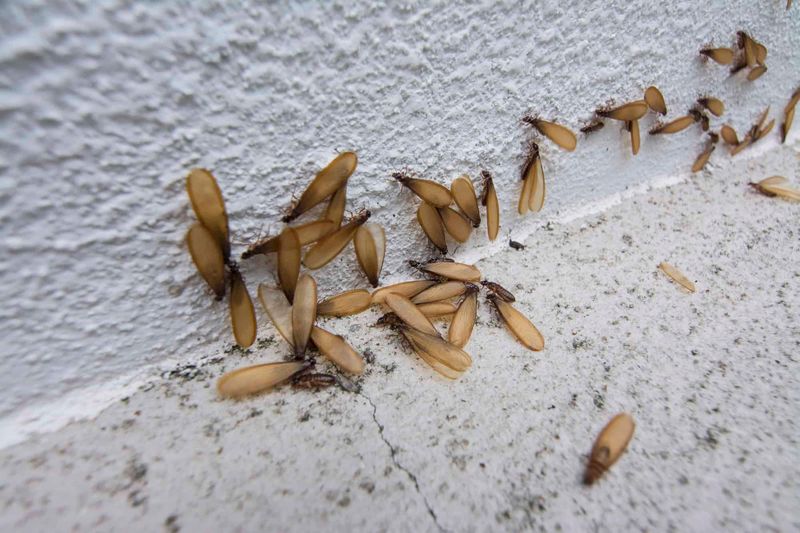
Nature has its own calendar, and those fluttering insects are right on schedule. What you saw were termite swarmers, called alates by scientists, and they are the young kings and queens of an established colony.
Their job is simple but important. They leave home, find a mate, drop their wings, and try to start a brand-new colony somewhere else.
Rain plays a big role in the timing. Warm air, high humidity, and soft, moist soil give swarmers their best shot at survival, since a damp spot is easier to dig into and keeps their delicate bodies from drying out.
In Florida, the native subterranean termites often swarm in late winter and spring, usually in the daytime. Formosan subterranean termites tend to swarm on warm, humid evenings from about April through June, and they love porch lights.
Drywood termites follow their own patterns, and some species fly in late spring and summer evenings. So the exact timing can tell an expert a lot about which termite you have.
Personally, I find the whole event kind of amazing. Still, a swarm is not just a cool nature show, and the next sections explain why it deserves a closer look around your property.
A Swarm Means a Grown-Up Termite Colony Lives Close By
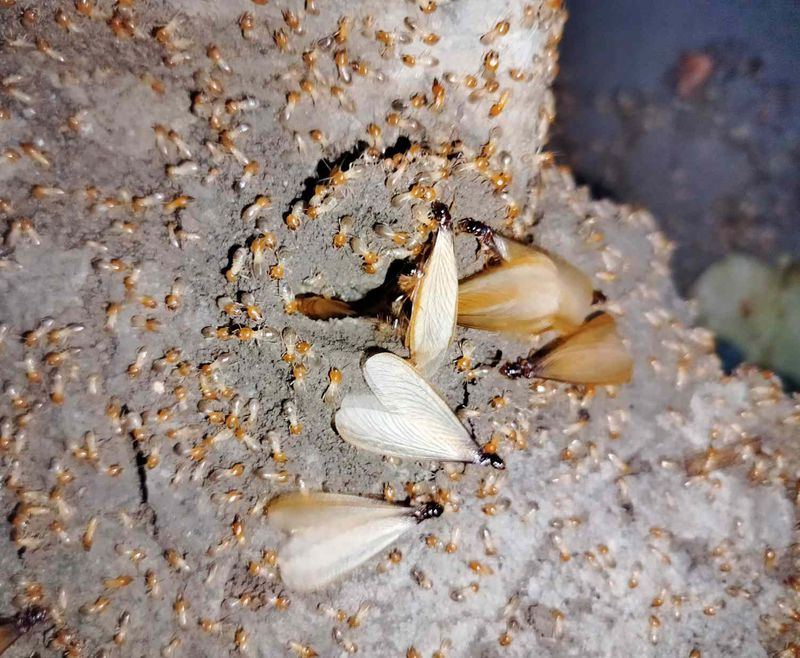
Here comes the part that matters most. Termite colonies do not produce swarmers until they are mature, which often takes several years of steady growth underground or inside wood.
That means the swarm you spotted did not just arrive. A healthy, well-established colony has likely been feeding somewhere nearby for quite a while.
Swarmers are weak fliers, so they rarely travel far from home. The parent colony could be in an old stump, buried roots, a landscape timber, a woodpile, a fence post, or yes, possibly your house.
A yard swarm does not prove your home is infested. Termites are a natural part of Florida soil, and they play a helpful role breaking down fallen wood in wild areas.
What a swarm does prove is pressure. Termites are active on or near your property, and new colonies may try to settle in nearby spots that offer food and moisture.
I treat a yard swarm like a smoke alarm chirp. It might be nothing serious, but ignoring it would be a gamble.
The smart move is to note where the swarm came from, snap photos, and save a few insects in a sealed bag. An inspector will thank you for that evidence later.
Flying Ants and Termite Swarmers Look Alike Until You Check the Waist
Plenty of Floridians shrug off a swarm as flying ants. Sometimes they are right, since ants also take wing after rain, so a quick look makes a huge difference.
Grab a magnifying glass or your phone camera and zoom in. You are checking three body features, and each one is easy to spot.
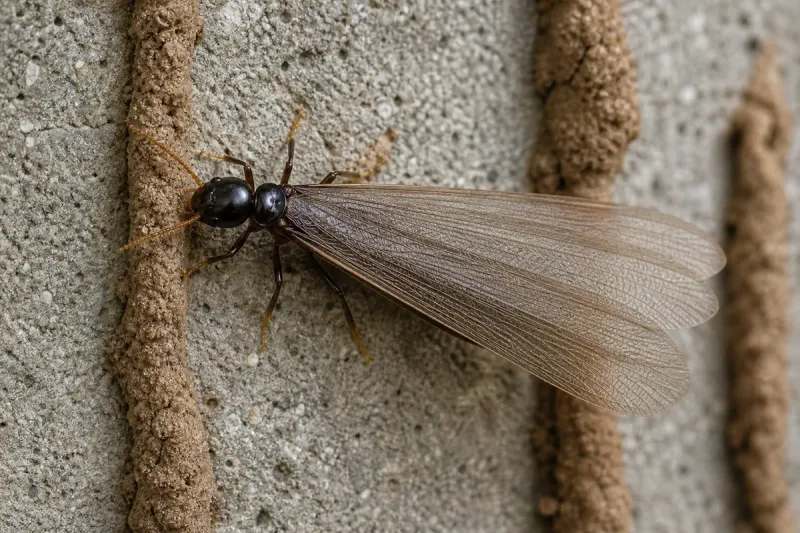
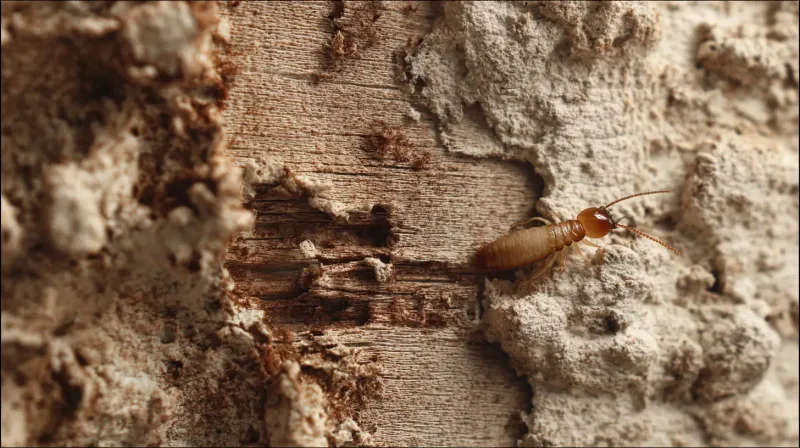
Termite swarmers have a thick, straight waist with no pinch. Their antennae are straight and beady, a bit like a tiny string of pearls.
Their four wings are about equal in length and often extend well past the body. Those wings also snap off easily, so you may find little piles of them on sidewalks and windowsills.
Flying ants have a narrow, pinched waist, almost like a wasp. Their antennae bend at an elbow, and the front wings are noticeably longer than the back pair.
Fun fact for curious kids in your house: termites are more closely related to cockroaches than to ants. Scientists now group them with roaches in the same insect order.
If you still cannot tell, the University of Florida extension offices can help identify samples. A correct ID keeps you from paying for the wrong treatment.
Piles of Shed Wings on Your Windowsill Tell a Bigger Story
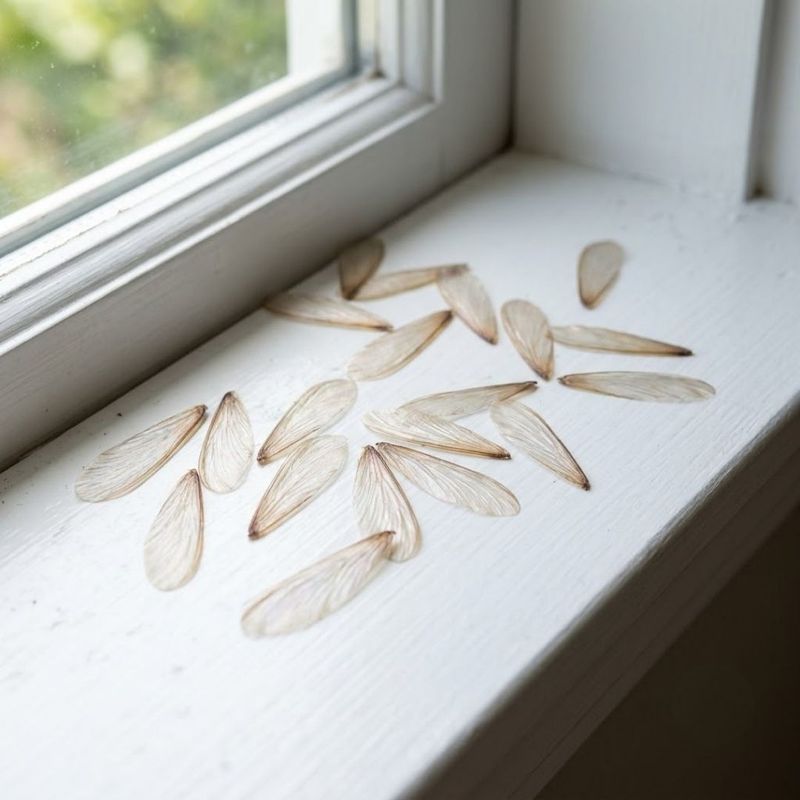
A few dropped wings on the patio are one thing. Finding them inside on a windowsill, bathtub, or kitchen counter is a whole different message.
Swarmers are strongly drawn to light. Outdoors, they gather around porch bulbs and lit windows, which is why evening swarms often end up pressed against your screens.
Indoors, though, wings usually point to swarmers that either slipped through a gap or emerged from a colony already living in the walls. When the swarm starts inside, the source is often in your structure.
Formosan termites, an invasive species found in much of Florida, are notorious for flying toward lights at dusk. Their colonies can grow huge, so indoor signs from this species deserve fast attention.
Indoor swarmers usually do not survive long because homes are too dry for them. Still, they can lead you straight to the problem area.
My advice is to vacuum the insects, but keep a sample first. Write down the date, time, and room where you found them.
Turning off unneeded outdoor lights during swarm season and using yellow bug bulbs can also cut down on how many swarmers gather at your doors.
Pencil-Thin Mud Tubes on Your Foundation Deserve a Closer Look
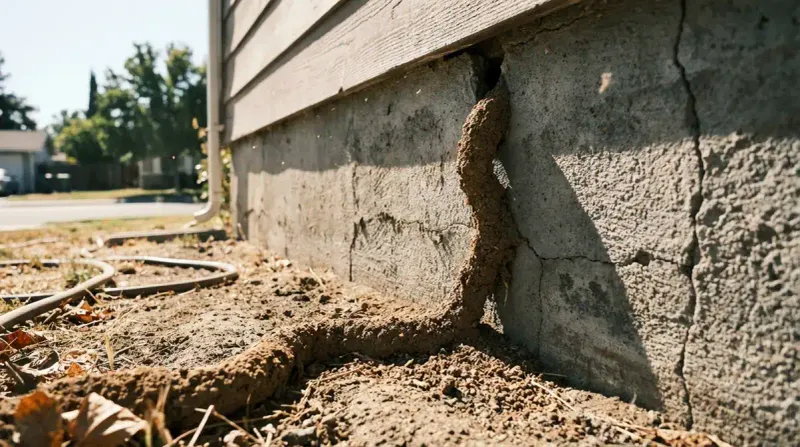
Grab a flashlight and take a slow walk around your house. Subterranean termites leave clues that are easy to miss unless you know what to look for.
The classic sign is a mud tube. These brownish tunnels, about as wide as a pencil, run up foundation walls, piers, and slab edges.
Termites build them from soil, saliva, and droppings. The tubes keep the insects moist and hidden while they travel between the soil and wood.
Break off a small section and check back in a few days. If it gets repaired, the colony is active.
Other hints are worth noticing too. Wood that sounds hollow when tapped, paint that bubbles or blisters, and doors or windows that suddenly stick can all point to hidden feeding.
Drywood termites leave different evidence. Look for tiny, six-sided pellets, often piled below small holes in furniture, trim, or attic wood.
Those pellets look a bit like coarse sand or ground pepper. They are a strong sign that drywood termites live right inside the wood above.
Spotting any of these signs after a swarm is a clear cue to call for a professional inspection rather than wait and see.
Thick Mulch and Leaky Spigots Roll Out a Welcome Mat for Termites
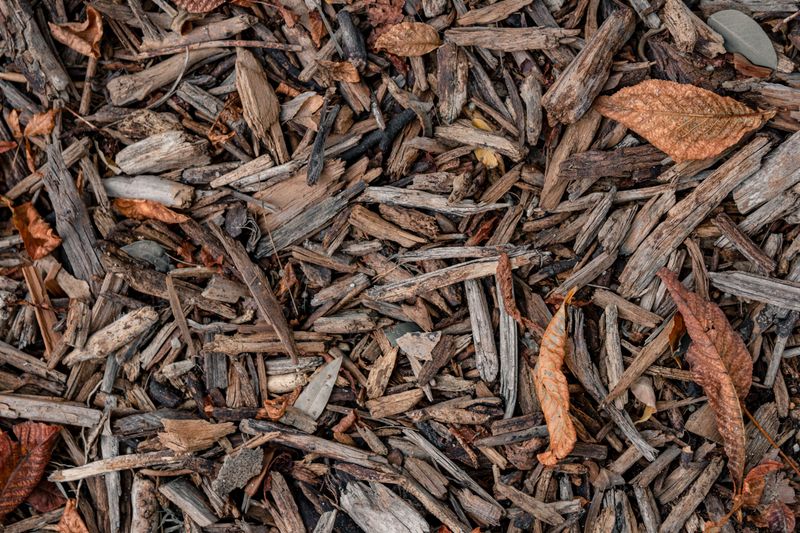
Gardeners, this one is on us. Some of our favorite yard habits create exactly the damp, woody conditions young termite colonies crave.
Mulch piled against the house holds moisture and hides termite activity. Pull it back so you have a strip of bare ground, ideally several inches to a foot wide, along the foundation.
Keep the mulch layer around plants to about two or three inches deep. Thicker layers stay soggy for days after Florida storms.
Water is the next big lure. Fix dripping spigots, point downspouts away from the house, and adjust sprinklers so they do not soak your walls.
Wood touching soil is an open invitation. Move firewood, lumber, and old boards well away from the house and raise them off the ground.
Remove rotting stumps and buried roots when you can. Trim shrubs so air flows between plants and siding, letting everything dry faster.
I made these changes a few years ago, and my foundation now looks tidier too. Small fixes like these will not remove an existing colony, but they make your home far less inviting to new ones.
Bug Spray Won’t Stop a Termite Colony Hiding Under Your Lawn
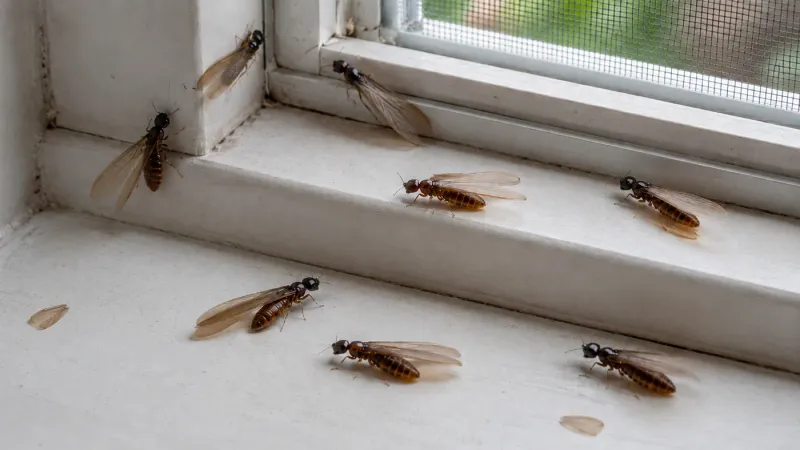
It is tempting to grab a can of spray and blast every swarmer you see. That might feel satisfying, but it barely touches the real problem.
The swarmers are a tiny fraction of the colony. The workers doing the feeding stay hidden underground or inside wood, far from your spray nozzle.
Store-bought products rarely reach a whole colony, and poorly placed treatments can leave gaps. That can make a professional’s job harder later on.
Licensed pros use tools you cannot buy at the hardware store. Options include liquid soil treatments that create a protective zone, monitored bait stations, and for drywood termites, spot treatments or whole-structure fumigation.
In Florida, companies offering termite work must hold the proper license from the state Department of Agriculture and Consumer Services. Ask to see it before signing anything.
Get two or three inspections and compare them. A trustworthy inspector will identify the species, show you the evidence, and explain why a specific method fits your home.
Read contracts carefully too. Check whether a plan covers repairs or only retreatment, and how often follow-up inspections happen.
An Annual Termite Checkup Keeps Your Florida Home One Step Ahead
Termites are part of life in the Sunshine State, and that is not cause for panic. It simply means a little routine attention goes a long way.
Schedule a professional inspection every year, even if you never see a swarm. Many infestations stay quiet for a long time before showing obvious signs.
Spring is a smart time for a home check. Swarm season reminds you to look, and you can pair the visit with your garden cleanup.
Keep a simple termite log. Note swarm dates, photos, inspection reports, and any treatments, since that record helps future inspectors and buyers if you ever sell.
If you have a termite bond or warranty, renew it on time. Lapses can leave you paying for repairs out of pocket.
Out in the garden, choose composite or treated lumber for raised beds near the house. Keep wooden trellises and planters from touching your siding.
I like to think of the next post-rain swarm as a friendly reminder rather than a scare. Watch, identify, tidy up the moisture, and call a pro when the clues point indoors. That simple rhythm protects both your home and your garden.