The Rainy Season Drainage Fix That Saves Florida Yards Every Summer
Florida summer storms do not need much time to make a yard confess.
The sky looks harmless at lunch. Then thunder rolls, rain slams down, gutters rush, and mulch starts floating away like it has somewhere better to be.
Thirty minutes later, the sun returns.
Now the lawn has puddles, the low corner has turned muddy again, and the same soggy patch is holding water like a tiny backyard lake with poor manners.
That is where a rain garden can change the whole routine.
Instead of forcing stormwater to race across the lawn, a rain garden gives it a planted place to slow down, spread out, and soak in.
Add smart downspout routing, gentle swales, tough plants, and better mulch control, and rainy season starts feeling less like a yard emergency.
So what drainage fix helps Florida yards handle summer storms without fighting the rain?
Start with a rain garden, then build the whole yard around where water already wants to go.
Build A Rain Garden First
A rain garden is not a pond with better marketing.
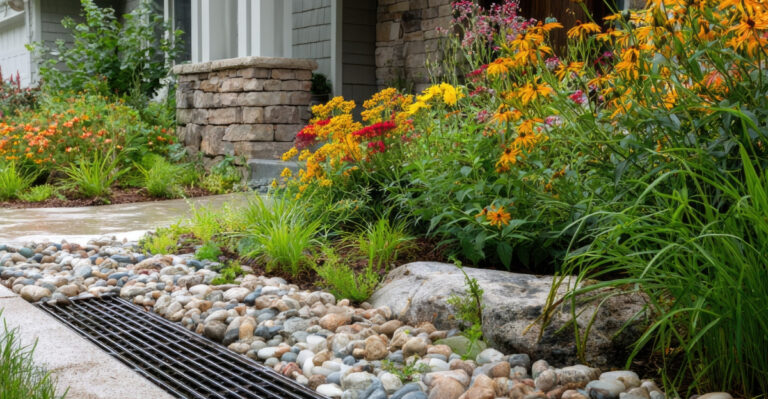
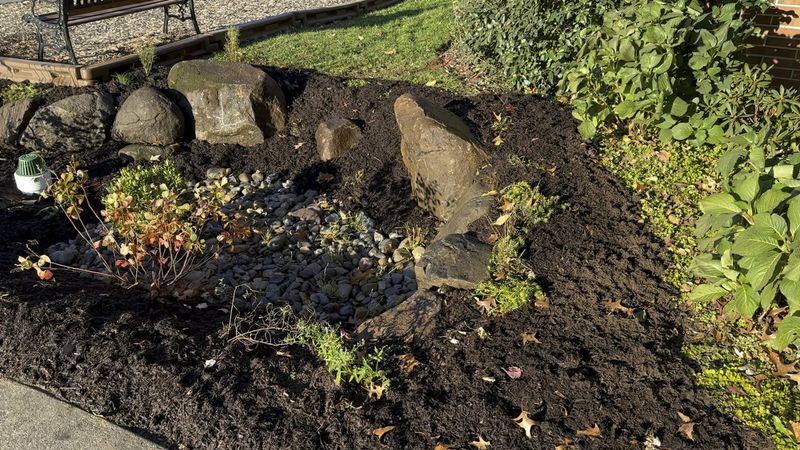
It is a shallow planted depression that catches stormwater, slows it down, and lets it soak into the soil instead of racing across the lawn. In a Florida yard, that simple idea can solve a surprising number of rainy-season headaches.
The best version looks intentional, not like a random hole with plants in it.
A rain garden usually sits in a low area that already collects runoff, but not right against the house. Water should move away from the foundation and into the planting area, where roots, mulch, and loose soil can help absorb it.
Depth matters.
A shallow bowl around six to twelve inches deep is often enough for a residential yard. It should hold water after a hard storm, then drain within a day or two.
Standing water that lingers too long can create new problems, and Florida already has enough mosquito drama without giving them a spa package.
Plant choice makes the garden work.
Use tough plants that can handle wet feet after storms and dry soil between rain events. That wet-dry swing is the whole personality of Florida rainy season.
Mark the shape with a garden hose before digging so the bed looks natural.
A rain garden turns runoff from a nuisance into a resource. That is stormwater with a job title.
Catch Water Before It Runs
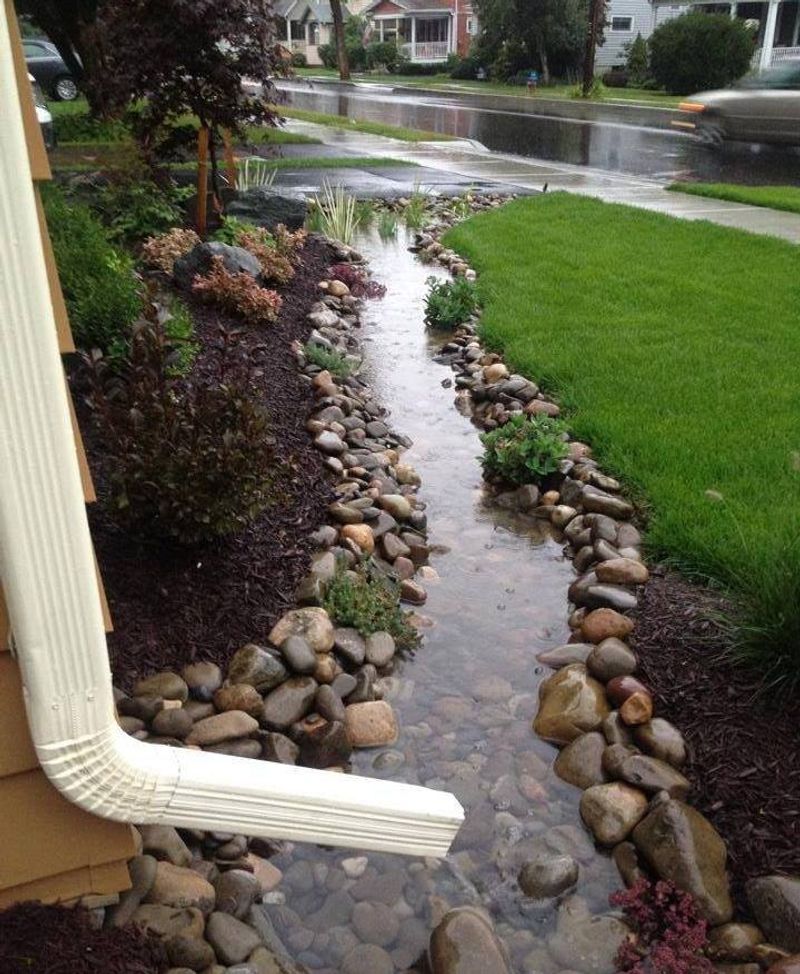
The best drainage plan starts with watching the yard during a storm.
That sounds simple, but it tells you more than any guess made on a sunny afternoon. Water usually follows the same route every time.
It slides down a slope, cuts along a fence, spills from a driveway edge, or gathers in the same sad corner after every hard rain.
That path is your map.
Place a rain garden where water already wants to go, and the fix feels natural instead of forced. The garden becomes a soft landing spot at the end of the route, catching runoff before it pools, erodes soil, or carries mulch into the street.
Your Florida Garden Changes Every Week. Your Plan Should Too.
Gardening in Florida changes quickly throughout the season. Every Friday you’ll receive a simple weekly plan showing exactly what to plant, prune, fertilize, harvest, and protect so you never miss the right timing.
A gentle slope helps.
Water should move toward the rain garden slowly, not rush in like it is late for a meeting. A slightly graded channel, a planted strip, or a shallow swale can guide water without creating a ditch that looks harsh or becomes hard to mow around.
Flat yards can still work.
Sometimes moving a small amount of soil creates just enough direction for runoff to find the planted basin. Even a subtle change can keep water from spreading everywhere at once.
Do not fight the water’s favorite route.
Improve it.
A Florida storm already has plenty of energy. Your yard just needs to turn that energy into a calmer path, a slower landing, and a better ending than another muddy mess by the fence.
Send Downspouts Into Plants
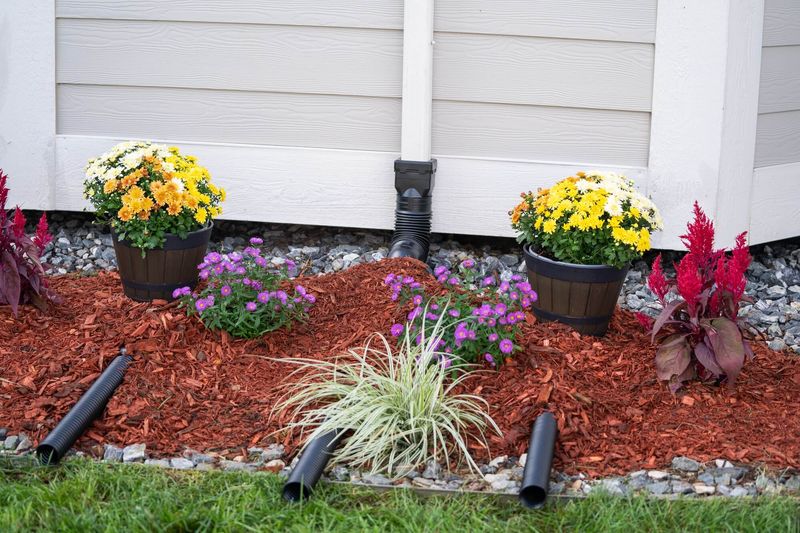
A downspout can turn one roof section into a backyard waterfall.
During a heavy Florida storm, that concentrated rush hits fast. Water pounds one patch of grass, digs a little crater, carries soil away, and then heads for the lowest point with all the confidence of a tiny flood.
Redirecting that flow is one of the fastest upgrades a homeowner can make.
A downspout extender, splash block, or flexible drain pipe can move roof water away from bare lawn and toward a planted bed, swale, or rain garden. Once the water reaches plants and mulch, it spreads out instead of hammering one spot.
That spread matters.
Roots help loosen soil. Mulch softens the impact. A planted basin gives water room to slow down before it sinks in. The downspout stops acting like a fire hose and starts acting like free irrigation with better timing.
Keep the slope away from the house.
Water should never collect near the foundation. A steady angle from the downspout toward the planting area keeps the system simple and safer. Many homes only need a short extension to get water to a better landing spot.
Multiple downspouts can feed one larger drainage area when the layout allows.
That can turn a soggy side yard into a planted system that handles roof runoff with much less fuss.
It is not glamorous work, but it pays off fast. One redirected downspout can save a bed from getting washed into the driveway again.
Use Swales To Slow Flow
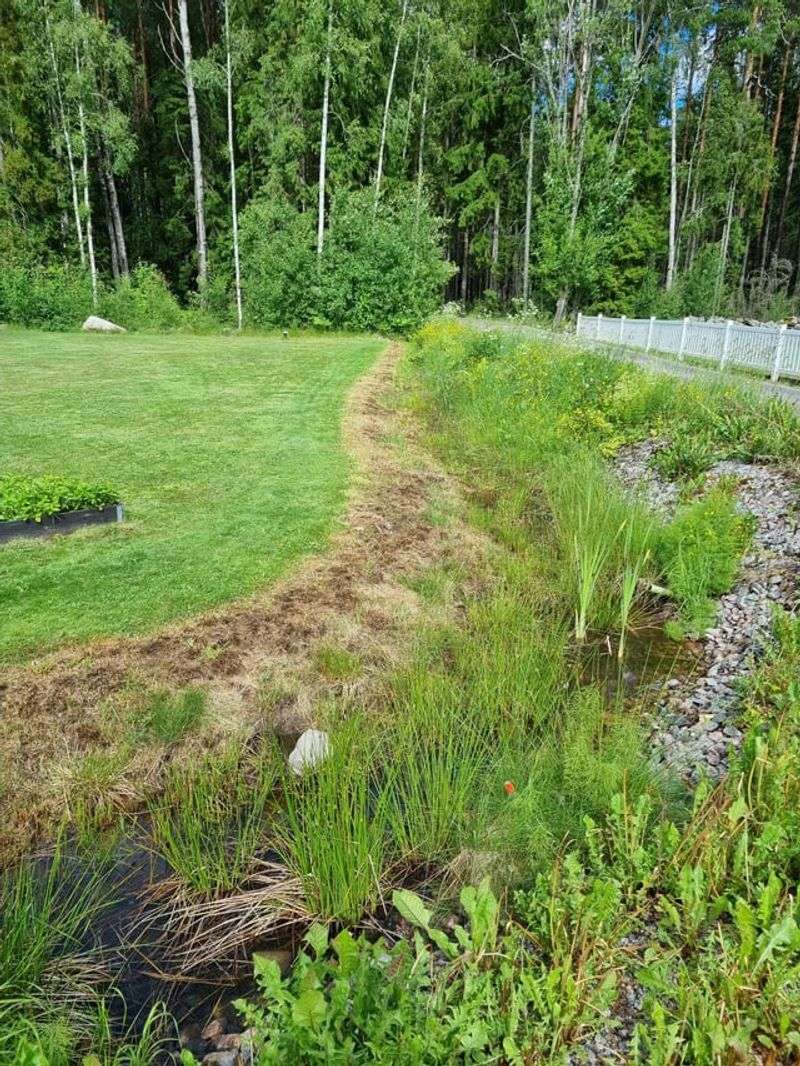
A swale is a drainage helper with a softer personality than a ditch.
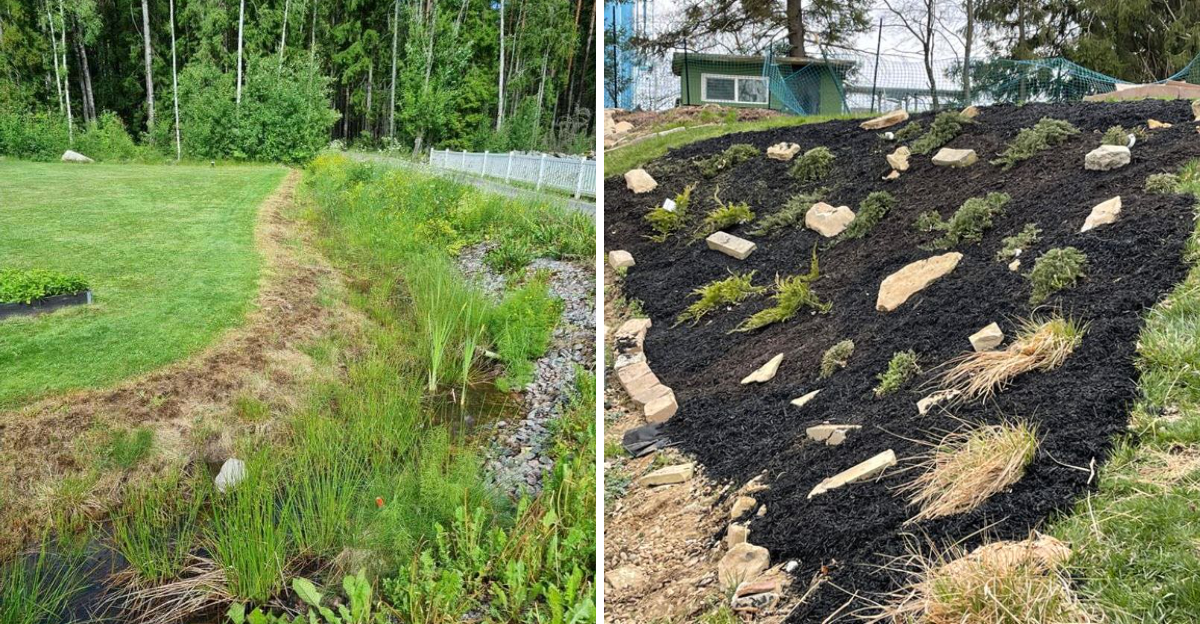
Instead of cutting a steep trench through the yard, a swale uses a shallow, wide channel to guide stormwater at a slower pace.
That shape lets water spread out, calm down, and move toward a rain garden, planted bed, or lower area without carving a new path every summer.
The gentle shape is the secret.
A steep channel can make water run faster, which creates more erosion. A broad, gradual swale reduces speed and gives the soil more time to absorb moisture.
Add grass, native groundcovers, or low plants, and the stems create friction that slows the flow even more.
That is water management with brakes.
Swales work especially well along fence lines, property edges, driveway borders, and low strips where runoff already travels. They can also connect a downspout outlet to a rain garden, turning separate fixes into one smarter system.
The bottom should stay broad enough to avoid looking like a trench.
The sides should slope gently enough to mow or plant, depending on the design. A swale can look like part of the landscape instead of a construction scar.
Planting makes it stronger.
Roots hold soil in place, while foliage softens heavy rain. Over time, the swale becomes less of a drainage feature and more of a living water lane.
It is not fancy. It is functional.
In Florida rainy season, functional deserves a standing ovation in waterproof shoes.
Pick Plants For Wet Dry Swings
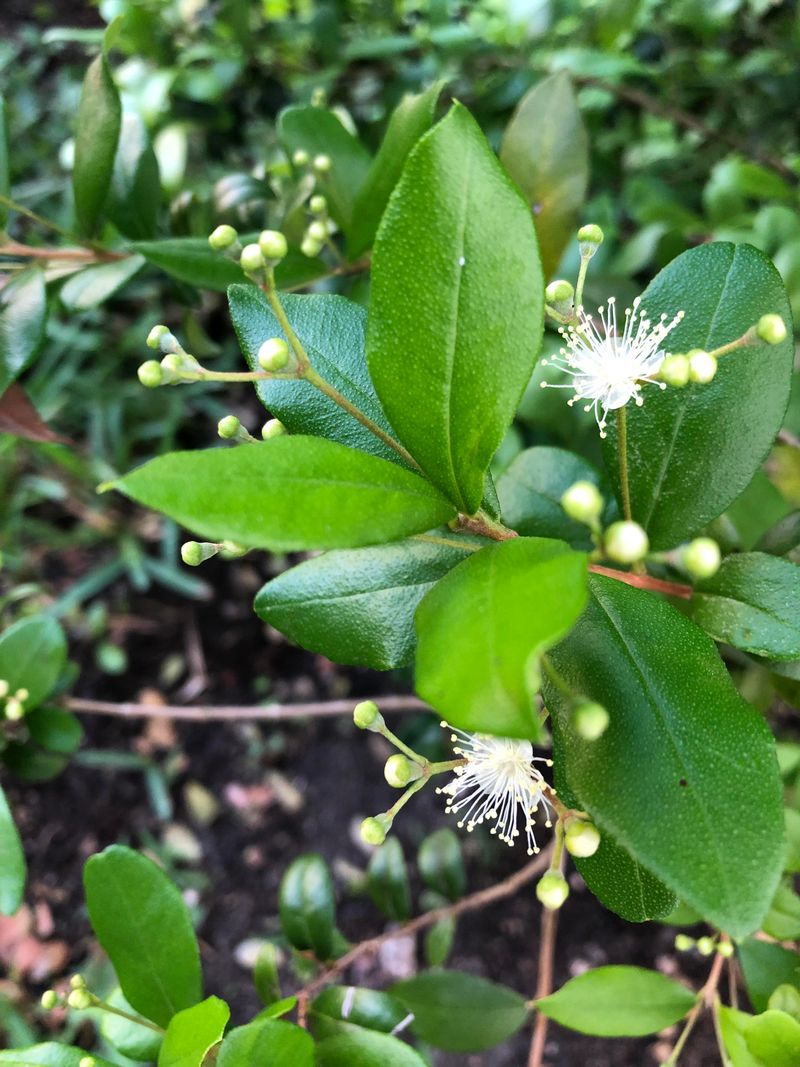
Florida rain gardens need plants with emotional range.
One afternoon brings sheets of rain. A week later, the same bed may feel hot and dry. That means ordinary moisture-loving plants may struggle during dry stretches, while dry-site plants may complain after every storm.
The winners can handle both.
Blue flag iris belongs near the wetter center of a rain garden where water lingers longest. Muhly grass fits higher edges and sunny spots where soil drains faster.
Firebush adds color, pollinator value, and toughness through heat and humidity. Simpson’s stopper can work along better-drained edges where shrub structure helps the planting look finished.
That zone approach matters.
The lowest part of the rain garden stays wettest. The rim dries first. Planting everything at the same level ignores how water behaves, and water is not known for respecting wishful thinking.
Match each plant to its moisture zone.
Flood-tolerant plants go in the middle. Plants that prefer quicker drainage go along the upper edges. Deep-rooted and clumping plants help hold soil, slow water, and reduce bare patches over time.
Give new plants steady care while roots establish.
After that, the right plants should need far less rescue watering because they are matched to the job. The garden becomes more self-sufficient with every season.
A rain garden is only as good as its plant crew.
Choose the crew well, and the bed handles storms like it has been practicing all summer.
Keep Mulch From Floating Away
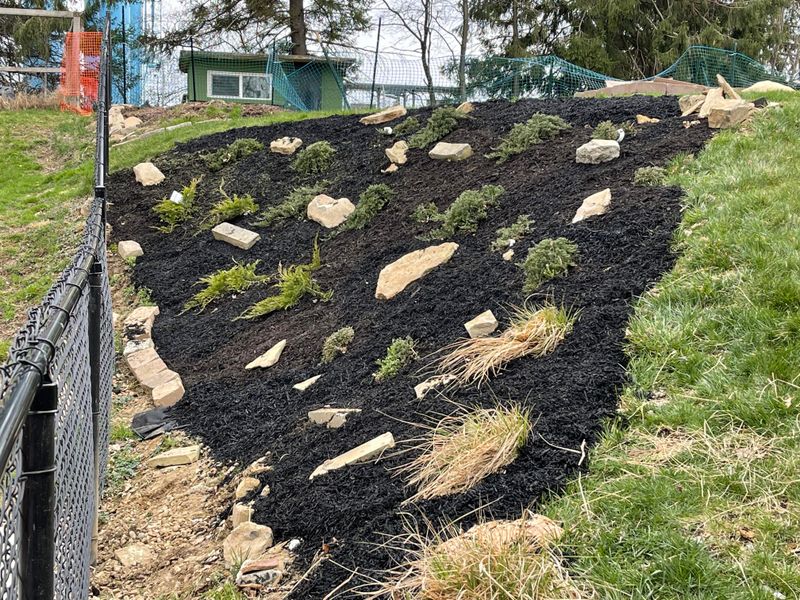
Floating mulch is Florida rainy season comedy until the bill arrives.
One hard storm can send fresh mulch drifting down the driveway, into the lawn, or out toward the street. The bed looks messy, the soil turns exposed, and the whole area becomes easier for the next storm to damage.
The fix starts with using mulch that behaves better.
Larger pine bark nuggets usually stay put better than lightweight shredded mulch in places with moving water. Pine straw can also work on gentle slopes when tucked around dense plantings.
The key is choosing a material that does not act like a tiny raft every time runoff crosses the bed.
Depth matters too. A steady layer around two to three inches helps protect soil, conserve moisture, and reduce raindrop impact.
Too thin, and it washes out quickly. Too thick, and it can smother plant crowns or hold too much moisture against stems.
Edges help hold everything together.
Brick, stone, metal edging, coir logs, or a dense row of groundcovers can slow mulch movement at the front of a bed. Plants eventually become the best border because roots and stems hold both soil and mulch in place.
Keep mulch away from trunks and stems.
That little mulch volcano look may be common, but it can invite rot and pests. A clean ring gives plants breathing room.
The goal is simple.
Stormwater can pass through the bed without taking half the mulch on vacation.
That is a small victory worth noticing after every downpour.
Protect Low Spots From Erosion
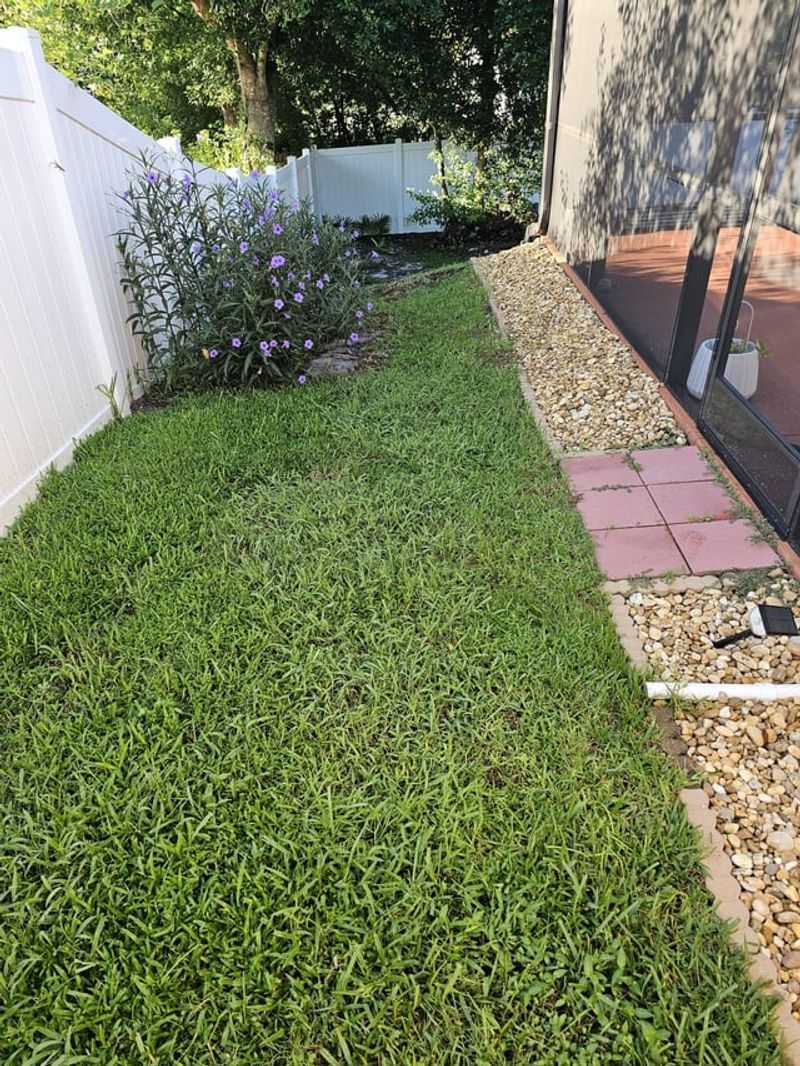
A low muddy corner is not just ugly.
It is a warning.
When runoff keeps hitting the same weak spot, bare soil compacts, puddles linger, and the depression can slowly deepen. What begins as a small soggy patch can turn into a recurring yard problem that takes more work each season.
Start by covering the soil.
Bare ground takes the full force of rain. Plants soften that impact, and roots hold the surface in place. Low-growing choices such as frogfruit, sunshine mimosa, or native grasses can help stabilize areas that stay damp or receive steady runoff.
Temporary cover helps while plants establish.
Pine straw, erosion-control fabric, or a light mulch layer can protect the surface during the early stage. New plants need time to root in before they can do the heavy lifting.
Water direction matters just as much as planting.
A low spot will keep failing when a downspout, slope, or driveway edge keeps sending runoff straight into it. Redirect the flow with a swale, downspout extension, rain garden, or gentle grading so the vulnerable area stops taking the full hit.
Think of it as pressure relief for the yard.
Once water slows and the soil stays covered, the spot can recover instead of getting reopened by every storm. A difficult low corner can become a planted basin, a rain garden edge, or a stable patch that finally stops demanding attention.
That is not just erosion control.
That is turning the yard’s most dramatic corner into a useful one.
Let Stormwater Soak In
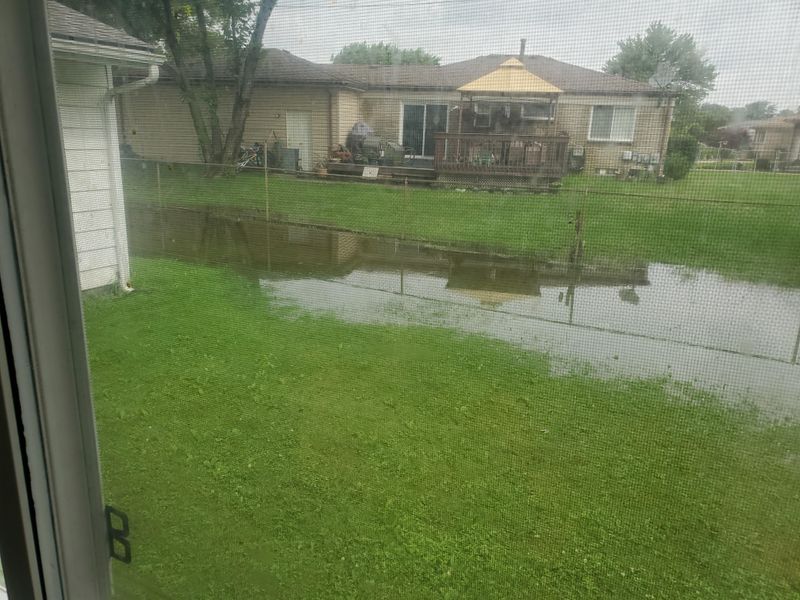
Slowing stormwater is helpful. Getting it into the ground is even better.
When rain soaks into the soil instead of racing across pavement and lawn, the yard holds more moisture, puddles shrink faster, and runoff carries away less soil, mulch, fertilizer, and debris. Infiltration is the quiet win behind every good rainy-season drainage plan.
Compacted soil makes that harder.
Heavy foot traffic, construction, parked equipment, and repeated mowing patterns can press soil tight enough that water sits on top instead of moving down. A yard may look flat and harmless until the first big storm reveals the problem.
Plants help loosen the system over time.
Roots create small channels in the soil. Organic matter improves structure. Mulch softens raindrop impact and helps prevent the surface from sealing. A rain garden combines all of that in one planted basin that receives water on purpose.
Swales, redirected downspouts, and stabilized low spots all support the same goal.
They slow water down long enough for the ground to accept it. That turns a storm from a runoff problem into a recharge moment for the landscape.
Do not expect instant perfection.
A new rain garden or planted swale improves as roots grow and soil life builds. The first season helps. The second season gets better. By the third, the yard can handle storms with much more confidence.
Florida rain will always arrive with drama.
A smart drainage setup lets the yard answer calmly, soak it in, and look ready for the next round.