The Kissing Plant Hanging In Virginia Treetops Is Actually A Parasite
Its scientific name translates roughly to “tree thief.” Yet people hang it over doorways every December and pucker up underneath it.
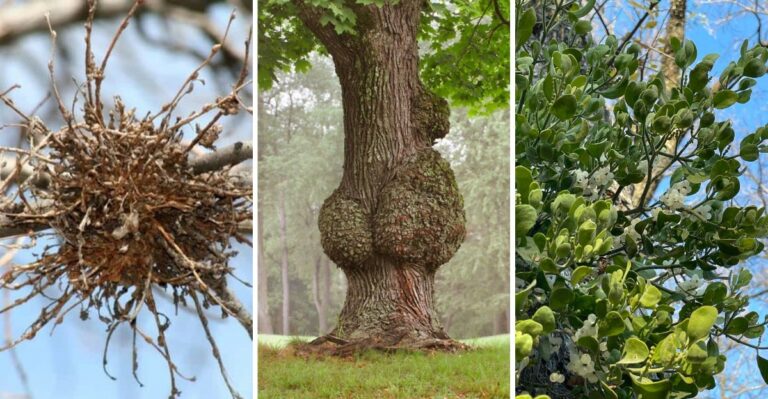
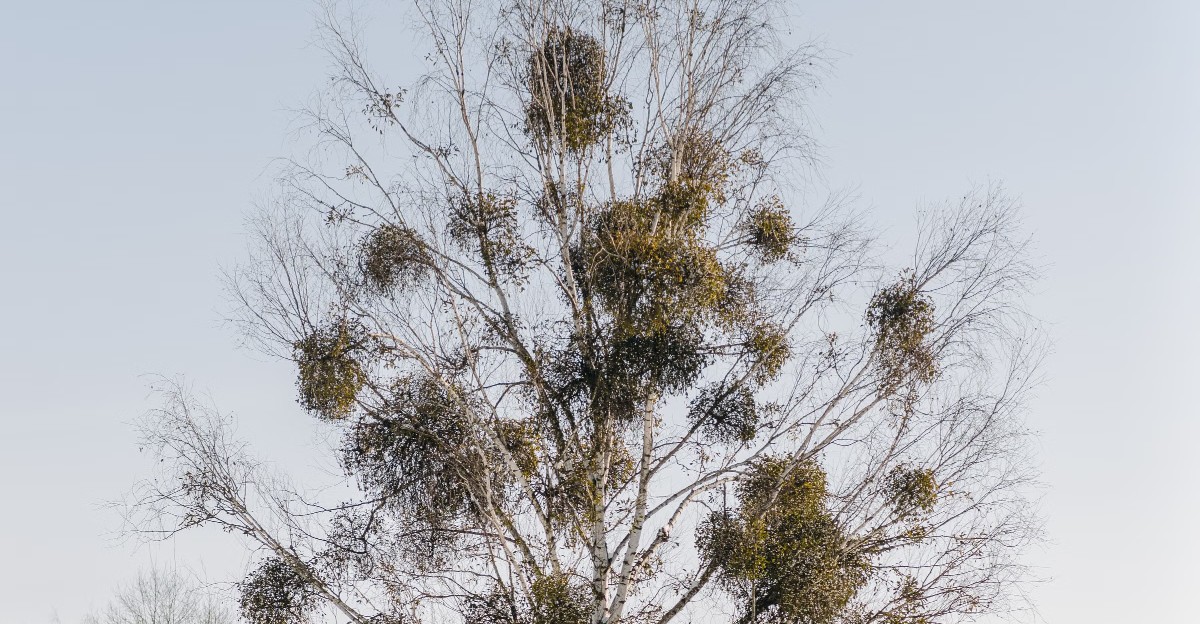
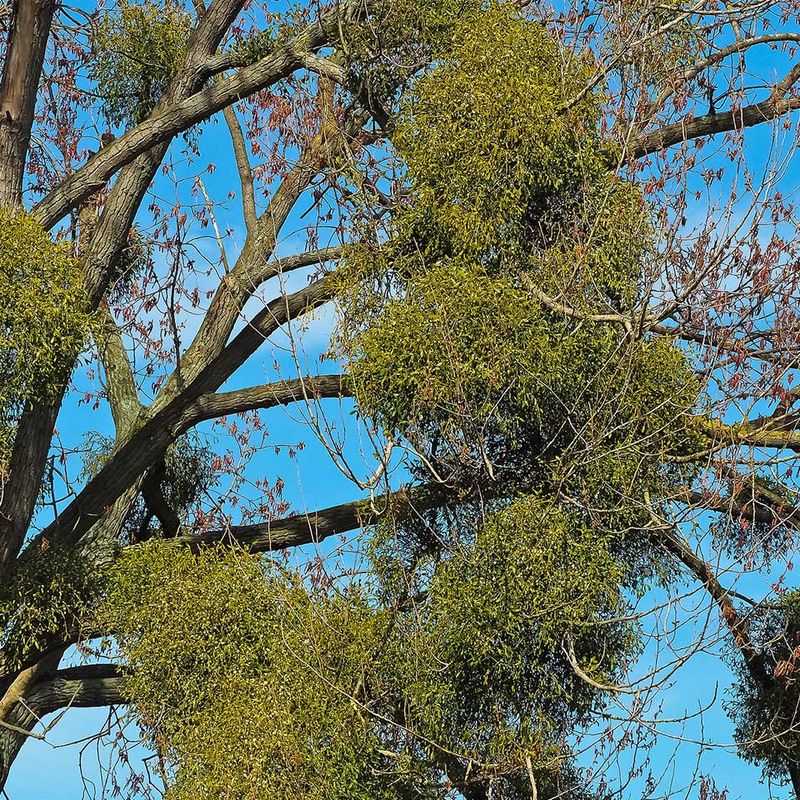
I first noticed those green balls in a bare oak along a Virginia back road. I figured they were old bird nests until I saw fresh leaves glowing against the winter sky. They looked oddly cheerful for January in Virginia.
You might spot them now if you glance up at your own maples or black gums. Once you see one, you start seeing dozens. Some trees carry so many that they look like they are wearing ornaments.
The plant is native, it feeds birds, and it hosts a gorgeous butterfly. It also quietly taps into the branches holding it up. So is that holiday sprig a friend to your trees, or a houseguest who forgot to leave?
Those Green Balls In Leafless Winter Oaks Are Not Nests
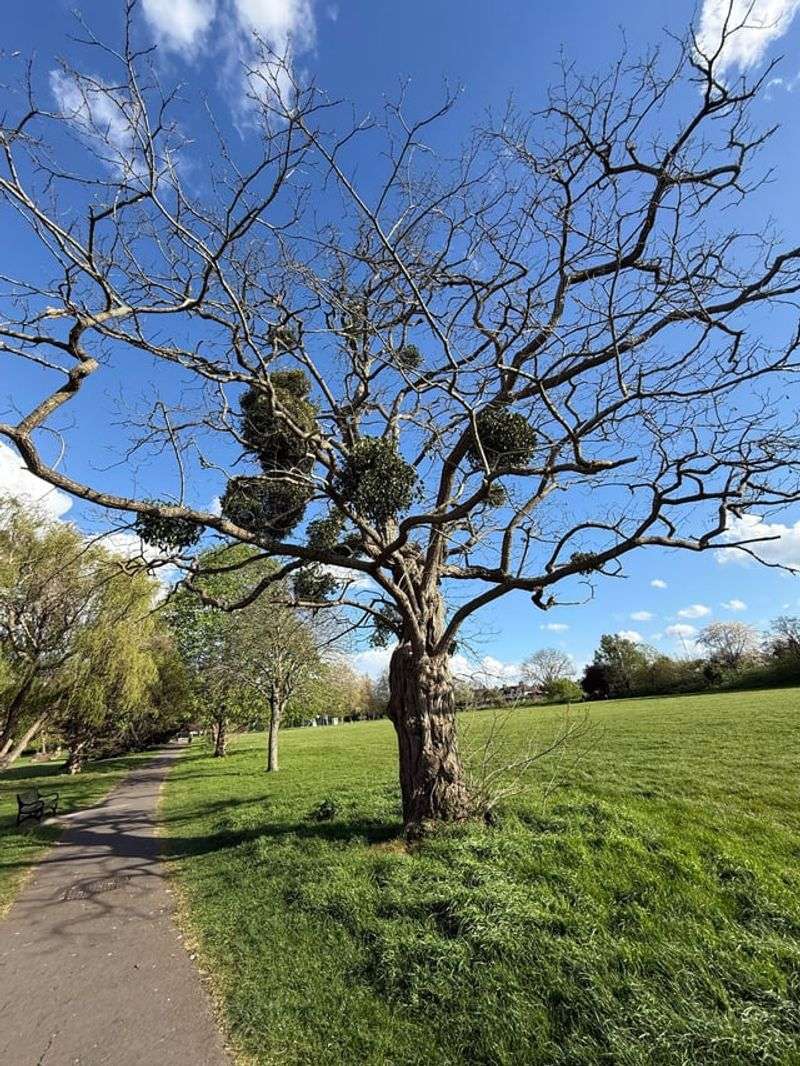
Plenty of folks drive past those leafy globes for years and assume squirrels built them. I did too.
Squirrel nests, called dreys, are brown wads of dry leaves, while these clumps stay green all winter.
The plant is American mistletoe, known to botanists as Phoradendron leucarpum. It is native to Virginia and much of the eastern United States.
Look for thick, leathery, oval leaves in a yellow-green shade, growing in a rounded bunch one to three feet across.
Winter is the easiest time to find it. Once deciduous trees drop their leaves, the clumps stand out like green lanterns.
In summer they hide inside the canopy, so most people only notice them from November through March.
Here is a quick way to tell them apart from nests with binoculars. Mistletoe has visible leaves and short, jointed stems, and female plants carry small white berries in late fall and winter. A nest looks messy and brown, with no fresh growth.
You will often find mistletoe on red maples, black gums, oaks, hickories, and other hardwood trees. It appears more often in eastern and southern parts of the state, though it shows up in many areas. Grab binoculars on your next walk and start counting.
Mistletoe Earned Its Tree Thief Name Honestly
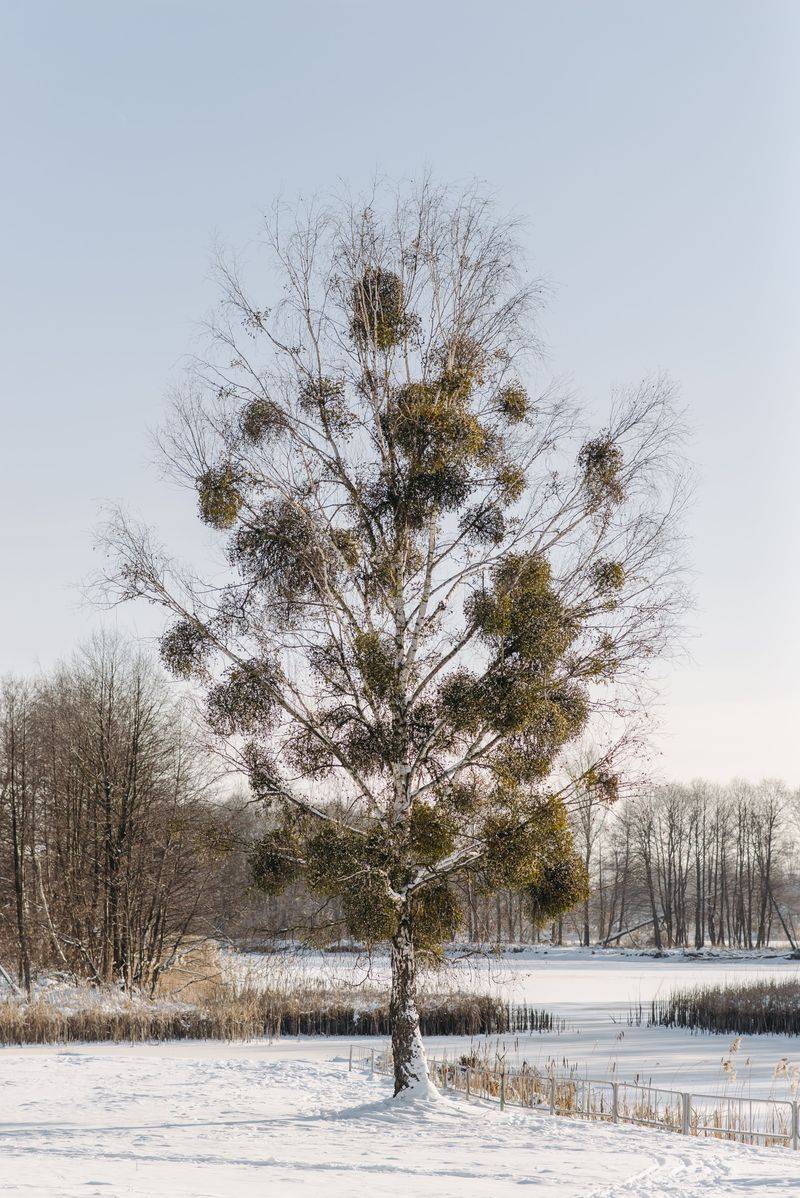
Greek speakers would raise an eyebrow at the genus name. Phoradendron roughly means thief of trees, and that label fits. American mistletoe is a parasite that lives on the branches of a host tree.
It is a special kind called a hemiparasite. Those green leaves do photosynthesis, so the plant makes some of its own sugar.
What it cannot do is reach the ground for water and minerals, so it borrows them from the tree.
Picturing a full parasite like dodder helps by comparison. Dodder has almost no green color and takes nearly everything from its host.
Mistletoe is more of a partial freeloader, taking water and nutrients but cooking up its own food.
This explains why a mistletoe clump stays so perky in winter. The tree is dormant, yet the mistletoe keeps its leaves and keeps drawing moisture through the branch. It has no soil roots at all.
So the kissing plant is not a decoration that happened to land in a tree. It moved in on purpose and plugged itself into the water supply. Knowing that changes how you look at those festive sprigs at the garden center.
Hidden Haustoria Tap Right Into Your Tree Branch

Under the bark, the real action happens. Mistletoe grows a root-like structure called a haustorium that pushes into the host branch. It works a bit like a straw slipped into a juice box.
The haustorium connects with the tree’s xylem. Xylem is the tissue that carries water and dissolved minerals from the roots up to the leaves. Mistletoe taps that flow and pulls off a share for itself.
Over time, the haustorium spreads inside the branch. That is why you often see a swollen or knobby spot right where a clump is attached. The wood reacts to the intruder, and the bulge can grow larger each year.
Removing the leafy part does not remove the haustorium. Snap off the green clump and the hidden tissue stays put, often sending up new shoots within a season or two. Plenty of homeowners learn this the frustrating way.
Want to check your own tree? Look for thickened, lumpy sections of branch near any mistletoe.
A swelling with no leaves may mean someone pulled off the top before. Make a mental note, because that spot will likely sprout again.
Cedar Waxwings And Bluebirds Plant Those Sticky White Berries
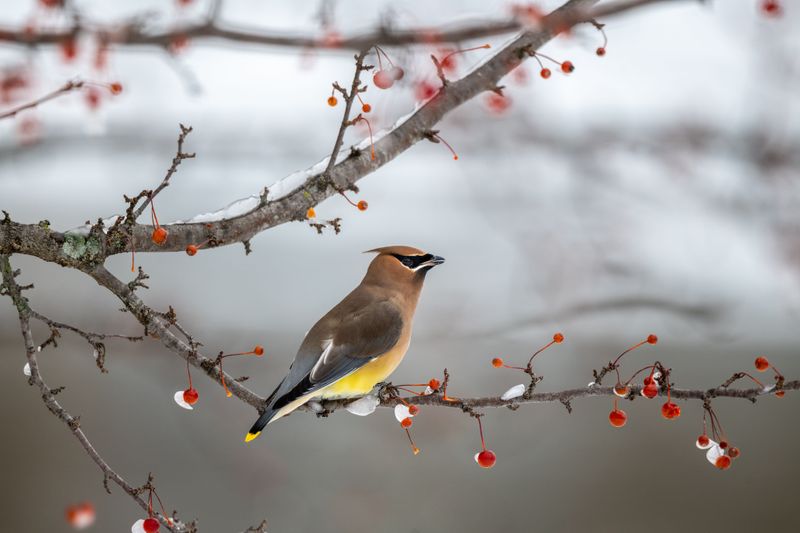
Birds are the gardeners behind every mistletoe clump. Cedar waxwings, eastern bluebirds, American robins, and mockingbirds all snack on the translucent white berries in late fall and winter.
Each berry holds a seed wrapped in a gooey layer called viscin. It is so sticky that it clings to beaks and feathers. A bird might wipe its bill on a twig to clean off the glue, leaving the seed stuck in place.
Seeds also pass through a bird’s gut and land on branches in droppings. Either way, the seed glues itself to bark, sprouts, and begins forming a haustorium. That is how a tree full of mistletoe often ends up with a neighbor that gets infected next.
I love watching a flock of waxwings work a berry-heavy clump. They are polite little thieves, passing fruit along and moving tree to tree. It is a clever partnership between plant and bird.
A practical tip follows from this. Trees where birds like to perch, such as tall hardwoods along fence lines and field edges, tend to collect more mistletoe. Isolated trees in open yards or near wood edges are common landing spots.
Your Maple Might Be Showing Stress From Too Much Mistletoe
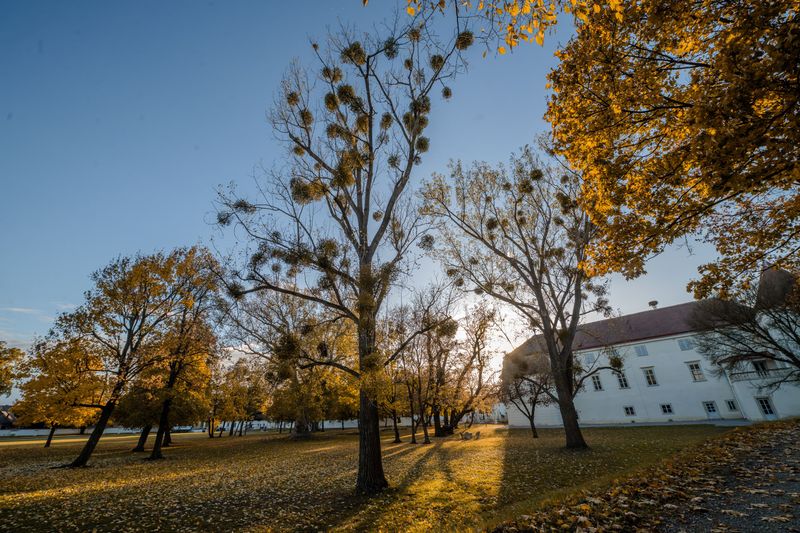
A clump or two rarely bothers a healthy, vigorous tree. Extension experts generally agree that light mistletoe is more of a cosmetic issue than a serious threat. Problems usually show up when the load gets heavy.
Lots of clumps mean lots of water heading to the parasite instead of the tree. Branches past the attachment point may grow slowly, look sparse, or decline over a few seasons.
Weak, crowded limbs can also break more easily in storms. Watch for these clues in summer:
Thinning leaves on branches that hold mistletoe. Shorter yearly twig growth. Withering branch tips. Swollen, knobby wood at attachment spots.
Drought makes things worse. During dry summers in Virginia, a tree already sharing water with many clumps can struggle more. That added stress may open the door to insects and disease.
Older trees and those already dealing with root damage, compacted soil, or construction injury are most at risk. If your tree is in that group, deep watering during dry spells and protecting its root zone from heavy traffic can help it cope while you plan any removal.
Prune Infected Limbs A Foot Below The Mistletoe Clump
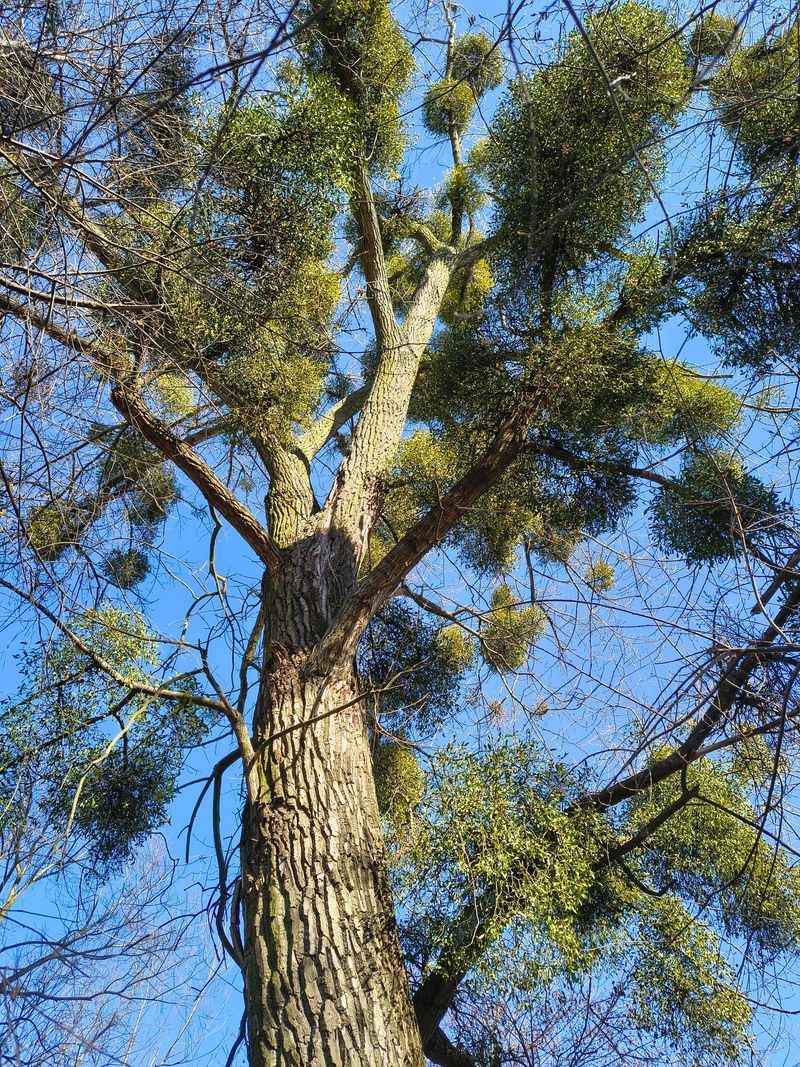
My first attempt involved yanking a clump off a low branch. It grew right back the next year. Proper pruning is the only reliable way to remove mistletoe for good on a given branch.
Cut the infected limb at least 12 inches below the point where the mistletoe attaches. Some arborists suggest going even farther if you see swelling.
That distance helps you get the hidden haustorium along with the leaves. Winter is a handy time to do this work. The clumps are easy to spot, and many trees are dormant.
Make clean cuts just outside the branch collar, the slightly raised ring where a limb meets a larger branch or trunk.
Not every infection can be cut. If mistletoe sits on the main trunk or a major structural limb, removing that wood could hurt the tree more than the parasite does.
In those spots, snipping the green growth flush with the bark and repeating each year can slow it down.
Some people wrap the cut area with black plastic to block light and stop regrowth. Results vary, so check that spot each winter. Stay on the ground and use pole tools for anything overhead.
High Mistletoe Clumps Are A Job For A Certified Arborist
Ladders and chainsaws make a risky pair. Most mistletoe hangs thirty, fifty, or even eighty feet up, far beyond safe homeowner reach. That is when calling a pro makes sense.
A certified arborist has the training, climbing gear, and insurance for high work. Look for credentials from the International Society of Arboriculture. You can search their website for certified professionals near you.
A good arborist will evaluate the whole tree first. They will weigh how many clumps are present, where they attach, and how much wood the tree can safely lose. Taking too much canopy at once can cause more stress than the mistletoe itself.
Heavy infections sometimes call for a plan spread over a few years. The arborist removes the worst limbs first and returns later for the rest.
This gives the tree time to recover and grow new leaves. Ask questions before signing on. How far below each clump will they cut? Will they avoid topping the tree? Are they planning to check back next winter?
A thoughtful answer tells you a lot about their skill. Avoid crews that suggest climbing spikes on a tree that is not being removed.
Great Purple Hairstreak Butterflies Count On This Native Parasite
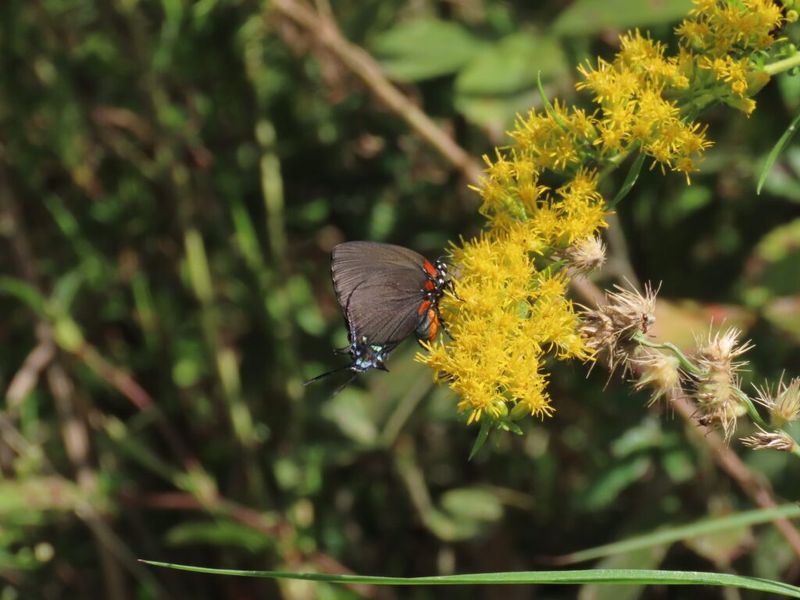
Brace yourself for the twist. The same plant sipping from your oak is a lifeline for one of the prettiest butterflies in the Southeast. The great purple hairstreak lays its eggs only on mistletoe.
Its caterpillars munch the leaves, and adults flash shimmering blue wings with bright orange bellies. In Virginia, you are most likely to spot them in the southeastern part of the state.
They often sip nectar from goldenrod and other fall flowers. Mistletoe also feeds birds through the lean winter months and offers evergreen shelter. Some birds even tuck nests inside dense clumps.
Researchers have found that forests with mistletoe can support more bird species overall. So, should you keep it or cut it? A balanced approach works well.
Leave mistletoe on wild trees in woods and field edges, and manage it on valued yard trees showing stress.
One more safety note before the holidays. Mistletoe berries and leaves can upset stomachs, so keep sprigs away from kids and pets. Hang it high, enjoy that kiss, and give a little nod to the clever native plant above you.