Native Shrubs That Bloom Like Knock Out Roses Without The Rose Rosette Risk In Georgia
A rose infected with rose rosette disease cannot be cured, and the whole plant must come out roots and all. The virus rides on mites so tiny that wind can carry them from yard to yard.
The invasive multiflora rose hides along Georgia roadsides and helps the disease spread into gardens. Red twisted shoots and extra thorns are the warning signs many rose growers now dread each spring.
I have to admit that losing a hedge of reliable roses would break my heart a little. You deserve color that keeps coming back without that constant worry hanging over your flower beds.
What surprises me most is how many native shrubs offer showy blooms, sweet scents, and busy pollinators.
Some even flower in seasons when roses sit quietly, giving you more options for a colorful yard than you might expect.
1. Oakleaf Hydrangea
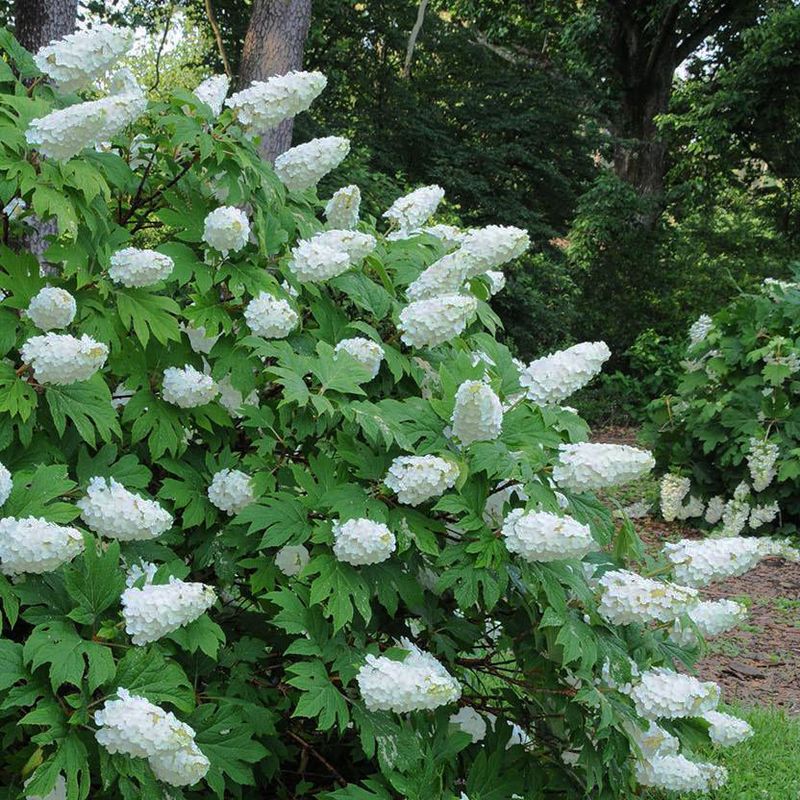
Giant white flower cones on oakleaf hydrangea can stretch nearly a foot long, and they slowly blush pink as summer rolls on.
I love how one shrub gives you a whole color show without any rose drama.
Native across the Southeast, Hydrangea quercifolia grows happily in USDA zones 5 through 9, covering nearly every corner of our region. Most plants reach four to eight feet tall and wide, so give them generous elbow room.
Blooms open in late spring and early summer, then fade to rosy purple tones that often hold well into winter.
You can leave those papery flower heads standing because they look lovely with a light frost on top.
Morning sun with afternoon shade suits this shrub best, especially in hot southern counties where July heat feels heavy. Rich, moist soil that drains well keeps roots healthy, while soggy clay often leads to root problems.
Fall brings another treat as the big oak-shaped leaves turn deep red, orange, or rich burgundy shades. Later, peeling cinnamon bark shows up on older stems and gives your winter garden some welcome texture.
Pruning is rarely needed, but do it right after flowering because next year’s buds form on old wood. Cutting back in late winter often removes those buds, and you will miss a whole season of blooms.
Personally, I think this shrub belongs near a porch or patio where you can enjoy every changing season.
Native bees visit the flowers too, so your garden gains beauty and helpful buzzing visitors at once.
2. Virginia Sweetspire
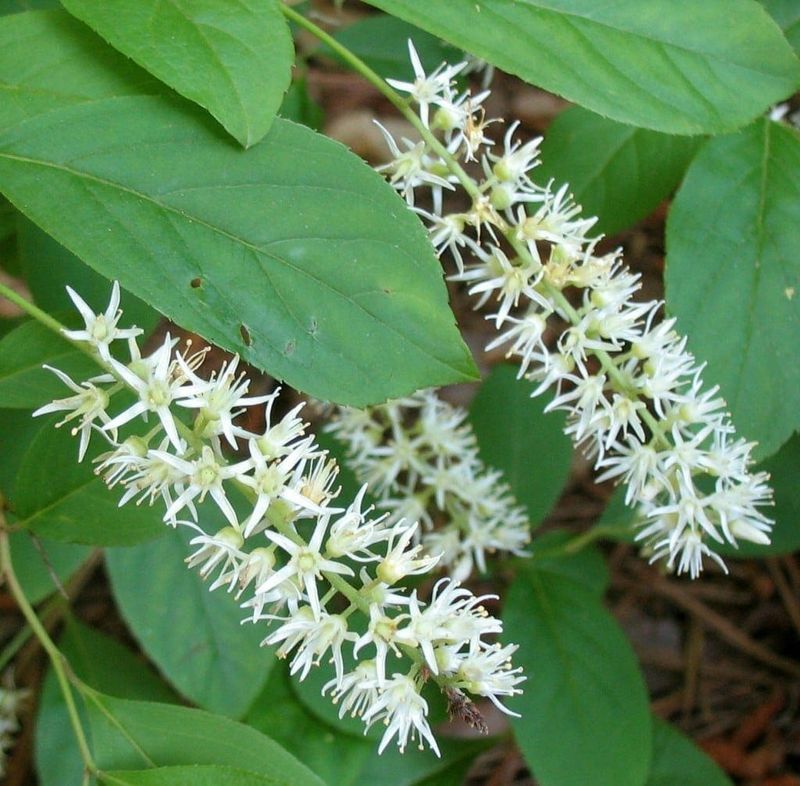
Drooping white flower tails on Virginia sweetspire look like a crowd of tiny fireworks frozen in midair each spring. Their sweet honey scent drifts across the yard and pulls butterflies in from surprising distances.
Itea virginica grows wild throughout the state and handles USDA zones 5 through 9 with easy, steady confidence.
Plants usually reach three to six feet tall and slowly spread by suckers into friendly little colonies.
Flowers arrive in late spring to early summer and often last several weeks, which feels generous for a native shrub. I like planting a small group together because the arching spikes look even better in a soft drift.
Wet spots that trouble other plants rarely bother sweetspire, so it shines in rain gardens and low corners. It also accepts ordinary garden soil, though moist acidic ground keeps leaves greener and growth noticeably fuller.
Sunlight changes the shape a bit, with full sun creating compact mounds and shade producing looser, more open branches.
Either way, you will find maintenance quite light, mostly trimming a few stray suckers after the blooms fade.
Autumn turns this modest shrub into a real showstopper, with leaves glowing red, orange, and deep burgundy. That color often hangs on far into winter, especially during mild years across the warmer southern counties.
Deer usually walk past sweetspire, which makes it a smart pick for neighborhoods with hungry visitors at night.
You get fragrant flowers and fiery fall leaves without spraying anything or worrying about mysterious rose viruses.
3. Sweet Pepperbush
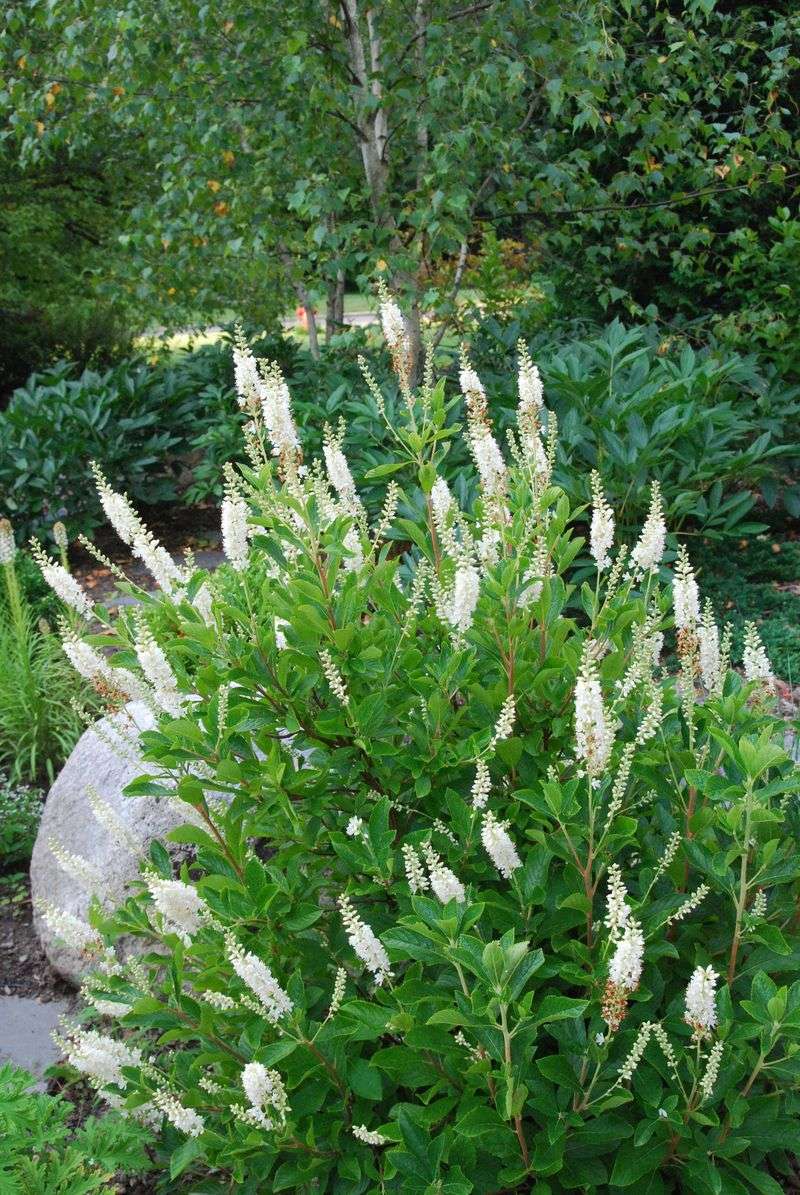
Walk past a blooming sweet pepperbush in July and the spicy, sugary perfume might stop you right in your tracks.
Bees seem to agree, because the flower spikes hum with activity from early morning until late afternoon.
Also called summersweet, Clethra alnifolia is native here and grows well in USDA zones 4 through 9. Typical plants reach three to eight feet tall and form rounded clumps that widen slowly over the years.
Blooms open in mid to late summer, which is exactly when many spring shrubs look tired and plain. White or pale pink spikes last for weeks, giving pollinators a dependable snack during the hottest stretch of weather.
Moist to wet acidic soil makes this shrub happiest, so creek banks and soggy beds are excellent planting spots.
It even tolerates some salt, which helps coastal gardeners who struggle with salty breezes and sandy ground.
Full sun to part shade both work, though more sun usually gives you heavier flowering and tighter growth. I suggest adding mulch around the base because steady moisture keeps leaves glossy through dry summer weeks.
Fall foliage turns a clean golden yellow, and the dried seed capsules stay on the branches through winter. Those brown spikes add quiet texture, and you can trim them off in late winter if you prefer.
Hummingbirds and butterflies both visit, so a patch of summersweet becomes a lively little wildlife stop.
For me, that buzzing summer energy makes it one of the most rewarding native shrubs to grow.
4. Piedmont Azalea
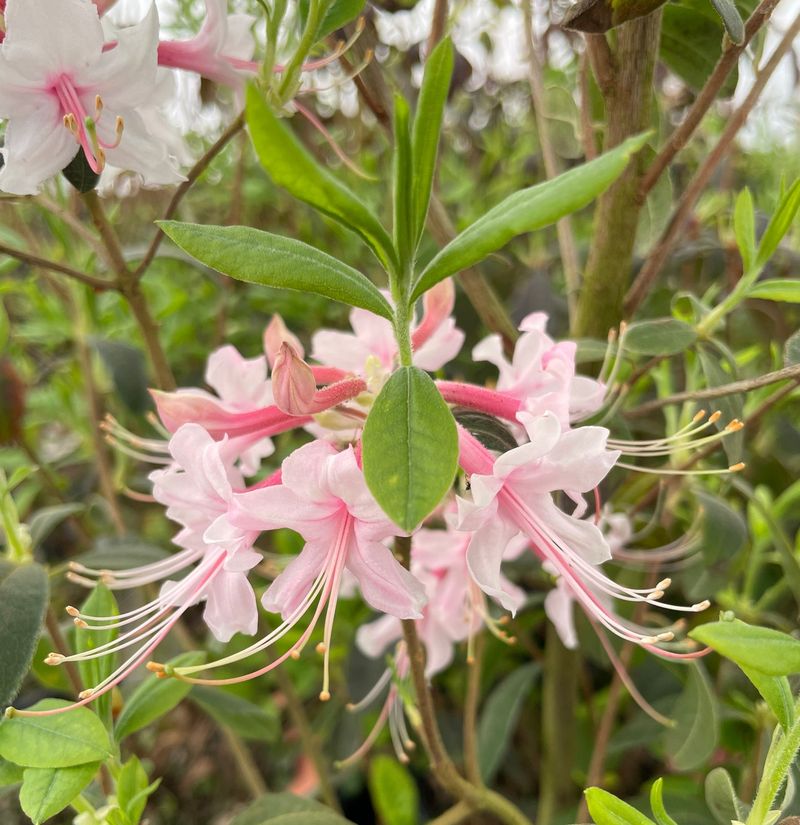
Long before leaves appear, Piedmont azalea covers bare branches with pink trumpets that smell spicy and sweet.
Swallowtail butterflies and hummingbirds race to those flowers, and you get a front row seat to the show.
Rhododendron canescens is the most widespread native azalea in the Southeast, found in mountains, Piedmont, and coastal plain. It grows in USDA zones 6 through 9, so almost every Georgia gardener can try one at home.
Expect an open, graceful shape reaching five to ten feet tall, with long stamens poking from each flower.
Colors range from pale pink to nearly white because native azaleas often cross with each other in the wild.
Partial shade works best, especially under tall pines or hardwoods that filter harsh afternoon summer sunlight. Roots stay shallow, so a thick layer of pine straw helps hold moisture and keeps the soil cool.
Acidic, well-drained soil rich in organic matter keeps this azalea thriving for many years in the garden. Heavy clay that stays soggy can cause root trouble, so plant slightly high if drainage looks questionable.
Prune lightly right after blooming because flower buds for next spring start forming soon after the show ends.
Late cuts often remove those buds, and nobody wants a spring without that sweet pink cloud.
I believe a woodland edge with a few Piedmont azaleas feels like a walk through a mountain trail. You get wild charm and early pollinator food without any of the worry that comes with roses.
5. Sweetshrub
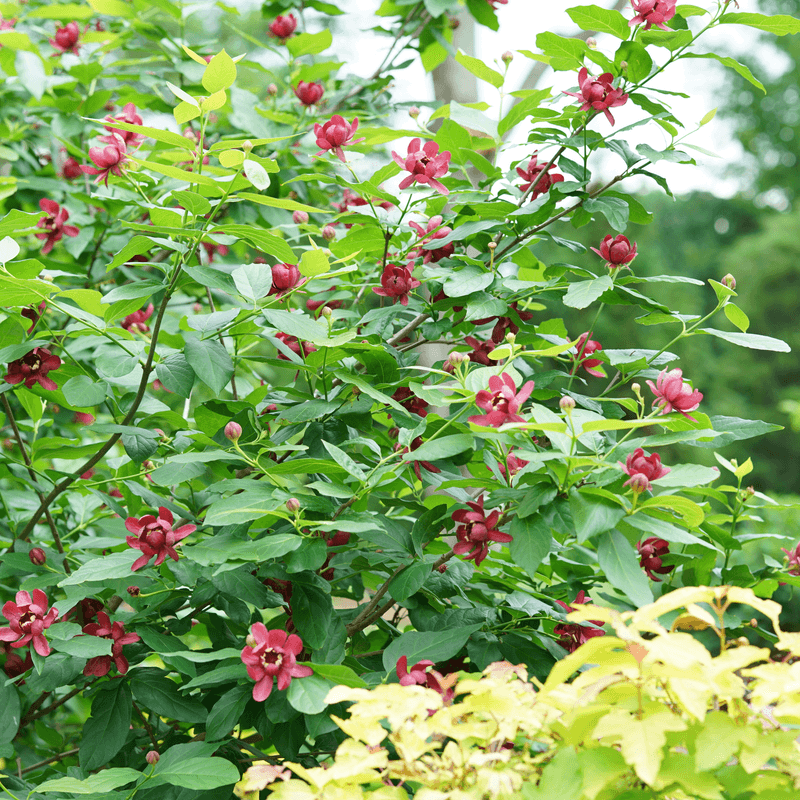
Crush a sweetshrub leaf between your fingers and a spicy scent jumps out, almost like a kitchen spice jar. Old Southern gardens often grew it near doorways just so visitors could enjoy that fruity fragrance.
Calycanthus floridus, also called Carolina allspice, is native across the Southeast and hardy in USDA zones 4 through 9.
Mature shrubs often reach six to ten feet tall and spread wider into rounded, clumping thickets.
Maroon flowers appear in April and May, and their strappy petals look a bit like tiny magnolia blossoms. Many people say the scent reminds them of ripe strawberries, bananas, or a bowl of mixed fruit salad.
Beetles handle most of the pollination, which explains the sturdy petals and that rich, fruity aroma. Before buying, sniff the blooms if possible, since fragrance strength varies quite a bit from plant to plant.
Sweetshrub adapts to many soils and handles full sun to partial shade with very little fuss.
Once established, it tolerates short droughts and occasional flooding, which makes it handy for tricky spots in the yard.
You can trim it after flowering to control size, or let it sucker into a loose informal hedge. Some named cultivars offer chartreuse or white flowers, so check plant tags if you want something a little different.
Honestly, I think every garden needs one plant that people want to touch and smell. Sweetshrub fills that role beautifully, and it skips the thorns that make roses tricky to handle.
6. Buttonbush
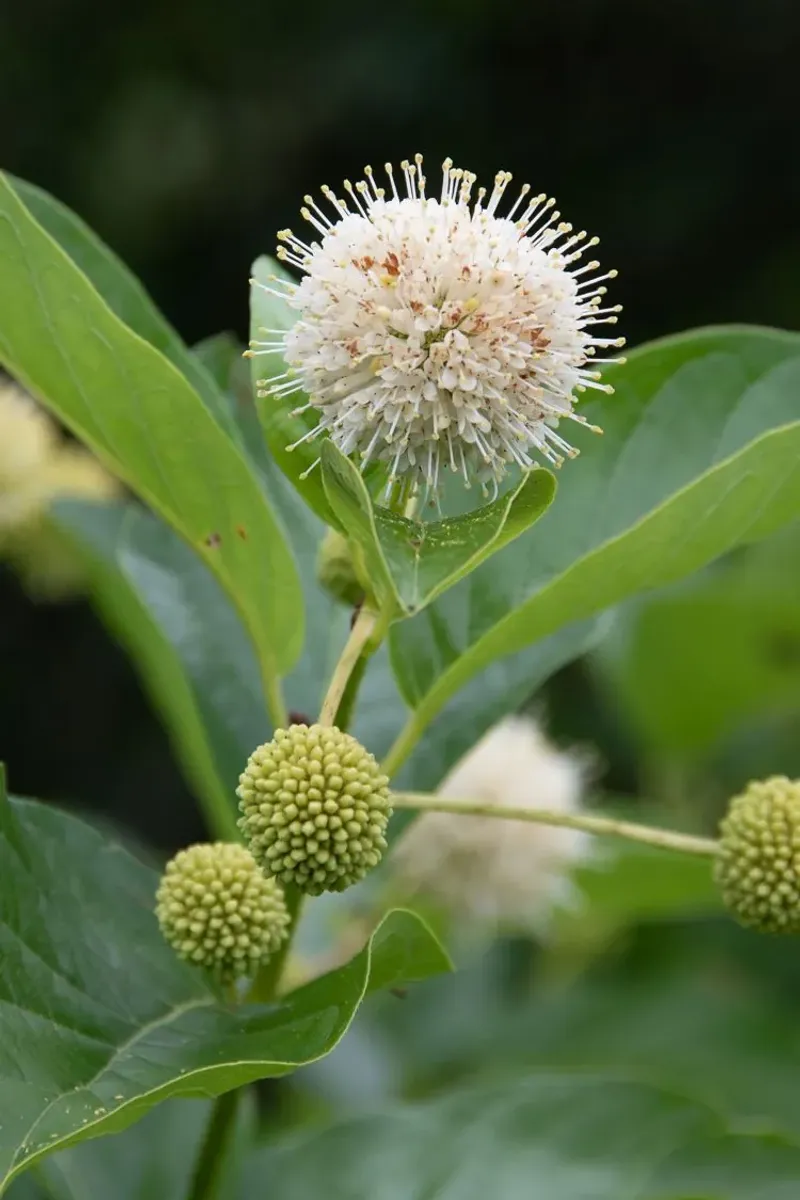
Round white flower balls on buttonbush look like tiny space satellites or pincushions bristling with pins.
Butterflies land on them constantly, and I could honestly watch that busy summer traffic for hours.
Cephalanthus occidentalis grows naturally along swamps, ponds, and streams across much of eastern North America. In the state, you will often spot it in soggy ditches where few other flowering shrubs can survive.
Fragrant blooms show up from early summer into September, giving pollinators a long, steady buffet of nectar. Bees, butterflies, and hummingbirds all visit, which turns a wet corner into a lively wildlife hangout.
Moist to wet soil is the secret, and this shrub even tolerates standing water for stretches of time.
It can grow in regular garden beds too, but you will need to water consistently during dry spells.
Plants range from three to twelve feet tall, so leave space or prune in late winter to shape them. Full sun brings the heaviest flowering, while part shade still produces a respectable crop of spiky blooms.
After the flowers fade, hard reddish-brown seed balls form and cling to branches well into winter. Ducks and songbirds eat those seeds, so your shrub keeps feeding wildlife long after summer ends.
Deer usually leave buttonbush alone, which surprises many people who struggle to protect their landscapes.
Keep in mind that the leaves are considered toxic, so plant it away from curious grazing animals.
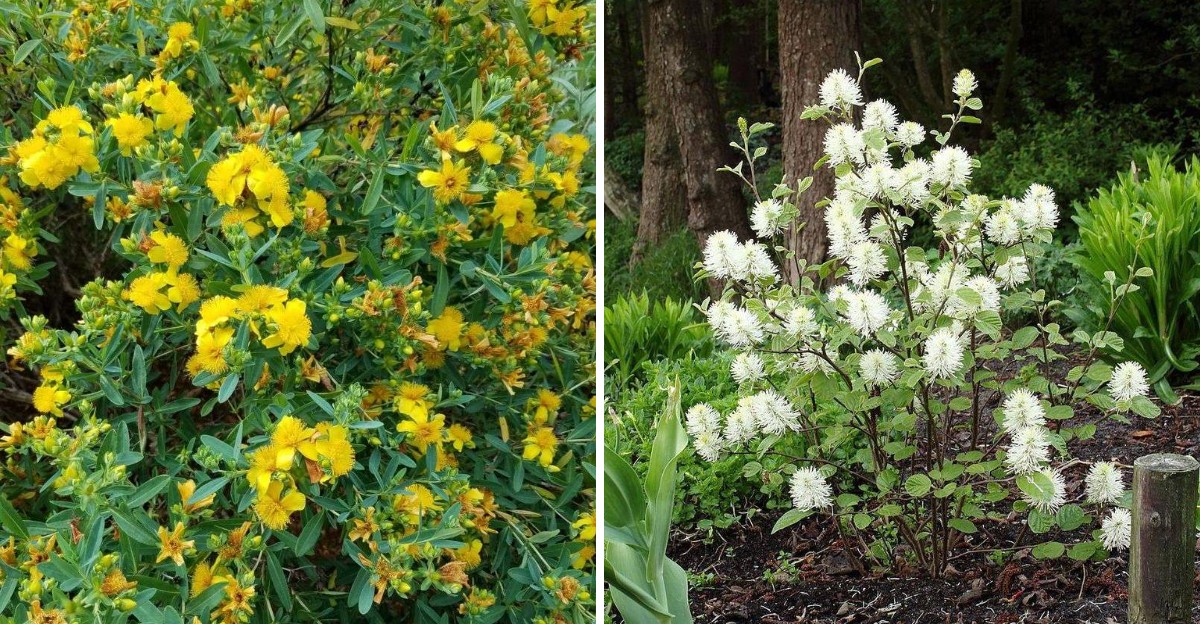
7. Shrubby St Johns Wort
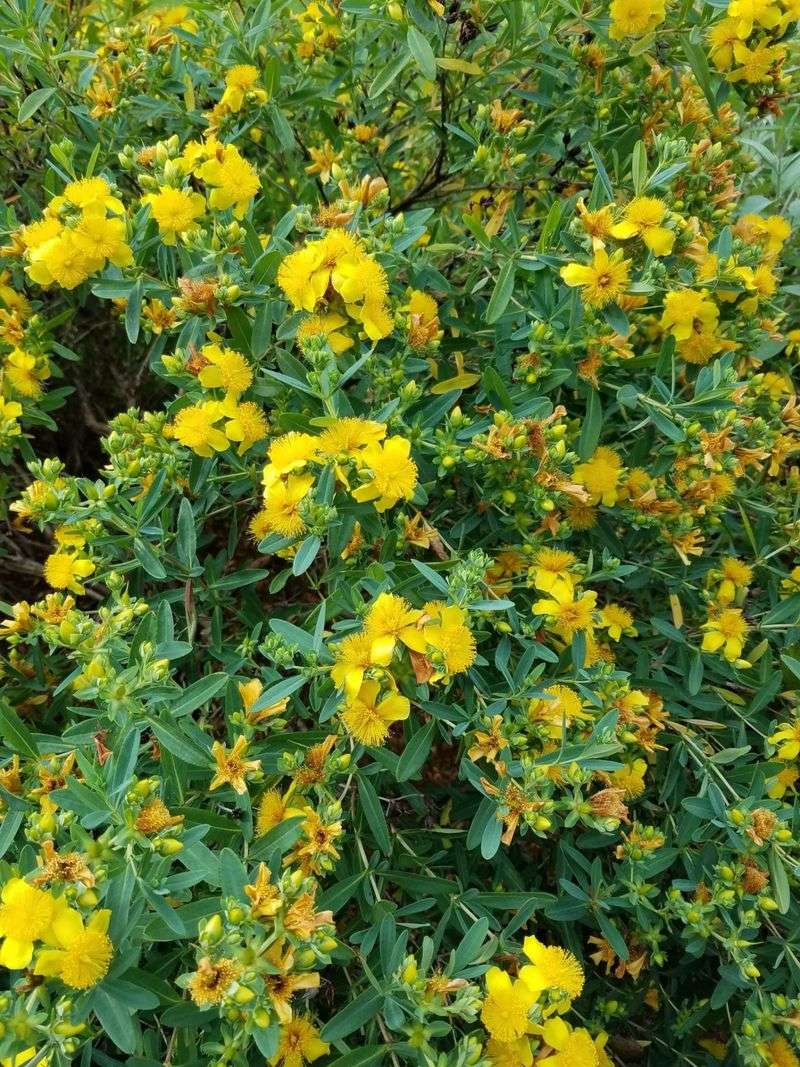
Each golden flower on shrubby St. John’s wort holds a fluffy burst of stamens that looks like a tiny firework.
Bumblebees bounce from bloom to bloom, rolling around in pollen like kids in a ball pit.
Hypericum prolificum is native to the eastern United States, including northern parts of our state, and handles zones 3 through 8. Southern gardeners in the hottest zones may find it struggles a bit, so give it afternoon shade there.
Bright yellow blooms open from June into August, covering the mounded shrub in cheerful color for weeks. I love pairing it with purple coneflower because those two colors seem to make each other glow.
Plants usually grow three to six feet tall and wide with dense, upright branches that hold their shape. Older stems develop peeling bark, which gives you something interesting to look at during bare winter months.
Soil rarely gives this tough shrub trouble, since it grows in sandy ground, heavy clay, and everything between.
It tolerates dry spells and brief flooding once roots settle, making it an easygoing choice for busy gardeners.
Deer and rabbits usually skip it, so you can plant along open edges without building protective cages. Several native moth caterpillars feed on the leaves too, quietly supporting the birds that hunt them.
Light shaping in early spring keeps the mound tidy, since flowers form on the new season’s growth.
For a compact shrub with sunny summer blooms, this one deserves far more attention than it gets.
8. Witch Hazel
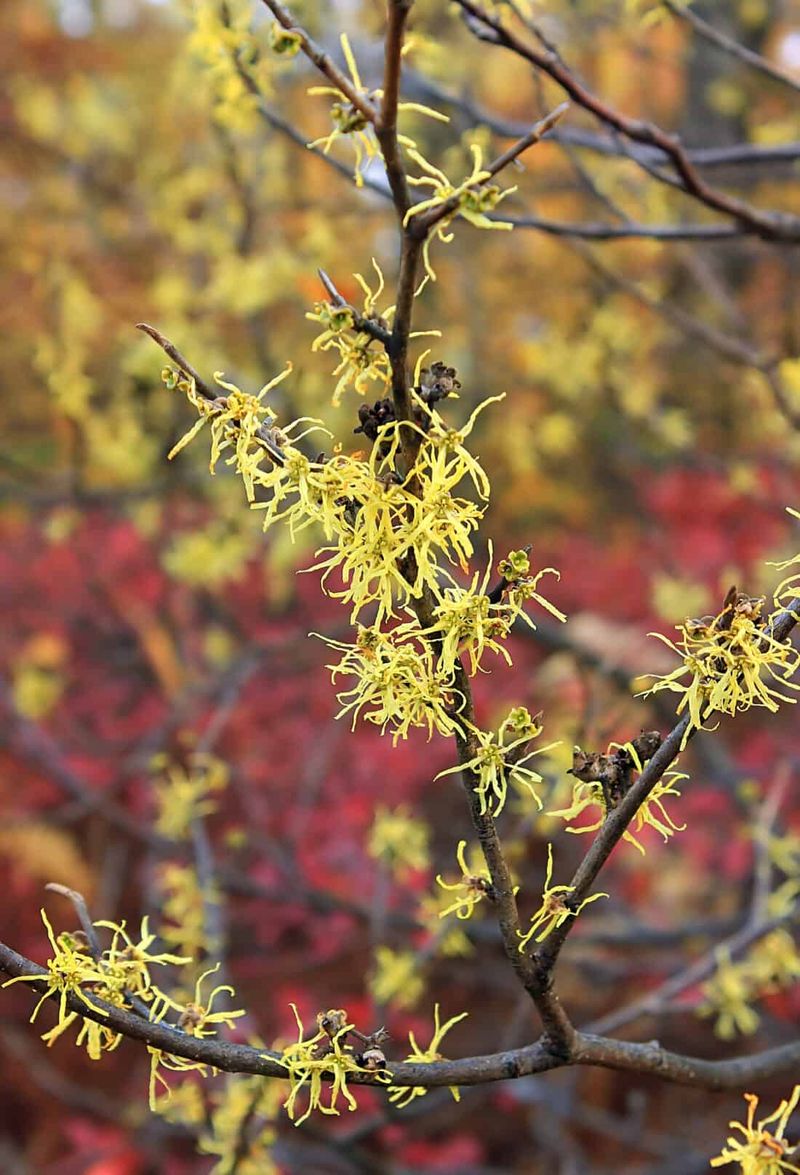
Most shrubs are winding down for the year when witch hazel decides to throw its own flower party.
Spidery yellow ribbons appear in late fall, sometimes while golden leaves are still clinging to the branches.
Hamamelis virginiana grows wild throughout eastern forests and handles USDA zones 3 through 8 with ease. It can reach fifteen to twenty feet tall, so treat it more like a small tree in tight spaces.
Flowers usually show from October into December and carry a faint, clean scent with a hint of citrus. Late flying bees and moths visit these blooms, gaining a rare food source when little else is available.
Here is a fun fact that surprises many people about the seed capsules on this shrub. A year after flowering, the woody pods snap open and fling shiny black seeds several yards away.
Sun or dappled shade works well, and acidic soil that ranges from moist to fairly dry suits it fine. In hot southern gardens, a little afternoon shade helps leaves stay fresh through the long, steamy summer.
Fall foliage turns bright lemon yellow to gold, which pairs nicely with those quirky ribbon blooms.
Prune only to remove crossing branches, since its natural vase shape already looks graceful without much help.
I can’t imagine a better shrub for gardeners who hate seeing the season end too quickly. You get flowers when roses have stopped, and that feels like a lovely little bonus gift.
9. Fothergilla
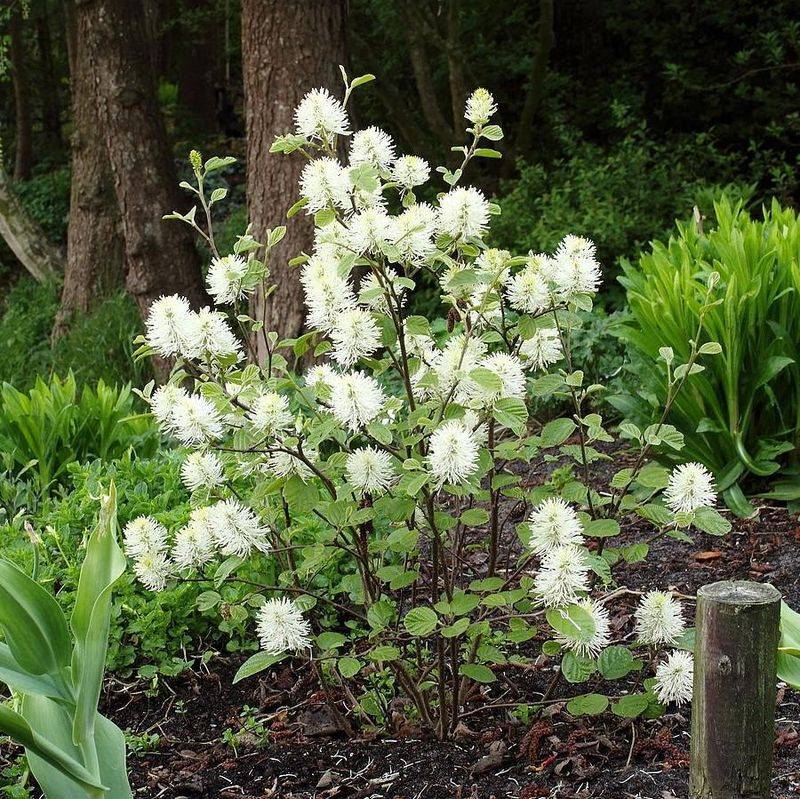
Fluffy white bottlebrush flowers make fothergilla look like someone stuck cotton swabs all over the branches.
Those soft brushes have no petals at all, since the white color comes from clusters of stamens.
Two native species grow in the Southeast, dwarf Fothergilla gardenii and the taller Fothergilla major. Both are hardy in USDA zones 5 through 8, so they suit northern and central parts of Georgia nicely.
Dwarf fothergilla stays around two to three feet tall, making it great for borders and small front beds. Large fothergilla grows six to ten feet tall, which works well as a loose screen or background shrub.
Blooms appear in April and May, often before the leaves fully open, and they smell faintly of honey.
Early bees find them quickly, so expect plenty of gentle buzzing around the brushes on warm spring mornings.
Moist, acidic, well-drained soil rich in organic matter keeps these shrubs looking their best for years. More sun usually means heavier flowering, though a bit of afternoon shade helps during sizzling southern summers.
Autumn might be the real highlight, with leaves glowing yellow, orange, red, and purple on the same branch. I have to admit that fothergilla fall color sometimes outshines maples planted right nearby in my yard.
Pests and diseases rarely bother these shrubs, which means less spraying and much more time simply enjoying them.
That kind of easy beauty is exactly what tired rose growers usually hope to find.