Most Christmas Cacti Sold In Maryland Stores Are Really A Different Holiday Plant
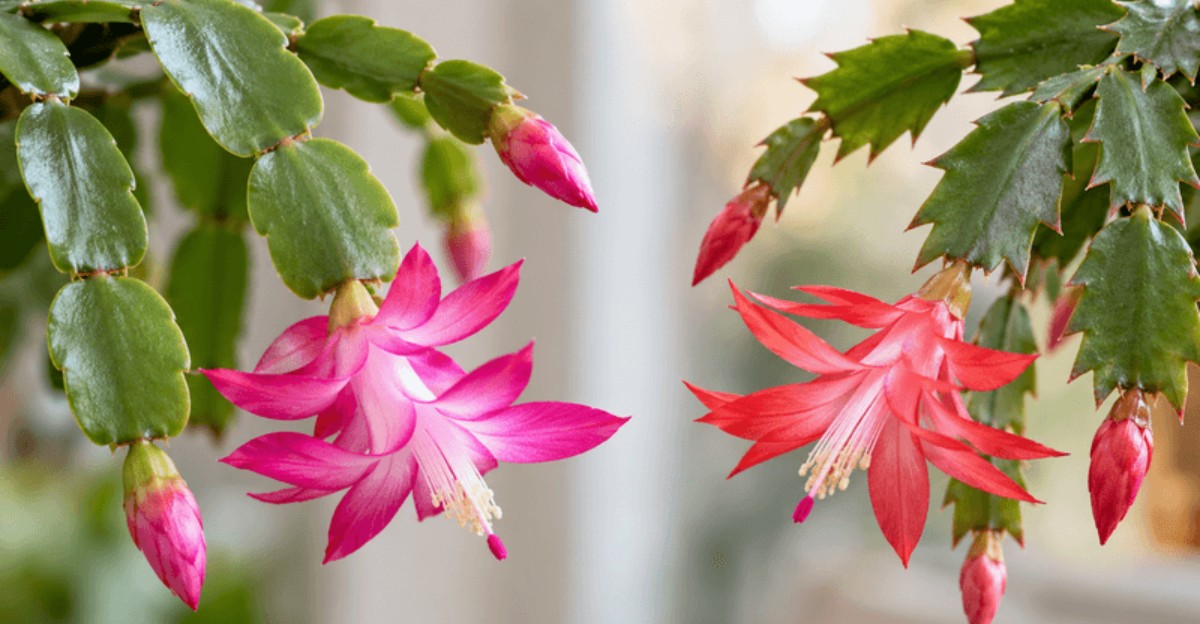
Those holiday plants with pointy claws on their stems have a nickname, and it is crab cactus. Guilty as charged, I bought one for years and called it the wrong name every single December.
The flowers often open before the turkey is even cooked. Growers in greenhouses tweak light and temperature so the blooms show up right on cue for shoppers. The name on the tag and the plant in the pot often tell two different stories.
Here in Maryland, garden centers and grocery stores fill their shelves with these cheerful pots each fall. You grab one, set it on the windowsill, and enjoy the show. Nobody hands you a botany lesson at the register.
Truth is, the clue to the real identity sits right on the stems. Once you spot it, you will never see that festive pot the same way again. So which plant is really sitting on your sill?
That Claw-Edged Holiday Cactus Has A Secret Name
I learned this one at a garden center checkout line, staring at a pot labeled Christmas cactus that was already in full bloom in early November. Something felt off, and it turns out my hunch was right.
Most holiday cacti sold in stores across the country, including Maryland, are actually Thanksgiving cacti. Their scientific name is Schlumbergera truncata. The true Christmas cactus is a hybrid called Schlumbergera x buckleyi, and it shows up in shops far less often.
University extension experts, including those at Illinois and Missouri, point out that the two plants get mixed up all the time. Both belong to the same genus, both bloom in the cooler months, and both have flat, jointed stems. To a busy shopper, they look like the same plant.
Labels add to the confusion. Many stores simply print Christmas cactus on the tag because that name sells well in December. Some tags say holiday cactus, which covers both plants without picking a side.
None of this means you were tricked on purpose. It just means the plant on your table may have a different family story than you thought. Learning the difference makes caring for it easier and a lot more fun.
Yellow Or Purple Pollen Tells The Flower Story
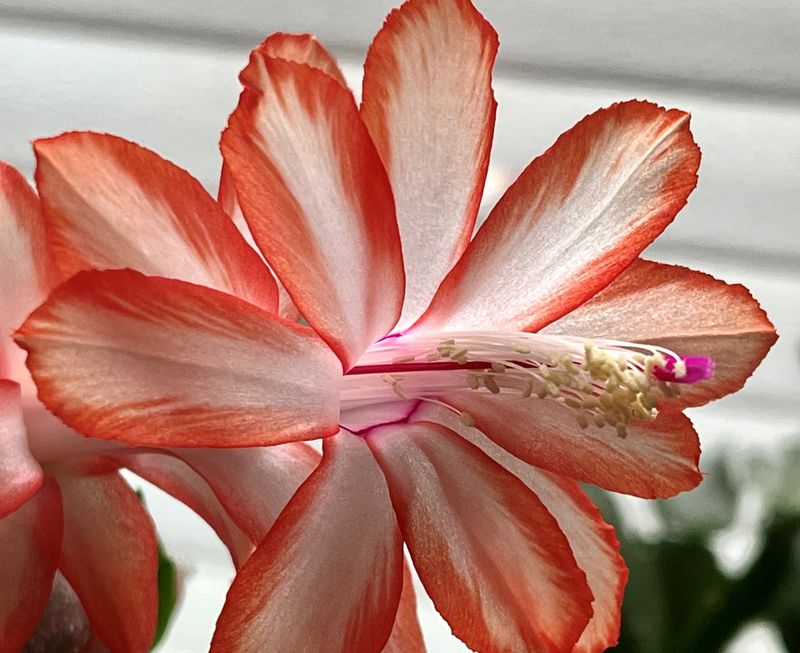
Not going to lie, I felt like a detective the first time I peeked inside a cactus bloom. The flowers carry a second clue that backs up what the stems tell you.
Look for the anthers, the tiny pollen-holding tips at the end of the long threads inside the flower. On a Thanksgiving cactus, the anthers are usually yellow. On a true Christmas cactus, they tend to be pink to purplish brown.
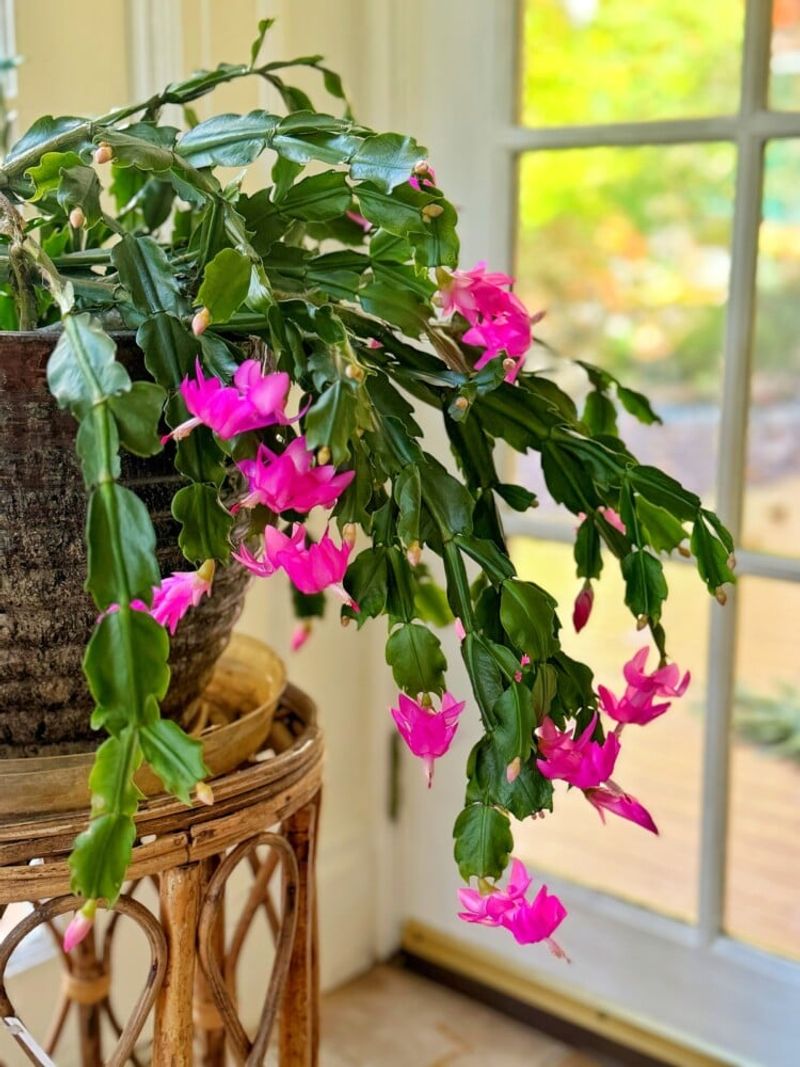
The way the flowers hang can help too. Thanksgiving cactus blooms often stick out more sideways, almost level with the stem. Christmas cactus flowers usually droop downward in a softer, dangling way.
Flower color is less helpful. Thanksgiving cacti come in a wide range, from white and yellow to salmon, pink, red, and purple. Christmas cacti are most often seen in rosy pink or magenta, but color alone is not a safe test.
A small magnifying glass or your phone camera zoomed in makes this job easy. Take a photo in good daylight and enlarge it. Compare anther color, flower angle, and stem edges together, and you will have a confident answer about what you brought home.
Check The Stem Segments For Pointy Teeth
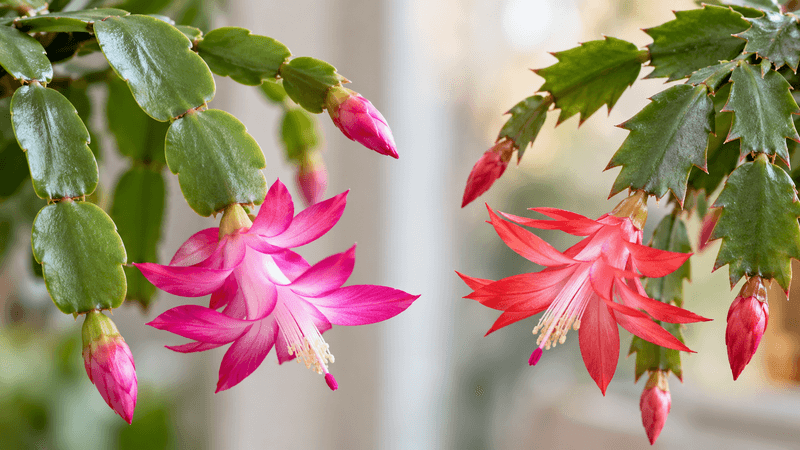
Grab your plant and look closely at one of the flat green pads. Those pads are stem segments, not leaves, and they hold the most reliable clue you will find.
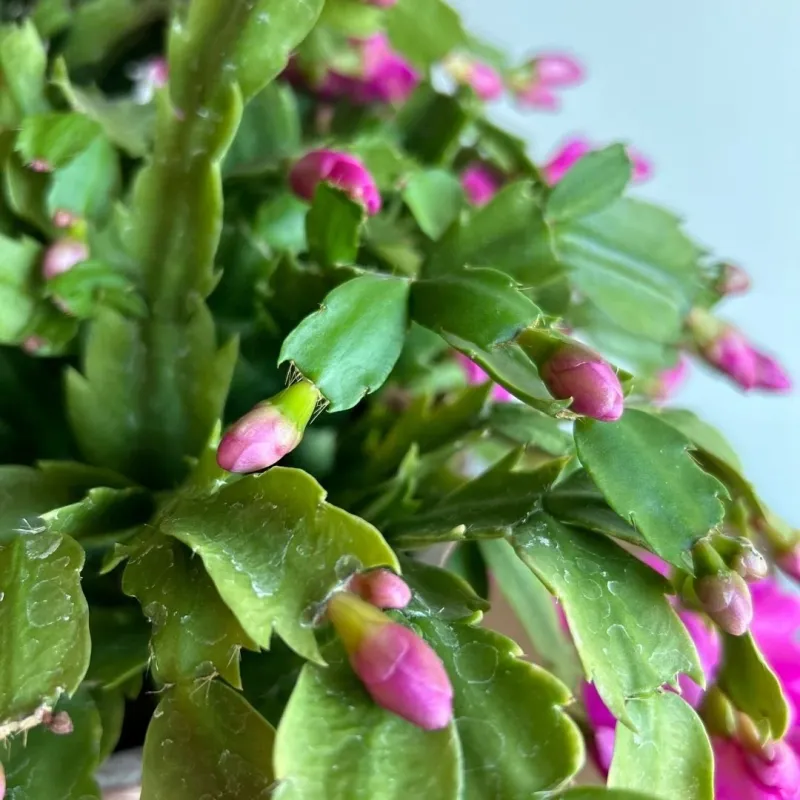
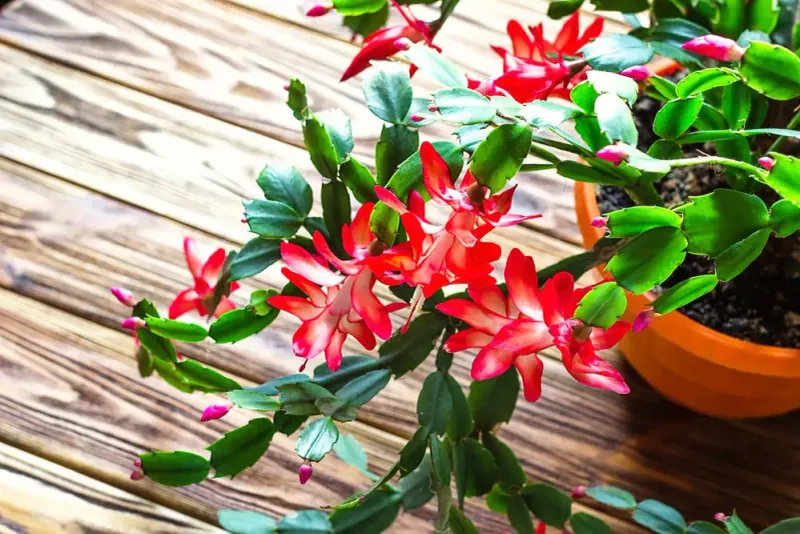
A Thanksgiving cactus has two to four sharp, pointed teeth along the edges of each segment. The tips curve up a bit, almost like little crab claws. That shape is why some gardeners call it crab cactus.
A true Christmas cactus looks softer. Its segments have rounded, gently scalloped edges with no sharp points. Run your finger along the side and you will feel smooth bumps instead of hooks.
Here is a quick check you can do in under a minute:
Pick a healthy segment near the tip of a stem. Count the teeth and notice if they point outward or curve upward. Pointy and claw-shaped means Thanksgiving, while rounded and scalloped means Christmas.
Fair warning, a third cousin sometimes sneaks into stores too. The Easter cactus has bristly hairs at the segment tips and star-shaped flowers in spring. It belongs to a different genus, so it plays by slightly different rules. Once you train your eye on those edges, sorting the trio becomes second nature.
November Blooms On Your Christmas Cactus Are A Giveaway
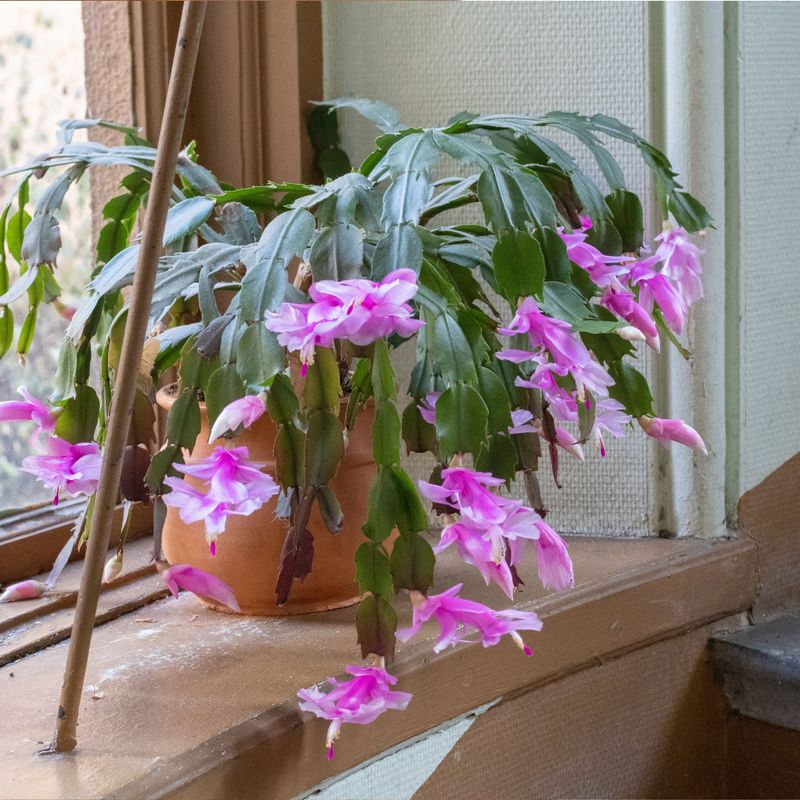
Ever notice your Christmas cactus throwing a party weeks before Santa shows up? That early timing is one of the clearest hints you own a Thanksgiving cactus.
Left to their natural schedule, Thanksgiving cacti usually bloom from mid-November into December. True Christmas cacti tend to flower later, often from late December into January. Their names actually match their timing pretty well.
Things get murky because growers control the calendar. Commercial greenhouses adjust day length and temperature so plants are covered in buds right when shoppers want them. A Thanksgiving cactus can look perfectly timed for Christmas when you buy it.
The real test comes the second year at home. Once your plant follows natural Maryland daylight in your house, its true rhythm usually shows. If it blooms around Thanksgiving again, you have your answer.
Keep a simple note on your phone or calendar with the date the first flower opens. Over a couple of seasons, you will see a clear pattern. It is a small, satisfying way to get to know your plant, and it helps you plan where to show it off during the holidays.
Growers Favor Thanksgiving Cacti For Good Reasons
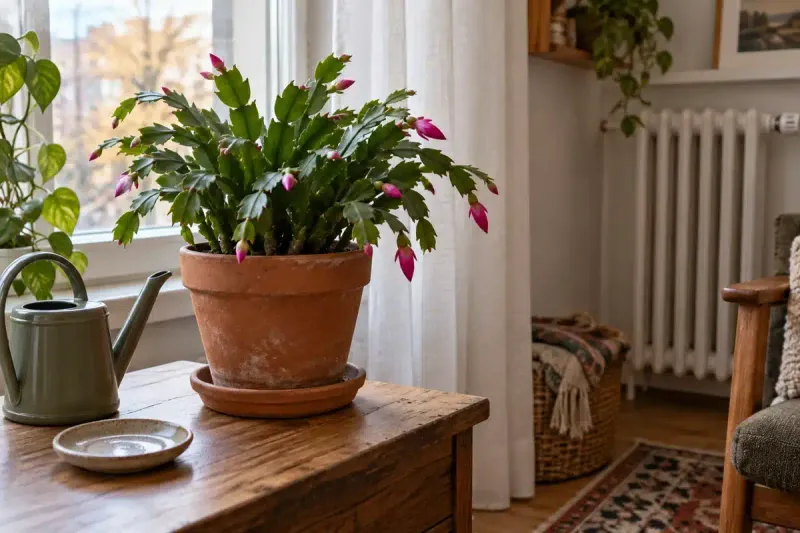
Walk into a big greenhouse in autumn and you will see bench after bench of blooming holiday cacti. Almost all of them are Thanksgiving types, and the reasons are practical.
Thanksgiving cacti are easier to produce on a large scale. Growers can time their flowering reliably with light and temperature control. That means fewer surprises when trucks need to leave for stores on a set schedule.
Variety helps sales too. Breeders have created Thanksgiving cacti in many colors, including white, peach, yellow, coral, and deep red. Shoppers love picking a shade that matches their decor.
Shipping is another factor. Plants that hold up well in boxes and on store shelves are more valuable to sellers. Thanksgiving cacti handle the trip nicely when their buds are at the right stage.
The true Christmas cactus is still grown, but in smaller numbers. Many of the old ones you see are passed down in families or shared as cuttings between friends.
So the mix-up is mostly about business and convenience, not trickery. Knowing this helps you shop smarter. If you want a real Christmas cactus, ask a local grower or a plant swap group rather than a big-box shelf.
Rainforest Roots Mean Your Holiday Cactus Hates Desert Care
Call me stubborn, but I once treated my holiday cactus like a desert plant and let it go bone dry. It sulked, dropped segments, and taught me a lesson.
Both Thanksgiving and Christmas cacti come from the coastal mountain forests of Brazil. In the wild, many grow on trees or rocks in shady, humid spots. They are forest cacti, so their needs are quite different from a prickly pear.
Give your plant bright, indirect light. An east window or a spot a few feet back from a sunny south window works well. Harsh afternoon sun can bleach or redden the stems.
Water when the top inch or so of soil feels dry. Pour until water drains out the bottom, then empty the saucer. Soggy roots are a common cause of trouble.
Use a light, well-draining potting mix, such as regular mix blended with perlite or orchid bark. These plants like to be a little snug in their pots, so repot only every few years.
Indoor heat in Maryland winters dries the air fast. A pebble tray or grouping plants together adds a bit of welcome humidity.
Long Dark Nights Set Holiday Cactus Buds
I didn’t expect a plant to need bedtime rules, yet holiday cacti absolutely care about darkness. They are short-day plants, so long nights tell them it is time to bloom.
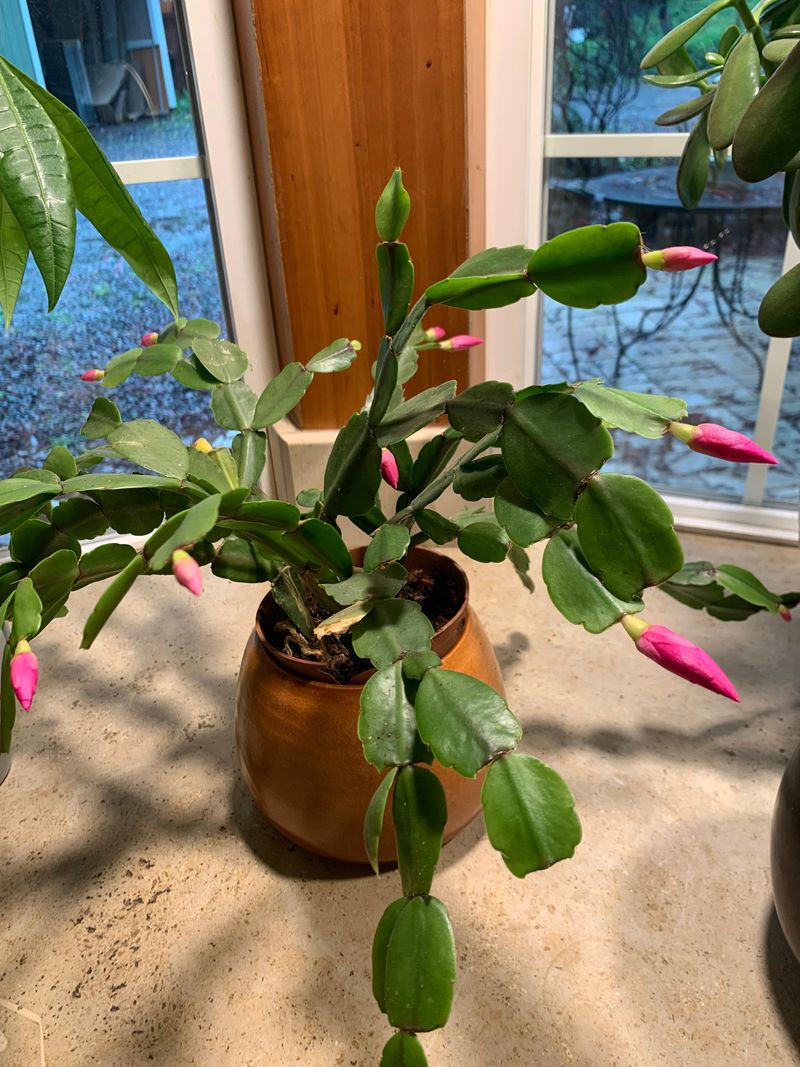
Extension guidance suggests about 12 to 14 hours of uninterrupted darkness each night for roughly six weeks. Cooler nights help a lot, ideally between about 50 and 65 degrees. Many plants will set buds from cool temperatures alone, even with some light.
In Maryland, fall gives you a head start. Shorter days arrive naturally from late September on. A spare bedroom, unheated sunroom, or a spot away from lamps can do most of the work.
Watch out for stray light. A porch light through the window or a lamp left on in the evening can confuse the plant. Even brief interruptions may delay buds.
Ease up on watering a little during this stretch, but do not let the soil turn powder dry. Once you see tiny buds at the stem tips, move the plant where you can enjoy it.
Keep it away from heater vents and cold drafts. Sudden swings in temperature are a common reason buds drop before opening.
Share A Cutting And Keep Your Holiday Cactus Going For Decades
Some of the most beautiful holiday cacti I have seen were older than the people caring for them. These plants can live for many decades with simple care.
Whether yours turns out to be Thanksgiving or Christmas, the name matters less than the joy it brings. Both are easy to grow and easy to share. Once you know which one you have, you can plan your bloom expectations and gift ideas.
Propagating is wonderfully simple. After flowering ends, twist off a piece with two or three segments. Let it sit for a day to dry the cut end.
Tuck the cutting about an inch deep in moist, well-draining mix. Keep it in bright, indirect light and water lightly. Roots often form within a few weeks.
Late spring and summer are great times for this project. Plants can even spend summer outdoors in a shady spot once Maryland nights stay above 50 degrees. Bring them back inside before fall frost.
Here is my favorite takeaway. Label your cuttings with the correct name before you give them away. You will pass along a lovely plant and a fun bit of plant knowledge your friends can brag about next December.