Brown Patches In Your Maryland Lawn May Signal A Bigger Problem
An unseen pest may be damaging your lawn beneath the surface. Brown patches don’t happen by accident, no matter what you assume.
Heat takes the blame, but it rarely deserves it. Real damage begins long before you notice anything wrong.
Maryland summers create exactly the conditions this invader craves. It feeds quietly beneath the surface, undetected for weeks.
Roots weaken fast once feeding becomes heavy and constant. Grass detaches like carpet when the damage turns severe.
Patches spread wider daily, often overnight, without warning signs. Ignoring the signs only buys this invader more time.
Detection early can determine how much of the lawn recovers. Homeowners across Maryland lose entire lawns to this exact threat every year.
Knowledge changes the outcome the moment you apply it. Waiting even a few days can cost you serious turf.
Timing matters more than most people ever realize. What you do next will determine your lawn’s recovery.
Why Brown Patches Show Up In Maryland Lawns
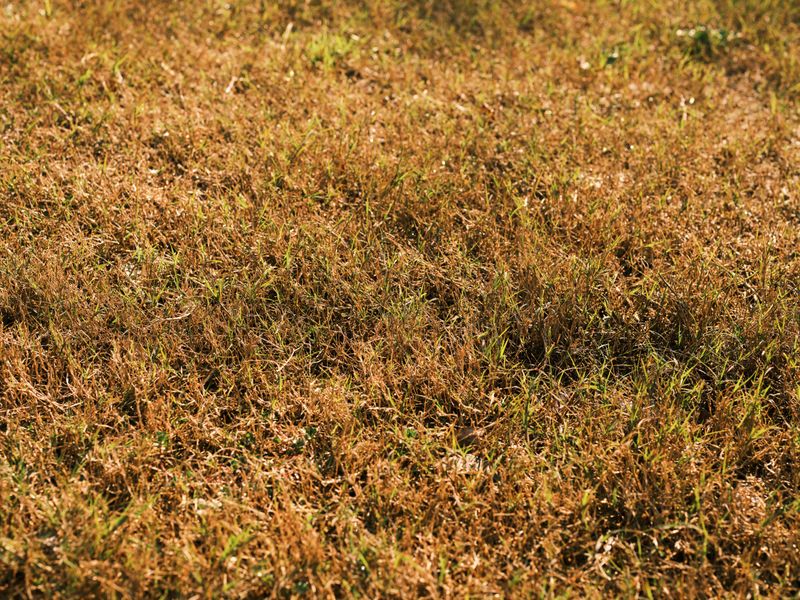
Your grass looked perfect last month. Now it looks like something went wrong overnight.
Brown patches in your Maryland lawn may signal a bigger problem than drought stress or bad watering habits. The Mid-Atlantic climate creates ideal conditions for turf stress in late summer.
Heat, humidity, and heavy rainfall all put pressure on grass roots. When roots weaken, the lawn becomes vulnerable to pests hiding underground.
Many homeowners blame the sun or a broken sprinkler head first. That instinct makes sense, but it delays finding the real cause by days or even weeks.
Parts of Maryland, especially central and Piedmont regions, tend to have clay-heavy soil. That means poor drainage, which creates favorable breeding conditions for beetle larvae.
Beetles lay eggs in moist soil during early summer. Those eggs hatch into white grubs that immediately start feeding on grass roots.
Roots are the lifeline of any lawn. Once grubs sever them, the grass above loses its anchor and its water supply simultaneously.
The brown patches you see on the surface are the final symptom. By the time they appear, the damage underground is already weeks old.
Checking early is always smarter than waiting for the full picture. A lawn that browns fast in August deserves a closer look below the soil line.
Knowing why patches form is the first step toward fixing them. Understanding the cause makes every next decision faster and more effective.
The Hidden Grub Problem Behind The Damage
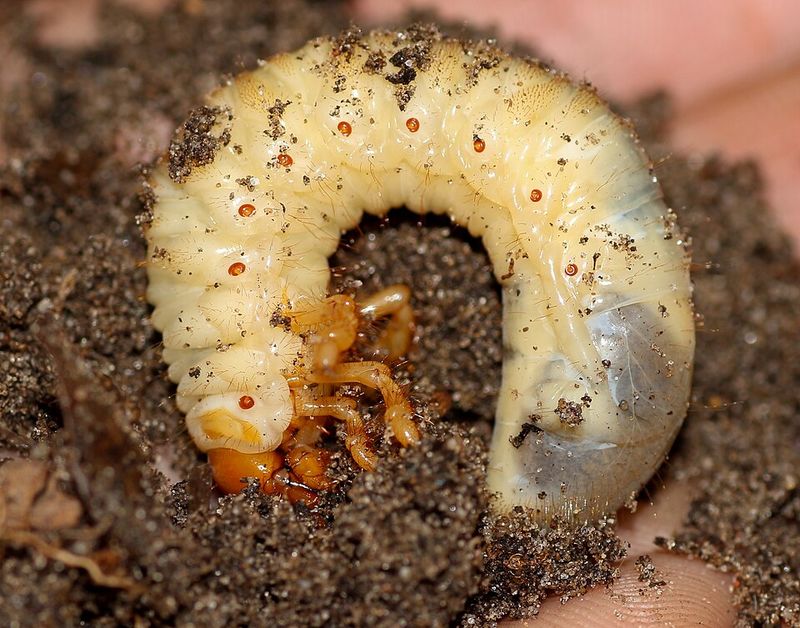
Flip back a section of struggling turf to see what’s underneath. You may find something unexpected.
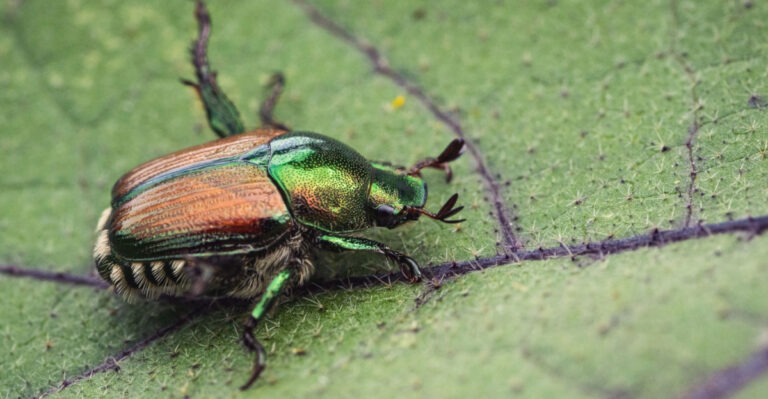
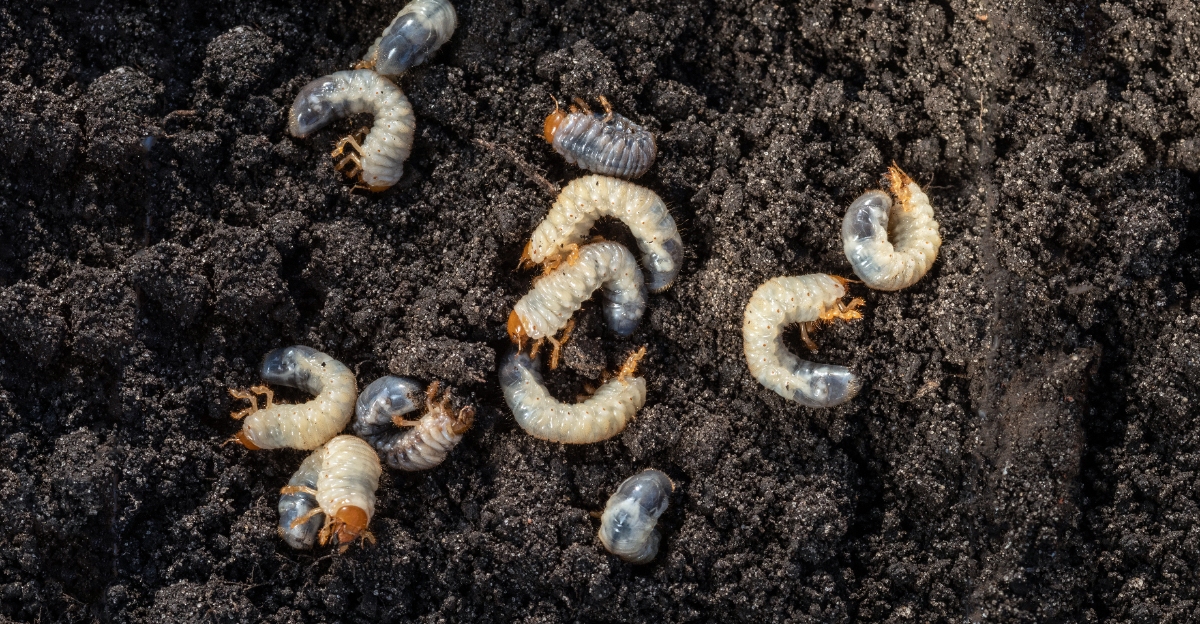
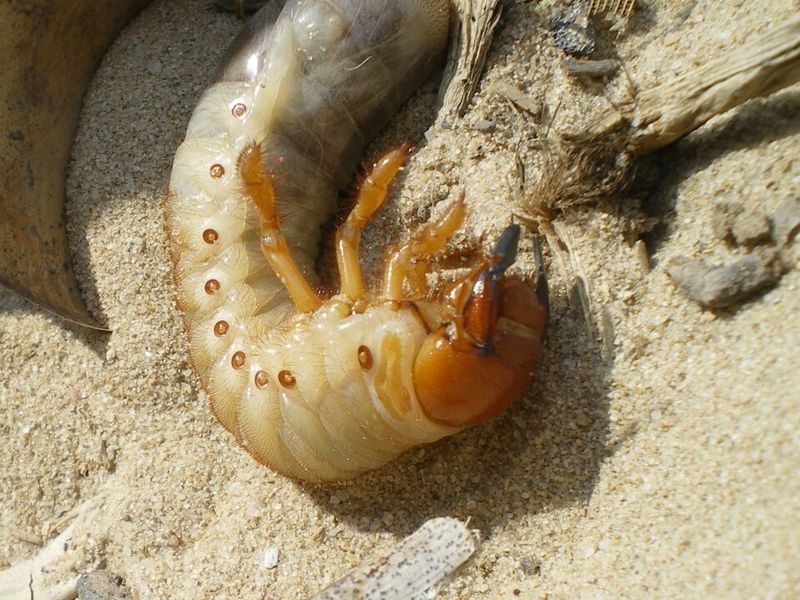
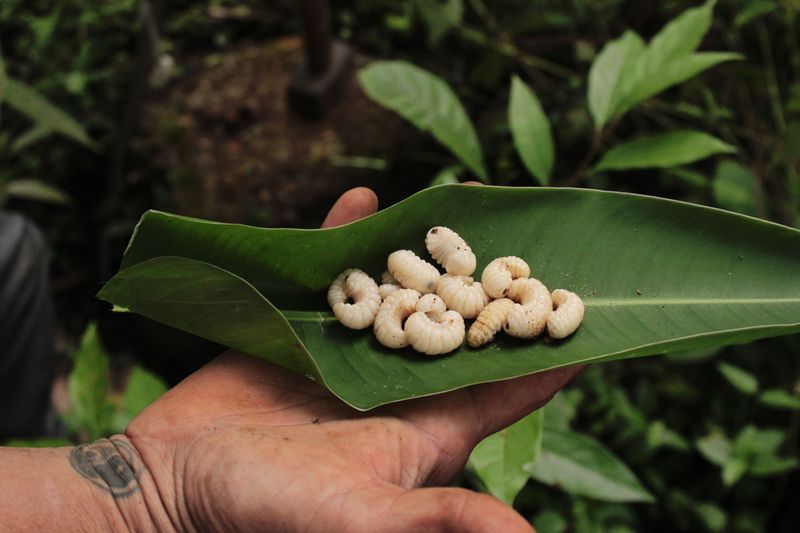
White grubs are the larvae of beetles like the Japanese beetle and masked chafer. They curl into a C-shape and live entirely underground during their feeding stage.
A single square foot of lawn can hold ten or more grubs in a heavy infestation. At that density, root destruction happens fast and spreads wide.
These larvae feed aggressively from late summer through early fall. That feeding window lines up almost perfectly with Maryland’s hottest and driest weeks.
Your Maryland Garden Changes Every Week. Your Plan Should Too.
Gardening in Maryland changes quickly throughout the season. Every Friday you’ll receive a simple weekly plan showing exactly what to plant, prune, fertilize, harvest, and protect so you never miss the right timing.
Grubs do not eat grass blades. They chew through the root system, disconnecting the turf from its food and water source entirely.
Once roots are gone, the grass declines from the bottom up. The surface browns quickly after that, sometimes within just a few days.
Adult beetles emerge in June and July to mate and lay eggs. Each female can deposit dozens of eggs in a single season.
Those eggs hatch in about two weeks. The newly hatched larvae immediately begin feeding on whatever roots they can find nearby.
This warm, moist climate can allow grub problems to develop more quickly than in cooler regions. That’s why staying alert during Maryland summers matters so much.
Spotting this hidden threat early changes everything about your response plan. The sooner you act, the less turf you lose to these underground feeders.
How To Tell Grubs From Other Lawn Issues
Not every brown spot means grubs are involved. Some lawn problems look similar but have completely different causes and fixes.
Fungal diseases like brown patch create circular, tan-colored rings in the turf. Grub damage tends to be more irregular and spreads outward from a central weak zone.
The easiest field test is the tug test. Grab a handful of brown grass and pull firmly upward toward the sky.
Healthy grass resists because its roots grip the soil tightly. Grub-damaged grass peels back like a loose carpet with almost no resistance at all.
Another clue is wildlife activity in your yard. Crows, skunks, and moles dig aggressively into grub-infested lawns looking for a meal.
If animals are tearing up your turf overnight, grubs are almost certainly the reason. Wildlife rarely excavates healthy, root-secured grass without a food incentive.
Drought stress causes uniform browning across large open areas. Grub damage shows up in patches that feel spongy or soft when you walk across them.
Check the soil beneath suspicious patches directly. Dig down two to three inches and count any white, C-shaped larvae you find per square foot.
As a general guideline, a low grub count per square foot often means the lawn can recover on its own, while a higher count signals an infestation that may require treatment.
Accurate identification saves you money and time. Treating for grubs when fungi are the culprit solves nothing and wastes valuable lawn care resources.
What Happens If Grubs Go Untreated
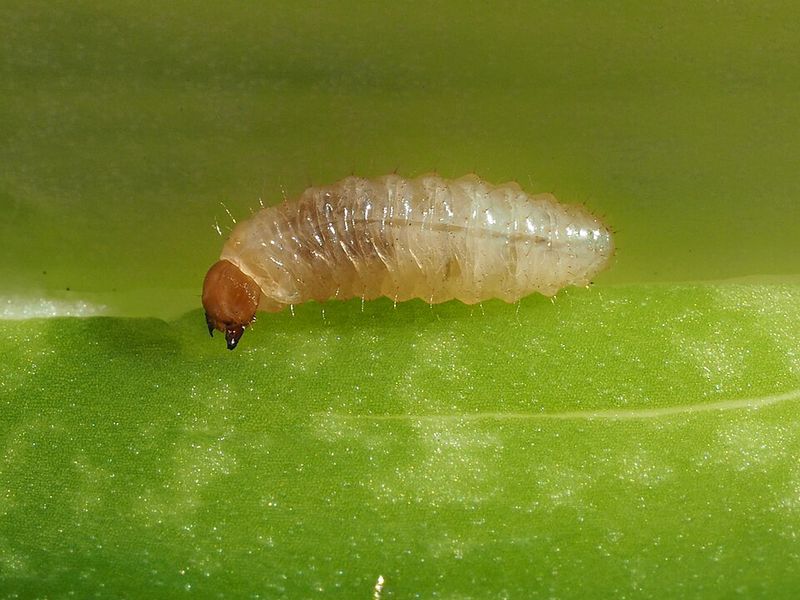
Ignoring grubs can become a costly mistake for homeowners. The problem does not pause or resolve itself over winter.
As temperatures drop in fall, grubs burrow deeper into the soil. They go dormant but survive the cold season completely intact underground.
When spring arrives and soil warms again, they move back toward the surface. At that point, they resume feeding before pupating into adult beetles.
Those adult beetles then fly off to mate, lay more eggs, and restart the entire cycle. Each generation left untreated multiplies the next season’s population significantly.
Meanwhile, the physical lawn damage compounds year after year. Bare soil left by damaged turf invites weeds like crabgrass and dandelion to take hold fast.
Weeds establish quickly in exposed ground with no grass competition. Once they root in, removing them requires a separate and often costly treatment plan.
Secondary pest damage also grows when grubs go unchecked. Moles tunnel through yards relentlessly when grub populations are high and food is abundant.
Mole tunnels disrupt soil structure and create tripping hazards across the lawn. Their presence signals an underground food source that continues attracting wildlife season after season.
The cost of full lawn renovation far exceeds early grub treatment. Waiting until the damage is severe can mean reseeding or resodding entire sections of your yard.
Brown patches in your Maryland lawn may signal a bigger problem ahead if left alone too long. Act before the cycle repeats itself next summer.
Treating An Active Grub Infestation
Finding grubs in your yard is frustrating, but it is also fixable. Treatment options range from chemical controls to natural biological solutions.
Curative insecticides like trichlorfon work fast on active grub populations. Apply them in late summer when grubs are still small and feeding near the surface.
Smaller grubs absorb the treatment more effectively than larger, mature ones. Timing your application to August or early September gives you the strongest results.
Water the lawn thoroughly after applying any granular grub product. The active ingredients need moisture to move down into the soil where grubs are feeding.
Biological options are worth considering for homeowners who prefer fewer chemicals. Beneficial nematodes are microscopic organisms that target and parasitize grub larvae naturally.
Nematodes work best when soil stays moist and temperatures remain moderate. Apply them in the evening to protect them from sun exposure during their activation period.
Milky spore is another biological option that targets Japanese beetle grubs specifically. It builds up in soil over several seasons and provides longer-term population control against that species.
Always read product labels carefully before any application. Dosage, timing, and safety precautions vary between products and matter greatly for both effectiveness and lawn health.
Spot-treating only the affected areas saves product and reduces chemical spread. Mark your brown patches clearly before you start so you cover every damaged zone.
Getting treatment right the first time protects your investment in your lawn. A well-timed application now prevents far more expensive repairs next growing season.
Preventing Grubs From Coming Back
Treating grubs is only the first step. Prevention matters just as much, and it starts with a solid plan before beetles ever lay eggs.
Preventive grub treatments work best when applied in June or early July. That window targets newly hatched larvae before they grow large enough to cause serious root damage.
Products containing imidacloprid or chlorantraniliprole are common preventive choices. They stay active in the soil for weeks, intercepting larvae right after eggs hatch.
Healthy, thick turf naturally resists grub damage better than thin or stressed grass. A dense root system can tolerate some larval feeding without showing surface symptoms.
Fertilizing properly in spring builds stronger, deeper roots throughout the season. Stronger roots give your lawn more resilience when grubs are at their hungriest in August.
Overseeding bare or thin areas in early fall fills gaps before weeds claim them. A full lawn canopy discourages beetles from choosing your yard as a laying site.
Reducing excess moisture in summer also helps lower grub pressure. Beetles prefer to lay eggs in moist, irrigated soil, so cutting back on watering slightly can deter them.
Monitoring your lawn regularly through summer catches new infestations early. A quick monthly tug test costs nothing and takes only a few minutes to complete.
Partnering with a local lawn care professional adds an expert layer of protection. Brown patches in your Maryland lawn may signal a bigger problem, but prevention keeps that problem from ever starting.