Is Winter Too Early To Prune A Christmas Cactus In California?
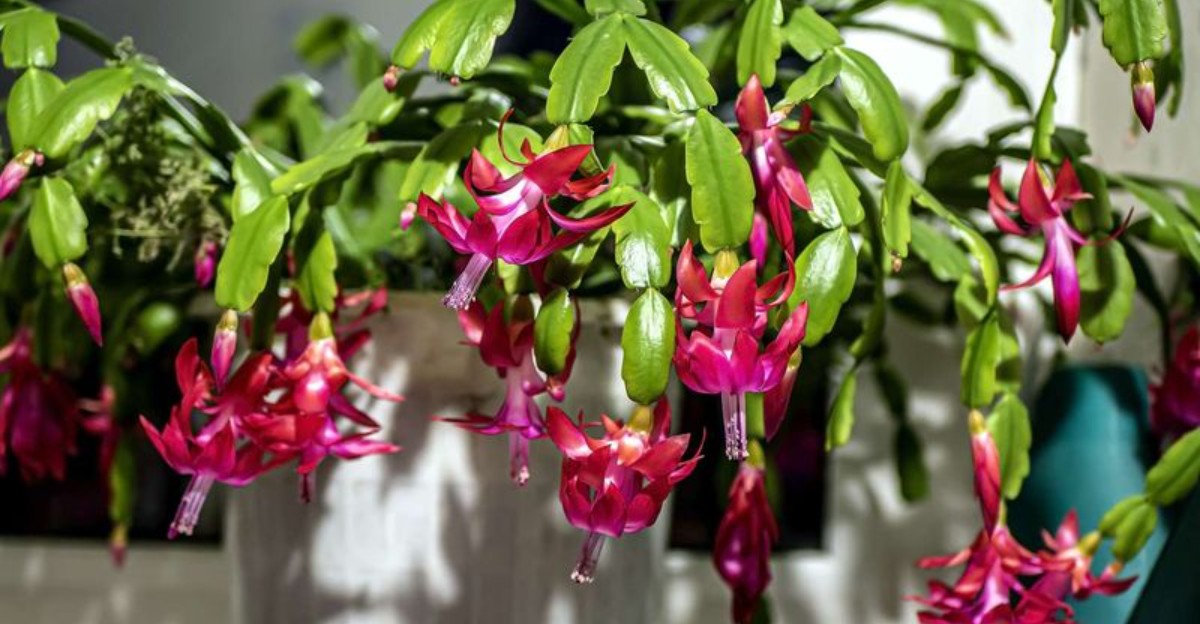
Fat pink buds at the stem tips of a certain holiday bloomer take months to build. One quick snip at the wrong moment can remove them in a second.
The plant’s whole year revolves around those buds. Weeks of cool nights and long, dark evenings in fall set them in motion. An ill-timed trim can also stress the plant into dropping the ones it has left, which feels like a double insult.
My pruning shears and I have a complicated relationship with this plant. Every lanky stem seems to beg for a haircut, and I’m terrible at saying no. In November, with buds swelling across California living rooms, I’ve learned to hide the snips in a drawer and admire the show instead.
Waiting has a sweet bonus, too. Snipped pieces, once the timing is right, can root into brand-new plants for friends.
Those Christmas Cactus Buds Hold The Answer To Your Timing Question
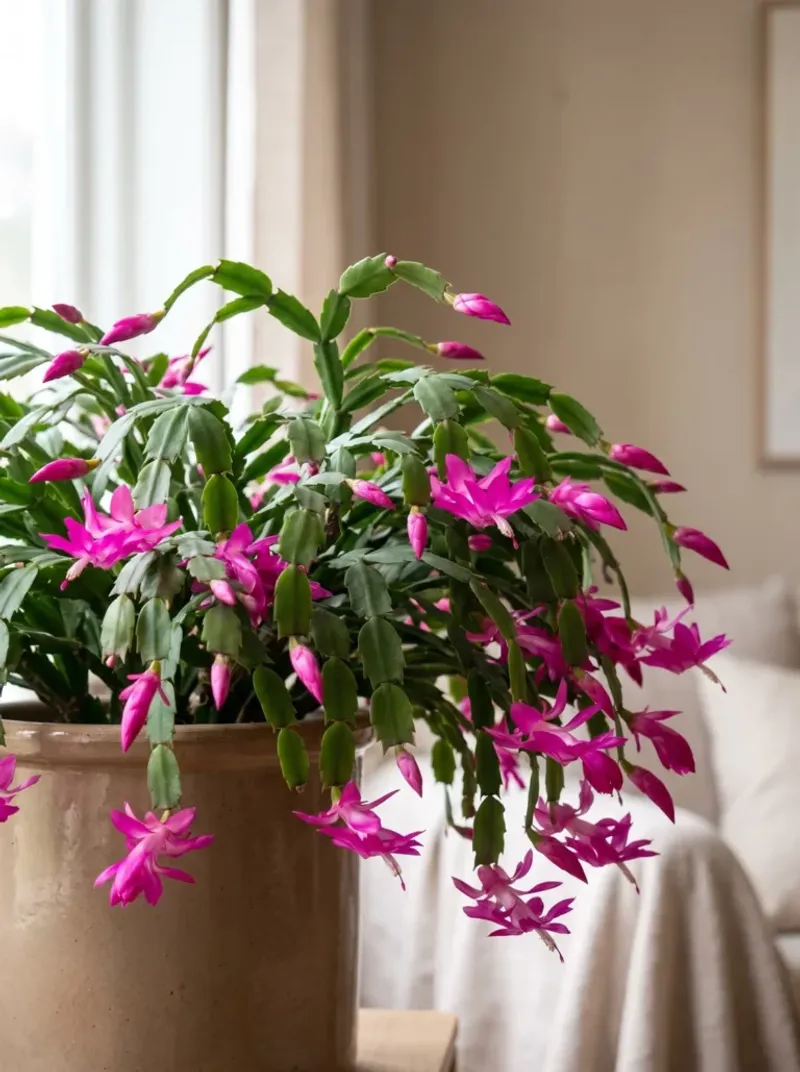
Watch the tips of your plant for a moment. If you see fat pink, red, or white buds, or flowers still open, your Christmas cactus is in the middle of its biggest yearly job.
Those buds formed after weeks of cool nights and long, dark evenings in fall. The plant has already poured energy and stored water into each one. Cutting stems now removes buds that took months to build.
So yes, pruning during bloom is too early in most cases. The calendar month matters less than what the plant is doing. A cactus that finished flowering in December is ready sooner than one still blooming in late January.
California adds a fun twist. Many homes here stay mild indoors, and plants on bright porches can bloom for weeks longer than expected. Some also turn out to be Thanksgiving cacti, which flower earlier, often in November.
My rule is simple and easy to follow. Wait until the last flower fades and drops off on its own. Then give the plant a short breather before you reach for the clean scissors.
Patience here pays off. You get to enjoy the full show first, and the trim lands at a time when the plant can bounce back fast.
Late Winter To Early Spring Is When Your Pruning Shears Belong On Those Stems
Most gardeners agree on one sweet spot. Right after blooming ends, usually from late January into March, is the best window for a trim.
At this stage the plant shifts gears. Flowering is over, days grow longer, and it starts pushing new green segments. Pruning now nudges that fresh growth into more branches instead of one long, droopy arm.
Many experts suggest finishing your cuts by early spring or even late spring at the latest. That gives new stems the whole summer to mature. Mature tips are the ones that set buds in fall.
Try to avoid pruning in late summer or autumn. Trimming then can remove the tips that would have flowered, leaving you with a quiet holiday season.
In coastal California, plants often wake up a little early because of mild temperatures. Inland and mountain areas with colder nights may see growth start a bit later. Follow your own plant rather than a neighbor’s.
A quick checklist helps. The last flower has dropped, you see a few weeks of rest, and tiny new segments are starting to show. When those three line up, you are ready to snip.
A Simple Twist At The Stem Joint Gives You A Bushier Christmas Cactus
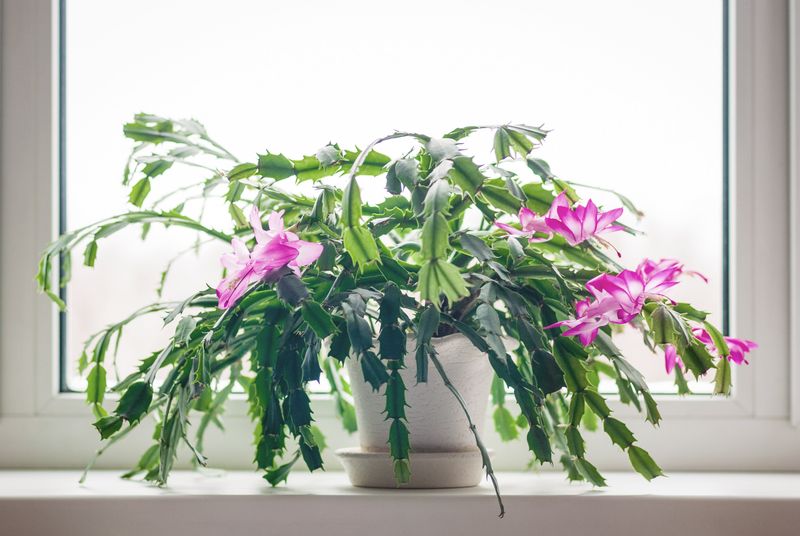
Here is the fun part. Christmas cactus stems are made of flat, linked pads, and they separate neatly at the joints between them.
You can twist off a segment with your fingers or use clean, sharp snips. Cut or pinch right at a joint instead of slicing through the middle of a pad. A clean break heals faster and looks tidier.
Remove one to three segments from the ends of longer stems. Each spot where you trim will often sprout two or more new segments. Over time that means a fuller plant with more tips, and more tips usually mean more flowers.
Keep the trim light. Taking off no more than about one third of the plant at once is a common guideline. Heavy cuts can leave it stressed and slow to recover.
I like to turn the pot as I go. Shaping from every side keeps the plant balanced so one heavy side does not tip it over.
Wipe your tools with rubbing alcohol before you start. Clean blades help reduce the spread of rot and fungus. That small step takes ten seconds and protects all your hard work.
Cutting Blooming Christmas Cactus Stems Can Cost You Flowers
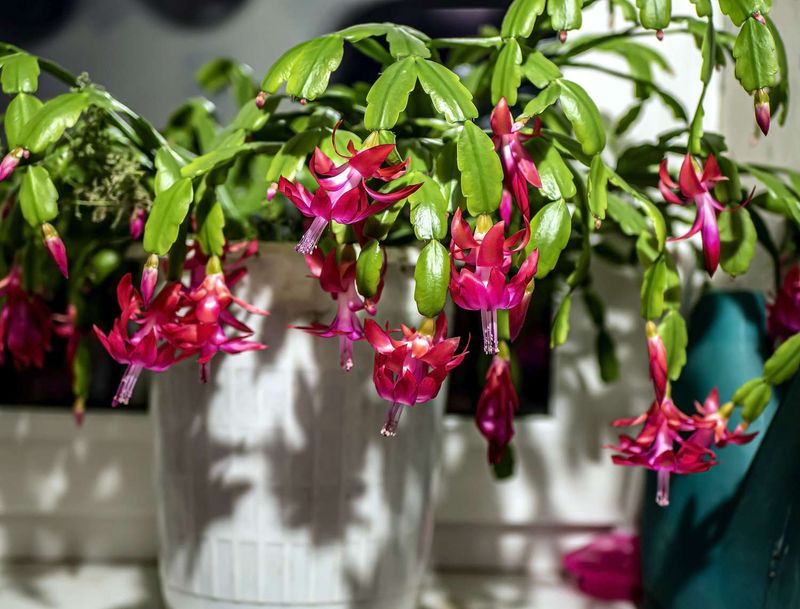
Ever had a full plant suddenly drop half its buds? Stress is often the culprit, and an ill-timed trim is one easy way to cause it.
When you prune during bloom, you remove flowers outright. You also force the plant to split its energy between healing cuts and holding onto remaining buds. Some plants respond by letting buds fall early.
Bud drop has other causes too, so pruning is not the only suspect. Sudden temperature swings, warm drafts from heaters, moving the pot, and soil that is too wet or too dry can all trigger it. Holiday decorating season brings plenty of those changes at once.
Fall pruning creates a different problem. The tips that would have flowered get removed before buds even form. You might end up with a healthy green plant and very few blooms.
So what can you safely do in winter? Snip off spent flowers once they wilt. That keeps things neat without harming the plant.
If a segment snaps off accidentally while you water, no worries at all. Save it for rooting. Small accidents rarely cause lasting trouble, and you get a free baby plant out of the deal.
Mushy Or Shriveled Christmas Cactus Segments Can Go Any Time
Some trims cannot wait for spring, and that is fine. Damaged, broken, or unhealthy segments can come off in any season.
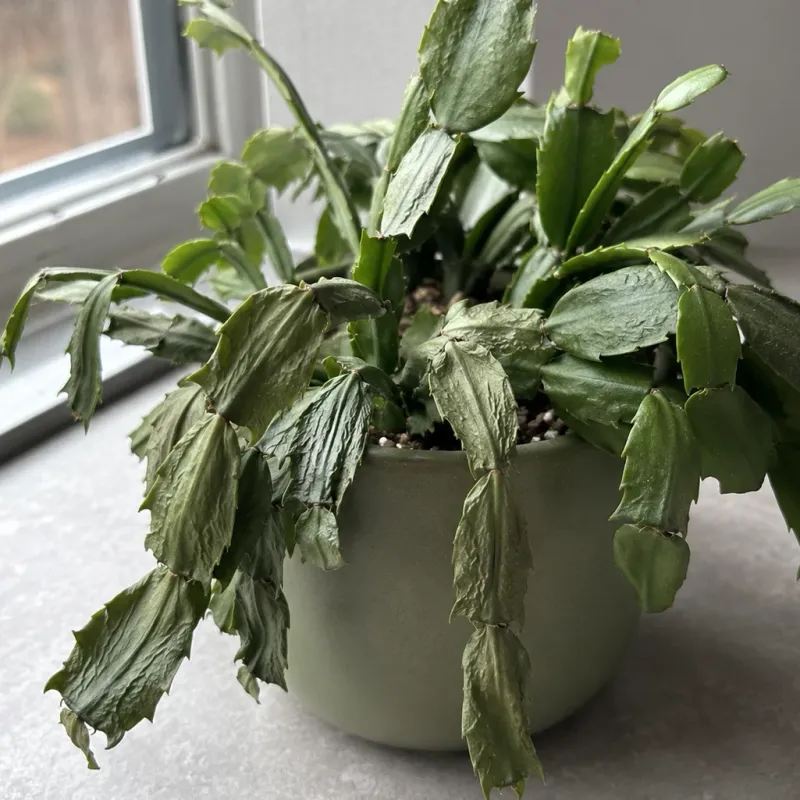
Look for pads that feel soft and mushy at the base, turn brown or black, or look badly wrinkled. Soft, dark tissue near the soil often points to root or stem rot from too much water. Remove affected parts with clean tools, cutting into healthy green tissue.
Wrinkled, limp pads tell a different story. They often mean the plant is thirsty or its roots are struggling. Check the soil before cutting anything, since a good drink may plump them back up.
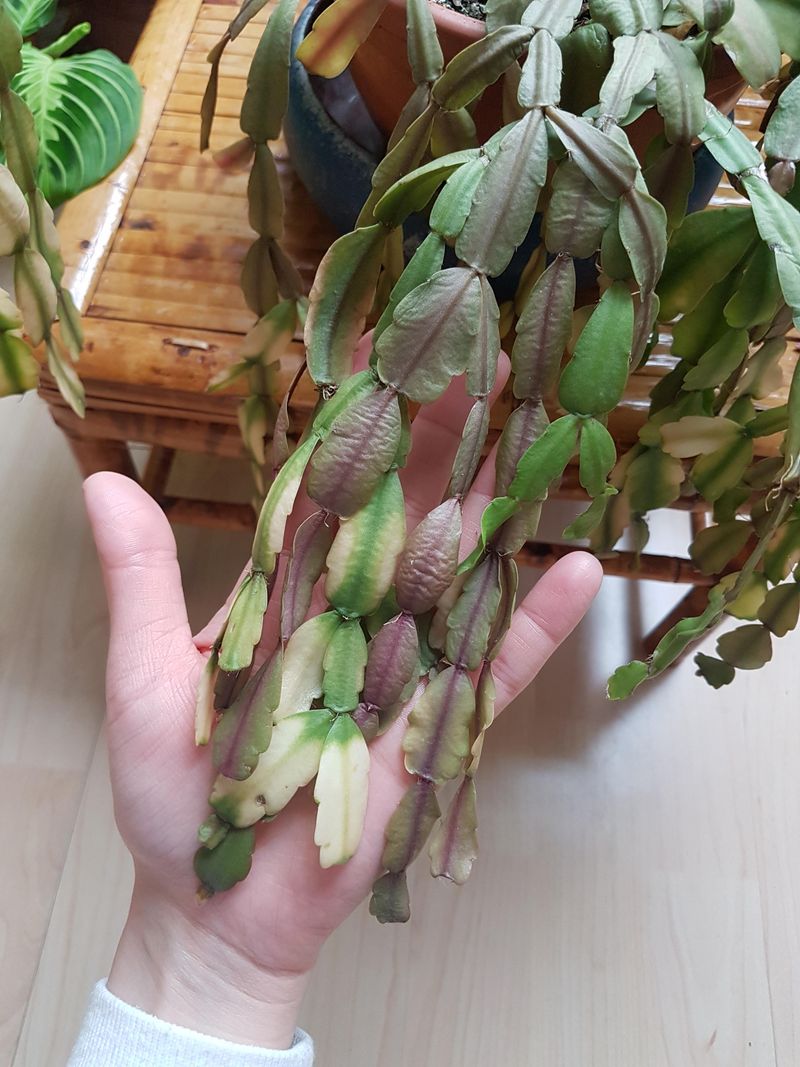
Reddish or purple tinted segments usually signal too much direct sun or cooler temperatures. That color is often a stress response, not a disease. Moving the pot to bright, indirect light frequently fixes it.
After removing problem stems, let the plant dry out a bit before the next watering. Make sure the pot has a drainage hole and fast-draining soil. A mix with orchid bark or perlite works nicely.
Keep an eye out for mealybugs too. Those fuzzy white spots hide in joints, and a cotton swab with rubbing alcohol handles small numbers well.
California Patios Give Your Holiday Cactus A Great Summer Home With A Few Rules
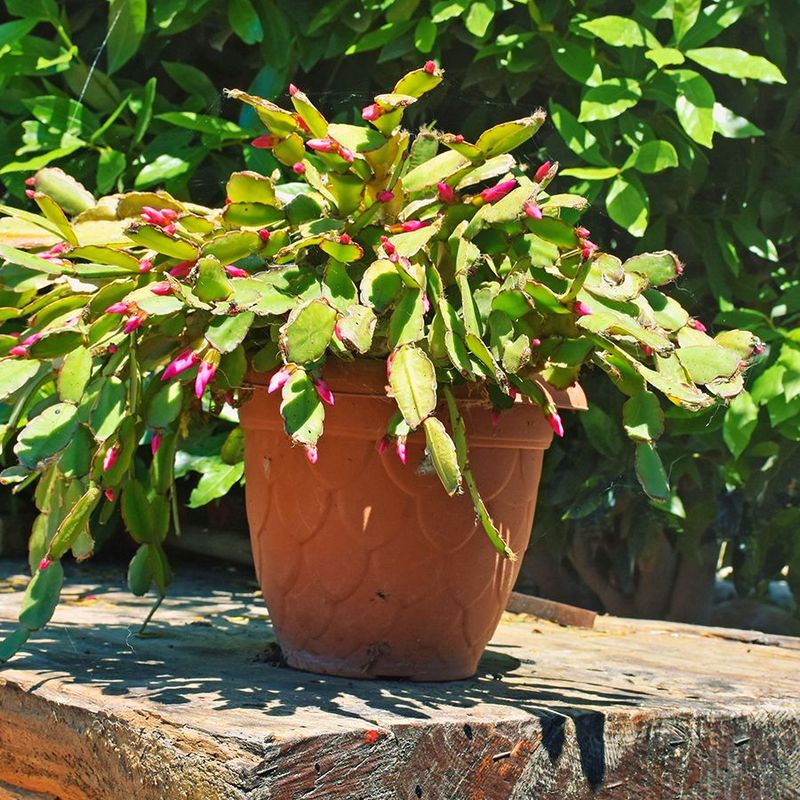
Lucky us. Mild California weather lets many gardeners move their holiday cactus outside after pruning, which can really boost growth.
Bright shade is the goal. A covered porch, the north side of the house, or dappled light under a tree works well. Hot afternoon sun, especially in the Central Valley and inland Southern California, can scorch the pads and turn them reddish.
Water when the top inch of soil feels dry. Feed with a balanced houseplant fertilizer, diluted, every few weeks from spring through summer. Stop feeding by late summer so the plant can prepare for blooming.
Fall outdoors can actually help flowering. Cool nights in the 50s and natural long evenings trigger bud set. Keep it away from porch lights or streetlamps that break up the dark.
Bring the pot inside before nights drop much below about 50 degrees Fahrenheit. Coastal gardeners may enjoy outdoor time well into fall, while foothill and high desert areas get chilly sooner. Frost is a real danger for this tropical plant.
Many plants sold as Christmas cacti are really Thanksgiving cacti. Pointy, clawlike edges on the pads give them away, and care is nearly the same.
Those Trimmed Christmas Cactus Cuttings Can Become Brand New Plants
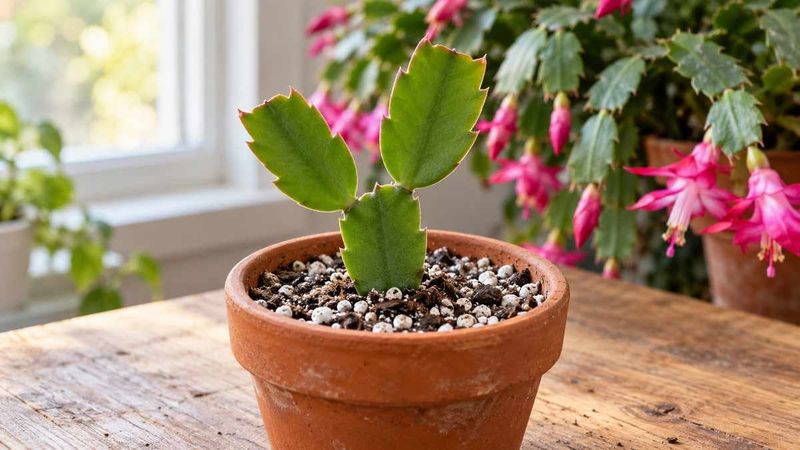
Please do not toss your clippings. Every healthy piece of a Christmas cactus can grow into a new plant, and it is one of the easiest projects in gardening.
Pick cuttings with two to four connected segments. Let them sit out for a day or two so the cut ends dry and form a callus. This small wait helps prevent rot.
Push the bottom segment about a quarter of the way into moist, fast-draining potting mix. Several cuttings in one pot create a fuller look sooner. Place them in bright, indirect light and keep the soil lightly damp, not soggy.
Roots usually form within a few weeks. A gentle tug that meets resistance means they have taken hold. New segments at the tips are another happy sign.
Spring cuttings have the whole growing season ahead, so some may even bloom by next winter. Others may take a year or two to put on a real show.
Some families pass down cuttings from plants that are decades old. Starting a few pots now could begin your own tradition. A tidy plant and gifts for friends both come from one well-timed trim.