9 Ways to Keep a Live Christmas Tree From Drying Out in a Warm Texas Home

A freshly cut evergreen can gulp close to a gallon of water during its first day inside your house. That thirst catches plenty of folks off guard, and I was one of them during my first holiday season.
Once the cut end dries for several hours, sticky sap forms a seal that blocks water from moving upward. Brittle needles then rain onto your floor, and dry branches catch fire far more easily than fresh ones.
Here in Texas, December afternoons can still feel warm enough for shorts, so indoor air often runs toasty. I find it fascinating how quickly a cozy living room pulls moisture right out of soft green branches.
You might be surprised by how small habits, not expensive gadgets, keep that piney scent going for weeks. Which simple tricks actually work best when a Texas winter feels more like a mild spring day?
1. Saw A Fresh Slice Off The Tree Trunk Base
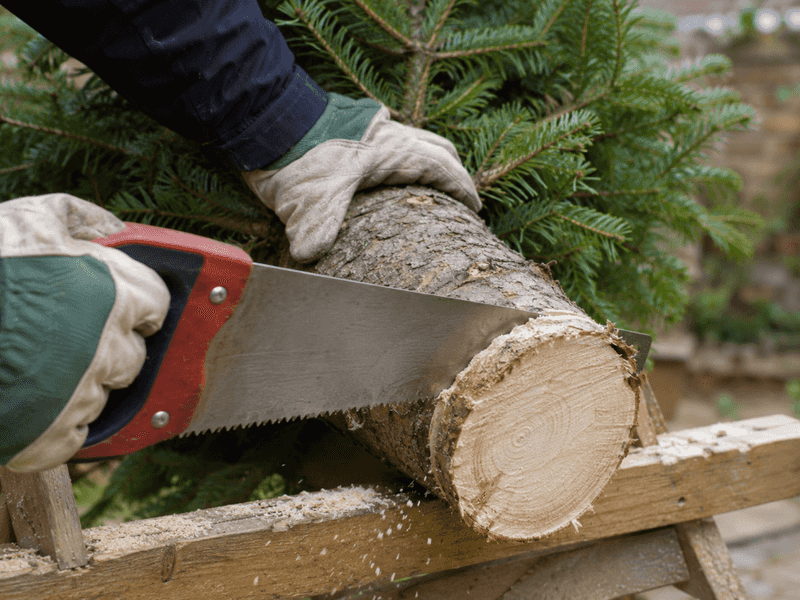
That pale stump you see at the tree lot is already sealing itself shut while the tree waits for you. Sap oozes over the cut surface within hours, and that sticky layer blocks water from traveling up the trunk.
My first tree sat in a full stand for two days without drinking a drop of water. Once I learned about the sap seal, the mystery made perfect sense, and I felt a little silly afterward.
University extension experts suggest sawing about half an inch to one inch off the base right before setup. This thin slice opens fresh wood so the tree can pull water upward again without any trouble.
Make the cut straight across instead of at an angle or a sharp point like a pencil tip. A flat cut sits evenly in the stand and keeps the base sitting low in the water reservoir.
Timing matters more than most people expect when you bring the tree home from the farm or lot. Try to get the trunk into water within a few hours after cutting, since longer delays let sap harden again.
You might want to think twice about drilling holes in the trunk or shaving off the bark to fit a stand. Researchers have found those tricks do not improve water uptake, and shaving can remove the layers that move water.
Many tree lots will happily make this fresh cut for you right before you load up the car. Ask politely, then head straight home so the tree can start drinking while that new wood stays open.
2. Choose A Tree Stand With A Big Water Bowl

Cute little stands from the discount aisle often hold barely enough water to wet the bottom of the trunk. I learned this one the hard way when my stand ran dry before lunch on day one.
Extension specialists recommend a stand that holds about one quart of water for every inch of trunk diameter. A trunk measuring four inches across would need a stand holding roughly one full gallon of water.
Grab a tape measure before shopping, because guessing the trunk width usually leads to buying something far too small. Measure straight across the cut end, then compare that number with the capacity printed on the box.
Bigger reservoirs give you breathing room between refills on busy days filled with school events and holiday errands. You can see why gardeners who travel often swear by deep stands with wide bowls and tall sides.
Stability deserves attention too, since a wobbly tree can tip over and splash water across your floor and presents. Look for sturdy legs and strong screws or a clamp system that grips the trunk firmly in the center.
Avoid whittling the sides of a thick trunk just to squeeze it into a narrow stand opening. The outer wood carries most of the water, so trimming it away leaves the tree struggling to drink properly.
Spend a few extra dollars here and the stand can serve your family for many seasons to come. I still use my heavy green stand every December, and it has paid for itself many times over.
3. Fill The Tree Stand With Plain Tap Water Daily
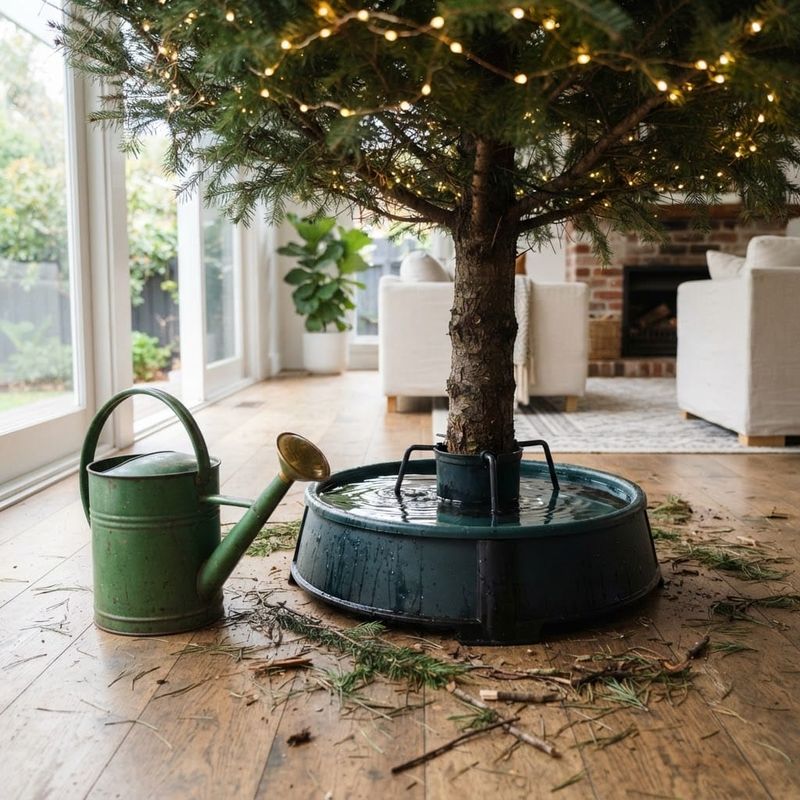
Plain tap water beats every fancy recipe floating around the internet, and I say that with a little relief. Sugar, aspirin, bleach, and soda have all been tested, and none of them beat ordinary water from the kitchen sink.
Researchers at several universities found that most additives either did nothing or actually reduced the amount of water trees absorbed. Some mixtures even encouraged needle loss, which feels like the opposite of what any of us want.
A fresh tree typically drinks about one quart of water per day for every inch of trunk diameter. That first week often brings the biggest thirst, so check the stand in the morning and again at night.
Keep the water level above the cut end of the trunk at all times during the season. If the base sits exposed to air, a new sap seal can form, and you would need another fresh cut.
A small watering can with a long spout makes reaching under low branches much easier on your back. I keep mine right beside the tree so refills happen while my morning coffee brews.
Some families set a phone reminder or let the kids handle the job as a daily holiday chore. Little ones often love peeking into the stand to see how much the tree drank overnight.
Watch for the water level dropping more slowly after a couple of weeks, which is normal for most trees. Keep refilling anyway, since steady moisture holds those needles soft and flexible until the season ends.
4. Move The Tree Away From Heater Vents And Fireplaces

Warm air blowing from a floor vent works like a hair dryer aimed straight at your tree all day long. Those branches closest to the vent turn crispy first, and the needles start dropping onto the rug.
Fire safety groups recommend keeping trees at least three feet away from fireplaces, radiators, space heaters, and heating vents. That distance protects the needles from drying and also lowers the risk of a dangerous house fire.
Before you drag the tree inside, take a slow walk around the room and note every heat source. Look for floor vents hidden under rugs, since those sneaky spots are easy to forget during holiday excitement.
Electronics can add warmth too, so a large television or gaming console nearby might dry out lower branches. I could be wrong, but I suspect many crispy corners come from these overlooked gadgets humming beside the tree.
If moving the tree is not possible, you can sometimes close or redirect a nearby vent during the season. Plastic vent deflectors are cheap and can push warm air away from branches without blocking airflow in the room.
Here in Texas, a cool front can blow in one day, sending everyone to crank up the heat. Those sudden swings can dry a tree quickly, so careful placement before the weather changes really pays off later.
A corner away from foot traffic and heaters usually works best for both safety and freshness. Your tree will reward that thoughtful spot with greener needles and a stronger pine scent each morning.
5. Keep Sunny Windows From Baking The Branches

Bright afternoon sun pouring through a big picture window looks lovely, but it can warm needles surprisingly fast. Glass traps heat, so the branches facing the window may feel noticeably warmer than the rest of the tree.
Many of us love showing off our trees in the front window for neighbors and passing cars to admire. I get that urge completely, yet a little planning keeps that showcase spot from drying out the branches.
Sheer curtains or blinds can soften strong sunlight during the hottest hours of the afternoon in your living room. Close them around midday, then open them again in the evening when the twinkling lights look their best anyway.
South and west facing windows usually collect the most direct sun during the short days of December. An east facing window gets gentler morning light, which tends to be easier on a tree throughout the season.
Here’s something worth knowing about mild winters in the South, where sunny days often outnumber gloomy ones. That steady sunshine means windows can heat up even when outdoor temperatures feel pleasant and cool.
Rotate a quick finger test into your routine by bending a few needles on the window side each day. Fresh fir needles should bend without snapping, while brittle ones signal that the spot is getting too warm.
You don’t have to give up the window display altogether to protect your tree from the sun. Shifting the tree a couple of feet back often gives you both a cheerful view and healthier branches.
6. Turn Down The Thermostat Around The Tree

A few degrees on the thermostat can make a bigger difference than you might expect for a cut tree. Cooler air slows the loss of moisture through the needles, so the tree uses less water each day.
Many tree growers suggest keeping rooms on the cooler side, especially overnight while everyone sleeps under warm blankets. Dropping the setting into the mid sixties at night can help a tree hold its freshness longer.
What I find interesting is how much drier warm indoor air feels compared with the same air cooled down. Warm air pulls water from leaves and needles faster, which explains why toasty rooms create thirsty trees.
A room humidifier can also help if your house feels dry when the heater runs on chilly nights. Keep the unit a safe distance from lights and cords, and clean it regularly according to the instructions.
Texas homes often swing between heating and air conditioning during December as fronts come and go. On warmer days, a little air conditioning can keep the living room comfortable for both you and the tree.
Ceiling fans can push air around the room, but avoid pointing a strong breeze straight into the branches. Constant moving air can speed up drying, much like a windy day dries laundry on the line.
Your energy bill might thank you too, since lower heat settings often save a bit of money. That feels like a nice bonus during a season when gifts and groceries already stretch the family budget.
7. Swap Hot Bulbs For Cool LED Tree Lights

Those old glass bulbs your grandparents loved can get warm enough to feel hot against your fingertips. Tucked deep into branches, they slowly bake the needles around them for hours each evening during the season.
LED strands produce far less heat because they turn more of their energy into light instead of warmth. They also use less electricity, which helps when the tree stays lit through long holiday evenings.
I never get tired of that soft glow, and switching to LEDs did not change the cozy feeling one bit. Modern warm white strands look a lot like classic bulbs without the extra heat building up inside.
Check every strand before decorating, looking for frayed wires, cracked sockets, or loose connections along the cord. Damaged lights can spark, and a dry tree near faulty wiring creates a serious fire hazard for families.
Turn off the tree lights when you leave home or head to bed for the night. A simple outlet timer handles this job automatically, so nobody has to remember during hectic holiday mornings.
Fire safety experts also recommend following the manufacturer guidance on how many strands to connect end to end. Overloading a single outlet with too many plugs can create heat where you least expect it.
Don’t be surprised if your tree smells fresher once those hot bulbs are packed away for good. Cooler branches hold onto their oils longer, and that lovely piney scent lingers in the room a bit more.
8. Pick A Fresh Fir Or Pine With Flexible Needles
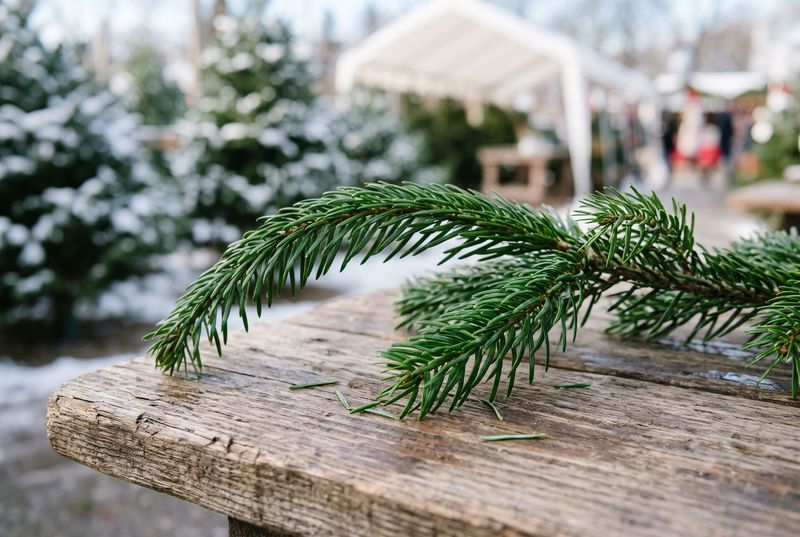
Your tree’s freshness begins long before it reaches your living room, right there in the tree lot. A quick hands-on test can tell you whether that pretty fir has been sitting around for weeks.
Run your hand gently along a branch toward you and watch how many needles fall into your palm. A few brown inner needles are normal, but plenty of green ones dropping means the tree is already drying.
Bend a single needle between your fingers too, since fresh fir needles should flex instead of snapping in half. Pine needles should feel supple and bendy rather than brittle, dull, or papery to the touch.
Fraser fir and Noble fir hold their needles well, which explains why many shipped trees in stores are firs. Spruces often shed needles faster indoors, so they may not be ideal for a warm house.
Visiting a local choose-and-cut farm gives you the freshest option possible, since the tree gets cut that same day. Many Texas farms grow Virginia pine, Leyland cypress, and Arizona cypress, which suit the warm southern climate well.
I can see why gardeners love those farm trips, with sawdust underfoot and that sharp evergreen scent everywhere. The experience turns tree shopping into a family memory instead of a quick stop on busy errands.
Ask lot workers when their shipment arrived, because trees trucked from northern farms may have been cut weeks earlier. Shaded lots that keep trees in water usually offer fresher choices than ones baking in the sun.
9. Limit Indoor Days For A Living Potted Tree
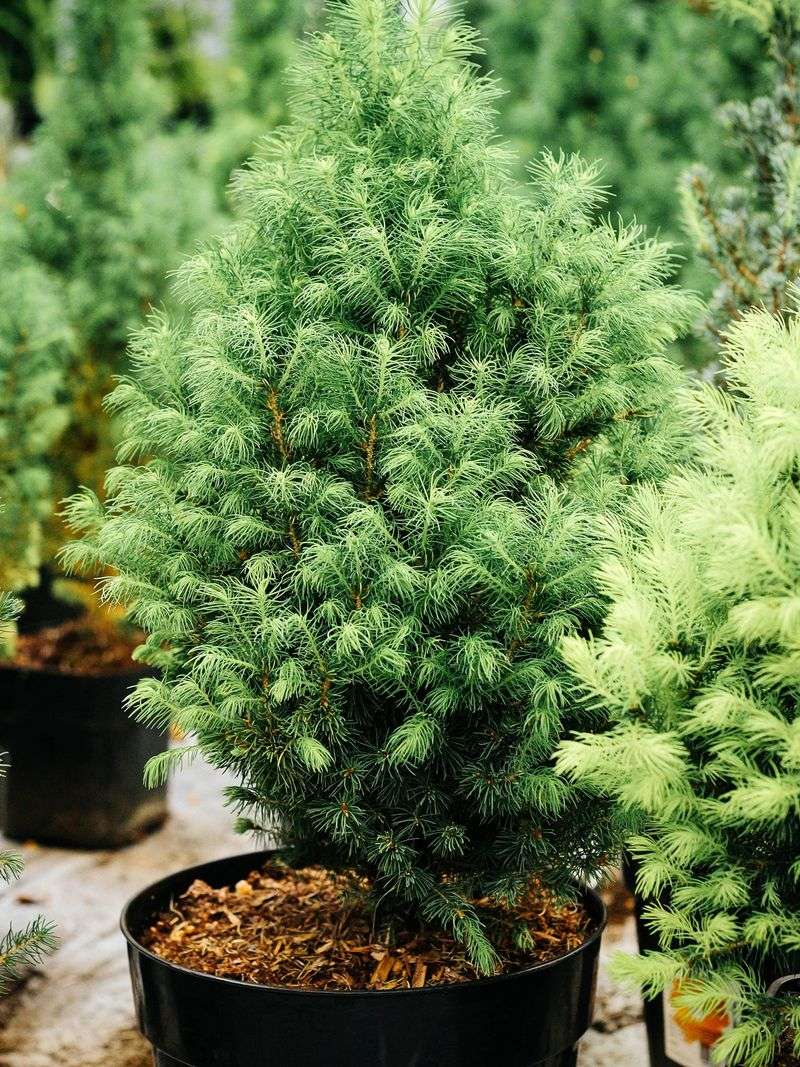
Living trees with their roots still attached feel like a sweet gift that keeps growing after the holidays. They need a different approach though, because warm rooms can confuse them about the season outside.
Extension specialists generally recommend keeping a living tree indoors for no more than about seven to ten days. A longer stay in a cozy house can coax it out of its winter rest and trigger tender new growth.
That soft growth struggles when the tree heads back outdoors into chilly winter nights for planting. A few days in a cool garage or covered porch helps the tree adjust before and after its indoor visit.
Keep the root ball moist but not soggy, checking it each day by poking a finger into the soil. Set the pot inside a large tray so extra water does not stain your floors or rug.
Choose a species suited to your region before buying, since many classic northern firs struggle in Texas heat. Eastern red cedar and Arizona cypress are often better choices for planting across much of the state.
Plan the planting spot ahead and even dig the hole early if the ground is workable. Planting soon after the holidays, followed by deep watering and mulch, gives roots a strong start before summer arrives.
You might find it hard to believe, but some families now have backyard rows of former holiday trees. I love that idea, since each one holds a little story from a different December spent together.