This Venomous Resident Is Moving Into Your Illinois Shed Before Winter
A spider with six eyes instead of eight could be tucked inside your gardening gloves right now. It hunts at night, skips the fancy web, and loves a box nobody has touched since July.
I found my first one under a stack of clay pots last October. My hand stopped about two inches away, and my heart did a little flip.
Across Illinois, cooler nights push certain spiders toward dry, quiet shelter. Your shed checks every box on their wish list, from dark corners to piles of old seed packets. You probably visit it less as the garden winds down, which suits them fine.
A second venomous neighbor sometimes joins the party in Illinois sheds, and it builds a very different kind of home. Which one is hiding behind your rake, and how would you even tell?
Cooler Nights Send Spiders Hunting For Your Shed Corners
Falling temperatures change spider behavior fast. As fall settles in, many spiders look for sheltered spots where they can slow down and wait out the cold.
Sheds are prime real estate for them. They offer darkness, dry air, steady temperatures, and a buffet of insects that also wander inside. Stacked pots, folded tarps, and old cardboard create hundreds of tiny hideouts.
Most spiders you find out there are harmless helpers. They eat flies, crickets, and other pests, which honestly makes them decent roommates.
The concern comes from just two kinds of medically significant spiders found in Illinois, the brown recluse and the black widow, which includes both the northern and southern black widow.
Neither spider is chasing you. Bites mostly happen when a hand or foot presses against one by accident.
That usually means reaching into a box, pulling on a boot, or grabbing a glove without looking first. I like to think of fall shed cleanup as a two-part job now. Part one is storing tools and hoses.
Part two is checking who else moved in while the door was cracked open all summer. Knowing which spiders matter, and where they hide, turns a creepy surprise into a simple routine. A flashlight and a little patience go a long way.
Look For The Violin Mark On A Brown Recluse
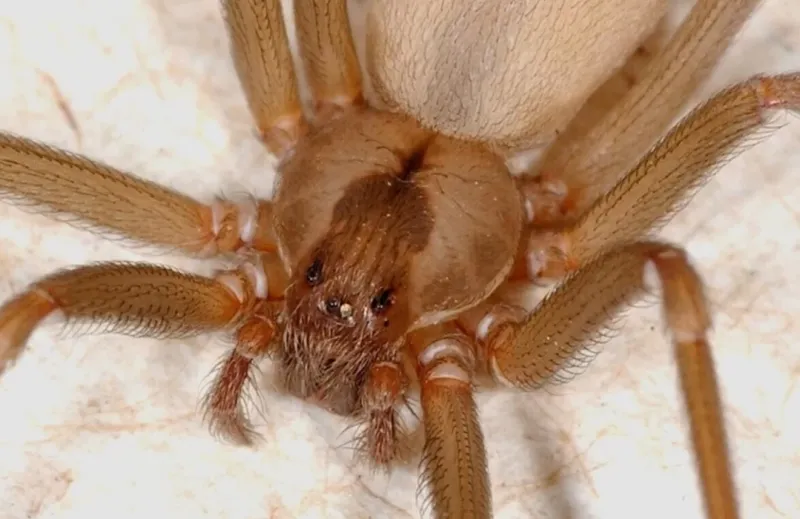
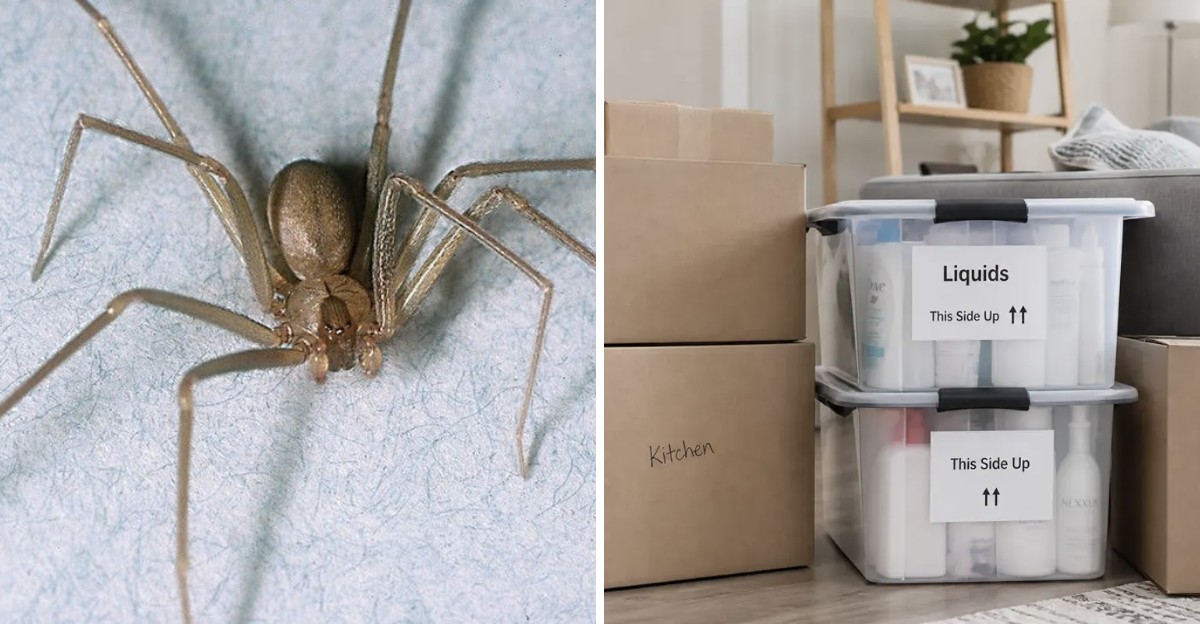
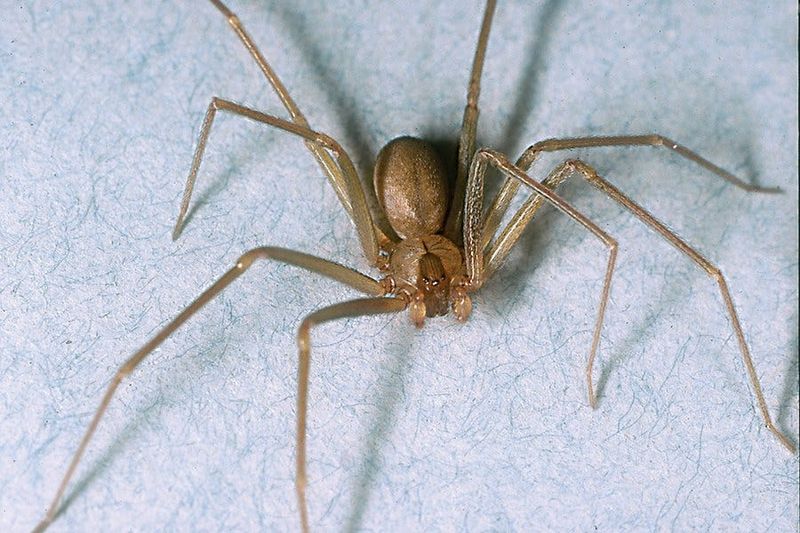
Six eyes in three pairs. That odd detail is one of the best clues for spotting a brown recluse, though you need a magnifying glass to see it clearly.
The more famous clue is the dark violin shape on its back, with the neck of the violin pointing toward the rear. The body is tan to light brown, and the legs are plain with no stripes or bands. Adults stay small, roughly the size of a quarter with legs spread.
In Illinois, brown recluses are most common in the southern and central parts of the state. They show up less often up north, though they can hitch rides in boxes and furniture.
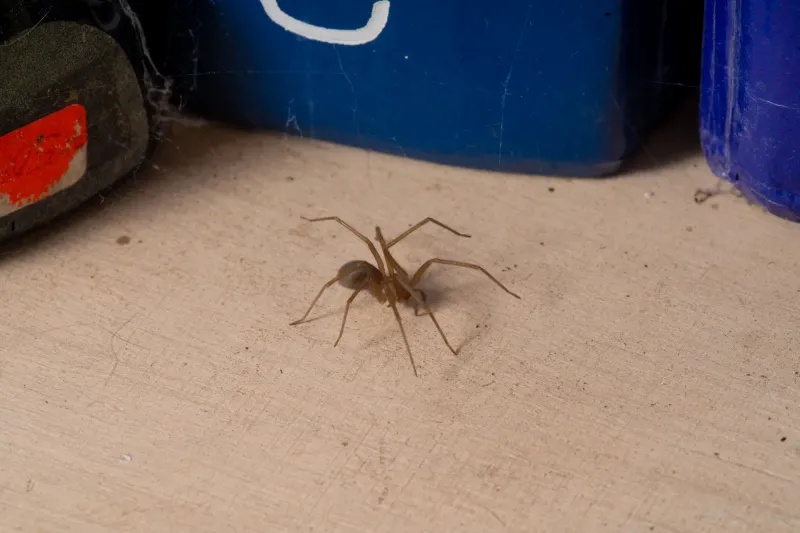
These spiders do not spin big, showy webs. They roam at night hunting insects, then hide by day in quiet places. Woodpiles, cardboard boxes, stored clothing, and gaps behind shelves are favorites.
Many harmless brown spiders get mistaken for recluses. Wolf spiders and cellar spiders top that list.
If you are unsure, snap a clear photo and compare it with resources from University of Illinois Extension.
Getting the ID right saves you from needless panic, and it helps you react sensibly if you ever find the real thing.
A Shiny Black Widow Prefers Messy Webs Near The Floor
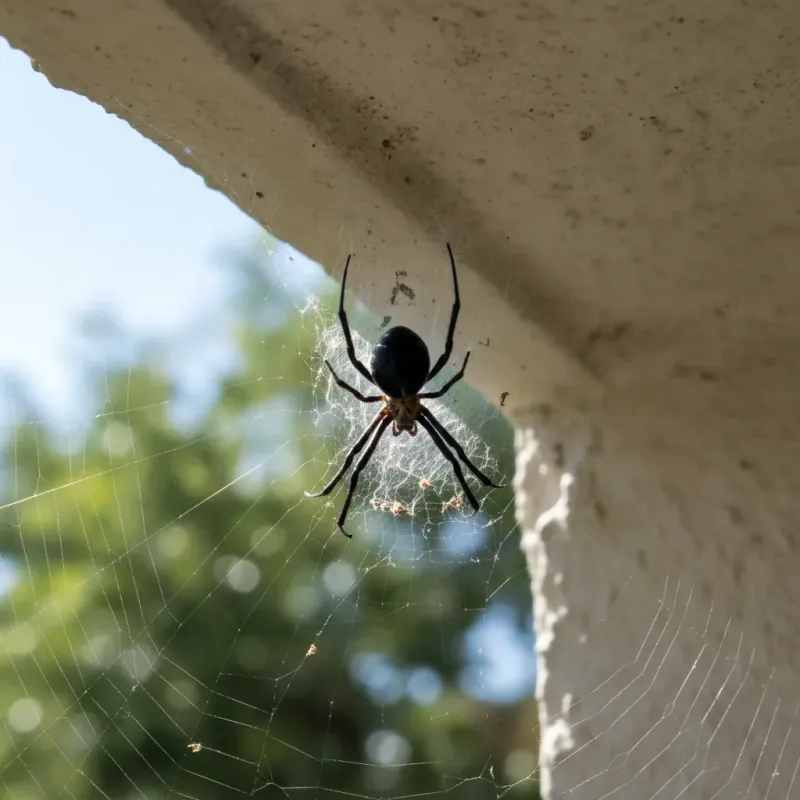
Glossy, round, and dressed in black, the female black widow looks almost polished. Flip her over and you will usually see a red hourglass, though the northern black widow in Illinois often has a split hourglass that looks like two red marks.
Her web gives her away before she does. It is a tangled, uneven mess of strong silk, often built low near the ground.
Under shelves, inside empty pots, beneath lawn furniture, and along woodpiles are classic spots.
Males are smaller, lighter colored, and not considered a bite risk. The females are the ones to respect.
Black widows are shy by nature. Most of the time they stay put in the web and try to escape when disturbed. Bites usually happen when someone accidentally squeezes one against their skin.
I once found a web stretched across the bottom of an old watering can. The silk was so tough it made a faint crackle when the brush touched it. That crackly feel is a helpful hint.
Wear gloves when moving items stored near the floor. Shine a light into pots and buckets before grabbing them, especially ones that sat untouched for months.
Know What A Spider Bite Can Do And When To Get Help
Most spider bites turn out to be mild, but these two species deserve real attention. Their venoms work in very different ways.
A brown recluse bite may feel minor at first. Over hours, the area can turn red, sore, and sometimes blister. In some cases, the skin breaks down into a slow-healing sore that needs a doctor’s care.
Black widow venom affects the nerves. People may feel spreading pain, muscle cramps, stiffness in the belly, sweating, or nausea. Children, older adults, and anyone with health conditions should get medical care quickly.
For any suspected bite, wash the spot with soap and water. Apply a cool compress and keep the area still and raised if you can.
Then call the Illinois Poison Center at 1-800-222-1222. Experts answer around the clock for free, and they can tell you whether a visit to the doctor makes sense.
If the spider is still nearby and you can do so safely, take a photo or trap it in a jar. That helps medical staff confirm what bit you. Many skin sores blamed on recluses are actually infections, so a proper check matters.
Swap Cardboard Boxes For Sealed Plastic Bins

Cardboard is basically a spider hotel. It has folds, gaps, and dark spaces, plus it soaks up moisture that draws in insects for them to eat.
Clear plastic bins with snug lids changed my shed completely. I can see what is inside, and spiders have far fewer places to settle. Bonus, my seed packets stay drier.
Clutter on the floor matters too. Lift bags of potting mix onto shelves and hang tools on a pegboard. Less stuff touching the ground means fewer cozy hiding spots.
Next, check the shed itself. Look for gaps around the door, cracks in the siding, and holes where wires or pipes enter. Weatherstripping, door sweeps, and caulk can close many of them.
Outdoor lights near the shed attract moths and beetles, which bring hungry spiders along. Switching to yellow bug bulbs or turning lights off can help.
Keep firewood stacked away from the shed walls and off the ground. Same goes for leaf piles and old lumber.
A sticky trap or two along the walls is a smart low-cost check. Trapped spiders tell you what is living there without any guesswork.
Shake Out Those Garden Gloves And Boots Every Time
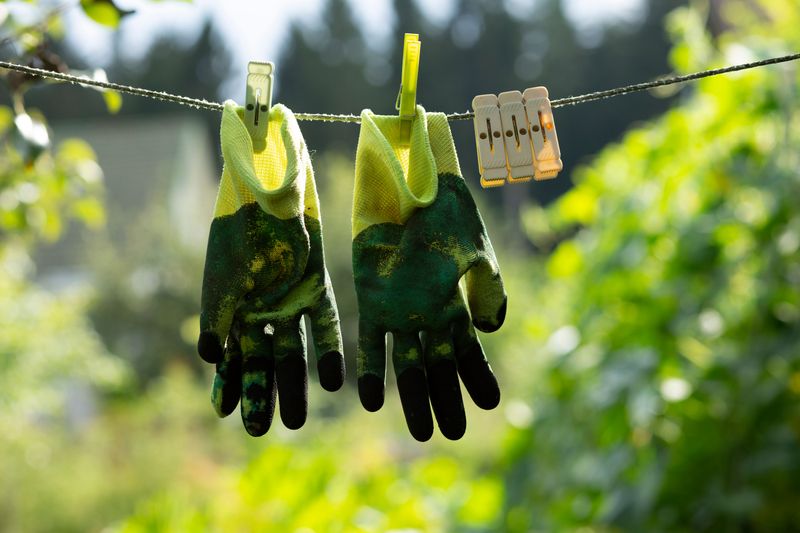
Gloves are cozy for us and for spiders. A glove left on a bench for a few weeks is a dark, snug tunnel that a hunting recluse finds hard to resist.
My rule is simple. Every glove gets a firm shake and a tap against the bench before my hand goes in. Boots get flipped upside down and knocked on the floor.
Hats, jackets, and aprons hanging in the shed deserve the same treatment. Shake them out and give them a quick look, especially if they hung in a corner all season.
Better yet, store gloves and small clothing items inside a sealed bin. That one habit cuts the risk way down.
When cleaning out the shed, wear thick gloves and long sleeves. Tuck pants into socks if you are moving piles off the floor. It looks a little silly but works well.
A handheld vacuum is great for pulling webs, spiders, and egg sacs out of corners. Empty the bag into a sealed trash bag outdoors right away.
These tiny habits take seconds. They also make the difference between an ordinary chore and an unwelcome surprise.
Calling A Pest Pro Makes Sense For A Busy Spider Shed
Spotting one brown recluse rarely means a disaster. Spotting several, week after week, suggests a settled population that deserves a stronger plan.
Brown recluses can be stubborn. They hide deep in gaps and wall voids, and sprays often miss them.
A licensed pest professional can inspect thoroughly, find hot spots, and use targeted treatments safely.
Black widows are usually easier. Removing webs with a long-handled brush or vacuum and reducing clutter often handles them. Still, call for help if you keep finding them near kids’ play areas.
Be careful with general bug foggers. They tend to spread chemicals widely without reaching spiders in hidden cracks. Always read and follow product labels if you use any pesticide.
Remember that most spiders in your yard are allies. Garden spiders, jumping spiders, and wolf spiders all eat pests that chew on your plants. Removing every spider is neither practical nor helpful.
Your best long-term approach in Illinois mixes cleanup, sealing, smart storage, and occasional checks. Pros can fill the gaps when a problem grows past what a broom can handle. By spring, a tidy, sealed shed welcomes you back instead of a crowd of hidden squatters.