The Round Little Sacs Under Your New York Deck Chairs Could Hatch Hundreds of Black Widows
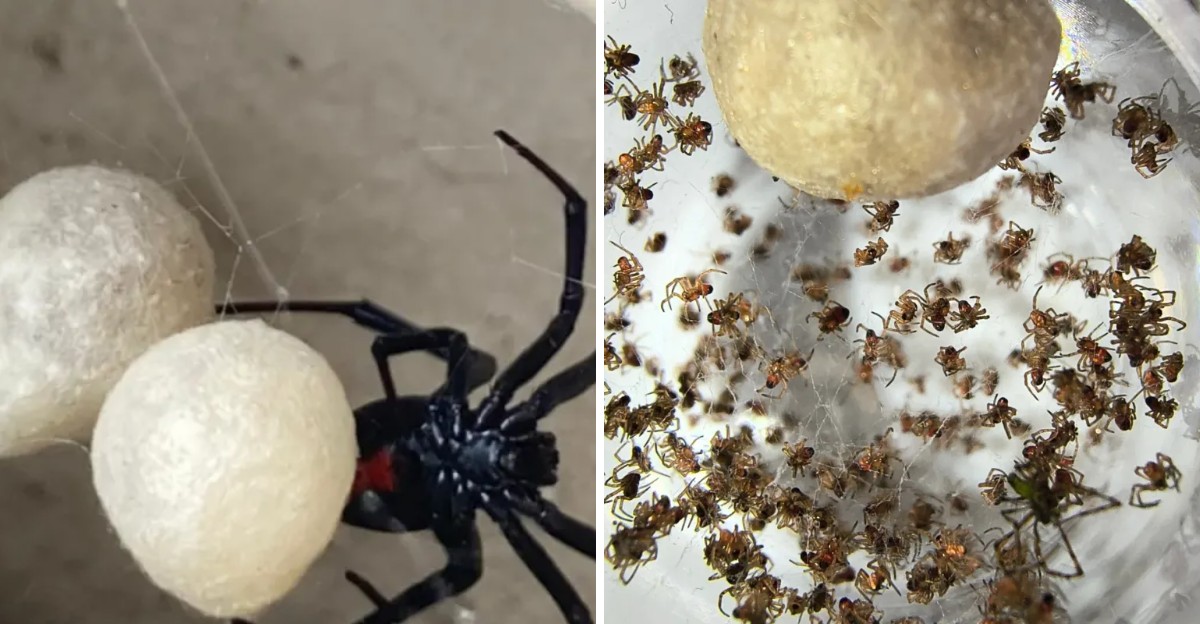
A single silk ball smaller than a marble can hold several hundred spider eggs. Some of those balls are hiding under patio furniture right now, wedged into the dark spots nobody checks.
I found my first one while flipping a folding chair in late summer. It looked like a wad of dryer lint, tan and tidy and oddly round. Truth be told, I almost picked it up with my bare fingers.
Here in New York, the spider that builds these sacs is shy, glossy, and easy to miss. She rarely leaves her messy web, and she rarely bothers anyone who leaves her alone.
Still, a little knowledge goes a long way. Would you know that tidy little bundle for what it is, or would you reach right for it like I nearly did?
That Papery Ball Under Your Patio Chair Is Hiding a Secret
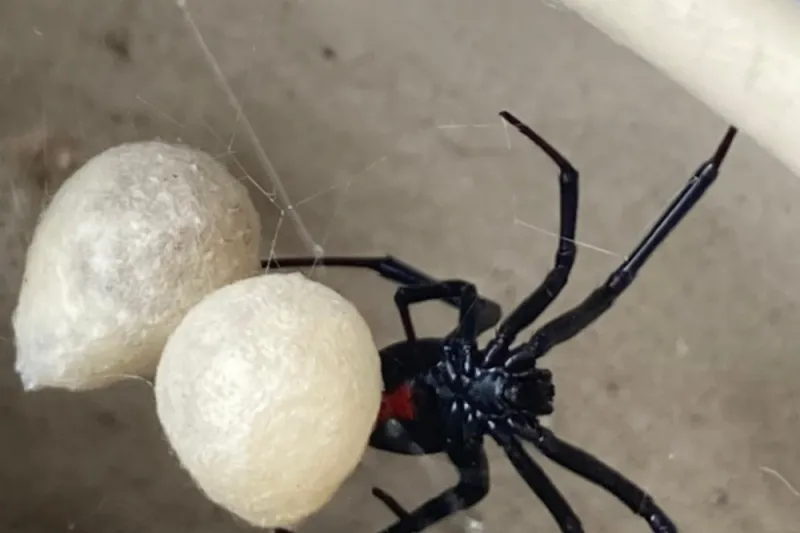
Flip over a deck chair that has sat untouched for a few weeks, and you may spot a smooth, round ball stuck in a jumble of silk. It often looks cream, tan, or pale gray, and it feels papery rather than fluffy.
A black widow egg sac usually measures about a half inch across, roughly the size of a pea or a little bigger. Many people mistake it for lint, a seed pod, or a bit of insulation.
Funny thing is, the shape gives it away once you know what to look for.
Most other spider egg sacs look flatter, fuzzier, or are spun into a leaf. A widow sac is typically tight, round, and hung inside a messy, three-dimensional web.
That web is the second clue, because it looks tangled and random instead of a neat wheel.
The spot matters too. Widows like quiet, sheltered places close to the ground, such as chair frames, under deck boards, inside stacked flower pots, and near woodpiles.
Places you rarely touch make perfect nurseries.
If you see a round sac in a scraggly web in a low, dark corner, treat it with respect. It may belong to a common house spider, which builds similar sacs.
Still, assuming caution is the smarter bet until you get a better look.
One Tiny Silk Sac Can Hold Hundreds of Baby Spiders
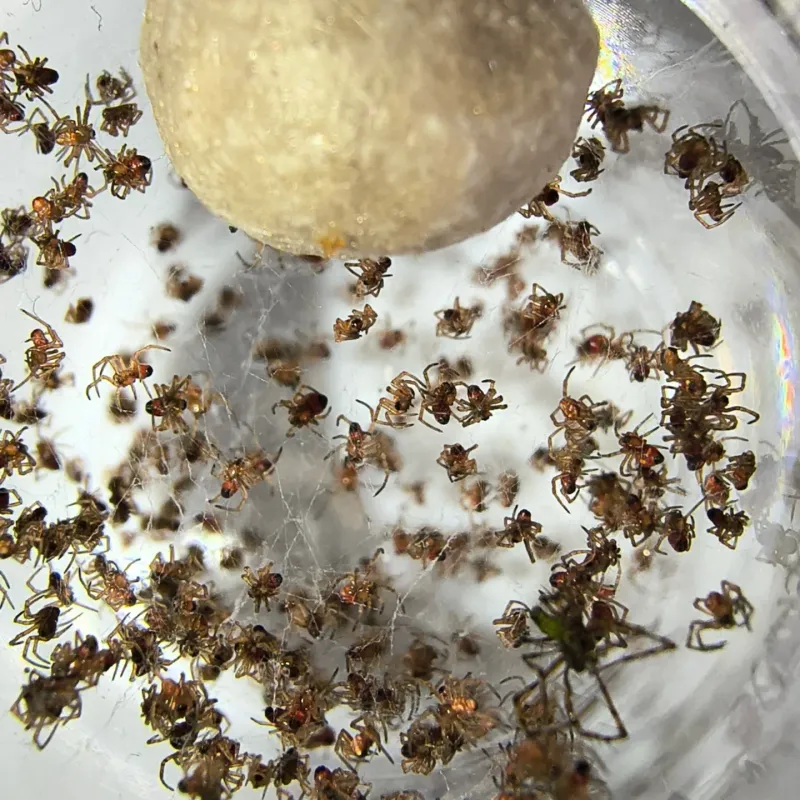
Hundreds of eggs packed into something the size of a pea is hard to wrap your head around. Most black widow sacs hold somewhere around 200 to 400 eggs, and some counts run higher.
One female can produce several sacs over a single summer, often four to nine, depending on food and weather. University extension sources note that number can climb in good conditions.
So one spider in a quiet corner can create a lot of company.
The eggs usually hatch in about two to four weeks in warm weather. Even after hatching, the spiderlings stay inside the sac for a while and molt once before they leave.
That means a sac that looks still could already be full of tiny spiders.
Here is the comforting part. Most of those babies will not survive long.
Many are eaten by their siblings, birds, wasps, and other predators, and others simply float away on silk threads in the breeze.
Young spiderlings look nothing like their mother at first. They are pale, mostly orange and white, and only darken as they grow.
If you ever spot a cloud of tiny tan specks near a web, you might be watching a fresh batch scatter.
The Northern Black Widow Wears a Broken Red Hourglass
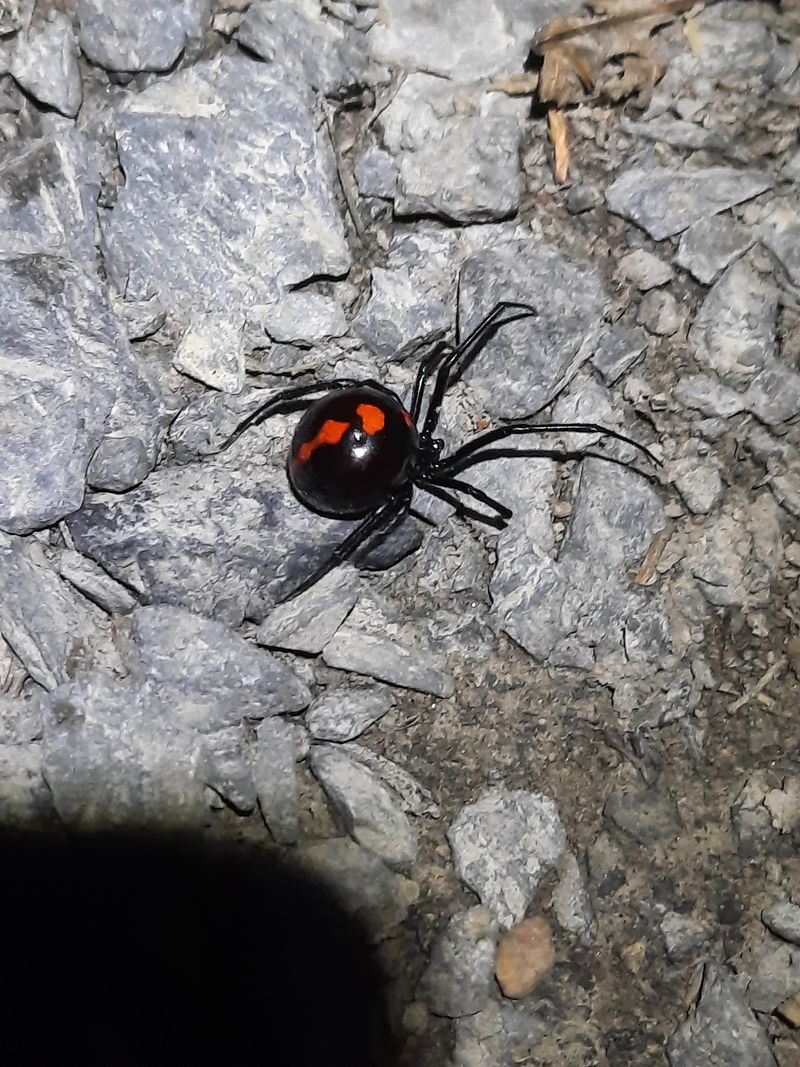
Shiny as a patent leather shoe, the adult female black widow is easy to recognize once she flips over. In New York, the species you are most likely to meet is the northern black widow, Latrodectus variolus.
Her famous red hourglass usually looks split in the middle, more like two red triangles than one solid shape. Many northern widows also have a row of red spots along the top of the abdomen.
Her body is about a half inch long, with long, slender legs.
Males are smaller, lighter, and often marked with streaks of white, yellow, or red. They are not the ones you need to worry about.
Their fangs are too weak to cause much trouble for people.
Northern widows show up across much of the state, especially in rural spots, woodpiles, stone walls, and wooded edges. They also turn up in sheds, garages, and outdoor furniture.
Sightings are uncommon for most people, which is why each one feels so startling.
If you want a safe look, use a flashlight after dark. Females hang upside down in their webs at night, which shows off that hourglass.
Just keep your hands back and let the light do the work.
Gardening Gloves Are Your Best Friend Around Spider Webs
Most black widow bites happen by accident. Someone slides a hand under a chair, pulls on a boot left outside, or grabs firewood without looking.
The spider gets pressed against skin and bites in self defense.
Let me save you some trouble. Wear sturdy gloves anytime you move patio furniture, stacked pots, lumber, or boxes that have sat outside for a while.
Shake out shoes, gloves, and garden clogs before putting them on.
A bite from an adult female often feels like a pinprick at first. Within an hour or so, pain can spread, along with muscle cramps in the belly, back, or chest.
Some people also get sweating, nausea, headache, or a fast heartbeat.
Serious outcomes are rare, and most healthy adults recover with medical care. Young children, older adults, and people with heart or health conditions may react more strongly.
That is why calling a doctor is the smart move after any suspected bite.
Wash the area with soap and water, and place a cool pack on it. You can call Poison Control at 1-800-222-1222 for quick advice.
If symptoms grow strong or breathing feels hard, head to urgent care or call 911.
A Vacuum Hose Makes Quick Work of That Egg Sac
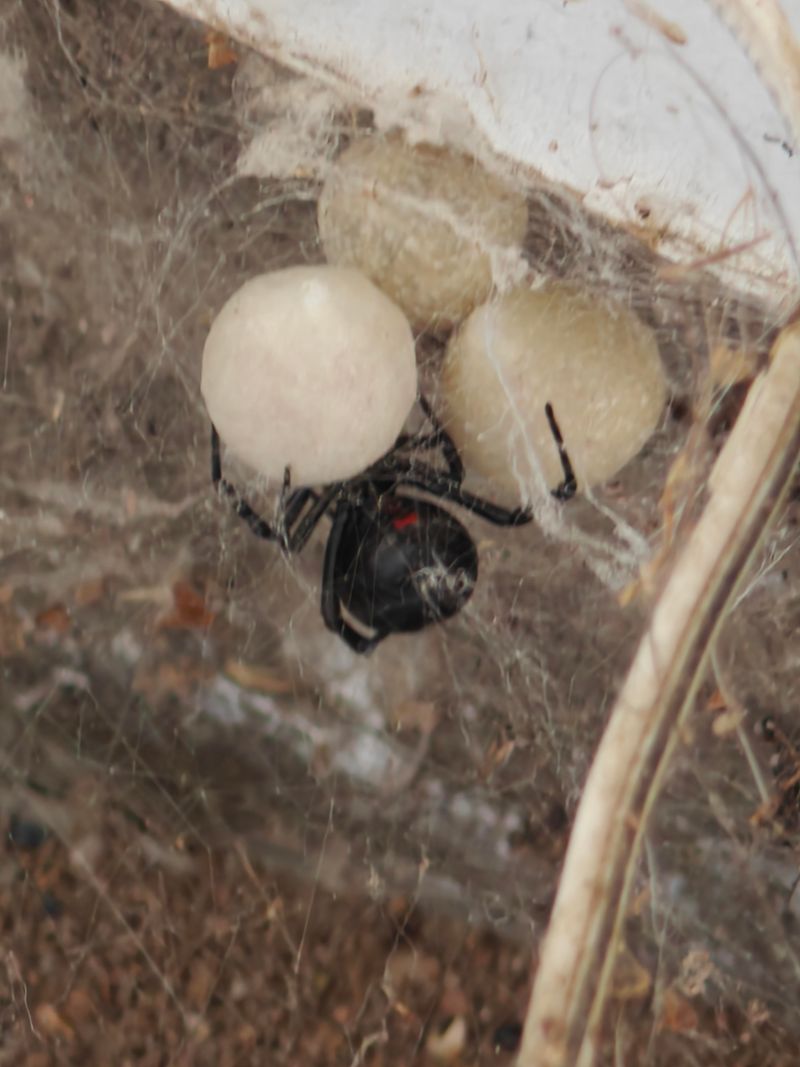
Squishing a widow sac with your thumb sounds satisfying. In real life, it can scatter tiny spiders or put your hand right next to an angry mother.
A better tool is probably sitting in your garage.
A shop vacuum or household vacuum with a long hose lets you remove the sac, the web, and the female from a safe distance. Afterward, seal the bag inside a plastic bag and toss it in an outdoor trash can.
For a bagless model, empty the canister outside into a tied bag.
No vacuum handy? Grab a long stick or scraper, pull the sac into a jar, and seal the lid.
You can also place the sac in a zip bag and freeze it for a few days before throwing it out.
Sprays rarely help much on egg sacs. The tough silk shields the eggs, so many products do little unless they hit the spider directly.
Physical removal is usually faster and more reliable.
After you clear one sac, check nearby. Widows often stay put in a good spot, so look for the female and any other sacs within a few feet.
A flashlight helps a lot here.
Cluttered Decks and Woodpiles Roll Out the Welcome Mat

Black widows are homebodies with simple tastes. They want a dark, dry, undisturbed spot with plenty of insects wandering by.
Your backyard may offer more of those than you realize.
In my own yard, I noticed widows favored the stack of extra pots and the folded chairs I ignored for months. Once I started moving things around every couple of weeks, the webs stopped showing up.
Regular disturbance makes a spot far less appealing.
Keep firewood stacked off the ground and at least a few feet from the house. Store patio cushions indoors or in sealed bins.
Clear leaf piles, old boards, and scrap materials from corners of decks and fences.
Outdoor lights matter too. Bright porch lights pull in moths and beetles, and those insects feed hungry spiders.
Yellow bulbs or motion sensor lights draw fewer bugs at night.
Seal gaps around doors, windows, and the foundation to keep spiders from wandering inside. Trim shrubs and ground covers back from the house walls.
Sweep under deck furniture now and then, and you will knock down webs before they turn into nurseries.
Small habits like these add up quickly, and they cost almost nothing.
Your Backyard Spiders Are Mostly On Your Side
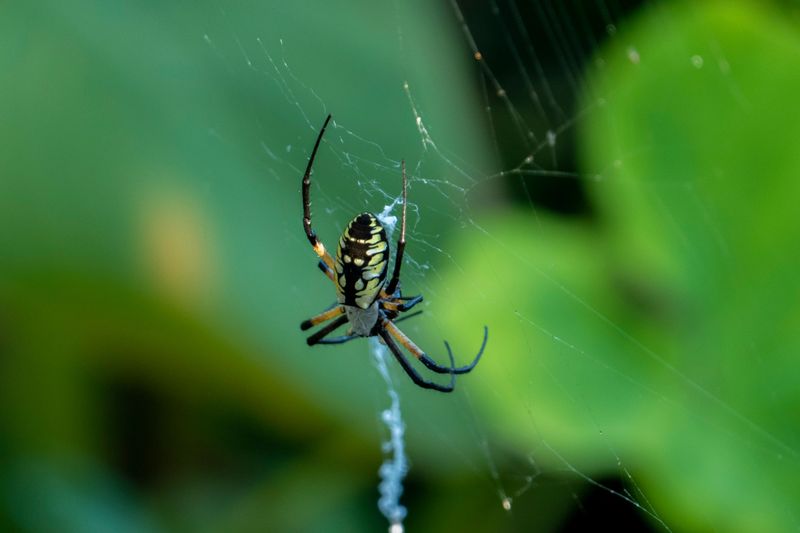
Funny thing is, the yard that makes room for spiders is often the yard with fewer pest problems. Spiders eat flies, mosquitoes, aphids, and plenty of other insects that bother gardeners.
Black widows are only one small part of that crew. Most spiders you see in New York gardens, like orb weavers, jumping spiders, and wolf spiders, pose little risk to people.
They earn their keep quietly, catching bugs from spring through fall.
So the goal is not to clear every web from your property. Focus on the high-touch spots, such as chairs, grills, toys, tool handles, and door frames.
Let the rest of your garden spiders keep working in the shrubs and flower beds.
If you find several widow webs or sacs, or you feel unsure about an identification, call a licensed pest professional. Your local Cornell Cooperative Extension office can also help identify spiders from a clear photo.
Many offices offer this service for free or at low cost.
A quick check under the chairs before summer barbecues can become an easy habit. Pair it with gloves and a flashlight, and you can enjoy your deck with confidence.
A little awareness keeps everyone, spiders included, in their proper place.