Here’s Where And When To Hang An Owl Box In Your New York Yard
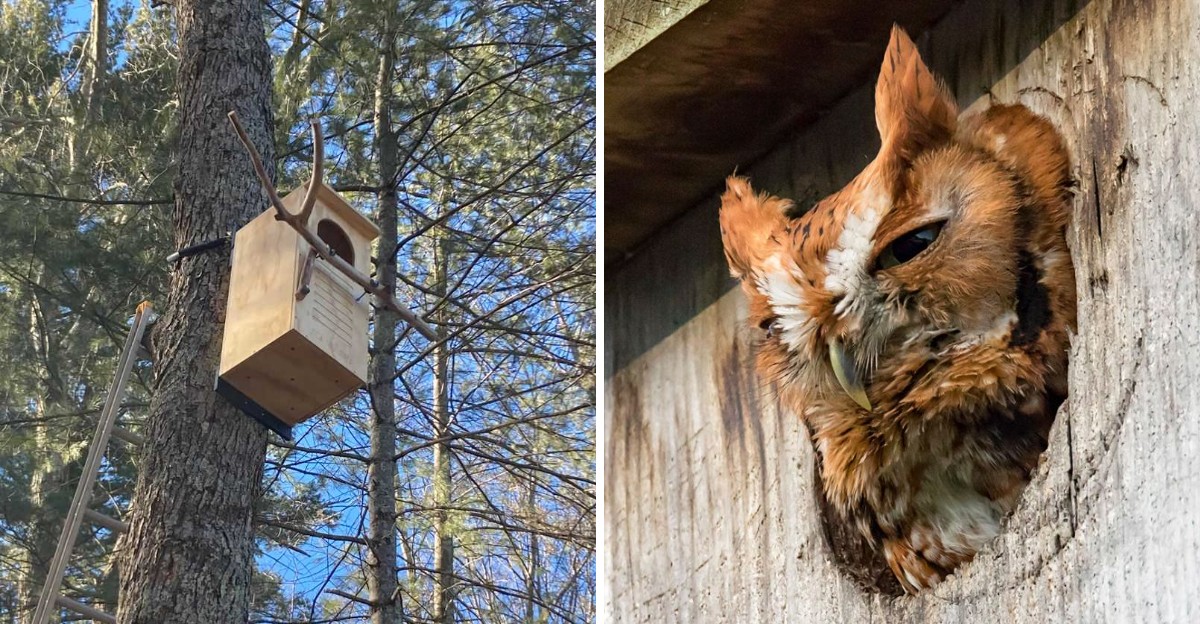
A soft, shivering trill drifts through the backyard on a cold winter night. That eerie little whinny might belong to an owl looking for a place to raise a family.
Small owls hunt quietly in New York yards, parks, and wooded lots, often right under our noses. Natural tree hollows are getting harder to find, so a well-placed box can make a real difference.
Hanging one isn’t hard, but timing and placement matter more than most people expect. Get them wrong, and the box may sit empty for years.
Get the details right, and you could have a front-row seat to fuzzy owlets peeking out each spring. Late fall is the perfect time to start.
Where, when, and how you hang that box all play a part. Your yard could soon become prime owl real estate.
1. Eastern Screech Owls Are The Most Likely Tenants
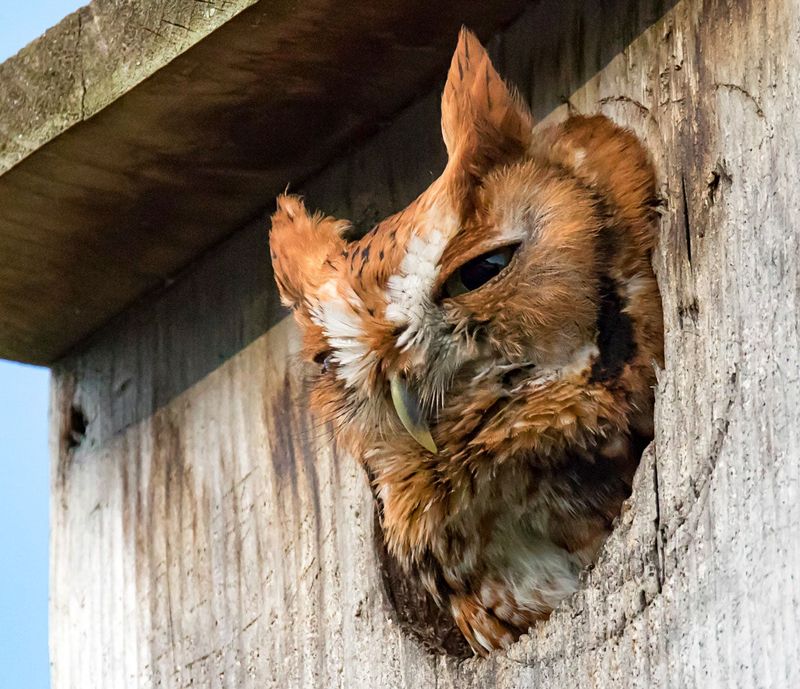
Meet the owl most likely to move into your box, and it is smaller than you might think. Eastern Screech Owls measure only about 7 to 10 inches long.
Despite the name, these owls rarely screech at all. Their calls sound more like a soft whinny or a long, wavering trill.
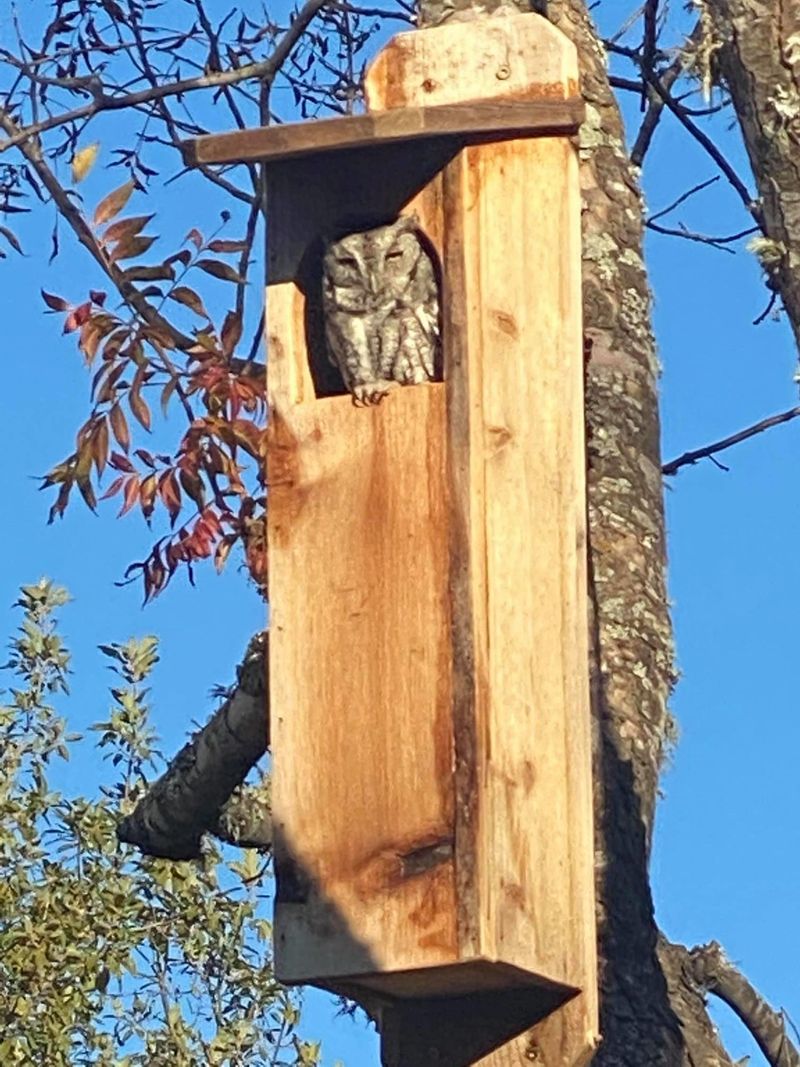
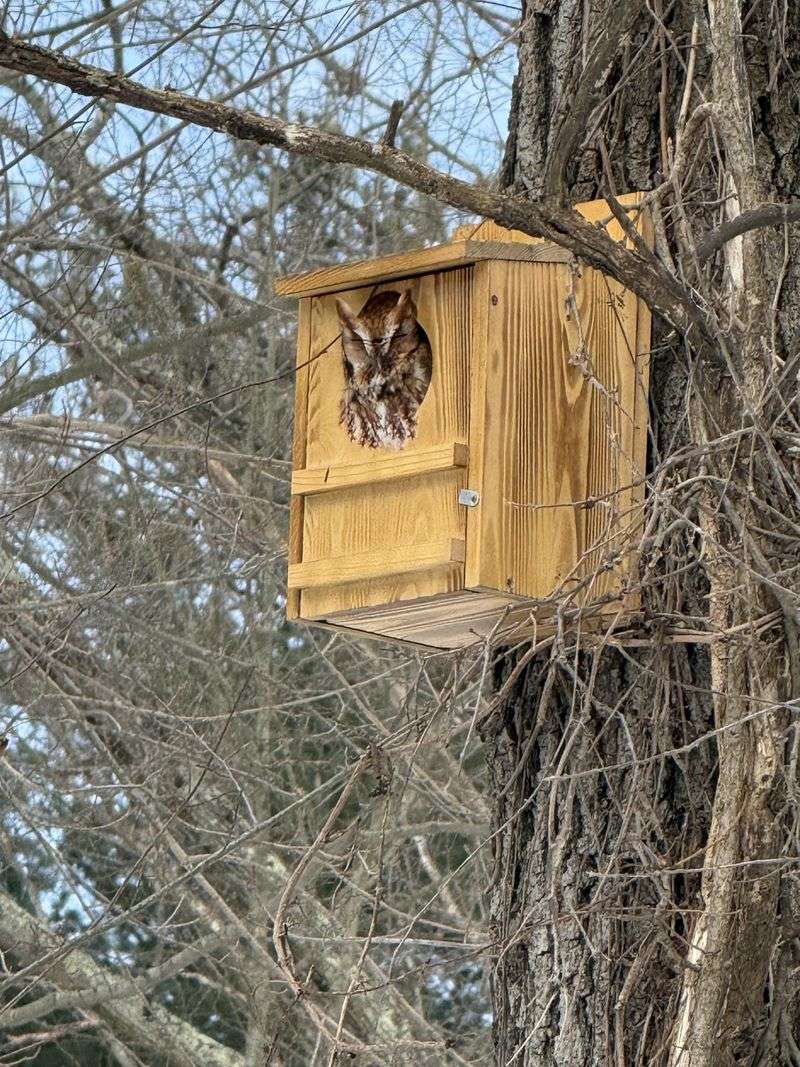
Look closely and you will spot bright yellow eyes and little feathered ear tufts. They come in two colors, gray and a rusty reddish-brown called rufous.
Here in New York, the gray version shows up more often. Its bark-like feathers help it blend into tree trunks during the day.
Screech owls are surprisingly comfortable around people. They live in woodlands, city parks, and quiet suburbs with mature trees nearby.
Size matters when you shop for or build a box. Aim for an inside floor between 8 by 8 and 10 by 10 inches.
The inside height should be about 15 to 18 inches tall. A round entrance hole 3 inches wide works best for these birds.
Place that hole roughly 12 to 13 inches above the floor. Such depth keeps eggs and chicks tucked safely away from curious reaching paws.
Bigger owls like barred owls need much larger boxes. Sticking with screech owl dimensions gives you the best odds of welcoming a tenant.
Fun fact: in Texas, these owls sometimes keep live blind snakes in their nests. The snakes eat insect pests that might otherwise bother the growing chicks.
2. Fall Into Early Winter Is The Best Time To Put It Up
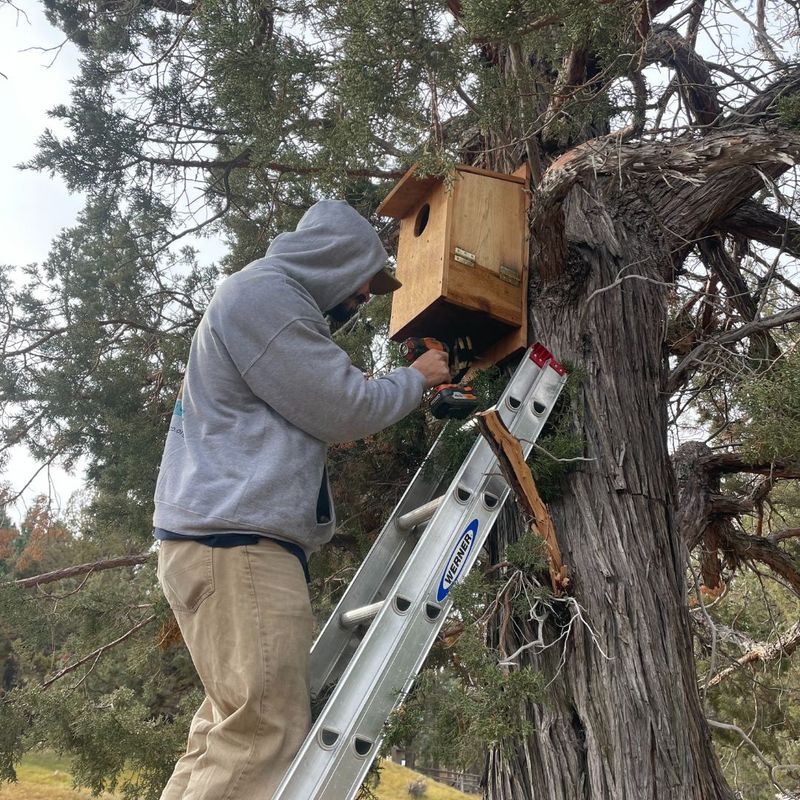
Crunchy leaves and chilly mornings make a perfect signal for owl box season. October through December is the sweet spot for hanging yours.
Why so early, you might ask? Owls start scouting for nest sites months before they actually lay eggs.
Think of it like house hunting before a big move. Owls want time to check out the neighborhood and inspect every possible option.
A box that goes up in fall gets noticed during those nightly flights. Owls may even roost inside during cold weather before claiming it for nesting.
Fall work is also easier for you. Many leaves have dropped, so you can see branches, flight paths, and good mounting spots clearly.
Your New York Garden Changes Every Week. Your Plan Should Too.
Gardening in New York changes quickly throughout the season. Every Friday you’ll receive a simple weekly plan showing exactly what to plant, prune, fertilize, harvest, and protect so you never miss the right timing.
Bugs are mostly gone, and the weather is still mild enough for ladder work. Frozen ground later in winter can make pole installation much harder.
In New York, early December storms can arrive quickly. Try to finish before snow and ice make climbing risky.
Here is a handy tip for planning ahead. Build or buy your box in late summer so it is ready when October rolls around.
Giving the wood a few weeks outdoors also helps. Fresh boxes can smell like a workshop, and weathering softens that new-lumber scent.
Mark your calendar now so the job does not slip away. A little planning in autumn can pay off with owlets in spring.
3. Have It Ready Before Late-Winter Nesting Begins
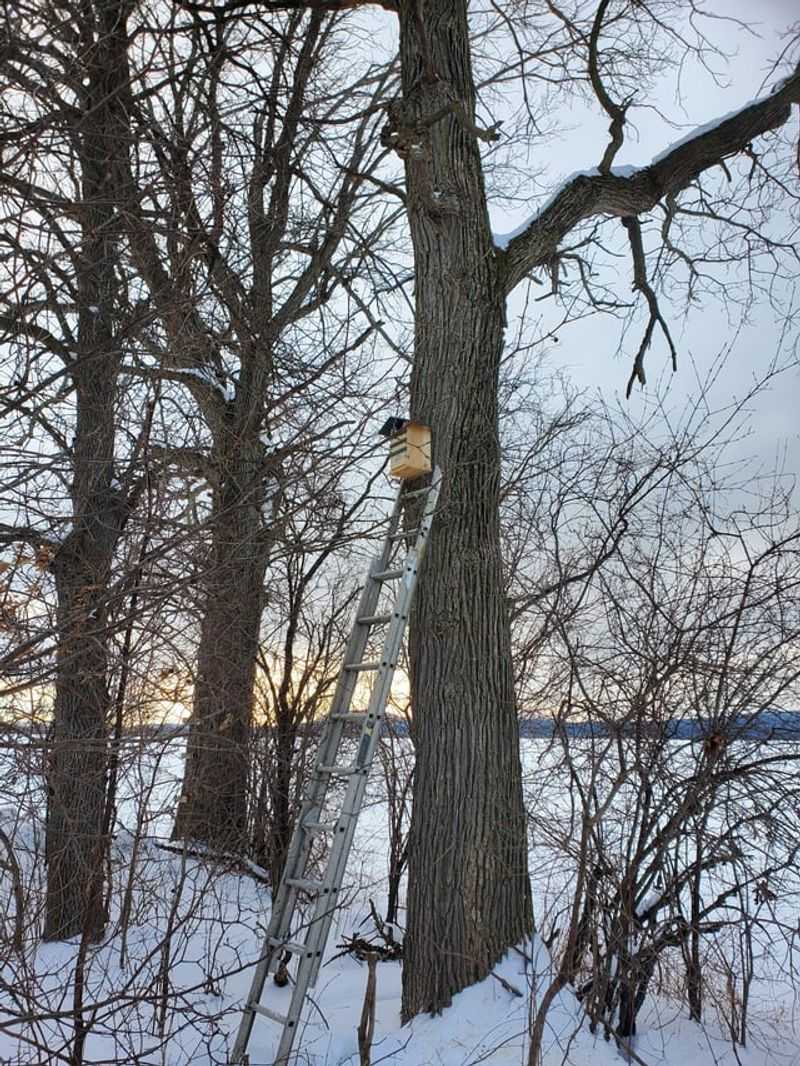
Snow may still cover the ground, but screech owls are already thinking about babies. Nesting in New York usually starts in late February or early March.
Males often begin searching for breeding sites as early as February. They show potential homes to females, almost like giving a house tour.
Miss that window, and your box might sit empty until next year. Owls that have already chosen a cavity rarely switch partway through the season.
Aim to have everything mounted by December at the latest. Doing so gives owls several weeks to find, inspect, and trust their new home.
Once eggs appear, you should leave the box alone. Females usually lay about four to five eggs and sit on them for roughly a month.
Disturbing the box during this time can cause the parents to abandon it. Watch from a distance instead, ideally after dark with a dim red light.
Here is a smart winter routine to follow. Check your box in January for damage from storms, squirrels, or loose screws.
Fix any problems quickly while the box is still empty. A quick inspection now beats an emergency repair once nesting has started.
Keep in mind that owls like predictability. A sturdy, ready box in late winter looks far more inviting than one that wobbles in the wind.
4. Mount It 10 To 30 Feet Off The Ground
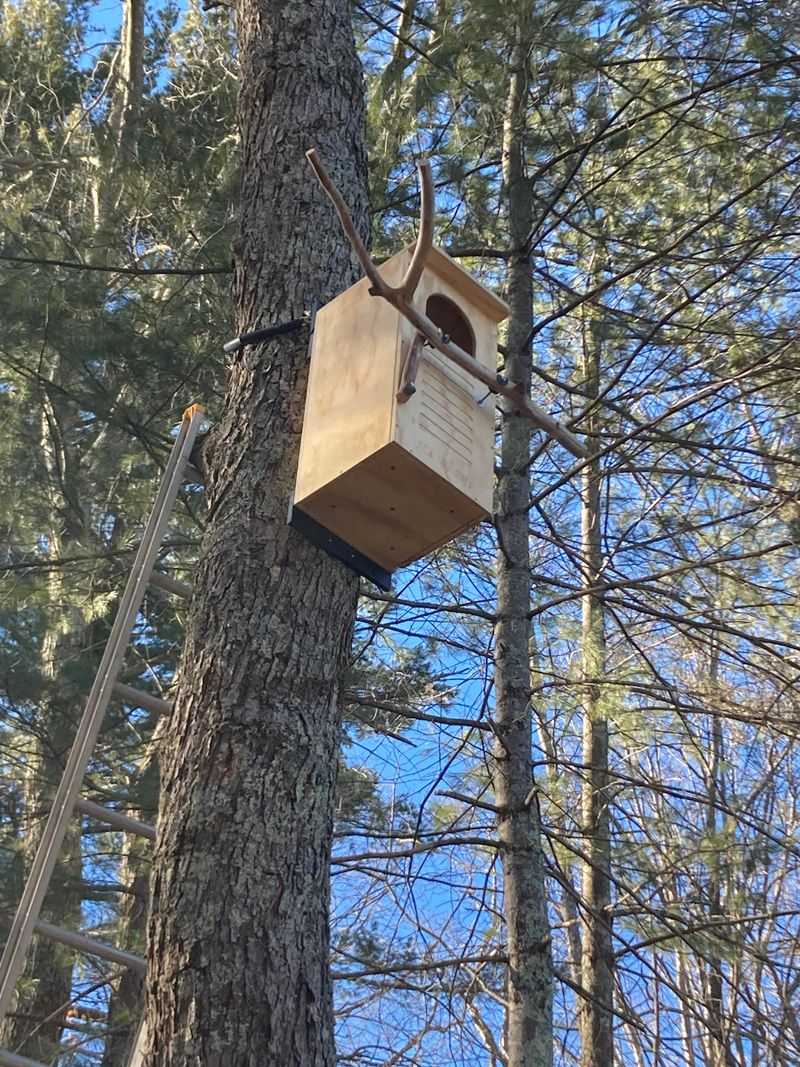
Height can make or break your owl box plan. The best range for screech owls is about 10 to 30 feet off the ground.
Some experts narrow that range to 10 to 20 feet. Either way, higher spots help keep owls safe from ground-dwelling threats.
Natural screech owl cavities are often found in old woodpecker holes. Many of those holes sit right in this same height zone.
Going too low invites trouble from cats and curious kids. Going too high makes it hard for you to clean or check the box safely.
For most homeowners, around 12 to 15 feet is a practical middle ground. A sturdy extension ladder can usually reach that height without much fuss.
Safety matters for you, too. Have a helper hold the ladder, and never stretch too far while drilling or lifting.
Use strong lag screws or bolts rather than nails. A loaded box with eggs and owls inside needs to stay put through wind and storms.
Here is a helpful trick for tree mounting. Attach the box with a wooden spacer block so you avoid wrapping wire tightly around the trunk.
Trees grow every year, and tight wire can cut into bark. Checking the hardware annually keeps both the tree and your owls healthy.
5. A Woodland Edge Near Open Space Is Ideal
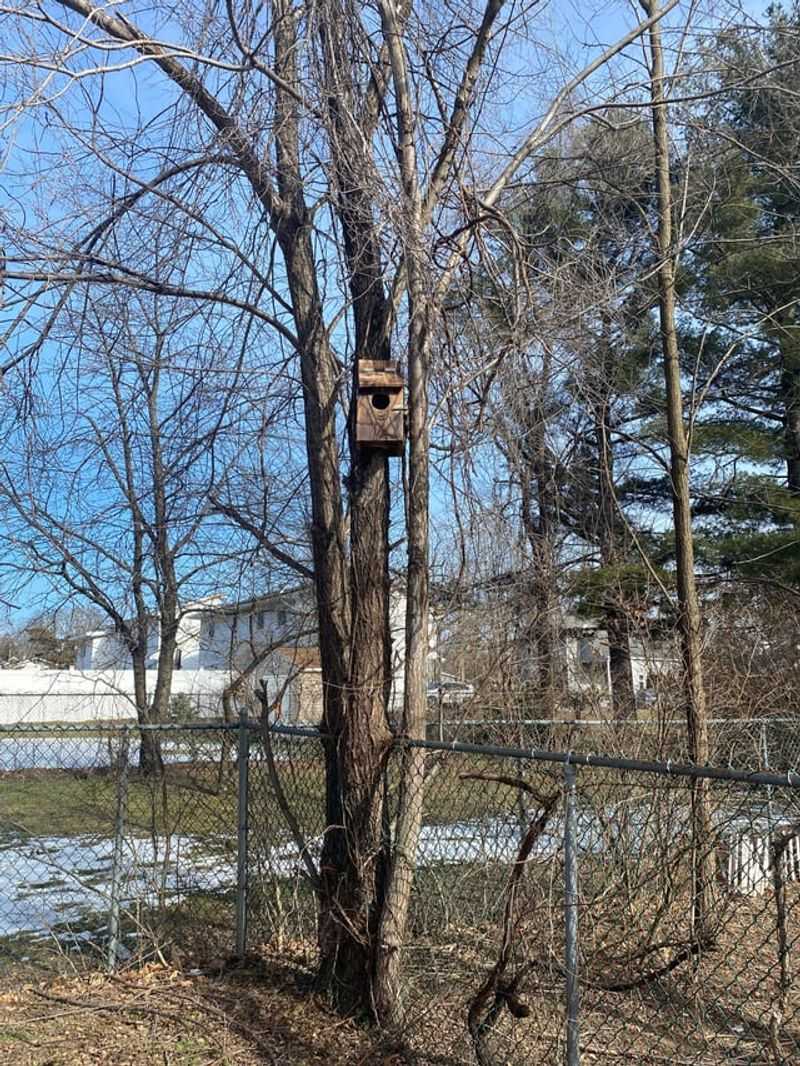
Imagine a restaurant right next to your bedroom. A woodland edge offers owls exactly that kind of setup.
Trees provide shelter and hiding spots during the day. Nearby fields, meadows, or lawns become their nighttime hunting grounds.
Screech owls eat mice, insects, small birds, and even crayfish. Open spaces make it easier to spot and grab that prey.
A spot near a pond, creek, or wetland is an extra bonus. Water attracts frogs and insects, which keeps the owl menu nicely stocked.
Suburban yards across New York often fit this pattern well. A row of mature trees beside a wide lawn can work beautifully.
Direction matters as much as location. Face the entrance hole south or east to catch warming morning sunlight.
Those directions also shield the opening from harsh winter winds. Cold northern and western gusts can chill eggs and young chicks.
Try to avoid pointing the box north or west if possible. Even a small turn can make the inside noticeably more comfortable.
Here is an easy test before you mount anything. Stand at your chosen tree around sunrise and see where the first light lands.
Owls cannot read real estate listings, but they know a good deal. A sunny box with food nearby is hard for them to resist.
6. Tuck It Under A Sturdy Tree Limb
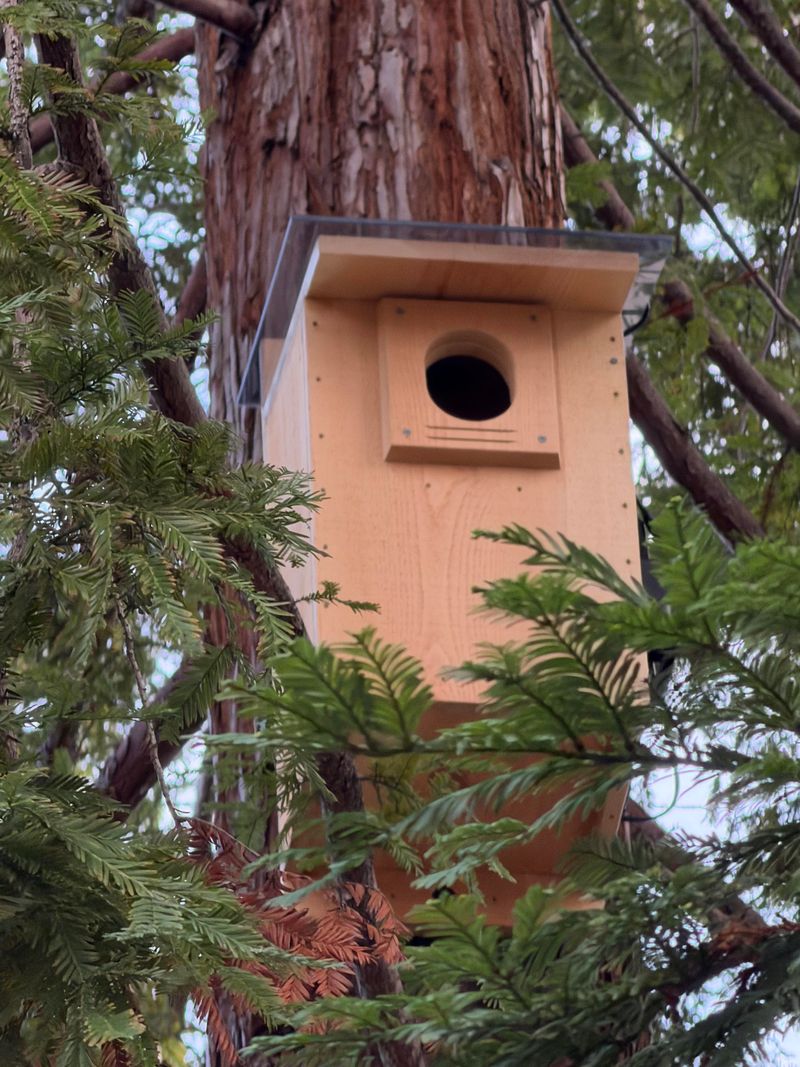
Owls appreciate a little roof over their roof. Placing your box under a strong tree limb adds valuable cover.
That branch acts like an umbrella during rain and snow. It also blocks some summer heat and protects against hawks swooping from above.
Nearby limbs serve another clever purpose. Adult owls use them as lookout perches while guarding the nest.
Young owls benefit, too. Fledglings climb out and practice hopping onto these so-called fledgling branches before they can fly well.
Watching wobbly owlets balance on a branch is pure entertainment. They look like fluffy, wide-eyed toddlers learning to walk.
Still, keep the entrance hole wide open. Owls need a clear, straight flight path to zip in and out quickly.
Trim any small twigs dangling right in front of the opening. Avoid limbs that sit directly across the hole, since they block easy access.
Here is a helpful balance to aim for. Put a sturdy branch above or beside the box, but leave the front clear.
Choose a healthy tree with solid wood. Rotting branches could crack in a storm and damage the box or harm the birds.
A quick look with binoculars can reveal decaying or hollow limbs. Picking a strong tree now saves headaches down the road.
7. A Predator Guard Keeps Squirrels And Raccoons Out
Raccoons are clever little bandits with nimble hands. Given the chance, they will happily reach into an owl box for eggs.
Squirrels cause trouble, too, often stealing the box for their own nests. Cats, snakes, and some birds can also threaten nesting owls.
A predator guard is your best line of defense. It stops climbers before they ever reach the entrance.
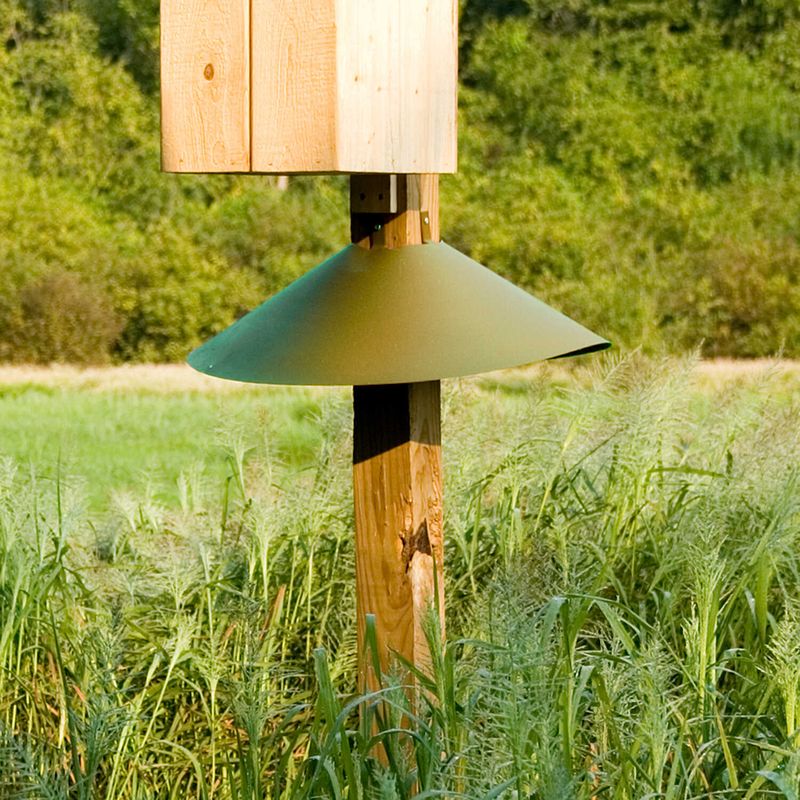
Metal sleeves or cone-shaped baffles work well on support poles. Animals simply cannot grip the slick surface to climb past.
Wooden entrance guards offer another layer of protection. Picture a thick block with a 3-inch hole lined up over the box opening.
That extra thickness makes the tunnel longer. Raccoon arms struggle to reach the eggs sitting at the bottom.
Many experts prefer pole-mounted boxes over tree-mounted ones. Trees give predators an easy highway straight to the nest.
If you do mount on a tree, wrap a wide metal band around the trunk. Make sure no nearby branches let animals leap across to the box.
Here is a practical tip for pole setups. Place the baffle at least four to five feet off the ground.
Squirrels are skilled jumpers, so lower guards may not stop them. A well-placed baffle keeps your owl family resting easy all season.
8. Add A Few Inches Of Wood Shavings Inside
Screech owls are not exactly master builders. Unlike robins, they gather no twigs or grass at all.
Instead, females lay eggs right on whatever debris sits inside the cavity. In the wild, that might be rotted wood or old woodpecker leftovers.
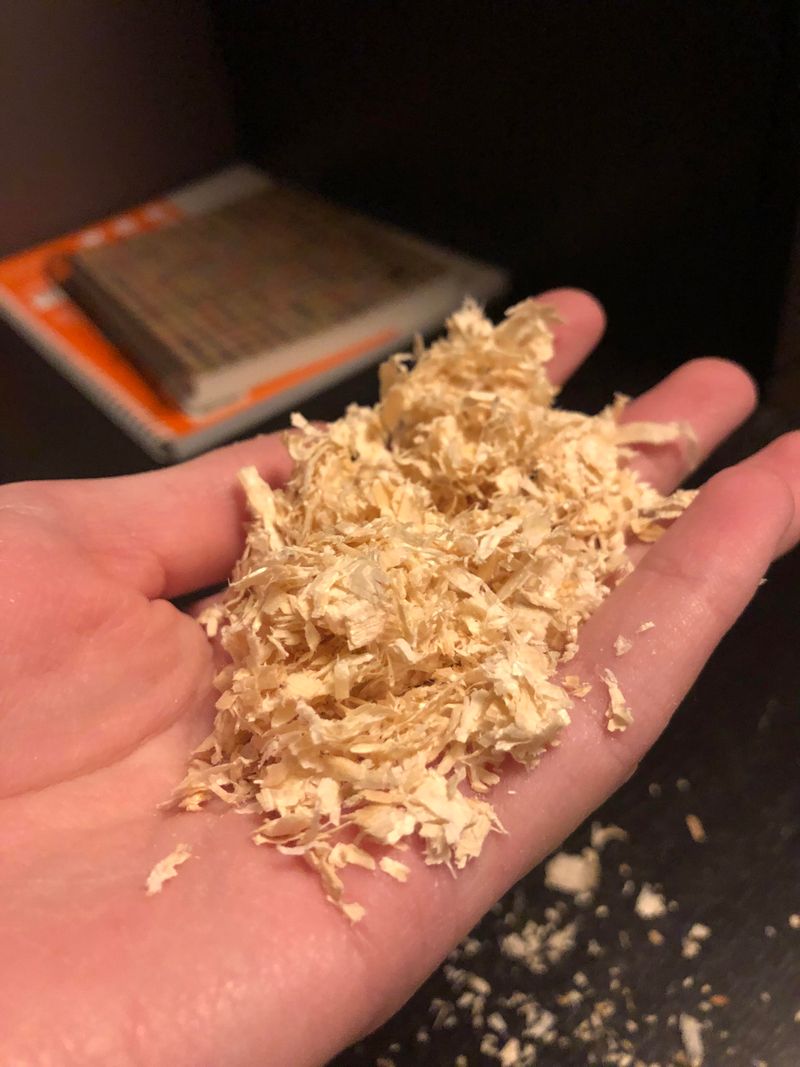
Your job is to provide a comfy floor. Spread one to three inches of natural pine shavings across the bottom.
The shavings cushion the eggs and stop them from rolling around. They also add warmth during chilly New York nights in early spring.
Skip cedar shavings, even though they smell nice. Cedar oils can harm birds if swallowed.
Avoid fine sawdust, too, because it can irritate young lungs. Straw and grass tend to mat down, hold moisture, and grow mold.
Wood chips are another poor choice. They can carry pests and do not drain or insulate as well.
Here is a simple shopping tip. Pet store pine bedding works well, as long as it is plain and unscented.
Drill a few small drainage holes in the box floor as well. Wet bedding chills eggs quickly, so good airflow matters.
Refresh the shavings each fall when the box is empty. Clean bedding sends a welcoming message to owls seeking a new home.
9. Keep It Away From Busy Paths And Pesticides
Owls are natural pest control, but poisons can turn that gift into a disaster. Rodenticides are among the biggest threats to backyard owls.
Here is how the problem happens. A mouse eats poison bait, then an owl eats the weakened mouse.
The poison passes straight into the owl, often with fatal results. Experts call this secondary poisoning, and it happens far too often.
If you want owls, skip rat and mouse poisons entirely. Snap traps or sealing entry points are much safer for wildlife.
Go easy on lawn and garden pesticides, too. Fewer chemicals mean healthier insects, mice, and owls throughout your New York neighborhood.
Location matters for peace and quiet as well. Keep the box away from busy roads, driveways, and walking paths.
Constant foot traffic and car noise can make owls nervous. Avoid aiming the entrance hole toward a street or sidewalk.
Think about your own comfort, too. Hungry owlets can be surprisingly loud at night while begging for food.
Here is a friendly tip to try. Place the box at the quieter back edge of your property, away from bedroom windows.
Nesting parents may also swoop near people who wander too close. A calm, secluded corner keeps both owls and humans happy.
10. Be Patient, Because Owls May Take A Season Or Two
Good things come to those who wait, and owl lovers know that well. Some boxes get tenants right away, while others sit quiet for a while.
Many owls take one to three years to move in. A season or two of emptiness is completely normal, so try not to lose hope.
Owls explore possible homes slowly over time. They may visit, roost, and leave before finally deciding to nest.
So how can you tell if anyone is home? Look for owl pellets on the ground below the box.
Pellets are small, gray bundles of fur and bones. Owls cough them up after swallowing prey whole.
Fresh whitewash streaks or stains on the box are another clue. Feathers caught around the entrance hole can also hint at visitors.
Sometimes the owl itself gives the game away. On sunny winter days, screech owls like to sit in the doorway and soak up warmth.
Here is a fun activity for the family. Walk outside at dusk and listen for that soft, horse-like whinny.
If a whole year passes with no visitors, review your setup. Adjusting height, direction, or location can improve your chances.
Across New York, patient homeowners are often rewarded. One spring morning, a pair of yellow eyes may be staring right back at you.