Are Mums Annual or Perennial in Arizona? How to Assess Your Plant’s Chances of Returning
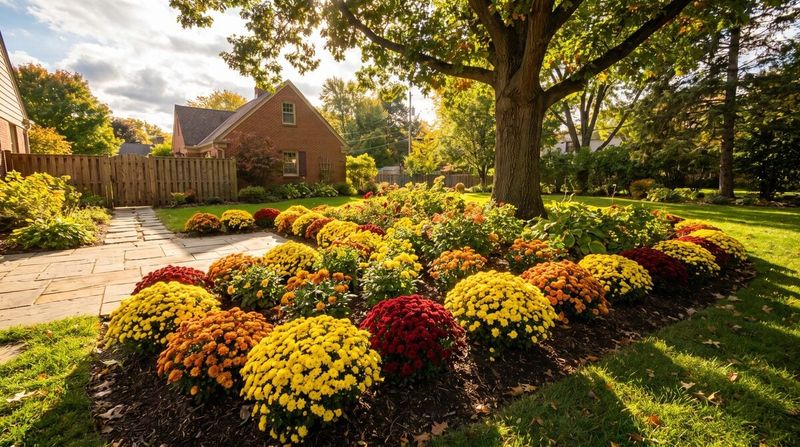
Those pots of fall mums at the store come with a question most tags do not answer. Will the plant come back next year in your Arizona yard, or is it a one-season color splash?
The answer depends on the plant, your address, and how it is treated. A few simple checks can help you judge its chances without any promises.
Garden Mums Are Perennial, but Arizona Survival Varies
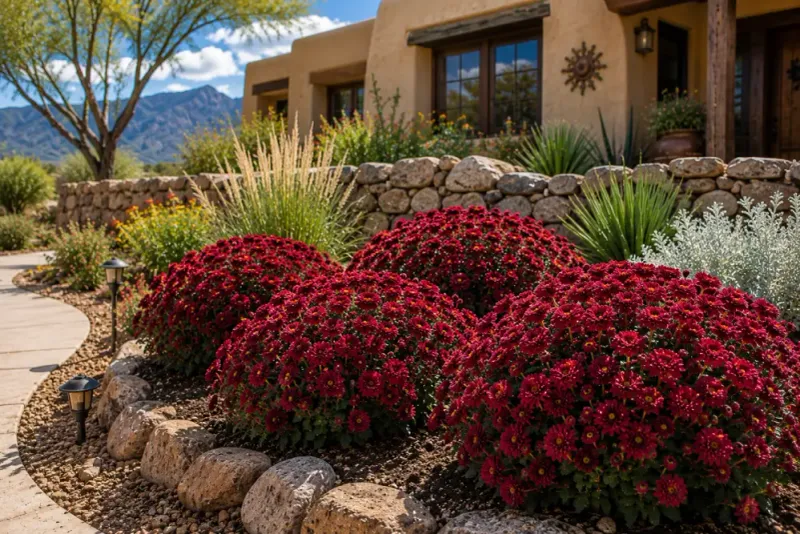
Garden mums (Chrysanthemum x morifolium) are generally treated as perennial plants. That label describes how the plant lives in general, though, not what will happen in your yard.
A perennial can still fail to return if the site or the weather does not suit it.
Hardiness also varies from one cultivar to the next. Virginia Cooperative Extension gives zones 5 to 9 as a typical range for garden mums.
It also says survival depends on cultivar, site, planting time, and winter conditions.
Arizona makes the question trickier because the state is not one climate. Elevation changes everything, from mild low-desert winters to cold mountain ones.
University of Arizona Extension describes these different climate zones, so saying a mum is in Arizona does not tell you much about its prospects. Where in Arizona matters more.
Start with the Plant Tag, Not Its Flowers
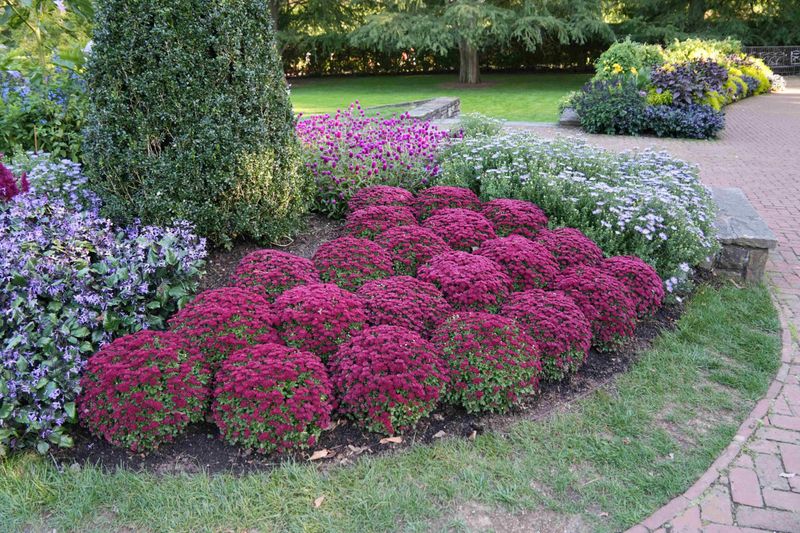
The tag is the best first clue you have. Look for the words garden mum or hardy garden mum, the scientific name, the cultivar name, and any stated hardiness range.
If you bought the plant at a nursery, the staff may be able to tell you the same details.
Flower color and shape will not settle the question. Hardiness is tied to the cultivar, as the Utah State University Extension guide on chrysanthemums explains.
A fall purchase or a grocery-store source does not prove a plant’s type either.
Even a good tag has limits. It can help you judge likely hardiness, but it cannot promise the plant will return.
And if the tag is gone, as with an inherited plant, you may not be able to identify what you have at all.
Check the USDA Zone for Your Address

Next, look up the hardiness zone for your actual address. The USDA Plant Hardiness Zone Map lets you search by ZIP code.
Arizona is not one zone, so your neighbor across the state may land in a very different one.
The zones are based on average annual extreme minimum winter temperatures. That makes them useful for judging whether winter cold is likely to be a problem.
Compare your zone with the range on the tag or the seller’s information.
A matching zone is a good sign, not a guarantee. The map does not predict whether one particular plant will survive.
It also says nothing about whether the plant will thrive overall, which depends on more than winter lows.
Winter Hardiness Does Not Answer the Summer Question
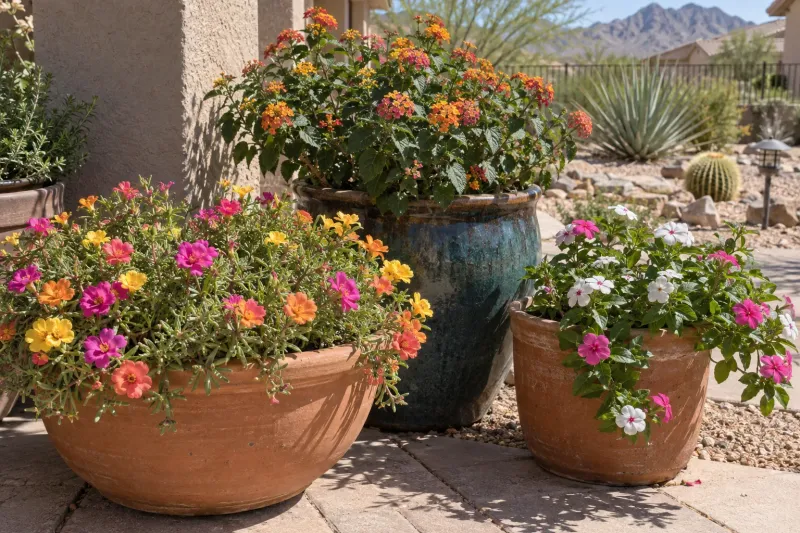
Surviving winter is only half the story. A zone number tells you about cold, not about a hot Arizona summer.
So it helps to ask two separate questions: can it handle my winter, and can it last through my summer?
University of Arizona guidance in its low-desert flower planting guide says many plants that are perennial elsewhere are grown as annuals in the low desert. Summer heat and chilling needs are the reasons.
That is the broader point worth keeping in mind.
One caution applies here. The chrysanthemums listed in that guide are different species, such as Shasta daisy and painted daisy.
So the guide does not tell us how garden mums perform in the low desert, and it does not classify them either way.
Give New Plants Suitable Growing Conditions
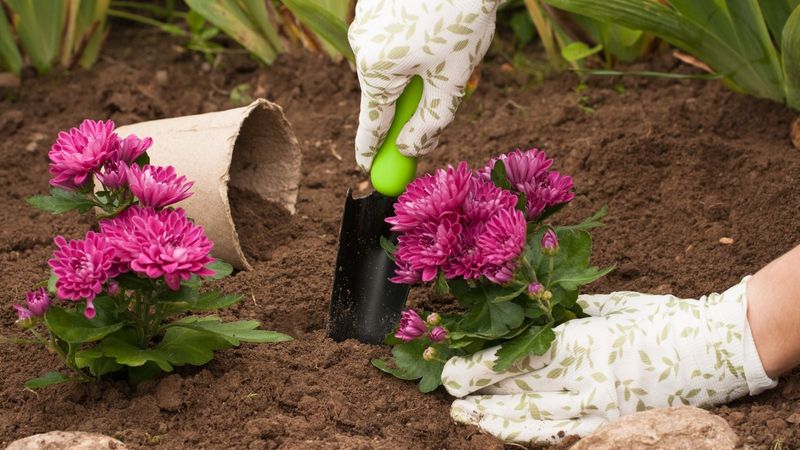
If you plant a mum in the ground, start with the site. Utah State University Extension recommends full sun and fertile, well-drained soil for chrysanthemums.
Soggy ground is a poor fit for any root system.
New plants also need help getting established. Watering needs vary by plant and location, and University of Arizona watering guidance notes that newly planted plants need extra care.
That is why one fixed schedule for the whole state would not work.
Timing matters too. Virginia Tech reports that late-planted mums have less time to build roots and lower survival.
That advice is for Virginia, so treat it as a general caution that a fall planting may have less time to settle in, not as an Arizona calendar.
Assess Your Plant’s Chances Without Treating One Outcome as a Rule
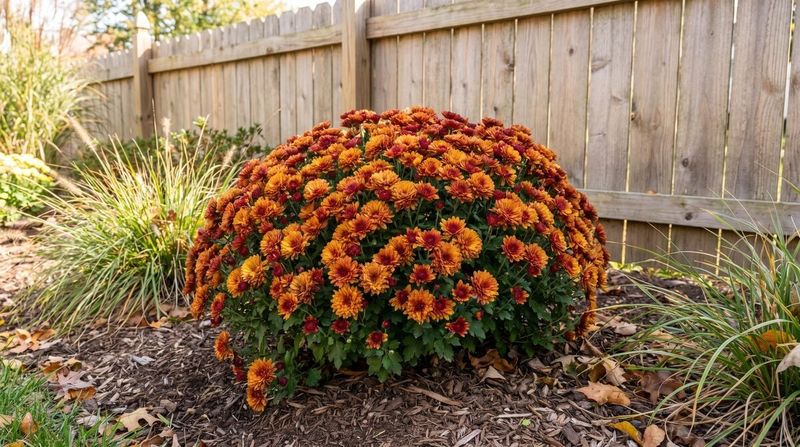
Put the pieces together like a short checklist. Read the tag or ask the seller about the cultivar.
Look up the zone for your address, then think about your local summers and how well you can help the plant settle in.
Some plants will stay a mystery. If an inherited mum has no label, you may never know its cultivar.
In that case, treat its return as an open question and enjoy the blooms while they last.
One result does not make a rule for every mum. A plant that returns or fails tells you about that plant in that spot, since cultivar, winter conditions, planting time, and care can all play a part.
Your mum’s odds are worth weighing, and a spring surprise is always possible.