This Bulb Looks Like An Onion And Is Sending New Yorkers To The ER
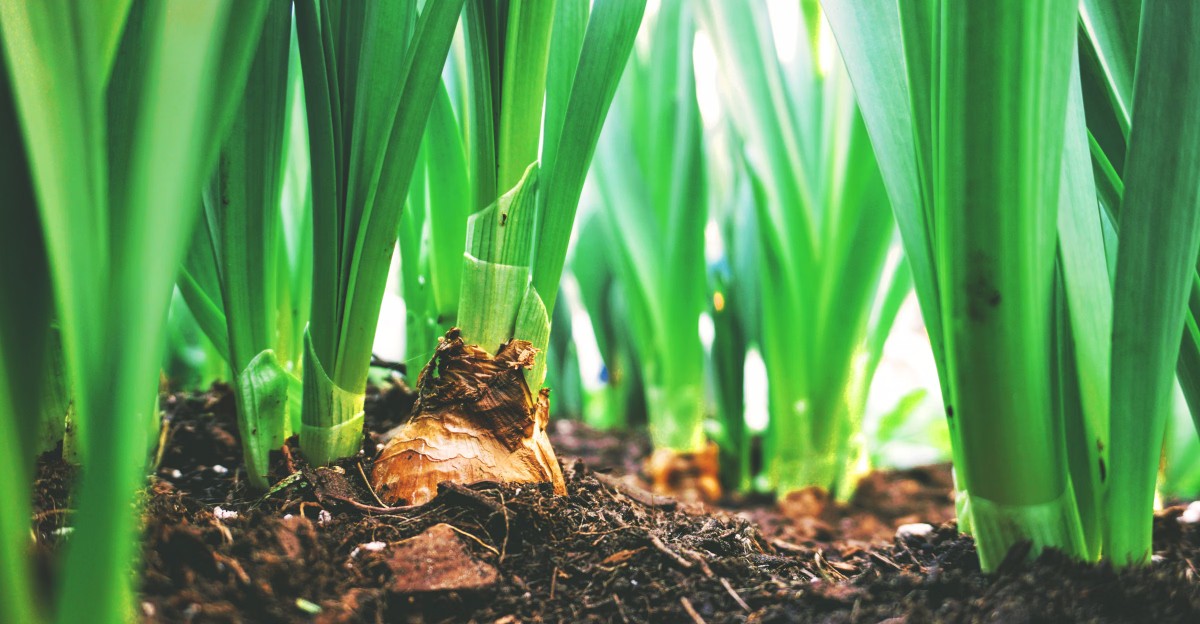
A plant with leaves almost identical to a beloved spring treat can slow a human heartbeat to a crawl. I learned that while reading poison center warnings, and it stuck with me for days.
Every spring, foragers across New York head into damp woods hunting for something green, garlicky, and free. Some come home with a basket of trouble instead, and a few end up spending the night in a hospital bed.
I get the excitement, honestly. After a long, gray winter, anything that pushes through the soil feels like a gift. You spot a smooth green leaf or a papery bulb, and your brain fills in the rest.
In New York, where wild leeks carpet the forest floor from the Catskills to the Adirondacks, that temptation is hard to resist.
The tricky part is that your eyes can fool you, but your nose usually tells the truth. One crushed leaf says a lot in seconds. So which plants are the troublemakers, and how do you tell them apart before dinner?
That Ramp-Looking Leaf in the Spring Woods Might Not Be a Ramp
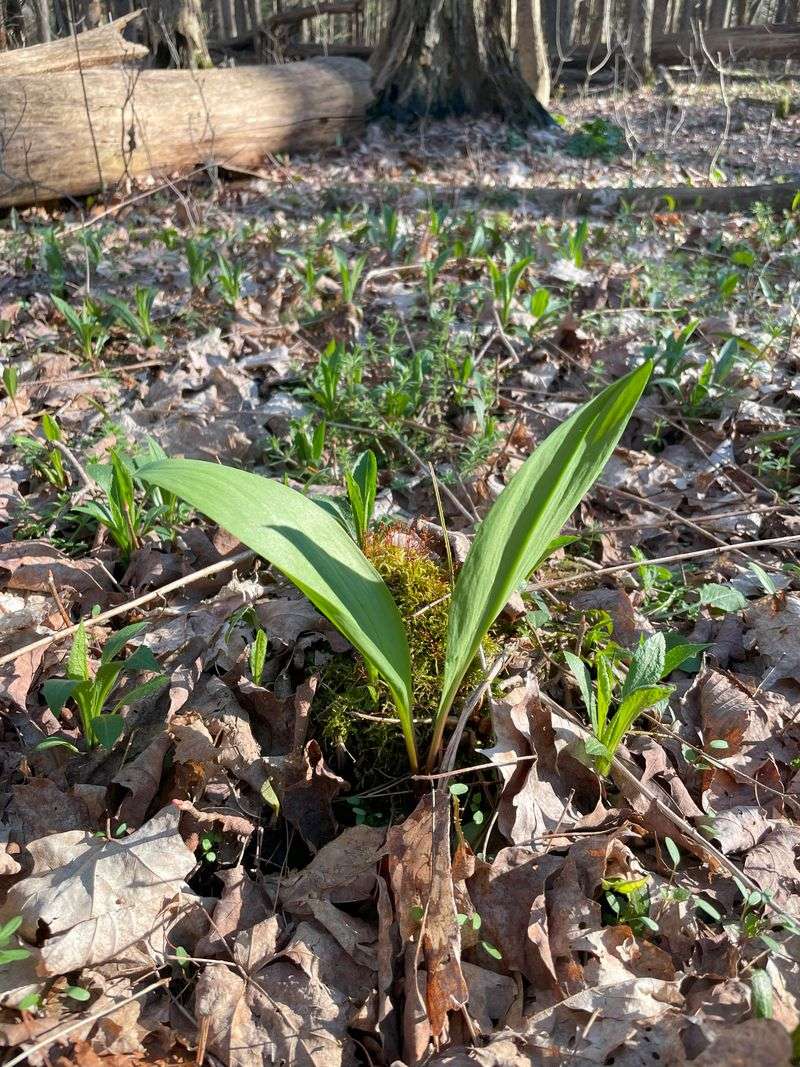
Spring foraging in the Northeast has a quiet problem, and it shows up in emergency rooms every April and May. Poison centers serving New York regularly warn that people mistake toxic plants for ramps and wild onions.
The pattern repeats itself year after year. Someone spots a patch of broad green leaves along a creek, feels a rush of excitement, and fills a bag. Hours after dinner, the nausea, vomiting, and dizziness start.
No single bulb causes all of these visits. A handful of plants share the blame, including false hellebore, daffodils, lily of the valley, autumn crocus, and the poisonous camas group. Some grow wild in wet woods, while others sit right in ornamental flower beds.
What links them together is timing and shape. Most push up smooth or grassy leaves in early spring, right when ramps and field garlic appear.
Several grow from bulbs or thick roots that look a lot like something from the produce aisle.
I find that a little humbling as a gardener. We spend all year learning what plants need, yet a few of them can trick experienced eyes. Knowing the usual suspects is the first step toward safer harvests.
Crush the Leaf and Sniff Before Anything Goes in Your Basket
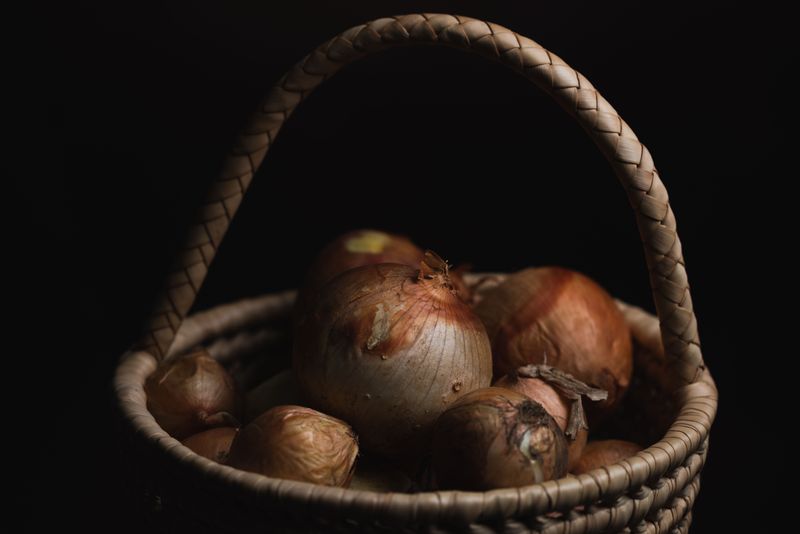
Your nose is the best free tool you own for this job. Real ramps, wild onions, and field garlic give off a strong onion or garlic smell the moment you crush a leaf.
False hellebore, lily of the valley, daffodils, and the toxic camas plants lack that smell. Lily of the valley may smell faintly sweet or green, but it does not smell like an onion. If a leaf looks right and smells wrong, put it down.
There is one sneaky catch that trips up even careful foragers. After you handle a few real ramps, your fingers carry the scent.
Crush the next leaf, and you might be smelling your own hands instead of the plant. A simple routine helps a lot.
Test one plant at a time and smell each leaf on its own. Wipe or rinse your hands between samples. Pull only plants that pass every check, not just the first one.
Smell works best as one part of a full identification, not the only step. Pair it with a close look at the leaves, stems, and roots. When something feels off, trust that instinct and leave the plant in the ground.
False Hellebore Leaves Are the Top Ramp Imposter
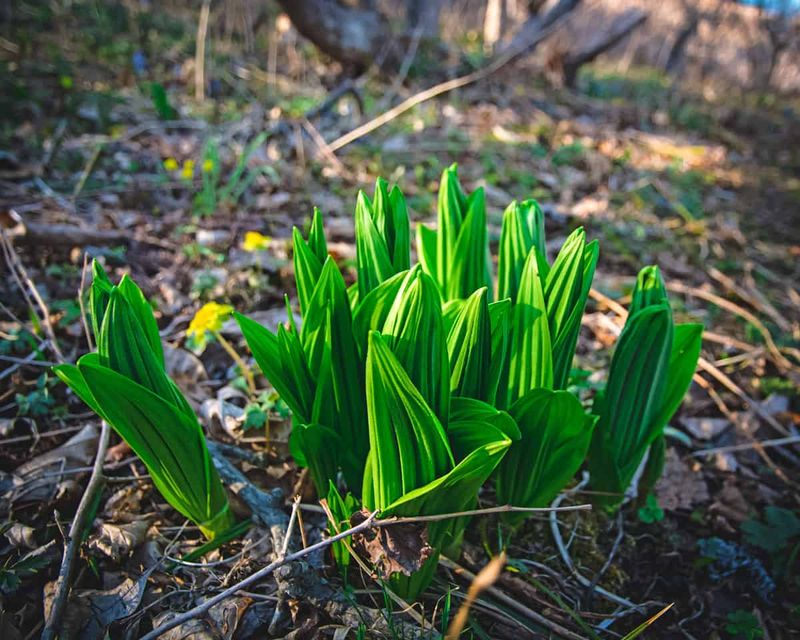
Ask any poison specialist in the Northeast about ramp mix-ups, and one name comes up fast. False hellebore, Veratrum viride, grows in the same wet woods, swamps, and stream banks where ramps thrive.
Young shoots can look like ramps from a few steps away. Up close, the differences show. False hellebore leaves are deeply pleated with strong parallel ribs, almost like a folded paper fan, and they grow up along a single thick stem.
Ramps behave differently. Each ramp usually has one to three smooth, flat leaves rising straight from the ground, often with a reddish or purple stem near the base. They also smell strongly of onion, while false hellebore has no such scent.
Eating false hellebore can bring on nausea and vomiting within a few hours. More worrying, it can slow the heart rate and drop blood pressure sharply, which is why many patients need hospital monitoring.
Most people recover with care, but it is a miserable and frightening night. The plant keeps growing well past ramp season, reaching several feet tall with green flower spikes in summer.
Learn what it looks like at that size, and you will spot the young shoots more easily next spring.
Daffodil Bulbs in Your Garden Shed Can Pass for Onions
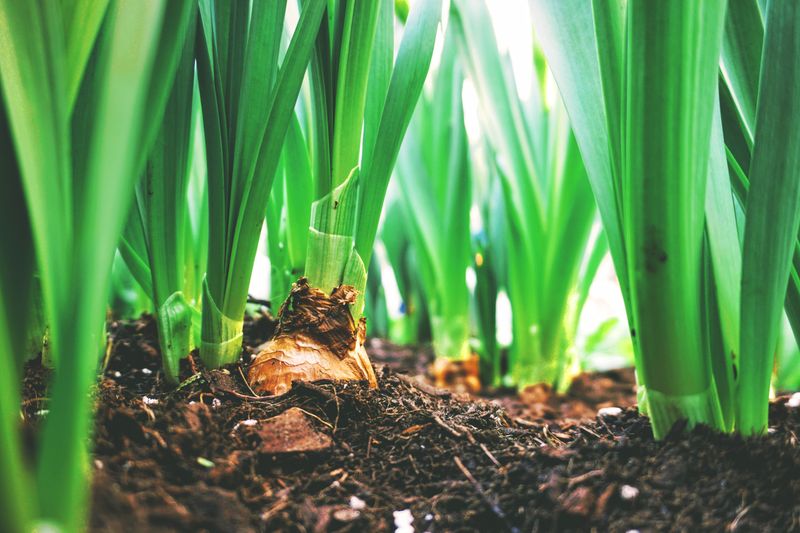
Of all the onion look-alikes, the daffodil bulb may be the most convincing. Papery brown skin, a rounded shape, and a pointed tip make it easy to confuse in a dim basement or garden shed.
Poison centers and medical case reports describe people cooking daffodil bulbs by mistake, sometimes in soup or stir-fry.
The bulbs contain lycorine and other alkaloids that cause vomiting, stomach pain, and diarrhea, often fairly soon after eating. Most cases are unpleasant rather than severe, but they still lead to ER trips.
The leaves can cause trouble too. Spring daffodil foliage looks like long, flat onion or garlic greens, especially before the flowers open.
Grabbing a few leaves for a salad from a mixed bed is a common way these mix-ups begin. A few habits keep the kitchen safe.
Store spring bulbs far from food, in labeled bags or boxes. Keep them out of the fridge and the pantry. Teach kids that garden bulbs are not snacks.
Cut a daffodil bulb open, and you will notice it has no onion scent, even though its layered structure looks similar to an onion’s. That quick check takes seconds. In my shed, bulbs now live on a high shelf with a big marker label.
Grassy Death Camas Leaves Hide a Toxic Bulb With No Onion Smell
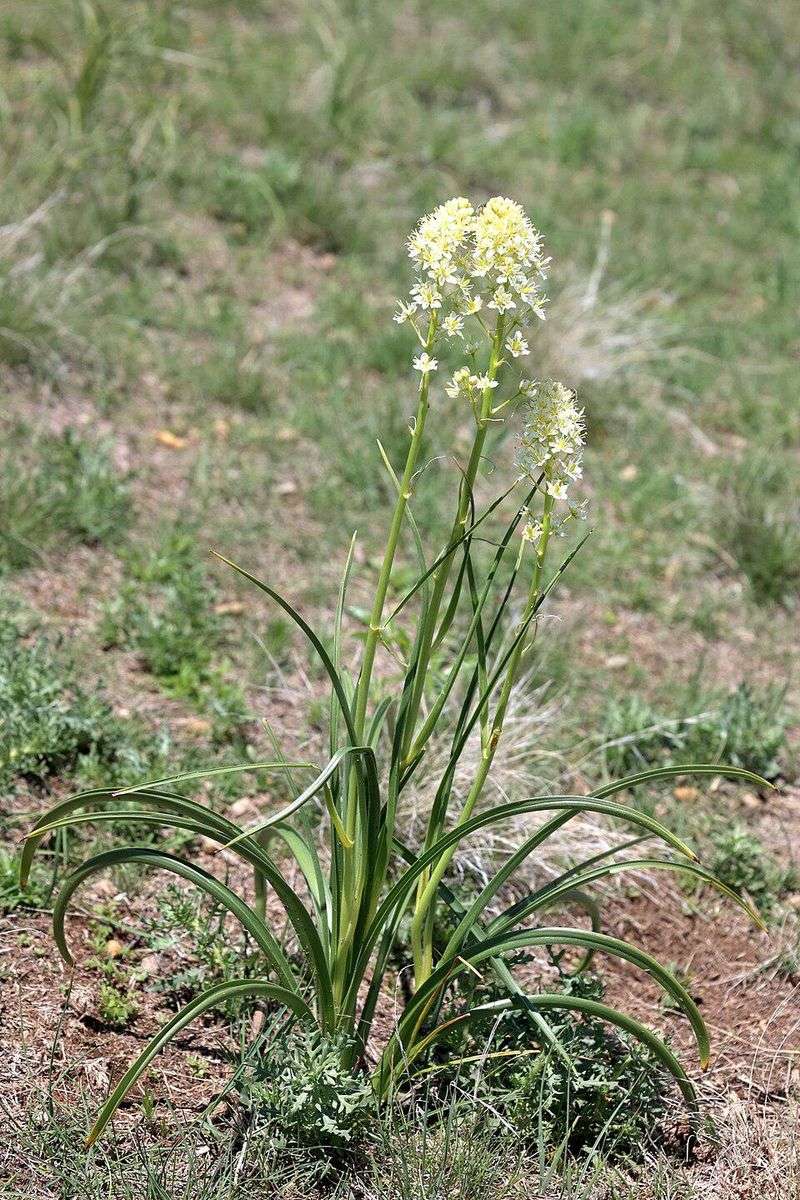
Out West, ranchers have worried about this plant for generations, because it poisons grazing sheep. The toxic camas group, from the genera Toxicoscordion, Zigadenus, and Anticlea, carries a grim common name, death camas, that tells you everything.
In the Northeast, the species you are most likely to find is Anticlea elegans, sometimes called mountain or white camas. It is uncommon in New York and tends to grow in limestone areas, fens, and rocky slopes rather than suburban lawns.
Hikers and botanists treat it with respect. The resemblance to wild onion is real. These plants grow from a bulb and send up long, narrow, grass-like leaves.
Before they flower, they can look a lot like a clump of wild onion. Smell gives it away. The toxic camas has no onion odor at all.
Its leaves also tend to be V-shaped or folded along the midrib, while many wild onions have flatter, rounder, or hollow leaves.
Eating the bulbs can cause vomiting, weakness, a slow heartbeat, and low blood pressure, much like false hellebore.
Later in the season, creamy white flowers appear in loose spikes, not the round clusters onions produce. If you ever find a grassy bulb plant with no smell, admire it and walk on.
Lily of the Valley Leaves Fool Foragers Near Shady Garden Beds
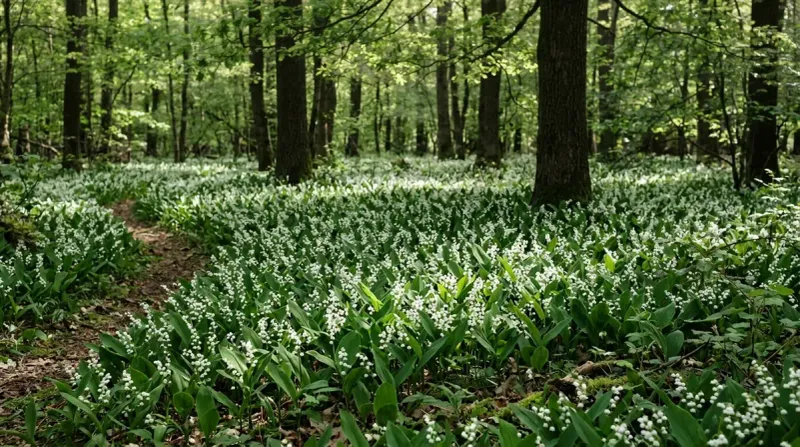
Grandma’s shady garden bed probably had a patch of it, perfuming the whole yard each May. Lily of the valley is a classic in older gardens, and it has spread into woods and yard edges across the region.
Its early leaves are broad, smooth, and pointed, which is exactly why people mistake them for ramps. Often two leaves wrap around each other at the base, almost like a rolled scroll.
Every part of the plant contains cardiac glycosides, compounds that act on the heart. Eating the leaves can cause nausea, vomiting, stomach pain, and an irregular heartbeat. Even the red berries that form in late summer are a concern for curious kids and pets.
Telling it apart is easier than it sounds. Lily of the valley grows from creeping rhizomes, not a bulb, so you will see a network of thin roots rather than a little white onion at the base. The leaf has no onion smell whatsoever.
Growing it on purpose is fine, just keep it away from vegetable beds and herb patches. Wear gloves when dividing clumps, and let neighbors who forage know where your patch sits.
Glossy Autumn Crocus Leaves Carry a Slow-Acting Poison
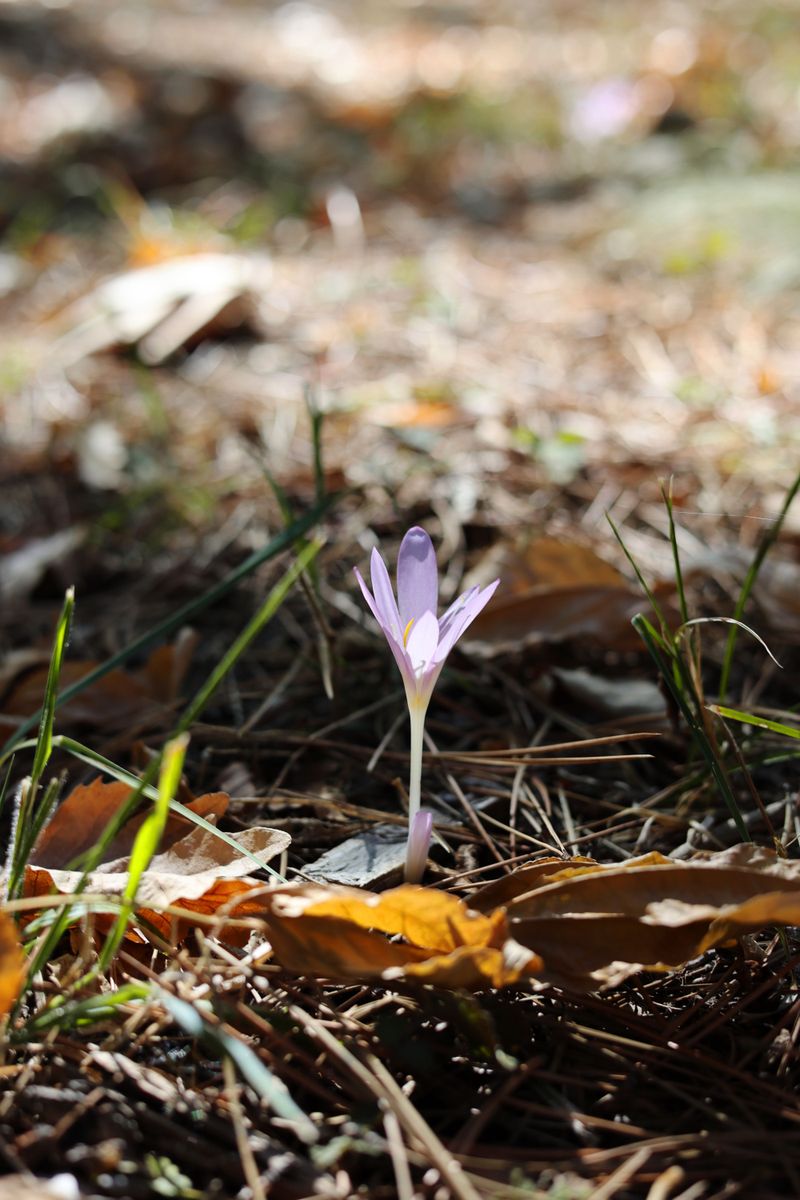
Few garden plants have a stranger calendar. Autumn crocus, Colchicum autumnale, sends up big glossy leaves in spring, lets them fade by summer, then pops out pink flowers in fall with no leaves in sight.
Those spring leaves are the problem. In Europe, many poisoning cases come from people who mistook them for wild garlic, also called ramsons. The plant grows from a corm with brown papery skin that can look onion-like too.
Autumn crocus contains colchicine, a strong compound used carefully in medicine. Eaten by accident, it causes severe vomiting and diarrhea, and in serious cases it can harm several organs.
Symptoms may be delayed for hours, so people sometimes wait too long to get help. Autumn crocus is sold as an ornamental bulb in the United States and shows up in New York gardens.
It is not a common wild plant here, so the bigger risk sits in home beds and gifted bulbs. Mark where you plant it, and keep it from sharing space with chives or garlic. Like the others, its leaves have no onion smell.
Anyone who eats a mystery green and feels sick later should mention it to a doctor right away. I tuck mine near a stone path, well away from the vegetable garden.
Keep the Poison Control Number Handy Before You Pick Wild Onions
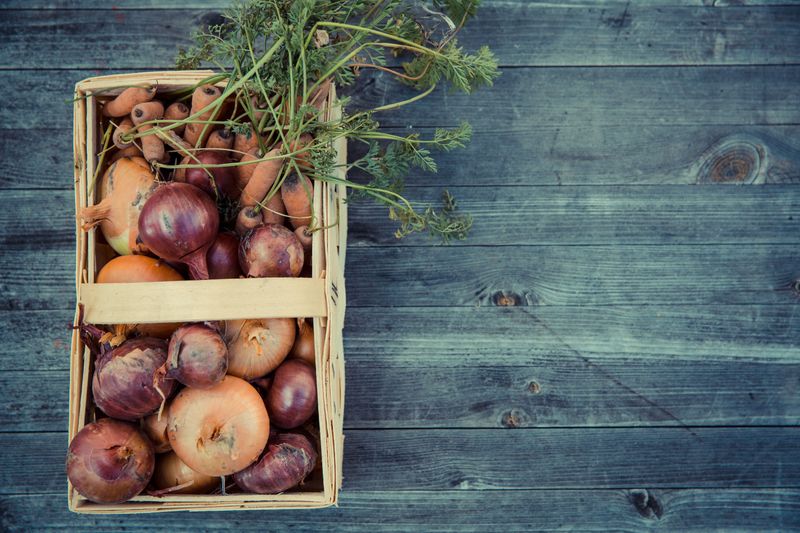
Quick action matters most when a foraging trip goes sideways. If anyone eats a plant and feels sick, or even suspects a mix-up, call Poison Control at 1-800-222-1222.
The line is free, confidential, and open around the clock. Save a sample of the plant if you can, including leaves and roots. Snap a photo too.
Those details help specialists figure out what happened. Call 911 for fainting, trouble breathing, or a racing or very slow heartbeat.
Prevention beats any trip to the ER. Learn from a local expert, such as a Cornell Cooperative Extension program, a nature center walk, or an established foraging club. Use more than one trusted field guide, and compare every feature.
Ramps deserve some care too. They grow slowly, and heavy digging has thinned patches in parts of the Northeast. Many foragers now snip a single leaf per plant and leave the bulb in the soil.
Check rules before harvesting on public land, since many parks limit plant collecting. Better yet, grow chives and garlic chives at home, or plant ramps from a reputable nursery in a shady spot. The old saying still holds up beautifully: when in doubt, leave it out.