8 Trees to Plant Instead of Palms in Arizona Yards
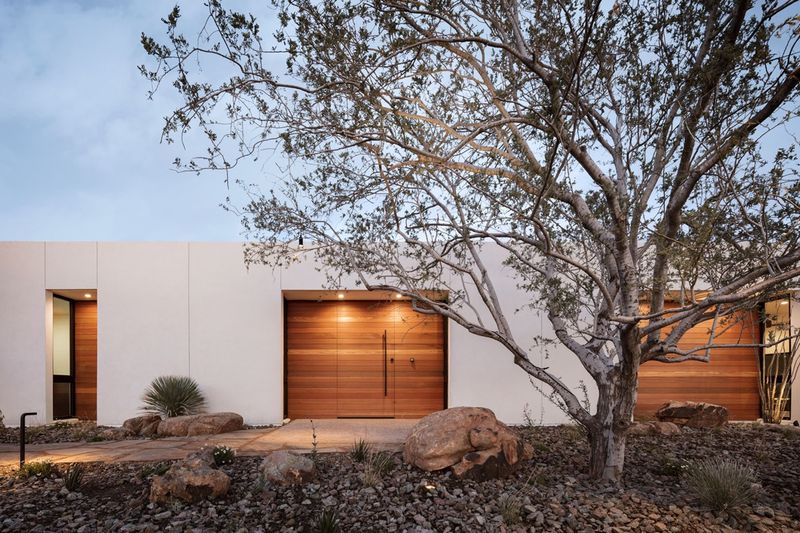
Most palms sold for desert yards are not desert natives at all, and the classic tall fan palm offers surprisingly little shade. The one palm native to Arizona grows wild only in a few scattered canyon oases.
Those skinny trunks look dramatic, but their high crowns leave patios baking under the afternoon sun. Old fronds also pile up and can give roof rats a cozy hideout.
I have to admit I once loved palms for their vacation vibe. Then I spent a July afternoon under a broad native canopy and felt the difference right away.
You might notice birds and bees crowding those native trees while palm crowns stay mostly quiet. October is a smart month for planting here, because cooling soil helps young roots settle before next summer.
So which shade makers deserve that sunny corner of your Arizona yard instead?
1. Velvet Mesquite
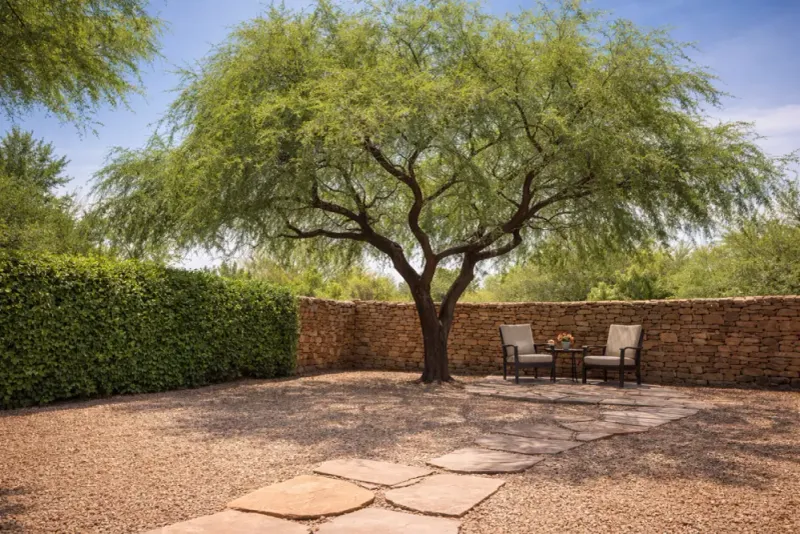
Feathery leaves covered in soft hairs give this Sonoran native its velvet name and a silvery shimmer in sunlight. I love how its twisting trunks look sculpted by wind, like living desert art in your backyard.
Velvet mesquite (Prosopis velutina) usually reaches 25 to 30 feet tall and wide in typical home yards. Give it deep soil and steady water, and it can stretch even larger over many patient years.
Pale yellow catkin flowers arrive in spring and pull in bees by the hundreds on warm, still mornings. Sweet tan pods follow later, feeding birds and small mammals that help keep your yard lively.
Lizards love hunting in the leaf litter, and many of them happily snack on crickets and other insects. You get natural pest helpers working for free while you relax beneath the cool, filtered shade.
Because it fixes nitrogen, this tree rarely needs fertilizer, and established plants often get by on rainfall. Plant it well away from foundations and pipes, since its roots travel deep and wide looking for moisture.
Overwatering inside a thirsty lawn can make it top-heavy and unstable during summer monsoon winds. October planting gives roots several cool months to anchor firmly before the next scorching season returns.
2. Desert Museum Palo Verde
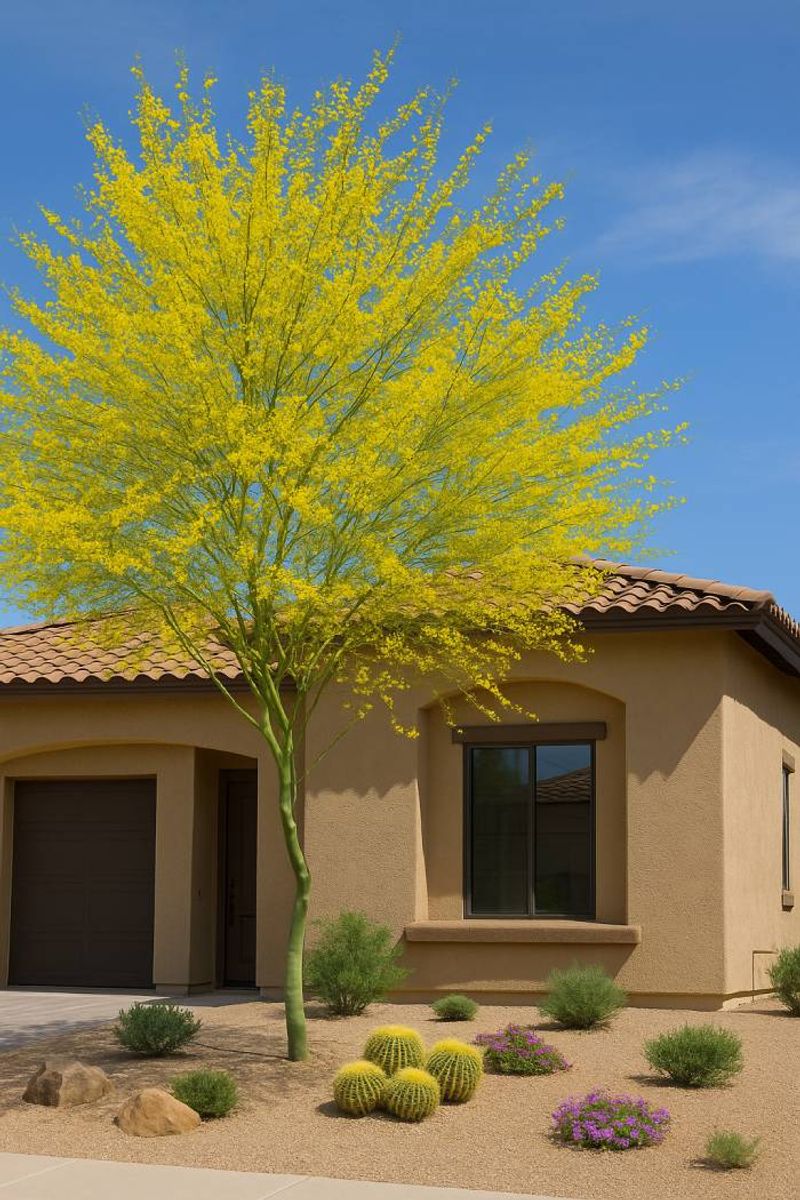
Green bark that makes its own food sounds like science fiction, yet this hybrid does it every day. Its chartreuse trunk and branches photosynthesize, so the tree keeps working even after tiny leaves drop away.
Bred in Tucson from Mexican, blue, and foothill palo verde parents, it borrowed the best traits from each. Personally, I appreciate that it skipped the thorns, which makes it friendlier near walkways and playful kids.
Young trees can grow up to eight feet per year, so shade arrives faster than most people expect. Mature trees usually reach 20 to 30 feet tall with a graceful canopy spreading even wider.
Spring brings a lemon-yellow show that can last two months or longer, with scattered blooms appearing into fall. Bees swarm the flowers, and hummingbirds sometimes stop by for a quick sip on bright mornings.
Filtered shade lets sun-loving perennials grow underneath instead of struggling in deep gloom all afternoon. Hardy to roughly 15 degrees, it handles low desert winters easily, even in caliche-heavy soil.
Once established, a deep soak about monthly in summer usually keeps it happy and steady. Too much water produces weak, floppy branches, so resist the urge to baby this tough tree.
3. Desert Ironwood
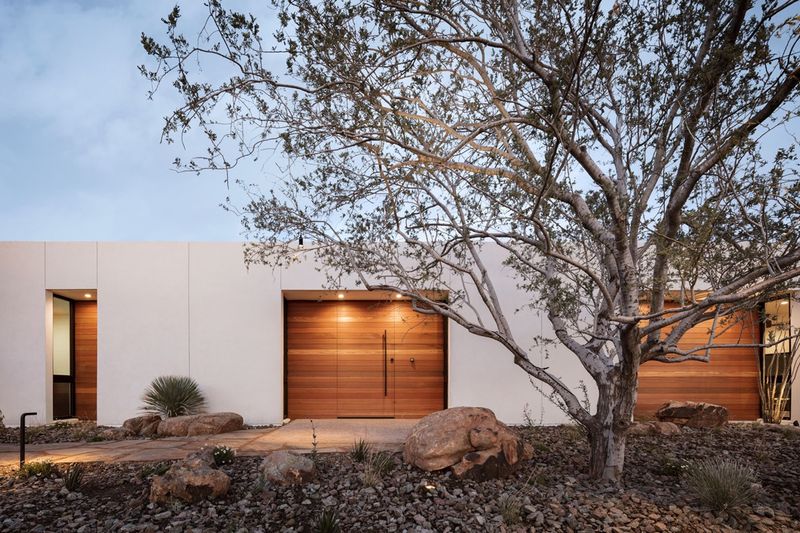
Wood so dense it sinks in water belongs to this slow-growing Sonoran treasure called desert ironwood. Its gnarled trunk ages into a silvery patina that looks wise enough to tell desert stories.
Olneya tesota stays mostly evergreen, holding small, leathery gray-green leaves that conserve water beautifully. In late spring, lavender pea-shaped flowers can dust the whole canopy in a soft purple haze.
What surprises me most is its role as a nurse plant for young saguaros and other tender seedlings. Its shelter helps baby cacti survive scorching summers, and your yard can host the same quiet support system.
Gambel’s quail nibble the seeds, while bees and hummingbirds visit the flowers during spring bloom. Dense branches also give small birds safe cover from hawks prowling overhead in search of lunch.
Patience pays off here, since growth is slow but the reward lasts for many generations. Plant it in full sun with sandy or rocky soil, and it handles temperatures down to about 20 degrees.
Thorns line the branches, so keep it away from busy paths and playful pets. Check occasionally for mistletoe clumps, and snip them out before they spread across the canopy.
4. Desert Willow
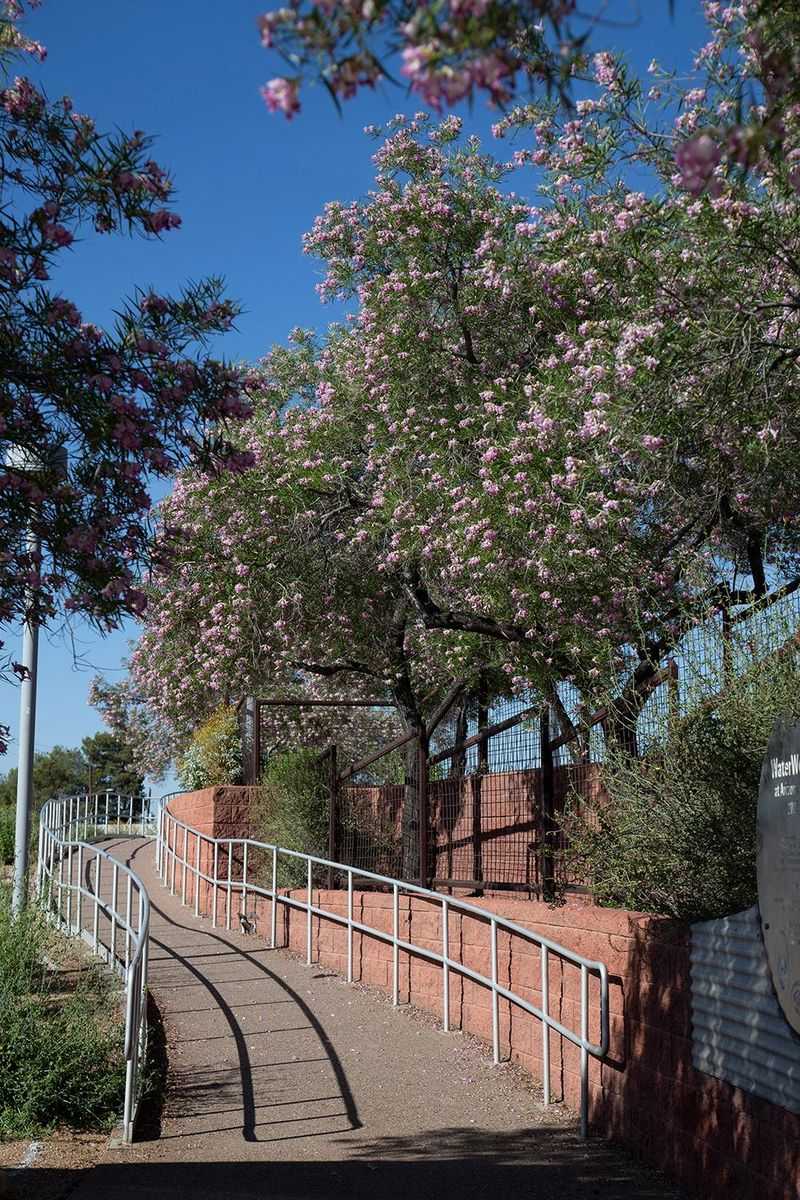
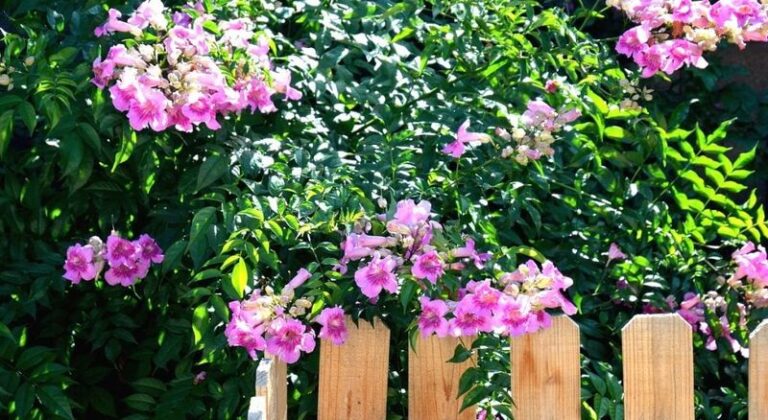
Hummingbirds treat this airy tree like a roadside diner open from late spring into early fall. Its trumpet flowers come in white, pink, or deep purple, and many carry a sweet fragrance.
Despite the name, desert willow is not a willow at all, but a member of the trumpet vine family. Chilopsis linearis simply borrowed the look, with slender light green leaves and a breezy, open canopy.
I like how it fits smaller yards, usually reaching 15 to 25 feet with modest width. You can train it to a single trunk or let several stems grow for a softer shape.
Cold barely bothers it, since it handles temperatures down to about zero degrees Fahrenheit. That makes it a strong choice for high desert towns where tender trees often struggle through winter.
Deep watering during the first couple of years builds sturdy roots that later shrug off drought. After that, extra water and fertilizer mainly create floppy growth rather than better blooms.
Long, skinny seed pods hang on through winter, which some gardeners find a bit untidy. A quick prune in late winter tidies things up while the tree sits quietly bare and dormant.
5. Blue Palo Verde
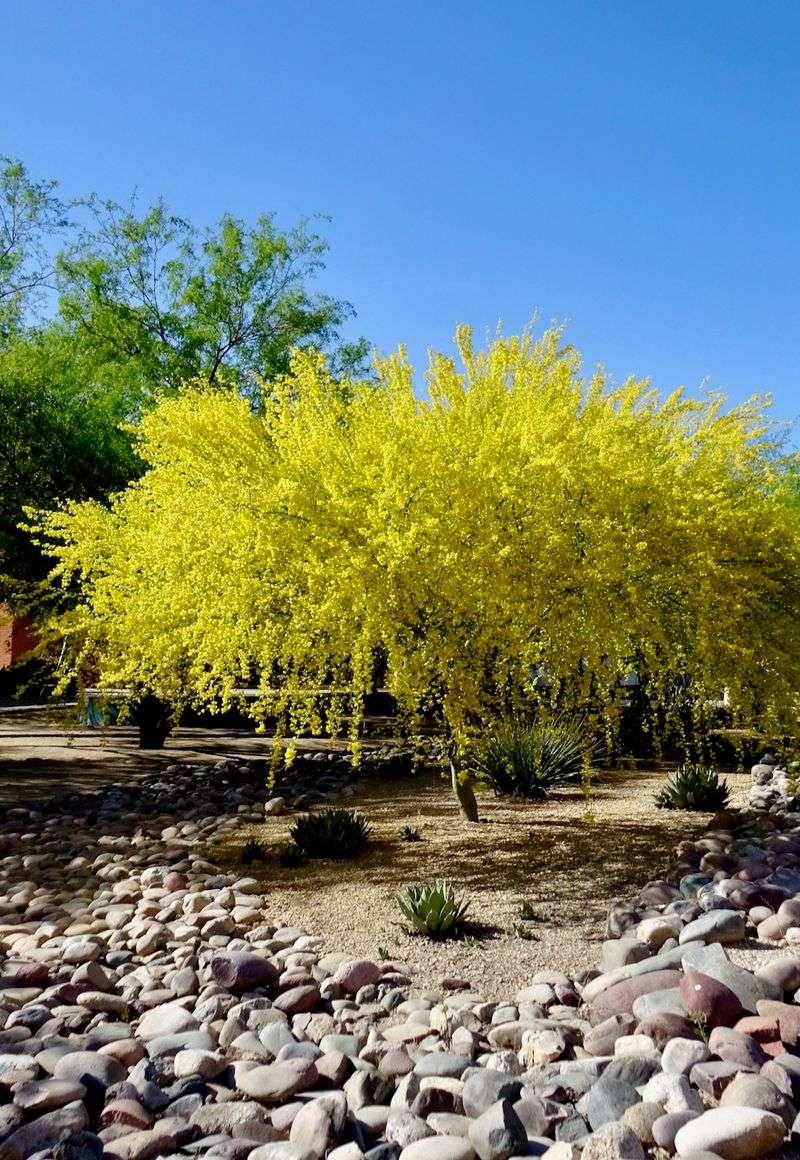
Arizona chose palo verde as its state tree, and the blue palo verde earns that honor every April. Bright yellow blossoms smother the canopy for several weeks, turning ordinary streets into glowing golden tunnels.
Parkinsonia florida has blue-green bark that photosynthesizes, much like its popular hybrid cousin. Tiny leaves drop during drought or cold, and the green branches keep the tree running quietly.
Growth is fast, with mature trees reaching 20 to 30 feet tall and often spreading even wider. You get a broad umbrella of dappled shade that still lets understory plants enjoy plenty of sunlight.
Bees, beetles, and flies all feast on the flowers, creating a buzzing pollinator buffet each spring. Native peoples once ate the seed pods, and many desert animals still gather them today.
Short thorns appear on newer twigs, so wear gloves when shaping young branches. Prune lightly to lift low limbs, because heavy cutting can weaken the tree and invite sunburned bark.
Hardy to about 22 degrees, it suits the low desert better than chilly upland valleys. Dropped flowers create a yellow carpet, which I personally consider charming rather than messy.
6. Sweet Acacia
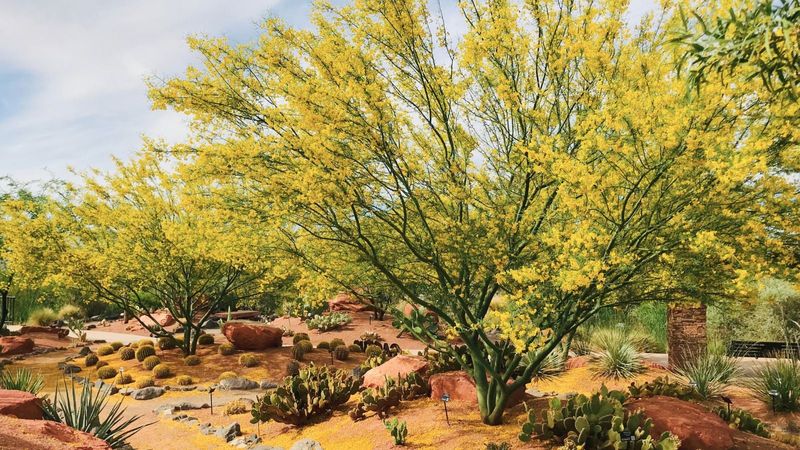
Perfume makers in Europe once distilled oil from these fuzzy golden flowers for fine fragrances. Walk past a sweet acacia in bloom, and you will understand why noses lingered.
Vachellia farnesiana grows as a multi-trunked small tree, usually 15 to 25 feet tall and wide. Delicate fern-like leaves give it a soft texture that contrasts nicely with chunky desert boulders.
Bloom season runs from late winter through spring, with occasional flowers appearing in warm spells. Bees crowd the puffballs, and birds later poke around the woody seed pods for snacks.
Its dense, thorny branches create a safe hideout where small songbirds can nest away from cats. I believe that kind of shelter makes a yard feel more alive than any decorative palm crown.
Like mesquite, it fixes nitrogen and improves poor soil, including sandy, alkaline, or caliche ground. Moderate summer water encourages more flowers, though established trees tolerate drought well.
Those inch-long thorns deserve respect, so plant it away from play areas and pet paths. Watch for suckers sprouting at the base, and prune in late winter to keep its shape tidy.
7. Texas Mountain Laurel
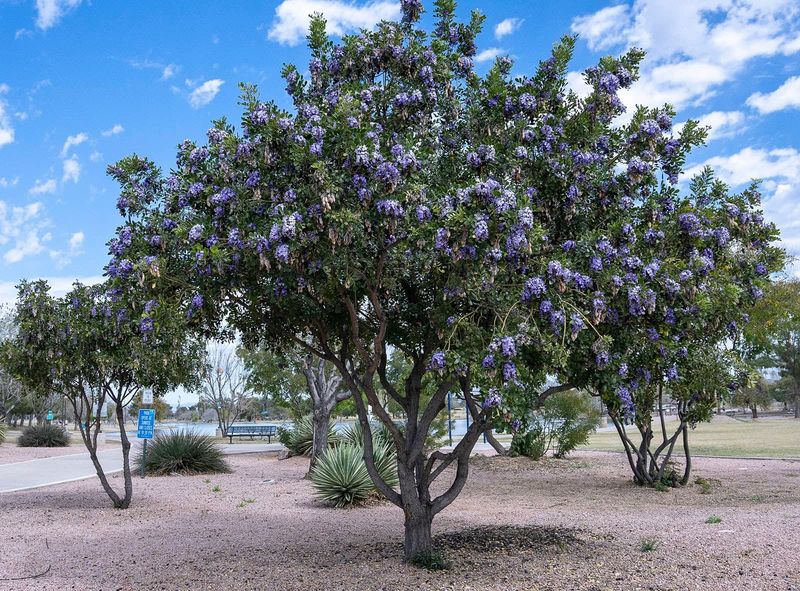
Grape soda is the scent most people describe when this shrubby tree opens its purple flowers. Every late winter, I catch myself sniffing the air like a curious kid near a candy store.
Texas mountain laurel, now listed as Dermatophyllum secundiflorum, keeps glossy dark green leaves all year. That evergreen foliage makes it a handsome privacy screen when neighbors sit a little too close.
Growth is slow, with plants usually reaching 10 to 25 feet tall but staying fairly narrow. You can let multiple trunks grow naturally or train one strong trunk for a tidy courtyard tree.
Flowers form on last year’s wood, so prune only after blooming finishes in late spring. Cutting in fall removes next season’s buds, which would be a sad trade for neatness.
Bright red seeds inside the fuzzy pods are poisonous to people and pets if chewed. Remove pods when children or curious dogs share the yard, just to stay on the safe side.
Genista caterpillars sometimes chew the leaves, but a Bt spray controls them without harming bees. In Phoenix, a deep drink every week or two in summer keeps foliage looking fresh.
8. Arizona Walnut
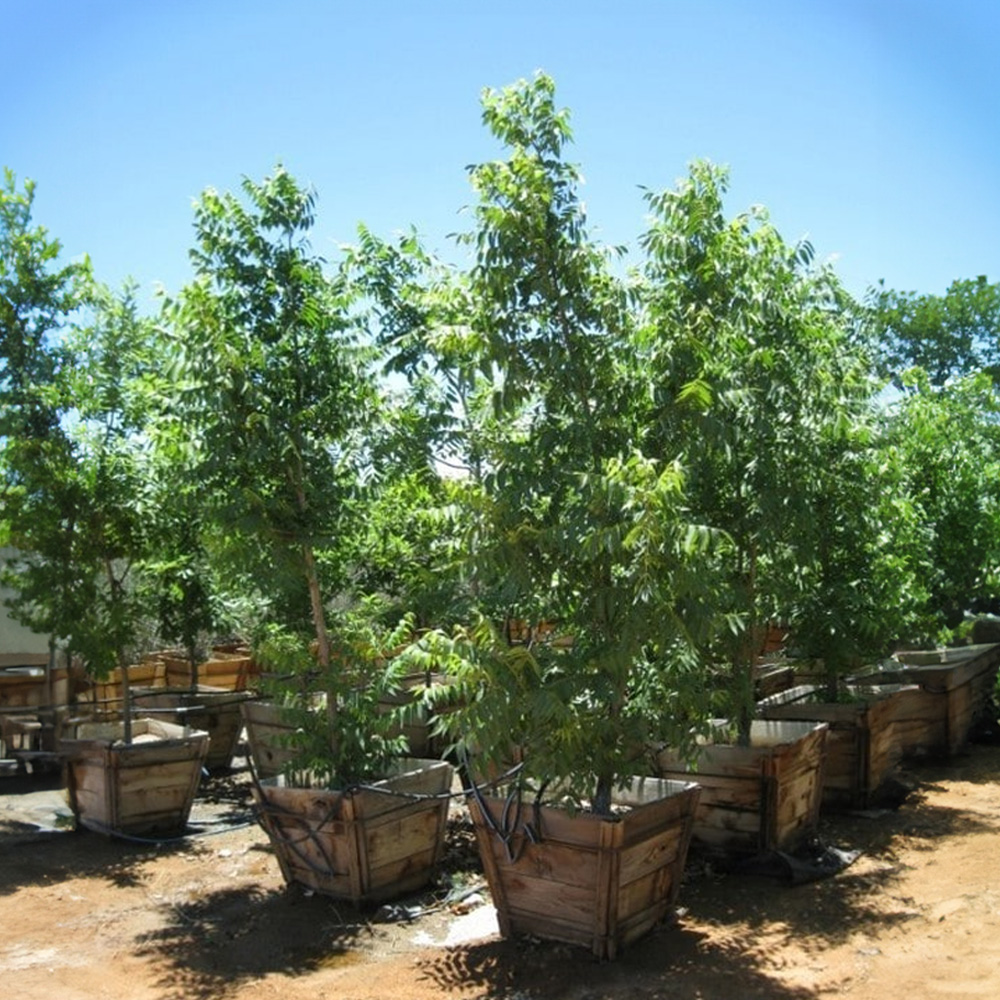
Squirrels in canyon country know exactly when these nuts ripen, usually between October and December. Plant one, and you might find furry visitors staking claims in your yard each autumn.
Juglans major grows wild along streams and canyon bottoms, forming a rounded crown of aromatic leaves. Trees often reach 36 to 48 feet, giving generous summer shade that palms simply cannot match.
Unlike most entries here, this tree prefers medium water and steady moisture during its younger years. I think it shines brightest in mid-elevation yards, where cooler winters suit its natural rhythm.
Hardy to about minus ten degrees, it handles frosty nights that would trouble many low desert trees. Birds nest in its sturdy branches, while its roots help hold soil along washes and slopes.
Nuts are edible but wrapped in thick shells that resist even determined nutcrackers. Fallen husks can stain patios and clog filters, so keep this tree well away from pools.
Young trees sometimes show blackened leaves from anthracnose, a mostly cosmetic fungal problem they outgrow. Light pruning is plenty, which leaves you more time to watch the wildlife show unfold.