9 Desert Shrubs to Plant Instead of Boxwood in Arizona Front Yards
Boxwood comes from cool, damp European woodlands, so a Phoenix July feels like a punishment for it. Summer air in Arizona can drop below ten percent humidity while pavement heat climbs past 110 degrees.
No wonder those tidy green globes start looking scorched, yellow, and tired by late summer. Caliche, a cement-like layer under many yards, also blocks roots and traps water around them.
I have to admit, I fought that battle longer than I should have before switching. You might notice your water bill sighing with relief once the thirsty hedge finally comes out of the ground.
October happens to be prime planting season across the Arizona low desert, with warm soil and gentler days. So which tough, flowering, bird-friendly shrubs deserve that front yard spot instead of a struggling hedge?
1. Baja Fairy Duster
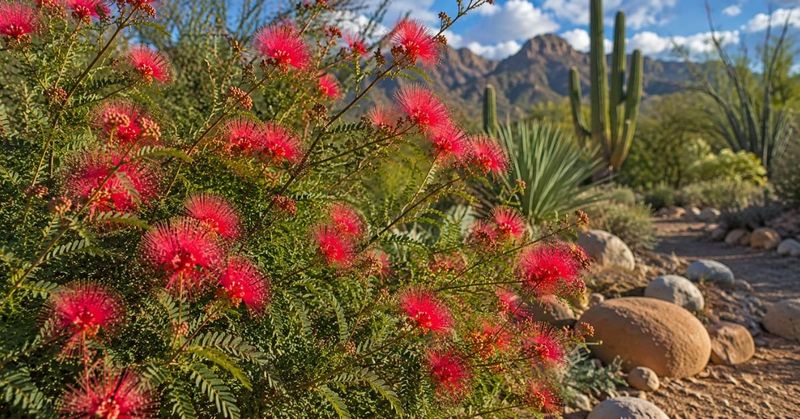
Hummingbirds treat those fuzzy scarlet powderpuffs like a drive-through window, zipping in for nectar again and again all day. I love how the lacy green leaves make a desert yard feel almost tropical without asking for tropical amounts of water.
Calliandra californica comes from Baja California and coastal Sonora, yet it settles happily into southern Arizona landscapes. Expect a thornless, rounded shrub reaching three to six feet tall and about as wide over a few seasons.
Blooming peaks from November through March, which means fall planting sets you up for color during the cooler months ahead. Summer brings scattered flowers too, especially when you give the roots a deep soak every two or three weeks.
Full sun and reflected wall heat rarely bother this shrub, so it works nicely beside driveways and stucco. Well-drained, drier soil suits it best, and it handles poor native ground better than most nursery favorites.
Please resist the urge to shear it into a boxwood-style ball, because heavy cuts reduce flowering. Light shaping keeps its natural form, and cold pockets may nip the tips before quick spring recovery follows.
2. Texas Ranger
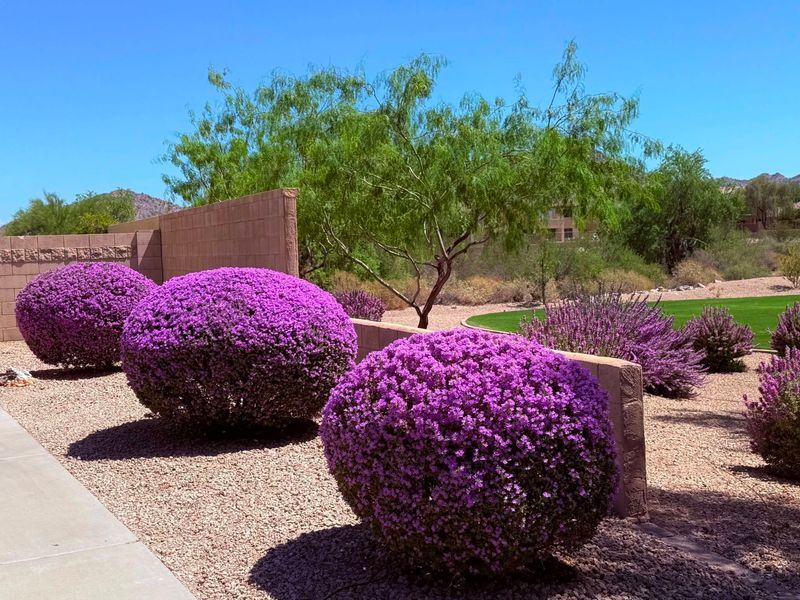
Silver leaves that suddenly erupt in purple flowers after a monsoon storm feel like a magic trick every single time. Old-timers even call Leucophyllum frutescens a barometer bush, because humidity often triggers those surprise bursts of lavender bloom.
Native to Texas and northern Mexico, it handles desert heat with a confidence boxwood simply cannot match here. Many cultivars stay compact, like Little Lynn at roughly four feet, while the species can reach six feet.
Personally, I think the gray-green foliage looks cool and calm beside warm-toned stucco walls and red gravel. Native bees visit the bell-shaped flowers eagerly, giving your front yard a quiet buzz from spring into fall.
Plant it in full sun with fast-draining soil, then water deeply but infrequently once roots settle in. Too much water or shade leads to floppy, sparse growth and fewer of those dazzling purple flower flushes.
Shearing into boxes is the biggest mistake I see across desert neighborhoods, since it removes the flowering tips. Choose a variety sized for your space, and its loose rounded shape mostly takes care of itself.
3. Desert Senna
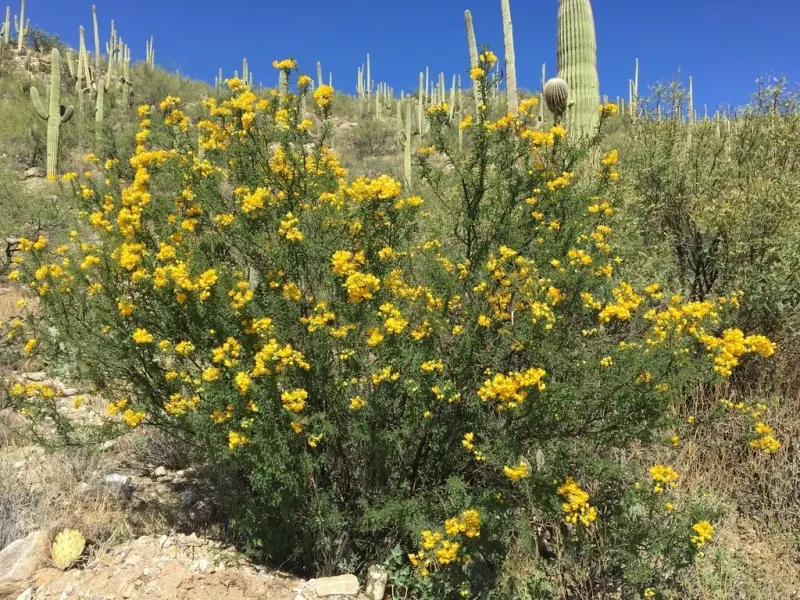
Shake a dry seedpod and you’ll hear a soft rattle, which earned this little native the nickname rattleweed. Kids especially love that sound, and I confess I still give the papery pods a playful shake.
Senna covesii grows naturally in the Sonoran and Mojave deserts, including southwestern Arizona and nearby Mexico. Fine gray hairs cover its blue-gray leaves, reflecting harsh sunlight and helping the plant hold onto precious moisture.
Sulfur butterflies rely on it as a caterpillar food plant, so a few chewed leaves mean your yard works. Bumblebees and carpenter bees visit the cheerful yellow flowers, while birds pick through the seeds later in the year.
Size stays modest, usually one to two feet tall and about two feet wide, making it great for borders. Tuck several in front of larger shrubs, where their relaxed habit softens hard edges along a walkway.
Full sun and reflected heat suit it well, and nearly any soil type works with proper drainage. An occasional renewal trim encourages fresh growth, though little else is needed once the roots settle into place.
4. Orange Jubilee
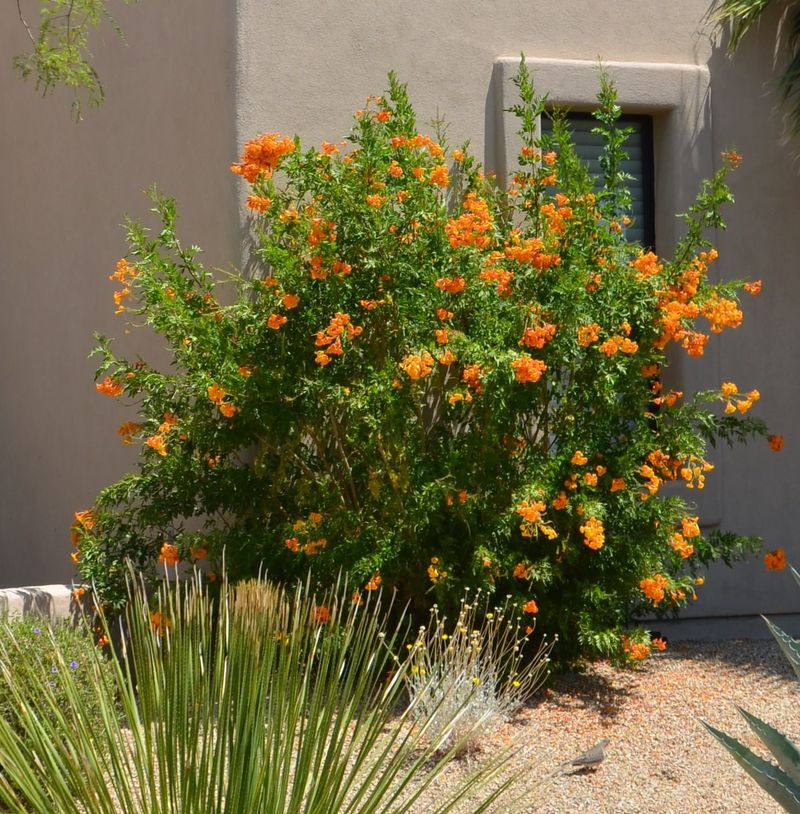
Triple-digit afternoons barely slow this shrub down, and its orange trumpets keep blazing while other plants simply sulk. Hummingbirds seem to know every flower cluster by heart, returning with impressive precision throughout the warm months.
Tecoma Orange Jubilee is a hybrid connected to Tecoma stans, a yellow-flowered relative native from Arizona into Texas. Growth is fast, often reaching ten to twelve feet tall, so it shines as a living screen.
You need to give it room, because squeezing it under a window leads to constant pruning chores. Along a sunny wall or property line, though, its glossy green foliage creates privacy that boxwood could rarely provide.
Low to moderate water keeps it going once established, while regular deep soaks boost both growth and flowering. Drainage matters, yet it adapts well to tough caliche soils found in many valley neighborhoods today.
Frost in the mid-twenties may brown the branches, but plants usually regrow quickly after a spring trim. Occasional leaf roller caterpillars appear, though serious pest problems are uncommon for this cheerful, hardworking flowering shrub.
5. Apache Plume
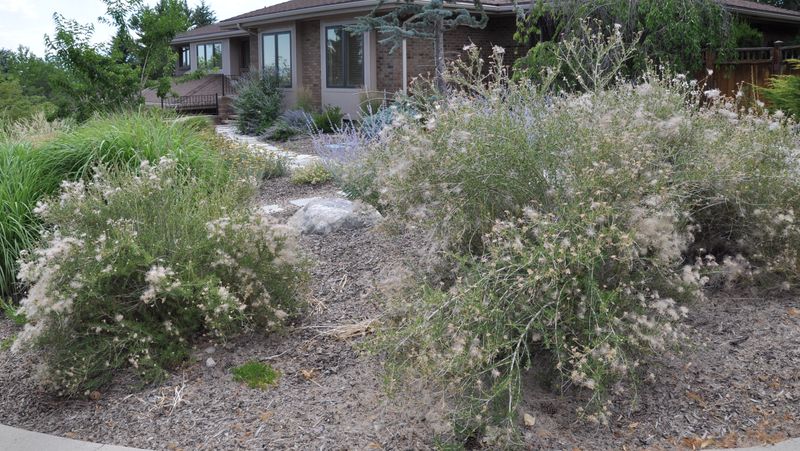
Wispy pink seed heads glow like tiny feather dusters when late afternoon light hits them from behind. What surprises me most is how long those fluffy plumes hang around, decorating the shrub for many months.
Fallugia paradoxa grows wild across the Southwest, often at elevations between three thousand and eight thousand feet. That background makes it especially handy for higher desert towns, though some valley gardens grow it successfully too.
White flowers shaped like small wild roses open from spring into summer, sometimes returning for a fall encore. Bees and butterflies visit the blooms, while birds snack on seeds and shelter inside the twiggy branches.
Mature plants usually reach three to six feet tall, with tiny divided leaves giving the shrub a soft texture. Hot low desert sites may call for morning sun and some afternoon relief during the harshest summer stretches.
Poor, dry, alkaline soil suits it just fine, which makes caliche-heavy yards less intimidating to landscape. Water needs stay very low after establishment, and pruning is rarely necessary to keep its airy natural shape.
6. Brittlebush
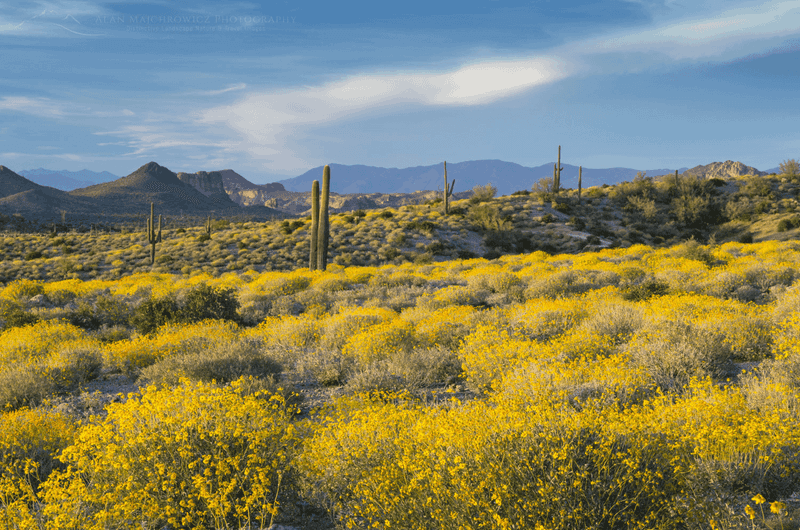
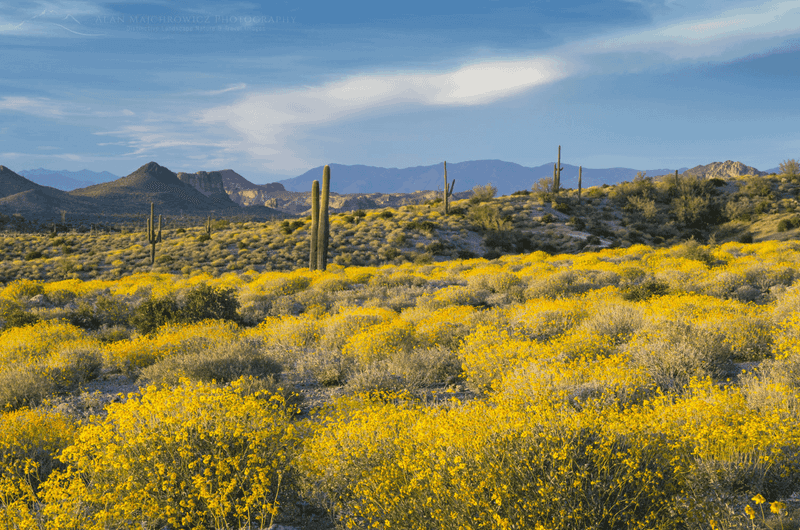
Early Indigenous peoples and later missionaries used brittlebush resin, which smells a bit like frankincense when warmed. I can’t imagine a more fitting native shrub for front yards baking under strong southwestern sunshine every day.
Encelia farinosa covers huge stretches of hillside below roughly 3,500 feet across the Sonoran and Mojave deserts. Snap a stem and you’ll understand the name, because the branches break easily under rough handling.
Silvery blue leaves wear a coat of tiny hairs that reflect sunlight and slow water loss in summer. Then late winter and spring arrive, and bright yellow daisies cover the mound in a glowing golden cloud.
Bees, butterflies, and beetles feed heavily on those flowers, adding real habitat value to an ordinary lot. Desert tortoises enjoy nibbling the blooms too, which makes this shrub a lovely nod to native wildlife.
Plant in deep, well-drained soil with full sun, and water mainly while young roots are establishing. Extra irrigation later causes leggy growth, so trim old flower stalks after bloom and let rainfall handle most needs.
7. Chuparosa
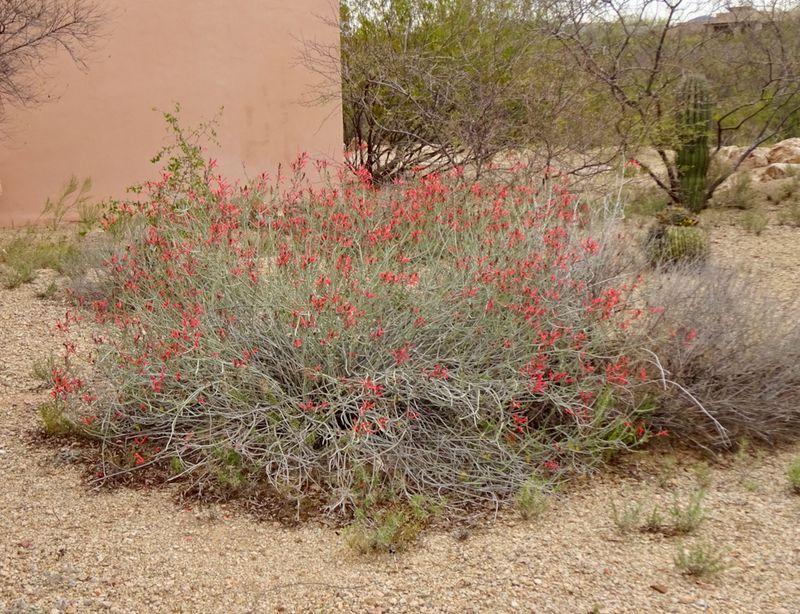
Chuparosa roughly translates to hummingbird in Spanish, and honestly, the name could not be more perfect. Those red tubular flowers bring hummingbirds zooming across the yard, often squabbling over the best blossoms each morning.
Justicia californica grows naturally in southern deserts of the state, plus southern California and northern Mexico. Plants form loose, sprawling mounds around three to five feet tall and wide, sometimes larger with extra water.
Leaves stay sparse and gray-green, and they may drop during summer drought or winter cold snaps. Even then, the green stems keep photosynthesizing, so the shrub holds a fresh color without much foliage at all.
Flowering peaks from late winter into spring, perfect timing for migrating hummingbirds passing through desert neighborhoods. Planting this month gives roots a cooler season to settle before that colorful show begins next year.
Deep watering once or twice monthly in summer works well, while overwatering creates lanky stems and fewer flowers. Cold sites may see plants freeze back to the ground, yet regrowth from the roots usually follows in spring.
8. Arizona Rosewood
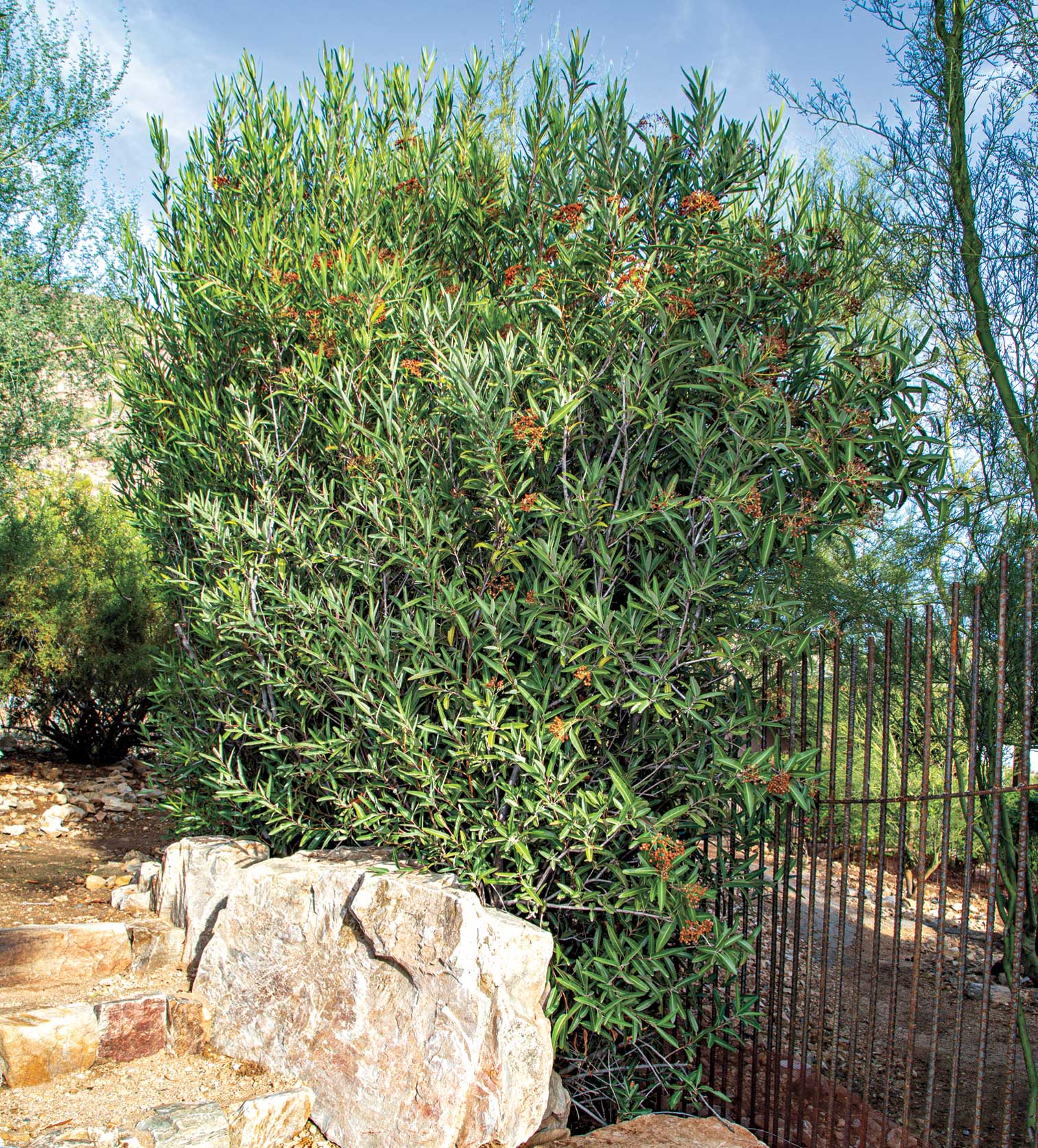
Dense, dark green leaves make this native look surprisingly formal, almost like a hedge plant from wetter places. I believe it’s the most underrated privacy shrub for desert yards, especially where oleander once dominated.
Vauquelinia californica grows wild in southern Arizona, usually between 2,500 and 5,000 feet in elevation. Left alone it can reach twenty feet or more, though pruning keeps it near six to eight feet.
Families with curious pets and children appreciate it as a nonpoisonous choice compared with toxic oleander. Thornless branches also make yard work far friendlier, which matters when trimming along sidewalks and front entry paths.
Creamy white flower clusters open in late spring, drawing bees and butterflies before brown seed capsules follow. Birds nest in its thick branches, and two-tailed swallowtail caterpillars use the leaves as a host plant.
Full sun suits it best, though young plants can struggle with heat stress during their first summers. Tucson and other slightly cooler desert spots generally grow it better than hotter Phoenix yards with intense reflected heat.
9. Boxwood Beauty Natal Plum
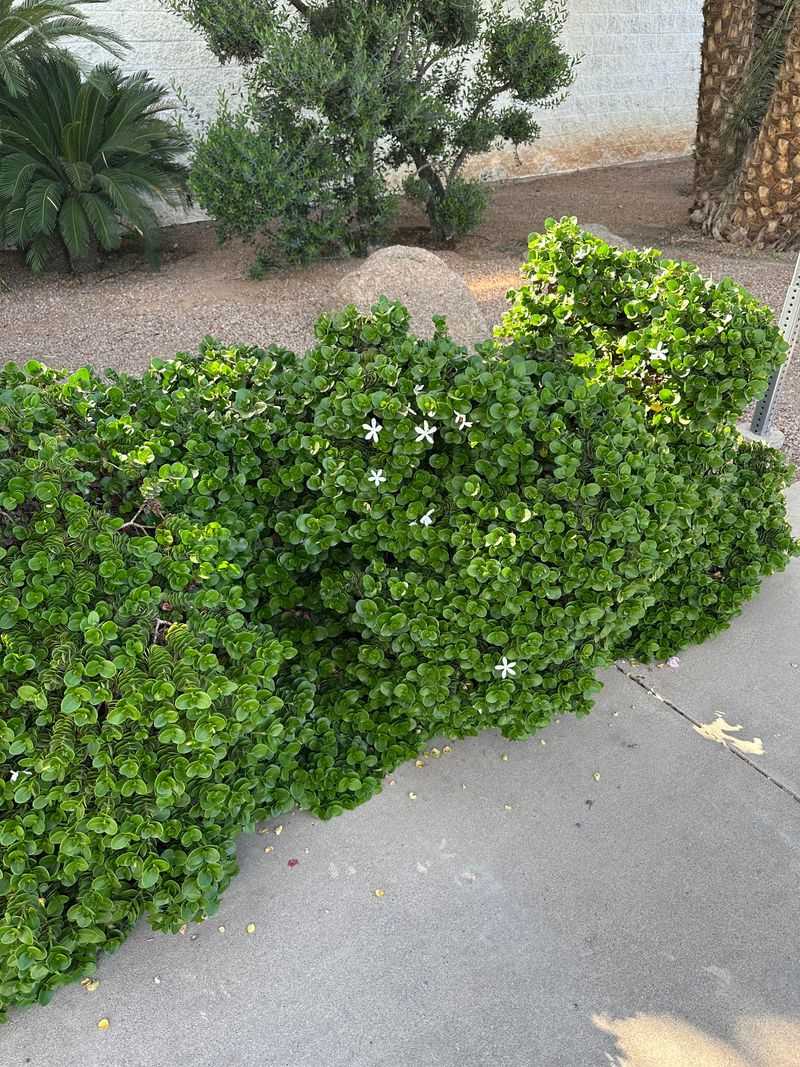
Fans of crisp, clipped hedges get the closest boxwood lookalike on this list with this glossy southern African import. You’re in for a big surprise once you notice fragrant white star flowers tucked between the shiny leaves.
Carissa macrocarpa Boxwood Beauty stays compact, usually one to three feet tall and a bit wider. That tidy size makes it ideal for low borders, foundation beds, and formal edging along front walkways.
Unlike true boxwood, it shrugs off strong sun and reflected heat from walls, patios, and hot driveways. Many relatives of this plant carry sharp spines, but this popular cultivar is known for being nearly thornless.
Small red fruits may appear occasionally, though this dwarf form produces far fewer than larger natal plum varieties. Frost can damage foliage during cold snaps, yet plants often rebound once warm weather returns in spring.
Loose, well-draining soil helps it adapt to caliche, and regular deep summer watering keeps the foliage looking polished. Shape it into neat geometric hedges, or let it mound naturally if you prefer a softer appearance.