Why Austrian Pines Are Browning Across Ohio Yards – And The Evergreens Replacing Them
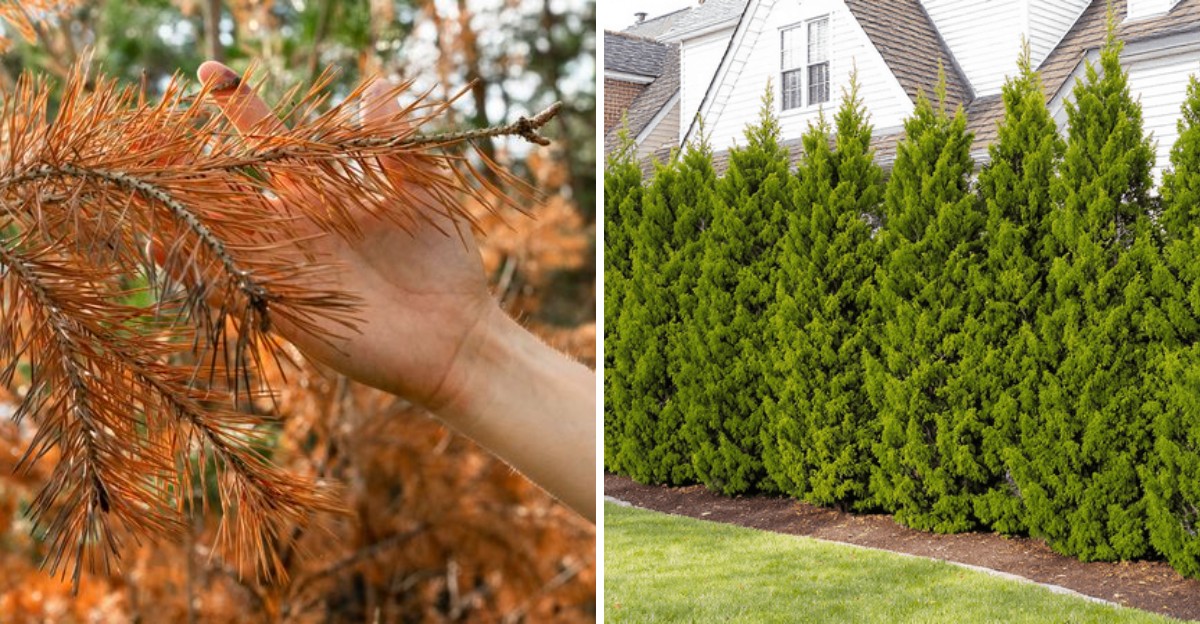
A single pine shoot can be infected while it is still a tiny candle of spring growth, months before you ever see a problem. By the time the brown tips show up, the trouble may have been brewing for years.
I used to think the big dark-green windbreak pines on Ohio roadsides were nearly indestructible. They shrug off wind, cold, and even some salt spray. So why are so many of them looking scorched, thin, and patchy from the bottom up?
The answer involves rainy springs, crowded rows, and a pair of sneaky fungi with very different habits. Planting choices made decades ago play a big role too.
If one of these tall evergreens anchors your yard, you deserve to know what is happening inside those needles. And the trees stepping in to take their place might be better than you expect.
1. Those Brown Austrian Pine Tips Started Long Before You Noticed
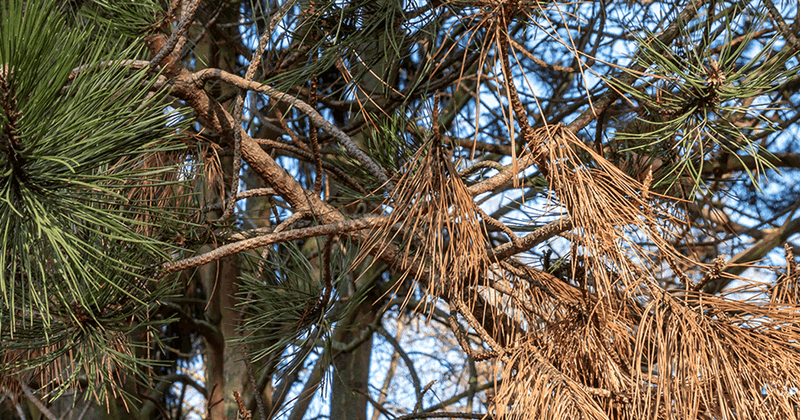
Most folks spot the problem from the driveway. A big Austrian pine that once looked like a dark green wall now has brown, scraggly tips and bare lower limbs.
Look closer and you may see new shoots that stopped growing early. Their needles stay short, turn tan or brown, and sometimes ooze a bit of sticky resin near the base.
On other branches, older needles inside the canopy carry odd spots or bands while the tips fade.
Those two patterns matter, because they point to two different diseases. Ohio State University Extension and the Ohio Department of Natural Resources both list fungal blights as the leading reasons these pines decline in the state.
Here is the tricky part. Spores often land in spring during wet weather, yet the damage may not stand out until summer or the following year.
By then, the infection has had time to spread from branch to branch.
So if your pine looked fine last year and rough this year, you did not do something wrong overnight. The fungi were quietly building up inside the tree for a while.
Learning to read the browning pattern is your first step toward a smart decision about what comes next.
2. Diplodia Tip Blight Goes After The Fresh Spring Candles
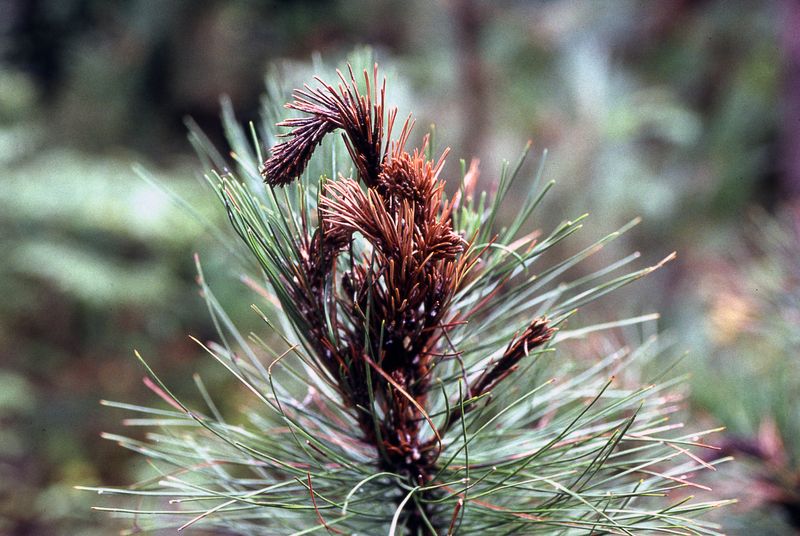
Diplodia tip blight is the headline villain for older Austrian pines. The fungus, now called Diplodia sapinea, loves trees that are about 30 years old or more.
Spores hang out on infected cones and needles. When spring rain splashes them onto the soft new candles, they slip in and stop the shoot cold.
You get stunted, brown tips, often with beads of resin, and the damage usually climbs from the lower branches upward.
Want a quick field check? Flip over a few cones.
Tiny black pimple-like dots at the base of the cone scales are a strong clue that Diplodia is living there.
Fungicide sprays can help, but timing is tight. Ohio State recommends treating as buds swell, about when the candles start to stretch, then again about a week and two weeks later.
Missing that window mostly wastes product.
You can also lower the spore load by pruning out brown tips during dry weather, not after a rain. Clean your pruners between cuts and bag the debris.
Big trees often need a certified arborist, since spraying a 40-foot pine thoroughly is no casual weekend job.
3. Red-Banded Pine Needles Point To Dothistroma Blight
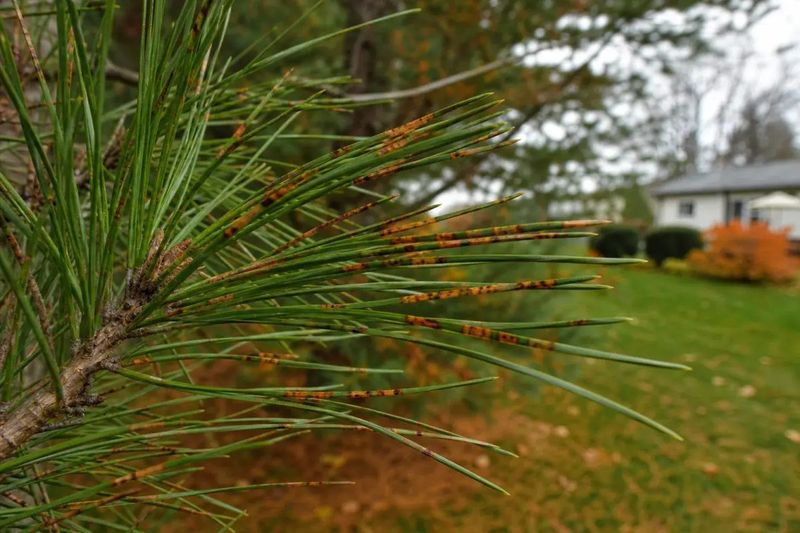
Grab a needle from inside the canopy and hold it up to the light. Do you see a reddish-brown band, almost like a tiny ring painted around it?
That band is the signature of Dothistroma needle blight. Unlike Diplodia, this fungus targets older needles first.
The tip beyond the band turns brown, while the base stays green for a while, giving the branch a two-toned look.
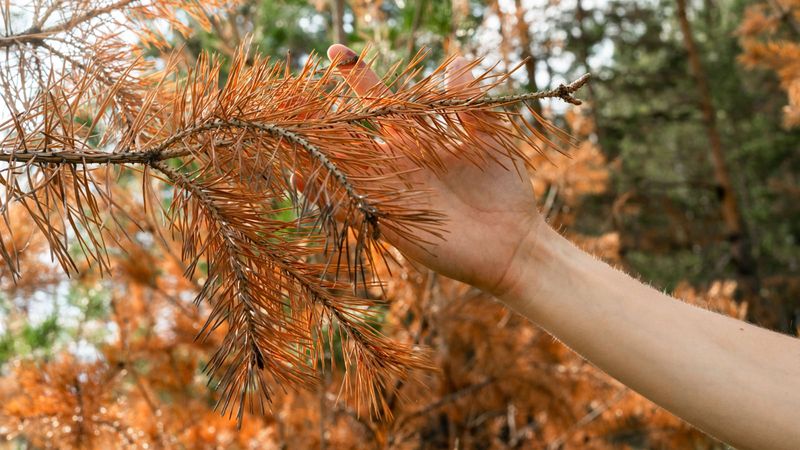
Infected needles usually drop early, often the year after symptoms appear. Over a few seasons, the tree keeps only its newest needles, so branches look like bottle brushes with bare handles.
Lower limbs get hit hardest because they stay damp longer.
Spores spread by rain splash, so wet springs give this disease a big boost. Copper-based fungicides can protect new needles if applied in spring and again a few weeks later, following label directions closely.
Honestly, I like checking for that red band because it saves money. A tree with Dothistroma alone may respond well to timely sprays and better airflow.
A tree fighting both blights plus years of stress is a much tougher case, and that changes the plan.
4. Crowded Pine Rows And Soggy Clay Make Everything Worse
Back in the 1970s and 80s, planting a tight row of Austrian pines felt like the perfect privacy plan. Decades later, many of those rows are the hardest-hit spots in the neighborhood.
Crowding keeps branches touching and shaded, so needles stay wet after every shower. That moisture is exactly what blight spores need.
When one tree gets infected, rain splash hands the disease straight to its neighbor.
Soil adds another layer of stress. Much of Ohio sits on heavy clay that drains slowly, and pines dislike wet feet.
Waterlogged roots struggle, which makes the whole tree an easier target.
Drought swings the other way and causes trouble too. Hot, dry summers stress these trees, and Diplodia is known to strike harder after dry spells.
Trees near roads also take hits from winter de-icing salt spray, which browns needles on the side facing traffic.
You can help a struggling tree by watering deeply during dry stretches and spreading a few inches of mulch over the root zone. Avoid piling soil or parking cars over the roots.
Remove badly declining trees in a crowded row to open up airflow for the rest.
5. Sometimes Taking Down An Old Austrian Pine Is The Kindest Move
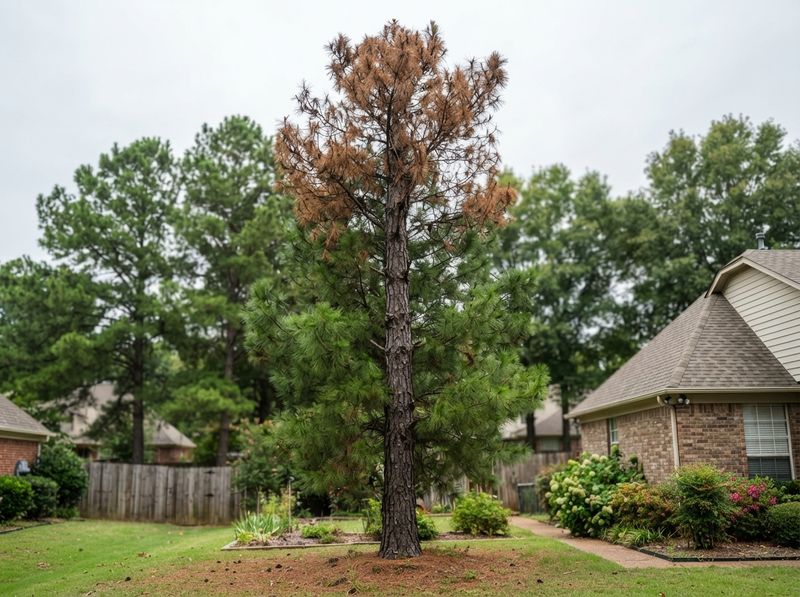
Nobody enjoys saying goodbye to a tree that has shaded the yard for 40 years. Still, there comes a point where spraying and pruning stop making sense.
Arborists often look at how much healthy canopy remains. If a large share of the crown is bare or brown, and the problem keeps creeping upward each year, recovery becomes unlikely.
Yearly fungicide treatments on a big tree also add up fast.
Safety matters too. Weakened pines can drop brittle limbs, and a declining tree near a house, driveway, or power line deserves a professional opinion.
A certified arborist can check the trunk and roots and give you an honest outlook.
If removal is the call, plan the replacement before the stump grinder arrives. Many experts suggest not planting another Austrian pine in the same spot, since blight spores linger in nearby trees and debris.
Personally, I see removal as a fresh start rather than a loss. You get to choose a tree suited to your soil, sun, and space.
Ohio State and the ODNR both encourage mixing species, so a single disease cannot sweep through your whole yard again.
6. Native Eastern White Pine And Eastern Redcedar Feel Right At Home
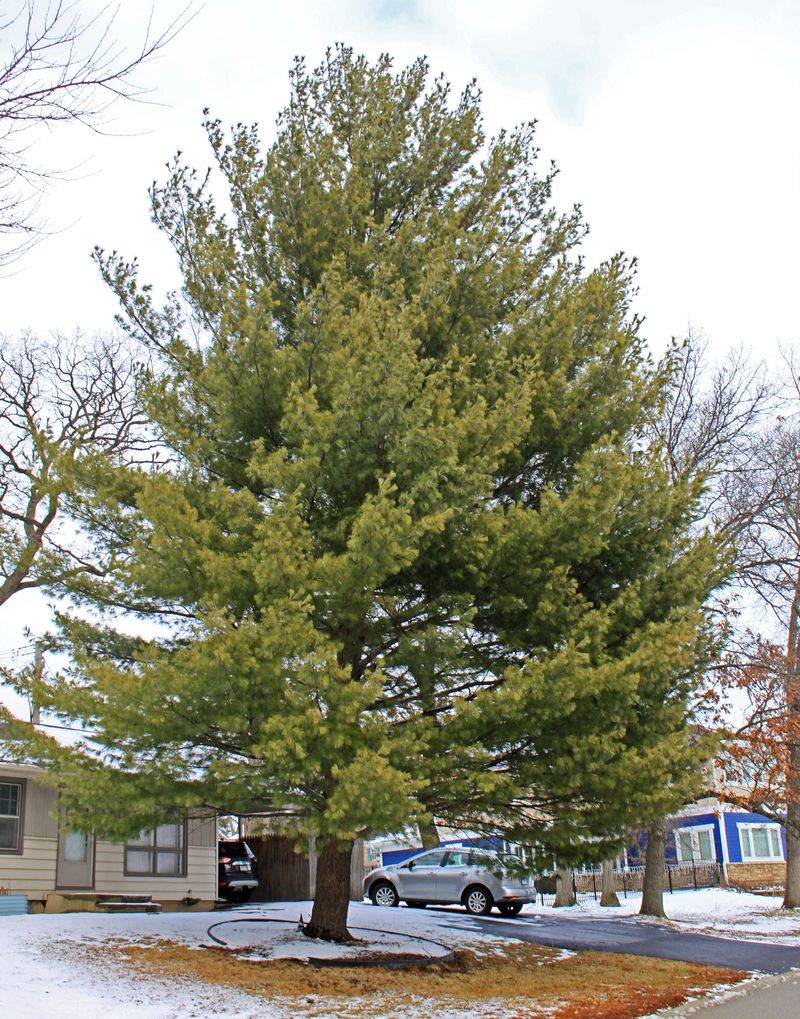
Few trees feel softer than an Eastern white pine. Its long, blue-green needles come in bundles of five, and running a hand through a branch feels a bit like petting a cat.
This native pine grows quickly, often a couple of feet a year once settled. It fits large yards, windbreaks, and natural corners.
Give it well-drained, slightly acidic soil and keep it away from salty roadsides, since salt spray and heavy pollution bother it.
Eastern redcedar is the scrappy cousin of the bunch. Despite the name, it is a juniper, with dense scale-like foliage that makes a tough screen.
It handles dry, rocky, and poor soils across much of the state.
Birds adore its bluish, berry-like cones. Cedar waxwings in particular may show up in flocks to feast on them in winter, which turns your hedge into a free bird show.
One caution with redcedar is cedar-apple rust. It does little harm to the cedar, but it can spot the leaves of nearby apple and crabapple trees.
If you grow apples, choose rust-resistant varieties or give these trees some distance.
7. Norway Spruce, Serbian Spruce, And Arborvitae Step Up As Sturdy Screens
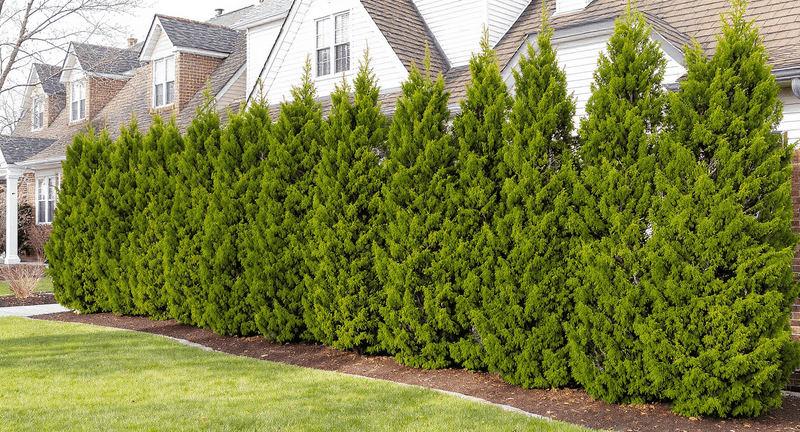
Need a big, fast privacy wall? Norway spruce is a classic pick in Ohio for good reason.
It tolerates wind, cold, and clay better than many evergreens, and it resists the needle diseases that often trouble Colorado blue spruce in our humid summers. Its branchlets hang down like curtains, which gives older trees a graceful look.
Just plan ahead, because mature trees can top 50 feet and spread wide.
Serbian spruce suits smaller lots. Its narrow, spire-like shape stays tidy, and the needles flash silvery undersides in the breeze.
It handles a range of soils and tends to stay healthier than blue spruce.
Arborvitae rounds out the list for hedges. Native Thuja occidentalis cultivars like ‘Emerald Green’ stay compact, while the hybrid ‘Green Giant’ grows fast and tall.
Both keep their color well through winter.
A friendly tip from experience: deer love to browse native arborvitae, sometimes stripping the lower foliage bare. ‘Green Giant’ is less tempting to them. Spacing matters too, so give each plant room to breathe instead of jamming them shoulder to shoulder like the old pine rows.
8. Mix Your New Evergreens And Plant Them In Fall Or Spring
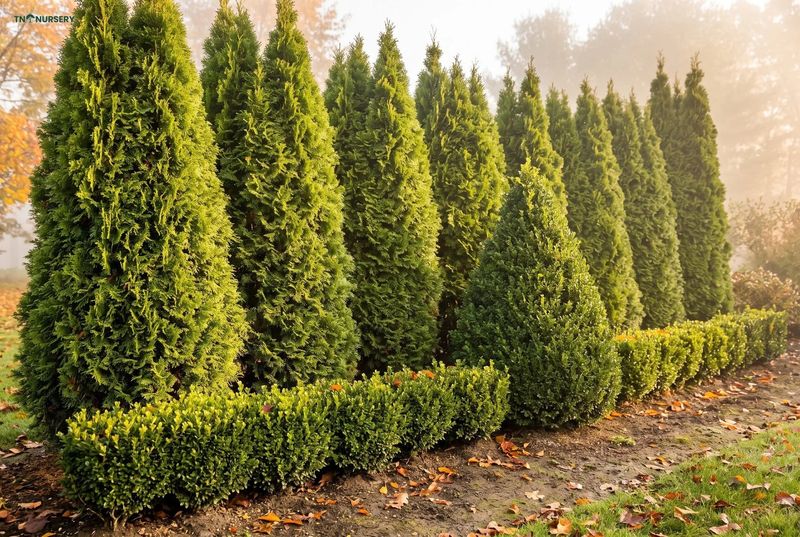
Think of your new evergreen planting like a well-balanced garden bed. Variety is your best insurance policy.
A screen built from three or four species holds up far better than one long row of the same tree. If a pest or blight shows up, it may bother one type while the others carry on.
Ohio foresters have watched this play out with Austrian pines and with ash trees too.
Timing helps. Early fall and spring are the sweet spots for planting evergreens in Ohio, when soil is workable and temperatures are mild.
Fall plantings should go in by about mid-October so roots can settle before the ground freezes.
Dig a hole two to three times wider than the root ball but no deeper. The root flare should sit at or slightly above soil level.
Remove burlap, twine, and wire from the top of the ball where you can.
Water deeply once a week through the first two growing seasons unless rain does the job. Spread two to three inches of mulch, keeping it a few inches off the trunk.
Leave enough space for the full mature width, and your new screen should thrive for decades.