Spotted White Fuzz on Your Houseplants This Michigan Winter? Here’s What It Likely Is
Some houseplant pests wear a coat of wax so thick that plain water beads right off their backs. That fluffy armor helps explain why the white stuff on your plant refuses to rinse away.
I first noticed it on a jade plant during a gray February week, tucked where the leaves meet the stem. It looked like a stray tuft of lint from a sweater. It was not lint.
Winter in Michigan sends us indoors, and our plants come along for the ride. Dry furnace air, short days, and crowded windowsills create a cozy setup for a few uninvited guests.
Some of them crawl, some of them grow, and one is mostly harmless. I know how frustrating it can be to baby a plant all season and then find a mystery on it. The clues are usually right there, though, if you know where to look.
1. That Cottony Tuft in Your Plant’s Leaf Joints Is a Clue
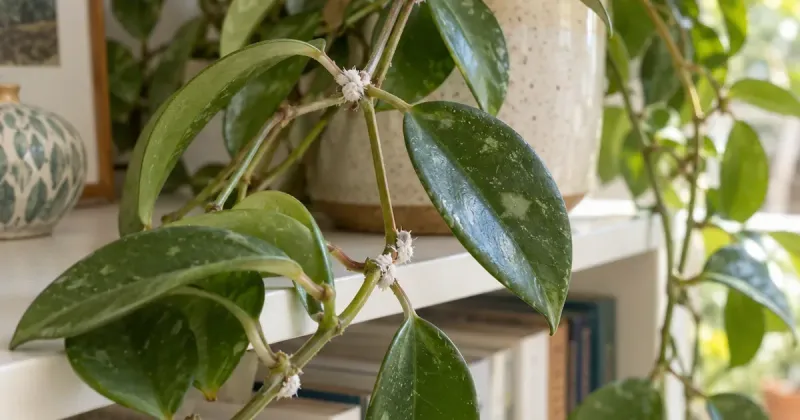
Grab a flashlight and a magnifying glass, because the location of that fuzz tells you a lot. Where it sits on the plant is one of the best ways to sort out what you’re dealing with. Fuzz packed into leaf joints, along stems, or under leaves usually points to an insect.
Look closely and you may see tiny oval shapes, sometimes with short white filaments around the edges. If the fluff hides a soft body that smears when pressed, you’ve found a living pest.
A flat, powdery coating spread across the top of leaves tells a different story. That pattern often signals a fungus rather than a bug. It looks more like someone dusted the plant with flour.
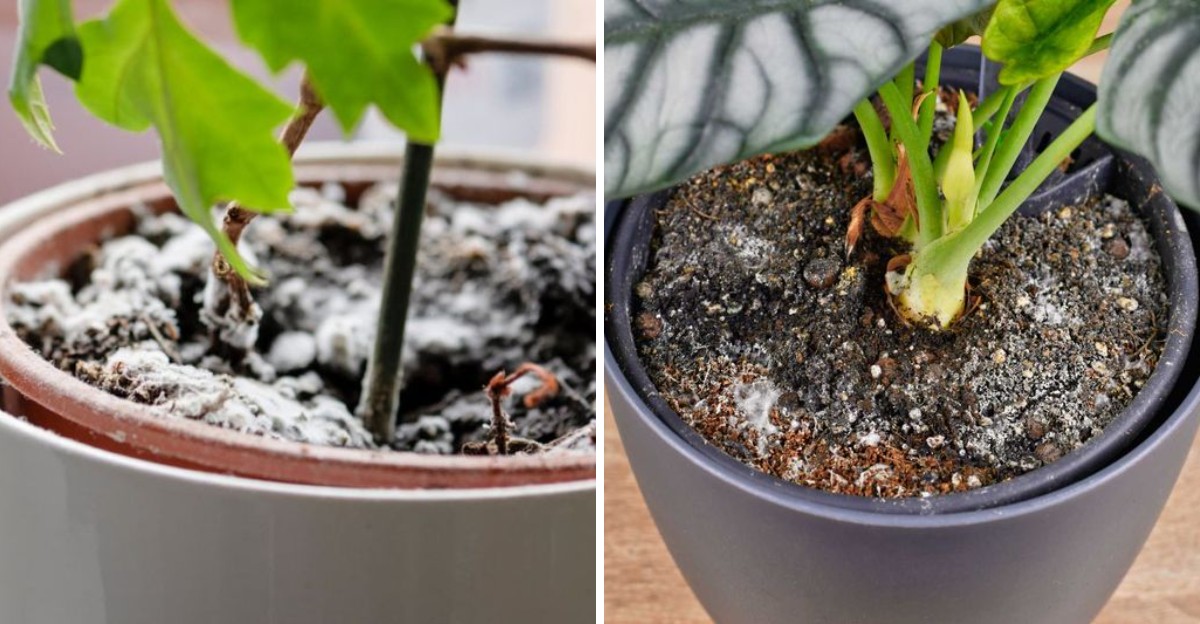
Fuzz sitting only on the potting soil is a third possibility. That one usually has nothing to do with the plant itself and everything to do with moisture.
Take a minute to check several plants, not just the one that caught your eye. Pests love to wander to neighbors on a crowded shelf. Jot down what you see, where you see it, and whether the leaves feel sticky.
Those simple notes will guide every step that follows and save you from treating the wrong problem.
2. Mealybugs Are the Usual Culprit Behind the Fluffy White Clumps
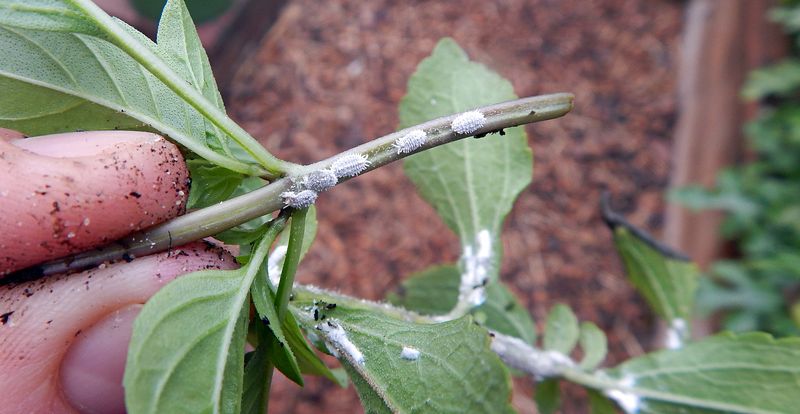
Nine times out of ten, those little cotton balls are mealybugs. University extension services, including Michigan State, list them among the most common indoor plant pests.
Mealybugs are soft-bodied insects, usually about one-eighth of an inch long. Their bodies are covered in a white, waxy powder that protects them from drying out and from many sprays.
Females often lay eggs inside fluffy cottony sacs, which is why clusters look so fuzzy. They feed by poking a needle-like mouthpart into the plant and sipping sap. Over time, leaves may yellow, curl, or drop, and new growth can look stunted.
A sticky shine on leaves or the table below is another giveaway. That residue is honeydew, a sugary waste the insects leave behind. Black sooty mold can grow on it, making leaves look dirty.
Favorite targets include jade, hoya, cactus, succulents, coleus, and many tropical foliage plants. Some kinds even live on roots, so a struggling plant with no visible bugs may still have them below the soil.
Fun fact? Adult male mealybugs look like tiny gnats with wings and don’t feed at all. The females do all the damage.
3. A Rubbing Alcohol Cotton Swab Can Send Mealybugs Packing
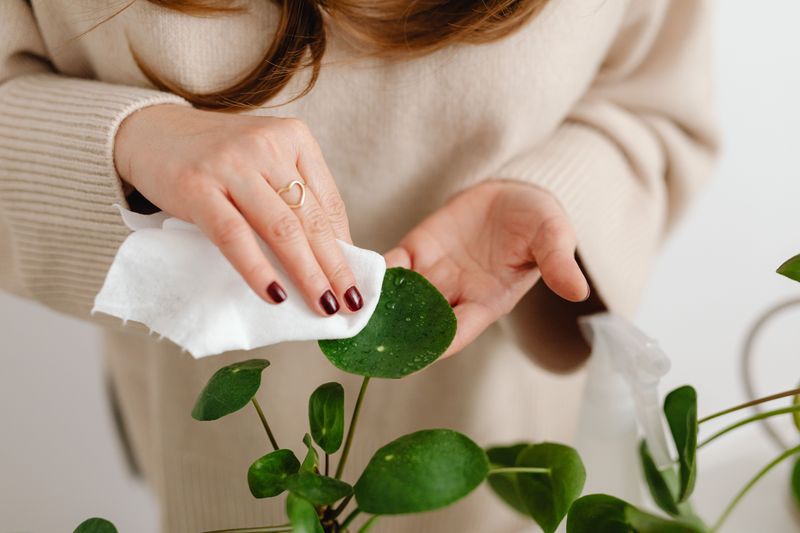
Here’s my favorite low-tech fix, and it works surprisingly well on small outbreaks. Dip a cotton swab in 70 percent isopropyl rubbing alcohol and touch each mealybug directly.
The alcohol cuts through that waxy coating and lets you lift the pests right off. Check stems, leaf joints, and the undersides of leaves carefully. Test a single leaf first and wait a day, since some plants are sensitive.
Move the plant away from its neighbors while you work. Isolation keeps crawling young from hitching a ride to the next pot.
For bigger groups, insecticidal soap or horticultural oil can help. Coverage matters, so spray every surface until it’s wet, including stem crotches. Follow the label closely and repeat about every week to ten days.
Why repeat? Eggs tucked in those fluffy sacs often survive the first round. New crawlers hatch later and start the cycle again. Patience pays off here. Expect to keep checking for several weeks.
If a small plant is heavily covered, tossing it may be smarter than a long battle. Losing one pothos beats losing your whole collection.
4. Flour-Like Dust on Begonia Leaves Points to Powdery Mildew
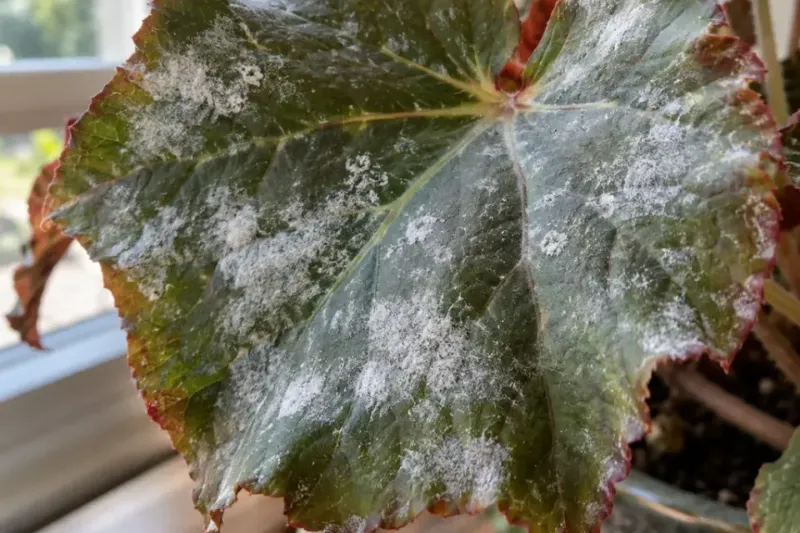
Powdery mildew looks like someone sprinkled talcum powder across your leaves. Unlike mealybugs, it isn’t a bug at all but a fungal disease.
The white patches usually show up on upper leaf surfaces first. You can sometimes wipe them away, only to watch them return a week later. Begonias, African violets, jade, kalanchoe, and rosemary brought indoors are frequent targets.
Many people assume it needs soggy conditions. Actually, powdery mildew is a bit unusual among fungi. Extension sources note it can spread when humidity is high around leaves but the leaf surface itself stays dry.
Stagnant air and crowded plants give it a big boost. Cool nights near windows and warm days can make conditions even friendlier.
Left alone, infected leaves may yellow, twist, or drop early. Rarely does it take down a healthy houseplant quickly, but it does weaken growth and looks unsightly.
A quick test can help you tell the difference. Rub the spot gently between your fingers. Powdery mildew smudges like dust, while mealybugs feel lumpy and may leave a smear. That simple touch tells you which treatment comes next.
5. Better Airflow and Fewer Wet Leaves Help Calm Mildew
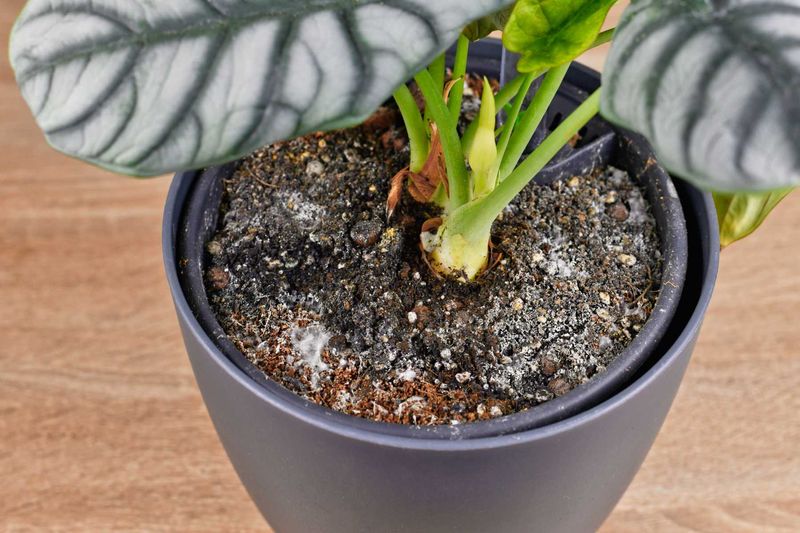
Good news for mildew sufferers comes down to air. Give your plants room to breathe, and the fungus loses much of its advantage.
Start by pinching off the worst leaves and sealing them in a bag for the trash. Avoid composting them indoors.
Next, spread your plants out so leaves don’t touch. A small fan on low, pointed near but not directly at the plants, keeps air moving gently.
Water at the soil, not over the foliage. Skip misting plants that tend to get mildew, since misting adds humidity right where you don’t want it.
Bright light helps too. Move affected plants closer to a south or west window during our short winter days, or add a grow light.
For mild cases, some gardeners try a potassium bicarbonate spray, sold for plant disease control. Many extension sources rate it more reliable than homemade baking soda or milk mixes, which give mixed results and can burn leaves.
Neem oil and labeled houseplant fungicides are other options. Read directions, test one leaf first, and repeat as the label suggests. Prevention through spacing and airflow still does most of the heavy lifting.
6. White Fuzz on the Potting Soil Is Usually Harmless Mold
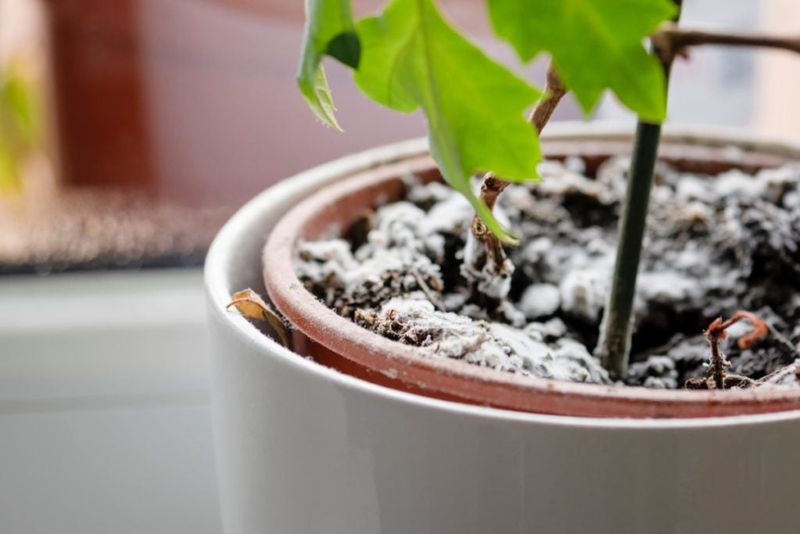
Relax a little if the fuzz sits only on the soil. That fluffy layer is most often a saprophytic fungus, a type that feeds on decaying organic matter in the mix.
It doesn’t attack healthy plant tissue. Instead, it breaks down bits of bark, peat, and other material in the potting soil.
Still, it’s sending you a message. Soil that stays wet for long stretches is what lets it spread. In a Michigan winter, plants grow slowly and use far less water, so the same watering routine from July can leave pots soggy in January.
Fixing it is simple. Scrape off the top fuzzy layer with a spoon and toss it. Let the top inch or two of soil dry before watering again.
Make sure every pot has drainage holes and empty saucers after watering. Some people sprinkle a thin layer of cinnamon on the surface, though evidence for that trick is mostly anecdotal.
One related clue is worth watching. Hard white crust on soil or pot rims is often mineral salt buildup from tap water or fertilizer, not mold. Flushing the pot with plain water usually clears it.
7. Fine Webbing or Woolly Scale Could Be Mistaken for Mealybugs
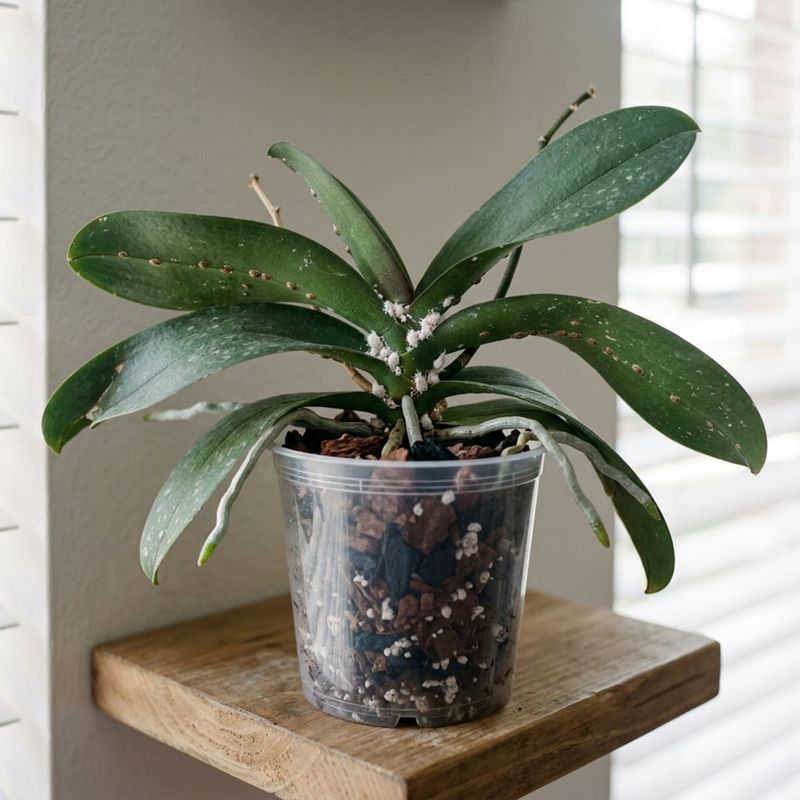
A few lookalikes deserve a mention before you settle on an answer. Spider mites are a big one in dry winter homes.
Furnace heat drops indoor humidity, and these tiny pests love it. Instead of fluffy clumps, you’ll see fine, silky webbing between leaves and stems, plus pale speckles on the foliage. Tapping a leaf over white paper may reveal moving dots smaller than a pinhead.
Rinsing plants in the shower and raising humidity can slow them down. Insecticidal soap also helps when coverage is thorough.
Cottony cushion scale and some woolly scale insects also produce white fluffy egg sacs. They tend to stay put more than mealybugs and often have a firmer body beneath the fluff. Treatment overlaps a lot with mealybug care.
Root mealybugs show up as white, waxy spots on roots and inside the pot. Slip a struggling plant out of its container and look closely if top growth seems weak for no clear reason.
Even the fuzzy hairs on some plants, like certain succulents and cacti, can fool a worried eye. When in doubt, a photo sent to your county extension office can settle the mystery.
8. Quarantine New Plants and Check Leaf Undersides Every Week
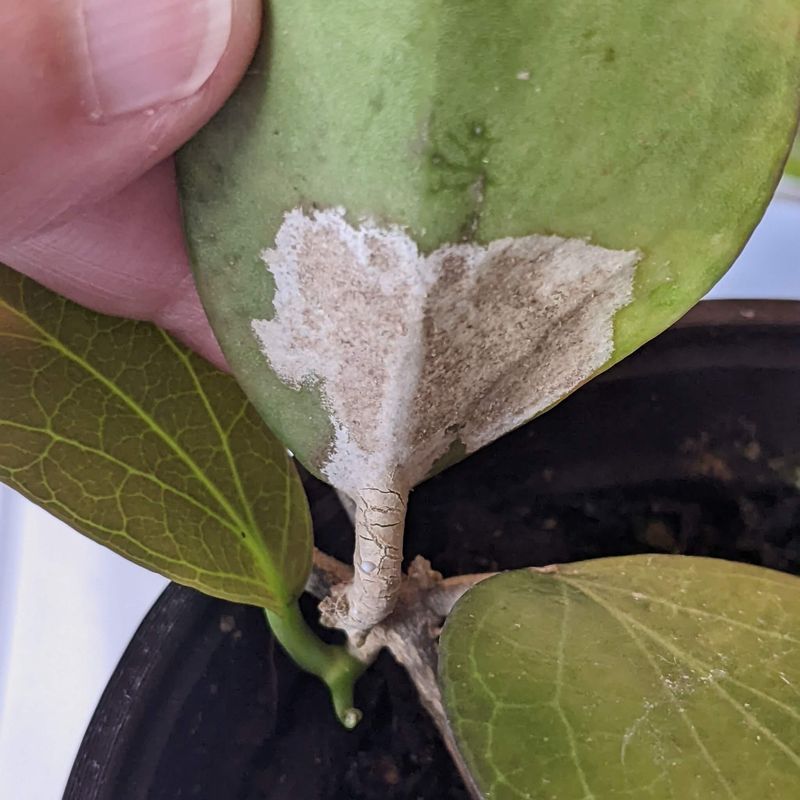
Most white fuzz troubles start small, so a quick weekly check is your best defense. Flip a few leaves, peek at stem joints, and press a finger to the soil.
New plants are a common way pests sneak in. Keep fresh arrivals away from your collection for two to three weeks and watch them closely.
Outdoor plants brought inside for winter deserve the same treatment. Inspect them before they cross the doorway, and rinse leaves and stems well.
Adjust your habits to the season. Water less while growth slows, skip heavy fertilizer, and give plants as much light as you can. Healthy, unstressed plants handle trouble better.
Wipe dusty leaves with a damp cloth now and then. Cleaner leaves catch more light and make problems easier to spot.
If something keeps coming back, reach out for help. Michigan State University Extension offers a Lawn and Garden Hotline and diagnostic services that can identify pests from samples or photos.
Honestly, finding white fuzz isn’t a disaster. It’s a nudge to look closer, and catching it early is the difference between a quick cleanup and a long winter project.