An Invasive Pest Is Quietly Laying Eggs On Maryland Patio Furniture Right Now
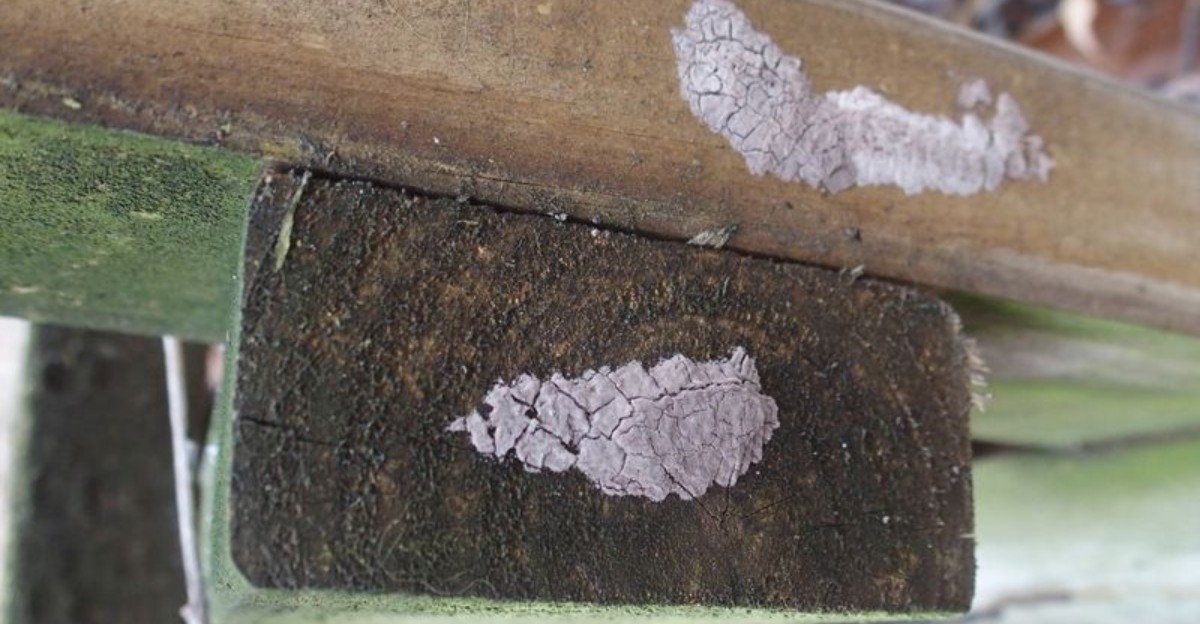
A single female insect can tuck dozens of eggs under a gray coating that looks exactly like a splash of dried mud. I scrubbed one off a lawn chair last fall and called it dirt.
It was not dirt. It was a nursery, sealed up tight and waiting for spring.
Here in Maryland, this hitchhiking bug has spread steadily since it first showed up in Cecil County in 2018. The adults keep laying eggs from late summer until a hard freeze finally stops them. That means your chairs, grill, and planters are fair game right now.
Not going to lie, the trick that fools most people is how ordinary these patches look. They sit on metal, plastic, wood, and stone without a hint of trouble. So when was the last time you flipped over your patio table and gave the underside a real look?
That Muddy Smear On Your Patio Chair Deserves A Second Look
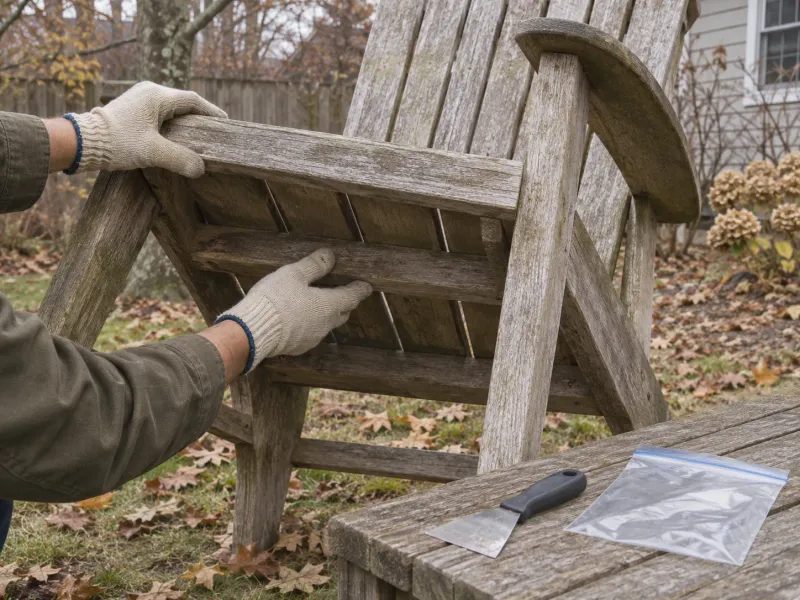
Funny how the most important clue in my yard looked like something a dog tracked in. That flat, grayish smear on a chair leg turned out to be a spotted lanternfly egg mass, and it had company.
Each mass usually measures about an inch to an inch and a half long. Fresh ones look shiny and putty-like, then dry into a cracked, mud-colored crust. Under that coating sit roughly 30 to 50 eggs lined up in neat rows.
Older masses from past years can look different. Once the coating wears off, you may see rows of seed-like eggs, sometimes with tiny exit holes where nymphs already hatched. Those empty ones are harmless leftovers.
Females pick smooth, sheltered surfaces, so patio furniture makes an easy target. Check under armrests, along chair legs, beneath tabletops, and inside folded umbrellas. Stacked chairs give them extra hiding spots between layers.
I also learned to check the stuff nobody thinks about. Grill propane tanks, flowerpots, bird baths, stone steps, firewood, and even the bumpers of cars parked outside can all hold egg masses.
A flashlight helps a lot, even in daylight. Shadows hide these patches surprisingly well, and a quick beam often makes the texture pop.
Scrape Those Lanternfly Egg Masses Into A Bag Of Rubbing Alcohol
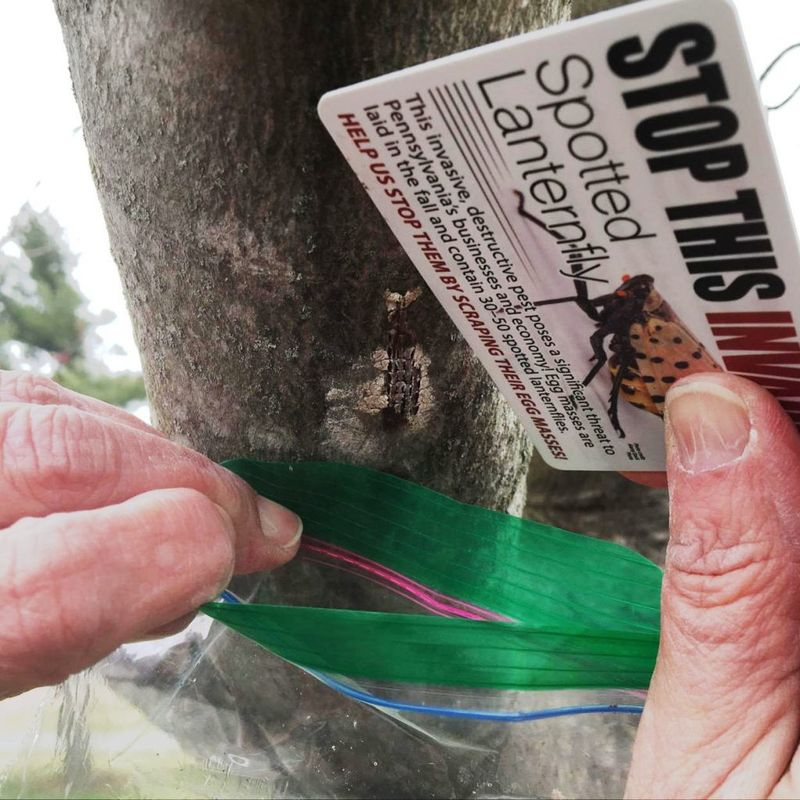
Grab an old gift card or a plastic putty knife, because this job takes about thirty seconds per patch. Scraping egg masses is one of the most useful things a homeowner can do from fall through early spring.
Hold a zip-top bag or small jar right below the mass. Press your card firmly against the surface and push downward so the eggs fall straight in. A good scrape pops the individual eggs, which you may hear as a faint crunch.
Fill the bag or jar with rubbing alcohol or hand sanitizer first. University of Maryland Extension and the Maryland Department of Agriculture both recommend this method, since it stops the eggs from hatching. Seal it up and toss it in the trash.
Scraping eggs onto the ground is a common slip. Many of them can still hatch in spring, which undoes your hard work.
Out of alcohol? Smashing the eggs thoroughly works too, as long as each one gets crushed. I still prefer the bag because it is neater and I know nothing escapes.
Keep a scraper and sealed bag near the back door. Having them handy makes spot checks a quick habit instead of a chore.
Adult Lanternflies Keep Laying Eggs Until The First Hard Freeze
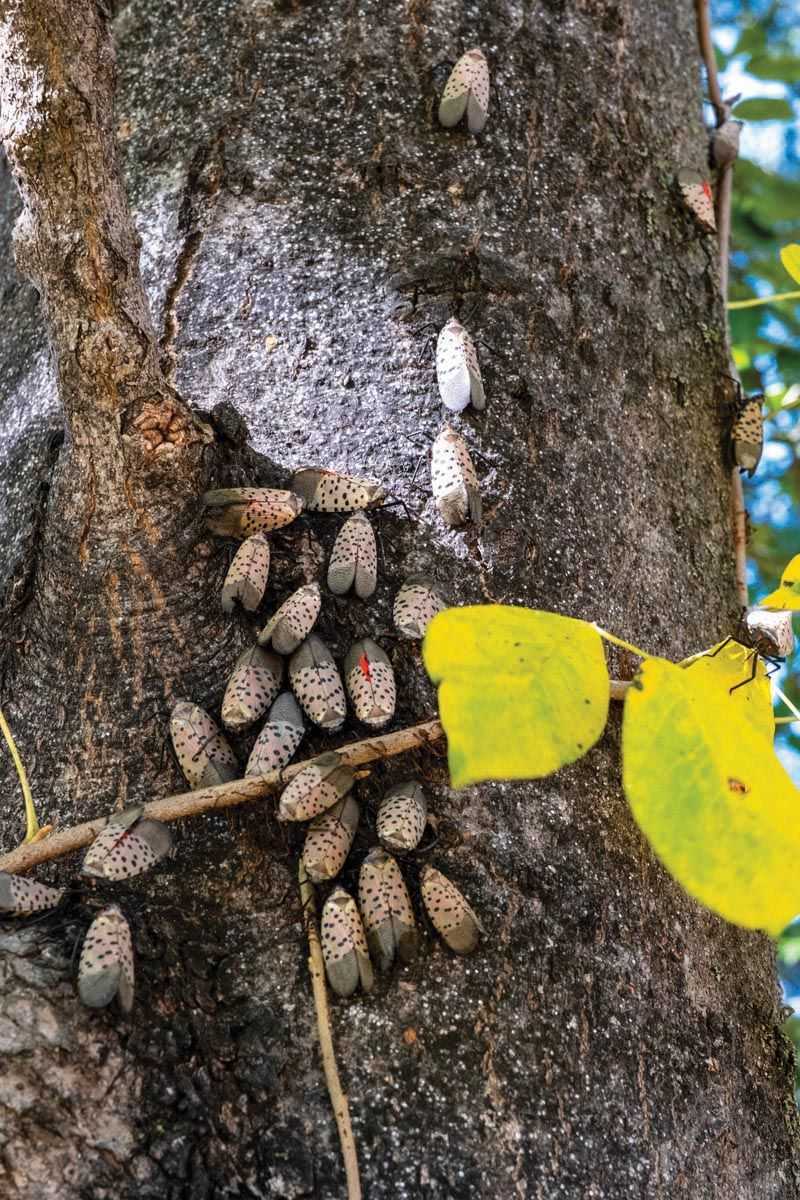
Cooler mornings fooled me into thinking bug season was over. Spotted lanternfly adults had other plans, and they kept busy right up until a hard frost arrived.
Egg laying in Maryland generally begins in September and continues into November or even early December. Timing shifts a bit by region. Western Maryland often sees freezing nights sooner, while the Eastern Shore and the warmer areas around Baltimore and Washington may stretch the season longer.
Adults are about an inch long with grayish-tan front wings covered in black spots. When they spread their wings, you get a flash of bright red with black and white patches. In fall, they often gather on tree trunks, walls, and railings.
Cold weather eventually ends the adults, but the eggs ride out winter just fine. They hatch from roughly late April through June as small black nymphs with white spots.
That gap gives you months to hunt for egg masses. Checking once in late fall and again in late winter catches most of them before spring arrives.
See any adults still hanging around? Squashing them now means fewer eggs on your furniture next week.
Sticky Honeydew And Black Sooty Mold Can Ruin Your Patio Season
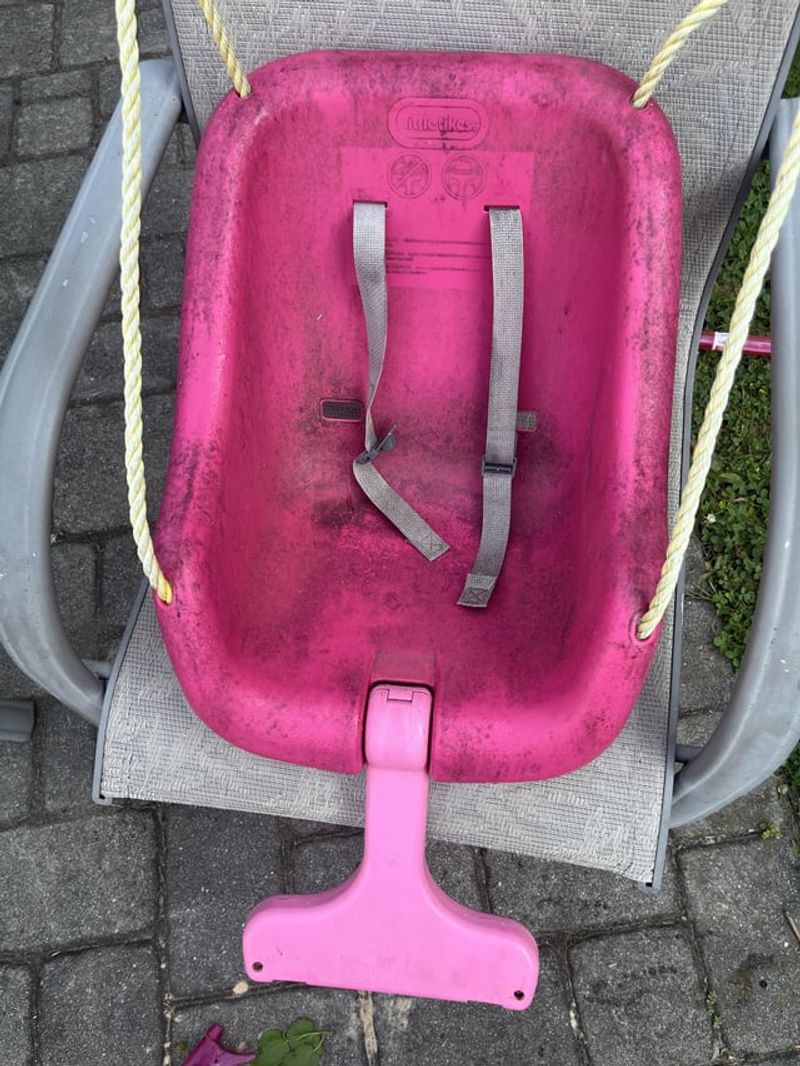
Last July, a friend asked why her deck felt like it had been mopped with syrup. The culprit was a crowd of lanternflies feeding in the maple overhead.
These planthoppers pierce stems and trunks to drink sap. They then release a sugary liquid called honeydew, which drips on whatever sits below. Chairs, cushions, umbrellas, and tables can turn sticky fast.
That sweet coating attracts wasps, bees, and ants. It also feeds a black fungus called sooty mold, which spreads across surfaces and plant leaves like a smudge of soot.
On plants, sooty mold blocks sunlight and makes it harder for leaves to make food. On furniture, it leaves stains that take real scrubbing to remove.
Warm water with mild dish soap handles most fresh honeydew. A soft brush helps on textured resin or wood. Rinse well so leftover sugar does not draw more insects.
Fabric cushions are easier to protect than to clean. During heavy summer feeding, store them indoors or under covers when not in use. Every egg mass you remove this fall means less sticky mess dripping on your patio next summer.
Grapevines And Maples Take The Biggest Hit From These Spotted Planthoppers
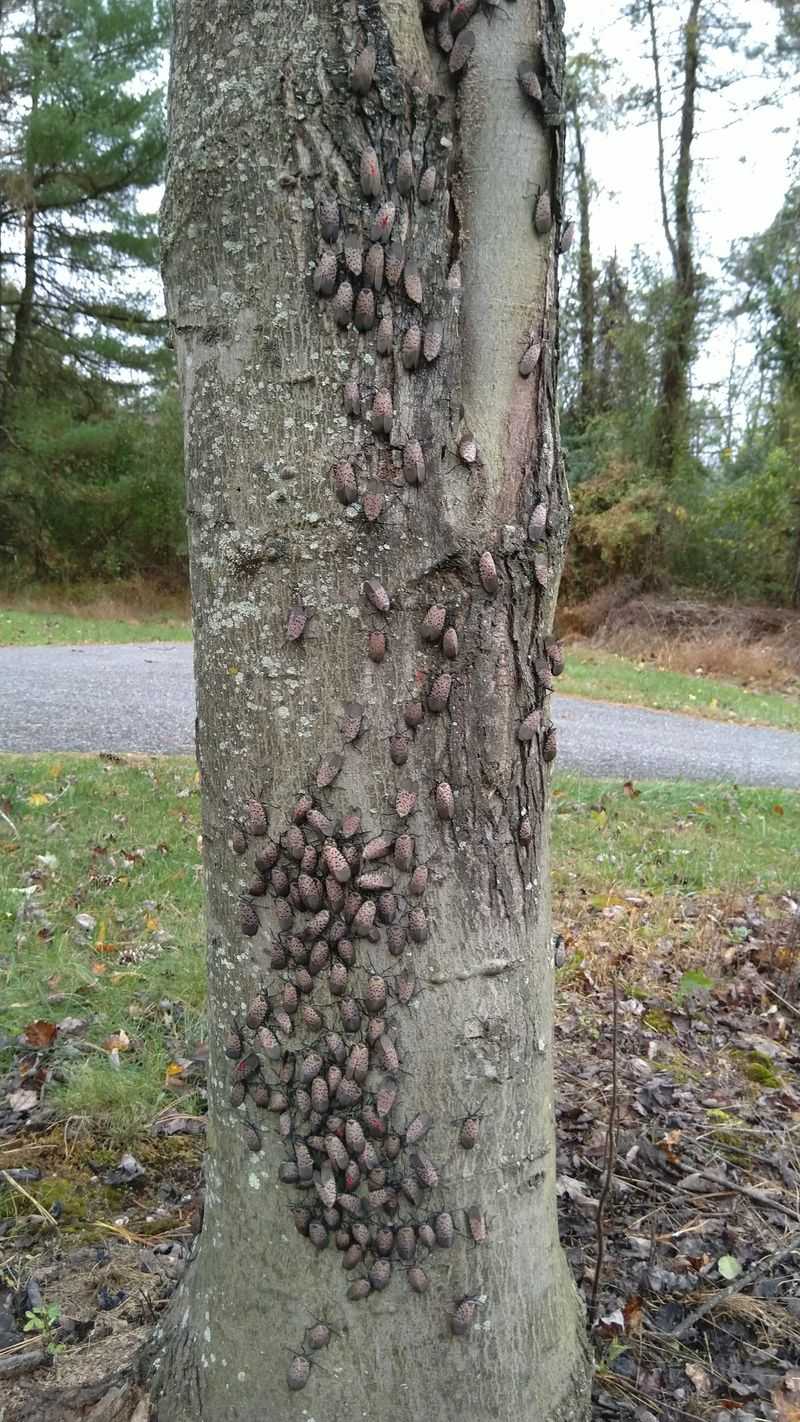
Grape growers in Maryland have good reason to grumble about this bug. Grapevines rank among the plants most harmed by lanternfly feeding, and heavy infestations can weaken vines and lower yields.
Home gardeners with a few backyard vines should keep watch too. Large groups can gather on trunks and stems, draining sap that the plant needs heading into winter.
Maples, black walnut, willows, birch, and river birch also attract plenty of attention. Penn State Extension reports the insect feeds on more than 70 plant species. Mature shade trees usually handle feeding better than young vines do, though stress can add up over time.
Most landscape plants survive a visit. The real worry is repeat feeding season after season, especially on plants already struggling with drought or poor soil.
So what can you do? Water trees deeply during dry stretches and mulch around the roots without piling it against bark.
For vines, check trunks regularly from summer through fall. Knocking adults into a bucket of soapy water works on small plantings. For heavy problems, a certified arborist or your county extension office can suggest safe, targeted treatments.
Tree Of Heaven Is The Lanternfly Magnet Hiding In Your Yard
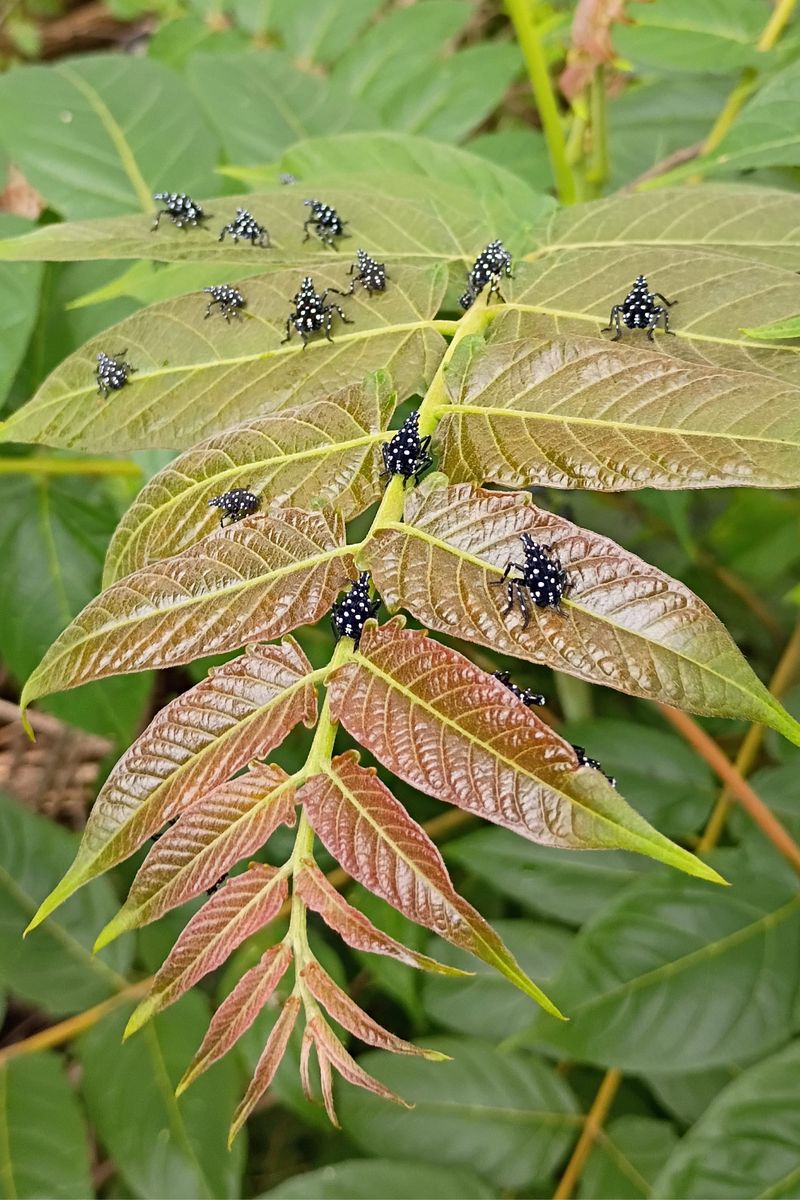
Funny name, not-so-funny tree. Tree of heaven, known as Ailanthus altissima, is the spotted lanternfly’s favorite host, and it pops up along fences, alleys, and roadsides across the state.
Like the lanternfly, this tree came from Asia. It grows fast, spreads aggressively, and gives off a rank, peanut-butter-like smell when you crush its leaves or stems.
You can identify it by long compound leaves with many leaflets. Each leaflet has one or two small bumps, called glands, near the base. That feature separates it from look-alikes such as native sumac and black walnut.
Removing this tree takes patience. Cutting it down often triggers a burst of root sprouts. Extension experts usually recommend a herbicide treatment applied in summer or early fall, followed by cutting once the tree has declined.
Small seedlings can be pulled by hand when soil is moist. Get as much root as possible.
Bigger trees near homes or power lines call for a licensed professional. Replacing them with native trees like redbud, serviceberry, or oak gives birds and pollinators something far better to enjoy.
Check Your Car And Camping Gear Before You Hit The Road
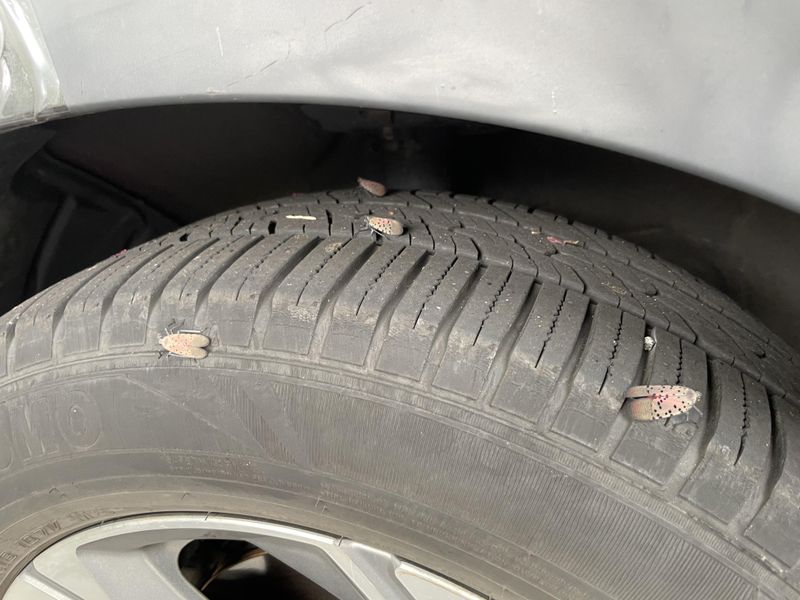
Road trips are how this insect got so far so fast. Egg masses laid on trailers, cars, and outdoor gear can travel hundreds of miles before anyone notices.
Spotted lanternflies were first found in Pennsylvania in 2014. Since then, they have hitchhiked into many states, largely by riding along with people and shipments.
Before you move furniture, lend a grill, or haul firewood, give everything a quick once-over. Check wheel wells, bumpers, trailer frames, kayaks, camp chairs, and the bottoms of pots.
All of Maryland now falls under a state spotted lanternfly quarantine. Businesses that move regulated items within or from the quarantine zone need a permit from the Maryland Department of Agriculture. Homeowners are asked to inspect items before moving them to another county or state.
The quarantine grew county by county until it covered the whole state in March 2026, so check the department website for current rules. It takes two minutes and saves headaches later.
Firewood deserves extra caution. Buy it close to where you burn it, or choose certified heat-treated bundles. That habit also slows the spread of other pests like emerald ash borer.
A quick check at your driveway beats spreading eggs to a friend’s yard.
Reporting Lanternfly Sightings Helps Protect Maryland Gardens
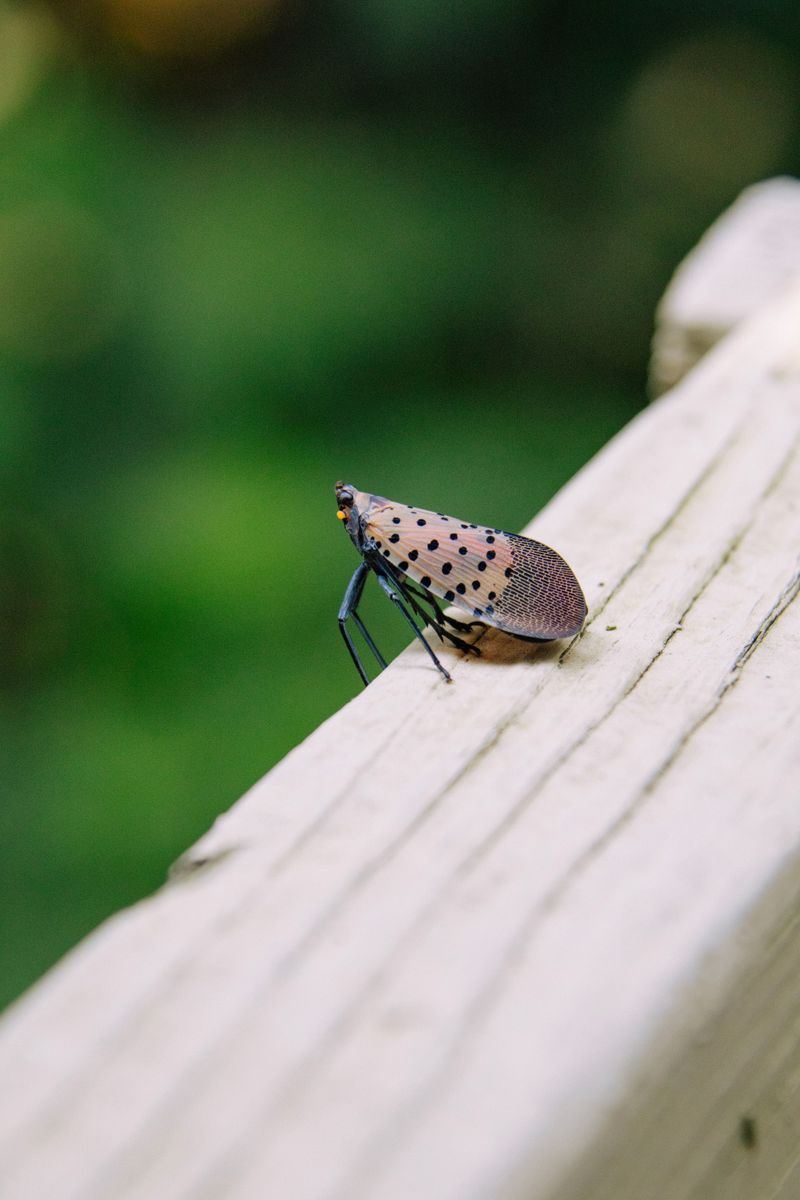
Every scraped egg mass feels small, but neighbors working together make a real difference. Each patch you remove means dozens fewer nymphs crawling up your plants next spring.
The Maryland Department of Agriculture tracks spotted lanternfly spread and welcomes reports from every county in the state. Snap a clear photo of the bug or egg mass and note the location. Then use the reporting form on the department’s website.
Even in the heavily infested central counties, your reports still help the department track how populations change. Your local extension office can also suggest the best management steps for your county.
Spring brings another chance to help. Circle traps placed around tree trunks catch nymphs as they climb. Avoid sticky bands without a wire cage, since they can trap birds and other wildlife.
Teach kids what the egg masses look like and turn it into a backyard scavenger hunt. Sharp young eyes spot those mud-colored smears quickly.
My plan is simple now. I check the patio once in November and again in March, scrape anything suspicious, and enjoy a cleaner deck all summer.