The Pennsylvania Native Tree That Won’t Crack Your Foundation Or Sidewalk
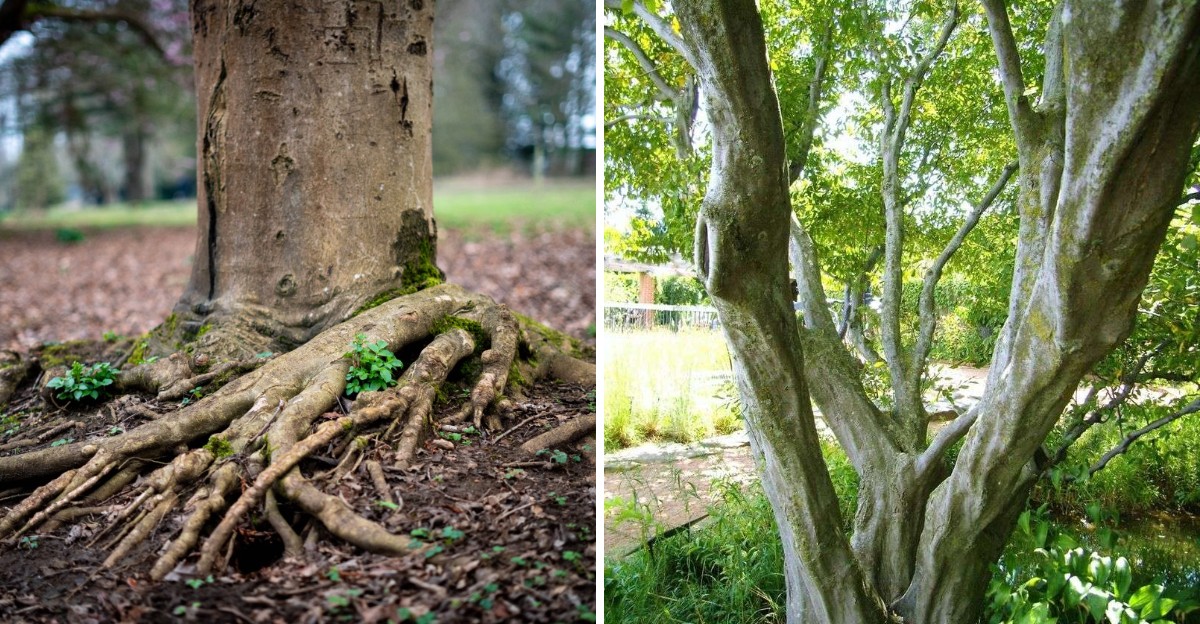
Tree roots rarely crack solid foundations on their own. Most of the damage blamed on roots starts with cracks, leaks, or shrinking clay soil that roots simply take advantage of.
That surprised me, because I used to blame every buckled sidewalk on the nearest big tree. Then I learned that the size and speed of a tree matter far more than its reputation. Fast, thirsty giants with shallow roots cause most of the trouble near pavement.
So which tree belongs near your house? Here in Pennsylvania, one small native grows slowly, stays modest, and wears bark that looks like flexed arm muscles. Birds love its seeds, and deer usually leave it alone.
Personally, I can’t imagine a better tree for a tight front yard. You may have walked past one on a woodland trail without a second glance. Take a closer look next time.
A Slow-Growing Woodland Tree With Muscles Is The Answer
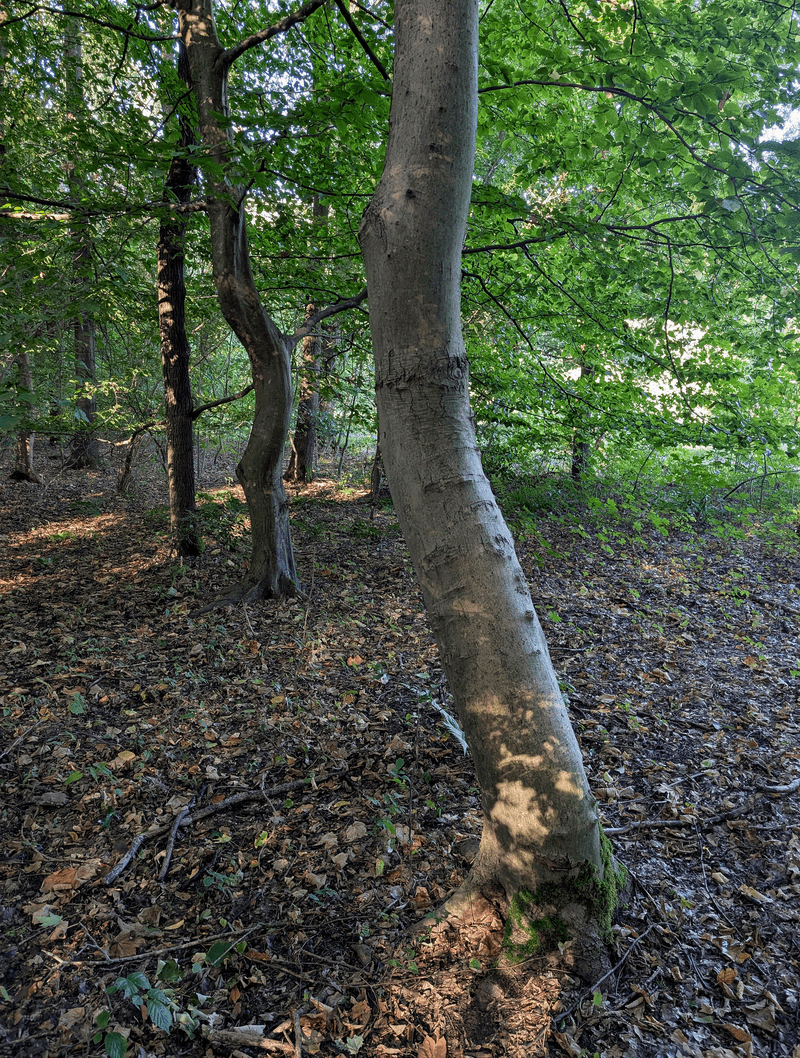
Meet the tree that hikers nicknamed musclewood. The American hornbeam, Carpinus caroliniana, grows wild along streams and shady forest edges across most of the state.
Its biggest selling point for homeowners is simple. It grows slowly, often around one foot per year, and usually tops out between 20 and 35 feet tall. A smaller tree means a smaller root system, and that lowers the pressure on nearby concrete.
Penn State Extension and many state arborists point to small, slow trees as the safest picks for tight spaces.
Hornbeam fits that description beautifully. It also handles shade, which most street-friendly trees struggle with.
One honest note matters here. No tree is root-proof, and any woody plant can lift a thin sidewalk slab if it is planted too close. Hornbeam simply gives you far better odds than a silver maple or willow ever will.
I like that it feels like a piece of the woods brought home. You get a native tree with real character, plus a lot less worry about repair bills.
For small lots, side yards, and spots near walkways, this tree deserves a spot at the top of your list. Your concrete will appreciate the choice.
Hornbeam Roots Stay Fibrous And Well Behaved Near Concrete
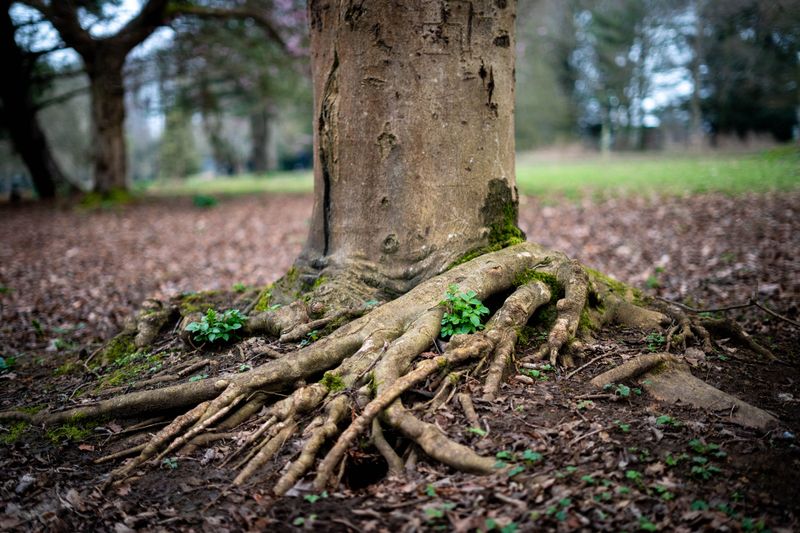
Roots are opportunists, not bulldozers. They grow where water, air, and loose soil are easiest to find, which often means the damp zone right under a sidewalk.
Hornbeam has a fairly compact, fibrous root system compared with big shade trees. Its roots spread out but tend to stay finer and less aggressive. Pair that with slow growth, and you get far less upward heaving over the years.
Foundation worries deserve a reality check too. University experts note that roots rarely break sound foundations directly.
Trouble usually begins with existing cracks, leaky pipes, or clay soil that shrinks when big trees pull out lots of water.
A modest tree like hornbeam uses much less water than a towering oak or poplar. That means less soil shrinkage near your house during dry summers.
You can stack the odds even further in your favor. Fix leaky gutters and downspouts so roots are not drawn toward the house. Keep the area under nearby slabs from staying soggy.
Think of hornbeam as a polite neighbor rather than a perfect angel. With smart placement and good drainage, it rarely gives you anything to complain about.
Plant Your Hornbeam At The Right Distance From The House
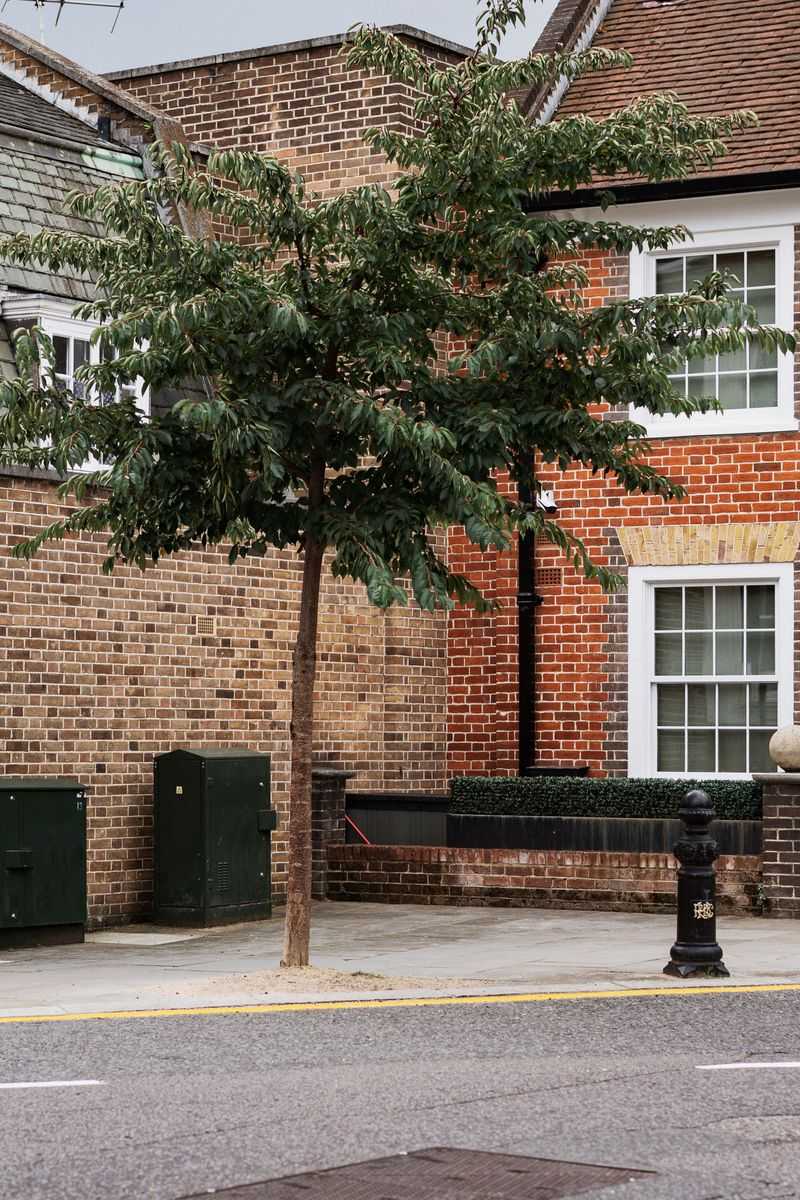
Grab a tape measure before you grab a shovel. Placement does more to protect your foundation than any tree label ever could.
For a small tree like hornbeam, a common guideline is to plant at least 10 to 15 feet from your house.
Keep it around 5 to 8 feet from sidewalks and driveways when possible. That gives the canopy room to spread and keeps roots from crowding concrete.
Look up as well as down. Hornbeam can reach 20 to 30 feet wide, so avoid planting right under power lines or tight against a roofline.
Call 811 before digging anywhere in Pennsylvania. The free service marks buried utility lines, and the law requires that call before excavation.
Early spring or fall makes the best planting window here, while soil stays cool and moist. Dig a hole two to three times wider than the root ball but no deeper. Set the root flare slightly above grade, backfill with native soil, and water deeply.
Spread two to three inches of mulch in a wide ring. Keep it a few inches away from the trunk so the bark stays dry and healthy.
That Fluted Gray Musclewood Bark Steals The Winter Show
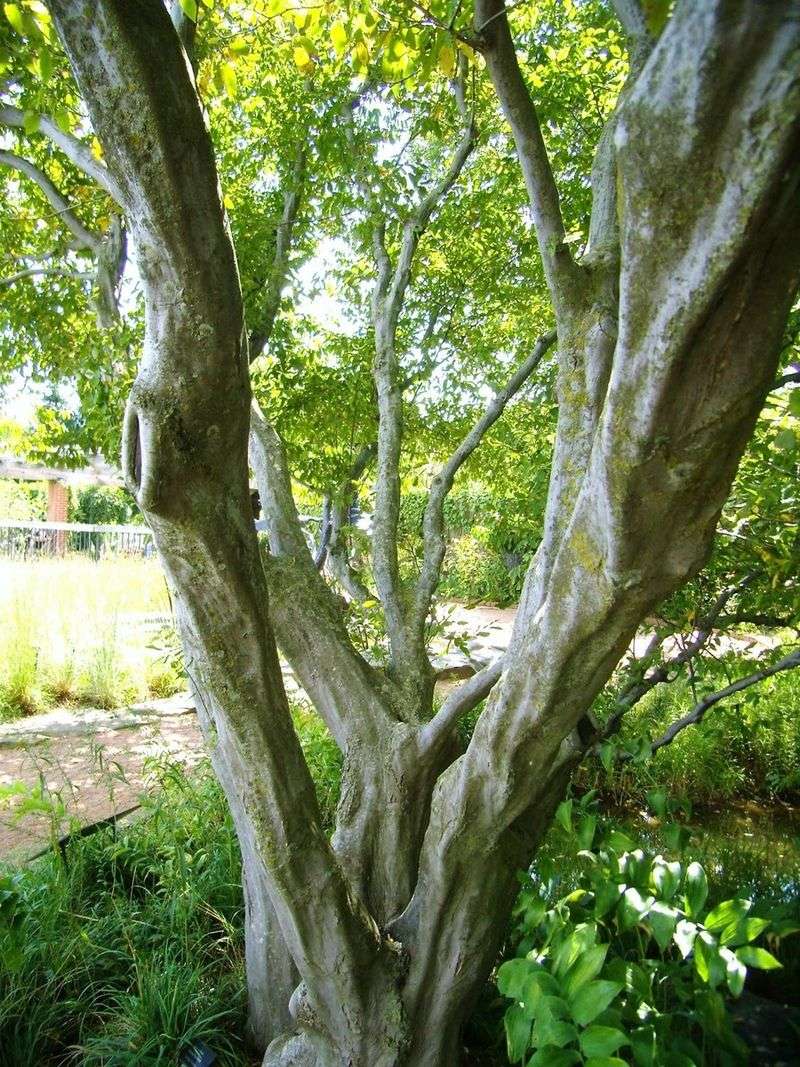
Run your hand along a mature hornbeam trunk and you will understand the nickname. The smooth blue-gray bark ripples with ridges that look like flexed arm muscles.
Winter is when this tree really shows off. Once the leaves drop, those sinewy trunks stand out against snow like sculptures. I catch myself staring at them on January walks more often than I would like to admit.
Many people also call it ironwood, and for good reason. The wood is extremely hard and dense. Early settlers used it for tool handles, mallets, and ox yokes because it resisted splitting.
Here’s a fun twist. Hornbeam belongs to the birch family, yet its bark stays smooth instead of peeling like a paper birch.
You can highlight this feature with a little planning. Plant it where you can see the trunk from a window, or place a low light at its base for evening drama.
Multi-stemmed hornbeams look especially striking, with several muscular trunks twisting upward together.
Ask your nursery whether they carry single-trunk or clump forms, and pick the style that suits your yard best.
Fiery Hornbeam Leaves Light Up Pennsylvania Autumns
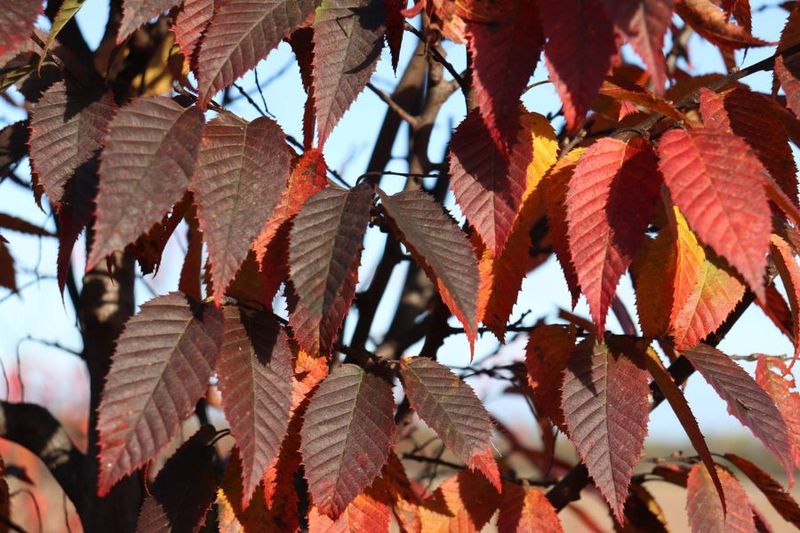
Autumn turns this quiet tree into a firecracker. Its toothed green leaves shift to yellow, orange, and scarlet, often all on the same branch.
Color varies from tree to tree, so it pays to shop in fall if you can. Pick the one that makes you smile at the nursery.
Spring and summer bring smaller pleasures. Dangling catkins appear early, then papery, three-lobed seed clusters hang from the branches like tiny lanterns. Those seeds feed songbirds, wild turkeys, and squirrels later in the year.
Wildlife benefits go beyond seeds. Hornbeam hosts the caterpillars of several native butterflies and moths, including the striped hairstreak and tiger swallowtail.
Those caterpillars become baby food for nesting birds, so your tree quietly supports a whole backyard food web.
Believe it or not, deer usually browse it less than many other young trees. That is not a guarantee, so protect small saplings with a simple cage for the first couple of years.
Bundle all this together and you get four seasons of interest from one modest trunk. Not bad for a tree that stays politely out of your concrete.
Shade, Clay, And Wet Spots Rarely Slow Hornbeam Down
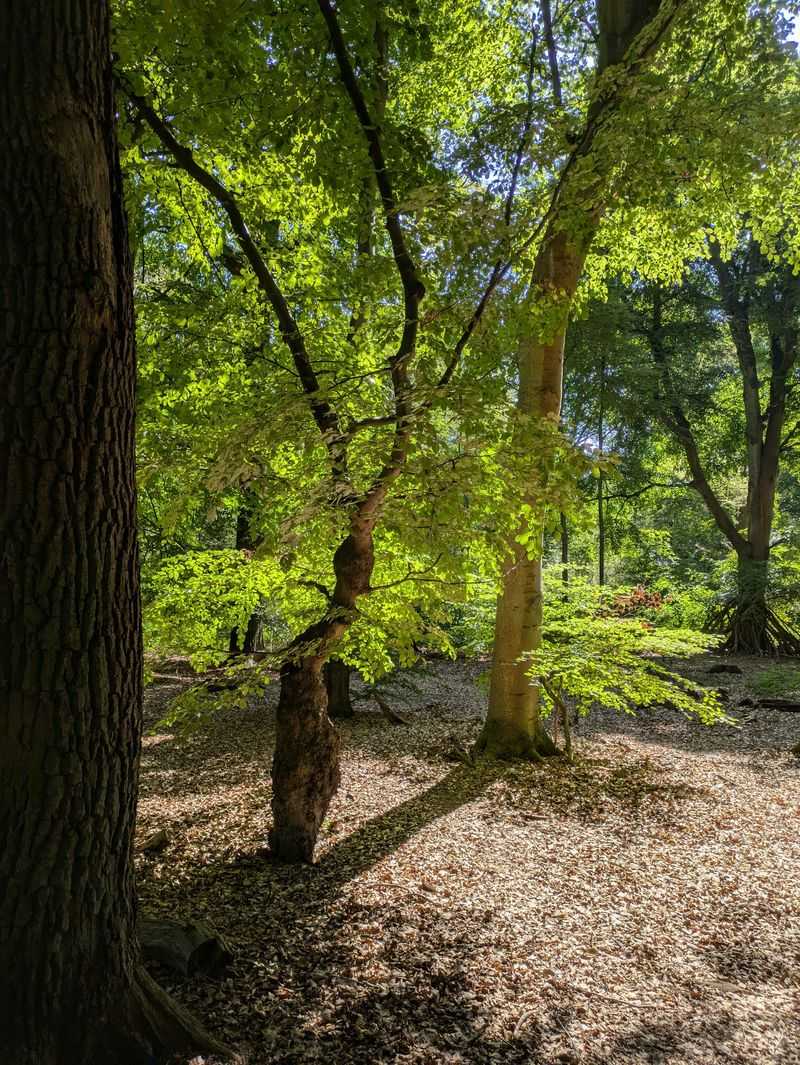
Got a shady corner that defeats every flowering tree you try? Hornbeam might be the fix you have been waiting for.
In the wild, it thrives as an understory tree beneath taller oaks and maples. That means it handles full shade to full sun, though partial shade often suits it best. It grows well across Pennsylvania, which falls mostly in USDA zones 5 through 7.
Soil flexibility is another bonus. Hornbeam tolerates heavy clay and even occasional flooding, which makes sense for a tree that naturally lines stream banks. It prefers slightly acidic, moist ground.
Drought is where it needs a little help. Water deeply once a week during dry spells for the first two or three years. After that, it handles average summers well, though long heat waves can scorch leaf edges.
Pests and diseases are rarely serious on this tree. Pruning needs stay light too. Remove crossing or broken branches in late winter while the tree is dormant.
One quirk to know. Hornbeam dislikes being moved once established, so choose your spot carefully the first time. Young container trees transplant much more easily than older field-dug ones.
Redbud And Serviceberry Make Smart Small Tree Backups
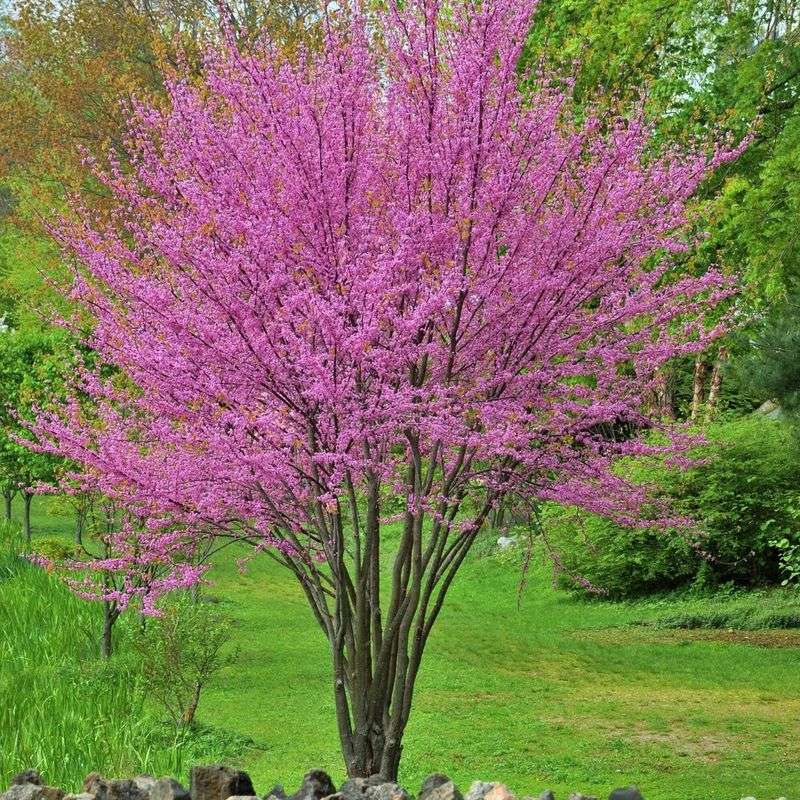
Maybe you want spring flowers instead of muscle bark. Two more small Pennsylvania natives can keep your sidewalk safe while delivering a burst of color.
Eastern redbud, Cercis canadensis, covers bare branches with pinkish-purple blooms in April. It usually reaches 20 to 30 feet and has heart-shaped leaves. Bees adore the early flowers.
Serviceberry, Amelanchier, opens clouds of white blossoms in early spring. By June, it offers sweet berries that taste a little like blueberries. Robins and cedar waxwings will race you for them.
Both stay compact and grow at a reasonable pace, so they suit tight lots near walkways. Give them the same spacing you would give hornbeam.
Steer clear of a few troublemakers near pavement. Silver maple, willows, and poplars grow fast with shallow, thirsty roots. Skip Bradford pear and Norway maple altogether, since both spread invasively in Pennsylvania.
My best advice is simple. Choose a small native, plant it at the right distance, and fix drainage around your home. Visit a local native plant nursery this fall, and you will be enjoying a calmer, greener yard for decades.