7 Plants With Red Berries That Brighten California Gardens In November
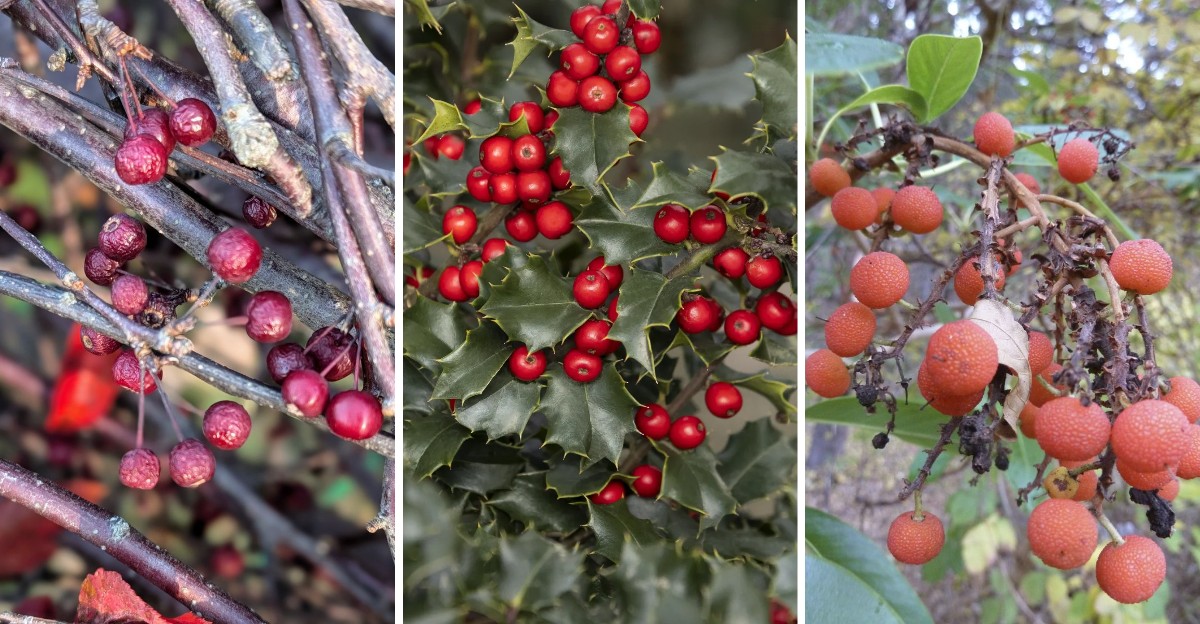
One Mediterranean tree can hold white blossoms and ripe red fruit on the same branch, since its fruit takes about a year to mature. I love how that overlap makes a November garden feel like spring and fall at once.
Some of the brightest so-called berries are technically tiny pomes, closer cousins to apples than to true berries. On certain shrubs, only female plants produce fruit, so a lonely single plant may struggle to put on a show.
Nobody asked, but red berries against gray November skies might be my favorite color combination in the whole garden. Late autumn rains also coax out fresh green leaves, so those glossy clusters glow even brighter.
One shrub’s fruit shifts through green, red, and finally black, and another tree’s Latin name supposedly means eat only one. Which cheerful red show would brighten the view from your kitchen window this winter?
1. Toyon
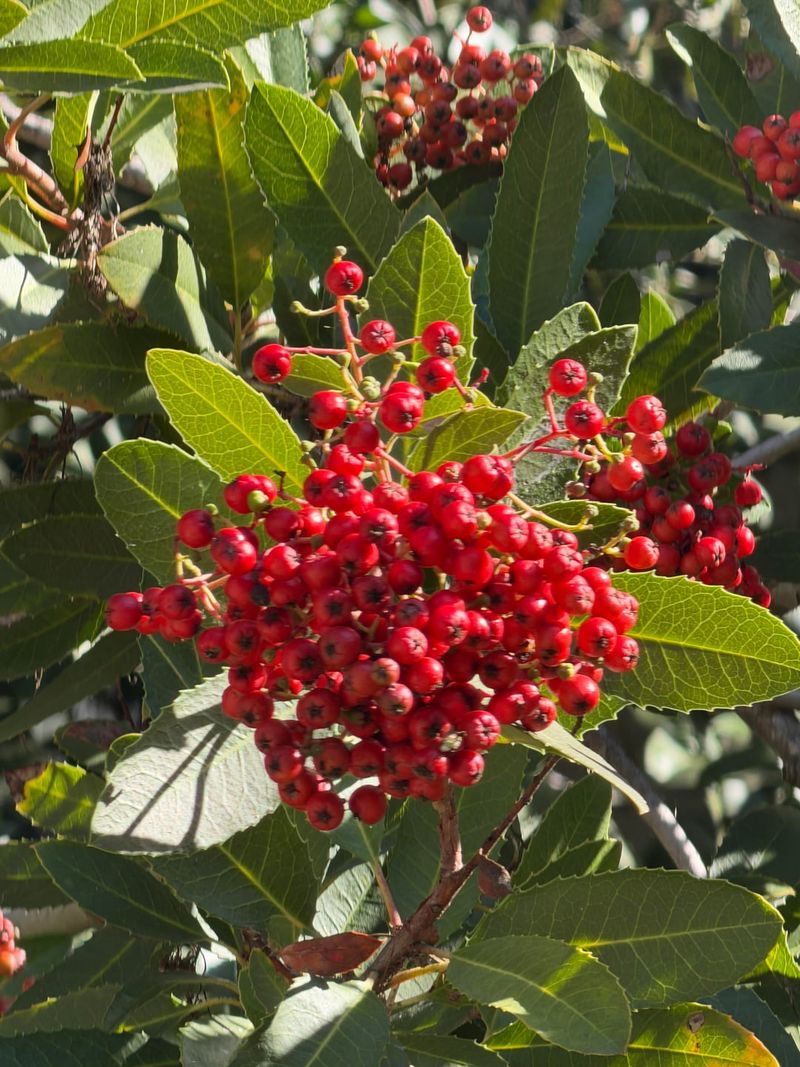
Every November, toyon looks like someone dumped buckets of tiny red ornaments across a glossy green shrub. I have to admit, I slow down on hiking trails just to admire those heavy, shining clusters.
Botanists call it Heteromeles arbutifolia, and the berries are technically small pomes, related to apples rather than true berries. Small white flower clusters showed up back in early summer, so the red display feels like a well-earned reward.
Size varies a lot, since mature plants often reach eight to twenty feet tall and fifteen feet wide. You can prune it into a small tree or keep it as a dense, leafy screen along a fence.
Cedar waxwings and robins often strip whole branches clean, sometimes arriving in noisy flocks that empty a shrub quickly. Planting one near a window gives you a cozy front-row seat for the hungry winter feeding show.
Young plants need a deep weekly soak during their first year or two while roots spread out. After that, toyon handles drought and heavy clay soil with very little fuss, though an occasional deep summer soak helps.
Do the heavier pruning in late summer, around August or September, so you avoid snipping off developing berries. Light shaping can happen any time of year, which makes toyon a forgiving choice for busy beginners alike.
Keep the fruit away from snacking kids, because the seeds and unripe berries contain compounds that can cause harm. Leave the harvest to the feathered visitors, and simply enjoy the cheerful color from your porch instead.
2. California Coffeeberry
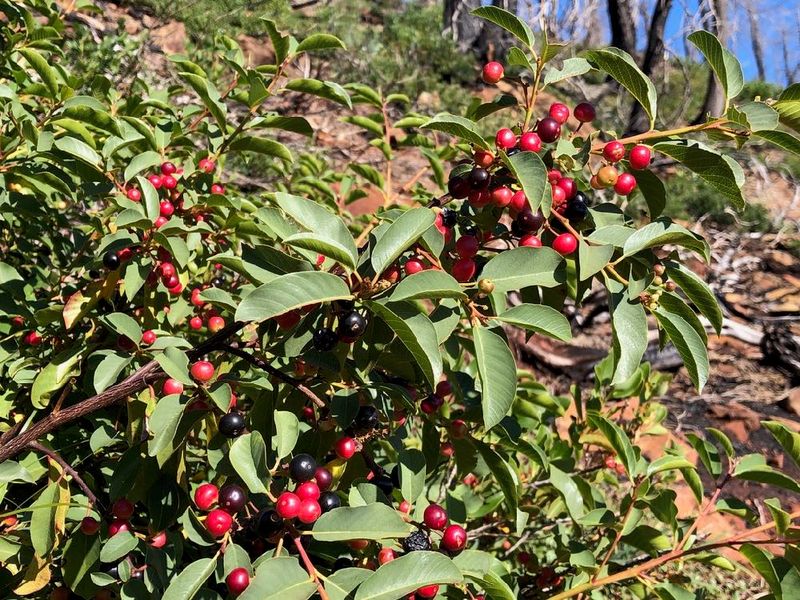
Coffeeberry fruit changes outfits like a nervous teenager, shifting from green to orange-red before finally settling on black. Late in the season, you might spot several colors hanging together on one branch, which looks surprisingly festive.
Its scientific name is Frangula californica, though older books and nursery tags still list it as Rhamnus californica. The name comes from the seeds, which look a bit like coffee beans but contain no caffeine.
Ripening usually stretches from midsummer through November, so the red phase may be fading by late autumn. I still love it, because the mix of red and glossy black fruit gives the shrub real personality.
Most plants grow four to ten feet tall, with leathery dark green leaves and reddish new stems. Some selections, like Eve Case, stay compact and rounded, which suits smaller suburban yards nicely.
Birds go wild for the juicy fruit, and the tiny spring flowers quietly feed many native bees. Deer usually leave it alone, which feels like a small miracle for anyone gardening near open hillsides.
Plant it in full sun along the coast or partial shade in hotter inland valleys for happier growth. Once established, it needs little water, though a deep summer drink every few weeks keeps leaves looking fresh.
Pruning is easy, so you can shape it into a hedge or let it grow loose and natural. Just skip tasting the berries yourself, since they can upset your stomach in a hurry.
3. Howard McMinn Manzanita
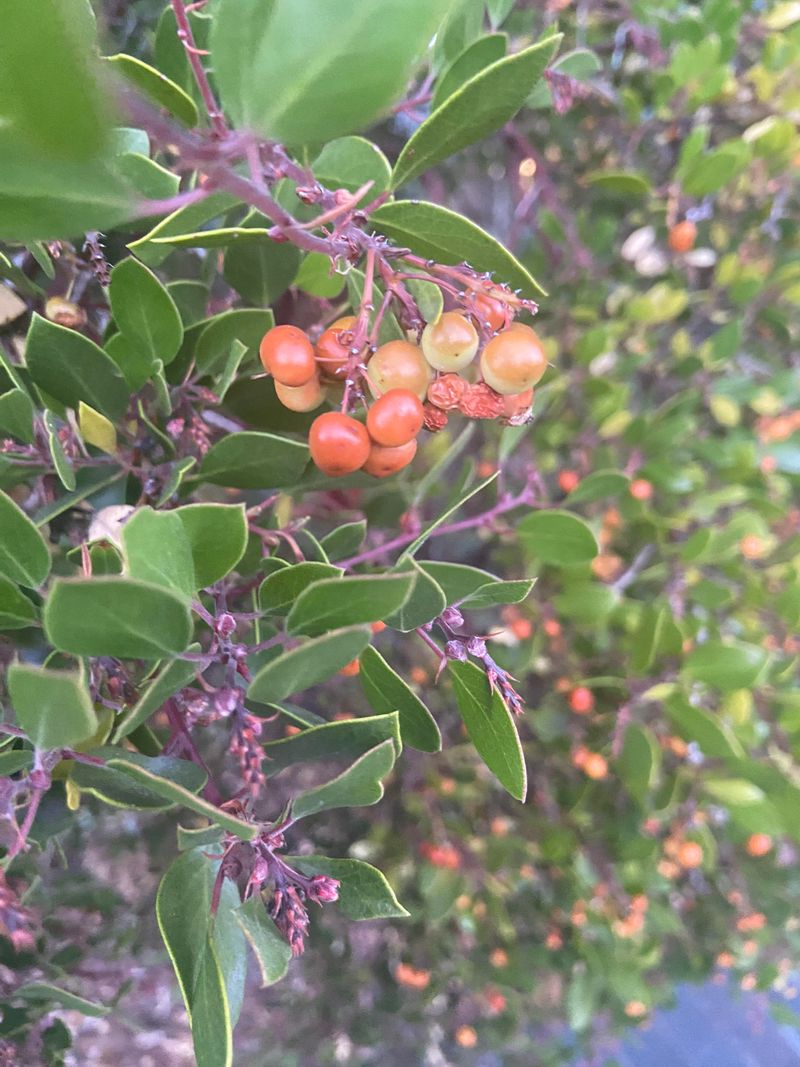
Smooth mahogany bark that peels in thin curls makes Howard McMinn manzanita feel like a living sculpture. Add clusters of small brick-red berries, and you have a shrub that rewards a close look in late autumn.
This popular selection of Arctostaphylos densiflora comes from a rare species native to Sonoma County. The name honors Howard McMinn, a botanist who taught at Mills College and championed native plants.
Expect a rounded mound five to ten feet tall and up to twelve feet wide over time. Glossy green leaves stay on year-round, so the shrub looks tidy even when the berries finally disappear.
Berries begin forming in midsummer and often hang on into early winter, though birds may harvest many first. Pink and white urn-shaped flowers return in late winter, feeding hummingbirds when few other blooms are open.
Drainage matters more than anything else, since soggy summer soil is a common reason manzanitas suddenly decline. I like planting mine on a gentle slope or small mound so water runs away from the roots.
After a year or two of regular watering, it needs very little irrigation along most of the coast. Inland gardeners should offer afternoon shade and an occasional deep soak during long, brutal summer heat waves.
Prune lightly right after flowering, and avoid cutting into bare wood that may not sprout again. You can even nibble the tart fruit, which people traditionally turned into a tangy and refreshing drink.
4. Pacific Madrone
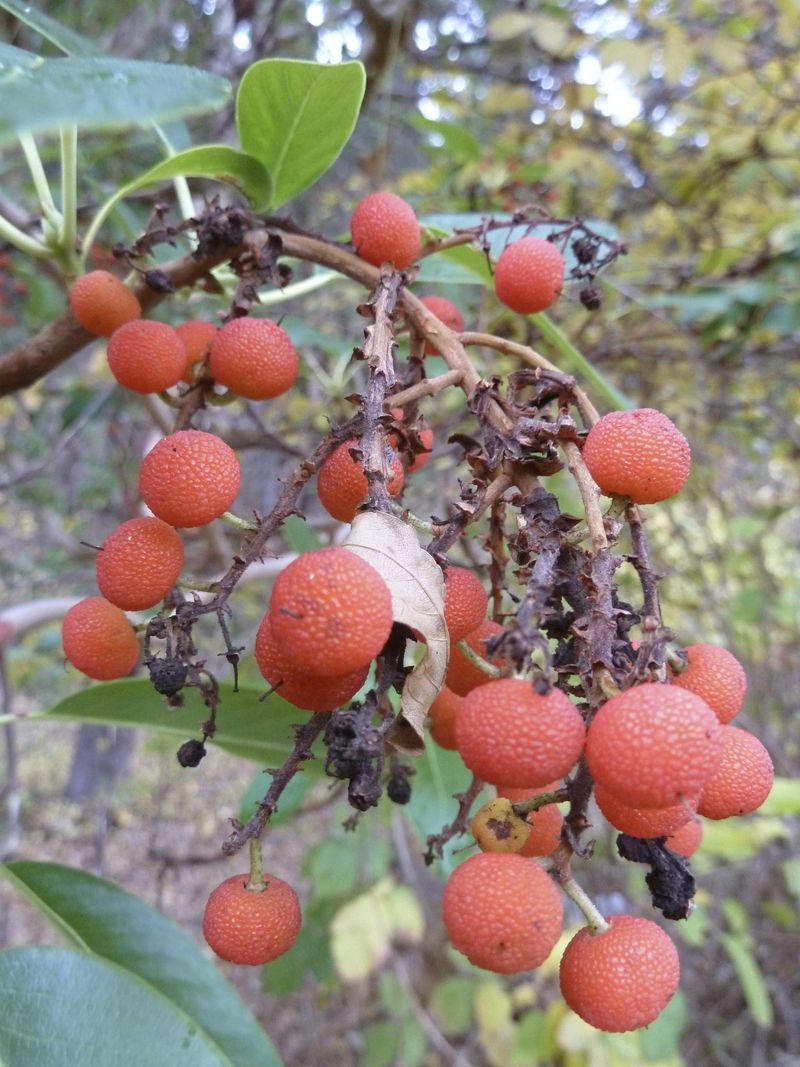
Peeling cinnamon bark and clusters of orange-red berries make Pacific madrone look dressed for a holiday party. Personally, I think a mature madrone in November is one of the prettiest sights in the West.
Arbutus menziesii grows naturally in coastal forests and foothills from British Columbia down into Southern California. Wild trees can reach fifty feet or more, so this pick suits roomy properties rather than tiny courtyards.
Berries ripen in fall and often hang on into winter, drawing hungry robins and band-tailed pigeons to the branches. Creamy white flower clusters appeared back in spring, buzzing with bees before the fruit started forming.
Fair warning, madrone has a reputation for sulking in typical backyard settings with lawns and sprinklers. It prefers lean, fast-draining soil and strongly dislikes summer water splashing around its roots once established.
Start with a small container plant, since young madrones handle transplanting far better than large nursery specimens. Plant in fall so winter rains can help roots settle in before hot weather returns next year.
Shed bark and leaves drop throughout the year, so skip planting it right beside a patio or pool. I see that litter as free mulch, but tidy gardeners may feel differently about it.
Madrone also supports many native insects and birds, making it a rich habitat tree for wilder gardens. If your yard has the space and drainage, few trees offer this much year-round character.
5. Strawberry Tree
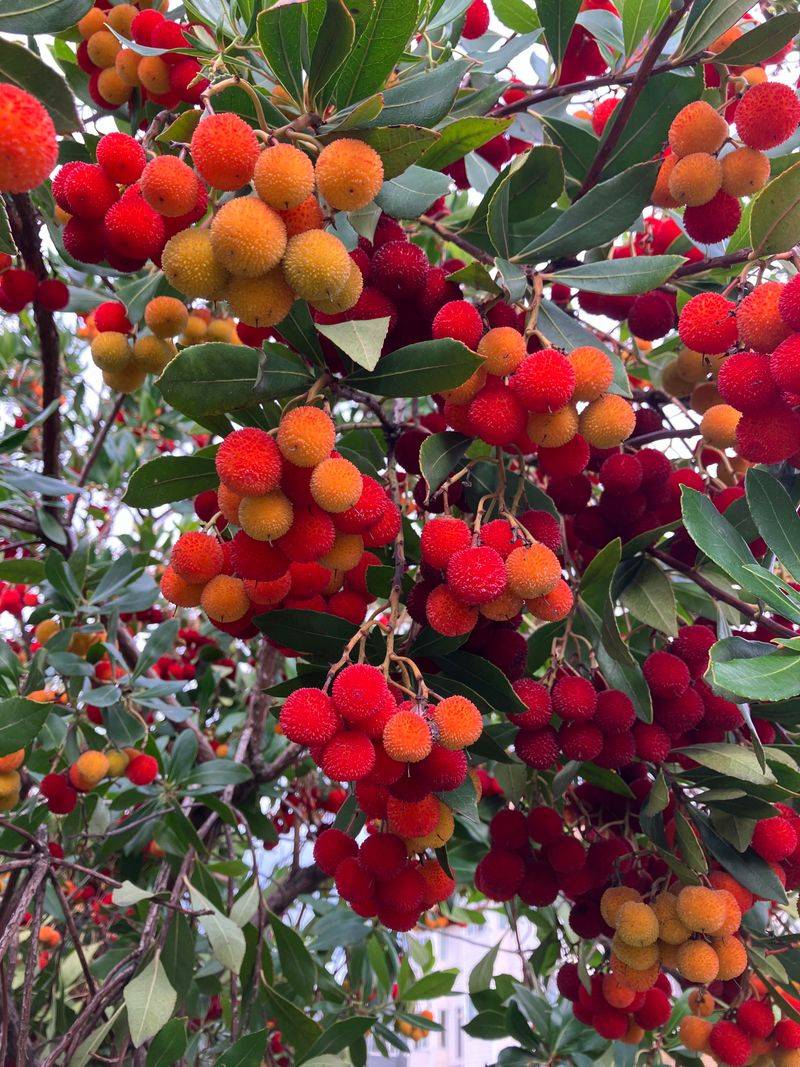
Flowers and ripe fruit on the same branch at the same time sound impossible, yet strawberry tree pulls it off. Its bumpy red fruit takes about a year to mature, so it overlaps with fresh autumn blossoms.
Arbutus unedo comes from the Mediterranean region and western Europe, where summers stay dry much like ours. That shared climate explains why it has become such a beloved street and garden tree across the state.
Small white to pale pink bell-shaped flowers dangle in clusters during fall, attracting bees and hummingbirds on mild days. Nearby, round fruits slowly shift from green to yellow and orange before finally turning a bright red.
The fruit is edible, though I find it mealy and mildly sweet rather than anything like real strawberries. Its species name, unedo, is often explained as Latin for eat only one, which tells you plenty.
Most trees reach fifteen to twenty-five feet, with glossy toothed leaves and reddish bark that peels attractively. Dwarf selections like Compacta stay much smaller, which works nicely in tight side yards or large containers.
Give it full sun or light afternoon shade along with well-drained soil for the healthiest growth. Established trees handle drought well, but they also accept regular garden watering without much complaint at all.
Fallen fruit can get messy on patios, so plant it over mulch or groundcover instead of pavement. Birds and squirrels will happily help with cleanup, sometimes before you even notice the fruit has ripened.
6. Adams Crabapple
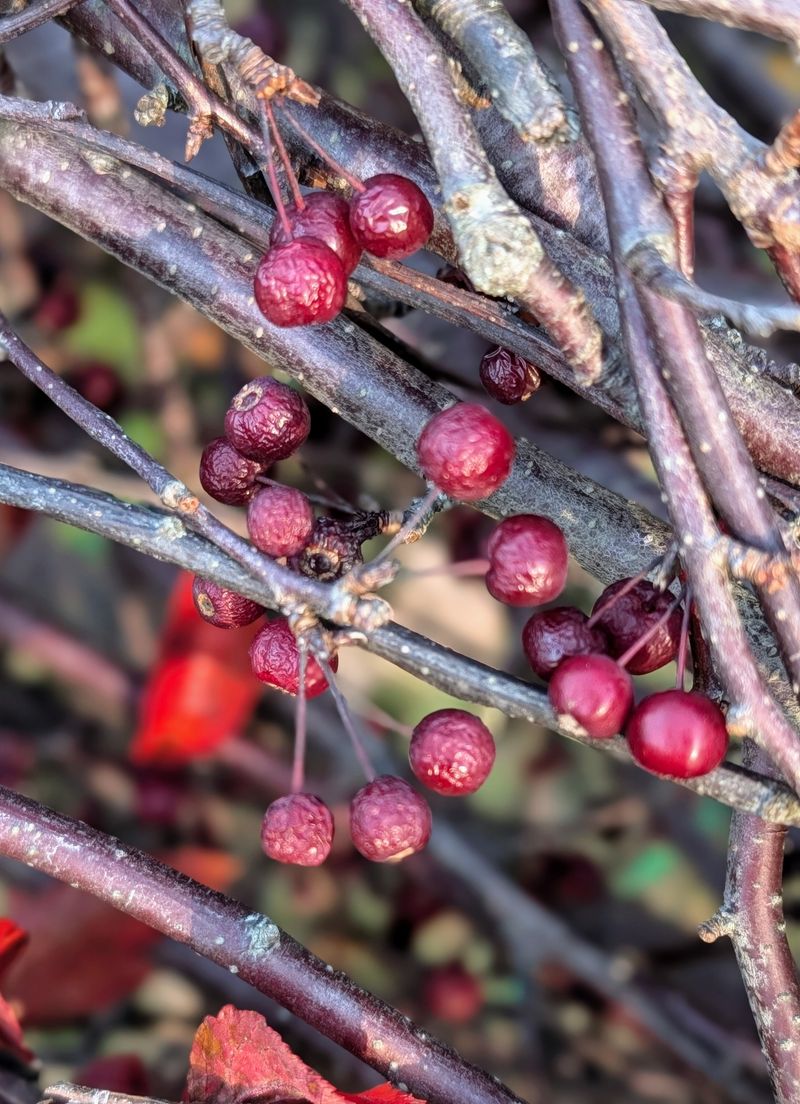
Tiny glossy apples the size of marbles cover Adams crabapple in fall, long after its leaves turn orange. Honestly, the bare branches studded with deep red fruit look like a holiday card come to life.
Malus Adams is a deciduous flowering tree that reaches about fifteen to twenty feet tall and wide. Deep pink blossoms open in mid-spring, and the small fruit follows with surprising blood-red flesh inside.
Crabapples need some winter chill, so this tree performs best in northern regions and foothills with cooler winters. Gardens near the mild southern coast may see fewer flowers and noticeably lighter fruit crops each year.
Fruit hangs on well into winter, which makes it a reliable snack bar for robins and cedar waxwings. I love how the birds wait until the fruit softens a little before they finally move in.
Plant in full sun with well-drained soil and steady moisture, especially during the first couple of summers. Established trees tolerate some dryness, but a deep soak during heat waves keeps them looking healthy.
Adams has good resistance to common crabapple diseases, which saves you plenty of headaches compared with older varieties. Prune in late winter while the tree is bare, removing crossing branches and any suckers near the base.
The fruit is edible and makes a lovely pink-tinted jelly if you can beat the birds to it. You might find yourself leaving most of it on the branches anyway, just for the view.
7. Red Beauty Holly
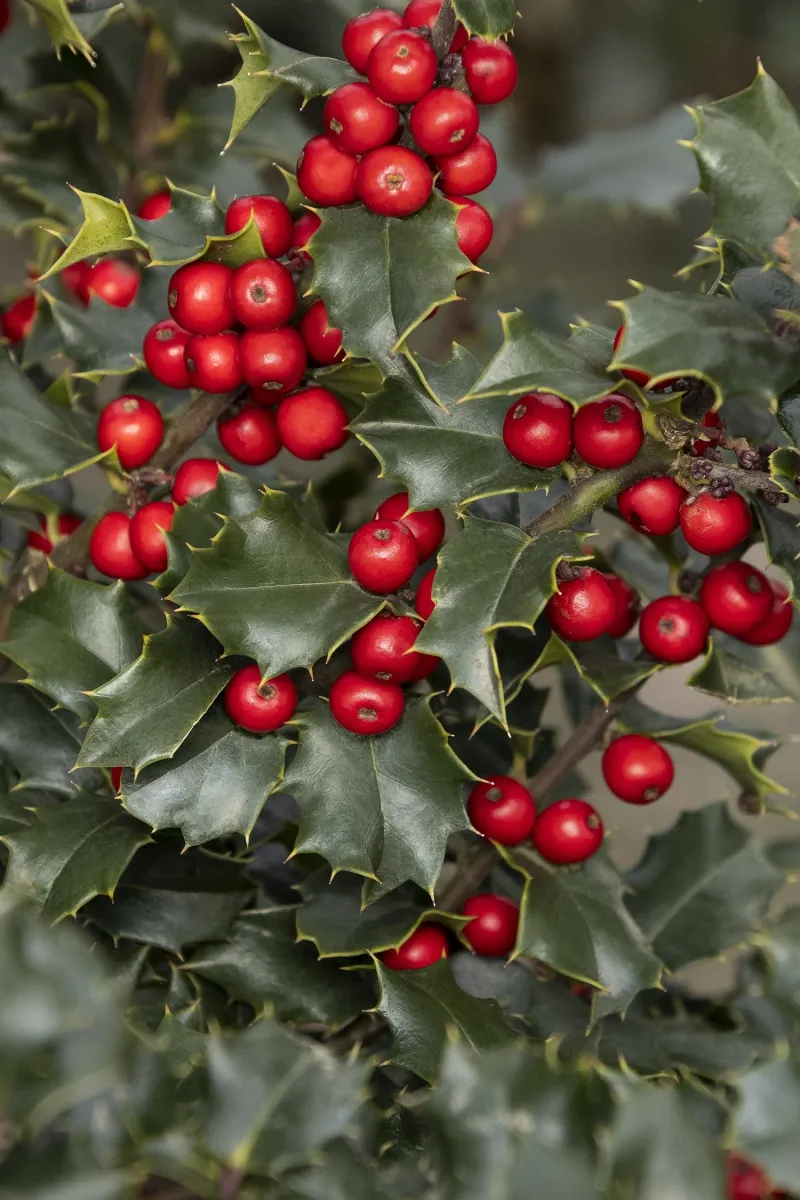
Small spiny leaves and shiny red berries give Red Beauty holly that classic holiday look many of us grew up admiring. It grows as a neat, upright cone, so it practically shapes itself into a living Christmas tree.
This compact hybrid belongs to the blue holly group, often sold under the name Ilex x meserveae Rutzan. Expect roughly six to eight feet of height with a narrower spread, perfect beside an entry or walkway.
Only female plants produce berries, and Red Beauty needs a male blue holly nearby to set fruit reliably. One male such as Blue Prince can pollinate several females, so you rarely need more than one.
Blue hollies prefer cooler summers, so this choice works best in northern regions or higher elevations of the state. In hot inland valleys, give it afternoon shade and mulch to protect the roots from baking.
Slightly acidic, well-drained soil keeps the dark green leaves glossy instead of yellowing over the summer months. Water regularly, aiming for evenly moist soil rather than soggy conditions that can invite root problems.
Berries color up in fall and usually stay bright through winter, giving November gardens a cheerful pop. I like snipping a few berried sprigs for indoor decorations, and the shrub barely notices the trim.
Keep curious kids and pets from eating the berries, since holly fruit can cause stomach upset. Plant it where you can see it from a window, because those red berries look wonderful on gray mornings.